
Network Version
Resiquimod Data Sheet
| Product Name: | Resiquimod |
 |
|---|---|---|
| CAS No.: | 144875-48-9 | |
| Cat. No.: | HY-13740 | |
| MWt: | 314.39 | |
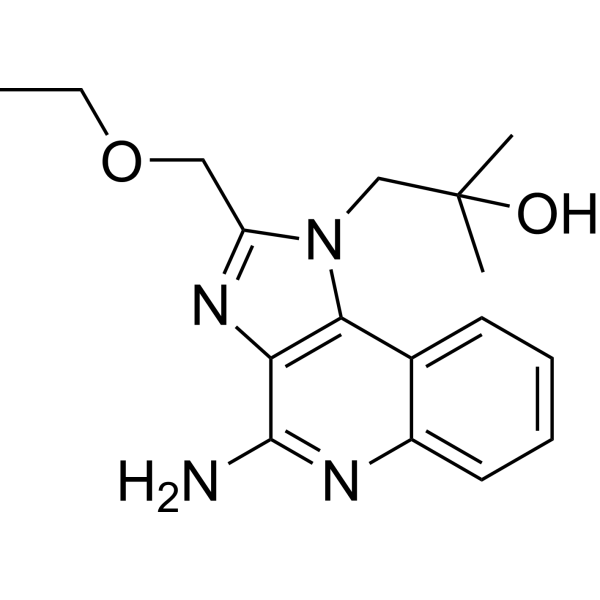
| Formula: | C17H22N4O2 | |
| Purity : | >98% | |
| Solubility: | DMSO : ≥ 30 mg/mL;H<sub>2</sub>O : 0.1 mg/mL (ultrasonic);Methanol : 25 mg/mL (ultrasonic);DMF : 50 mg/mL (ultrasonic);Ethanol : 25 mg/mL (ultrasonic) | |
| Mechanisms: | Target: Cancer Inflammation/Immunology | |
| Biological Activity: | ||
|
Resiquimod is a Toll-like receptor 7 and 8 (TLR7/TLR8) agonist that induces the upregulation of cytokines such as TNF-α, IL-6 and IFN-α.
IC50 & Target:TLR7/TLR8
In Vitro:Resiquimod (R-848) induces both hapten- and allergen-specific circulating T cells, including TH2 effectors, to produce IFN-γ and even to lose the ability to produce IL-4[2]. Resiquimod (R848) enhances PBL proliferation in a dose-dependent manner, and increases the number of BrdU-positive cells in BrdU incorporation assay. Cells treated with R848 exhibits significantly increased (3.5-fold) luciferase (a reporter of NF-κB activity) activity[3]. In Vivo:Resiquimod can be used in animal modeling to establish a model of cytokine release in rats and mice, and a model of immune-mediated cardiac tissue injury. Resiquimod (R-848) (50 μg/bird, i.m. route) significantly up-regulates the expression of IFN-α, IFN-β, IFN-γ, IL-1β, IL-4, iNOS and MHC-II genes in SPF chicken[1]. The pharmacokinetic properties of Resiquimod is characterized by a short half-life, resulting in a low AUC and a concomitantly high Cmax at relevant doses[5]. Induction of systemic Lupus erythematosus[4]. Background
Alterations in TLR signaling contributes to the initiation and/or exacerbation of lupus in humans and in murine models. Autoreactive B cells (in which TLR-7 activation occurs in response to RNA-containing antigens), in synergy with B cell receptor, undergo proliferation, isotype switching, and plasma cell differentiation, leading to the production of autoantibodies.
Specific Mmodeling Methods
Mice: Wild-type FVB/N, BALB/c, and C57BL/6 mice• female• 7-9 weeks old (period: 4 weeks) Administration: 100 μg• topical application to the right ear•three times a week for 4 weeks.
Note
Modeling Record
Metabolism changes: Elevates levels of autoantibodies to double-stranded DNA and multiple organ involvement, including glomerulonephritis, hepatitis, carditis. Histology analysis: Marked splenomegaly, and the liver revealed severe mononuclear cell infiltration around the portal veins and hepatocyte necrosis. Correlated Product(s): Myosin H Chain Fragment, mouse (HY-P2464) Enpatoran
(HY-134581) |
||
1 Deer Park Dr, Suite F, Monmouth Junction, NJ 08852, USA
Tel: 609-228-6898 Fax: 609-228-5909 Email: [email protected] Web:www.medchemexpress.com