Search Result
Results for "
N0322
" in MedChemExpress (MCE) Product Catalog:
11
Biochemical Assay Reagents
14
Isotope-Labeled Compounds
| Cat. No. |
Product Name |
Target |
Research Areas |
Chemical Structure |
-
- HY-N0322
-
|
|
Environmental Pollutants
Endogenous Metabolite
Estrogen Receptor/ERR
Bacterial
Liposome
|
Infection
Metabolic Disease
Cancer
|
|
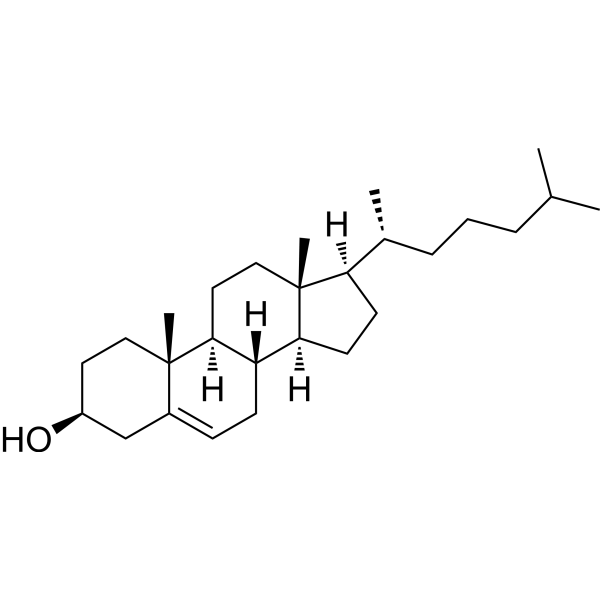
Cholesterol (from animal) is the major sterol in mammals. It is making up 20-25% of structural component of the plasma membrane. Plasma membranes are highly permeable to water but relatively impermeable to ions and protons. Cholesterol (from animal) plays an important role in determining the fluidity and permeability characteristics of the membrane as well as the function of both the transporters and signaling proteins . Cholesterol (from animal) is also an endogenous estrogen-related receptor α (ERRα) agonist .
|
-
-
- HY-N0322A
-
|
|
Liposome
|
Others
|
Cholesterol Water Soluble is a major sterol in mammals, constituting 20-25% of the structural composition of the plasma membrane. The plasma membrane is highly permeable to water but relatively impermeable to ions and protons. Cholesterol Water Soluble plays an important role in determining the fluidity and permeability characteristics of membranes and the function of transporters and signaling proteins. Cholesterol Water Soluble is also an endogenous estrogen-related receptor alpha (ERRα) agonist. Cholesterol Water Soluble can be used to study the effects of cholesterol on potassium currents in inner hair cells .
(Note: This product is a mixture of Cholesterol and Methyl-β-cyclodextrin. The product specifications below only indicate the effective content of Cholesterol.)
|
-
-
- HY-N0322S
-
|
|
Estrogen Receptor/ERR
Endogenous Metabolite
|
Metabolic Disease
|
|
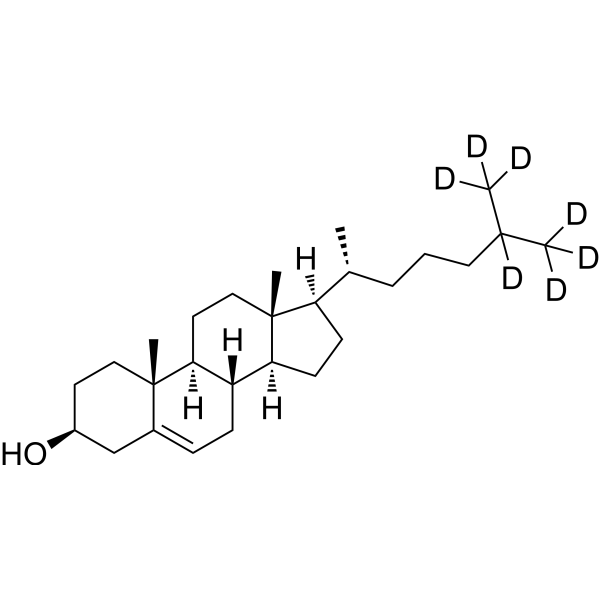
Cholesterol-d7 is the deuterium labeled Cholesterol. Cholesterol is the major sterol in mammals. It is making up 20-25% of structural component of the plasma membrane. Plasma membranes are highly permeable to water but relatively impermeable to ions and protons. Cholesterol plays an important role in determining the fluidity and permeability characteristics of the membrane as well as the function of both the transporters and signaling proteins . Cholesterol is also an endogenous estrogen-related receptor α (ERRα) agonist .
|
-
-
- HY-N0322R
-
|
|
Liposome
Reference Standards
Estrogen Receptor/ERR
Endogenous Metabolite
Bacterial
|
Metabolic Disease
Cancer
|
|
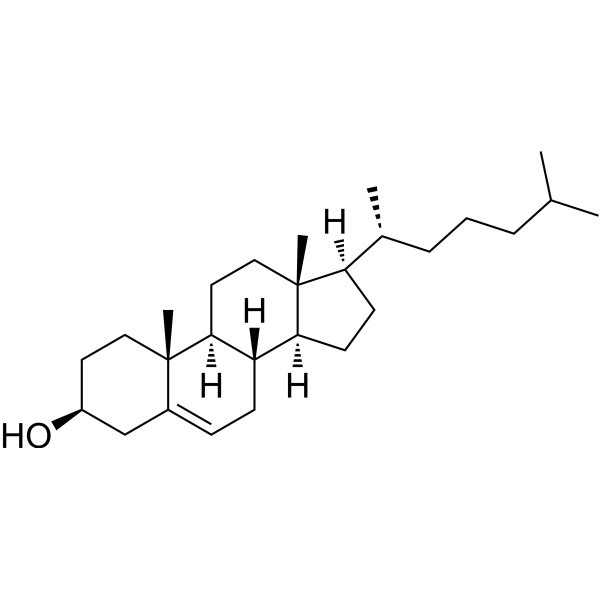
Cholesterol (Standard) is the analytical standard of Cholesterol. This product is intended for research and analytical applications. Cholesterol is the major sterol in mammals. It is making up 20-25% of structural component of the plasma membrane. Plasma membranes are highly permeable to water but relatively impermeable to ions and protons. Cholesterol plays an important role in determining the fluidity and permeability characteristics of the membrane as well as the function of both the transporters and signaling proteins . Cholesterol is also an endogenous estrogen-related receptor α (ERRα) agonist .
|
-
-
- HY-N0322S5
-
|
|
Estrogen Receptor/ERR
Endogenous Metabolite
|
Metabolic Disease
|
|
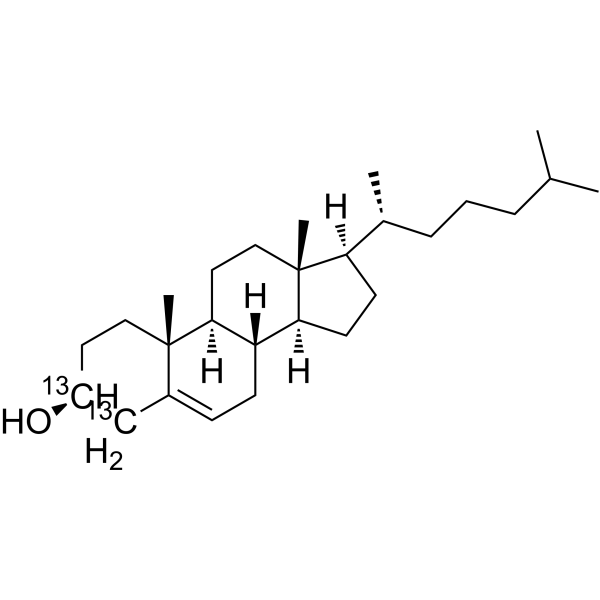
Cholesterol- 13C2 is the 13C labeled Cholesterol. Cholesterol is the major sterol in mammals. It is making up 20-25% of structural component of the plasma membrane. Plasma membranes are highly permeable to water but relatively impermeable to ions and protons. Cholesterol plays an important role in determining the fluidity and permeability characteristics of the membrane as well as the function of both the transporters and signaling proteins . Cholesterol is also an endogenous estrogen-related receptor α (ERRα) agonist .
|
-
-
- HY-N0322S1
-
|
|
Estrogen Receptor/ERR
Endogenous Metabolite
|
Metabolic Disease
|
|
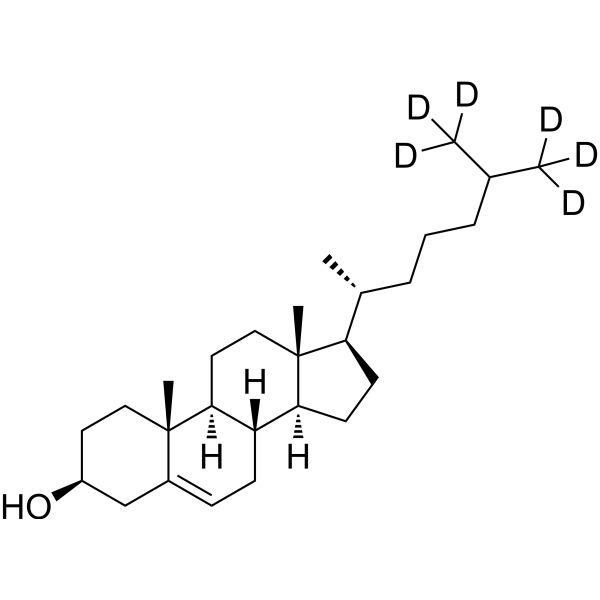
Cholesterol-d6 is the deuterium labeled Cholesterol. Cholesterol is the major sterol in mammals. It is making up 20-25% of structural component of the plasma membrane. Plasma membranes are highly permeable to water but relatively impermeable to ions and protons. Cholesterol plays an important role in determining the fluidity and permeability characteristics of the membrane as well as the function of both the transporters and signaling proteins . Cholesterol is also an endogenous estrogen-related receptor α (ERRα) agonist .
|
-
-
- HY-N0322S2
-
|
|
Isotope-Labeled Compounds
Estrogen Receptor/ERR
Endogenous Metabolite
|
Metabolic Disease
|
|
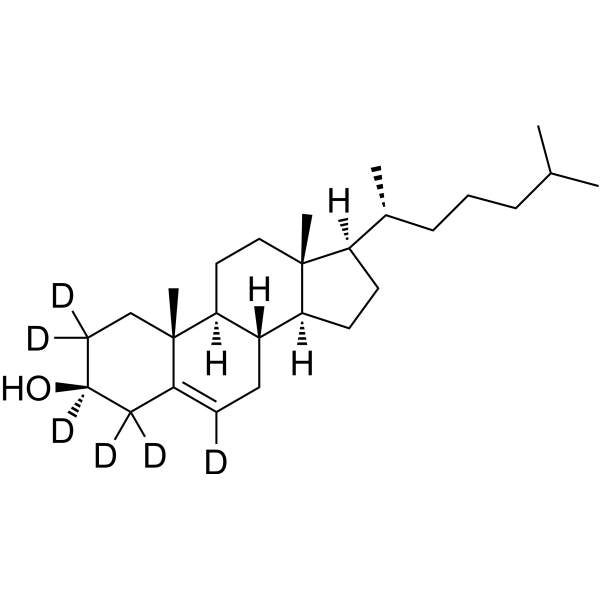
Cholesterol-d6-1 is the deuterium labeled Cholesterol. Cholesterol is the major sterol in mammals. It is making up 20-25% of structural component of the plasma membrane. Plasma membranes are highly permeable to water but relatively impermeable to ions and protons. Cholesterol plays an important role in determining the fluidity and permeability characteristics of the membrane as well as the function of both the transporters and signaling proteins . Cholesterol is also an endogenous estrogen-related receptor α (ERRα) agonist .
|
-
-
- HY-N0322S4
-
|
|
Estrogen Receptor/ERR
Endogenous Metabolite
|
Metabolic Disease
|
|
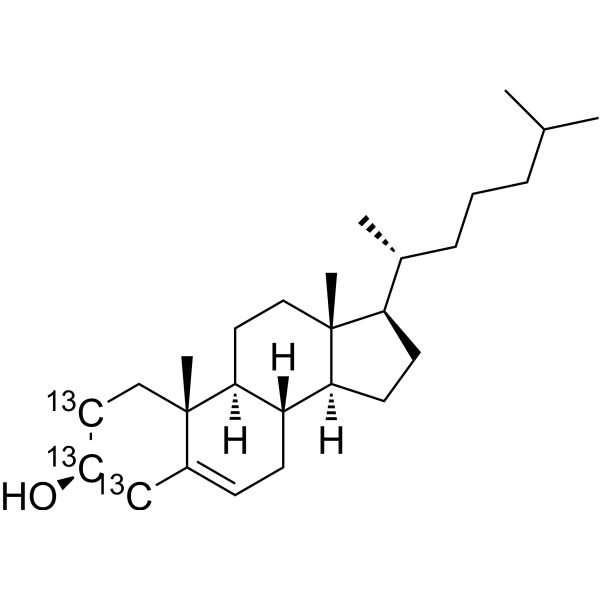
Cholesterol- 13C3 is the 13C-labeled Cholesterol. Cholesterol is the major sterol in mammals. It is making up 20-25% of structural component of the plasma membrane. Plasma membranes are highly permeable to water but relatively impermeable to ions and protons. Cholesterol plays an important role in determining the fluidity and permeability characteristics of the membrane as well as the function of both the transporters and signaling proteins . Cholesterol is also an endogenous estrogen-related receptor α (ERRα) agonist .
|
-
-
- HY-N0322S6
-
|
|
Estrogen Receptor/ERR
Endogenous Metabolite
|
Metabolic Disease
|
|
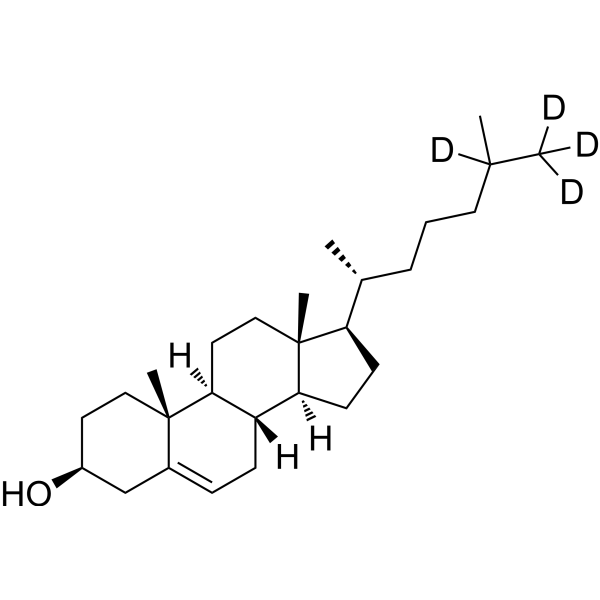
Cholesterol-d4 is deuterium labeled Cholesterol. Cholesterol is the major sterol in mammals. It is making up 20-25% of structural component of the plasma membrane. Plasma membranes are highly permeable to water but relatively impermeable to ions and protons. Cholesterol plays an important role in determining the fluidity and permeability characteristics of the membrane as well as the function of both the transporters and signaling proteins . Cholesterol is also an endogenous estrogen-related receptor α (ERRα) agonist .
|
-
-
- HY-N0322S7
-
|
|
Isotope-Labeled Compounds
Estrogen Receptor/ERR
Endogenous Metabolite
|
Endocrinology
|
|
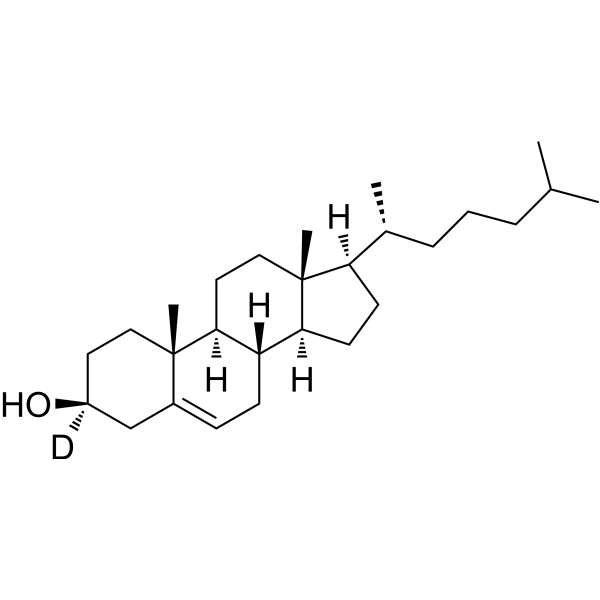
Cholesterol-d1 is the deuterium labeled Cholesterol. Cholesterol is the major sterol in mammals. It is making up 20-25% of structural component of the plasma membrane. Plasma membranes are highly permeable to water but relatively impermeable to ions and protons. Cholesterol plays an important role in determining the fluidity and permeability characteristics of the membrane as well as the function of both the transporters and signaling proteins . Cholesterol is also an endogenous estrogen-related receptor α (ERRα) agonist .
|
-
-
- HY-N0322GL
-
|
|
Liposome
Estrogen Receptor/ERR
Endogenous Metabolite
|
Metabolic Disease
Cancer
|
|
Cholesterol (GMP Like) is Cholesterol (HY-N0322) produced by using GMP like guidelines. GMP Like small molecules works appropriately as an auxiliary reagent for cell therapy manufacture. Cholesterol is the major sterol in mammals. It is making up 20-25% of structural component of the plasma membrane. Plasma membranes are highly permeable to water but relatively impermeable to ions and protons. Cholesterol plays an important role in determining the fluidity and permeability characteristics of the membrane as well as the function of both the transporters and signaling proteins . Cholesterol is also an endogenous estrogen-related receptor α (ERRα) agonist .
|
-

-
- HY-N0322S3
-
|
|
Estrogen Receptor/ERR
Endogenous Metabolite
|
Metabolic Disease
|
|
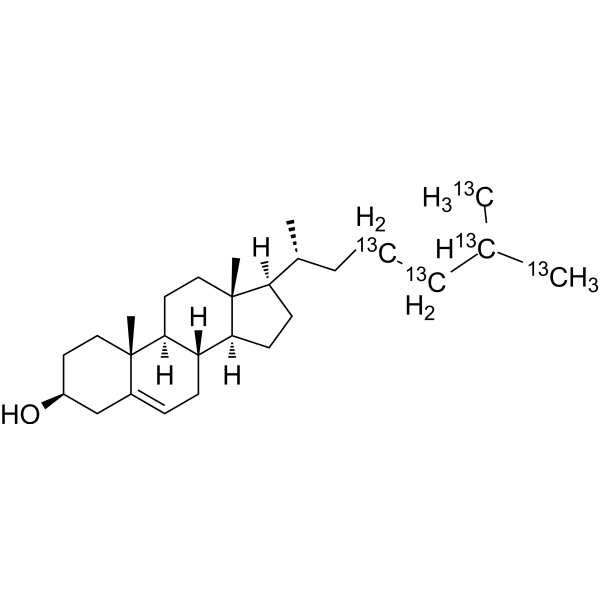
Cholesterol- 13C5 is the 13C-labeled Cholesterol. Cholesterol is the major sterol in mammals. It is making up 20-25% of structural component of the plasma membrane. Plasma membranes are highly permeable to water but relatively impermeable to ions and protons. Cholesterol plays an important role in determining the fluidity and permeability characteristics of the membrane as well as the function of both the transporters and signaling proteins . Cholesterol is also an endogenous estrogen-related receptor α (ERRα) agonist .
|
-
-
- HY-N0322S8
-
|
|
Isotope-Labeled Compounds
Estrogen Receptor/ERR
Endogenous Metabolite
|
Metabolic Disease
|
|
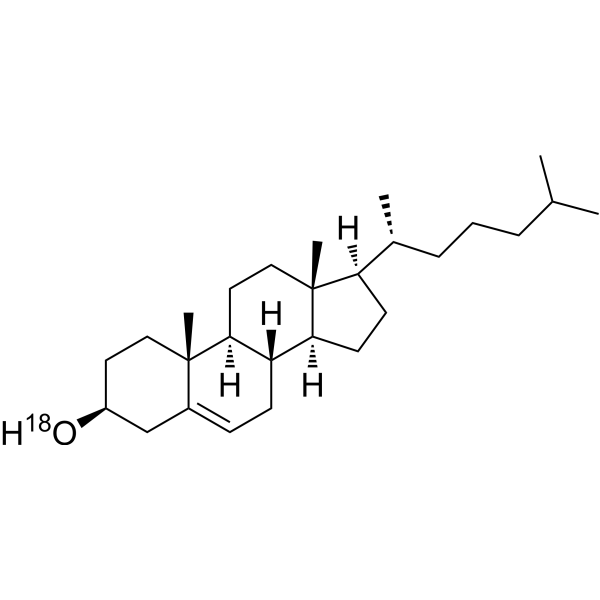
Cholesterol- 18O is the 18O-labeled Cholesterol. Cholesterol is the major sterol in mammals. It is making up 20-25% of structural component of the plasma membrane. Plasma membranes are highly permeable to water but relatively impermeable to ions and protons. Cholesterol plays an important role in determining the fluidity and permeability characteristics of the membrane as well as the function of both the transporters and signaling proteins . Cholesterol is also an endogenous estrogen-related receptor α (ERRα) agonist .
|
-
-
- HY-N0322D
-
-

-
- HY-N0322E
-
|
|
Endogenous Metabolite
|
Cardiovascular Disease
|
|
Cholesterol (synthetic) is a synthetic form of cholesterol. It is a lipid that sustains vital functions. Cholesterol (synthetic) can be used in research on cardiovascular diseases .
|
-

-
- HY-113217
-
|
|
Liposome
Endogenous Metabolite
|
Metabolic Disease
Cancer
|
|
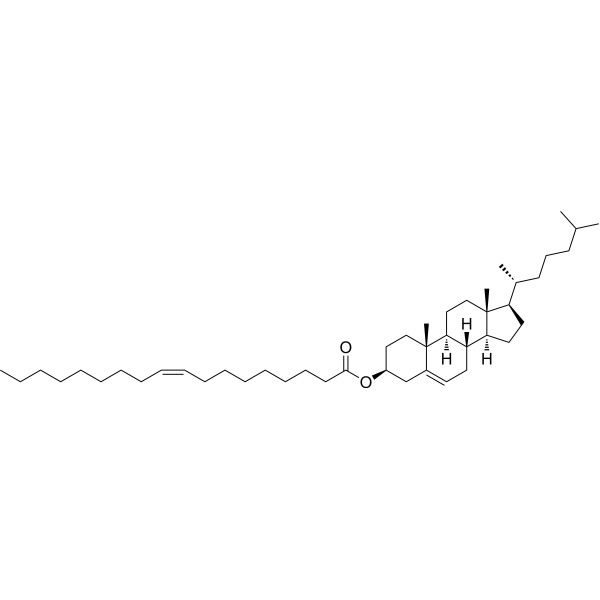
Cholesteryl oleate is an ester compound formed from Cholesterol (HY-N0322) and Oleic acid (HY-N1446), which is involved in lipid transport, storage and cell membrane formation in living organisms. Cholesteryl oleate may serve as a potential biomarker for prostate cancer. Cholesteryl oleate can also prepare cationic solid lipid nanoparticles (SLNs) for efficient gene silencing .
|
-
-
- HY-124265
-
|
|
Endogenous Metabolite
|
Metabolic Disease
|
|
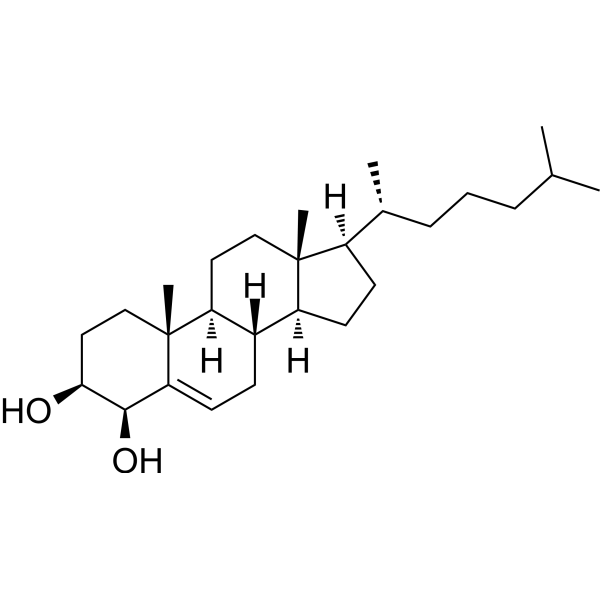
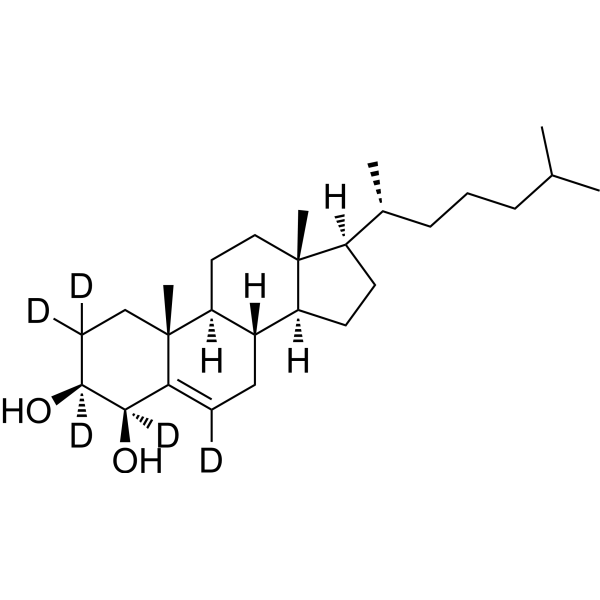
4β-Hydroxycholesterol is a major Cholesterol (HY-N0322) metabolite and a precursor in the synthesis of bile acids that is found in human circulation .
|
-
-
- HY-156197
-
-
-
- HY-114297
-
|
|
Endogenous Metabolite
|
Others
|
|
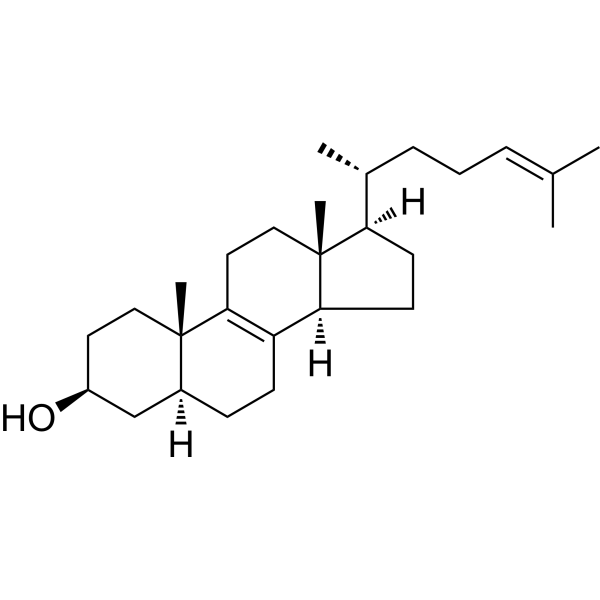
Zymosterol is a Cholesterol (HY-N0322) biosynthesis metabolite. Zymosterol, a precursor of Cholesterol, is found mostly in the plasma membrane. Zymosterol circulates within the cell .
|
-
-
- HY-124265S
-
|
|
Endogenous Metabolite
|
Metabolic Disease
|
|
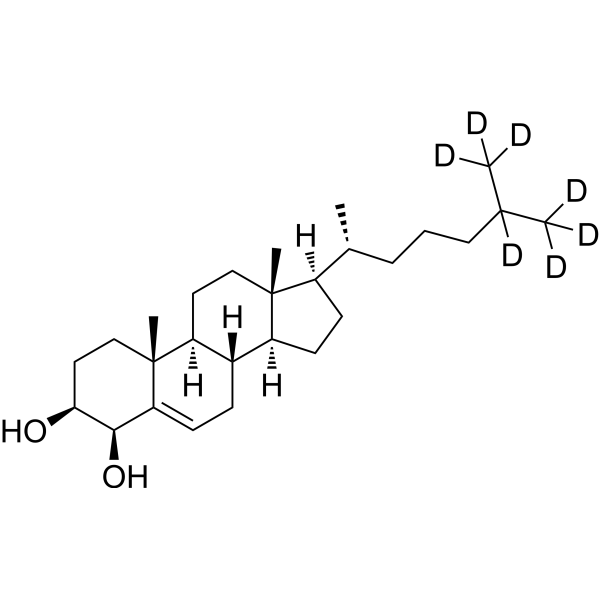
4β-Hydroxycholesterol-d7 is the deuterium labeled 4β-Hydroxycholesterol (HY-124265). 4β-Hydroxycholesterol is a major Cholesterol (HY-N0322) metabolite and a precursor in the synthesis of bile acids that is found in human circulation .
|
-
-
- HY-124265S2
-
|
|
Endogenous Metabolite
|
Metabolic Disease
|
|
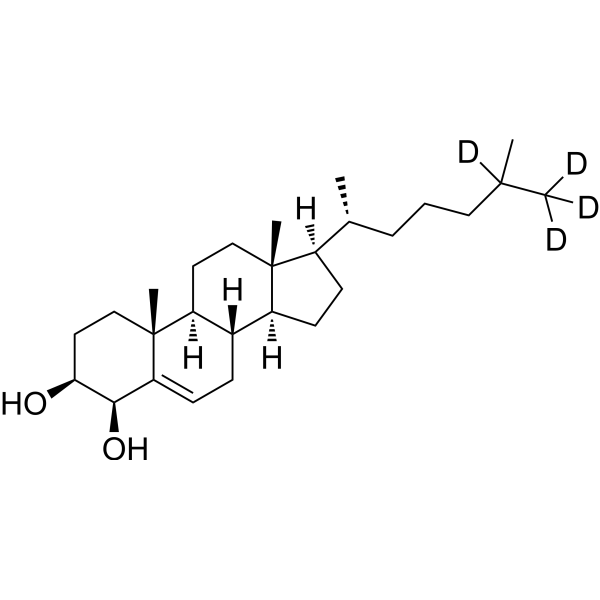
4β-Hydroxycholesterol-d4 is the deuterium labeled 4β-Hydroxycholesterol (HY-124265) . 4β-Hydroxycholesterol is a major Cholesterol (HY-N0322) metabolite and a precursor in the synthesis of bile acids that is found in human circulation .
|
-
-
- HY-W588187
-
|
5β-Cholestan-3-one
|
Drug Metabolite
Apoptosis
|
Cancer
|
|
Coprostanone (5β-cholestan-3-one) is an oxysterol and active metabolite of Cholesterol (HY-N0322). Coprostanone induces apoptosis in primary dog gallbladder epithelial cells. Coprostanone is promising for research of colon cancers or adenomatous polyps .
|
-

-
- HY-113217S
-
|
|
Isotope-Labeled Compounds
Endogenous Metabolite
|
Others
|
|
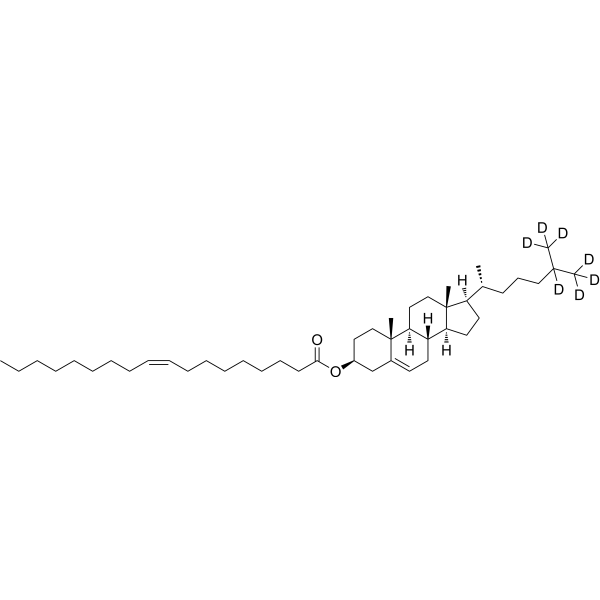
Cholesteryl oleate-d7 is deuterium labeled Cholesteryl oleate. Cholesteryl oleate is an ester compound formed from Cholesterol (HY-N0322) and Oleic acid (HY-N1446), which is involved in lipid transport, storage and cell membrane formation in living organisms. Cholesteryl oleate may serve as a potential biomarker for prostate cancer. Cholesteryl oleate can also prepare cationic solid lipid nanoparticles (SLNs) for efficient gene silencing .
|
-
-
- HY-W097268
-
-

-
- HY-131663
-
-

-
- HY-171562
-
|
|
Biochemical Assay Reagents
|
Metabolic Disease
|
|
Cholesterol-SA-PEG2000-Azide is a lipid that can be used for drug delivery. Cholesterol-SA-PEG2000-Azide contains Cholesterol (HY-N0322), Succinic acid (HY-N0420), PEG units and an azide group. Cholesterol-SA-PEG2000-Azide contains an azide group that can undergo copper-catalyzed azide-alkyne cycloaddition reaction (CuAAc) with molecules containing an alkyne group .
|
-

-
- HY-W009001
-
-

-
- HY-124265S1
-
-
-
- HY-124265R
-
|
|
Reference Standards
Endogenous Metabolite
|
Metabolic Disease
|
|
4β-hydroxy Cholesterol (Standard) is the analytical reference standard of 4β-hydroxy Cholesterol (HY-124265). This product is used for research and analytical applications. 4β-Hydroxycholesterol is a major Cholesterol (HY-N0322) metabolite and a precursor in the synthesis of bile acids that is found in human circulation .
|
-

-
- HY-P11456A
-
|
|
Liposome
|
Others
|
|
Lipopeptide CPK4 TFA is a Cholesterol (HY-N0322)-modified peptide K4 [(KIAALKE) 3]. Lipopeptide CPK4 TFA is capable of coiled-coil formation when attached to liposomes. Lipopeptide CPK4 TFA triggers membrane fusion between liposomes and living cells with concomitant efficient cytosolic delivery of a variety of compounds such as fluorescent dyes Propidium Iodide (PI) (HY-D0815) and TO-PRO-3 iodide (HY-117070), and Doxorubicin (DOX) (HY-15142A). Lipopeptide CPK4 TFA can be used for drug delivery research .
|
-

-
- HY-159866
-
|
mPEG2000-Cholesterol
|
Liposome
|
Others
|
|
mPEG2000-CLS (mPEG2000-Cholesterol) is a PEGylated form of Cholesterol (HY-N0322). mPEG2000-CLS can be used to prepare liposome or nanoparticle .
|
-

-
- HY-113217S1
-
|
|
Isotope-Labeled Compounds
Endogenous Metabolite
|
Others
|
|
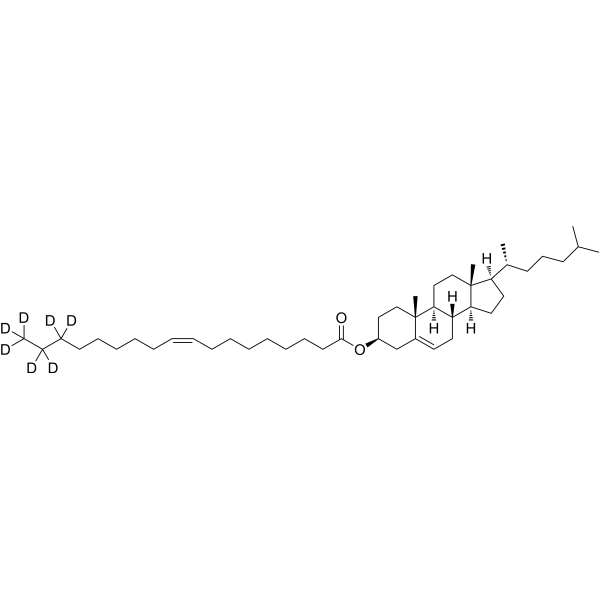
Cholesteryl oleate-d7-1 is deuterium labeled Cholesteryl oleate. Cholesteryl oleate is an ester compound formed from Cholesterol (HY-N0322) and Oleic acid (HY-N1446), which is involved in lipid transport, storage and cell membrane formation in living organisms. Cholesteryl oleate may serve as a potential biomarker for prostate cancer. Cholesteryl oleate can also prepare cationic solid lipid nanoparticles (SLNs) for efficient gene silencing .
|
-
-
- HY-P11456
-
|
|
Liposome
|
Others
|
|
Lipopeptide CPK4 is a Cholesterol (HY-N0322)-modified peptide K4 [(KIAALKE) 3]. Lipopeptide CPK4 is capable of coiled-coil formation when attached to liposomes. Lipopeptide CPK4 triggers membrane fusion between liposomes and living cells with concomitant efficient cytosolic delivery of a variety of compounds such as fluorescent dyes Propidium Iodide (PI) (HY-D0815) and TO-PRO-3 iodide (HY-117070), and Doxorubicin (DOX) (HY-15142A). Lipopeptide CPK4 can be used for drug delivery research .
|
-

-
- HY-W540405
-
|
|
Others
|
Others
|
|
2,3-Dimethyl-1-pentene is volatile compound produced by the thermal oxidation of Cholesterol (HY-N0322) .
|
-

-
- HY-N15960
-
|
|
Biochemical Assay Reagents
|
Others
|
|
Photoclick cholesterol II is a sterol lipid Cholesterol (HY-N0322) analog that contains a clickable terminal alkyne moiety and a photoactivatable diaziridine group.
|
-

-
- HY-17671
-
|
|
HIV
|
Infection
|
|
Cholesterol heptanoic acid is a lipophilic Cholesterol (HY-N0322) derivative. Cholesterol heptanoic acid can combine with peptides (such as peptides P1 and P2) to form lipopeptides, which possess antiviral activity. Cholesterol heptanoic acid can be used for research of HIV infection .
|
-

-
- HY-W1052178H
-
|
Folate-PEG600-Cholesterol
|
Biochemical Assay Reagents
|
Others
|
|
FA-PEG600-Cholesterol (Folate-PEG600-Cholesterol) is a multifunctional drug delivery system composed of Folic acid (HY-16637), polyethylene glycol (PEG), and Cholesterol (HY-N0322). Folic acid (FA) has a high affinity for folic acid receptors and can be used to target cell membrane receptors for drug delivery. Cholesterol can improve the circulation time of encapsulated drugs .
|
-

-
- HY-W1052178E
-
|
Folate-PEG400-Cholesterol
|
Biochemical Assay Reagents
|
Others
|
|
FA-PEG400-Cholesterol (Folate-PEG400-Cholesterol) is a multifunctional drug delivery system composed of Folic acid (HY-16637), polyethylene glycol (PEG), and Cholesterol (HY-N0322). Folic acid (FA) has a high affinity for folic acid receptors and can be used to target cell membrane receptors for drug delivery. Cholesterol can improve the circulation time of encapsulated drugs .
|
-

-
- HY-W1052178
-
|
Folate-PEG2000-Cholesterol
|
Biochemical Assay Reagents
|
Others
|
|
FA-PEG2000-Cholesterol (Folate-PEG2000-Cholesterol) is a multifunctional drug delivery system composed of Folic acid (HY-16637), polyethylene glycol (PEG), and Cholesterol (HY-N0322). Folic acid (FA) has a high affinity for folic acid receptors and can be used to target cell membrane receptors for drug delivery. Cholesterol can improve the circulation time of encapsulated drugs .
|
-

-
- HY-W1052178C
-
|
Folate-PEG10000-Cholesterol
|
Biochemical Assay Reagents
|
Others
|
|
FA-PEG10000-Cholesterol (Folate-PEG10000-Cholesterol) is a multifunctional drug delivery system composed of Folic acid (HY-16637), polyethylene glycol (PEG), and Cholesterol (HY-N0322). Folic acid (FA) has a high affinity for folic acid receptors and can be used to target cell membrane receptors for drug delivery. Cholesterol can improve the circulation time of encapsulated drugs .
|
-

-
- HY-W1052178B
-
|
Folate-PEG5000-Cholesterol
|
Biochemical Assay Reagents
|
Others
|
|
FA-PEG5000-Cholesterol (Folate-PEG5000-Cholesterol) is a multifunctional drug delivery system composed of Folic acid (HY-16637), polyethylene glycol (PEG), and Cholesterol (HY-N0322). Folic acid (FA) has a high affinity for folic acid receptors and can be used to target cell membrane receptors for drug delivery. Cholesterol can improve the circulation time of encapsulated drugs .
|
-

-
- HY-W1052178A
-
|
Folate-PEG3400-Cholesterol
|
Biochemical Assay Reagents
|
Others
|
|
FA-PEG3400-Cholesterol (Folate-PEG3400-Cholesterol) is a multifunctional drug delivery system composed of Folic acid (HY-16637), polyethylene glycol (PEG), and Cholesterol (HY-N0322). Folic acid (FA) has a high affinity for folic acid receptors and can be used to target cell membrane receptors for drug delivery. Cholesterol can improve the circulation time of encapsulated drugs .
|
-

-
- HY-W1052178D
-
|
Folate-PEG1000-Cholesterol
|
Biochemical Assay Reagents
|
Others
|
|
FA-PEG1000-Cholesterol (Folate-PEG1000-Cholesterol) is a multifunctional drug delivery system composed of Folic acid (HY-16637), polyethylene glycol (PEG), and Cholesterol (HY-N0322). Folic acid (FA) has a high affinity for folic acid receptors and can be used to target cell membrane receptors for drug delivery. Cholesterol can improve the circulation time of encapsulated drugs .
|
-

| Cat. No. |
Product Name |
Type |
-
- HY-N0322GL
-
|
|
Fluorescent Dye
|
|
Cholesterol (GMP Like) is Cholesterol (HY-N0322) produced by using GMP like guidelines. GMP Like small molecules works appropriately as an auxiliary reagent for cell therapy manufacture. Cholesterol is the major sterol in mammals. It is making up 20-25% of structural component of the plasma membrane. Plasma membranes are highly permeable to water but relatively impermeable to ions and protons. Cholesterol plays an important role in determining the fluidity and permeability characteristics of the membrane as well as the function of both the transporters and signaling proteins . Cholesterol is also an endogenous estrogen-related receptor α (ERRα) agonist .
|
| Cat. No. |
Product Name |
Type |
-
- HY-N0322A
-
|
|
Biochemical Assay Reagents
|
Cholesterol Water Soluble is a major sterol in mammals, constituting 20-25% of the structural composition of the plasma membrane. The plasma membrane is highly permeable to water but relatively impermeable to ions and protons. Cholesterol Water Soluble plays an important role in determining the fluidity and permeability characteristics of membranes and the function of transporters and signaling proteins. Cholesterol Water Soluble is also an endogenous estrogen-related receptor alpha (ERRα) agonist. Cholesterol Water Soluble can be used to study the effects of cholesterol on potassium currents in inner hair cells .
(Note: This product is a mixture of Cholesterol and Methyl-β-cyclodextrin. The product specifications below only indicate the effective content of Cholesterol.)
|
-
- HY-N0322GL
-
|
|
Biochemical Assay Reagents
|
|
Cholesterol (GMP Like) is Cholesterol (HY-N0322) produced by using GMP like guidelines. GMP Like small molecules works appropriately as an auxiliary reagent for cell therapy manufacture. Cholesterol is the major sterol in mammals. It is making up 20-25% of structural component of the plasma membrane. Plasma membranes are highly permeable to water but relatively impermeable to ions and protons. Cholesterol plays an important role in determining the fluidity and permeability characteristics of the membrane as well as the function of both the transporters and signaling proteins . Cholesterol is also an endogenous estrogen-related receptor α (ERRα) agonist .
|
-
- HY-113217
-
|
|
Biochemical Assay Reagents
|
|
Cholesteryl oleate is an ester compound formed from Cholesterol (HY-N0322) and Oleic acid (HY-N1446), which is involved in lipid transport, storage and cell membrane formation in living organisms. Cholesteryl oleate may serve as a potential biomarker for prostate cancer. Cholesteryl oleate can also prepare cationic solid lipid nanoparticles (SLNs) for efficient gene silencing .
|
-
- HY-171562
-
|
|
Biochemical Assay Reagents
|
|
Cholesterol-SA-PEG2000-Azide is a lipid that can be used for drug delivery. Cholesterol-SA-PEG2000-Azide contains Cholesterol (HY-N0322), Succinic acid (HY-N0420), PEG units and an azide group. Cholesterol-SA-PEG2000-Azide contains an azide group that can undergo copper-catalyzed azide-alkyne cycloaddition reaction (CuAAc) with molecules containing an alkyne group .
|
-
- HY-W1052178H
-
|
Folate-PEG600-Cholesterol
|
Biochemical Assay Reagents
|
|
FA-PEG600-Cholesterol (Folate-PEG600-Cholesterol) is a multifunctional drug delivery system composed of Folic acid (HY-16637), polyethylene glycol (PEG), and Cholesterol (HY-N0322). Folic acid (FA) has a high affinity for folic acid receptors and can be used to target cell membrane receptors for drug delivery. Cholesterol can improve the circulation time of encapsulated drugs .
|
-
- HY-W1052178E
-
|
Folate-PEG400-Cholesterol
|
Biochemical Assay Reagents
|
|
FA-PEG400-Cholesterol (Folate-PEG400-Cholesterol) is a multifunctional drug delivery system composed of Folic acid (HY-16637), polyethylene glycol (PEG), and Cholesterol (HY-N0322). Folic acid (FA) has a high affinity for folic acid receptors and can be used to target cell membrane receptors for drug delivery. Cholesterol can improve the circulation time of encapsulated drugs .
|
-
- HY-W1052178
-
|
Folate-PEG2000-Cholesterol
|
Biochemical Assay Reagents
|
|
FA-PEG2000-Cholesterol (Folate-PEG2000-Cholesterol) is a multifunctional drug delivery system composed of Folic acid (HY-16637), polyethylene glycol (PEG), and Cholesterol (HY-N0322). Folic acid (FA) has a high affinity for folic acid receptors and can be used to target cell membrane receptors for drug delivery. Cholesterol can improve the circulation time of encapsulated drugs .
|
-
- HY-W1052178C
-
|
Folate-PEG10000-Cholesterol
|
Biochemical Assay Reagents
|
|
FA-PEG10000-Cholesterol (Folate-PEG10000-Cholesterol) is a multifunctional drug delivery system composed of Folic acid (HY-16637), polyethylene glycol (PEG), and Cholesterol (HY-N0322). Folic acid (FA) has a high affinity for folic acid receptors and can be used to target cell membrane receptors for drug delivery. Cholesterol can improve the circulation time of encapsulated drugs .
|
-
- HY-W1052178B
-
|
Folate-PEG5000-Cholesterol
|
Biochemical Assay Reagents
|
|
FA-PEG5000-Cholesterol (Folate-PEG5000-Cholesterol) is a multifunctional drug delivery system composed of Folic acid (HY-16637), polyethylene glycol (PEG), and Cholesterol (HY-N0322). Folic acid (FA) has a high affinity for folic acid receptors and can be used to target cell membrane receptors for drug delivery. Cholesterol can improve the circulation time of encapsulated drugs .
|
-
- HY-W1052178A
-
|
Folate-PEG3400-Cholesterol
|
Biochemical Assay Reagents
|
|
FA-PEG3400-Cholesterol (Folate-PEG3400-Cholesterol) is a multifunctional drug delivery system composed of Folic acid (HY-16637), polyethylene glycol (PEG), and Cholesterol (HY-N0322). Folic acid (FA) has a high affinity for folic acid receptors and can be used to target cell membrane receptors for drug delivery. Cholesterol can improve the circulation time of encapsulated drugs .
|
-
- HY-W1052178D
-
|
Folate-PEG1000-Cholesterol
|
Biochemical Assay Reagents
|
|
FA-PEG1000-Cholesterol (Folate-PEG1000-Cholesterol) is a multifunctional drug delivery system composed of Folic acid (HY-16637), polyethylene glycol (PEG), and Cholesterol (HY-N0322). Folic acid (FA) has a high affinity for folic acid receptors and can be used to target cell membrane receptors for drug delivery. Cholesterol can improve the circulation time of encapsulated drugs .
|
| Cat. No. |
Product Name |
Target |
Research Area |
-
- HY-P11456A
-
|
|
Liposome
|
Others
|
|
Lipopeptide CPK4 TFA is a Cholesterol (HY-N0322)-modified peptide K4 [(KIAALKE) 3]. Lipopeptide CPK4 TFA is capable of coiled-coil formation when attached to liposomes. Lipopeptide CPK4 TFA triggers membrane fusion between liposomes and living cells with concomitant efficient cytosolic delivery of a variety of compounds such as fluorescent dyes Propidium Iodide (PI) (HY-D0815) and TO-PRO-3 iodide (HY-117070), and Doxorubicin (DOX) (HY-15142A). Lipopeptide CPK4 TFA can be used for drug delivery research .
|
-
- HY-P11456
-
|
|
Liposome
|
Others
|
|
Lipopeptide CPK4 is a Cholesterol (HY-N0322)-modified peptide K4 [(KIAALKE) 3]. Lipopeptide CPK4 is capable of coiled-coil formation when attached to liposomes. Lipopeptide CPK4 triggers membrane fusion between liposomes and living cells with concomitant efficient cytosolic delivery of a variety of compounds such as fluorescent dyes Propidium Iodide (PI) (HY-D0815) and TO-PRO-3 iodide (HY-117070), and Doxorubicin (DOX) (HY-15142A). Lipopeptide CPK4 can be used for drug delivery research .
|
| Cat. No. |
Product Name |
Category |
Target |
Chemical Structure |
| Cat. No. |
Product Name |
Chemical Structure |
| Cat. No. |
Product Name |
|
Classification |
-
- HY-N0322
-
|
|
|
Cholesterol
Emulsifiers
|
|
Cholesterol (from animal) is the major sterol in mammals. It is making up 20-25% of structural component of the plasma membrane. Plasma membranes are highly permeable to water but relatively impermeable to ions and protons. Cholesterol (from animal) plays an important role in determining the fluidity and permeability characteristics of the membrane as well as the function of both the transporters and signaling proteins . Cholesterol (from animal) is also an endogenous estrogen-related receptor α (ERRα) agonist .
|
-
- HY-N0322A
-
|
|
|
Cholesterol
|
Cholesterol Water Soluble is a major sterol in mammals, constituting 20-25% of the structural composition of the plasma membrane. The plasma membrane is highly permeable to water but relatively impermeable to ions and protons. Cholesterol Water Soluble plays an important role in determining the fluidity and permeability characteristics of membranes and the function of transporters and signaling proteins. Cholesterol Water Soluble is also an endogenous estrogen-related receptor alpha (ERRα) agonist. Cholesterol Water Soluble can be used to study the effects of cholesterol on potassium currents in inner hair cells .
(Note: This product is a mixture of Cholesterol and Methyl-β-cyclodextrin. The product specifications below only indicate the effective content of Cholesterol.)
|
-
- HY-113217
-
|
|
|
Cholesterol
|
|
Cholesteryl oleate is an ester compound formed from Cholesterol (HY-N0322) and Oleic acid (HY-N1446), which is involved in lipid transport, storage and cell membrane formation in living organisms. Cholesteryl oleate may serve as a potential biomarker for prostate cancer. Cholesteryl oleate can also prepare cationic solid lipid nanoparticles (SLNs) for efficient gene silencing .
|
-
- HY-156197
-
|
|
|
Cholesterol
|
|
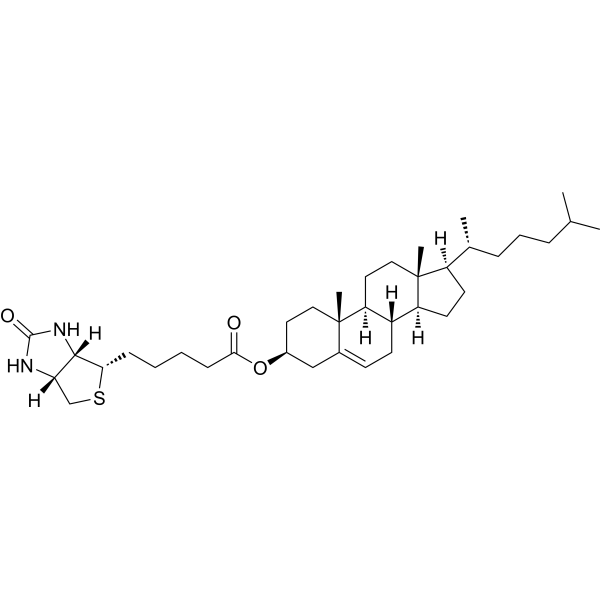
Biotin-cholesterol is a biotinylated form of Cholesterol (HY-N0322). Biotin-cholesterol can be used in the synthesis of biotin-conjugated liposomes and micelles for drug delivery .
|
-
- HY-171562
-
|
|
|
Pegylated Lipids
|
|
Cholesterol-SA-PEG2000-Azide is a lipid that can be used for drug delivery. Cholesterol-SA-PEG2000-Azide contains Cholesterol (HY-N0322), Succinic acid (HY-N0420), PEG units and an azide group. Cholesterol-SA-PEG2000-Azide contains an azide group that can undergo copper-catalyzed azide-alkyne cycloaddition reaction (CuAAc) with molecules containing an alkyne group .
|
-
- HY-159866
-
|
mPEG2000-Cholesterol
|
|
Pegylated Lipids
|
|
mPEG2000-CLS (mPEG2000-Cholesterol) is a PEGylated form of Cholesterol (HY-N0322). mPEG2000-CLS can be used to prepare liposome or nanoparticle .
|
| Cat. No. |
Product Name |
Target |
Research Areas |
Chemical Structure |
-
- HY-N0322GL
-
|
|
Liposome
Estrogen Receptor/ERR
Endogenous Metabolite
|
Metabolic Disease
Cancer
|
|
Cholesterol (GMP Like) is Cholesterol (HY-N0322) produced by using GMP like guidelines. GMP Like small molecules works appropriately as an auxiliary reagent for cell therapy manufacture. Cholesterol is the major sterol in mammals. It is making up 20-25% of structural component of the plasma membrane. Plasma membranes are highly permeable to water but relatively impermeable to ions and protons. Cholesterol plays an important role in determining the fluidity and permeability characteristics of the membrane as well as the function of both the transporters and signaling proteins . Cholesterol is also an endogenous estrogen-related receptor α (ERRα) agonist .
|
-
Your information is safe with us. * Required Fields.
Inquiry Information
- Product Name:
- Cat. No.:
- Quantity:
- MCE Japan Authorized Agent:








