1. Search Result
Search Result
Results for "

Staphylococcus+epidermidis

" in MedChemExpress (MCE) Product Catalog:

29

Inhibitors & Agonists

2

Peptides

7

Natural
Products

Cat. No. Product Name Target Research Areas Chemical Structure
  • HY-B0704
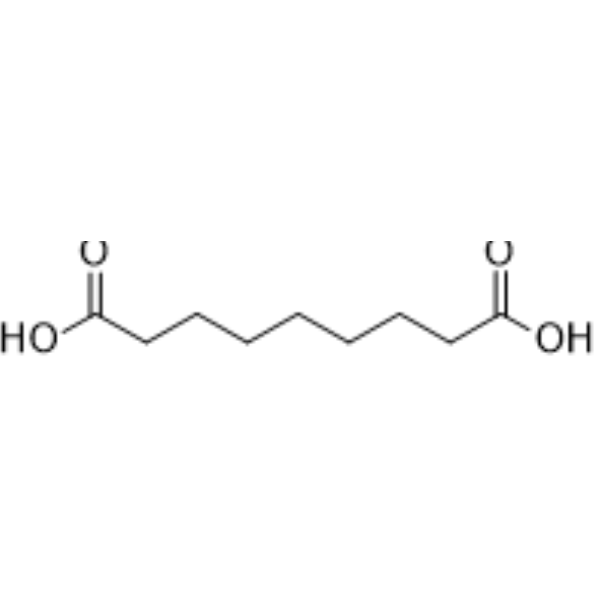
    Azelaic acid
    3 Publications Verification

    Nonanedioic acid

    Antibiotic Endogenous Metabolite PROTAC Linkers Inflammation/Immunology
    Azelaic acid is a nine-carbon dicarboxylic acid. Azelaic acid has antimicrobial activity against Propionibacterium acnes and Staphylococcus epidermidis through inhibition of microbial cellular prorein synthesis. Azelaic acid has hypopigmentation action resulting from its ability to scavenge free radicals .
    Azelaic acid
  • HY-B1924
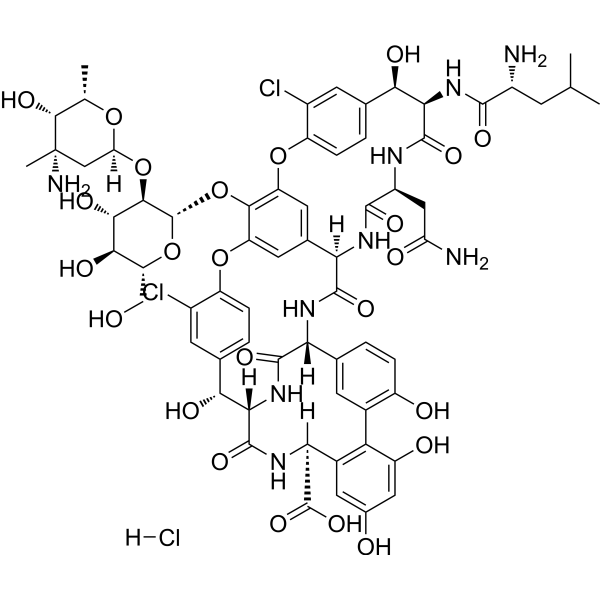
    Norvancomycin monohydrochloride
    1 Publications Verification

    N-Demethylvancomycin monohydrochloride; NVCM monohydrochloride

    Bacterial Infection
    Norvancomycin hydrochloride is a cell wall synthesis inhibitor targeting peptidoglycan precursors of Gram-positive bacteria and cannot pass the blood-brain barrier. Norvancomycin hydrochloride can competitively bind to peptidoglycan precursors, irreversibly inhibit bacterial cell wall synthesis, and exert antibacterial activity. Norvancomycin hydrochloride is mainly used in the study of Gram-positive bacterial infections, especially infections caused by methicillin-resistant Staphylococcus aureus (MRSA) and methicillin-resistant Staphylococcus epidermidis (MRSE). Norvancomycin hydrochloride can also be incorporated into the bionic calcium phosphate coating of titanium implants to enhance antibacterial activity and inhibit postoperative orthopedic infections .
    Norvancomycin monohydrochloride
  • HY-W052289

    Endogenous Metabolite Infection Cancer
    Methyl 6-bromo-1H-indole-3-carboxylate is a marine-derived natural product with anti-tumor activity. Methyl 6-bromo-1H-indole-3-carboxylate exhibits growth inhibitory effects against Staphylococcus epidermidis. Methyl 6-bromo-1H-indole-3-carboxylate can be used in research related to Staphylococcus epidermidis infection and cancer .
    Methyl 6-bromo-1H-indole-3-carboxylate
  • HY-131130

    Bacterial Drug Isomer Infection
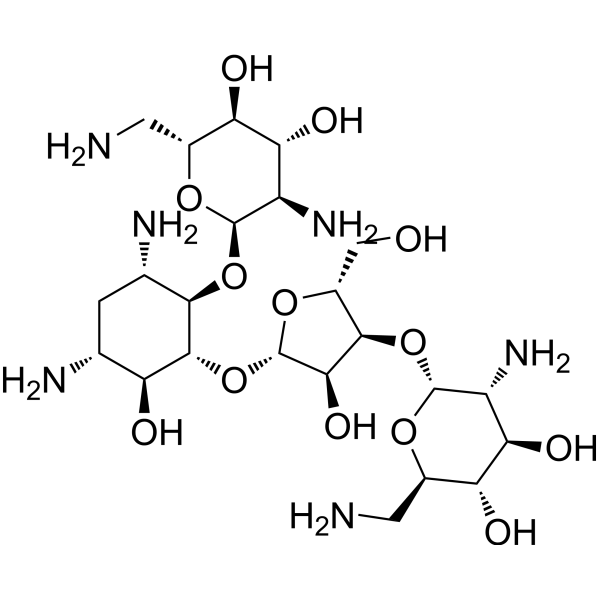
    Neomycin C is an impurity of Neomycin (HY-150520) and a stereoisomer of Neomycin B (HY-17624). Neomycin C exerts in vitro antimicrobial activity against Staphylococcus epidermidis and Staphylococcus aureus. Neomycin C can be used for the research of bacterial infection .
    Neomycin C
  • HY-N13668

    Antibiotic Bacterial Infection
    Rhodomyrtone is an antibiotic that can be found in the leaves of Rhodomyrtus tomentosa. Rhodomyrtone kills Gram-positive bacterial cells without causing bacteriolysis. Rhodomyrtone exhibits activity against a variety of Gram-positive bacteria, including Bacillus cereus, Bacillus subtilis, Enterococcus faecalis, Staphylococcus epidermidis, Streptococcus gordonii, Streptococcus pneumoniae, Streptococcus pyogenes and Streptococcus salivarius. Rhodomyrtone is applicable to studies related to bacterial infections .
    Rhodomyrtone
  • HY-121544

    Penicillin-binding protein (PBP) Bacterial Antibiotic Histamine Receptor Infection
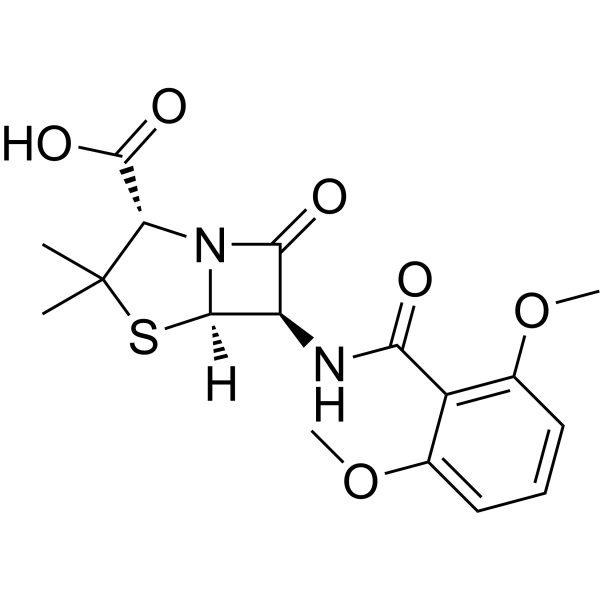
    Methicillin is a narrow-spectrum β-lactam antibiotic, acts by inhibiting penicillin-binding proteins (PBPs). Methicillin is active against Staphylococcus aureus and Staphylococcus epidermidis that are resistant to other penicillins.Methicillin can be used for the research of skin infections, osteomyelitis, and endocarditis .
    Methicillin
  • HY-P4211

    Bacterial Infection
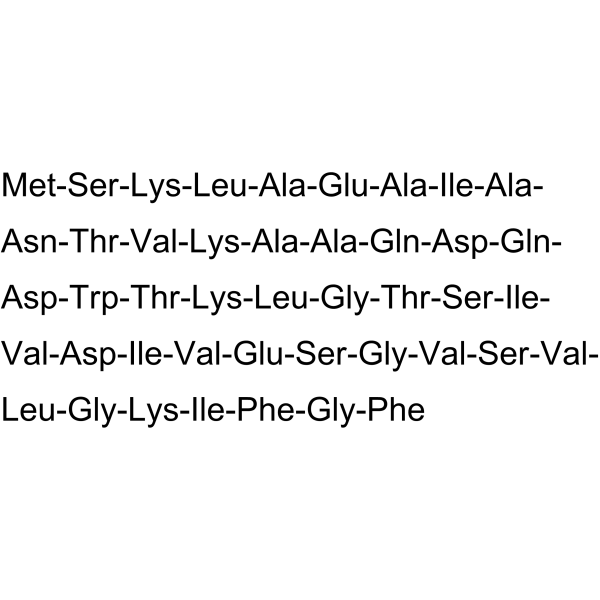
    PSM-β is a active peptide , which can be isolated from Staphylococcus epidermidis. PSM-β is an analog of staphylococcal toxins, as well as a termed phenol-soluble modulin. PSM-β has bacteriostatic and poorly hemolytic properties .
    PSM-β
  • HY-W014665

    Phthaloyl glycine

    Bacterial Fungal Infection
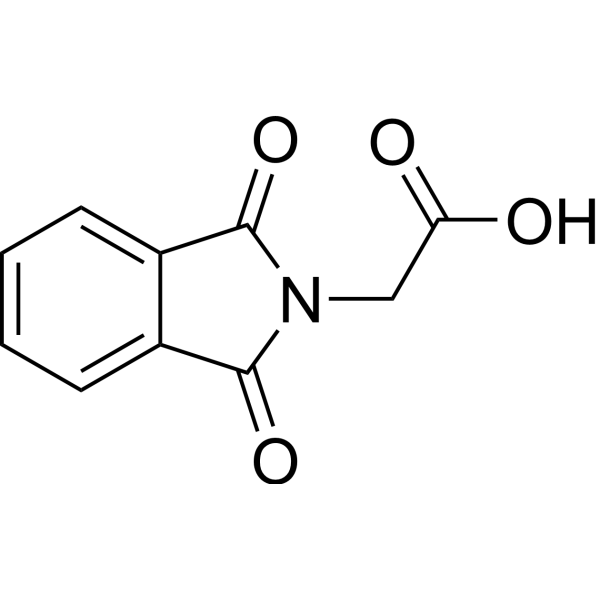
    N-Phthaloylglycine (Phthaloyl glycine) is a Type II fragmentary hapten (FX-type) with antimicrobial activity. N-Phthaloylglycine acts against Candida albicans, Escherichia coli, and Staphylococcus epidermidis. N-Phthaloylglycine can be used for the research of fungal and bacterial infection .
    N-Phthaloylglycine
  • HY-N6931

    Bacterial Infection
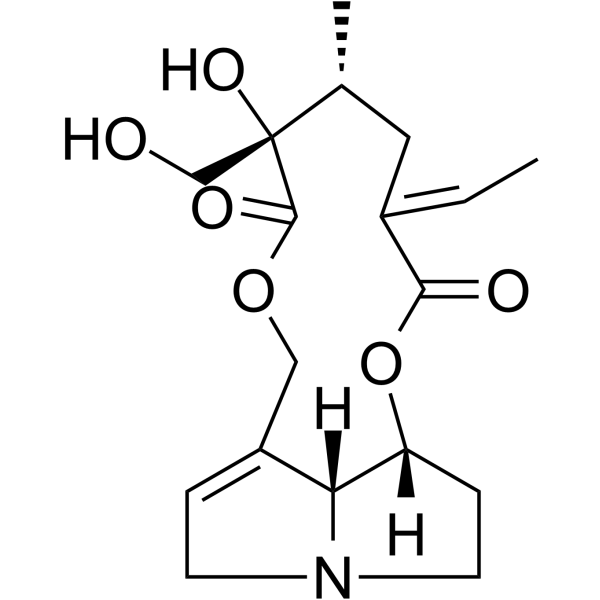
    Usaramine is a pyrrolizidine alkaloid that can be isolated from seeds of Crolatalaria pallida. Usaramine selective Usaramine demonstrates antibiofilm activity against Staphylococcus epidermidis. Usaramine can be used for the research of bacterial infections .
    Usaramine
  • HY-121544A

    Penicillin-binding protein (PBP) Bacterial Antibiotic Histamine Receptor Infection
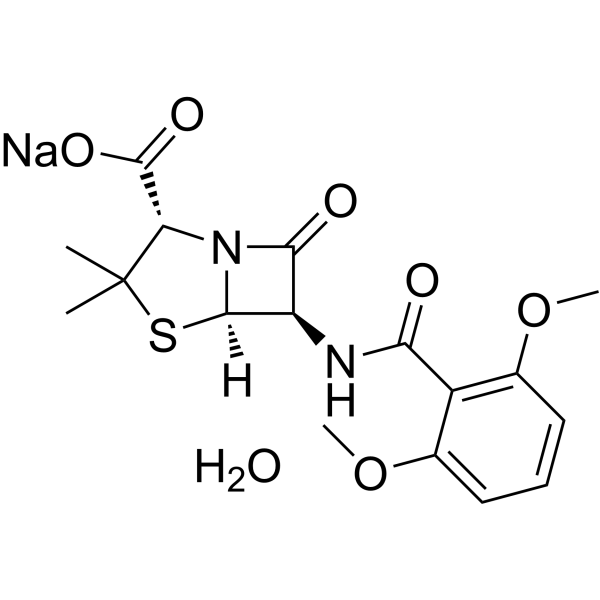
    Methicillin sodium hydrate is a narrow-spectrum β-lactam antibiotic, acts by inhibiting penicillin-binding proteins (PBPs). Methicillin sodium hydrate is active against Staphylococcus aureus and Staphylococcus epidermidis that are resistant to other penicillins. Methicillin sodium hydrate can be used for the research of skin infections, osteomyelitis, and endocarditis .
    Methicillin sodium hydrate
  • HY-W104752

    Bacterial Fungal Infection Neurological Disease Metabolic Disease Inflammation/Immunology Cancer
    5-(Pyridin-4-yl)-1,3,4-oxadiazole-2-thiol (Compound 3n) is an antimicrobial and antioxidant agent, that inhibits Escherichia coli and Staphylococcus epidermidis, with MIC of 8 and 4 μg/mL. 5-(Pyridin-4-yl)-1,3,4-oxadiazole-2-thiol exhibits antioxidant activity with IC50 of 17.47 μM using DPPH free radical-scavenging method .
    5-(Pyridin-4-yl)-1,3,4-oxadiazole-2-thiol
  • HY-19428A

    RBx-7644

    Antibiotic Bacterial Infection Cardiovascular Disease
    Ranbezolid (RBx7644 free base) is an orally active, oxazolidinone antibiotic against Gram-positive and Gram-negative anaerobes including Staphylococcus aureus, Staphylococcus epidermidis and Bacteroides fragilis. Ranbezolid can inhibit the 50s ribosomal subunit with an IC50 of 17 μM for bacterial ribosomes. Ranbezolid interferes cell wall and lipid synthesis. Ranbezolid can rapidly kill bacteria, significantly reduce bacterial load, and has better cardiovascular safety. Ranbezolid can be used for the study of antibiotics for anaerobic bacteria .
    Ranbezolid hydrochloride
  • HY-19428

    RBx7644 free base

    Antibiotic Bacterial Infection Cardiovascular Disease
    Ranbezolid (RBx7644 free base) is an orally active, oxazolidinone antibiotic against Gram-positive and Gram-negative anaerobes including Staphylococcus aureus, Staphylococcus epidermidis and Bacteroides fragilis. Ranbezolid can inhibit the 50s ribosomal subunit with an IC50 of 17 μM for bacterial ribosomes. Ranbezolid interferes cell wall and lipid synthesis. Ranbezolid can rapidly kill bacteria, significantly reduce bacterial load, and has better cardiovascular safety. Ranbezolid can be used for the study of antibiotics for anaerobic bacteria .
    Ranbezolid
  • HY-W145053

    Sodium chloro(4-methylbenzenesulfonyl)azanide hydrate

    Factor Xa Bacterial Infection
    ChloraMine-T hydrate (Sodium chloro(4-methylbenzenesulfonyl)azanide (hydrate)) is a common reagent in various synthetic processes. It has been used as a reagent in aminohydroxylation and allylic amination reactions, a nitrogen source in aziridination reactions of alkenes and alkenes, and deprotection of sulfur groups in sulfur-containing compounds. It has been used as a reagent in the synthesis of factor Xa inhibitors. ChloraMine-T hydrate (Sodium chloro(4-methylbenzenesulfonyl)azanide (hydrate)) (0.2% w/v) is also an antimicrobial agent that kills Staphylococcus epidermidis, Staphylococcus aureus, Enterococcus faecalis, Escherichia coli, Proteus mirabilis, and Enterococcus cloacae.
    ChloraMine-T hydrate
  • HY-P2897A

    Lactate Dehydrogenase Metabolic Disease
    D-Lactic Dehydrogenase, Staphylococcus epidermidis (EC 1.1.1.28) catalyzes the conversion of D-lactate into D-pyruvate while reducing NAD + to NADH and H +.
    D-Lactic Dehydrogenase, Staphylococcus epidermidis
  • HY-162261

    Bacterial Infection
    Antibacterial agent 186 (compound 25) is a potent antibacterial agent. Antibacterial agent 186 shows antibiofilm-forming properties against clinical Staphylococcus epidermidis strains and demonstrates the capacity to eliminate existing biofilm layers. Antibacterial agent 186 has the potential for the research of multidrug-resistant Staphylococcus epidermidis .
    Antibacterial agent 186
  • HY-W399439

    Antibiotic Bacterial Infection
    Aurantiogliocladin is a weak antibiotic which was active against Staphylococcus epidermidis but not S. aureus. Aurantiogliocladin could inhibit biofilm formation .
    Aurantiogliocladin
  • HY-163630

    Bacterial Infection
    Antibacterial agent 217 (Compound 24) is a non-cytotoxic, non-hemolytic, moderately active antibacterial agent that inhibits the growth of Staphylococcus aureus strains with a minimum inhibitory concentration (MIC) of 32 μg/mL. Antibacterial agent 217 also moderately inhibits the growth of Staphylococcus epidermidis .
    Antibacterial agent 217
  • HY-131130A

    Bacterial Drug Isomer Infection
    Neomycin C hexaacetate is an impurity of Neomycin (HY-150520) and a stereoisomer of Neomycin B (HY-17624). Neomycin C hexaacetate exerts in vitro antimicrobial activity against Staphylococcus epidermidis and Staphylococcus aureus. Neomycin C hexaacetate can be used for the research of bacterial infection .
    Neomycin C hexaacetate
  • HY-N6931R

    Reference Standards Bacterial Infection
    Usaramine (Standard) is the analytical standard of Usaramine. This product is intended for research and analytical applications. Usaramine is a pyrrolizidine alkaloid isolated from seeds of Crolatalaria pallida. Usaramine demonstrates a highlighted antibiofilm activity against Staphylococcus epidermidis by reducing more than 50% of biofilm formation without killing the bacteria .
    Usaramine (Standard)
  • HY-P5323

    Bacterial Others
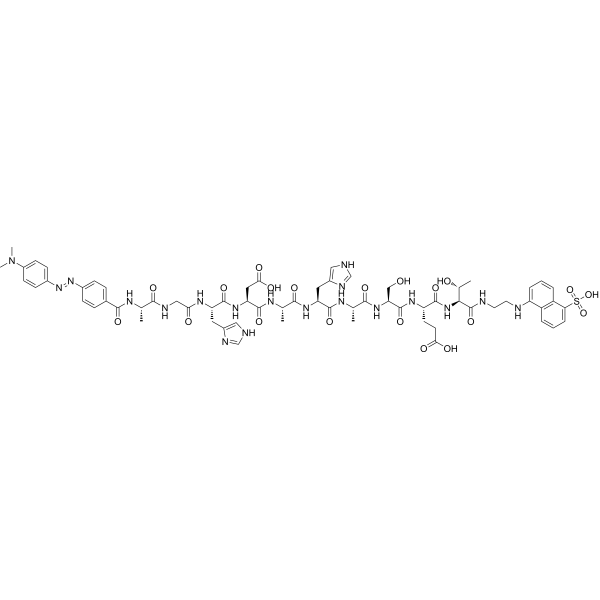
    Dabcyl-AGHDAHASET-Edans is a biological active peptide. (This is a type I signal peptidase (SPase1) substrate peptide labeled with EDANS/ DABCYL FRET pair, and contains a crucial cleavage site derived from the C-terminal region of the Staphylococcus epidermidis pre-SceD protein. Abs/Em = 340/490 nm.)
    Dabcyl-AGHDAHASET-Edans
  • HY-N12617

    Bacterial Apoptosis Infection Cancer
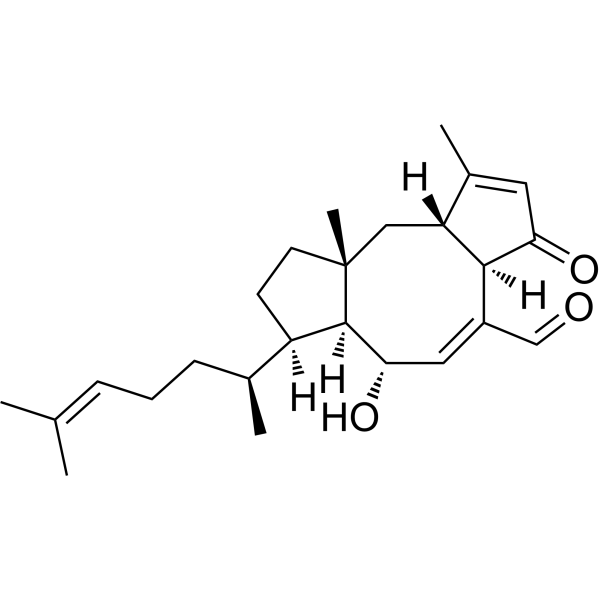
    Bipolaricin R (Compound 6) is a compound that can be isolated from Bipolaris maydis. Bipolaricin R exhibits noticeable antimicrobial ability against Bacillus cereus, Staphylococcus aureus, and Staphylococcus epidermidis. Bipolaricin R has excellent antiproliferation and apoptosis induction effects against A549 cell line .
    Bipolaricin R
  • HY-121544AR

    Penicillin-binding protein (PBP) Reference Standards Bacterial Antibiotic Histamine Receptor Infection
    Methicillin (sodium hydrate) (Standard) is the analytical standard of Methicillin (sodium hydrate). This product is intended for research and analytical applications. Methicillin sodium hydrate is a narrow-spectrum β-lactam antibiotic, acts by inhibiting penicillin-binding proteins (PBPs). Methicillin sodium hydrate is active against Staphylococcus aureus and Staphylococcus epidermidis that are resistant to other penicillins. Methicillin sodium hydrate can be used for the research of skin infections, osteomyelitis, and endocarditis .
    Methicillin sodium hydrate (Standard)
  • HY-18719ER

    Cytochrome P450 Reference Standards Estrogen Receptor/ERR Drug Metabolite Parasite Cancer
    Methicillin (sodium hydrate) (Standard) is the analytical standard of Methicillin (sodium hydrate). This product is intended for research and analytical applications. Methicillin sodium hydrate is a narrow-spectrum β-lactam antibiotic, acts by inhibiting penicillin-binding proteins (PBPs). Methicillin sodium hydrate is active against Staphylococcus aureus and Staphylococcus epidermidis that are resistant to other penicillins. Methicillin sodium hydrate can be used for the research of skin infections, osteomyelitis, and endocarditis .
    Endoxifen (Standard)
  • HY-173192

    Bacterial Infection
    Antibacterial agent 272 (Compound Z22) is a potential antimicrobial agent targeting DNA and the DNA-topoisomerase II (DNA-Topo II) complex, exhibiting MIC values of 1 μg/mL against Staphylococcus aureus 25923 and 29213, 2 μg/mL against Staphylococcus epidermidis 12228, 2-4 μg/mL against Enterococcus faecalis, and 4 μg/mL against Pseudomonas aeruginosa 9027 and 27853, demonstrating potent antibacterial activity. This compound functions by intercalating with DNA base pairs to disrupt normal bacterial DNA function, making it suitable for research on bacterial infectious diseases .
    Antibacterial agent 272
  • HY-112027

    Ciprofloxacin impurity E

    Bacterial Infection
    Decarboxy ciprofloxacin (Decarboxylated ciprofloxacin) is an antibacterial agent. Decarboxy ciprofloxacin displays antibacterial activities against Staphylococcus aureus, Staphylococcus epidermidis, Enterococcus faecalis, Bacillus subtilis, Enterobacter cloacae, Serratia marcescens and especially potent activity against Escherichia coli .
    Decarboxy ciprofloxacin
  • HY-105560

    Bacterial Beta-lactamase Infection
    Cefcanel is an orally active cephalosporin and antibacterial agent. Cefcanel inhibits growth of methicillin-susceptible Staphylococcus aureus, methicillin-susceptible Staphylococcus epidermidis, Haemophilus influenzae, Moraxella catarrhalis. Cefcanel acts as a substrate hydrolyzed by TEM-1, TEM-3, and Moraxella Bro-1 beta-lactamases .
    Cefcanel
  • HY-178722

    Fungal Bacterial Infection
    Deferasirox methyl ester (compound 6a), a derivative of Deferasirox (HY-17359), is an antimicrobial agent. Deferasirox methyl ester exhibits activities against Staphylococcus aureus, Staphylococcus epidermidis, Escherichia coli, Candida albicans and Aspergillus niger with MICs of 0.5, 4.0, 1.0, 4.0, and 2.0 μg/mL, respectively. Deferasirox methyl ester can be used for antimicrobial research .
    Deferasirox methyl ester
  • HY-W052289R

    Endogenous Metabolite Reference Standards Cancer
    Methyl 6-bromo-1H-indole-3-carboxylate (Standard) is the analytical standard of Methyl 6-bromo-1H-indole-3-carboxylate (HY-W052289). This product is intended for research and analytical applications. Methyl 6-bromo-1H-indole-3-carboxylate is a marine-derived natural product with antitumor activity. Methyl 6-bromo-1H-indole-3-carboxylate showed growth inhibition against Staphylococcus epidermidis, exhibiting weak or moderate minimum inhibitory concentrations (MICs) .
    Methyl 6-bromo-1H-indole-3-carboxylate (Standard)

Inquiry Online

Your information is safe with us. * Required Fields.

Salutation


Country or Region *

Applicant Name *


Organization Name *

Department *


Email Address *


Product Name *

Cat. No.


Requested quantity *

Phone Number *


Remarks

Inquiry Online

Inquiry Information

Product Name:
Cat. No.:
Quantity:
MCE Japan Authorized Agent: