Search Result
Results for "
bidentate
" in MedChemExpress (MCE) Product Catalog:
2
Biochemical Assay Reagents
1
Isotope-Labeled Compounds
| Cat. No. |
Product Name |
Target |
Research Areas |
Chemical Structure |
-
- HY-W017289
-
|
|
Drug Intermediate
|
Others
|
|
4,4′-Dipyridyl is a heterocyclic compound. 4,4′-Dipyridyl is utilized as an electronic and photosensitive building block and bidentate ligand in supramolecular chemistry. 4,4′-Dipyridyl can also be used as a drug intermediate in the synthesis of paraquat, a widely used herbicide .
|
-

-
- HY-W012161
-
|
L-Alanyl-L-phenylalanine; H-Ala-Phe-OH
|
Endogenous Metabolite
Drug Intermediate
|
Others
|
|
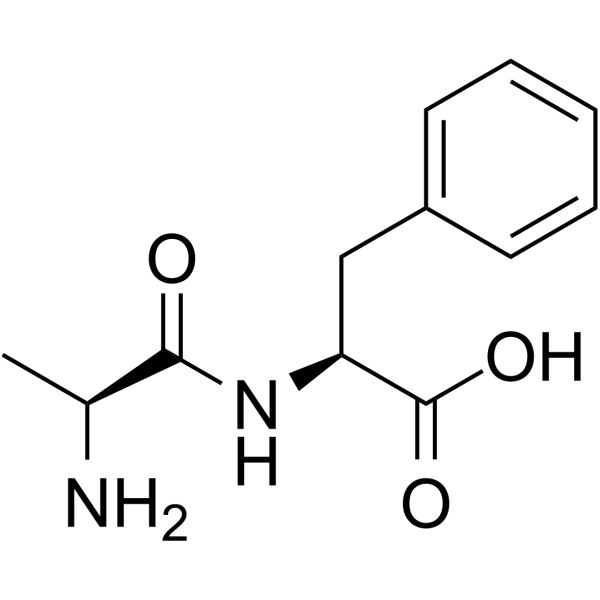
Alanylphenylalanine (L-Alanyl-L-phenylalanine) is a dipeptide. Alanylphenylalanine forms a mononuclear Au (III) complex through bidentate coordination via its carboxyl oxygen atom and deprotonated amide nitrogen atom .
|
-
-
- HY-W096079
-
|
|
ADC Linker
|
Cancer
|
|
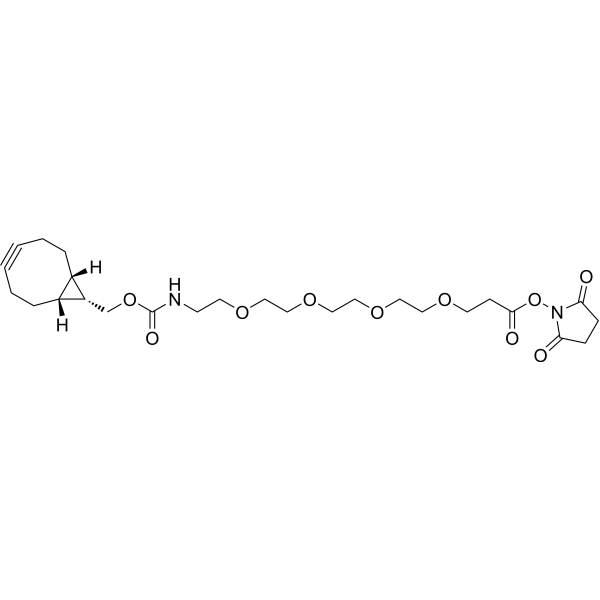
BCN-endo-PEG4-NHS is an ADC Linker containing 4 PEG units. BCN-endo-PEG4-NHS contains the lyophilic bidentate macrocyclic ligand endo-BCN, which allows for further synthesis of macrocyclic complexes. In click chemistry, endo-BCN can react with molecules containing azide groups to form stable triazoles in the absence of catalysts.
|
-
-
- HY-156311
-
|
|
ADC Linker
|
Cancer
|
|
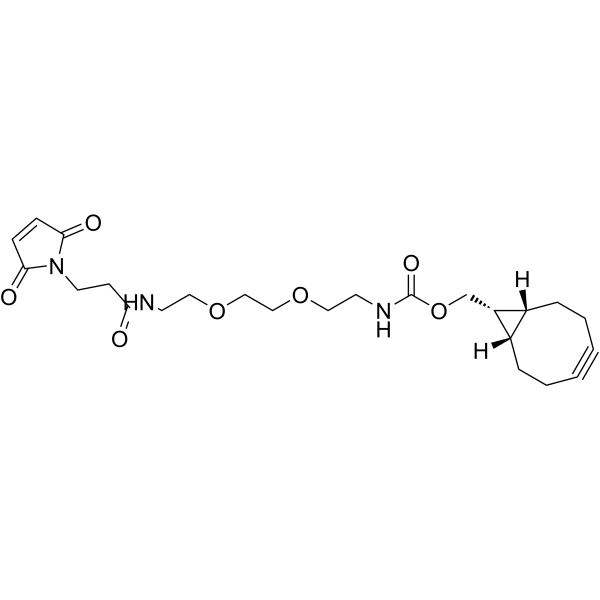
BCN-endo-PEG2-maleimide is an ADC Linker containing 4 PEG units. BCN-endo-PEG2-maleimide contains the lyophilic bidentate macrocyclic ligand endo-BCN, which can further synthesize macrocyclic complexes. In click chemistry, endo-BCN can react with molecules containing azide groups to form stable triazoles in the absence of catalysts. Its maleimide group (-Maleimide) degrades in aqueous media and has been used in drug delivery studies.
|
-
-
- HY-134734
-
|
|
ADC Linker
|
Cancer
|
|
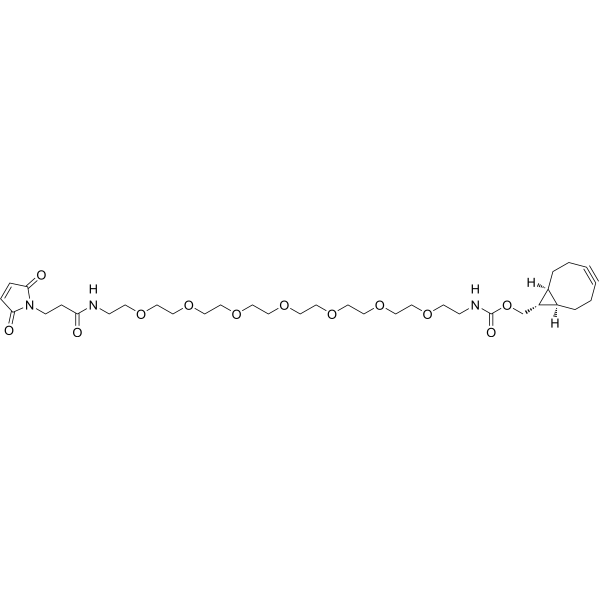
BCN-exo-PEG7-maleimide is an ADC Linker containing 7 PEG units. BCN-exo-PEG7-maleimide contains the lyophilic bidentate macrocyclic ligand BCN, which allows for further synthesis of macrocyclic complexes. In click chemistry, BCN reacts with molecules containing azide groups to form stable triazoles in the absence of catalysts. Its maleimide group (-Maleimide) degrades in aqueous media and has been used in drug delivery studies.
|
-
-
- HY-149618
-
|
|
Fluorescent Dye
|
Others
|
|
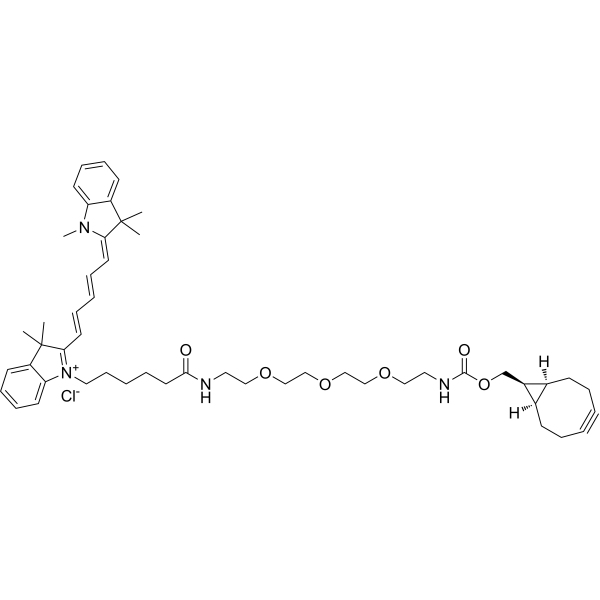
Cy5-PEG3-endo-BCN is a derivative of the Cyanine 5 (Cy5) (HY-D0821) dye bearing 3 PEG units. Cy5-PEG3-endo-BCN contains the lyophilic bidentate macrocyclic ligand endo-BCN, which allows for further synthesis of macrocyclic complexes. In click chemistry, endo-BCN forms stable triazoles with azide-containing molecules under catalyst-free conditions .
|
-
-
- HY-W007648
-
|
β-Alanine methyl ester hydrochloride
|
Drug Intermediate
Biochemical Assay Reagents
|
Others
|
|
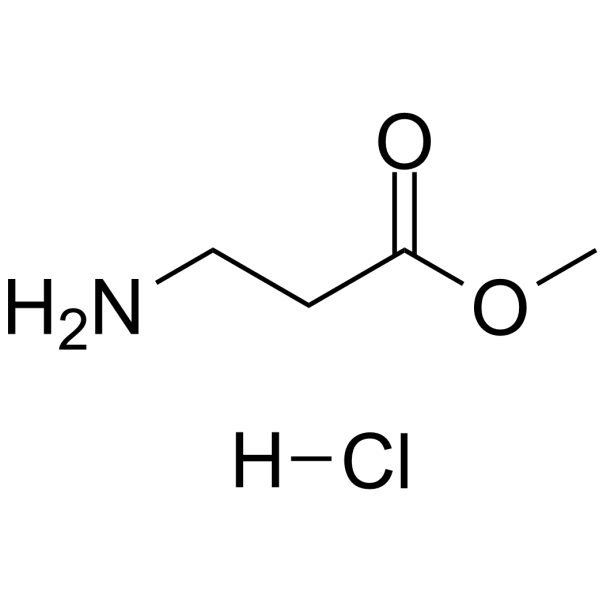
Methyl 3-aminopropanoate (β-Alanine methyl ester) hydrochloride is a compound prepared by esterification of Β-Alanine (I). Methyl 3-aminopropanoate hydrochloride can be used in the synthesis of bidentate pyridine-acid ligand. Methyl 3-aminopropionate hydrochloride can be used for proteomics research .
|
-
-
- HY-W054259
-
|
N,N'-Difurfuryloxamide; N1,N2-Bis(furan-2-ylmethyl)oxalamide
|
Biochemical Assay Reagents
|
Others
|
|
BFMO (N,N'-Difurfuryloxamide) is an oxamide derivative and a bidentate ligand. BFMO exhibits plant growth regulatory activity and root growth inhibitory activity. BFMO can promote the copper-catalyzed N-arylation reaction between aniline compounds and cyclic secondary amines, realizing the coupling of (hetero) aryl bromides with (hetero) aryl amines and cyclic secondary amines .
|
-

-
- HY-156305
-
|
|
Fluorescent Dye
|
Others
|
|
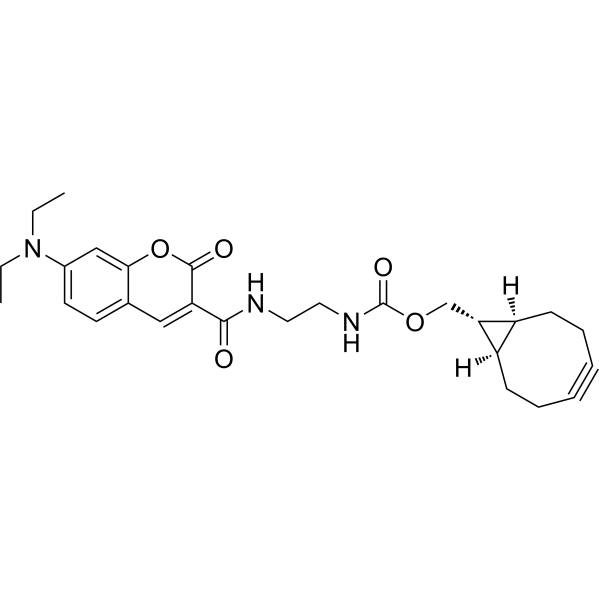
Coumarin-C2-exoBCN is a dye derivative of Coumarin (HY-N0709). Coumarin-C2-exoBCN contains the lyophilic bidentate macrocyclic ligand exo-BCN, which can further synthesize macrocyclic complexes. In click chemistry, exo-BCN can react with molecules containing azide groups to generate stable triazoles under catalyst-free conditions.
|
-
-
- HY-156322
-
|
|
ADC Linker
|
Cancer
|
|
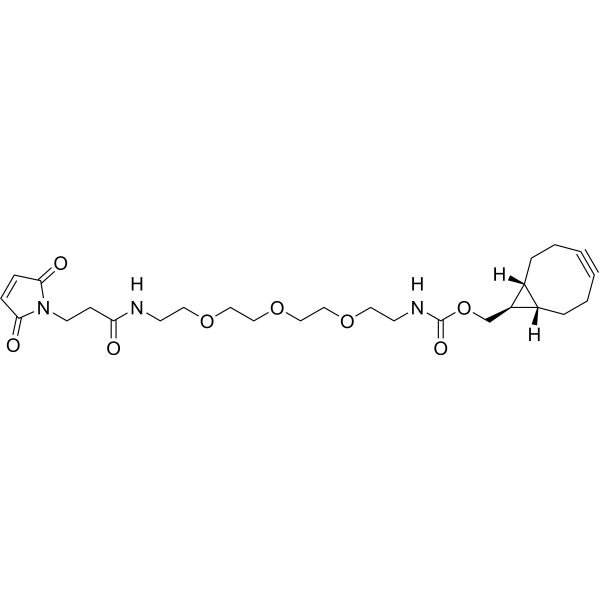
BCN-exo-PEG3-maleimide is an ADC Linker containing 3 PEG units. BCN-exo-PEG3-maleimide contains the lyophilic bidentate macrocyclic ligand BCN, which enables the further synthesis of macrocyclic complexes. In click chemistry, BCN reacts with molecules containing azide groups to form stable triazoles in the absence of catalysts. Its maleimide group (-Maleimide) degrades in aqueous media and has been used in drug delivery studies.
|
-
-
- HY-155327B
-
|
|
Fluorescent Dye
|
Others
|
|
Cy3-PEG2-endo-BCN bromide is the bromide salt form of Cy3-PEG2-endo-BCN (HY-155327). Cy3-PEG2-endo-BCN bromide is a dye derivative of Cyanine 3 (Cy3) (HY-D0822) containing 2 PEG units. Cy3-PEG2-endo-BCN bromide contains the lyophilic bidentate macrocyclic ligand endo-BCN, which can further synthesize macrocyclic complexes. In click chemistry, endo-BCN can react with molecules containing azide groups to form stable triazoles in the absence of catalysts .
|
-

-
- HY-W012037
-
|
8-Quinolinol hemisulfate
|
Environmental Pollutants
Antibiotic
Bacterial
|
Infection
|
|
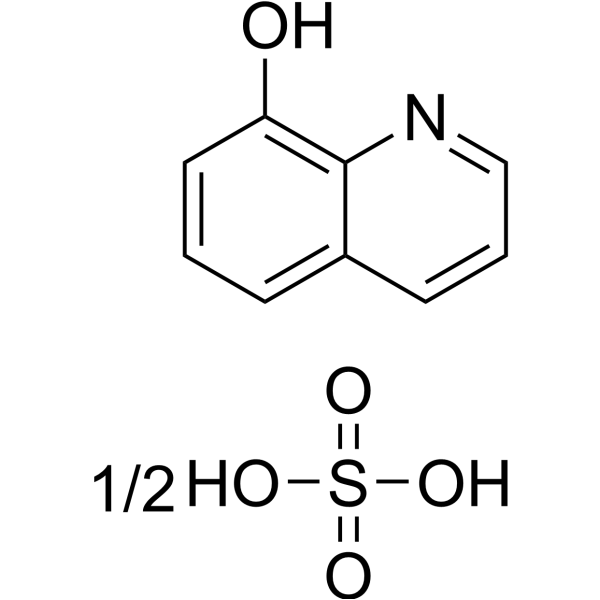
8-Hydroxyquinoline hemisulfate (8-Quinolinol hemisulfate) is a monoprotic bidentate chelating agent, exhibits antiseptic, disinfectant, and pesticide properties, functioning as a transcription inhibitor.
|
-
-
- HY-156320
-
|
|
ADC Linker
|
Cancer
|
|
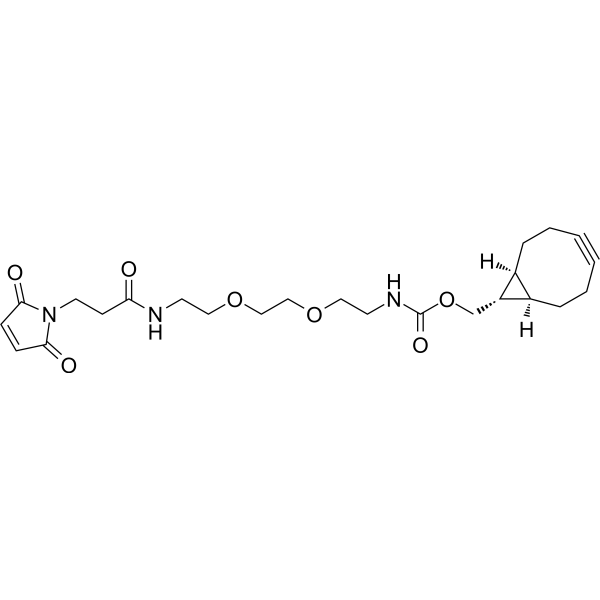
BCN-exo-PEG2-maleimide is an ADC Linker containing 2 PEG units. BCN-exo-PEG2-maleimide contains the lyophilic bidentate macrocyclic ligand BCN, which allows for further synthesis of macrocyclic complexes. In click chemistry, BCN reacts with molecules containing azide groups to form stable triazoles in the absence of catalysts. Its maleimide group (-Maleimide) degrades in aqueous media and has been used in drug delivery studies.
|
-
-
- HY-W012037R
-
|
8-Quinolinol hemisulfate (Standard)
|
Reference Standards
Bacterial
Antibiotic
|
Infection
|
|
8-Hydroxyquinoline (hemisulfate) (Standard) is the analytical standard of 8-Hydroxyquinoline (hemisulfate). This product is intended for research and analytical applications. 8-Hydroxyquinoline hemisulfate (8-Quinolinol hemisulfate) is a monoprotic bidentate chelating agent, exhibits antiseptic, disinfectant, and pesticide properties, functioning as a transcription inhibitor.
|
-

-
- HY-W025838
-
|
|
Drug Intermediate
|
Others
|
|
4,5-Dimethylbenzene-1,2-diamine is a substitute for aromatic diamine compound. 4,5-Dimethylbenzene-1,2-diamine act as a bidentate nucleophilic reagent and participates in the palladium (II)-mediated isocyanate addition reaction to construct a diaminocarbene palladium complex with potential catalytic activity .
|
-

-
- HY-156317
-
|
|
ADC Linker
|
Cancer
|
|
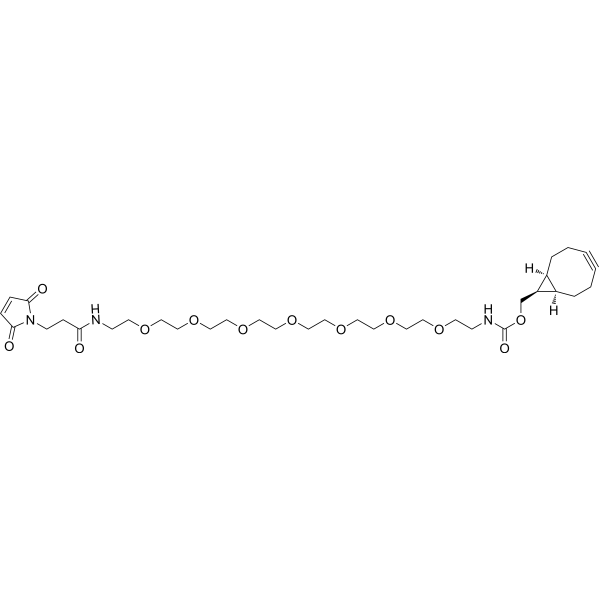
BCN-endo-PEG7-maleimide is an ADC Linker containing 7 PEG units. BCN-endo-PEG7-maleimide contains the lyophilic bidentate macrocyclic ligand endo-BCN, which can further synthesize macrocyclic complexes. In click chemistry, endo-BCN can react with molecules containing azide groups to form stable triazoles in the absence of catalysts.
|
-
-
- HY-156323
-
|
|
ADC Linker
|
Cancer
|
|
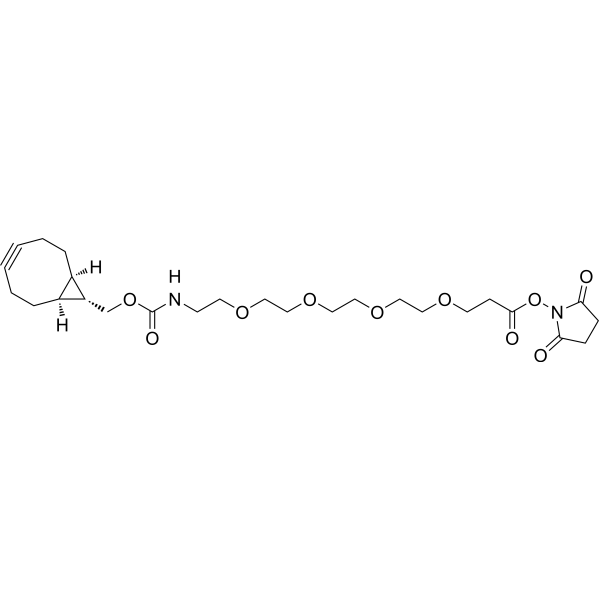
BCN-exo-PEG4-NHS is an ADC Linker containing 4 PEG units. BCN-exo-PEG4-NHS contains the lyophilic bidentate macrocyclic ligand BCN, which allows for further synthesis of macrocyclic complexes. In click chemistry, BCN reacts with molecules containing azide groups to form stable triazoles in the absence of catalysts.
|
-
-
- HY-156324
-
|
|
ADC Linker
|
Cancer
|
|
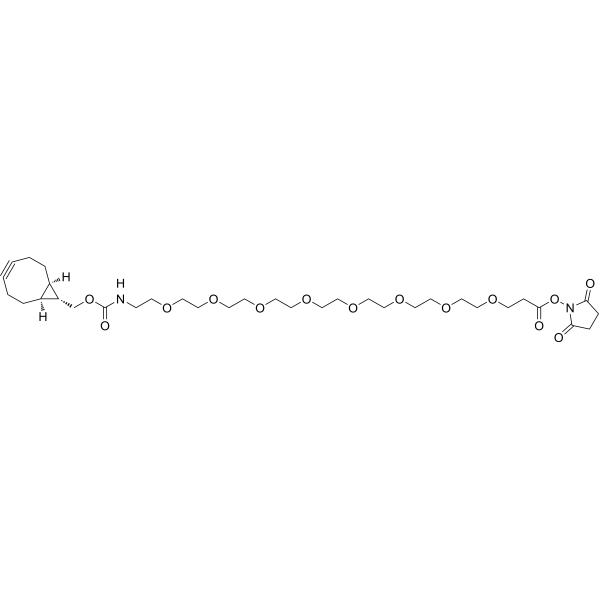
BCN-exo-PEG8-NHS is an ADC Linker containing 8 PEG units. BCN-exo-PEG8-NHS contains the lyophilic bidentate macrocyclic ligand BCN, which allows for further synthesis of macrocyclic complexes. In click chemistry, BCN reacts with molecules containing azide groups to form stable triazoles in the absence of catalysts.
|
-
-
- HY-W017289S
-
|
|
Isotope-Labeled Compounds
Drug Intermediate
|
Others
|
|
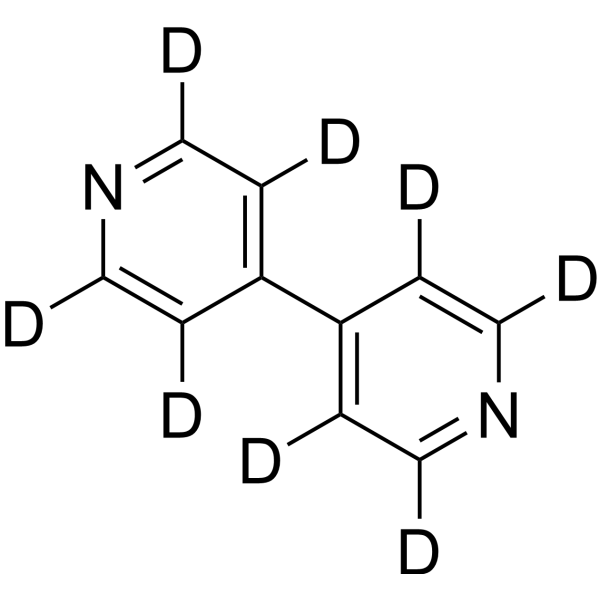
4,4′-Dipyridyl-d8 is the deuterium labeled 4,4'-Dipyridyl (HY-017289). 4,4′-Dipyridyl is a heterocyclic compound. 4,4′-Dipyridyl is utilized as an electronic and photosensitive building block and bidentate ligand in supramolecular chemistry. 4,4′-Dipyridyl can also be used as a drug intermediate in the synthesis of paraquat, a widely used herbicide.
|
-
-
- HY-156319
-
|
|
ADC Linker
|
Cancer
|
|
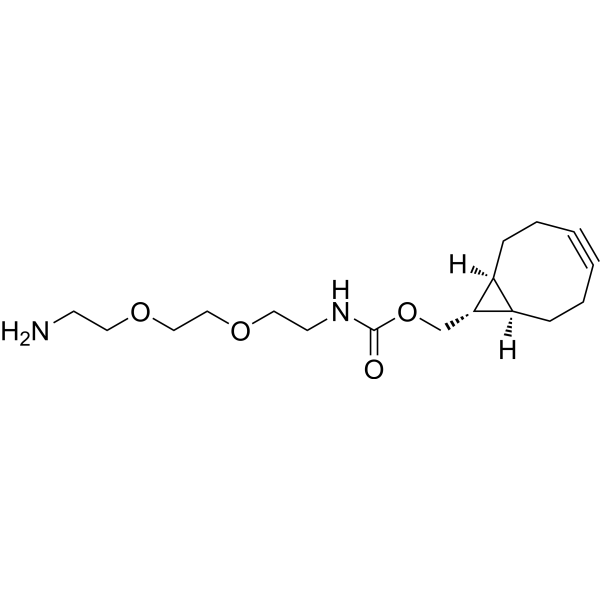
BCN-exo-PEG2-NH2 is an ADC Linker containing 2 PEG units. BCN-exo-PEG2-NH2 contains the lyophilic bidentate macrocyclic ligand BCN, which can further synthesize macrocyclic complexes. In click chemistry, BCN reacts with molecules containing azide groups to form stable triazoles in the absence of catalysts.
|
-
-
- HY-156310
-
|
|
ADC Linker
|
Cancer
|
|
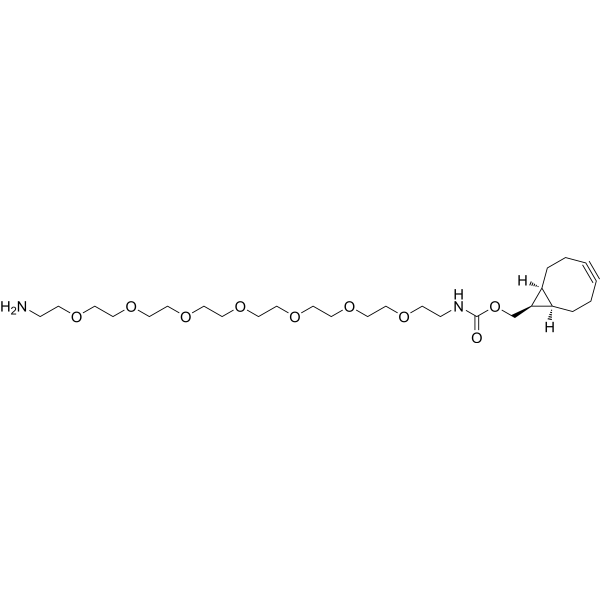
BCN-endo-PEG7-NH2 is an ADC Linker containing 7 PEG units. BCN-endo-PEG7-NH2 contains the lyophilic bidentate macrocyclic ligand endo-BCN, which can further synthesize macrocyclic complexes. In click chemistry, endo-BCN can react with molecules containing azide groups to form stable triazoles in the absence of catalysts.
|
-
-
- HY-149620
-
|
|
Fluorescent Dye
|
Others
|
|
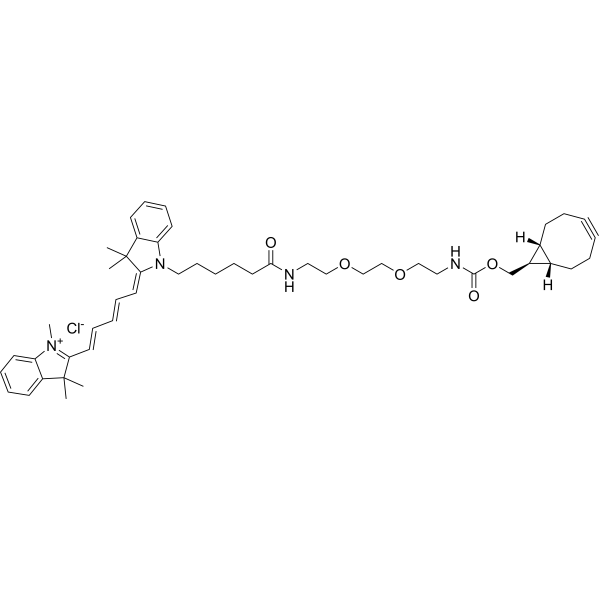
Cy5-PEG2-exo-BCN is a dye derivative of Cyanine 5 (Cy5) (HY-D0821) containing 2 PEG units. Cy5-PEG2-exo-BCN contains the lyophilic bidentate macrocyclic ligand BCN, which can further synthesize macrocyclic complexes. In click chemistry, BCN reacts with molecules containing azide groups to form stable triazoles in the absence of catalysts.
|
-
-
- HY-155327
-
|
|
Fluorescent Dye
|
Others
|
|
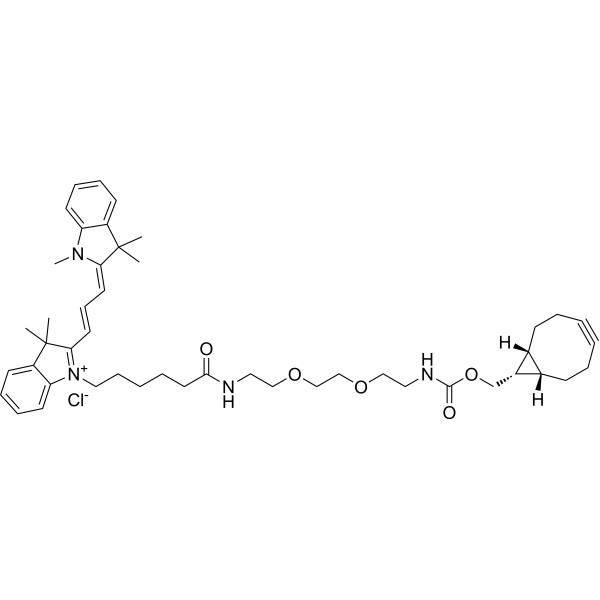
Cy3-PEG2-endo-BCN is a dye derivative of Cyanine 3 (Cy3) (HY-D0822) containing 2 PEG units. Cy3-PEG2-endo-BCN contains the lyophilic bidentate macrocyclic ligand endo-BCN, which can further synthesize macrocyclic complexes. In click chemistry, endo-BCN can react with molecules containing azide groups to form stable triazoles in the absence of catalysts.
|
-
-
- HY-116918
-
|
N-Acetyldiphenylamine
|
Drug Intermediate
|
Others
|
|
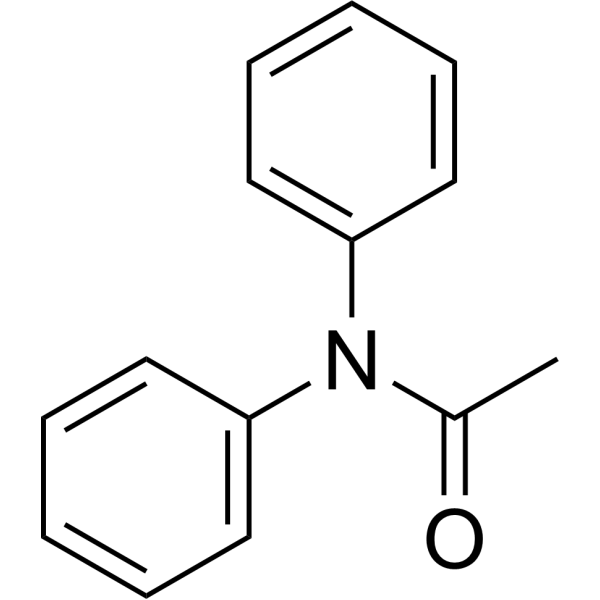
N,N-Diphenylacetamide (N-Acetyldiphenylamine) has N,N-disubstituted amide group and can be used as a mono- as well as a bidentate ligand generating four-membered chelate rings .
|
-
-
- HY-W540023
-
|
|
ADC Linker
|
Cancer
|
|
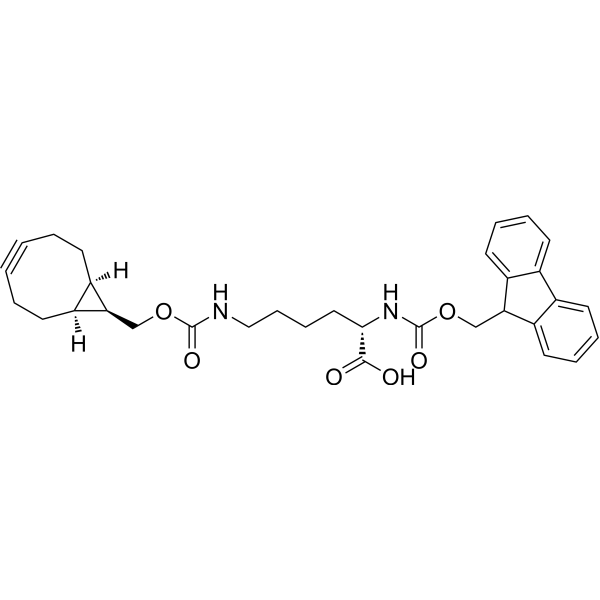
Endo-BCN-Fmoc-L-Lysine is a linker containing the lyophilic bidentate macrocyclic ligand endo-BCN, which can further synthesize macrocyclic complexes. In click chemistry, endo-BCN can react with molecules containing azide groups to form stable triazoles in the absence of catalysts.
|
-
-
- HY-W030105
-
|
|
Drug Intermediate
|
Others
|
|
2-Amino-2-thiazoline is a nitrogen-sulfur heterocyclic compound. 2-Amino-2-thiazoline acts as a bidentate ligand involved in the synthesis of nickel (II) complexes, thereby constructing metal complexes with potential DNA-binding capabilities .
|
-

-
- HY-145482R
-
|
|
Drug Metabolite
Reference Standards
|
Neurological Disease
|
|
8-Hydroxyquinoline (hemisulfate) (Standard) is the analytical standard of 8-Hydroxyquinoline (hemisulfate). This product is intended for research and analytical applications. 8-Hydroxyquinoline hemisulfate (8-Quinolinol hemisulfate) is a monoprotic bidentate chelating agent, exhibits antiseptic, disinfectant, and pesticide properties, functioning as a transcription inhibitor.
|
-

-
- HY-D2121
-
|
|
Fluorescent Dye
|
Others
|
|
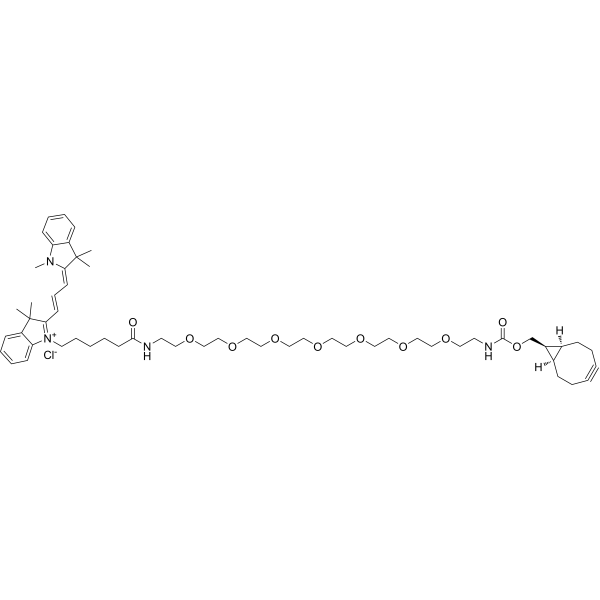
Cy3-PEG7-endo-BCN is a dye derivative of Cyanine 3 (Cy3) (HY-D0822) containing 7 PEG units. Cy3-PEG7-endo-BCN contains the lyophilic bidentate macrocyclic ligand BCN, which can further synthesize macrocyclic complexes. In click chemistry, endo-BCN can react with molecules containing azide groups to form stable triazoles in the absence of catalysts.
|
-
-
- HY-D2121A
-
|
|
Fluorescent Dye
|
Others
|
|
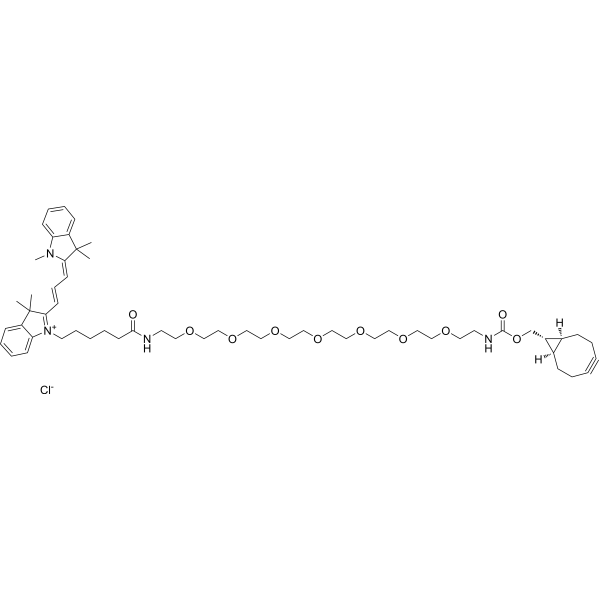
Cy3-PEG7-exo-BCN is a dye derivative of Cyanine 3 (Cy3) (HY-D0822) containing 7 PEG units. Cy3-PEG7-exo-BCN contains the lyophilic bidentate macrocyclic ligand BCN, which can further synthesize macrocyclic complexes. In click chemistry, exo-BCN can react with molecules containing azide groups to form stable triazoles in the absence of catalysts.
|
-
-
- HY-149619
-
|
|
Fluorescent Dye
|
Others
|
|
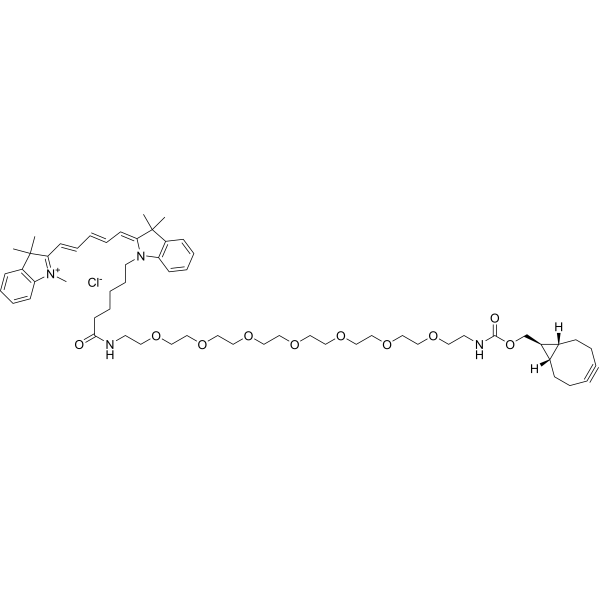
Cy5-PEG7-endo-BCN is a dye derivative of Cyanine 5 (Cy5) (HY-D0821) containing 7 PEG units. Cy5-PEG7-endo-BCN contains the lyophilic bidentate macrocyclic ligand endo-BCN, which can further synthesize macrocyclic complexes. In click chemistry, endo-BCN can react with molecules containing azide groups to form stable triazoles in the absence of catalysts.
|
-
-
- HY-155327A
-
|
|
Fluorescent Dye
|
Others
|
|
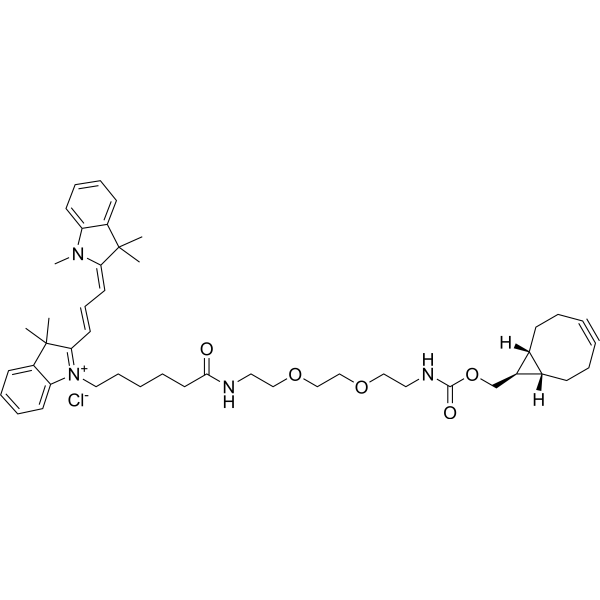
Cy3-PEG2-exo-BCN is a dye derivative of Cyanine 3 (Cy3) (HY-D0822) containing 2 PEG units. Cy3-PEG2-exo-BCN contains the lyophilic bidentate macrocyclic ligand BCN, which can further synthesize macrocyclic complexes. In click chemistry, exo-BCN can react with molecules containing azide groups to form stable triazoles in the absence of catalysts.
|
-
-
- HY-D2120A
-
|
|
Fluorescent Dye
|
Others
|
|
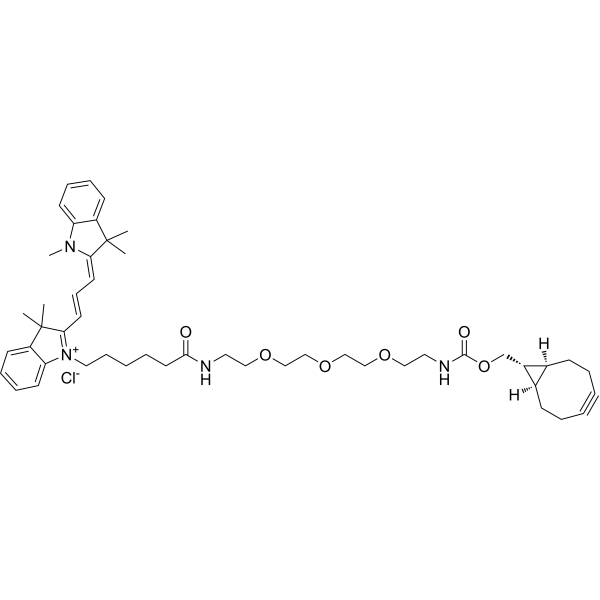
Cy3-PEG3-exo-BCN is a dye derivative of Cyanine 3 (Cy3) (HY-D0822) containing 3 PEG units. Cy3-PEG3-exo-BCN contains the lyophilic bidentate macrocyclic ligand BCN, which can further synthesize macrocyclic complexes. In click chemistry, exo-BCN can react with molecules containing azide groups to form stable triazoles in the absence of catalysts.
|
-
-
- HY-D2149
-
|
|
Fluorescent Dye
|
Others
|
|
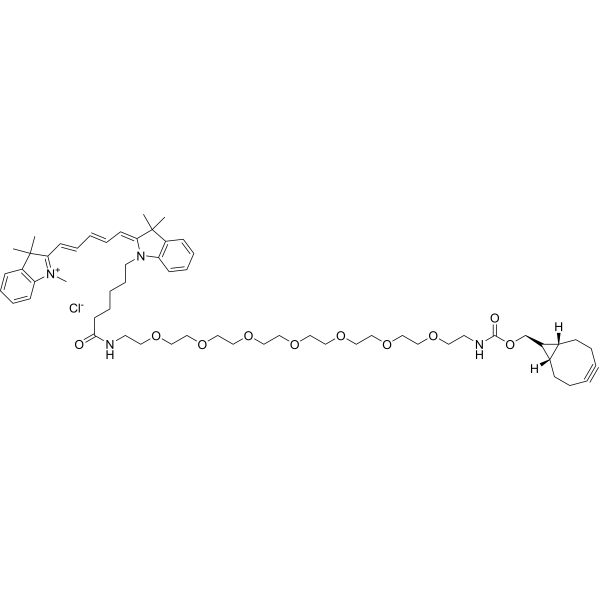
Cy5-PEG7-exo-BCN is a dye derivative of Cyanine 5 (Cy5) (HY-D0821) containing 7 PEG units. Cy5-PEG7-exo-BCN contains the lyophilic bidentate macrocyclic ligand BCN, which can further synthesize macrocyclic complexes. In click chemistry, exo-BCN can react with molecules containing azide groups to form stable triazoles in the absence of catalysts.
|
-
-
- HY-D2120
-
|
|
Fluorescent Dye
|
Others
|
|
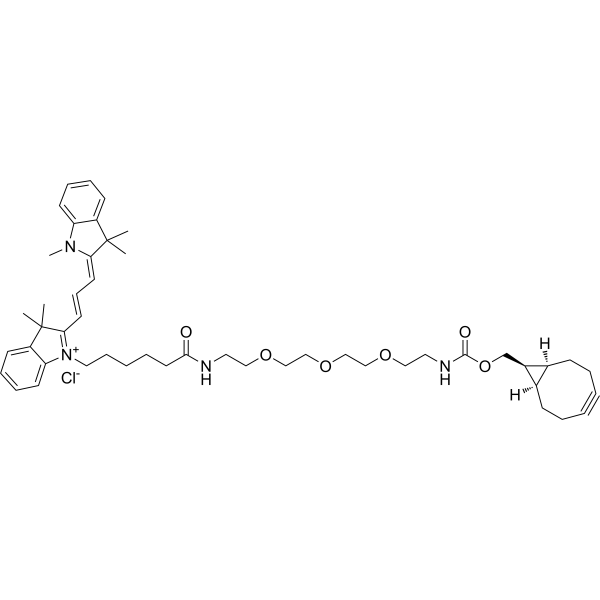
Cy3-PEG3-endo-BCN is a dye derivative of Cyanine 3 (Cy3) (HY-D0822) containing 3 PEG units. Cy3-PEG3-endo-BCN contains the lyophilic bidentate macrocyclic ligand BCN, which can further synthesize macrocyclic complexes. In click chemistry, endo-BCN can react with molecules containing azide groups to form stable triazoles in the absence of catalysts.
|
-
-
- HY-W012161R
-
|
L-Alanyl-L-phenylalanine (Standard); H-Ala-Phe-OH (Standard)
|
Endogenous Metabolite
Reference Standards
|
Others
|
|
Alanylphenylalanine (L-Alanyl-L-phenylalanine) Standard is the analytical standard of Alanylphenylalanine (HY-W012161). This product is intended for research and analytical applications. Alanylphenylalanine (L-Alanyl-L-phenylalanine) is a dipeptide. Alanylphenylalanine forms a mononuclear Au (III) complex through bidentate coordination via its carboxyl oxygen atom and deprotonated amide nitrogen atom .
|
-

| Cat. No. |
Product Name |
Type |
-
- HY-149618
-
|
|
Fluorescent Dye
|
|
Cy5-PEG3-endo-BCN is a derivative of the Cyanine 5 (Cy5) (HY-D0821) dye bearing 3 PEG units. Cy5-PEG3-endo-BCN contains the lyophilic bidentate macrocyclic ligand endo-BCN, which allows for further synthesis of macrocyclic complexes. In click chemistry, endo-BCN forms stable triazoles with azide-containing molecules under catalyst-free conditions .
|
-
- HY-156305
-
|
|
Fluorescent Dye
|
|
Coumarin-C2-exoBCN is a dye derivative of Coumarin (HY-N0709). Coumarin-C2-exoBCN contains the lyophilic bidentate macrocyclic ligand exo-BCN, which can further synthesize macrocyclic complexes. In click chemistry, exo-BCN can react with molecules containing azide groups to generate stable triazoles under catalyst-free conditions.
|
-
- HY-149620
-
|
|
Fluorescent Dye
|
|
Cy5-PEG2-exo-BCN is a dye derivative of Cyanine 5 (Cy5) (HY-D0821) containing 2 PEG units. Cy5-PEG2-exo-BCN contains the lyophilic bidentate macrocyclic ligand BCN, which can further synthesize macrocyclic complexes. In click chemistry, BCN reacts with molecules containing azide groups to form stable triazoles in the absence of catalysts.
|
-
- HY-155327
-
|
|
Fluorescent Dye
|
|
Cy3-PEG2-endo-BCN is a dye derivative of Cyanine 3 (Cy3) (HY-D0822) containing 2 PEG units. Cy3-PEG2-endo-BCN contains the lyophilic bidentate macrocyclic ligand endo-BCN, which can further synthesize macrocyclic complexes. In click chemistry, endo-BCN can react with molecules containing azide groups to form stable triazoles in the absence of catalysts.
|
-
- HY-D2121
-
|
|
Fluorescent Dye
|
|
Cy3-PEG7-endo-BCN is a dye derivative of Cyanine 3 (Cy3) (HY-D0822) containing 7 PEG units. Cy3-PEG7-endo-BCN contains the lyophilic bidentate macrocyclic ligand BCN, which can further synthesize macrocyclic complexes. In click chemistry, endo-BCN can react with molecules containing azide groups to form stable triazoles in the absence of catalysts.
|
-
- HY-D2121A
-
|
|
Fluorescent Dye
|
|
Cy3-PEG7-exo-BCN is a dye derivative of Cyanine 3 (Cy3) (HY-D0822) containing 7 PEG units. Cy3-PEG7-exo-BCN contains the lyophilic bidentate macrocyclic ligand BCN, which can further synthesize macrocyclic complexes. In click chemistry, exo-BCN can react with molecules containing azide groups to form stable triazoles in the absence of catalysts.
|
-
- HY-149619
-
|
|
Fluorescent Dye
|
|
Cy5-PEG7-endo-BCN is a dye derivative of Cyanine 5 (Cy5) (HY-D0821) containing 7 PEG units. Cy5-PEG7-endo-BCN contains the lyophilic bidentate macrocyclic ligand endo-BCN, which can further synthesize macrocyclic complexes. In click chemistry, endo-BCN can react with molecules containing azide groups to form stable triazoles in the absence of catalysts.
|
-
- HY-155327A
-
|
|
Fluorescent Dye
|
|
Cy3-PEG2-exo-BCN is a dye derivative of Cyanine 3 (Cy3) (HY-D0822) containing 2 PEG units. Cy3-PEG2-exo-BCN contains the lyophilic bidentate macrocyclic ligand BCN, which can further synthesize macrocyclic complexes. In click chemistry, exo-BCN can react with molecules containing azide groups to form stable triazoles in the absence of catalysts.
|
-
- HY-D2120A
-
|
|
Fluorescent Dye
|
|
Cy3-PEG3-exo-BCN is a dye derivative of Cyanine 3 (Cy3) (HY-D0822) containing 3 PEG units. Cy3-PEG3-exo-BCN contains the lyophilic bidentate macrocyclic ligand BCN, which can further synthesize macrocyclic complexes. In click chemistry, exo-BCN can react with molecules containing azide groups to form stable triazoles in the absence of catalysts.
|
-
- HY-D2149
-
|
|
Fluorescent Dye
|
|
Cy5-PEG7-exo-BCN is a dye derivative of Cyanine 5 (Cy5) (HY-D0821) containing 7 PEG units. Cy5-PEG7-exo-BCN contains the lyophilic bidentate macrocyclic ligand BCN, which can further synthesize macrocyclic complexes. In click chemistry, exo-BCN can react with molecules containing azide groups to form stable triazoles in the absence of catalysts.
|
-
- HY-D2120
-
|
|
Fluorescent Dye
|
|
Cy3-PEG3-endo-BCN is a dye derivative of Cyanine 3 (Cy3) (HY-D0822) containing 3 PEG units. Cy3-PEG3-endo-BCN contains the lyophilic bidentate macrocyclic ligand BCN, which can further synthesize macrocyclic complexes. In click chemistry, endo-BCN can react with molecules containing azide groups to form stable triazoles in the absence of catalysts.
|
| Cat. No. |
Product Name |
Type |
-
- HY-W017289
-
|
|
Biochemical Assay Reagents
|
|
4,4′-Dipyridyl is a heterocyclic compound. 4,4′-Dipyridyl is utilized as an electronic and photosensitive building block and bidentate ligand in supramolecular chemistry. 4,4′-Dipyridyl can also be used as a drug intermediate in the synthesis of paraquat, a widely used herbicide .
|
-
- HY-W054259
-
|
N,N'-Difurfuryloxamide; N1,N2-Bis(furan-2-ylmethyl)oxalamide
|
Biochemical Assay Reagents
|
|
BFMO (N,N'-Difurfuryloxamide) is an oxamide derivative and a bidentate ligand. BFMO exhibits plant growth regulatory activity and root growth inhibitory activity. BFMO can promote the copper-catalyzed N-arylation reaction between aniline compounds and cyclic secondary amines, realizing the coupling of (hetero) aryl bromides with (hetero) aryl amines and cyclic secondary amines .
|
| Cat. No. |
Product Name |
Category |
Target |
Chemical Structure |
| Cat. No. |
Product Name |
Chemical Structure |
-
- HY-W017289S
-
|
|
|
4,4′-Dipyridyl-d8 is the deuterium labeled 4,4'-Dipyridyl (HY-017289). 4,4′-Dipyridyl is a heterocyclic compound. 4,4′-Dipyridyl is utilized as an electronic and photosensitive building block and bidentate ligand in supramolecular chemistry. 4,4′-Dipyridyl can also be used as a drug intermediate in the synthesis of paraquat, a widely used herbicide.
|
-
| Cat. No. |
Product Name |
|
Classification |
-
- HY-W096079
-
|
|
|
ADC Synthesis
BCN
|
|
BCN-endo-PEG4-NHS is an ADC Linker containing 4 PEG units. BCN-endo-PEG4-NHS contains the lyophilic bidentate macrocyclic ligand endo-BCN, which allows for further synthesis of macrocyclic complexes. In click chemistry, endo-BCN can react with molecules containing azide groups to form stable triazoles in the absence of catalysts.
|
-
- HY-156311
-
|
|
|
BCN
ADC Synthesis
|
|
BCN-endo-PEG2-maleimide is an ADC Linker containing 4 PEG units. BCN-endo-PEG2-maleimide contains the lyophilic bidentate macrocyclic ligand endo-BCN, which can further synthesize macrocyclic complexes. In click chemistry, endo-BCN can react with molecules containing azide groups to form stable triazoles in the absence of catalysts. Its maleimide group (-Maleimide) degrades in aqueous media and has been used in drug delivery studies.
|
-
- HY-134734
-
|
|
|
BCN
|
|
BCN-exo-PEG7-maleimide is an ADC Linker containing 7 PEG units. BCN-exo-PEG7-maleimide contains the lyophilic bidentate macrocyclic ligand BCN, which allows for further synthesis of macrocyclic complexes. In click chemistry, BCN reacts with molecules containing azide groups to form stable triazoles in the absence of catalysts. Its maleimide group (-Maleimide) degrades in aqueous media and has been used in drug delivery studies.
|
-
- HY-149618
-
|
|
|
Labeling and Fluorescence Imaging
BCN
|
|
Cy5-PEG3-endo-BCN is a derivative of the Cyanine 5 (Cy5) (HY-D0821) dye bearing 3 PEG units. Cy5-PEG3-endo-BCN contains the lyophilic bidentate macrocyclic ligand endo-BCN, which allows for further synthesis of macrocyclic complexes. In click chemistry, endo-BCN forms stable triazoles with azide-containing molecules under catalyst-free conditions .
|
-
- HY-156305
-
|
|
|
Labeling and Fluorescence Imaging
BCN
|
|
Coumarin-C2-exoBCN is a dye derivative of Coumarin (HY-N0709). Coumarin-C2-exoBCN contains the lyophilic bidentate macrocyclic ligand exo-BCN, which can further synthesize macrocyclic complexes. In click chemistry, exo-BCN can react with molecules containing azide groups to generate stable triazoles under catalyst-free conditions.
|
-
- HY-156322
-
|
|
|
BCN
|
|
BCN-exo-PEG3-maleimide is an ADC Linker containing 3 PEG units. BCN-exo-PEG3-maleimide contains the lyophilic bidentate macrocyclic ligand BCN, which enables the further synthesis of macrocyclic complexes. In click chemistry, BCN reacts with molecules containing azide groups to form stable triazoles in the absence of catalysts. Its maleimide group (-Maleimide) degrades in aqueous media and has been used in drug delivery studies.
|
-
- HY-156320
-
|
|
|
BCN
|
|
BCN-exo-PEG2-maleimide is an ADC Linker containing 2 PEG units. BCN-exo-PEG2-maleimide contains the lyophilic bidentate macrocyclic ligand BCN, which allows for further synthesis of macrocyclic complexes. In click chemistry, BCN reacts with molecules containing azide groups to form stable triazoles in the absence of catalysts. Its maleimide group (-Maleimide) degrades in aqueous media and has been used in drug delivery studies.
|
-
- HY-156317
-
|
|
|
BCN
|
|
BCN-endo-PEG7-maleimide is an ADC Linker containing 7 PEG units. BCN-endo-PEG7-maleimide contains the lyophilic bidentate macrocyclic ligand endo-BCN, which can further synthesize macrocyclic complexes. In click chemistry, endo-BCN can react with molecules containing azide groups to form stable triazoles in the absence of catalysts.
|
-
- HY-156323
-
|
|
|
BCN
|
|
BCN-exo-PEG4-NHS is an ADC Linker containing 4 PEG units. BCN-exo-PEG4-NHS contains the lyophilic bidentate macrocyclic ligand BCN, which allows for further synthesis of macrocyclic complexes. In click chemistry, BCN reacts with molecules containing azide groups to form stable triazoles in the absence of catalysts.
|
-
- HY-156324
-
|
|
|
BCN
|
|
BCN-exo-PEG8-NHS is an ADC Linker containing 8 PEG units. BCN-exo-PEG8-NHS contains the lyophilic bidentate macrocyclic ligand BCN, which allows for further synthesis of macrocyclic complexes. In click chemistry, BCN reacts with molecules containing azide groups to form stable triazoles in the absence of catalysts.
|
-
- HY-156319
-
|
|
|
BCN
|
|
BCN-exo-PEG2-NH2 is an ADC Linker containing 2 PEG units. BCN-exo-PEG2-NH2 contains the lyophilic bidentate macrocyclic ligand BCN, which can further synthesize macrocyclic complexes. In click chemistry, BCN reacts with molecules containing azide groups to form stable triazoles in the absence of catalysts.
|
-
- HY-156310
-
|
|
|
BCN
|
|
BCN-endo-PEG7-NH2 is an ADC Linker containing 7 PEG units. BCN-endo-PEG7-NH2 contains the lyophilic bidentate macrocyclic ligand endo-BCN, which can further synthesize macrocyclic complexes. In click chemistry, endo-BCN can react with molecules containing azide groups to form stable triazoles in the absence of catalysts.
|
-
- HY-149620
-
|
|
|
BCN
Labeling and Fluorescence Imaging
|
|
Cy5-PEG2-exo-BCN is a dye derivative of Cyanine 5 (Cy5) (HY-D0821) containing 2 PEG units. Cy5-PEG2-exo-BCN contains the lyophilic bidentate macrocyclic ligand BCN, which can further synthesize macrocyclic complexes. In click chemistry, BCN reacts with molecules containing azide groups to form stable triazoles in the absence of catalysts.
|
-
- HY-155327
-
|
|
|
Labeling and Fluorescence Imaging
BCN
|
|
Cy3-PEG2-endo-BCN is a dye derivative of Cyanine 3 (Cy3) (HY-D0822) containing 2 PEG units. Cy3-PEG2-endo-BCN contains the lyophilic bidentate macrocyclic ligand endo-BCN, which can further synthesize macrocyclic complexes. In click chemistry, endo-BCN can react with molecules containing azide groups to form stable triazoles in the absence of catalysts.
|
-
- HY-W540023
-
|
|
|
BCN
|
|
Endo-BCN-Fmoc-L-Lysine is a linker containing the lyophilic bidentate macrocyclic ligand endo-BCN, which can further synthesize macrocyclic complexes. In click chemistry, endo-BCN can react with molecules containing azide groups to form stable triazoles in the absence of catalysts.
|
-
- HY-D2121
-
|
|
|
BCN
Labeling and Fluorescence Imaging
|
|
Cy3-PEG7-endo-BCN is a dye derivative of Cyanine 3 (Cy3) (HY-D0822) containing 7 PEG units. Cy3-PEG7-endo-BCN contains the lyophilic bidentate macrocyclic ligand BCN, which can further synthesize macrocyclic complexes. In click chemistry, endo-BCN can react with molecules containing azide groups to form stable triazoles in the absence of catalysts.
|
-
- HY-D2121A
-
|
|
|
BCN
Labeling and Fluorescence Imaging
|
|
Cy3-PEG7-exo-BCN is a dye derivative of Cyanine 3 (Cy3) (HY-D0822) containing 7 PEG units. Cy3-PEG7-exo-BCN contains the lyophilic bidentate macrocyclic ligand BCN, which can further synthesize macrocyclic complexes. In click chemistry, exo-BCN can react with molecules containing azide groups to form stable triazoles in the absence of catalysts.
|
-
- HY-149619
-
|
|
|
BCN
Labeling and Fluorescence Imaging
|
|
Cy5-PEG7-endo-BCN is a dye derivative of Cyanine 5 (Cy5) (HY-D0821) containing 7 PEG units. Cy5-PEG7-endo-BCN contains the lyophilic bidentate macrocyclic ligand endo-BCN, which can further synthesize macrocyclic complexes. In click chemistry, endo-BCN can react with molecules containing azide groups to form stable triazoles in the absence of catalysts.
|
-
- HY-155327A
-
|
|
|
BCN
Labeling and Fluorescence Imaging
|
|
Cy3-PEG2-exo-BCN is a dye derivative of Cyanine 3 (Cy3) (HY-D0822) containing 2 PEG units. Cy3-PEG2-exo-BCN contains the lyophilic bidentate macrocyclic ligand BCN, which can further synthesize macrocyclic complexes. In click chemistry, exo-BCN can react with molecules containing azide groups to form stable triazoles in the absence of catalysts.
|
-
- HY-D2120A
-
|
|
|
BCN
Labeling and Fluorescence Imaging
|
|
Cy3-PEG3-exo-BCN is a dye derivative of Cyanine 3 (Cy3) (HY-D0822) containing 3 PEG units. Cy3-PEG3-exo-BCN contains the lyophilic bidentate macrocyclic ligand BCN, which can further synthesize macrocyclic complexes. In click chemistry, exo-BCN can react with molecules containing azide groups to form stable triazoles in the absence of catalysts.
|
-
- HY-D2149
-
|
|
|
BCN
|
|
Cy5-PEG7-exo-BCN is a dye derivative of Cyanine 5 (Cy5) (HY-D0821) containing 7 PEG units. Cy5-PEG7-exo-BCN contains the lyophilic bidentate macrocyclic ligand BCN, which can further synthesize macrocyclic complexes. In click chemistry, exo-BCN can react with molecules containing azide groups to form stable triazoles in the absence of catalysts.
|
-
- HY-D2120
-
|
|
|
Labeling and Fluorescence Imaging
BCN
|
|
Cy3-PEG3-endo-BCN is a dye derivative of Cyanine 3 (Cy3) (HY-D0822) containing 3 PEG units. Cy3-PEG3-endo-BCN contains the lyophilic bidentate macrocyclic ligand BCN, which can further synthesize macrocyclic complexes. In click chemistry, endo-BCN can react with molecules containing azide groups to form stable triazoles in the absence of catalysts.
|
Your information is safe with us. * Required Fields.
Inquiry Information
- Product Name:
- Cat. No.:
- Quantity:
- MCE Japan Authorized Agent:








