1. Search Result
Search Result
Results for "

cav1

" in MedChemExpress (MCE) Product Catalog:

35

Inhibitors & Agonists

1

Screening Libraries

5

Peptides

5

Natural
Products

2

Recombinant Proteins

5

Isotope-Labeled Compounds

5

Antibodies

3

Oligonucleotides

Cat. No. Product Name Target Research Areas Chemical Structure
  • HY-112499
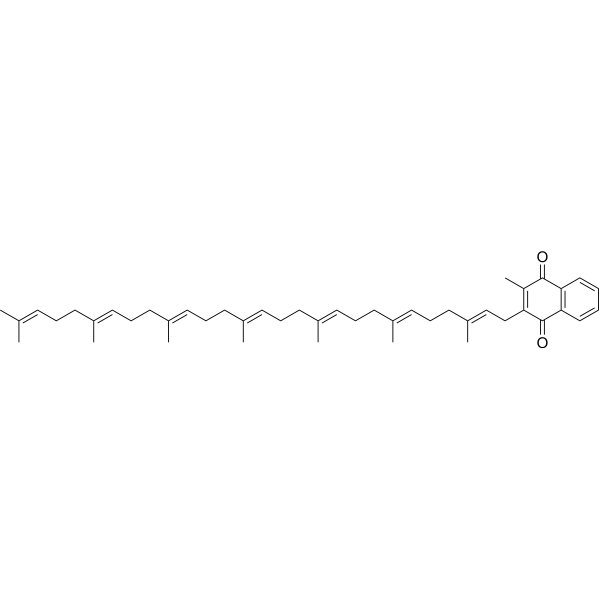
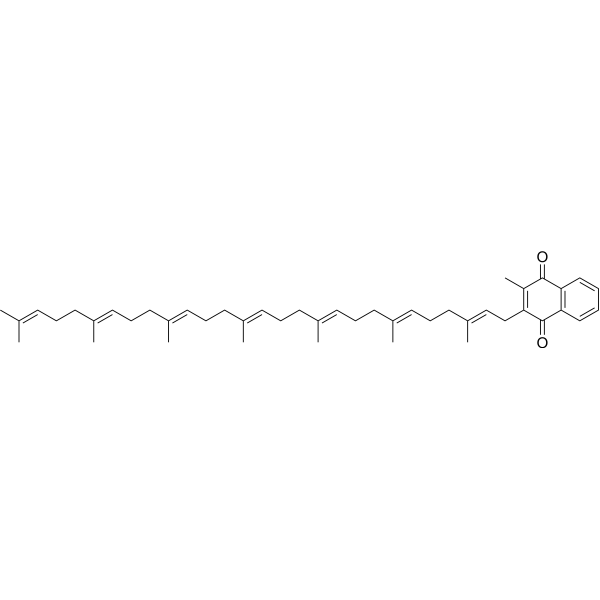
    Menaquinone-7
    3 Publications Verification

    Vitamin K2-7; Vitamin K2(35); Vitamin MK-7

    TGF-beta/Smad Cardiovascular Disease
    Menaquinone-7 (Vitamin K2-7), belongs to a class of K2-vitamin homologs (orally active), is originally discovered as the anti-hemorrhagic factors. Menaquinone-7 inhibits osteoclast bone resorption in vitro and stimulates bone formation in femoral tissue of aged female rats. Menaquinone-7 has a well-researched potential in the prevention of aging-induced bone degeneration. Menaquinone-7 is also a pharmacological option for activating Gla matrix protein and intervening in the progression of calcific aortic stenosis (CAVS) .
    Menaquinone-7
  • HY-N2488
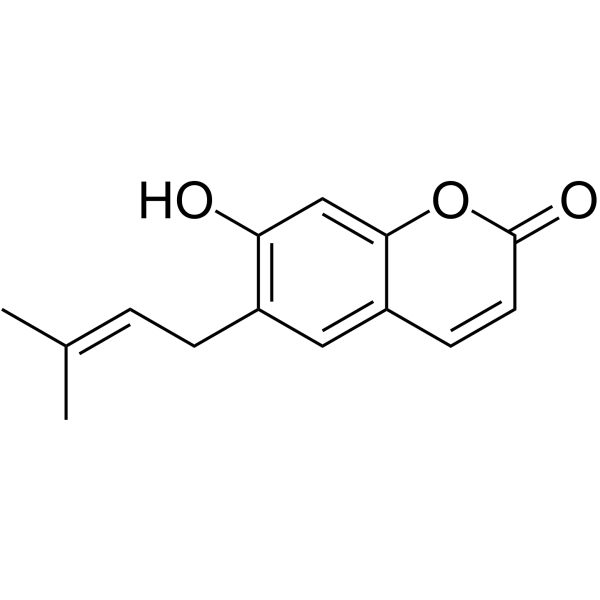
    Demethylsuberosin
    4 Publications Verification

    7-Demethylsuberosin

    Calcium Channel NO Synthase Cardiovascular Disease Neurological Disease Inflammation/Immunology
    Demethylsuberosin (7-Demethylsuberosin) is a coumarin compound found in Angelica gigas Nakai. Demethylsuberosin exerts antihypertensive effects by inhibiting the L-type CaV1.2 channel. Demethylsuberosin has antioxidant and anti-inflammatory activities. Demethylsuberosin also exhibits neuroprotective activities against glutamate-induced toxicity in primary cultured rat cortical cells [1] .
    Demethylsuberosin
  • HY-134542

    Calcium Channel Neurological Disease
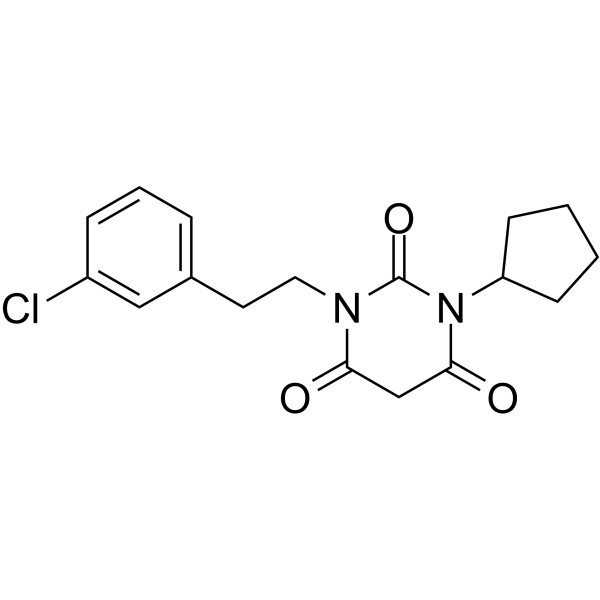
    CaV1.3 antagonist-1 is a potent and highly selective CaV1.3 L-type calcium channel (LTCC) antagonist with an IC50 of 1.7 μM. CaV1.3 antagonist-1 inhibits CaV1.3 LTCC >600-fold more potently than CaV1.2 LTCC. CaV1.3 antagonist-1, a cyclopentyl derivative, has the potential for Parkinson's disease research [1].
    CaV1.3 antagonist-1
  • HY-B1090

    Calcium Channel Histamine Receptor Cardiovascular Disease Endocrinology
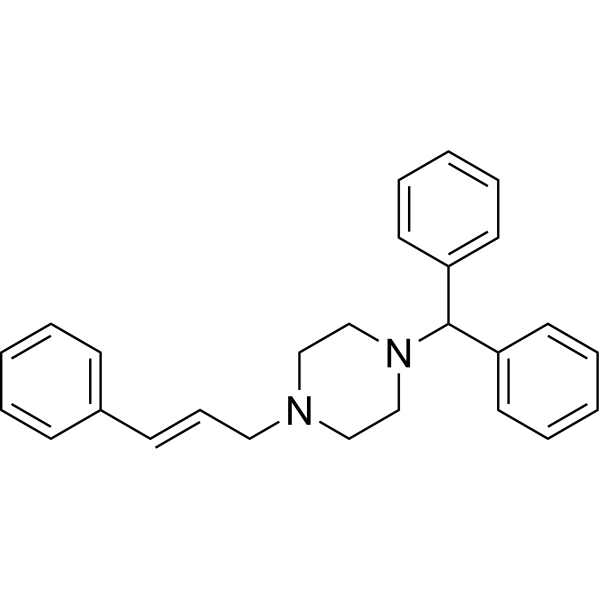
    Cinnarizine is an orally active, effective and selective inhibitor of L-type calcium channel Cav1.3 with an IC50 of 1.5 μM (in vestibular hair cells). Cinnarizine can cross the blood-brain barrier and regulate calcium homeostasis and dopamine neurotransmission. Cinnarizine inhibits the influx of calcium ions into smooth muscle cells by blocking L-type calcium channels, thereby relaxing vascular smooth muscle, improving cerebral circulation and reducing blood viscosity, while antagonizing dopamine receptors. Cinnarizine can be used in the study of vestibular vertigo, Meniere's disease and cerebrovascular diseases [1] .
    Cinnarizine
  • HY-B1752
    Quinpirole
    4 Publications Verification

    LY 171555; (-)-LY 141865

    Dopamine Receptor Calcium Channel Bcl-2 Family iGluR Apoptosis Neurological Disease
    Quinpirole (LY 171555; (-)-LY 141865) is a D2/D3 dopamine receptor agonist and a CaV1.3 calcium channel modulator. Quinpirole normalizes dendritic spine density in dopamine-depleted striatum, upregulates the protein expression of BCL2 and GluR2, downregulates the protein expression of BAX, and delays the onset of seizures. Quinpirole enhances learning and memory, inhibits neuronal apoptosis (apoptosis), and induces anxiety-like, stereotyped, and compulsive behaviors. Quinpirole disrupts prepulse inhibition in rhesus monkeys, enhances the activity of paraventricular thalamic neurons to promote recovery from Isoflurane anesthesia, and alters the composition of the gut microbiota in rats. Quinpirole can be used in research related to dyskinesia, pain, epilepsy, and neurological disorders including anxiety disorder, obsessive-compulsive disorder, and schizophrenia [1] .
    Quinpirole
  • HY-RS01986

    Small Interfering RNA (siRNA) Others

    CAV1 Human Pre-designed siRNA Set A contains three designed siRNAs for CAV1 gene (Human), as well as a negative control, a positive control, and a FAM-labeled negative control.

    CAV1 Human Pre-designed siRNA Set A
    CAV1 Human Pre-designed siRNA Set A
  • HY-106454

    Norfludiazepam

    Calcium Channel Neurological Disease
    N-Desalkylflurazepam (Norfludiazepam) is a long-acting metabolite of benzodiazepine compounds, such as Flurazepam. N-Desalkylflurazepam inhibits L-type voltage-gated calcium channels with IC50 values of 55 μM and 37 μM for Cav1.2 and Cav1.3, respectively [1] .
    N-Desalkylflurazepam
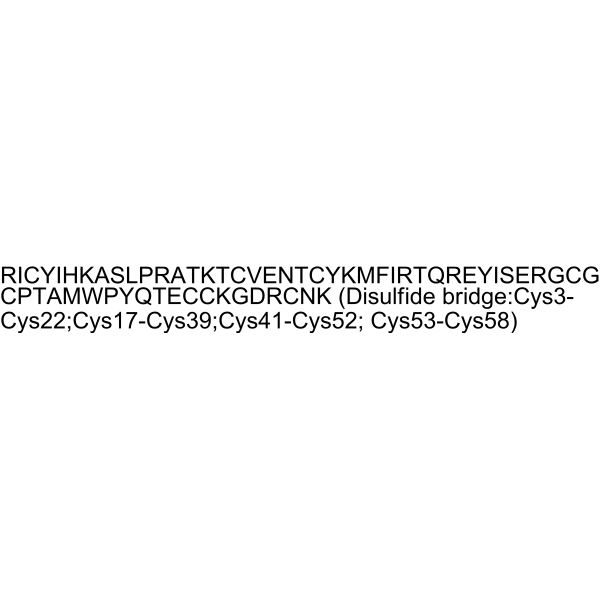
  • HY-P3269

    Calcium Channel Cardiovascular Disease
    Calciseptine is a natural polypeptide toxin found in the venom of the black mamba snake (Dendroaspis p. polylepis). Calciseptine is a highly effective and selective blocker of the L-type channel of the Cav1.2 subtype, with an IC50 value of 92 nM. Calciseptine has no effect on Cav3.1, Cav2.2, Cav2.1, Cav1.1, voltage-sensitive sodium channels and potassium channels. Calciseptine exhibits negative inotropic and negative relaxant effects on mice, and does not affect heart rate or the action potential of sinoatrial node pacemaker cells. Calciseptine can be used for research on cardiovascular diseases[1].
    Calciseptine
  • HY-RS23990

    Small Interfering RNA (siRNA) Others

    Cav1 Rat Pre-designed siRNA Set A contains three designed siRNAs for Cav1 gene (Rat), as well as a negative control, a positive control, and a FAM-labeled negative control.

    Cav1 Rat Pre-designed siRNA Set A
    Cav1 Rat Pre-designed siRNA Set A
  • HY-Z7760

    Mineralocorticoid Receptor Metabolic Disease
    Felodipine 3,5-Dimethyl Ester is a aryldihydropyridine derivatives for use as mineralocorticoid receptor modulator and voltage-dependent L-type calcium channel CaV1.2 inhibitor [1].
    Felodipine 3,5-dimethyl ester
  • HY-RS17533

    Small Interfering RNA (siRNA) Others

    Cav1 Mouse Pre-designed siRNA Set A contains three designed siRNAs for Cav1 gene (Mouse), as well as a negative control, a positive control, and a FAM-labeled negative control.

    Cav1 Mouse Pre-designed siRNA Set A
    Cav1 Mouse Pre-designed siRNA Set A
  • HY-112499R
    Menaquinone-7 (Standard)
    3 Publications Verification

    Vitamin K2-7(Standard); Vitamin K2(35)(Standard); Vitamin MK-7 (Standard)

    Endogenous Metabolite Reference Standards Cardiovascular Disease
    Menaquinone-7 (Standard) is the analytical standard of Menaquinone-7. This product is intended for research and analytical applications. Menaquinone-7 (Vitamin K2-7), belongs to a class of K2-vitamin homologs (orally active), is originally discovered as the anti-hemorrhagic factors. Menaquinone-7 inhibits osteoclast bone resorption in vitro and stimulates bone formation in femoral tissue of aged female rats. Menaquinone-7 has a well-researched potential in the prevention of aging-induced bone degeneration. Menaquinone-7 is also a pharmacological option for activating Gla matrix protein and intervening in the progression of calcific aortic stenosis (CAVS) .
    Menaquinone-7 (Standard)
  • HY-126336

    Calcium Channel Cardiovascular Disease Neurological Disease
    HM12 is a covalent inhibitor of L-/T-type calcium channels. HM12 can strongly inhibit the Cav1.2 (L-type) and Cav3.2 (T-type) calcium channels, and has selectivity for the N-type channels. HM12 produces an irreversible inhibition that persisted after washout. HM12 can be used to study diseases such as hypertension, pain, epilepsy, etc [1].
    HM12
  • HY-175226

    Dipeptidyl Peptidase Calcium Channel Sodium Channel Potassium Channel Cancer
    DPP8/9-IN-2 (Compound 21) is a DPP8/9 inhibitor with IC50 values of 0.22 nM and 3 nM, respectively, and Ki values of 2.9 nM and 6 nM, respectively . DPP8/9-IN-2 has certain cardiotoxicity, with IC50 values of 0.7 μM, 29.0 μM and 27.7 μM for hERG potassium channel, Nav1.5 sodium channel and Cav1.2 calcium channel, respectively. DPP8/9-IN-2 can be used in the research of diseases such as tumors [1].
    DPP8/9-IN-2
  • HY-Z15823

    Dexverapamil

    Calcium Channel Potassium Channel Somatostatin Receptor Arrestin Apoptosis P-glycoprotein Metabolic Disease Inflammation/Immunology
    (R)-Verapamil (Dexverapamil) is an optically enantiomer of the oral-active Verapamil (HY-14275). (R)-Verapamil has a relatively low affinity for L-type calcium channels (Cav1.2) (IC50 > 300 μM), and its IC50 for sodium channels (sodium channel) is 3.19 μM. (R)-Verapamil exhibits SSTR2 agonistic activity, with an EC50 of 1.3 μM. (R)-Verapamil significantly downregulates the expression of TXNIP protein in diabetic mouse models and significantly inhibits β-cell apoptosis (apoptosis), effectively controlling blood sugar. (R)-Verapamil can be used as a PET tracer for the function of P-glycoprotein (P-gp) [1] .
    (R)-Verapamil
  • HY-106454R

    Norfludiazepam (Standard)

    Reference Standards Calcium Channel Neurological Disease
    N-Desalkylflurazepam (Standard) is the analytical standard of N-Desalkylflurazepam. This product is intended for research and analytical applications. N-Desalkylflurazepam (Norfludiazepam) is a long-acting metabolite of benzodiazepine compounds, such as Flurazepam. N-Desalkylflurazepam inhibits L-type voltage-gated calcium channels with IC50 values of 55 μM and 37 μM for Cav1.2 and Cav1.3, respectively [1] .
    N-Desalkylflurazepam (Standard)
  • HY-W701464

    Isotope-Labeled Compounds Others
    N-Desalkylflurazepam-d4 is a deuterated labeled N-Desalkylflurazepam (HY-106454). N-Desalkylflurazepam (Norfludiazepam) is a long-acting metabolite of benzodiazepine compounds, such as Flurazepam. N-Desalkylflurazepam inhibits L-type voltage-gated calcium channels with IC50 values of 55 μM and 37 μM for Cav1.2 and Cav1.3, respectively [1] .
    N-Desalkylflurazepam-d4
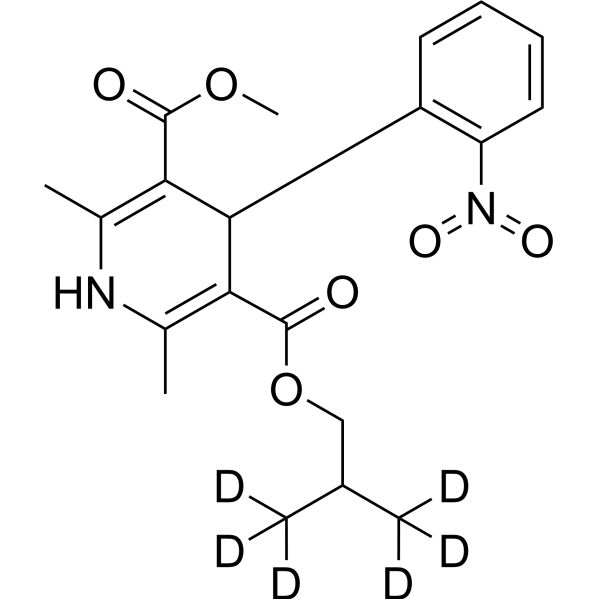
  • HY-17402S

    BAY-k 5552-d6

    Isotope-Labeled Compounds Calcium Channel Reactive Oxygen Species (ROS) Cardiovascular Disease
    Nisoldipine-d6 is the deuterium labeled Nisoldipine. Nisoldipine(BAY-k 5552; Sular) is a calcium channel blocker belonging to the dihydropyridines class, specific for L-type Cav1.2 with an IC50 of 10 nM.
    Nisoldipine-d6
  • HY-17402R

    BAY-k 5552 (Standard)

    Reference Standards Calcium Channel Reactive Oxygen Species (ROS) Cardiovascular Disease
    Nisoldipine (Standard) is the analytical standard of Nisoldipine. This product is intended for research and analytical applications. Nisoldipine (BAY-k 5552; Sular) is a highly efficient and specific L-type Cav1.2 channel blocker with an IC50 of 10 nM.
    Nisoldipine (Standard)
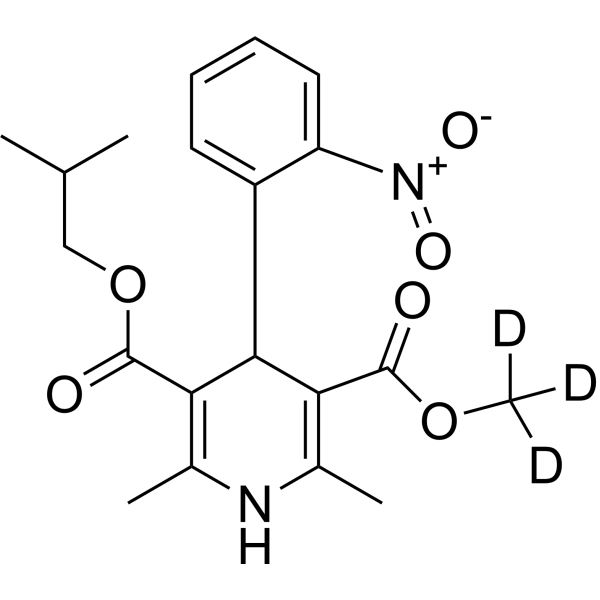
  • HY-17402S3

    BAY-k 5552-d3

    Calcium Channel Reactive Oxygen Species (ROS) Isotope-Labeled Compounds Cardiovascular Disease
    Nisoldipine-d3 is deuterated labeled Nisoldipine (HY-17402). Nisoldipine (BAY-k 5552; Sular) is a highly efficient and specific L-type Cav1.2 channel blocker with an IC50 of 10 nM.
    Nisoldipine-d3
  • HY-122552

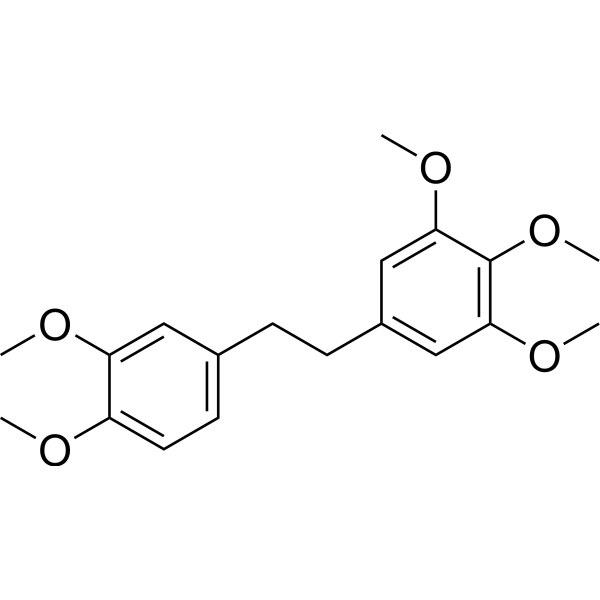
    Integrin Cancer
    Chrysotobibenzyl can be isolated from stem of Dendrobium pulchellum. Chrysotobibenzyl inhibits lung cancer cell (H460 and H292) migration, invasion, filopodia formation via Cav-1, integrins β1, β3, and αν, and EMT suppressions. Chrysotobibenzyl also sensitizes lung cancer cell death mediated by Cisplatin (HY-17394) [1].
    Chrysotobibenzyl
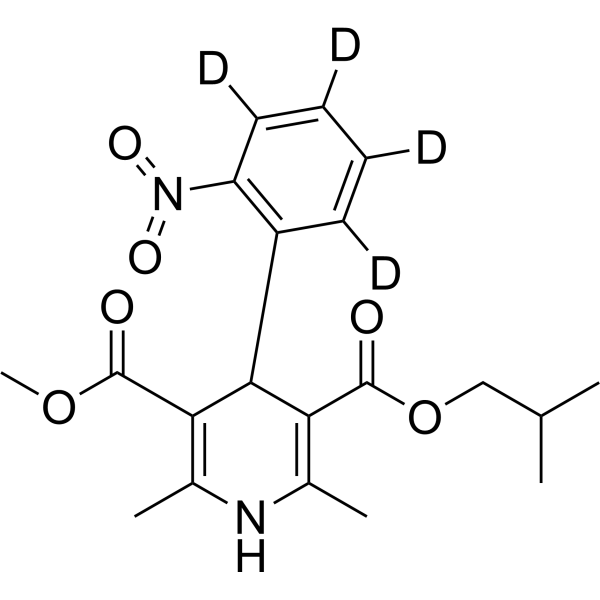
  • HY-17402S1

    Isotope-Labeled Compounds Calcium Channel Reactive Oxygen Species (ROS) Cardiovascular Disease
    Nisoldipine-d4 (BAY-k 5552-d4) is the deuterium labeled Nisoldipine. Nisoldipine(BAY-k 5552) is a calcium channel blocker belonging to the dihydropyridines class, specific for L-type Cav1.2 with IC50 of 10 nM [1] .
    Nisoldipine-d4
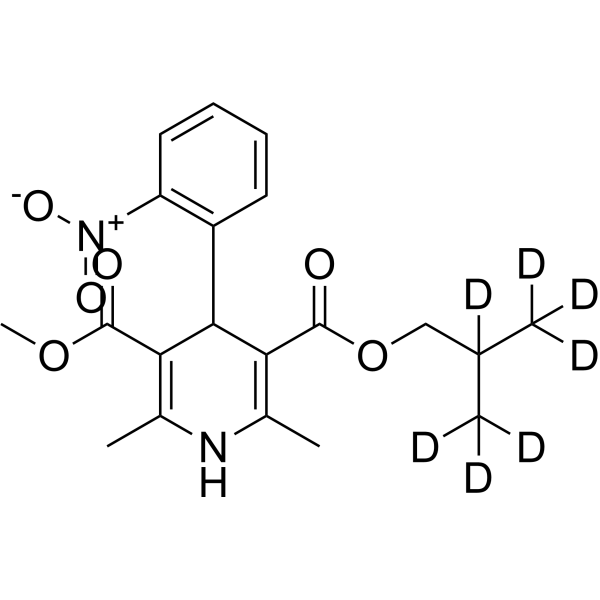
  • HY-17402S2

    Isotope-Labeled Compounds Calcium Channel Reactive Oxygen Species (ROS) Cardiovascular Disease
    Nisoldipine-d7 (BAY-k 5552-d7) is the deuterium labeled Nisoldipine. Nisoldipine(BAY-k 5552) is a calcium channel blocker belonging to the dihydropyridines class, specific for L-type Cav1.2 with IC50 of 10 nM [1] .
    Nisoldipine-d7
  • HY-118202A

    (-)-Methoxyverapamil hydrochloride

    Calcium Channel Cardiovascular Disease
    (-)-Gallopamil (hydrochloride) exerts a selective modulation of the fast voltage-dependent inactivation. (-)-Gallopamil (hydrochloride) inhibits efficiently Cav1.2 constructs formed by β-subunits (promoting fast voltage-dependent inactivation). (-)-Gallopamil (hydrochloride) also accelerates the voltage-dependent phase of ICa decay (as well as the voltage-dependent decay of Ba 2+ currents). (-)-Gallopamil (hydrochloride) is promising for research of antiarrhythmics [1] .
    (-)-Gallopamil hydrochloride
  • HY-118202

    (-)-Methoxyverapamil

    Calcium Channel Cardiovascular Disease
    (-)-Gallopamil exerts a selective modulation of the fast voltage-dependent inactivation. (-)-Gallopamil inhibits efficiently Cav1.2 constructs formed by β-subunits (promoting fast voltage-dependent inactivation). (-)-Gallopamil also accelerates the voltage-dependent phase of ICa decay (as well as the voltage-dependent decay of Ba 2+ currents). (-)-Gallopamil is promising for research of antiarrhythmics [1] .
    (-)-Gallopamil
  • HY-159090

    Calcium Channel Angiotensin Receptor Cardiovascular Disease
    AT1R antagonist 3 (Compound 1) is an antagonist for angiotensin II type 1 receptor (AT1R) and an inhibitor for calcium channel type-L CaV1.2 (IC50=0.57 μM). AT1R antagonist 3 exhibits vasodilation efficacy in solated rat aorta (10 μM, 88.7%) and antihypertensive efficacy in rat models [1].
    AT1R antagonist 3
  • HY-116307

    P2Y Receptor Cardiovascular Disease
    2-Thio-UTP is a selective P2Y2 inhibitor with an EC50 value of 50 nM. 2-Thio-UTP reduces pro-fibrotic gene expression and protein α-smooth muscle actin. 2-Thio-UTP has the potential for the research of calcific aortic valve stenosis (CAVS) .
    2-Thio-UTP
  • HY-146173

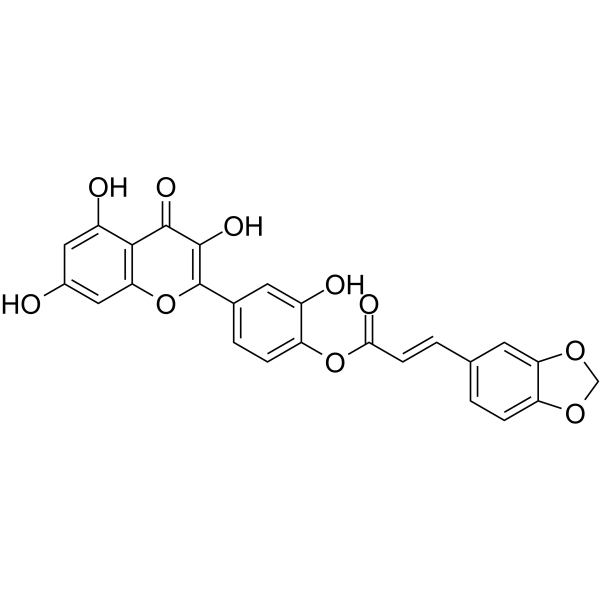
    Potassium Channel Calcium Channel Cardiovascular Disease
    KCa1.1 channel activator-1 (compound 1E), a Quercetin hybrid derivative, is a selective vascular KCa1.1 channel channel stimulator. KCa1.1 channel activator-1 also displays CaV1.2 channel blocking activity. KCa1.1 channel activator-1 exhibits weak myorelaxant activity [1].
    KCa1.1 channel activator-1
  • HY-N4189

    PI3K Akt p38 MAPK STAT Apoptosis Cancer
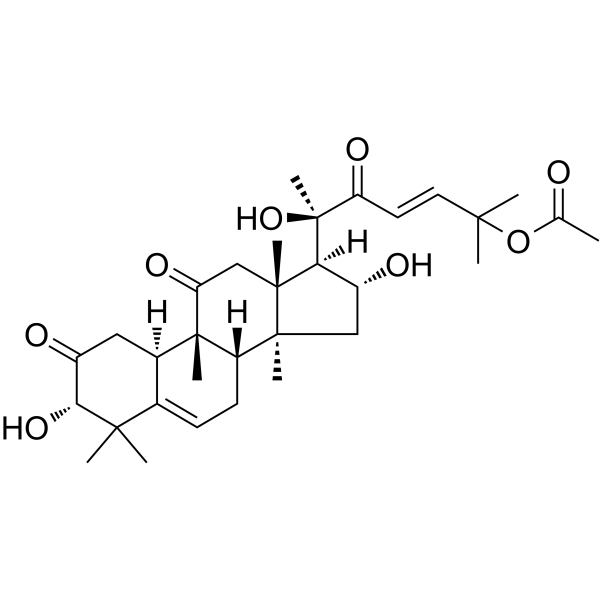
    Isocucurbitacin B is a natural terpenoid compound found in Pedicellus Melo. Isocucurbitacin B can inhibit the PI3K/AKT, MAPK, and STAT3 signaling pathways and downregulate CAV1 expression. Isocucurbitacin B can inhbit cancer cell proliferation, migration and invision. Isocucurbitacin B can induce apoptosis and cause G2/M phase arrest. Isocucurbitacin B can decrease intracellular cholesterol and PH levels and increase intracellular calcium levels. Isocucurbitacin B can be used for the research of cancer, such as glioma [1][2].

    Isocucurbitacin B
  • HY-175395

    Calcium Channel Cardiovascular Disease
    Onychocin B is a cyclic tetrapeptide isolated from Onychocola sclerotica. Onychocin B is a calcium channel blocker with an IC50 of 7.1 μM for Cav1.2 [1].
    Onychocin B
  • HY-P3269A

    Calcium Channel Cardiovascular Disease
    Calciseptine TFA, a polypeptide found in black mamba venom, is a selcetive Cav1.2 L-type calcium channel inhibitor with an IC50 of 92 nM. Calciseptine TFA binds to the pore domain shoulder at repeats III and IV of Cav1.2, stabilizing an inactivated conformation. Calciseptine TFA exhibits negative inotropic and negative relaxant effects on mice, and does not affect heart rate or the action potential of sinoatrial node pacemaker cells. Calciseptine TFA can be used for the research of cardiovascular diseases [1] .
    Calciseptine TFA
  • HY-180547

    PROTACs Neurological Disease
    MRC71 is a TRIMTAC degrader targeting Halo Tag, containing a PEG linker and chloroalkane. MRC71 selectively degrades oligomeric CAV1- and Cavin1-mEGFP-Halo over monomeric mEGFP-Halo and exhibits a characteristic hook effect concentration-dependence for degradation [1].
    MRC71
  • HY-N12859

    Others Others
    Herbacetin 3-O-glucopyranoside-8-O-glucuronopyranoside is a flavonoid glycoside that can be isolated from Malope trifida Cav .
    Herbacetin 3-O-glucopyranoside-8-O-glucuronopyranoside
  • HY-156889

    Calcium Channel Neurological Disease
    Cav 3.1 blocker 1 (compound 12) is a T-type calcium channel blocker with an IC50value of 160 nM for Cav3.1. Cav 3.1 blocker 1 weakly inhibits Cav 3.2 (IC50 of 5000 nM), and shows no inhibition on Cav 3.3 and Cav 1.2 (IC50 of >10000 nM) [1].
    Cav 3.1 blocker 1
  • HY-181755

    NO Synthase Inflammation/Immunology
    Phenylaminojuglone AJ-2 is a nitric oxide synthase inhibitor that interacts with soluble guanylate cyclase, β-adrenergic receptor, CaV1.2 calcium channel, KV channel and KCa channel. Phenylaminojuglone AJ-2 blocks extracellular Ca 2+ influx, regulates the activity of the NO−sGC−cGMP signaling pathway, and inhibits pharmacologic and electromechanical contractions of smooth muscle. Phenylaminojuglone AJ-2 is applicable to studies related to intestinal spasm [1].
    Phenylaminojuglone AJ-2

Inquiry Online

Your information is safe with us. * Required Fields.

Salutation


Country or Region *

Applicant Name *


Organization Name *

Department *


Email Address *


Product Name *

Cat. No.


Requested quantity *

Phone Number *


Remarks

Inquiry Online

Inquiry Information

Product Name:
Cat. No.:
Quantity:
MCE Japan Authorized Agent: