1. Search Result
Search Result
Results for "

cognitive+decline

" in MedChemExpress (MCE) Product Catalog:

27

Inhibitors & Agonists

2

Peptides

2

Inhibitory Antibodies

2

Natural
Products

2

Isotope-Labeled Compounds

Art. -Nr. Produktname Target Forschungsgebiete Chemical Structure
  • HY-P990110
    Lecanemab (Mouse IGG2a)
    1 Publications Verification

    Mab158

    Amyloid-β Neurological Disease
    Lecanemab (Mouse IGG2a) (Mab158) is a monoclonal antibody that targets soluble β-amyloid and has the potential to reduce cognitive decline. The variable region of Lecanemab (Mouse IGG2a) is consistent with that of Lecanemab, while the constant region is of Mouse IGG2a sequence. Lecanemab (Mouse IGG2a) almost abolishes accumulation in astrocytes and rescues neurons from Aβ-induced cell death. Lecanemab (Mouse IGG2a) holds promise for research in the field of Alzheimer's disease .
    Lecanemab (Mouse IGG2a)
  • HY-136093A
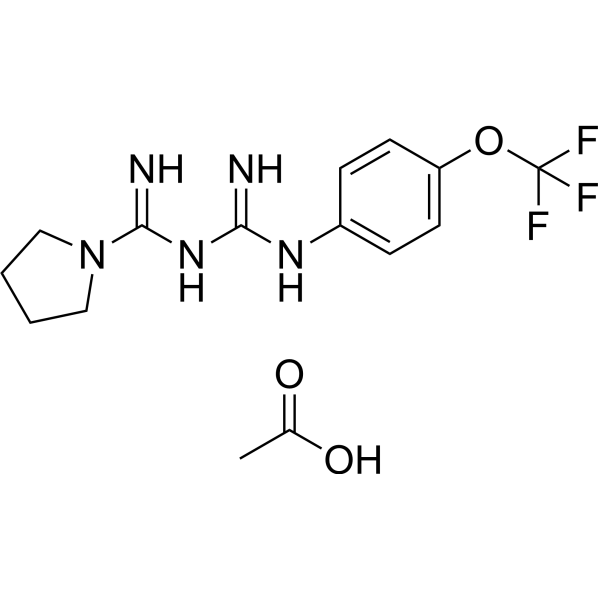
    Lixumistat acetate
    1 Publications Verification

    IM156; HL156A; HL271 acetate

    Mitochondrial Metabolism AMPK Neurological Disease Metabolic Disease Inflammation/Immunology Cancer
    Lixumistat (IM156) acetate is a potent and orally active AMPK activator and OXPHOS inhibitor. Lixumistat acetate strongly activates AMPK, while it lacks the systemic metabolic regulatory effects of classic metformin, such as hypoglycemic and weight-lowering activities. Lixumistat acetate exhibits significant therapeutic effects on cognitive decline associated with brain aging and pulmonary fibrosis .
    Lixumistat acetate
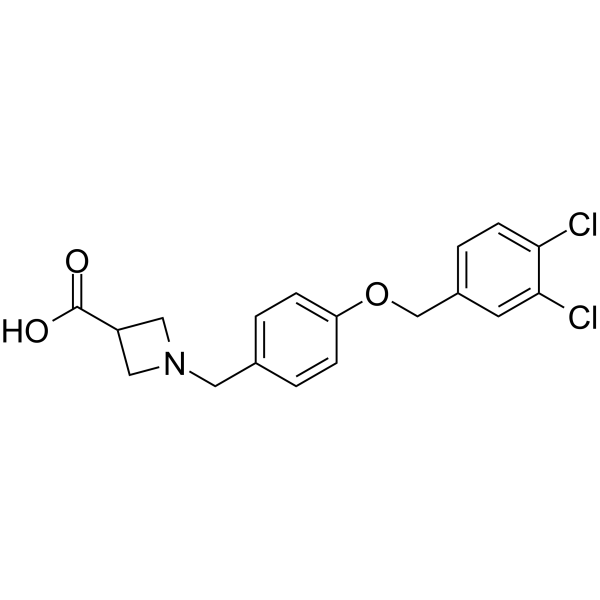
  • HY-110291

    LPL Receptor Neurological Disease
    A-971432 is a potent, selective and orally active sphingosine-1-phosphate (S1P) receptor 5 agonist with IC50s of .362, >10, 0.006 μM for S1P1, S1P3, S1P5 respectively. A-971432 protects blood–brain barrier (BBB) homeostasis. A-971432 reverses age-related cognitive decline. A-971432 has the potential for the research of alzheimer’s disease or multiple sclerosis .
    A-971432
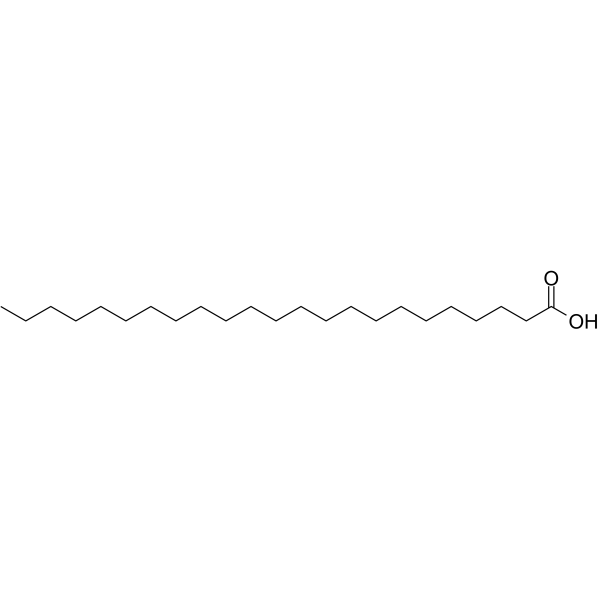
  • HY-W009081

    Free Fatty Acid Receptor Neurological Disease
    Tricosanoic acid is an endogenous agonist of long-chain saturated fatty acids and free fatty acid receptor FFAR1, which can activate hair growth. Tricosanoic acid (C23:0) has the activity of improving cognitive function by regulating neuronal membrane fluidity, inhibiting neuroinflammatory response, participating in myelination and neuronal energy metabolism. Tricosanoic acid expression levels are low in the prefrontal cortex of Alzheimer's disease (AD) models; while better cognitive performance corresponds to higher serum concentration levels. Tricosanoic acid can be used as a biomarker for diseases related to cognitive decline .
    Tricosanoic acid
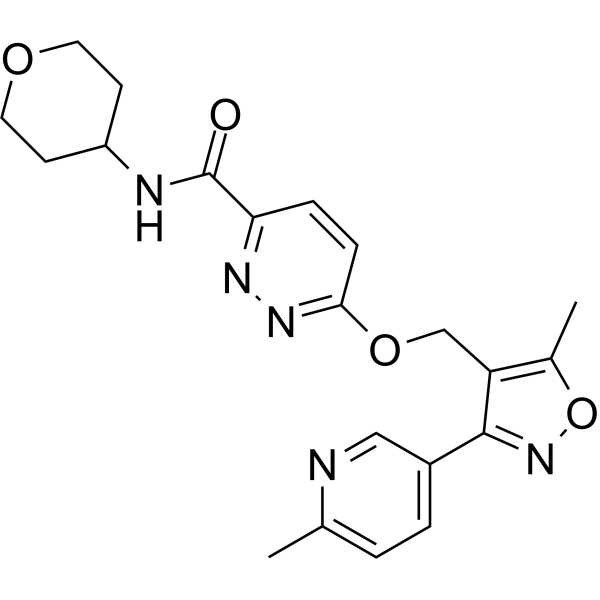
  • HY-132806

    RG-7816; RO-7017773

    GABA Receptor Neurological Disease
    Alogabat is a positive allosteric modulator (PAM) and agonist (Ki <100 nM) of the GABAA α5 receptor, targeting the α5β3γ2 subunit with a Ki of 8.7 nM. Alogabat increases the expression level of α5β3γ2 in oocytes (1.97-fold). GABAA has been implicated in cognitive impairment associated with central nervous system (CNS) disorders, brain cancer (including brain tumors such as medulloblastoma), and can be used in the study of mild cognitive impairment (MCI), amnestic MCI (aMCI), age-associated memory impairment (AAMI), age-related cognitive decline (ARCD), dementia, Alzheimer's disease (AD), prodromal AD, post-traumatic stress disorder (PTSD), schizophrenia, bipolar disorder, amyotrophic lateral sclerosis (ALS), cognitive impairment associated with cancer treatment, mental retardation, Parkinson's disease (PD), autism spectrum disorder, fragile X, Rett syndrome, obsessive-compulsive behavior, and substance addiction .
    Alogabat
  • HY-108667

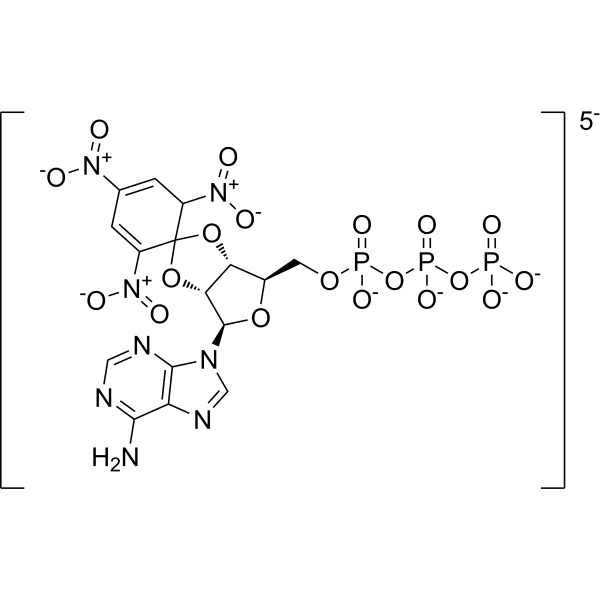
    P2X Receptor Interleukin Related Fluorescent Dye Neurological Disease
    TNP-ATP triethylammonium is a P2X receptor antagonist with an IC50 of 0.010 μM for P2X3 and an IC50 of 0.062 μM for P2X2/3. TNP-ATP triethylammonium acts as an inhibitor of CheA autophosphorylation, with a Ki of 0.7 µM. TNP-ATP triethylammonium blocks the functional activation of P2X1-7 receptors. TNP-ATP triethylammonium attenuates hypoxia-induced IL-1β expression and release. TNP-ATP triethylammonium alleviates visceral pain, and improves hypoxia-induced cognitive impairment, insufficient myelination and neuroinflammation. Binding of TNP-ATP triethylammonium to CheA enhances the fluorescence of the TNP group. TNP-ATP triethylammonium can be used in studies related to visceral pain. NP-ATP triethylammonium can be used in studies related to hypoxia-induced insufficient myelination and cognitive decline .
    TNP-ATP triethylammonium
  • HY-P6292

    PACAP Receptor PKA ERK PI3K Akt GSK-3 Neurological Disease Cancer
    KS-133 is a bicyclic peptide with VIPR2 antagonistic activity that can cross the blood-brain barrier. KS-133 selectively blocks VIPR2-mediated Gq/Ca, Gs/cAMP, cAMP/PKA/ERK and PI3K/AKT/GSK3β signaling pathways. KS-133 inhibits VIPR2 agonist-induced CREB phosphorylation in the prefrontal cortex of mice. KS-133 shifts the polarization direction of macrophages toward M1. KS-133 attenuates cancer cell proliferation and reduces the cell cycle distribution level at the S-M phase. KS-133 exerts antitumor effects in a mouse model of colorectal cancer. KS-133 reverses cognitive decline in mouse models of psychiatric disorders. KS-133 can be used for research related to schizophrenia, colorectal cancer and breast cancer .
    KS-133
  • HY-136093B
    Lixumistat
    1 Publications Verification

    IM156 free base; HL156A free base; HL271 free base

    Mitochondrial Metabolism AMPK Neurological Disease Inflammation/Immunology
    Lixumistat (IM156 free base) is a potent and orally active AMPK activator and OXPHOS inhibitor. Lixumistat strongly activates AMPK, while it lacks the systemic metabolic regulatory effects of classic metformin, such as hypoglycemic and weight-lowering activities. Lixumistat exhibits significant therapeutic effects on cognitive decline associated with brain aging and pulmonary fibrosis .
    Lixumistat
  • HY-P99959

    MT-3921; rH116A3

    TGF-β Receptor Neurological Disease
    Unasnemab (MT-3921) is a humanised IgG1 monoclonal antibody that binds to repulsive guidance molecule A (RGMa). Unasnemab improves locomotor function and promotes neuroregeneration. Unasnemab exerts ameliorative effects on hippocampal neurogenesis impairment and cognitive decline in db/db mice, Streptozotocin (STZ) (HY-13753)-induced type 1 diabetic and bilateral common carotid artery stenosis (BCAS)-induced mice. Unasnemab can be used for the research of spinal cord injury, diabetes-induced neurological impairments .
    Unasnemab
  • HY-N5130

    Others Neurological Disease
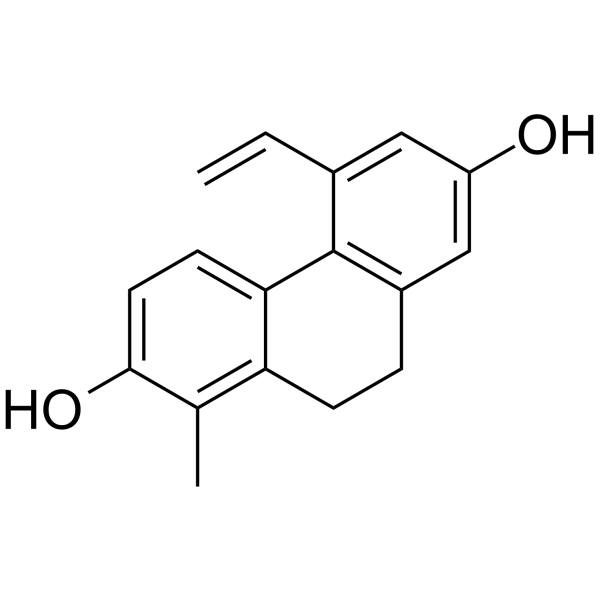
    Effusol, a phenolic constituent from Juncus effuses, exhibits potent scavenging activity for DPPH and ABTS radicals, with IC50 values of 79 μM and 2.73 μM, respectively. Effusol rescues CA1 LTP attenuated by corticosterone, defending the hippocampal function against stress-induced cognitive decline .
    Effusol
  • HY-136093
    Lixumistat hydrochloride
    1 Publications Verification

    HL271; IM156 hydrochloride; HL156A hydrochloride

    Mitochondrial Metabolism AMPK Neurological Disease
    Lixumistat (IM156) hydrochloride is a potent and orally active AMPK activator and OXPHOS inhibitor. Lixumistat hydrochloride strongly activates AMPK, while it lacks the systemic metabolic regulatory effects of classic metformin, such as hypoglycemic and weight-lowering activities. Lixumistat hydrochloride exhibits significant therapeutic effects on cognitive decline associated with brain aging and pulmonary fibrosis .
    Lixumistat hydrochloride
  • HY-113448

    20:3 (8Z,11Z,14Z) CE; 20:3 n-6 CE; 20:3 (8Z,11Z,14Z) Cholesterol Ester

    Endogenous Metabolite Cardiovascular Disease
    Cholesteryl homo-γ-linolenate is a cholesterol ester. It accumulates in the adrenal gland of rabbits fed a diet high in linolenic acid.1 Levels of cholesteryl homo-γ-linolenate are decreased and positively correlate with cognitive decline in HIV-infected humans.
    CE(20:3(8Z,11Z,14Z))
  • HY-W106057

    11β-HSD Neurological Disease Metabolic Disease
    11β-HSD1-IN-7 (compound c10a) is a 11β HSD1 inhibitor with an IC50 value of 1.9 μM for human 11β HSD1. 11β-HSD1-IN-7 can be used for the research of diabetes and cognitive decline .
    11β-HSD1-IN-7
  • HY-W611371

    TRP Channel iGluR Neurological Disease
    FP802 is an orally active potent TwinF interface inhibitor that disrupts and detoxifies the NMDAR/TRPM4 death complex. FP802 exerts powerful neuroprotective effects in the 5xFAD mouse model of Alzheimer’s disease (AD) by preventing cognitive decline, preserving neuronal structural integrity, reducing amyloid-β plaque formation, and mitigating mitochondrial pathology . FP802 stops loss of motor neurons, reduces serum neurofilament light chain (NfL) levels, improves motor performance, and extends life in a mouse model of amyotrophic lateral sclerosis (ALS). FP802 can be used for AD and ALS research .
    FP802
  • HY-10104

    Beta-secretase Neurological Disease
    GRL-8234 is a potent β-secretase (BACE1) inhibitor with blood-brain barrier penetration (Ki = 1.8 nM). GRL-8234 can rescue age-related cognitive decline in Tg2576 mice. GRL-8234 can be used in the research related to Alzheimer's disease (AD) .
    GRL-8234
  • HY-W129359

    11β-HSD Neurological Disease Metabolic Disease
    11β-HSD1-IN-8 (compound c6a) is a 11β HSD1 inhibitor with an IC50 value of 2.3 μM for human 11β HSD1. 11β-HSD1-IN-8 can be used for the research of diabetes and cognitive decline .
    11β-HSD1-IN-8
  • HY-P11540

    Cholecystokinin Receptor MMP Amyloid-β Neurological Disease
    CCKBR agonist-1 (Compound 3r1) is a Gq-protein-preferring cholecystokinin B receptor (CCKBR) agonist with an EC50 of 35 pM. CCKBR agonist-1 significantly increases the survival rate of neurons, with an EC50 of 37 pM. CCKBR agonist-1 can improve the cognitive decline in mice by upregulating α-secretase (ADAM10) and calcium signaling molecule PLCB4, reduce the number of amyloid β () plaques, and promote long-term potentiation (LTP). CCKBR agonist-1 can be used for the study of Alzheimer's disease .
    CCKBR agonist-1
  • HY-155822

    Cholinesterase (ChE) Apoptosis Caspase Neurological Disease
    TZ3O is an anticholinergic agent with neuroprotective effects. TZ3O inhibits acetylcholinesterase (AChE) activity in human plasma with an IC50 of 304.5 μM. TZ3O can improve memory impairment and cognitive decline in rats in the Scopolamine (HY-N0296)-induced Alzheimer-type model. TZ3O could be used in Alzheimer’s research .
    TZ3O
  • HY-W611371A

    TRP Channel iGluR Neurological Disease
    FP802 dihydrochloride is an orally active potent TwinF interface inhibitor that disrupts and detoxifies the NMDAR/TRPM4 death complex. FP802 dihydrochloride exerts powerful neuroprotective effects in the 5xFAD mouse model of Alzheimer’s disease (AD) by preventing cognitive decline, preserving neuronal structural integrity, reducing amyloid-β plaque formation, and mitigating mitochondrial pathology . FP802 dihydrochloride stops loss of motor neurons, reduces serum neurofilament light chain (NfL) levels, improves motor performance, and extends life in a mouse model of amyotrophic lateral sclerosis (ALS) . FP802 dihydrochloride can be used for AD and ALS research .
    FP802 dihydrochloride
  • HY-101339A

    5-HT Receptor Others
    (R)-RS 56812 hydrochloride is a 5-HT3 receptor antagonist that enhances performance in monkeys on a delayed matching task. The (R) isomer produces more systematic improvements than the (S) isomer and has potential inhibitory effects in diseases involving cognitive decline.
    (R)-RS 56812 hydrochloride
  • HY-101339

    Others Others
    (R)-RS 56812 is a 5-HT3 receptor antagonist that enhances performance in monkeys on a delayed matching task. The (R) isomer produces more systematic improvements than the (S) isomer and has potential inhibitory effects in diseases involving cognitive decline.
    (R)-RS 56812
  • HY-163646

    Cholinesterase (ChE) Neurological Disease
    (Rac)-TZ3O is the (Rac) isomer of TZ3O. TZ3O is an anticholinergic compound with neuroprotective activity. TZ3O improves memory impairment and cognitive decline in a scopolamine-induced Alzheimer's disease rat model and can be used in the study of Alzheimer's disease.
    (Rac)-TZ3O
  • HY-14156

    11β-HSD Metabolic Disease
    11β-HSD1-IN-15 is an inhibitor of 11β-hydroxysteroid dehydrogenase type I (11β-HSD1). 11β-HSD1-IN-15 blocks the conversion of corticosterone to cortisol by binding to the active site of the 11β-HSD1 enzyme. 11β-HSD1-IN-15 can be used to investigate the role of 11β-HSD1 enzymes IN the development of metabolic syndrome, obesity, cognitive decline and type 2 diabetes .
    11β-HSD1-IN-15
  • HY-158978

    Cholinesterase (ChE) Monoamine Oxidase Neurological Disease
    Multitarget AD inhibitor-2 (Compound VN-19) is a multitargeting inhibitor acetylcholinesterase (AChE, IC50=0.14 μM), butyrylcholinesterase (BChE, IC50=11.6 μM), monoamine oxidase B (MAO B, IC50=0.45 μM). Multitarget AD inhibitor-2 inhibits self-induced aggregation of amyloid beta protein Aβ1-42 (inhibition rate is 47.3% at 20 μM), and downregulates the level of ROS in SH-SY5Y (80 inhibition rate at 25 μM). Multitarget AD inhibitor-2 ameliorates the cognitive decline in Scopolamine (HY-N0296)-induced Alzheimer’s Disease zebrafish models .
    Multitarget AD inhibitor-2
  • HY-181589

    Phosphodiesterase (PDE) Neurological Disease
    PDE11A4-IN-2 is a selective PDE11A4 inhibitor with an IC50 of 33 nM. PDE11A4-IN-2 functionally inhibits PDE11A4-mediated catalytic activities of cAMP and cGMP in cellular models. PDE11A4-IN-2 is applicable to the research of age-related cognitive decline .
    PDE11A4-IN-2
  • HY-178395S

    Isotope-Labeled Compounds Free Fatty Acid Receptor Neurological Disease
    Tricosanoic acid-d45 is the deuterium labeled Tricosanoic acid (HY-W009081). Tricosanoic acid is an endogenous agonist of long-chain saturated fatty acids and free fatty acid receptor FFAR1, which can activate hair growth. Tricosanoic acid (C23:0) has the activity of improving cognitive function by regulating neuronal membrane fluidity, inhibiting neuroinflammatory response, participating in myelination and neuronal energy metabolism. Tricosanoic acid expression levels are low in the prefrontal cortex of Alzheimer's disease (AD) models; while better cognitive performance corresponds to higher serum concentration levels. Tricosanoic acid can be used as a biomarker for diseases related to cognitive decline .
    Tricosanoic acid-d45
  • HY-W746542

    Isotope-Labeled Compounds Free Fatty Acid Receptor Neurological Disease
    Tricosanoic acid-d3 is the deuterium labeled Tricosanoic acid (HY-W009081). Tricosanoic acid is an endogenous agonist of long-chain saturated fatty acids and free fatty acid receptor FFAR1, which can activate hair growth. Tricosanoic acid (C23:0) has the activity of improving cognitive function by regulating neuronal membrane fluidity, inhibiting neuroinflammatory response, participating in myelination and neuronal energy metabolism. Tricosanoic acid expression levels are low in the prefrontal cortex of Alzheimer's disease (AD) models; while better cognitive performance corresponds to higher serum concentration levels. Tricosanoic acid can be used as a biomarker for diseases related to cognitive decline .
    Tricosanoic acid-d3

Online-Anfrage

Your information is safe with us. * Required Fields.

Anrede


Country or Region *

Name des Antragstellers *


Name der Organisation *

Department *


E-Mail-Addresse *


Produktname *

Art. -Nr.


Requested quantity *

Telefonnummer *


Bemerkungen

Online-Anfrage

Inquiry Information

Produktname:
Art. -Nr.:
Menge:
MCE Japan Authorized Agent: