From 11:00 pm to 12:00 pm EST ( 8:00 pm to 9:00 pm PST ) on January 6th, the website will be under maintenance. We are sorry for the inconvenience. Please arrange your schedule properly.
TGFB1 Human Pre-designed siRNA Set A contains three designed siRNAs for TGFB1 gene (Human), as well as a negative control, a positive control, and a FAM-labeled negative control.
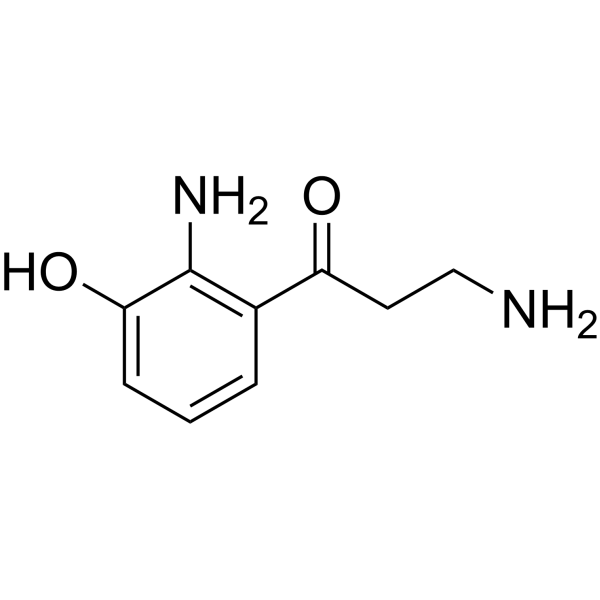
3-OH-Kynurenamine dihydroiodide is the dihydroiodide form of 3-OH-Kynurenamine (HY-156908). 3-OH-Kynurenamine dihydroiodide is an activator for aryl hydrocarbon receptor (AhR), and thus regulates the immune response. 3-OH-Kynurenamine dihydroiodide upregulates the expressions of Ido1 and Tgfb1, ameliorates the skin inflammation in psoriasis mouse model and kidney damage in nephrotoxic lupus mouse model .
Anti-TGFb1 Antibody is a humanized antibody expressed in CHO cells that targets TGFb1. The Anti-TGFb1 Antibody has a huIgG1 type heavy chain and a huκ type light chain, with a predicted molecular weight (MW) of 145 kDa. The isotype control for Anti-TGFb1 Antibody can refer to Human IgG1 kappa, Isotype Control (HY-P99001).
Tgfb1 Mouse Pre-designed siRNA Set A contains three designed siRNAs for Tgfb1 gene (Mouse), as well as a negative control, a positive control, and a FAM-labeled negative control.
TGFB2 Human Pre-designed siRNA Set A contains three designed siRNAs for TGFB2 gene (Human), as well as a negative control, a positive control, and a FAM-labeled negative control.
Tgfb2 Mouse Pre-designed siRNA Set A contains three designed siRNAs for Tgfb2 gene (Mouse), as well as a negative control, a positive control, and a FAM-labeled negative control.
(+)-ITD-1 is an inhibitor for TGF-β, that inhibits the TGF-β2 with an IC50 of 0.46 μM. (+)-ITD-1 promotes the degradation of TGF-b type II receptor (TGFBR2) and the differentiation of cardiomyocyte, and inhibits the mesoderm formation in the early differentiation stage of mouse embryonic stem cells (mESCs) .
SAR-439459 is a human monoclonal antibody (mAb) targeting TGFB1/TGFβ-1. SAR-439459 blocks TGFβ-mediated pSMAD signaling, and suppression of T cells and NK cells. SAR-439459 has anti-tumor activity .
L-744832 is a farnesyl transferase inhibitor. L-744832 effectively inhibits the farnesylation of H-Ras and N-Ras, but has little effect on K-Ras treatment. L-744832 not only directly targets the oncogenic pathway by inhibiting Ras farnesylation, but also enhances radiosensitivity by restoring TGF-β signaling through epigenetic reprogramming. L-744832 can induce cell cycle arrest and apoptosis. L-744832 can be used in combination therapy studies for Ras-driven tumors such as pancreatic cancer .
Cirevetmab (ZTS-00521426) is an immunoglobulin G2-kappa, Canis lupus familiaris TGFB1 caninized monoclonal antibody. Cirevetmab is an immunomodulator .
Tgfb1 Rat Pre-designed siRNA Set A contains three designed siRNAs for Tgfb1 gene (Rat), as well as a negative control, a positive control, and a FAM-labeled negative control.
3-OH-Kynurenamine dihydroiodide is an activator for aryl hydrocarbon receptor (AhR), and thus regulates the immune response. 3-OH-Kynurenamine dihydroiodide upregulates the expressions of Ido1 and Tgfb1, ameliorates the skin inflammation in psoriasis mouse model and kidney damage in nephrotoxic lupus mouse model .
Human TGFB2 mRNA encodes the human transforming growth factor beta 2 (TGFB2) protein, a secreted ligand of the TGF-beta superfamily. TGFB2 has suppressive effects on interleukin-2 dependent T-cell growth.
Human TGFB1 mRNA encodes the human transforming growth factor beta 1 (TGFB1) protein, a secreted ligand of the TGF-beta superfamily. TGFB1 can regulate cell proliferation, differentiation and growth, and also play a role in modulating expression and activation of other growth factors including interferon gamma and tumor necrosis factor alpha.
Tgfb3 Rat Pre-designed siRNA Set A contains three designed siRNAs for Tgfb3 gene (Rat), as well as a negative control, a positive control, and a FAM-labeled negative control.
TGFB3 Human Pre-designed siRNA Set A contains three designed siRNAs for TGFB3 gene (Human), as well as a negative control, a positive control, and a FAM-labeled negative control.
Tgfb3 Mouse Pre-designed siRNA Set A contains three designed siRNAs for Tgfb3 gene (Mouse), as well as a negative control, a positive control, and a FAM-labeled negative control.
Tgfb2 Rat Pre-designed siRNA Set A contains three designed siRNAs for Tgfb2 gene (Rat), as well as a negative control, a positive control, and a FAM-labeled negative control.
TGFB1I1 Human Pre-designed siRNA Set A contains three designed siRNAs for TGFB1I1 gene (Human), as well as a negative control, a positive control, and a FAM-labeled negative control.
Human ACVR1C mRNA encodes the human activin A receptor type 1C (ACVR1C) protein, a type I receptor for the TGFB family of signaling molecules. Upon ligand binding, type I receptors phosphorylate cytoplasmic SMAD transcription factors, which then translocate to the nucleus and interact directly with DNA or in complex with other transcription factors.
Human TGFBR3 mRNA encodes the human transforming growth factor beta receptor 3 (TGFBR3) protein, a transforming growth factor (TGF)-beta type III receptor. TGFBR3 is a membrane proteoglycan that often functions as a co-receptor with other TGF-beta receptor superfamily members. Ectodomain shedding produces soluble TGFBR3, which may inhibit TGFB signaling. Decreased expression of this receptor has been observed in various cancers.
Human TGFB3 mRNA encodes the human transforming growth factor beta 3 (TGFB3) protein, a secreted ligand of the TGF-beta superfamily. TGFB3 is involved in embryogenesis and cell differentiation, and may play a role in wound healing.
SHR-1906 is a selective fully humanized monoclonal IgG1 inhibitory antibody targeting CTGF. SHR-1906 specifically binds to CTGF, thereby blocking the interaction between CTGF and TGF-B1 with an inhibition rate of 55%. SHR-1906increases the survival rate in a pulmonary fibrosis model by reducing TGF-β1 levels and inhibiting fibrotic lesions in lung tissue in Bleomycin (HY-108345)-induced pulmonary fibrosis.SHR-1906 can be used for pulmonary fibrosis (IPF) research. Recommend Isotype Controls: Human IgG1 kappa, Isotype Control (HY-P99001) .
Human ACVR2A mRNA encodes the human activin A receptor type 2A (ACVR2A) protein, a member of the TGFB family. ACVR2A mediates signaling by forming heterodimeric complexes with various combinations of type I and type II receptors and ligands in a cell-specific manner. It may be associated with susceptibility to preeclampsia, a pregnancy-related disease which can result in maternal and fetal morbidity and mortality.
Ltbp1 Mouse Pre-designed siRNA Set A contains three designed siRNAs for Ltbp1 gene (Mouse), as well as a negative control, a positive control, and a FAM-labeled negative control.
BMP-2 Epitope (73-92) is a biological active peptide. (This is amino acids 73 to 92 fragment of bone morphogenetic protein (BMP) knuckle epitope. It is a member of transforming growth factor beta (TGF-b). This peptide fragment is able to raise alkaline phosphate activity in murine multipotent mesenchymal cells.)
Anti-TGFb1 Antibody is a humanized antibody expressed in CHO cells that targets TGFb1. The Anti-TGFb1 Antibody has a huIgG1 type heavy chain and a huκ type light chain, with a predicted molecular weight (MW) of 145 kDa. The isotype control for Anti-TGFb1 Antibody can refer to Human IgG1 kappa, Isotype Control (HY-P99001).
SAR-439459 is a human monoclonal antibody (mAb) targeting TGFB1/TGFβ-1. SAR-439459 blocks TGFβ-mediated pSMAD signaling, and suppression of T cells and NK cells. SAR-439459 has anti-tumor activity .
Cirevetmab (ZTS-00521426) is an immunoglobulin G2-kappa, Canis lupus familiaris TGFB1 caninized monoclonal antibody. Cirevetmab is an immunomodulator .
SHR-1906 is a selective fully humanized monoclonal IgG1 inhibitory antibody targeting CTGF. SHR-1906 specifically binds to CTGF, thereby blocking the interaction between CTGF and TGF-B1 with an inhibition rate of 55%. SHR-1906increases the survival rate in a pulmonary fibrosis model by reducing TGF-β1 levels and inhibiting fibrotic lesions in lung tissue in Bleomycin (HY-108345)-induced pulmonary fibrosis.SHR-1906 can be used for pulmonary fibrosis (IPF) research. Recommend Isotype Controls: Human IgG1 kappa, Isotype Control (HY-P99001) .
TGF beta-1/TGFB1 proprotein is the precursor of latency-associated peptide (LAP) and active transforming growth factor Beta-1 (TGF-beta-1) chain, which maintains TGF-beta-1 latency in the extracellular matrix. It interacts with "environmental molecules" (LTBP1, LRRC32/GARP, LRRC33/NRROS) and plays a crucial regulatory role in the activation of TGF-β-1. TGF beta 1/TGFB1 Protein, Oncorhynchus mykiss (P. pastoris, His) is the recombinant TGF beta 1/TGFB1 protein, expressed by P. pastoris , with N-6*His labeled tag.
TGFB1 proprotein is the precursor of latency-associated peptide (LAP) and active transforming growth factor Beta-1 (TGF-β-1) chain, which maintains TGF-β-1 latency in the extracellular matrix. Through non-covalent binding, TGFB1 critically regulates TGF-β-1 activation by interacting with “environmental molecules” (LTBP1, LRRC32/GARP, LRRC33/NRROS) that collectively control TGF-β-1 activation. TGF beta 1/TGFB1 Protein, Xenopus laevis (P. pastoris, His) is the recombinant Xenopus laevis-derived TGF beta 1/TGFB1 protein, expressed by P. pastoris , with N-6*His labeled tag.
TGF beta 1/TGFB1 is a polypeptide member of the transforming growth factor beta superfamily of cytokines. TGF beta 1 is a secreted protein that performs many cellular functions, including the control of cell growth, cell proliferation, cell differentiation, apoptosis, and can regulate the expression and activation of other growth factors, including interferon gamma and tumor necrosis factor alpha. TGF beta 1/TGFB1 LAP Protein, Human (HEK293) is the recombinant human-derived TGF beta 1/TGFB1 LAP protein, expressed by HEK293 , with tag free. and C33S mutation.
TGF beta 1 is a secreted ligand of the TGF-beta superfamily that binds to receptors and activates SMAD transcription factors. Preproprotein is proteolytically processed to produce latency-associated peptide (LAP) and mature peptide. TGF beta 1/TGFB1 LAP Protein, Human (HEK293, N-His) is the recombinant human-derived TGF beta 1/TGFB1 Latency-associated peptide protein, expressed by HEK293 , with N-6*His labeled tag and C33S mutation.
Transforming growth factor beta-1 (TGF-beta-1) proprotein contains latency-associated peptide (LAP) and active TGF-beta-1 chains, forming a homodimer with disulfide bonds. Upon activation, the proteolytic process releases mature TGF-β-1, allowing it to play regulatory functions in cell growth, differentiation, and immune responses. TGF beta 1/TGFB1 Protein, Rhesus Macaque (HEK293, His) is the recombinant Rhesus Macaque-derived TGF beta 1/TGFB1 protein, expressed by HEK293 , with N-His labeled tag and C33S mutation.
Latent TGF beta 1/TGFB1 Protein is a large extracellular matrix protein and an associated ligand of fibrillinmicrofibrils. Latent TGF beta 1/TGFB1 Protein, Cynomolgus (C33S, HEK293, His) is a recombinant protein (L30-S390, C33S) produced by HEK293 cells with His tag.
Latent transforming growth factor beta-3 (TGF-beta-3) preprotein serves as a precursor to latency-associated peptide (LAP) and active TGF-beta-3 chains, which serve as regulatory and functional subunits. It plays a crucial role in maintaining the latent state of TGF-β-3 within the extracellular matrix. Animal-Free TGF beta 3/TGFB3 Protein, Human (His) is the recombinant human-derived animal-FreeTGF beta 3/TGFB3 protein, expressed by E. coli , with C-His labeled tag. This product is for cell culture use only.
TGF beta 1/TGFB1 Protein is initially identified as a growth factor that induces the growth of rodent fibroblasts. TGF beta 1/TGFB1 Protein inhibits the cell cycle in the G1 phase. TGF beta 1/TGFB1 is an endogenous factor controlling apoptosis in normal and pathological tissues. TGF beta 1/TGFB1 Protein, Human (Biotinylated, HEK293, N-Avi) is a recombinant protein (A279-S390) produced by HEK293 cells with Avi tag.
TGF beta 1/TGFB1 Protein belongs to the TGF-β superfamily. TGF beta 1/TGFB1 Protein plays a key role in various physiological and pathological processes such as cell growth, differentiation, apoptosis, immune regulation, and extracellular matrix formation. TGF beta 1/TGFB1 Protein, Mouse/Rat (HEK293) is a recombinant TGF beta 1/TGFB1 Protein expressed by HEK293 without a tag.
Latent TGF beta 1/TGFB1 Protein is a large extracellular matrix protein and an associated ligand of fibrillinmicrofibrils. Latent TGF beta 1/TGFB1 Protein, Human (C33S, HEK293, His) is a recombinant Biotinylated protein (L30-S390) produced by HEK293 cells with His tag.
TGF beta 1/TGFB1 is a polypeptide member of the transforming growth factor beta superfamily of cytokines. TGF beta 1 is a secreted protein that performs many cellular functions, including the control of cell growth, cell proliferation, cell differentiation, apoptosis, and can regulate the expression and activation of other growth factors, including interferon gamma and tumor necrosis factor alpha. Mature TGF beta 1/TGFB1 Protein, Human (Biotinylated, HEK293, Avi) is the recombinant human-derived Mature TGF beta 1/TGFB1 protein, expressed by HEK293 , with C-Avi labeled tag.
Transforming growth factor beta-1 proprotein is the precursor of the Latency-associated peptide (LAP) and Transforming growth factor beta-1 (TGF-beta-1) chains. TGF beta 1/TGFB1 Protein, Mouse (HEK293, His) is a recombinant protein (L30-S390) produced by HEK293 cells with His tag.
The latency-associated peptide (LAP) of the transforming growth factor β-1 (TGF-β-1) proprotein is an important precursor that forms a complex with TGF-β-1. LAP maintains the latent state of TGF-β-1 during storage in the extracellular matrix, ensuring controlled activation. Interactions with “environmental molecules” such as LTBP1, LRRC32/GARP, and LRRC33/NRROS intricately regulate TGF-β-1 activation. LRRC33/NRROS influences the activation of macrophages and microglia, while LRRC32/GARP controls the activation of activated regulatory T cells. Interactions with integrins induce conformational changes in LAP, releasing active TGF-β-1. LAP orchestrates controlled TGF-β-1 activation in different physiological contexts. Recombinant human TGF beta 1/TGFB1 LAP (biotinylated, expressed in HEK293 cells, Avi-tagged) is a biotinylated, Avi-tagged LAP protein expressed in HEK293 cells.
Latent TGF beta 1/TGFB1 Protein is a large extracellular matrix protein and an associated ligand of fibrillinmicrofibrils. Latent TGF beta 1/TGFB1 Protein, Human (Biotinylated, C33S, HEK293, His-Avi) is a recombinant Biotinylated protein (L30-S390, C33S) produced by HEK293 cells with His-Avi tag.
TGFB1 proprotein is the precursor of latency-associated peptide (LAP) and active transforming growth factor Beta-1 (TGF-β-1) chain, which maintains TGF-β-1 latency in the extracellular matrix. TGFB1 binds non-covalently to TGF-β-1 and interacts with “environmental molecules” (LTBP1, LRRC32/GARP, LRRC33/NRROS) to regulate TGF-β-1 activation. TGF beta 1/TGFB1 Protein, Canine (HEK293, His) is the recombinant canine-derived TGF beta 1/TGFB1 protein, expressed by HEK293 , with C-His labeled tag.
TGF beta 1/TGFB1 is a polypeptide member of the transforming growth factor beta superfamily of cytokines. TGF beta 1 is a secreted protein that performs many cellular functions, including the control of cell growth, cell proliferation, cell differentiation, apoptosis, and can regulate the expression and activation of other growth factors, including interferon gamma and tumor necrosis factor alpha. TGF beta 1/TGFB1 LAP Protein, Human (HEK293, His) is the recombinant human-derived TGF beta 1/TGFB1 Latency-associated peptide protein, expressed by HEK293 , with C-10*His labeled tag and C33S mutation.
Latent TGF beta 1 (latent TGFB1) is the inactive form of TGF-B1. Latent TGF beta 1 associates with the extracellular matrix (ECM) via LTBP. LTBPs are components of the ECM, so that the proteolytic cleavage of LTBP can lead to the release of latent TGF-beta 1 from the matrix. Besides, the proteolytic cleavage and liberation of active TGFB1 is performed by BMP-1, by a variety of matrix metalloproteinases (MMPs). Latent TGF beta 1/TGFB1 Protein, Rat (HEK293, His) is the recombinant rat-derived Latent TGF beta 1/TGFB1 protein, expressed by HEK293 , with C-His labeled tag.
TGF beta 1/TGFB1 is a polypeptide member of the transforming growth factor beta superfamily of cytokines. TGF beta 1 is a secreted protein that performs many cellular functions, including the control of cell growth, cell proliferation, cell differentiation, apoptosis, and can regulate the expression and activation of other growth factors, including interferon gamma and tumor necrosis factor alpha. Latent TGF beta 1/TGFB1 Protein, Human (HEK293, His) is the recombinant human-derived Latent TGF beta 1/TGFB1 protein, expressed by HEK293 , with C-His labeled tag.
TGF beta 1/TGFB1 Protein is initially identified as a growth factor that induces the growth of rodent fibroblasts. TGF beta 1/TGFB1 Protein inhibits the cell cycle in the G1 phase. TGF beta 1/TGFB1 is an endogenous factor controlling apoptosis in normal and pathological tissues. GMP TGF beta 1/TGFB1 Protein, Human (HEK293) is a GMP-grade recombinant protein (A279-S390) produced by CHO cells.
TGF beta 1/TGFB1 Protein is initially identified as a growth factor that induces the growth of rodent fibroblasts. TGF beta 1/TGFB1 Protein inhibits the cell cycle in the G1 phase. TGF beta 1/TGFB1 is an endogenous factor controlling apoptosis in normal and pathological tissues. TGF beta 1/TGFB1 Protein, Human (HEK293) is a recombinant protein (A279-S390) produced by HEK293 cells.
TGFB1 proprotein is the precursor of latency-associated peptide (LAP) and active transforming growth factor Beta-1 (TGF-β-1) chain, which maintains TGF-β-1 latency in the extracellular matrix. TGFB1 binds non-covalently to TGF-β-1 and regulates its activation through interactions with “environmental molecules” (LTBP1, LRRC32/GARP, LRRC33/NRROS). Animal-Free TGF beta 1/TGFB1 Protein, Pig (His) is the recombinant pig-derived animal-FreeTGF beta 1/TGFB1 protein, expressed by E. coli , with C-His labeled tag. This product is for cell culture use only.
TGF beta 1/TGFB1 Protein is initially identified as a growth factor that induces the growth of rodent fibroblasts. TGF beta 1/TGFB1 Protein inhibits the cell cycle in the G1 phase. TGF beta 1/TGFB1 is an endogenous factor controlling apoptosis in normal and pathological tissues. TGF beta 1/TGFB1 Protein, Human is a recombinant protein (A279-S390) produced by CHO cells.
TGF-β3 (transforming growth factor-β3) is a member of a TGF-beta superfamily subgroup that performs many cellular functions. TGF-β3 has a role in embryogenesis and cell differentiation. TGF-β3 also plays a critical role in palatogenesis, the wound healing process. TGF-β3 is capable of binding directly to the type II receptor (TβRII). TGF beta 3/TGFB3 Protein, Human (HEK293) is produced in HEK293 cells, and consists of 112 amino acids (A301-S412).
In the TGF-beta-2 pathway, the TGF beta 2/TGFB2 protein serves as a precursor to latency-associated peptide (LAP) and transforming growth factor beta-2 (TGF-beta-2), regulating their formation. Crucially, TGF-β2/TGFB2 maintains TGF-β-2 in a latent state within the extracellular matrix, forming a non-covalent association with TGF-β-2. Animal-Free TGF beta 2/TGFB2 Protein, Human (His) is the recombinant human-derived animal-FreeTGF beta 2/TGFB2 protein, expressed by E. coli , with C-His labeled tag. This product is for cell culture use only.
In the TGF-beta-2 pathway, the TGF beta 2/TGFB2 protein serves as a precursor to latency-associated peptide (LAP) and transforming growth factor beta-2 (TGF-beta-2), regulating their formation. Crucially, TGF-β2/TGFB2 maintains TGF-β-2 in a latent state within the extracellular matrix, forming a non-covalent association with TGF-β-2. TGF beta 2/TGFB2 Protein, Human (HEK293, His) is the recombinant human-derived TGF beta 2/TGFB2 protein, expressed by HEK293, with N-His labeled tag.
Latent transforming growth factor beta-3 (TGF-beta-3) preprotein serves as a precursor to latency-associated peptide (LAP) and active TGF-beta-3 chains, which serve as regulatory and functional subunits. It plays a crucial role in maintaining the latent state of TGF-β-3 within the extracellular matrix. Latent TGF beta 3/Latent TGFB3 Protein, Human (Biotinylated, HEK293, His-Avi) is the recombinant human-derived Latent TGF beta 3/Latent TGFB3 protein, expressed by HEK293 , with C-Avi, N-His labeled tag. The total length of Latent TGF beta 3/Latent TGFB3 Protein, Human (Biotinylated, HEK293, His-Avi) is 389 a.a., with molecular weight of 40-45 kDa.
Transforming growth factor-beta 2 (TGF-β2), an extracellular glycosylated protein, is a member of the TGF-β superfamily. TGFβ2 controls key physiological processes including cell migration, proliferation and differentiation via signalling through type I and type II receptors (TGFβR1 and TGFβR2). TGF-β2 is an immune suppressor involved in the development of immune tolerance, and also regulates embryonic development. TGF beta 2/TGFB2 Protein, Human (HEK293) is produced in HEK293 cells, and consists of 112 amino acids (A303-S414).
Transforming growth factor-beta 2 (TGF-β2), an extracellular glycosylated protein, is a member of the TGF-β superfamily. TGFβ2 controls key physiological processes including cell migration, proliferation and differentiation via signalling through type I and type II receptors (TGFβR1 and TGFβR2). TGF-β2 is an immune suppressor involved in the development of immune tolerance, and also regulates embryonic development. TGF beta 2/TGFB2 Protein, Canine (HEK293, His) is produced in HEK293 cells with a C-Terminal His-tag. It and consists of 414 amino acids (M1-S414).
Transforming growth factor-beta 2 (TGF-β2), an extracellular glycosylated protein, is a member of the TGF-β superfamily. TGFβ2 controls key physiological processes including cell migration, proliferation and differentiation via signalling through type I and type II receptors (TGFβR1 and TGFβR2). TGF-β2 is an immune suppressor involved in the development of immune tolerance, and also regulates embryonic development. TGF beta 2/TGFB2 Protein, Rhesus Macaque (HEK293, His) is produced in HEK293 cells with a C-Terminal His-tag. It and consists of 414 amino acids (M1-S414).
Latent transforming growth factor beta-3 (TGF-beta-3) preprotein serves as a precursor to latency-associated peptide (LAP) and active TGF-beta-3 chains, which serve as regulatory and functional subunits. It plays a crucial role in maintaining the latent state of TGF-β-3 within the extracellular matrix. Latent TGF beta 3/Latent TGFB3 Protein, Human (HEK293, His) is the recombinant human-derived Latent TGF beta 3/Latent TGFB3 protein, expressed by HEK293 , with N-His labeled tag.
Latent transforming growth factor beta-3 (TGF-beta-3) preprotein serves as a precursor to latency-associated peptide (LAP) and active TGF-beta-3 chains, which serve as regulatory and functional subunits. It plays a crucial role in maintaining the latent state of TGF-β-3 within the extracellular matrix. TGF beta 3/TGFB3 Protein, Human (Biotinylated, HEK293, Avi) is the recombinant human-derived TGF beta 3/TGFB3 protein, expressed by HEK293 , with C-Avi labeled tag.
Transforming growth factor-beta 2 (TGF-β2), an extracellular glycosylated protein, is a member of the TGF-β superfamily. TGFβ2 controls key physiological processes including cell migration, proliferation and differentiation via signalling through type I and type II receptors (TGFβR1 and TGFβR2). TGF-β2 is an immune suppressor involved in the development of immune tolerance, and also regulates embryonic development. TGF beta 2/TGFB2 Protein, Rhesus Macaque (HEK293, His) is produced in HEK293 cells with a C-Terminal His-tag. It and consists of 414 amino acids (M1-S414).
Latent transforming growth factor beta-3 (TGF-beta-3) preprotein serves as a precursor to latency-associated peptide (LAP) and active TGF-beta-3 chains, which serve as regulatory and functional subunits. It plays a crucial role in maintaining the latent state of TGF-β-3 within the extracellular matrix. Latent TGF beta 3/Latent TGFB3 Protein, Human (Biotinylated, HEK293, His) is the recombinant human-derived Latent TGF beta 3/Latent TGFB3 protein, expressed by HEK293 , with N-His labeled tag.
In its proprotein form, the TGF beta-1/TGFB1 protein serves as a precursor to latency-associated peptide (LAP) and active transforming growth factor beta-1 (TGF-beta-1) chains.Critical to maintaining the latent state of TGF-β-1 within the extracellular matrix, preprotein interacts with “environmental molecules” such as LTBP1, LRRC32/GARP, and LRRC33/NRROS to regulate TGF-β-1 activation.Animal-Free TGF beta 1/TGFB1 Protein, Mouse/Rat (His) is the recombinant mouse-derived animal-FreeTGF beta 1/TGFB1 protein, expressed by E.coli , with C-His labeled tag.This product is for cell culture use only.
TGF beta 1/TGFB1 Protein is initially identified as a growth factor that induces the growth of rodent fibroblasts. TGF beta 1/TGFB1 Protein inhibits the cell cycle in the G1 phase. TGF beta 1/TGFB1 is an endogenous factor controlling apoptosis in normal and pathological tissues. TGF beta 1/TGFB1 Protein, Mouse/Rat (HEK293, Tag Free) is a recombinant protein (A279-S390) produced by HEK293 cells.
TGF beta 1/TGFB1 is a polypeptide member of the transforming growth factor beta superfamily of cytokines. TGF beta 1 is a secreted protein that performs many cellular functions, including the control of cell growth, cell proliferation, cell differentiation, apoptosis, and can regulate the expression and activation of other growth factors, including interferon gamma and tumor necrosis factor alpha. Animal-Free TGF beta 1/TGFB1 Protein, Human (His) is the recombinant human-derived animal-FreeTGF beta 1/TGFB1 protein, expressed by E. coli , with C-His labeled tag. This product is for cell culture use only.
LRRC32 is a key regulator of TGF-β activation and maintains TGFB1, TGFB2, and TGFB3 in the latent state during extracellular storage by binding to latency-associated peptide (LAP). LRRC32 competes with LTBP1 for LAP binding and effectively regulates integrin-dependent TGF-β activation. GARP&Latent TGF Beta 2 Complex Protein, Human (HEK293, His-Avi) is a recombinant protein dimer complex containing human-derived GARP&Latent TGF Beta 2 Complex protein, expressed by HEK293 , with C-Avi, C-His labeled tag. GARP&Latent TGF Beta 2 Complex Protein, Human (HEK293, His-Avi), has molecular weight of 72-77 kDa(GARP) & 13 kDa & 46-48 kDa(Latent TGF Beta 2), respectively.
In the TGF-beta-2 pathway, the TGF beta 2/TGFB2 protein serves as a precursor to latency-associated peptide (LAP) and transforming growth factor beta-2 (TGF-beta-2), regulating their formation. Crucially, TGF-β2/TGFB2 maintains TGF-β-2 in a latent state within the extracellular matrix, forming a non-covalent association with TGF-β-2. TGF beta 2/TGFB2 Protein, Human (HEK293, Avi) is the recombinant human-derived TGF beta 2/TGFB2 protein, expressed by HEK293 , with C-Avi labeled tag.
Transforming growth factor-beta 2 (TGF-β2), an extracellular glycosylated protein, is a member of the TGF-β superfamily. TGFβ2 controls key physiological processes including cell migration, proliferation and differentiation via signalling through type I and type II receptors (TGFβR1 and TGFβR2). TGF-β2 is an immune suppressor involved in the development of immune tolerance, and also regulates embryonic development. TGF beta 2/TGFB2 Protein, Mouse/Rat (HEK293) is produced in HEK293 cells.
LRRC32 is a key regulator of TGF-β activation and maintains TGFB1, TGFB2, and TGFB3 in the latent state during extracellular storage by binding to latency-associated peptide (LAP). LRRC32 competes with LTBP1 for LAP binding and effectively regulates integrin-dependent TGF-β activation. GARP&Latent TGF Beta-1 Complex Protein, Human (HEK293, His, Strep) is a recombinant protein dimer complex containing human-derived GARP&Latent TGF Beta-1 Complex protein, expressed by HEK293 , with N-6*His, C-3*Strep labeled tag. GARP&Latent TGF Beta-1 Complex Protein, Human (HEK293, His, Strep), has molecular weight of 10-14 & 35-50 & 85-95 kDa, respectively.
Activin A receptor, type I (ACVR1), also known as ALK-2, is a bone morphogenetic protein (BMP) type I receptor. ACVR1 is involved in a wide variety of biological processes, including bone, heart, cartilage, nervous, and reproductive system development and regulation. ACVR1 Protein, Rat (HEK293, hFc) is produced in HEK293 cells with a C-Terminal Fc-tag. It consists of 103 amino acids (M21-E123).
Activin A receptor, type I (ACVR1), also known as ALK-2, is a bone morphogenetic protein (BMP) type I receptor. ACVR1 is involved in a wide variety of biological processes, including bone, heart, cartilage, nervous, and reproductive system development and regulation. ACVR1 Protein, Canine (HEK293, His) is produced in HEK293 cells with a C-Terminal His-tag.
Activin A receptor, type I (ACVR1), also known as ALK-2, is a bone morphogenetic protein (BMP) type I receptor. ACVR1 is involved in a wide variety of biological processes, including bone, heart, cartilage, nervous, and reproductive system development and regulation. ACVR1 Protein, Cynomolgus (HEK293, Fc) is produced in HEK293 cells with a C-Terminal Fc-tag. It consists of 101 amino acids (M1-E123).
Activin A receptor, type I (ACVR1), also known as ALK-2, is a bone morphogenetic protein (BMP) type I receptor. ACVR1 is involved in a wide variety of biological processes, including bone, heart, cartilage, nervous, and reproductive system development and regulation. ACVR1 Protein, Canine (HEK293, Fc) is produced in HEK293 cells with a C-Terminal Fc-tag.
Activin A receptor, type I (ACVR1), also known as ALK-2, is a bone morphogenetic protein (BMP) type I receptor. ACVR1 is involved in a wide variety of biological processes, including bone, heart, cartilage, nervous, and reproductive system development and regulation. ACVR1 Protein, Mouse (HEK293, His-hFc) is produced in HEK293 cells with a C-Terminal His-tag and a C-Terminal Fc-tag . It consists of 123 amino acids (M1-E123).
TSC22D1 Protein, a positive modulator of cell death during mammary gland involution in response to TGFB3, forms a heterodimer with TSC22D4/THG1. Its interactions with histone H1-2 and GNL3 underscore TSC22D1's versatile role in molecular processes, emphasizing its potential significance in various cellular contexts. TSC22/TSC22D1 Protein, Human (His) is the recombinant human-derived TSC22/TSC22D1 protein, expressed by E. coli , with N-His labeled tag.
TSC22D1 protein, possessing RNA polymerase II binding activity, regulates apoptotic and cell proliferation processes. It is found in the cytoplasm and nucleus and expressed in multiple structures like the alimentary system and central nervous system. With ubiquitous expression observed, TSC22D1 likely regulates diverse cellular processes across tissues. TSC22/TSC22D1 Protein, Mouse (His) is the recombinant mouse-derived TSC22/TSC22D1 protein, expressed by E. coli , with N-His labeled tag.
GARP/latent TGF-b1 complexes are potent inducers of Th17 differentiation in the presence of exogenous IL-6 and inducers of Treg in the presence of IL-2. GARP&Latent TGF beta Complex Protein, Mouse (HEK293, His) is a biotinylated recombinant protein (GARP (I18-N628)&TGF-b1 (L30-S390)) produced by HEK293 cells with His tag.
LRRC32 is a key regulator of TGF-β activation and maintains TGFB1, TGFB2, and TGFB3 in the latent state during extracellular storage by binding to latency-associated peptide (LAP). LRRC32 competes with LTBP1 for LAP binding and effectively regulates integrin-dependent TGF-β activation. GARP&Latent TGF Beta Complex Protein, Human (HEK293, His-Avi) is a recombinant protein dimer complex containing human-derived GARP&Latent TGF Beta Complex protein, expressed by HEK293 , with C-Avi, C-His labeled tag. GARP&Latent TGF Beta Complex Protein, Human (HEK293, His-Avi), has molecular weight of 72-80 kDa.
LRRC32 is a key regulator of TGF-β activation and maintains TGFB1, TGFB2, and TGFB3 in the latent state during extracellular storage by binding to latency-associated peptide (LAP). LRRC32 competes with LTBP1 for LAP binding and effectively regulates integrin-dependent TGF-β activation. GARP&Latent TGF beta Complex Protein, Human (Biotinylated, HEK293, His-Avi) is a recombinant protein dimer complex containing human-derived GARP&Latent TGF beta Complex protein, expressed by HEK293 , with C-Avi, C-His labeled tag. GARP&Latent TGF beta Complex Protein, Human (Biotinylated, HEK293, His-Avi), has molecular weight of (73-78) kDa (GARP) & 13 kDa & (42-45) kDa (Latent TGF beta 1), respectively.
GARP/latent TGF-b1 complexes are potent inducers of Th17 differentiation in the presence of exogenous IL-6 and inducers of Treg in the presence of IL-2. GARP&Latent TGF beta Complex Protein, Mouse (Biotinylated, HEK293, His-Avi) is a biotinylated recombinant protein (GARP (I18-N628)&TGF-b1 (L30-S390)) produced by HEK293 cells with His-Avi tag.
LRRC32 is a key regulator of TGF-β activation and maintains TGFB1, TGFB2, and TGFB3 in the latent state during extracellular storage by binding to latency-associated peptide (LAP). LRRC32 competes with LTBP1 for LAP binding and effectively regulates integrin-dependent TGF-β activation. GARP (Mutated) &Latent TGF Beta Complex Protein, Human (HEK293, His-Avi) is a recombinant protein dimer complex containing human-derived GARP, expressed by HEK293 , with C-Avi, C-His labeled tag. GARP (Mutated) &Latent TGF Beta Complex Protein, Human (HEK293, His-Avi), has molecular weight of 75-80 kDa.
LRRC32 is a key regulator of TGF-β activation and maintains TGFB1, TGFB2, and TGFB3 in the latent state during extracellular storage by binding to latency-associated peptide (LAP). LRRC32 competes with LTBP1 for LAP binding and effectively regulates integrin-dependent TGF-β activation. GARP (Y137H) &Latent TGF Beta Complex Protein, Human (HEK293, His-Avi) is a recombinant protein dimer complex containing human-derived GARP, expressed by HEK293 , with C-Avi, C-His labeled tag. GARP (Y137H) &Latent TGF Beta Complex Protein, Human (HEK293, His-Avi), has molecular weight of 71-75 kDa.
LRRC32 is a key regulator of TGF-β activation and maintains TGFB1, TGFB2, and TGFB3 in the latent state during extracellular storage by binding to latency-associated peptide (LAP). LRRC32 competes with LTBP1 for LAP binding and effectively regulates integrin-dependent TGF-β activation. GARP (S138G) &Latent TGF Beta Complex Protein, Human (HEK293, His-Avi) is a recombinant protein dimer complex containing human-derived GARP, expressed by HEK293 , with C-His, C-Avi labeled tag. GARP (S138G) &Latent TGF Beta Complex Protein, Human (HEK293, His-Avi), has molecular weight of 75-80 kDa.
LRRC32 is a key regulator of TGF-β activation and maintains TGFB1, TGFB2, and TGFB3 in the latent state during extracellular storage by binding to latency-associated peptide (LAP). LRRC32 competes with LTBP1 for LAP binding and effectively regulates integrin-dependent TGF-β activation. GARP (G139N) &Latent TGF Beta Complex Protein, Human (HEK293, His-Avi) is a recombinant protein dimer complex containing human-derived GARP, expressed by HEK293 , with C-Avi, C-His labeled tag. GARP (G139N) &Latent TGF Beta Complex Protein, Human (HEK293, His-Avi), has molecular weight of 75-80 kDa.
TGFBR1/ALK-5 proteins cooperate with TGFBR2 to form dedicated receptors for TGFB1, TGFB2, and TGFB3, transmitting signals and coordinating different physiological and pathological processes. It induces cell cycle arrest, modulates mesenchymal cell dynamics, contributes to wound healing, and affects immunosuppression and carcinogenesis. TGFBR1/ALK-5 Protein, Human (HEK293, mFc-Avi) is the recombinant human-derived TGFBR1/ALK-5 protein, expressed by HEK293 , with C-Avi, C-mFc labeled tag.
Lefty-A/TGF-beta 4 Protein, Human is a secreted protein belonging to the transforming growth factor-beta (TGF-β) family, which plays an important role in the development of human left-right axis. Lefty-A/TGF-beta 4 Protein, Human (HEK293, His) is a recombinant Lefty-A/TGF-β 4 protein expressed by HEK293 with an N-6*His tag.
GARP is a transmembrane protein that acts as a docking receptor for potential transforming growth factor (LTGF-β) and plays a key role in the production and release of active transforming growth factor β (TGF-β). The presence of GARP affects immune-mediated diseases such as cancer, allergies, and autoimmunity. GARP&Latent TGF Beta 1 Complex Protein, Human (Biotinylated, HEK293, His-Avi) is a recombinant protein dimer complex containing rat-derived GARP&Latent TGF Beta 1 Complex protein, expressed by HEK293 , with C-Avi, C-His labeled tag. GARP&Latent TGF Beta 1 Complex Protein, Human (Biotinylated, HEK293, His-Avi), has molecular weight of 70-80 kDa (GARP) & 42-48 kDa & 13 kDa (L, respectively.
GARP is a transmembrane protein that acts as a docking receptor for potential transforming growth factor (LTGF-β) and plays a key role in the production and release of active transforming growth factor β (TGF-β). The presence of GARP affects immune-mediated diseases such as cancer, allergies, and autoimmunity. GARP&Latent TGF Beta 1 Complex Protein, Human (HEK293, His-Avi) is a recombinant protein dimer complex containing rat-derived GARP&Latent TGF Beta 1 Complex protein, expressed by HEK293 , with C-Avi, C-His labeled tag. GARP&Latent TGF Beta 1 Complex Protein, Human (HEK293, His-Avi), has molecular weight of 70-80 kDa (GARP) & 42-48 kDa & 13 kDa (L, respectively.
TGFB1 Human Pre-designed siRNA Set A contains three designed siRNAs for TGFB1 gene (Human), as well as a negative control, a positive control, and a FAM-labeled negative control.
Tgfb1 Mouse Pre-designed siRNA Set A contains three designed siRNAs for Tgfb1 gene (Mouse), as well as a negative control, a positive control, and a FAM-labeled negative control.
TGFB2 Human Pre-designed siRNA Set A contains three designed siRNAs for TGFB2 gene (Human), as well as a negative control, a positive control, and a FAM-labeled negative control.
Tgfb2 Mouse Pre-designed siRNA Set A contains three designed siRNAs for Tgfb2 gene (Mouse), as well as a negative control, a positive control, and a FAM-labeled negative control.
Tgfb1 Rat Pre-designed siRNA Set A contains three designed siRNAs for Tgfb1 gene (Rat), as well as a negative control, a positive control, and a FAM-labeled negative control.
Human TGFB2 mRNA encodes the human transforming growth factor beta 2 (TGFB2) protein, a secreted ligand of the TGF-beta superfamily. TGFB2 has suppressive effects on interleukin-2 dependent T-cell growth.
Human TGFB1 mRNA encodes the human transforming growth factor beta 1 (TGFB1) protein, a secreted ligand of the TGF-beta superfamily. TGFB1 can regulate cell proliferation, differentiation and growth, and also play a role in modulating expression and activation of other growth factors including interferon gamma and tumor necrosis factor alpha.
Tgfb3 Rat Pre-designed siRNA Set A contains three designed siRNAs for Tgfb3 gene (Rat), as well as a negative control, a positive control, and a FAM-labeled negative control.
TGFB3 Human Pre-designed siRNA Set A contains three designed siRNAs for TGFB3 gene (Human), as well as a negative control, a positive control, and a FAM-labeled negative control.
Tgfb3 Mouse Pre-designed siRNA Set A contains three designed siRNAs for Tgfb3 gene (Mouse), as well as a negative control, a positive control, and a FAM-labeled negative control.
Tgfb2 Rat Pre-designed siRNA Set A contains three designed siRNAs for Tgfb2 gene (Rat), as well as a negative control, a positive control, and a FAM-labeled negative control.
TGFB1I1 Human Pre-designed siRNA Set A contains three designed siRNAs for TGFB1I1 gene (Human), as well as a negative control, a positive control, and a FAM-labeled negative control.
Human ACVR1C mRNA encodes the human activin A receptor type 1C (ACVR1C) protein, a type I receptor for the TGFB family of signaling molecules. Upon ligand binding, type I receptors phosphorylate cytoplasmic SMAD transcription factors, which then translocate to the nucleus and interact directly with DNA or in complex with other transcription factors.
Human TGFBR3 mRNA encodes the human transforming growth factor beta receptor 3 (TGFBR3) protein, a transforming growth factor (TGF)-beta type III receptor. TGFBR3 is a membrane proteoglycan that often functions as a co-receptor with other TGF-beta receptor superfamily members. Ectodomain shedding produces soluble TGFBR3, which may inhibit TGFB signaling. Decreased expression of this receptor has been observed in various cancers.
Human TGFB3 mRNA encodes the human transforming growth factor beta 3 (TGFB3) protein, a secreted ligand of the TGF-beta superfamily. TGFB3 is involved in embryogenesis and cell differentiation, and may play a role in wound healing.
Human ACVR2A mRNA encodes the human activin A receptor type 2A (ACVR2A) protein, a member of the TGFB family. ACVR2A mediates signaling by forming heterodimeric complexes with various combinations of type I and type II receptors and ligands in a cell-specific manner. It may be associated with susceptibility to preeclampsia, a pregnancy-related disease which can result in maternal and fetal morbidity and mortality.
Ltbp1 Mouse Pre-designed siRNA Set A contains three designed siRNAs for Ltbp1 gene (Mouse), as well as a negative control, a positive control, and a FAM-labeled negative control.
Inquiry Online
Your information is safe with us. * Required Fields.
Western blot analysis of extracts from THP-1(lane 2(20μg), Jurkat (lane 3(20μg) and NIH3T3(lane 4(20μg) using FOXO1A (HY-P80132) Rabbit mAb. Proteins were transferred
to a PVDF membrane and blocked with 5% non-fat milk in TBST for 2 hour at room temperature. The primary antibody (1/1000) and Loading control antibody (Beta Actin, HY-P80438, 1/10000) was
used in 5% non-fat milk in TBST at 4°C overnight. Goat Anti-Mouse/Rabbit IgG-HRP Secondary Antibody (1/10000) was used for 1 hour at room temperature.
Western blot analysis of extracts from THP-1(lane 2(20μg), Jurkat (lane 3(20μg) and NIH3T3(lane 4(20μg) using FOXO1A (HY-P80132) Rabbit mAb. Proteins were transferred
to a PVDF membrane and blocked with 5% non-fat milk in TBST for 2 hour at room temperature. The primary antibody (1/1000) and Loading control antibody (Beta Actin, HY-P80438, 1/10000) was
used in 5% non-fat milk in TBST at 4°C overnight. Goat Anti-Mouse/Rabbit IgG-HRP Secondary Antibody (1/10000) was used for 1 hour at room temperature.
Western blot analysis of extracts from THP-1(lane 2(20μg), Jurkat (lane 3(20μg) and NIH3T3(lane 4(20μg) using FOXO1A (HY-P80132) Rabbit mAb. Proteins were transferred
to a PVDF membrane and blocked with 5% non-fat milk in TBST for 2 hour at room temperature. The primary antibody (1/1000) and Loading control antibody (Beta Actin, HY-P80438, 1/10000) was
used in 5% non-fat milk in TBST at 4°C overnight. Goat Anti-Mouse/Rabbit IgG-HRP Secondary Antibody (1/10000) was used for 1 hour at room temperature.
Western blot analysis of extracts from THP-1(lane 2(20μg), Jurkat (lane 3(20μg) and NIH3T3(lane 4(20μg) using FOXO1A (HY-P80132) Rabbit mAb. Proteins were transferred
to a PVDF membrane and blocked with 5% non-fat milk in TBST for 2 hour at room temperature. The primary antibody (1/1000) and Loading control antibody (Beta Actin, HY-P80438, 1/10000) was
MedchemExpress Validation 03
Western blot analysis of extracts from THP-1(lane 2(20μg), Jurkat (lane 3(20μg) and NIH3T3(lane 4(20μg) using FOXO1A (HY-P80132) Rabbit mAb. Proteins were transferred
MedchemExpress Validation 04
Western blot analysis of extracts from THP-1(lane 2(20μg), Jurkat (lane 3(20μg) and NIH3T3(lane 4(20μg) using FOXO1A (HY-P80132) Rabbit mAb. Proteins were transferred
to a PVDF membrane and blocked with 5% non-fat milk in TBST for 2 hour at room temperature. The primary antibody (1/1000) and Loading control antibody (Beta Actin, HY-P80438, 1/10000) was
used in 5% non-fat milk in TBST at 4°C overnight. Goat Anti-Mouse/Rabbit IgG-HRP Secondary Antibody (1/10000) was used for 1 hour at room temperature.
MedchemExpress Validation
Western blot analysis of extracts from THP-1(lane 2(20μg), Jurkat (lane 3(20μg) and NIH3T3(lane 4(20μg) using FOXO1A (HY-P80132) Rabbit mAb. Proteins were transferred
to a PVDF membrane and blocked with 5% non-fat milk in TBST for 2 hour at room temperature. The primary antibody (1/1000) and Loading control antibody (Beta Actin, HY-P80438, 1/10000) was
used in 5% non-fat milk in TBST at 4°C overnight. Goat Anti-Mouse/Rabbit IgG-HRP Secondary Antibody (1/10000) was used for 1 hour at room temperature.
Western blot analysis of extracts from THP-1(lane 2(20μg), Jurkat (lane 3(20μg) and NIH3T3(lane 4(20μg) using FOXO1A (HY-P80132) Rabbit mAb. Proteins were transferred
to a PVDF membrane and blocked with 5% non-fat milk in TBST for 2 hour at room temperature. The primary antibody (1/1000) and Loading control antibody (Beta Actin, HY-P80438, 1/10000) was
used in 5% non-fat milk in TBST at 4°C overnight. Goat Anti-Mouse/Rabbit IgG-HRP Secondary Antibody (1/10000) was used for 1 hour at room temperature.
MedchemExpress Validation
Western blot analysis of extracts from THP-1(lane 2(20μg), Jurkat (lane 3(20μg) and NIH3T3(lane 4(20μg) using FOXO1A (HY-P80132) Rabbit mAb. Proteins were transferred
to a PVDF membrane and blocked with 5% non-fat milk in TBST for 2 hour at room temperature. The primary antibody (1/1000) and Loading control antibody (Beta Actin, HY-P80438, 1/10000) was
used in 5% non-fat milk in TBST at 4°C overnight. Goat Anti-Mouse/Rabbit IgG-HRP Secondary Antibody (1/10000) was used for 1 hour at room temperature.
MedchemExpress Validation
Western blot analysis of extracts from THP-1(lane 2(20μg), Jurkat (lane 3(20μg) and NIH3T3(lane 4(20μg) using FOXO1A (HY-P80132) Rabbit mAb. Proteins were transferred
to a PVDF membrane and blocked with 5% non-fat milk in TBST for 2 hour at room temperature. The primary antibody (1/1000) and Loading control antibody (Beta Actin, HY-P80438, 1/10000) was
used in 5% non-fat milk in TBST at 4°C overnight. Goat Anti-Mouse/Rabbit IgG-HRP Secondary Antibody (1/10000) was used for 1 hour at room temperature.
MedchemExpress Validation
Western blot analysis of extracts from THP-1(lane 2(20μg), Jurkat (lane 3(20μg) and NIH3T3(lane 4(20μg) using FOXO1A (HY-P80132) Rabbit mAb. Proteins were transferred
to a PVDF membrane and blocked with 5% non-fat milk in TBST for 2 hour at room temperature. The primary antibody (1/1000) and Loading control antibody (Beta Actin, HY-P80438, 1/10000) was
used in 5% non-fat milk in TBST at 4°C overnight. Goat Anti-Mouse/Rabbit IgG-HRP Secondary Antibody (1/10000) was used for 1 hour at room temperature.
MedchemExpress Validation
Western blot analysis of extracts from THP-1(lane 2(20μg), Jurkat (lane 3(20μg) and NIH3T3(lane 4(20μg) using FOXO1A (HY-P80132) Rabbit mAb. Proteins were transferred
to a PVDF membrane and blocked with 5% non-fat milk in TBST for 2 hour at room temperature. The primary antibody (1/1000) and Loading control antibody (Beta Actin, HY-P80438, 1/10000) was
used in 5% non-fat milk in TBST at 4°C overnight. Goat Anti-Mouse/Rabbit IgG-HRP Secondary Antibody (1/10000) was used for 1 hour at room temperature.
MedchemExpress Validation
Western blot analysis of extracts from THP-1(lane 2(20μg), Jurkat (lane 3(20μg) and NIH3T3(lane 4(20μg) using FOXO1A (HY-P80132) Rabbit mAb. Proteins were transferred
to a PVDF membrane and blocked with 5% non-fat milk in TBST for 2 hour at room temperature. The primary antibody (1/1000) and Loading control antibody (Beta Actin, HY-P80438, 1/10000) was
used in 5% non-fat milk in TBST at 4°C overnight. Goat Anti-Mouse/Rabbit IgG-HRP Secondary Antibody (1/10000) was used for 1 hour at room temperature.
MedchemExpress Validation
Western blot analysis of extracts from THP-1(lane 2(20μg), Jurkat (lane 3(20μg) and NIH3T3(lane 4(20μg) using FOXO1A (HY-P80132) Rabbit mAb. Proteins were transferred
to a PVDF membrane and blocked with 5% non-fat milk in TBST for 2 hour at room temperature. The primary antibody (1/1000) and Loading control antibody (Beta Actin, HY-P80438, 1/10000) was
used in 5% non-fat milk in TBST at 4°C overnight. Goat Anti-Mouse/Rabbit IgG-HRP Secondary Antibody (1/10000) was used for 1 hour at room temperature.
MedChemExpress values your privacy and your trust is important to us. We use cookies to enhance your website experience. Some cookies are necessary to run the website.
Privacy and Cookie Policy