1. Apoptosis Metabolic Enzyme/Protease
  2. Caspase Apoptosis Endogenous Metabolite
  3. Taurochenodeoxycholic acid

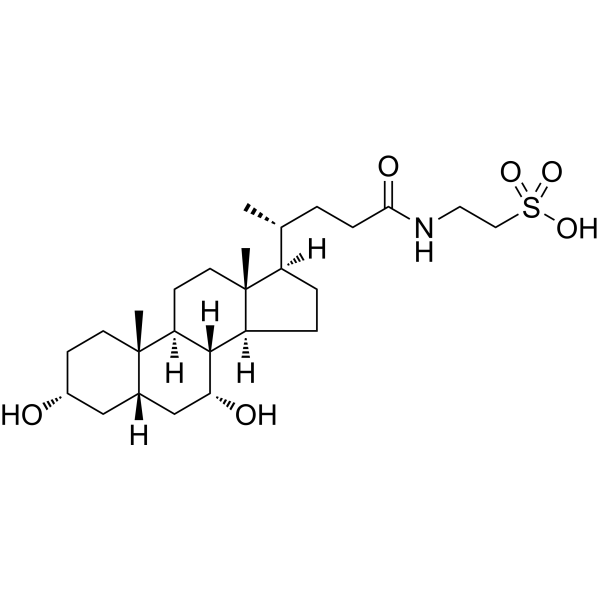
Taurochenodeoxycholic acid  (Synonyms: 12-Deoxycholyltaurine)

Cat. No.: HY-N2027 Purity: 99.90%
Handling Instructions Technical Support

Taurochenodeoxycholic acid (12-Deoxycholyltaurine) is one of the main bioactive substances of animals' bile acid. Taurochenodeoxycholic acid induces apoptosis and shows obvious anti-inflammatory and immune regulation properties.

For research use only. We do not sell to patients.

CAS No. : 516-35-8

Size Price Stock Quantity
Free Sample (0.1 - 0.2 mg)   Apply Now  
Solid + Solvent (Highly Recommended)
10 mM * 1 mL in DMSO
ready for reconstitution
In-stock
Solution
10 mM * 1 mL in DMSO In-stock
Solid
25 mg In-stock
50 mg In-stock
100 mg In-stock
200 mg   Get quote  
500 mg   Get quote  

* Please select Quantity before adding items.

This product is a controlled substance and not for sale in your territory.

Customer Review

Based on 8 publication(s) in Google Scholar

Top Publications Citing Use of Products

    Taurochenodeoxycholic acid purchased from MedChemExpress. Usage Cited in: Adv Sci (Weinh). 2025 Feb 3:e2411719.  [Abstract]

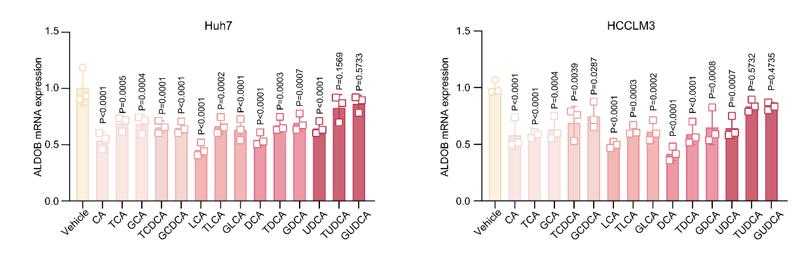
    The mRNA levels of ALDOB in Huh7 or HCCLM3 cells treated with various bile acids (100 μM, 24 h). All data are presented as mean ± SD. Data were analyzed by one-way ANOVA with Bonferroni multiple-comparison correction. CA, cholic acid; TCA, taurocholic acid; GCA, glycocholic acid; TCDCA, taurochenodeoxycholic acid; GCDCA, glycochenodeoxycholic acid; LCA, lithocholic acid; TLCA, taurolithocholic acid; GLCA, glycolithocholic acid; DCA, deoxycholic acid; TDCA, taurodeoxycholic acid; GDCA, glycodeoxycholic acid; UDCA, ursodeoxycholic acid; TUDCA, tauroursodeoxycholic acid; GUDCA, glycoursodeoxycholic acid.

    Taurochenodeoxycholic acid purchased from MedChemExpress. Usage Cited in: J Transl Med. 2024 Dec 20;22(1):1124.  [Abstract]

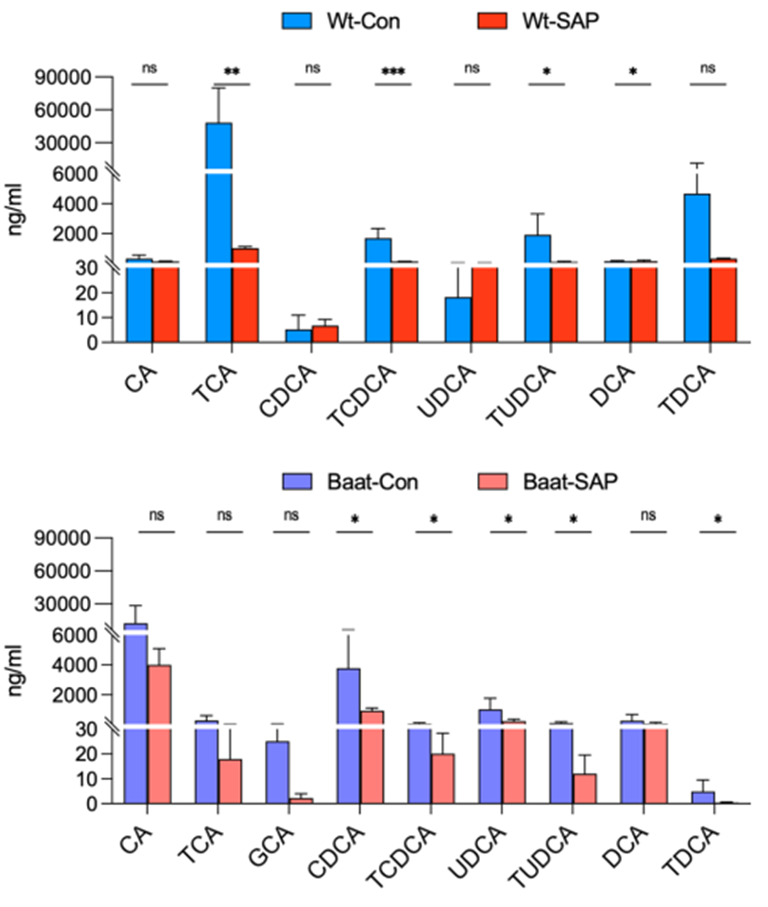
    Univariate analysis of major serum bile acids in WT d and e mice of control and SAP model. (3 mM TCDCA).

    Taurochenodeoxycholic acid purchased from MedChemExpress. Usage Cited in: J Transl Med. 2024 Dec 20;22(1):1124.  [Abstract]

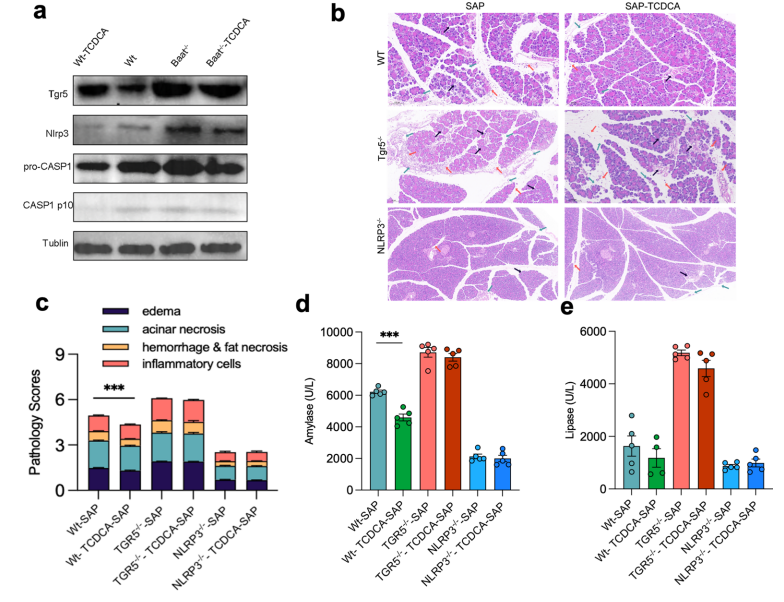
    A notable reduction in serum amylase and lipase levels was observed following TCDCA supplementation.

    Taurochenodeoxycholic acid purchased from MedChemExpress. Usage Cited in: J Transl Med. 2024 Dec 20;22(1):1124.  [Abstract]

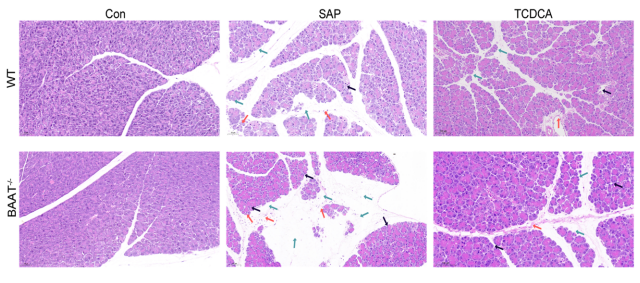
    TCDCA alleviates pancreatitis via TGR5 and NLRP3 signaling. 3 mM TCDCA was added to the drinking water for 4 weeks before caerulein injection SAP models. Samples were at 12 h post caerulein-induced SAP modeling (n=6).
    • Biological Activity

    • Protocol

    • Purity & Documentation

    • References

    • Customer Review

    Description

    Taurochenodeoxycholic acid (12-Deoxycholyltaurine) is one of the main bioactive substances of animals' bile acid. Taurochenodeoxycholic acid induces apoptosis and shows obvious anti-inflammatory and immune regulation properties[1][2].

    IC50 & Target[1][2]

    Microbial Metabolite


    Human Endogenous Metabolite


    Cellular Effect
    Cell Line Type Value Description References
    CHO EC50
    1.92 μM
    Compound: 4a, tauro
    Agonist activity at human TGR5 expressed in CHO cells by luciferase assay
    Agonist activity at human TGR5 expressed in CHO cells by luciferase assay
    [PMID: 18307294]
    HEK293 EC50
    2.3 μM
    Compound: TCDC
    Agonist activity at wild type human TGR5 expressed in HEK293 cells assessed as rise in intracellular cAMP level incubated for 16 hrs by luciferase reporter gene assay
    Agonist activity at wild type human TGR5 expressed in HEK293 cells assessed as rise in intracellular cAMP level incubated for 16 hrs by luciferase reporter gene assay
    [PMID: 26435512]
    HEK293 EC50
    29.57 μM
    Compound: TCDC
    Agonist activity at human TGR5 Y89A mutant expressed in HEK293 cells assessed as rise in intracellular cAMP level incubated for 16 hrs by luciferase reporter gene assay
    Agonist activity at human TGR5 Y89A mutant expressed in HEK293 cells assessed as rise in intracellular cAMP level incubated for 16 hrs by luciferase reporter gene assay
    [PMID: 26435512]
    HEK293 IC50
    55 μM
    Compound: Taurochenodeoxycholate
    TP_TRANSPORTER: inhibition of E217betaG uptake in membrane vesicles from MRP4-expressing HEK-293 cells
    TP_TRANSPORTER: inhibition of E217betaG uptake in membrane vesicles from MRP4-expressing HEK-293 cells
    [PMID: 12523936]
    In Vitro

    Taurochenodeoxycholic acid (12-Deoxycholyltaurine) dramatically improves the apoptosis rate of NR8383 cells in a concentration-dependent manner. In the meantime, Taurochenodeoxycholic acid significantly augments PKC mRNA levels, activities and increases JNK, caspase-3 and caspase-8 mRNA expression levels, activities[1].

    MedChemExpress (MCE) has not independently confirmed the accuracy of these methods. They are for reference only.

    In Vivo

    Taurochenodeoxycholic acid (12-Deoxycholyltaurine; 0.05, 0.1g/kg) decreases the pulmonary coefficient in the model mice and reduces the pathological damages on their lungs; it can decrease the expression levels of TNF-α and TIMP-2 in pulmonary tissues in the pulmonary fibrosis mice and has no significant effects on MMP2[2].
    ? Taurochenodeoxycholic acid significantly normalizes the clinical inflammatory parameters, prevented indomethacin-induced increases in the biliary contents of secondary bile acids and hydrophobicity index, and tended to attenuate the intestinal inflammation[3].
    ? Taurochenodeoxycholic acid significantly suppresses paw swelling and polyarthritis index, increases the loss body weight and index of thymus and spleen, and amends radiologic changes in AA rats. The overproduction and mRNA expression of TNF-α, IL-1β and IL-6 are remarkably suppressed in serum and synovium tissue of all TCDCA-treated rats[4].

    MedChemExpress (MCE) has not independently confirmed the accuracy of these methods. They are for reference only.

    Molecular Weight

    499.70

    Formula

    C26H45NO6S

    CAS No.
    Appearance

    Solid

    Color

    White to off-white

    SMILES

    C[C@@]1([C@@]2([H])[C@H](C)CCC(NCCS(=O)(O)=O)=O)[C@](CC2)([H])[C@@]([C@@H](C[C@]3([H])C[C@H](O)CC4)O)([H])[C@]([C@]34C)([H])CC1

    Structure Classification
    Initial Source
    Shipping

    Room temperature in continental US; may vary elsewhere.

    Storage
    Powder -20°C 3 years
    4°C 2 years
    In solvent -80°C 6 months
    -20°C 1 month
    Solvent & Solubility
    In Vitro: 

    Methanol : ≥ 100 mg/mL (200.12 mM)

    H2O : 100 mg/mL (200.12 mM; Need ultrasonic)

    DMSO : ≥ 25 mg/mL (50.03 mM; Hygroscopic DMSO has a significant impact on the solubility of product, please use newly opened DMSO)

    *"≥" means soluble, but saturation unknown.

    Preparing
    Stock Solutions
    Concentration Solvent Mass 1 mg 5 mg 10 mg
    1 mM 2.0012 mL 10.0060 mL 20.0120 mL
    5 mM 0.4002 mL 2.0012 mL 4.0024 mL
    View the Complete Stock Solution Preparation Table

    * Please refer to the solubility information to select the appropriate solvent. Once prepared, please aliquot and store the solution to prevent product inactivation from repeated freeze-thaw cycles.
    Storage method and period of stock solution: -80°C, 6 months; -20°C, 1 month. When stored at -80°C, please use it within 6 months. When stored at -20°C, please use it within 1 month.

    * Note: If you choose water as the stock solution, please dilute it to the working solution, then filter and sterilize it with a 0.22 μm filter before use.

    • Molarity Calculator

    • Dilution Calculator

    Mass (g) = Concentration (mol/L) × Volume (L) × Molecular Weight (g/mol)

    Mass
    =
    Concentration
    ×
    Volume
    ×
    Molecular Weight *

    Concentration (start) × Volume (start) = Concentration (final) × Volume (final)

    This equation is commonly abbreviated as: C1V1 = C2V2

    Concentration (start)

    C1

    ×
    Volume (start)

    V1

    =
    Concentration (final)

    C2

    ×
    Volume (final)

    V2

    In Vivo:

    Select the appropriate dissolution method based on your experimental animal and administration route.

    For the following dissolution methods, please ensure to first prepare a clear stock solution using an In Vitro approach and then sequentially add co-solvents:
    To ensure reliable experimental results, the clarified stock solution can be appropriately stored based on storage conditions. As for the working solution for in vivo experiments, it is recommended to prepare freshly and use it on the same day.
    The percentages shown for the solvents indicate their volumetric ratio in the final prepared solution. If precipitation or phase separation occurs during preparation, heat and/or sonication can be used to aid dissolution.

    • Protocol 1

      Add each solvent one by one:  10% DMSO    40% PEG300    5% Tween-80    45% Saline

      Solubility: ≥ 2.08 mg/mL (4.16 mM); Clear solution

      This protocol yields a clear solution of ≥ 2.08 mg/mL (saturation unknown).

      Taking 1 mL working solution as an example, add 100 μL DMSO stock solution (20.8 mg/mL) to 400 μL PEG300, and mix evenly; then add 50 μL Tween-80 and mix evenly; then add 450 μL Saline to adjust the volume to 1 mL.

      Preparation of Saline: Dissolve 0.9 g sodium chloride in ddH₂O and dilute to 100 mL to obtain a clear Saline solution.
    • Protocol 2

      Add each solvent one by one:  10% DMSO    90% (20% SBE-β-CD in Saline)

      Solubility: ≥ 2.08 mg/mL (4.16 mM); Clear solution

      This protocol yields a clear solution of ≥ 2.08 mg/mL (saturation unknown).

      Taking 1 mL working solution as an example, add 100 μL DMSO stock solution (20.8 mg/mL) to 900 μL 20% SBE-β-CD in Saline, and mix evenly.

      Preparation of 20% SBE-β-CD in Saline (4°C, storage for one week): 2 g SBE-β-CD powder is dissolved in 10 mL Saline, completely dissolve until clear.

    For the following dissolution methods, please prepare the working solution directly. It is recommended to prepare fresh solutions and use them promptly within a short period of time.
    The percentages shown for the solvents indicate their volumetric ratio in the final prepared solution. If precipitation or phase separation occurs during preparation, heat and/or sonication can be used to aid dissolution.

    • Protocol 1

      Add each solvent one by one:  PBS

      Solubility: 100 mg/mL (200.12 mM); Clear solution; Need ultrasonic

    In Vivo Dissolution Calculator
    Please enter the basic information of animal experiments:

    Dosage

    mg/kg

    Animal weight
    (per animal)

    g

    Dosing volume
    (per animal)

    μL

    Number of animals

    Recommended: Prepare an additional quantity of animals to account for potential losses during experiments.
    Calculation results:
    Working solution concentration: mg/mL
    This product has good water solubility, please refer to the measured solubility data in water/PBS/Saline for details.
    The concentration of the stock solution you require exceeds the measured solubility. The following solution is for reference only.If necessary, please contact MedChemExpress (MCE).
    Purity & Documentation

    Purity: 99.90%

    References
    Animal Administration
    [4]

    Rats: Male Wistar rats are divided into six groups of ten each. Group 1 is normal rat (Sham), Group 2 received FCA only, Group 3 and Group 4 received FCA+Taurochenodeoxycholic acid (0.1 g/kg) and FCA+Taurochenodeoxycholic acid (0.2 g/kg), respectively, Groups 3 and 4 are treated beginning from day 0 of injection of FCA, Group 5 and Group 6 received FCA+Taurochenodeoxycholic acid (0.1 g/kg) and FCA+Taurochenodeoxycholic acid (0.2 g/kg), respectively, Group 5 and Group 6 are treated from 14 days after induction. All animals are treated with intragastrical administration and sacrificed after 28 days of induction[4].

    MCE has not independently confirmed the accuracy of these methods. They are for reference only.

    References

    Complete Stock Solution Preparation Table

    * Please refer to the solubility information to select the appropriate solvent. Once prepared, please aliquot and store the solution to prevent product inactivation from repeated freeze-thaw cycles.
    Storage method and period of stock solution: -80°C, 6 months; -20°C, 1 month. When stored at -80°C, please use it within 6 months. When stored at -20°C, please use it within 1 month.

    Optional Solvent Concentration Solvent Mass 1 mg 5 mg 10 mg 25 mg
    DMSO / Methanol / H2O 1 mM 2.0012 mL 10.0060 mL 20.0120 mL 50.0300 mL
    5 mM 0.4002 mL 2.0012 mL 4.0024 mL 10.0060 mL
    10 mM 0.2001 mL 1.0006 mL 2.0012 mL 5.0030 mL
    15 mM 0.1334 mL 0.6671 mL 1.3341 mL 3.3353 mL
    20 mM 0.1001 mL 0.5003 mL 1.0006 mL 2.5015 mL
    25 mM 0.0800 mL 0.4002 mL 0.8005 mL 2.0012 mL
    30 mM 0.0667 mL 0.3335 mL 0.6671 mL 1.6677 mL
    40 mM 0.0500 mL 0.2502 mL 0.5003 mL 1.2508 mL
    50 mM 0.0400 mL 0.2001 mL 0.4002 mL 1.0006 mL
    Methanol / H2O 60 mM 0.0334 mL 0.1668 mL 0.3335 mL 0.8338 mL
    80 mM 0.0250 mL 0.1251 mL 0.2502 mL 0.6254 mL
    100 mM 0.0200 mL 0.1001 mL 0.2001 mL 0.5003 mL

    * Note: If you choose water as the stock solution, please dilute it to the working solution, then filter and sterilize it with a 0.22 μm filter before use.

    • No file chosen (Maximum size is: 1024 Kb)
    • If you have published this work, please enter the PubMed ID.
    • Your name will appear on the site.
    Help & FAQs
    • Do most proteins show cross-species activity?

      Species cross-reactivity must be investigated individually for each product. Many human cytokines will produce a nice response in mouse cell lines, and many mouse proteins will show activity on human cells. Other proteins may have a lower specific activity when used in the opposite species.

    Your Recently Viewed Products:

    Inquiry Online

    Your information is safe with us. * Required Fields.

    Product Name


    Requested Quantity *

    Applicant Name *


    Salutation

    Email Address *


    Phone Number *

    Department


    Organization Name *

    City

    State

    Country or Region *


    Remarks

    Bulk Inquiry

    Inquiry Information

    Product Name:
    Taurochenodeoxycholic acid
    Cat. No.:
    HY-N2027
    Quantity:
    MCE Japan Authorized Agent: