



Grazoprevir
Based on 30 publication(s) in Google Scholar
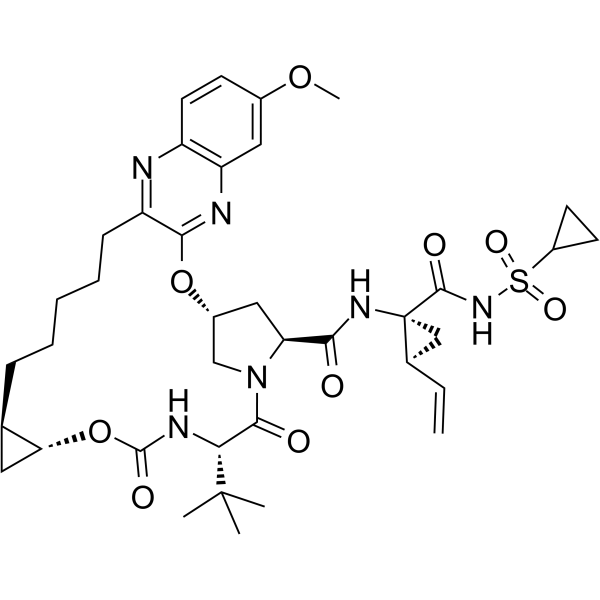
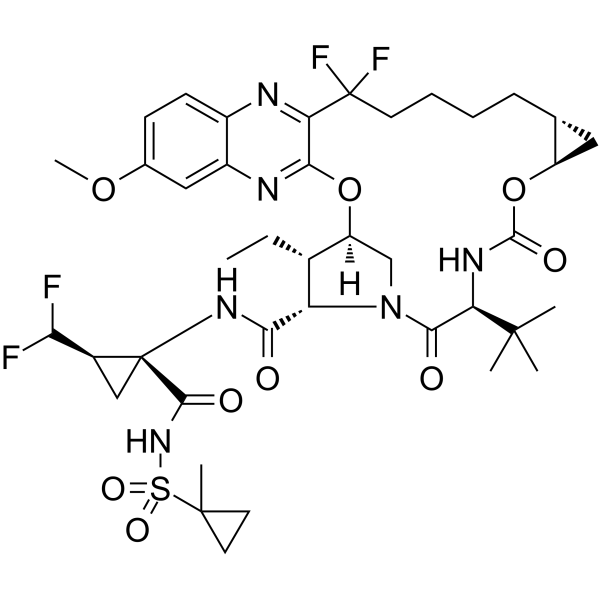
Grazoprevir (MK-5172) is a selective inhibitor of Hepatitis C virus NS3/4a protease with broad activity across genotypes and resistant variants, with Kis of 0.01 nM (gt1b), 0.01 nM (gt1a), 0.08 nM (gt2a), 0.15 nM (gt2b), 0.90 nM (gt3a), respectively. Grazoprevir inhibits SARS-CoV-2 3CLpro activity.
For research use only. We do not sell to patients.
- Purity : 99.90%
- CAS No.: 1350514-68-9
- Formula: C38H50N6O9S
- Molecular Weight:766.90
-
Storage:Powder -20°C, 3 years , 4°C, 2 years ; In solvent -80°C, 1 year , -20°C, 6 months

To place orders, for customer services and technical support, please contact: MedChemExpress USA
Tel: 609-228-6898 E-mail: [email protected] [email protected]


-
 Biological Activity
-
Chemical Information
-
Solvent & Solubility
- Protocol
- Purity & Documentation
- References
-
 Help & FAQs


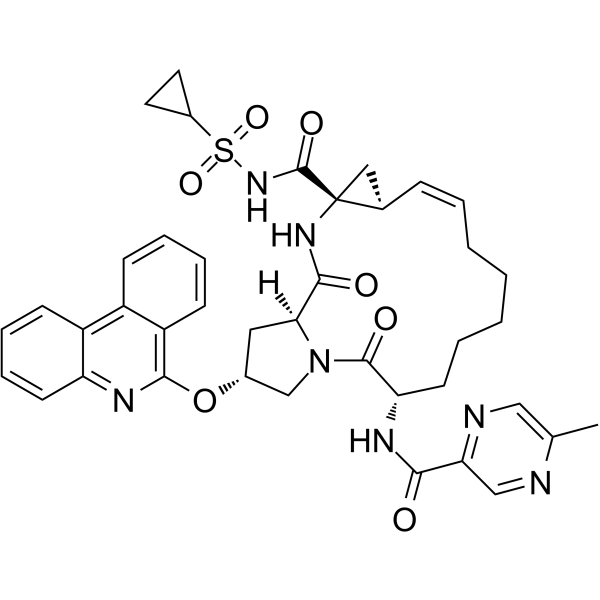
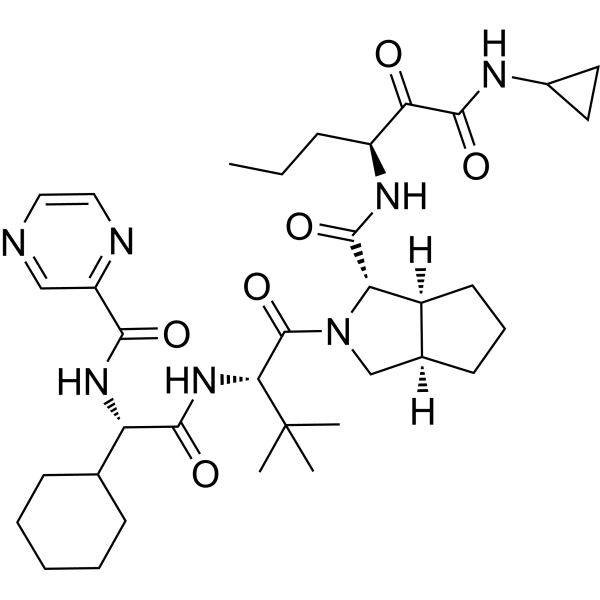
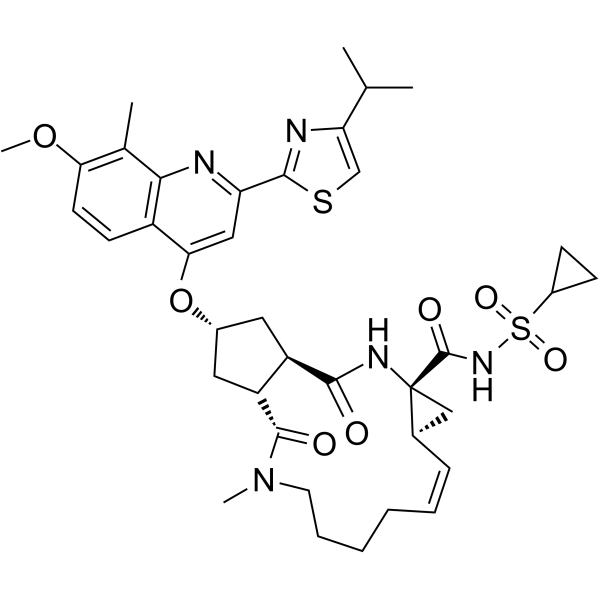
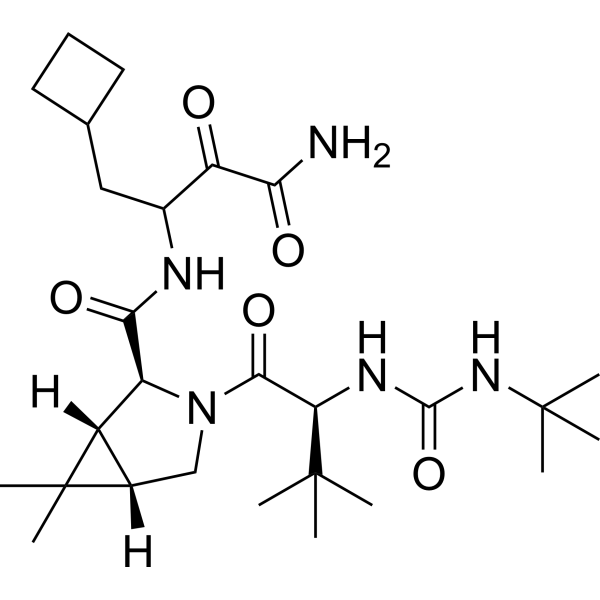
Publications Citing Use of MedChemExpress (MCE) Grazoprevir
More- Signal Transduct Target Ther. 2021 May 29;6(1):212. [Abstract]
- Nature. 2026 Feb;650(8103):1035-1044. [Abstract]
- Cancer Cell. 2024 Nov 11;42(11):1955-1969.e7. [Abstract]
- Cancer Cell. 2022 Nov 14;40(11):1294-1305.e4. [Abstract]
- Nat Biotechnol. 2019 Oct;37(10):1209-1216. [Abstract]
- Nat Methods. 2018 Jul;15(7):519-522. [Abstract]
- Nat Commun. 2020 Sep 4;11(1):4417. [Abstract]
- Cancer Immunol Res. 2021 Sep;9(9):999-1007. [Abstract]
- Pharmaceuticals (Basel). 2022 Feb 18;15(2):242. [Abstract]
- J Gastroenterol. 2019 May;54(5):449-458. [Abstract]
- Sci Rep. 2022 Jul 16;12(1):12197. [Abstract]
- Sci Rep. 2019 Apr 5;9(1):5722. [Abstract]
- Antiviral Res. 2022 Jan:197:105224. [Abstract]
- Antiviral Res. 2019 Nov:171:104612. [Abstract]
- Antiviral Res. 2017 Mar:139:18-24. [Abstract]
- Development. 2025 Jun 1;152(11):dev204505. [Abstract]
- J Pharm Biomed Anal. 2020 Jan 30:178:112964. [Abstract]
- J Chromatogr B Analyt Technol Biomed Life Sci. 2019 Mar 15:1110-1111:15-24. [Abstract]
- Boston University. 2026.
- bioRxiv. 2024 Dec 3:2024.11.26.625483. [Abstract]
- Patent. US12065501.
- University of Glasgow. 2024 Mar.
- bioRxiv. 2024 Mar 12.
- Research Square Preprint. 2024 Jan 23.
- bioRxiv. 2023 Oct 26:2023.10.26.561921. [Abstract]
- bioRxiv. 2023 Feb 27:2023.02.27.530290. [Abstract]
- Patent. US20220025003A1.
- Elife. 2020 Jun 9:9:e56469. [Abstract]
- Patent. US20190010245A1.
- Patent. US20180346589A1.
 Customer Validation & Images

-
ELISA
-
Cell Proliferation/Viability Assay
-
Cell Proliferation/Viability Assay
-
In Vivo Imaging
-
In Vivo Efficacy Study


Biological Activity
Description
IC50 & Target
Ki: 0.01±<0.01 nM (gt1b), 0.01±0.01 nM (gt1a), 0.08±0.02 nM (gt2a), 0.15±0.06 nM (gt2b), 0.90±0.2 nM (gt3a)[1]
Cellular Effect
|
Cell Line

|
Type | Value | Description | References |
|---|---|---|---|---|
| Huh-7 | EC50 |
0.2 nM
Compound: GZR; MK-5172
|
Antiviral activity against HCV genotype 1b infected in human Huh7 cells incubated for 96 hrs by luciferase assay
Antiviral activity against HCV genotype 1b infected in human Huh7 cells incubated for 96 hrs by luciferase assay
|
[PMID: 34405680] |
| Huh-7 | EC50 |
0.3 nM
Compound: MK-5172
|
Antiviral activity against HCV genotype 1a infected in human HuH7 cells assessed as inhibition of viral replication after 72 hrs by RT-PCR method
Antiviral activity against HCV genotype 1a infected in human HuH7 cells assessed as inhibition of viral replication after 72 hrs by RT-PCR method
|
[PMID: 26819676] |
| Huh-7 | EC50 |
0.3 nM
Compound: MK-5172
|
Antiviral activity against HCV genotype 1b infected in human HuH7 cells assessed as inhibition of viral replication after 72 hrs by RT-PCR method
Antiviral activity against HCV genotype 1b infected in human HuH7 cells assessed as inhibition of viral replication after 72 hrs by RT-PCR method
|
[PMID: 26819676] |
| Huh-7 | EC50 |
0.6 nM
Compound: 1; MK-5172
|
Antiviral activity against HCV genotype 1a infected in human HuH7 cells assessed as reduction viral RNA level after 72 hrs by RT-PCR method
Antiviral activity against HCV genotype 1a infected in human HuH7 cells assessed as reduction viral RNA level after 72 hrs by RT-PCR method
|
[PMID: 27994759] |
| Huh-7 | EC50 |
0.6 nM
Compound: 1; MK-5172
|
Antiviral activity against HCV genotype 1b infected in human HuH7 cells assessed as reduction viral RNA level after 72 hrs by RT-PCR method
Antiviral activity against HCV genotype 1b infected in human HuH7 cells assessed as reduction viral RNA level after 72 hrs by RT-PCR method
|
[PMID: 27994759] |
| Huh-7 | EC50 |
1.2 nM
Compound: MK-5172
|
Antiviral activity against HCV genotype 2a infected in human HuH7 cells assessed as inhibition of viral replication after 72 hrs by RT-PCR method
Antiviral activity against HCV genotype 2a infected in human HuH7 cells assessed as inhibition of viral replication after 72 hrs by RT-PCR method
|
[PMID: 26819676] |
| Huh-7 | EC50 |
1.5 nM
Compound: MK-5172
|
Antiviral activity against Hepatitis C virus genotype 1b infected in HuH7 cells assessed as reduction in replicon RNA level after 72 hrs by TaqMan-based RT-PCR analysis in presence of 10% FBS
Antiviral activity against Hepatitis C virus genotype 1b infected in HuH7 cells assessed as reduction in replicon RNA level after 72 hrs by TaqMan-based RT-PCR analysis in presence of 10% FBS
|
[PMID: 24900818] |
| Huh-7 | EC50 |
12 nM
Compound: GZR; MK-5172
|
Antiviral activity against HCV genotype 1b harboring D168A mutant infected in human Huh7 cells incubated for 96 hrs by luciferase assay
Antiviral activity against HCV genotype 1b harboring D168A mutant infected in human Huh7 cells incubated for 96 hrs by luciferase assay
|
[PMID: 34405680] |
| Huh-7 | EC50 |
13 nM
Compound: MK-5172
|
Antiviral activity against Hepatitis C virus genotype 3a infected in HuH7 cells assessed as reduction in replicon RNA level after 72 hrs by TaqMan-based RT-PCR analysis in presence of 10% FBS
Antiviral activity against Hepatitis C virus genotype 3a infected in HuH7 cells assessed as reduction in replicon RNA level after 72 hrs by TaqMan-based RT-PCR analysis in presence of 10% FBS
|
[PMID: 24900818] |
| Huh-7 | EC50 |
261 nM
Compound: GZR; MK-5172
|
Antiviral activity against HCV genotype 1b harboring A156T mutant infected in human Huh7 cells incubated for 96 hrs by luciferase assay
Antiviral activity against HCV genotype 1b harboring A156T mutant infected in human Huh7 cells incubated for 96 hrs by luciferase assay
|
[PMID: 34405680] |
| Huh-7 | EC50 |
5 nM
Compound: MK-5172
|
Antiviral activity against HCV genotype 2b infected in human HuH7 cells assessed as inhibition of viral replication after 72 hrs by RT-PCR method
Antiviral activity against HCV genotype 2b infected in human HuH7 cells assessed as inhibition of viral replication after 72 hrs by RT-PCR method
|
[PMID: 26819676] |
| Huh-7 | EC50 |
5.4 nM
Compound: 1; MK-5172
|
Antiviral activity against HCV genotype 2a infected in human HuH7 cells assessed as reduction viral RNA level after 72 hrs by RT-PCR method
Antiviral activity against HCV genotype 2a infected in human HuH7 cells assessed as reduction viral RNA level after 72 hrs by RT-PCR method
|
[PMID: 27994759] |
| Huh-7 | EC50 |
7.2 nM
Compound: 1; MK-5172
|
Antiviral activity against HCV genotype 3a infected in human HuH7 cells assessed as reduction viral RNA level after 72 hrs by RT-PCR method
Antiviral activity against HCV genotype 3a infected in human HuH7 cells assessed as reduction viral RNA level after 72 hrs by RT-PCR method
|
[PMID: 27994759] |
| Huh-7 | EC50 |
7.2 nM
Compound: MK-5172
|
Antiviral activity against HCV genotype 3a infected in human HuH7 cells assessed as inhibition of viral replication after 72 hrs by RT-PCR method
Antiviral activity against HCV genotype 3a infected in human HuH7 cells assessed as inhibition of viral replication after 72 hrs by RT-PCR method
|
[PMID: 26819676] |
| Huh-7 | IC50 |
7 nM
Compound: 15, MK-5172
|
Antiviral activity against Hepatitis C virus genotype 1a infected in human HuH7 cells assessed as inhibition of viral replication after 24 hrs presence of 40% NHS
Antiviral activity against Hepatitis C virus genotype 1a infected in human HuH7 cells assessed as inhibition of viral replication after 24 hrs presence of 40% NHS
|
[PMID: 24900473] |
| Huh-7 | IC50 |
7.4 nM
Compound: 15, MK-5172
|
Antiviral activity against Hepatitis C virus (isolate Con1) genotype 1b infected in human HuH7 cells assessed as inhibition of viral replication after 24 hrs in presence of 50% NHS
Antiviral activity against Hepatitis C virus (isolate Con1) genotype 1b infected in human HuH7 cells assessed as inhibition of viral replication after 24 hrs in presence of 50% NHS
|
[PMID: 24900473] |
In Vitro
In biochemical assays, Grazoprevir (MK-5172) is effective against a panel of major genotypes and variants engineered with common resistant mutations, with Ki of 0.01±<0.01 nM (gt1b), 0.01±0.01 nM (gt1a), 0.08±0.02 nM (gt2a), 0.15±0.06 nM (gt2b), 0.90±0.2 nM (gt3a), 0.07±0.01 nM (gt1bR155K), 0.14±0.03 nM (gt1bD168V), 0.30±0.04 nM (gt1bD168Y), 5.3±0.9 nM (gt1bA156T), and 12±2 nM (gt1bA156V), respectively. In the replicon assay, Grazoprevir demonstrates subnanomolar to low-nanomolar EC50s against genotypes 1a, 1b, and 2a, with EC50s of 0.5±0.1 nM, 2±1 nM, and 2±1 nM for gt1bcon1, gt1a, and gt2a, respectively. Grazoprevir is potent against a panel of HCV replication mutants NS5A (Y93H) (EC50=0.7±0.3 nM), NS5B nucleosides (S282T) (EC50=0.3±0.1 nM), and NS5B (C316Y) (EC50=0.4±0.2)[1]. Grazoprevir (MK-5172) maintains the excellent potency against the gt 3a enzyme as well as a broad panel of mutant enzymes, has excellent potency in the replicon system [gt1b IC50(50% NHS)=7.4 nM; gt1a IC50(40% NHS)=7 nM], and shows excellent rat liver exposure[2].
MedChemExpress (MCE) has not independently confirmed the accuracy of these methods. They are for reference only.
In Vivo
MedChemExpress (MCE) has not independently confirmed the accuracy of these methods. They are for reference only.


Chemical Information
-
CAS No. 1350514-68-9
-
Appearance Solid
-
Molecular Weight 766.90
-
Formula C38H50N6O9S
-
Color White to off-white
-
SMILES
COC1=CC2=C(N=C(CCCCC[C@@H]3C[C@H]3OC4=O)C(O[C@H]5CN(C([C@H](C(C)(C)C)N4)=O)[C@H](C(N[C@@]([C@@H]6C=C)(C6)C(NS(C7CC7)(=O)=O)=O)=O)C5)=N2)C=C1
-
Synonyms
MK-5172
-
Shipping
Room temperature in continental US; may vary elsewhere.
-
Storage
Powder -20°C 3 years 4°C 2 years In solvent -80°C 1 year -20°C 6 months


Publications (30)
-
Journal Impact Factor
-
Most Recent
-
Signal Transduct Target Ther
Bardoxolone and bardoxolone methyl, two Nrf2 activators in clinical trials, inhibit SARS-CoV-2 replication and its 3C-like protease. [Abstract]2021 May 29;6(1):212. PMID: 34052830 -
Nature
2026 Feb;650(8103):1035-1044. PMID: 41535463 -
Cancer Cell
2024 Nov 11;42(11):1955-1969.e7. PMID: 39532065 -
Cancer Cell
2022 Nov 14;40(11):1294-1305.e4. PMID: 36084652
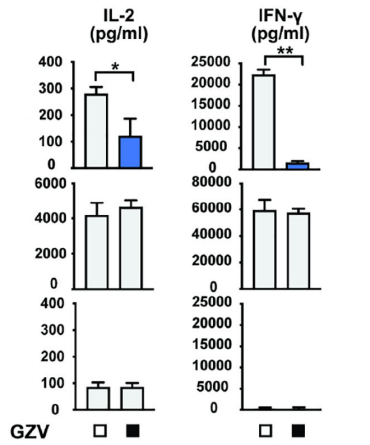
Grazoprevir purchased from MedChemExpress. Usage Cited in: Cancer Cell. 2022 Nov 14;40(11):1294-1305.e4. [Abstract]
Primary T cell lines were treated with or without Grazoprevir (all in the presence of target cells), and cytokine levels quantified.
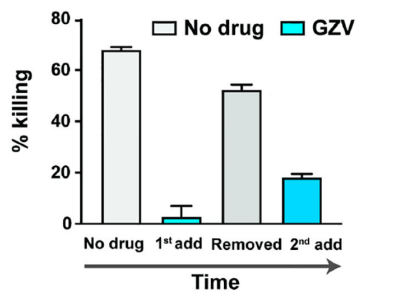
Grazoprevir purchased from MedChemExpress. Usage Cited in: Cancer Cell. 2022 Nov 14;40(11):1294-1305.e4. [Abstract]
Cytotoxicity response of OFF VIPER CAR T cells to Grazoprevir being added, washed out, and re-introduced after two days.
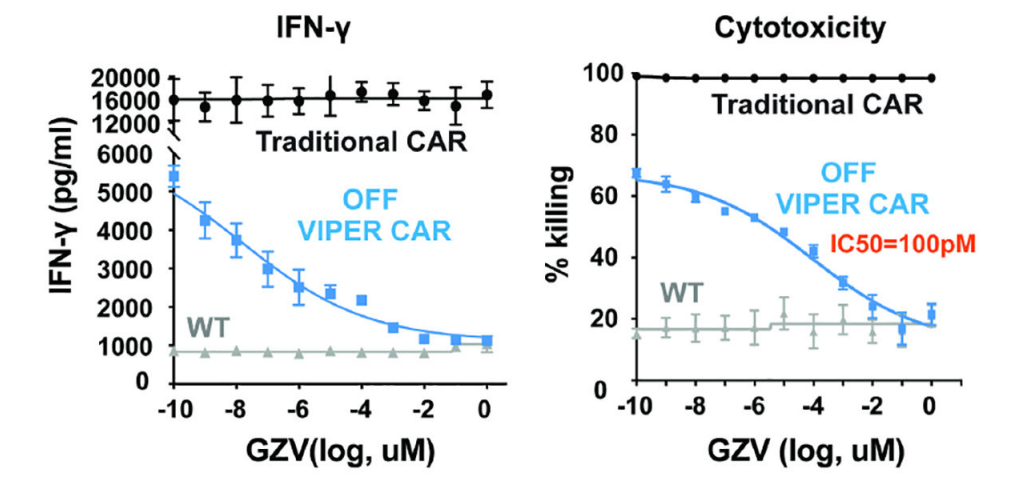
Grazoprevir purchased from MedChemExpress. Usage Cited in: Cancer Cell. 2022 Nov 14;40(11):1294-1305.e4. [Abstract]
Grazoprevir dose-response profile of various cells, as measured in cytokine levels and cell killing.
Grazoprevir purchased from MedChemExpress. Usage Cited in: Cancer Cell. 2022 Nov 14;40(11):1294-1305.e4. [Abstract]
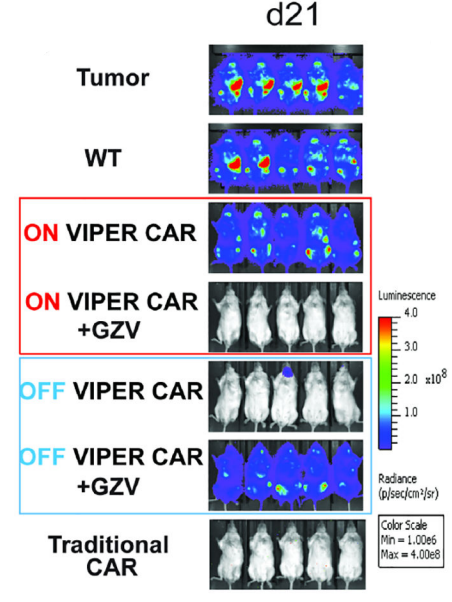
IVIS imaging of groups treated with (1) no T cells, (2) non-transduced T cell (NT-WT), (3) ON VIPER CAR T cells, (4) ON VIPER CAR T cells with Grazoprevir (5) OFF VIPER CAR T cells, (6) OFF VIPER CAR T cells with Grazoprevir, or (7) Traditional CAR T cells by day 21.
Grazoprevir purchased from MedChemExpress. Usage Cited in: Cancer Cell. 2022 Nov 14;40(11):1294-1305.e4. [Abstract]
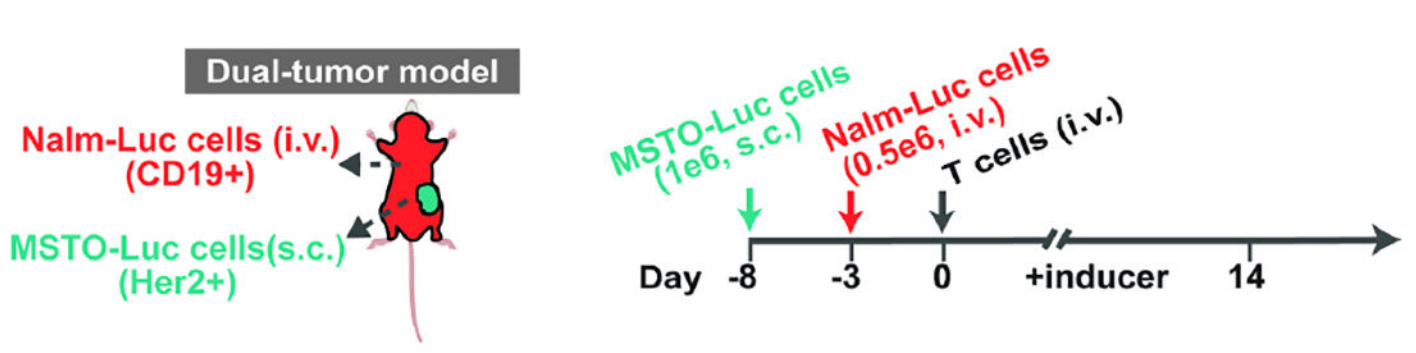
Illustration of the dual-tumor model generated by systemically growing Nalm6 cells via i.v. and regional growth of MSTO-211H cells via s.c (left). Timeline for the in vivo experiment (right). Inducers (Grazoprevir or POM) were injected daily through i.p.
-
Nat Biotechnol
Multi-input chemical control of protein dimerization for programming graded cellular responses. [Abstract]2019 Oct;37(10):1209-1216. PMID: 31501561 -
Nat Methods
2018 Jul;15(7):519-522. PMID: 29967495 -
Nat Commun
Both Boceprevir and GC376 efficaciously inhibit SARS-CoV-2 by targeting its main protease. [Abstract]2020 Sep 4;11(1):4417. PMID: 32887884 -
Cancer Immunol Res
CRASH-IT Switch Enables Reversible and Dose-Dependent Control of TCR and CAR T-cell Function. [Abstract]2021 Sep;9(9):999-1007. PMID: 34193461 -
Pharmaceuticals (Basel)
Evaluation of the Potency of Anti-HIV and Anti-HCV Drugs to Inhibit P-Glycoprotein Mediated Efflux of Digoxin in Caco-2 Cell Line and Human Precision-Cut Intestinal Slices. [Abstract]2022 Feb 18;15(2):242. PMID: 35215354 -
J Gastroenterol
Combinations of two drugs among NS3/4A inhibitors, NS5B inhibitors and non-selective antiviral agents are effective for hepatitis C virus with NS5A-P32 deletion in humanized-liver mice. [Abstract]2019 May;54(5):449-458. PMID: 30684016 -
Sci Rep
Hepatitis C virus NS3/4A inhibitors and other drug-like compounds as covalent binders of SARS-CoV-2 main protease. [Abstract]2022 Jul 16;12(1):12197. PMID: 35842458 -
Sci Rep
Impact of novel NS5A resistance-associated substitutions of hepatitis C virus detected in treatment-experienced patients. [Abstract]2019 Apr 5;9(1):5722. PMID: 30952914 -
Antiviral Res
Identification of a novel replication-competent hepatitis C virus variant that confers the sofosbuvir resistance. [Abstract]2022 Jan:197:105224. PMID: 34864126 -
Antiviral Res
Construction and characterization of Genotype-3 hepatitis C virus replicon revealed critical genotype-3-specific polymorphism for drug resistance and viral fitness. [Abstract]2019 Nov:171:104612. PMID: 31542377 -
Antiviral Res
A profiling study of a newly developed HCVcc strain PR63cc's sensitivity to direct-acting antivirals. [Abstract]2017 Mar:139:18-24. PMID: 28025084 -
Development
Small molecule- and cell contact-inducible systems for controlling expression and differentiation in mouse embryonic stem cells. [Abstract]2025 Jun 1;152(11):dev204505. PMID: 40377146 -
J Pharm Biomed Anal
Simultaneous determination of elbasvir and grazoprevir in fixed-dose combination and mass spectral characterization of each degradation product by UHPLC-ESI-QTOF-MS/MS. [Abstract]2020 Jan 30:178:112964. PMID: 31711865 -
J Chromatogr B Analyt Technol Biomed Life Sci
Quantification of second generation direct-acting antivirals daclatasvir, elbasvir, grazoprevir, ledipasvir, simeprevir, sofosbuvir and velpatasvir in human plasma by UPLC-MS/MS. [Abstract]2019 Mar 15:1110-1111:15-24. PMID: 30776611 -
-
bioRxiv
High-resolution profiling reveals coupled transcriptional and translational regulation of transgenes. [Abstract]2024 Dec 3:2024.11.26.625483. PMID: 39651241 -
-
-
-
-
bioRxiv
2023 Oct 26:2023.10.26.561921. PMID: 37961502 -
bioRxiv
Controlled protein activities with viral proteases, antiviral peptides, and antiviral drugs. [Abstract]2023 Feb 27:2023.02.27.530290. PMID: 36909459 -
-
Elife
Acute disruption of the synaptic vesicle membrane protein synaptotagmin 1 using knockoff in mouse hippocampal neurons. [Abstract]2020 Jun 9:9:e56469. PMID: 32515733 -
-


Solvent & Solubility
In Vitro:
Ethanol : 66.67 mg/mL (86.93 mM; Need ultrasonic)
DMSO : 50 mg/mL (65.20 mM; Need ultrasonic; Hygroscopic DMSO has a significant impact on the solubility of product, please use newly opened DMSO)
Please refer to the solubility information to select the appropriate solvent. Once prepared, please aliquot and store the solution to prevent product inactivation from repeated freeze-thaw cycles.
Storage method and period of stock solution: -80°C, 1 year; -20°C, 6 months. When stored at -80°C, please use it within 1 year. When stored at -20°C, please use it within 6 months.
Please refer to the solubility information to select the appropriate solvent. Once prepared, please aliquot and store the solution to prevent product inactivation from repeated freeze-thaw cycles.
Storage method and period of stock solution: -80°C, 1 year; -20°C, 6 months. When stored at -80°C, please use it within 1 year. When stored at -20°C, please use it within 6 months.
Concentration (start) × Volume (start) = Concentration (final) × Volume (final)
In Vivo:
Select the appropriate dissolution method based on your experimental animal and administration route.
- For the following dissolution methods, please ensure to first prepare a clear stock solution using an In Vitro approach and then sequentially add co-solvents:
- To ensure reliable experimental results, the clarified stock solution can be appropriately stored based on storage conditions. As for the working solution for In Vivo experiments, it is recommended to prepare freshly and use it on the same day.
- The percentages shown for the solvents indicate their volumetric ratio in the final prepared solution. If precipitation or phase separation occurs during preparation, heat and/or sonication can be used to aid dissolution.
Add each solvent one by one: 10% DMSO 40% PEG300 5% Tween-80 45% Saline
Solubility: ≥ 2.5 mg/mL (3.26 mM); Clear solution
This protocol yields a clear solution of ≥ 2.5 mg/mL (saturation unknown).
Taking 1 mL working solution as an example, add 100 μL DMSO stock solution (25.0 mg/mL) to 400 μL PEG300, and mix evenly; then add 50 μL Tween-80 and mix evenly; then add 450 μL Saline to adjust the volume to 1 mL.
Preparation of Saline: Dissolve 0.9 g sodium chloride in ddH₂O and dilute to 100 mL to obtain a clear Saline solution.
For the following dissolution methods, please prepare the working solution directly:
It is recommended to prepare fresh solutions and use them promptly within a short period of time.
The percentages shown for the solvents indicate their volumetric ratio in the final prepared solution. If precipitation or phase separation occurs during preparation, heat and/or sonication can be used to aid dissolution.
Add each solvent one by one: 100% PEG-300
Solubility: 12.5 mg/mL (16.30 mM); Clear solution; Need ultrasonic
In Vivo Dissolution Calculator
Please enter the basic information of animal experiments:
-
-
-
-
Recommended: Prepare an additional quantity of animals to account for potential losses during experiments.
Please enter your animal formula composition:
-
%DMSO +
Recommended: Keep the proportion of DMSO in working solution below 2% if your animal is weak.
-
%+
-
+%Tween-80 + +
-
%Saline +
The co-solvents required include: DMSO, . All of co-solvents are available by MedChemExpress (MCE). , Tween 80. All of co-solvents are available by MedChemExpress (MCE).
Working solution concentration: 0.22 mg/mL
Method for preparing stock solution: mg drug dissolved in μL DMSO. Stock solution concentration: mg/mL.
1. Take μL DMSO stock solution;
2. Add μL .
μL , mix evenly;
3. Then add μL Tween 80, mix evenly;
4. Then add μL
Please ensure that the stock solution in the first step is dissolved to a clear state, and add co-solvents in sequence. You can use ultrasonic heating (ultrasonic cleaner, recommended frequency 20-40 kHz), vortexing, etc. to assist dissolution.

Protocol
Animal Administration[1]
Rats and Dogs[1]
Studies are performed in both rats and dogs. For studies in which Grazoprevir is dosed intravenously to rats or dogs, the compound is formulated in polyethylene glycol 200 (PEG200) and administered as a bolus at either 2 mg/kg of body weight (Rats) or 0.5 mg/kg (dog). For oral studies, the crystalline potassium salt of the compound is dosed as a solution in PEG400 at 5 mg/kg (Rats) or 1 mg/kg (dog). For all studies, blood samples are collected in EDTA-containing tubes at appropriate times and plasma is separated by centrifugation and stored at −70°C until analysis. Quantitation of Grazoprevir (MK-5172) levels is conducted by high-performance liquid chromatography/mass spectroscopy (LC/MS/MS) following protein precipitation. Liver samples are obtained from rat studies at the termination of the experiment. For dog, liver biopsy samples (20 μL) are collected following sedation. Tissue samples are homogenized in four volumes of deionized water, and drug concentrations are determined by LC/MS/MS after protein precipitation.
MedChemExpress (MCE) has not independently confirmed the accuracy of these methods. They are for reference only.


Purity & Documentation
-
Data Sheet (286 KB)
-
SDS (393 KB)
- English - EN (393 KB)
- Français - FR (393 KB)
- Deutsch - DE (393 KB)
- Norwegian - NO (393 KB)
- Español - ES (393 KB)
- Swedish - SV (393 KB)
- Italian - IT (393 KB)
- Korean - KR (393 KB)
- Portuguese - PT (393 KB)
-
Handling Instructions (2659 KB)
References
[1]. Summa V, et al. MK-5172, a selective inhibitor of hepatitis C virus NS3/4a protease with broad activity across genotypes and resistant variants. Antimicrob Agents Chemother. 2012 Aug;56(8):4161-7. [Content Brief]
[2]. Harper S, et al. Discovery of MK-5172, a Macrocyclic Hepatitis C Virus NS3/4a Protease Inhibitor. ACS Med Chem Lett. 2012 Mar 2;3(4):332-6. [Content Brief]
[3]. Qi Sun, et al. Bardoxolone and bardoxolone methyl, two Nrf2 activators in clinical trials, inhibit SARS-CoV-2 replication and its 3C-like protease. Signal Transduct Target Ther. 2021 May 29;6(1):212. [Content Brief]


Complete Stock Solution Preparation Table
Please refer to the solubility information to select the appropriate solvent. Once prepared, please aliquot and store the solution to prevent product inactivation from repeated freeze-thaw cycles.
Storage method and period of stock solution: -80°C, 1 year; -20°C, 6 months. When stored at -80°C, please use it within 1 year. When stored at -20°C, please use it within 6 months.
| Optional Solvent | Concentration Solvent Mass | 1 mg | 5 mg | 10 mg | 25 mg |
|---|---|---|---|---|---|
| DMSO / Ethanol | 1 mM | 1.3040 mL | 6.5198 mL | 13.0395 mL | 32.5988 mL |
| 5 mM | 0.2608 mL | 1.3040 mL | 2.6079 mL | 6.5198 mL | |
| 10 mM | 0.1304 mL | 0.6520 mL | 1.3040 mL | 3.2599 mL | |
| 15 mM | 0.0869 mL | 0.4347 mL | 0.8693 mL | 2.1733 mL | |
| 20 mM | 0.0652 mL | 0.3260 mL | 0.6520 mL | 1.6299 mL | |
| 25 mM | 0.0522 mL | 0.2608 mL | 0.5216 mL | 1.3040 mL | |
| 30 mM | 0.0435 mL | 0.2173 mL | 0.4347 mL | 1.0866 mL | |
| 40 mM | 0.0326 mL | 0.1630 mL | 0.3260 mL | 0.8150 mL | |
| 50 mM | 0.0261 mL | 0.1304 mL | 0.2608 mL | 0.6520 mL | |
| 60 mM | 0.0217 mL | 0.1087 mL | 0.2173 mL | 0.5433 mL | |
| Ethanol | 80 mM | 0.0163 mL | 0.0815 mL | 0.1630 mL | 0.4075 mL |


Grazoprevir Related Classifications
HY-15298 Related Classifications
 Powered by Bioz