



H-Ras
H-Ras (HRAS) is a small GTPase that functions as a GDP/GTP-regulated molecular switch linking activated cell-surface receptors to intracellular signaling networks that control cell proliferation, differentiation, survival, and migration[4][5]. Mechanistically, H-Ras cycles between inactive GDP-bound and active GTP-bound states and transmits signals through major effector pathways, including the RAF-MEK-ERK and PI3K-AKT cascades, thereby coordinating growth factor-dependent cellular responses[6][1]. In disease contexts, activating HRAS mutations promote persistent downstream signaling and contribute to multiple human malignancies, with notable involvement in bladder, thyroid, head and neck, and oral squamous cell carcinomas[7][2]. Compared with related Ras isoforms, H-Ras, K-Ras, and N-Ras share highly conserved G-domains but differ substantially within their C-terminal hypervariable regions, which determine membrane trafficking, subcellular localization, and isoform-specific signaling outputs[4][8]. H-Ras is further distinguished by its dynamic palmitoylation-dependent trafficking between the plasma membrane and endomembrane compartments, enabling spatially restricted signal transduction and context-dependent biological effects[8][3]. These isoform-specific properties make H-Ras an important experimental model for dissecting Ras signaling compartmentalization and oncogenic network regulation[4][8]. For experimental and translational applications, H-Ras remains a particularly tractable therapeutic target because its membrane localization depends on farnesylation, and pharmacological farnesyltransferase inhibitors such as tipifarnib can suppress H-Ras-dependent signaling in selected tumor models[2][9].
Referencias:
- [1]. Johnson CW, et al. The small GTPases K-Ras, N-Ras, and H-Ras have distinct biochemical properties determined by allosteric effects. J Biol Chem. 2017;292(31):12981-12993.
- [2]. Hoxhallari L, et al. Regulation of nucleotide excision repair by wild-type HRAS signaling in head and neck cancer. Cancer Gene Ther. 2025;32(6):662-677.
- [3]. Mitin N, et al. Signaling interplay in Ras superfamily function. Curr Biol. 2005;15(14):R563-R574.
- [4]. Castellano E, et al. Functional specificity of ras isoforms: so similar but so different. Genes Cancer. 2011;2(3):216-231. [Content Brief]
- [5]. Hobbs GA, et al. RAS isoforms and mutations in cancer at a glance. J Cell Sci. 2016;129(7):1287-1292. [Content Brief]
- [6]. Czyzyk D, et al. Structural insights into isoform-specific RAS-PI3Kα interactions and the role of RAS in PI3Kα activation. Nat Commun. 2025 Jan 9;16(1):525. [Content Brief]
- [7]. Adjei AA. Blocking oncogenic Ras signaling for cancer therapy. J Natl Cancer Inst. 2001 Jul 18;93(14):1062-74. doi: 10.1093/jnci/93.14.1062. PMID: 11459867. et al. Blocking oncogenic Ras signaling for cancer therapy. J Natl Cancer Inst. 2001 Jul 18;93(14):1062-74. [Content Brief]
- [8]. Nussinov R, et al. Ras isoform-specific expression, chromatin accessibility, and signaling. Biophys Rev. 2021;13:489-505.
- [9]. Hahn S M, et al. Farnesyltransferase inhibitors[C]//Seminars in oncology. WB Saunders, 2001, 28: 86-93.
-
Productos relacionados con H-Ras (10)
Productos relacionados con (10)

-
RMC-7977
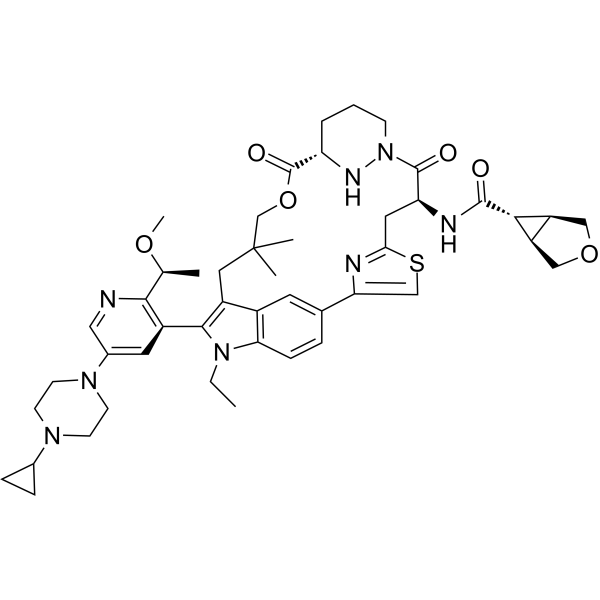 0 ImagesRMC-7977 is an orally active triple-complex RAS inhibitor that can simultaneously bind to cyclophilin A (CYPA) (Kd = 195 nM) and KRAS (G12V) (Kd = 292 μM). It exhibits broad-spectrum inhibitory activity against KRAS, NRAS, and HRAS proteins and their various wild-type and mutant variants. RMC-7977 induces apoptosis by inhibiting the phosphorylation of ERK, CRAF, and RSK, as well as increasing PARP cleavage. This leads to tumor regression, reduces resistance in KRASG12C cancer models, and demonstrates good tolerability across various RAS cancer models.
-
Lonafarnib
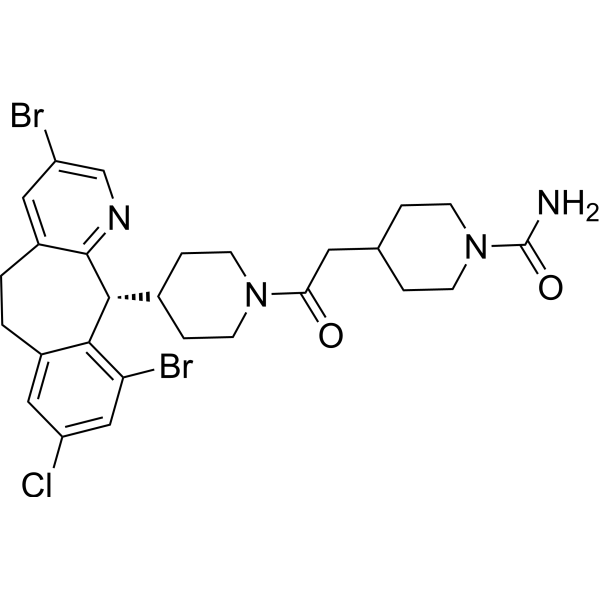 0 ImagesSynonyms: Sch66336Lonafarnib (Sch66336) is an orally active, blood-brain barrier penetrant farnesyltransferase (FPTase) inhibitor. Lonafarnib increases the phosphorylation levels of Akt, CaMKII and CREB, upregulates BDNF expression in the hippocampus, elevates the content of α7nAChR on cell membranes, and blocks the isoprenylation of H-Ras. Lonafarnib repairs synapses and reverses spatial memory deficits in Aβ1-42 model mice. Lonafarnib inhibits RSV fusion and replication, and alleviates virus-induced lung injury. Lonafarnib activates the lysosomal and autophagic pathways, and reduces the phosphorylation and aggregation of tau. Lonafarnib acts synergistically with Sorafenib (HY-10201) to promote apoptosis, and inhibits the proliferation and invasion of melanoma cells. Lonafarnib inhibits the farnesylation of progerin, repairs nuclear membrane defects, and activates the cGAS-STING-STAT1 signaling pathway. Lonafarnib can be used in research related to diseases including Alzheimer's disease, viral infections, melanoma, and progeria.
-
Eras-4001
 0 ImagesEras-4001 is a potent, orally active pan-KRAS inhibitor with Kd values of 110, 13 and 39 pM against wild-type, G12D and G12V mutant KRAS, respectively, and exhibits selectivity toward wild-type HRAS and NRAS. Eras-4001 inhibits ERK1/2 phosphorylation and cell viability in cancer cells. Eras-4001 induces tumor growth inhibition and regression in subcutaneous xenograft models. Eras-4001 can be used in research on non-small cell lung cancer, ovarian cancer, etc.
-
Kobe0065
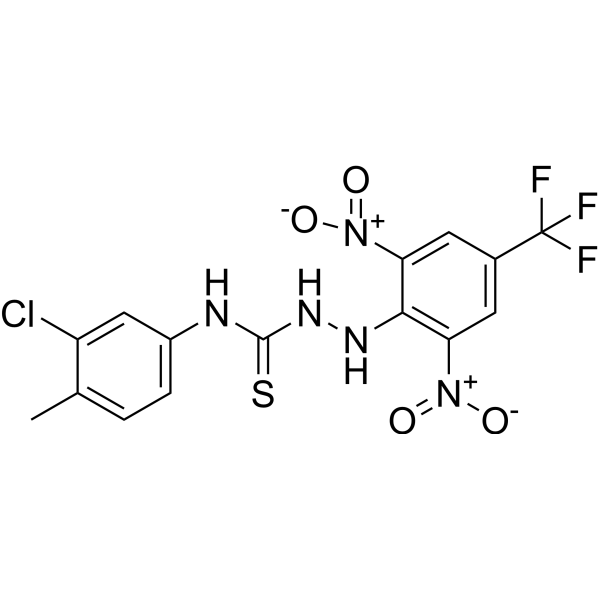 0 ImagesKobe0065 is a novel and effective inhibitor of Ras-Raf interaction, competitively inhibiting the binding of H-Ras·GTP to c-Raf-1 RBD with a Ki value of 46±13 μM.
-
PROTAC Axl Degrader 2
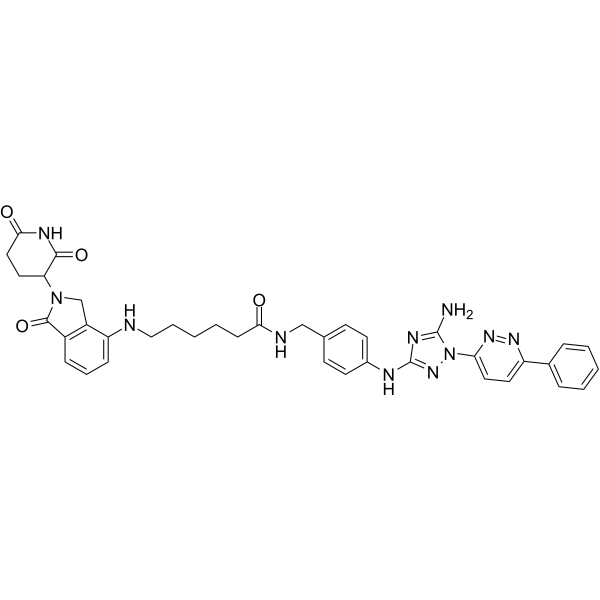 0 ImagesReferencia número: HY-144627No. CAS: 3033401-45-2PROTAC Axl Degrader 2 is an orally active and selective AXL PROTAC degrader with dual activities of AXL kinase inhibition and AXL protein degradation. PROTAC Axl Degrader 2 induces cytoplasmic vacuolization, excessive macropinosome production, oncosis, H-Ras activation, and Rac1-dependent non-apoptotic cell death. PROTAC Axl Degrader 2 inhibits the proliferation and migration of cancer cells, and also suppresses the growth of tumor cell xenografts under in vivo conditions. PROTAC Axl Degrader 2 can be used in research related to breast cancer.
-
Aspafilioside B
 0 ImagesReferencia número: HY-122465No. CAS: 131123-73-4Aspafilioside B is a steroidal saponin. Aspafilioside B is extractable from Asparagus filicinus. Aspafilioside B activates the ERK, c-Raf and p38 MAPK signaling pathways, and upregulates H-Ras and N-Ras. Aspafilioside B mediates G2/M cell cycle arrest by altering the expression of cell cycle regulatory proteins. Aspafilioside B induces Apoptosis. Aspafilioside B increases intracellular ROS levels. Aspafilioside B is applicable to research related to hepatocellular carcinoma.
-
(Rac)-Lonafarnib
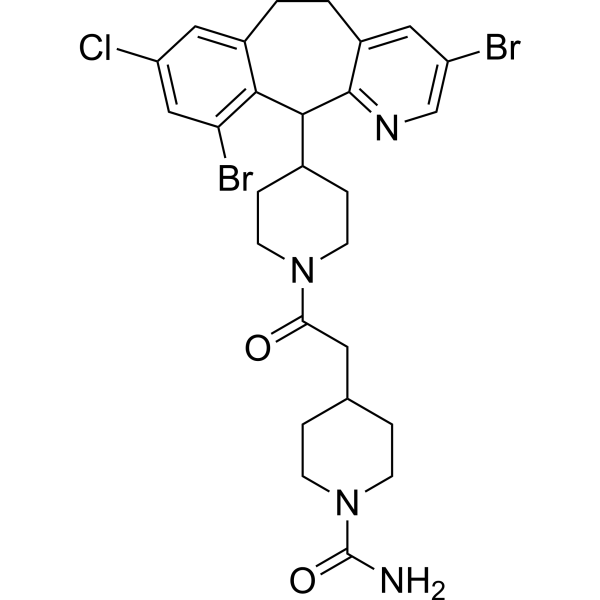 0 ImagesReferencia número: HY-15136BNo. CAS: 193275-86-4Synonyms: Sch66336 racemate(Rac)-Lonafarnib (Sch66336 racemate) is an isomer of Lonafarnib (HY-15136). Lonafarnib (Sch66336) is an orally active, blood-brain barrier penetrant farnesyltransferase (FPTase) inhibitor. Lonafarnib increases the phosphorylation levels of Akt, CaMKII and CREB, upregulates BDNF expression in the hippocampus, elevates the content of α7nAChR on cell membranes, and blocks the isoprenylation of H-Ras. Lonafarnib repairs synapses and reverses spatial memory deficits in Aβ1-42 model mice. Lonafarnib inhibits RSV fusion and replication, and alleviates virus-induced lung injury. Lonafarnib activates the lysosomal and autophagic pathways, and reduces the phosphorylation and aggregation of tau. Lonafarnib acts synergistically with Sorafenib (HY-10201) to promote apoptosis, and inhibits the proliferation and invasion of melanoma cells. Lonafarnib inhibits the farnesylation of progerin, repairs nuclear membrane defects, and activates the cGAS-STING-STAT1 signaling pathway. Lonafarnib can be used in research related to diseases including Alzheimer's disease, viral infections, melanoma, and progeria.
-
Eras-4001-d6
 0 ImagesReferencia número: HY-175870SNo. CAS: 3024881-00-0Eras-4001-d6 is a deuterated form of Eras-4001 (HY-175870). Eras-4001 is a potent, orally active pan-KRAS inhibitor with Kd values of 110, 13 and 39 pM against wild-type, G12D and G12V mutant KRAS, respectively, and exhibits selectivity toward wild-type HRAS and NRAS. Eras-4001 inhibits ERK1/2 phosphorylation and cell viability in cancer cells. Eras-4001 induces tumor growth inhibition and regression in subcutaneous xenograft models. Eras-4001 can be used in research on non-small cell lung cancer, ovarian cancer, etc.
-
L-744832
 0 ImagesReferencia número: HY-116428No. CAS: 160141-09-3L-744832 is a farnesyl transferase inhibitor. L-744832 effectively inhibits the farnesylation of H-Ras and N-Ras, but has little effect on K-Ras treatment. L-744832 not only directly targets the oncogenic pathway by inhibiting Ras farnesylation, but also enhances radiosensitivity by restoring TGF-β signaling through epigenetic reprogramming. L-744832 can induce cell cycle arrest and apoptosis. L-744832 can be used in combination therapy studies for Ras-driven tumors such as pancreatic cancer.
-
pan-KRAS-IN-16
 0 ImagesReferencia número: HY-164645No. CAS: 2368246-78-8pan-KRAS-IN-16 (Compound 3344) is an anti-RAS small molecule derived from an intracellular antibody fragment with pan-RAS-effector protein-protein interaction inhibitor properties. pan-KRAS-IN-16 binds to a hydrophobic pocket near to the effector-binding switch regions of RAS. pan-KRAS-IN-16 prevents endogenous RAS-dependent signaling in tumor cell lines.



