



CD74
HLA-DR-gamma; Invariant polypeptide of major histocompatibility complex, class II antigen-associated
CD74 (HLA class II histocompatibility antigen gamma chain; HLA-DR antigens-associated invariant chain) is a type II transmembrane protein. CD74 is involved in the formation and transport of MHC class II peptide complexes for the generation of CD4+ T cell responses. Cell surface CD74 serves as a receptor for the cytokine, macrophage migration inhibitory factor (MIF) on many cell types. In immune cells, MIF binding to CD74 induces a signaling cascade that results in regulation of cell proliferation and survival. CD74 has been associated with tumor progression and metastasis. CD74 expression has been suggested to serve as a prognostic factor in many cancers, with higher relative expression behaving as a marker of tumor progression[1].
All Product Categories
-
CD74 関連製品 (11)
関連製品 (11)

-
抗体 (25)
- 1
-
Milatuzumab
 0 Images別名: hLL1; MEDI-115Milatuzumab (hLL1; MEDI-115) is a humanized anti-CD74 monoclonal antibody. CD74, a integral membrane protein, is associated with the promotion of B-cell growth and survival. Milatuzumab causes free radical oxygen generation, and loss of mitochondrial membrane potential. Milatuzumaba also decreases CD20/CD74 aggregates and cell adhesion, to lead to cell death.
-
CLIP (86-100)
 0 ImagesCLIP (86-100) is amino acids 86 to 100 fragment of class II-associated invariant chain peptide (CLIP). CLIP is a small self-peptide and cleavage product of the invariant chain that resides in the HLA-II antigen binding groove and is believed to play a critical role in the assembly and transport of MHC class II alphabetaIi complexes through its interaction with the class II peptide-binding site.
-
PADRE peptide
 0 ImagesPADRE peptide is a pan-HLA-DR binding epitope and immunostimulant. PADRE peptide binds to the peptide-binding groove of MHC class II molecules for presentation to CD4+ T cells, thereby effectively stimulating specific immune responses. PADRE peptide not only enhances anti-tumor immune responses, inhibits tumor growth and prolongs survival; it also significantly increases the frequency of E7-specific CD8+ T cells and improves therapeutic efficacy against TC-1 tumors when used in combination with E7 peptide-based vaccines and poly (I:C). The intensity of the immune response induced by PADRE peptide is lower than that of the Ii-PADRE DNA vaccine, and it fails to enhance the immune effect of CRT-E7 DNA. PADRE peptide is widely applicable to research on related tumors such as melanoma, glioblastoma and cervical cancer.
-
Bezetabart
 0 Images別名: SP-7219; STRO-001 Antibody
-
Arvanil
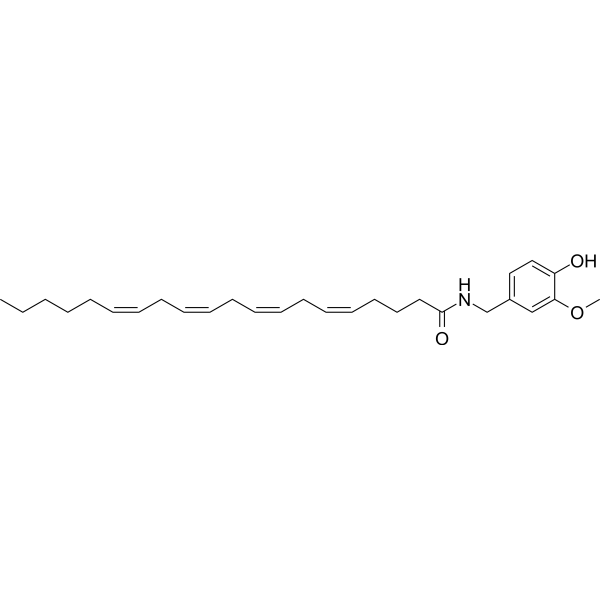 0 Images別名: N-VanillylarachidonamideArvanil (N-Vanillylarachidonamide) is a mixed agonist of CB1 and TRPV1 receptors. Arvanil downregulates CD25, HLA-DR, CD134/OX40, blocks G1/S phase transition, and induces phosphorylation of Akt. Arvanil does not induce apoptosis in cells. Arvanil inhibits lymphocyte activation and ameliorates autoimmune encephalomyelitis. Arvanil can be used in research related to Huntington's disease, vomiting, and multiple sclerosis.
-
PE-CF594
 0 Images製品番号: HY-D3334PE-CF594 is a labeled monoclonal antibody conjugate that specifically binds to HLA-DR on the surface of monocytes and B cells, while acting as a signal attenuator. Through steric hindrance and a possible fluorescence resonance energy transfer mechanism, PE-CF594 specifically reduces the fluorescence intensity of PE-CD124 staining, but does not interfere with the staining of other PE-labeled antibodies such as CD40, CD4 or CD14. PE-CF594 can also be used to detect the emission signal of mt-Keima after excitation with a 561-nm laser, thereby effectively evaluating mitophagy activity.
-
Schisandrone
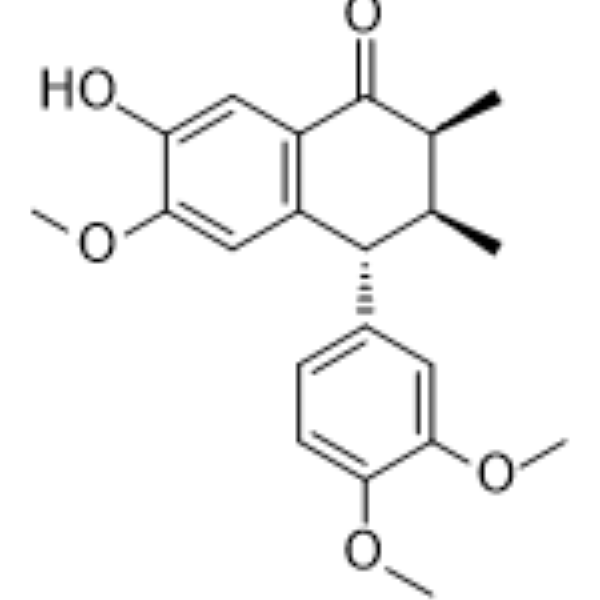 0 ImagesSchisandrone, a 4-aryltetralone lignan, is isolated from the dried fruits of Schisandra sphenanthera. Schisandrone is an alpha-hemolysin (Hla) inhibitor that downregulates the transcript levels of hla, agrA and RNAIII. Hla is an integral virulence determinant in Staphylococcus aureus that determines pathogenicity. Schisandrone is a potent inhibitor against MRSA pneumonia.
-
(5R)-5-Hydroxytriptolide
 0 Images別名: PG 701; LLDT-8; 5α-Hydroxytriptolide(5R)-5-Hydroxytriptolide is an extracted compound from Tripterygium, and shows lower cell cytotoxicity and higher immunosuppressive activity. (5R)-5-Hydroxytriptolide can be used for study of rheumatoid arthritis.


- 1




