



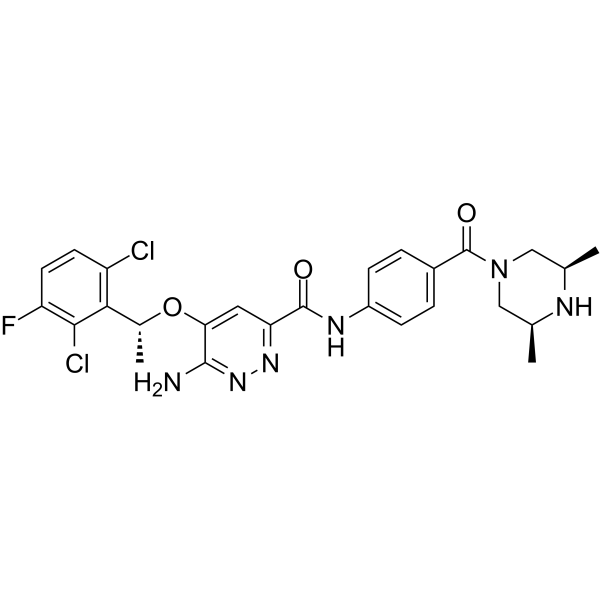
Ensartinib
Based on 5 publication(s) in Google Scholar
Ensartinib (X-396) is a BBB-permeable and dual ALK/MET inhibitor with IC50s of <0.4 nM and 0.74 nM, respectively.
For research use only. We do not sell to patients.
- Purity : 99.93%
- CAS No.: 1370651-20-9
- Formula: C26H27Cl2FN6O3
- Molecular Weight:561.44
-
Storage:Powder -20°C, 3 years , 4°C, 2 years ; In solvent -80°C, 6 months , -20°C, 1 month

To place orders, for customer services and technical support, please contact: MedChemExpress USA
Tel: 609-228-6898 E-mail: [email protected] [email protected]


-
 Biological Activity
-
Chemical Information
-
Solvent & Solubility
- Purity & Documentation
- References
-
 Help & FAQs


-
HY-12215
LorlatinibALK/ROS1 Inhibitor -
HY-15656
CeritinibALK Inhibitor -
HY-12857
BrigatinibALK Inhibitor -
HY-13011
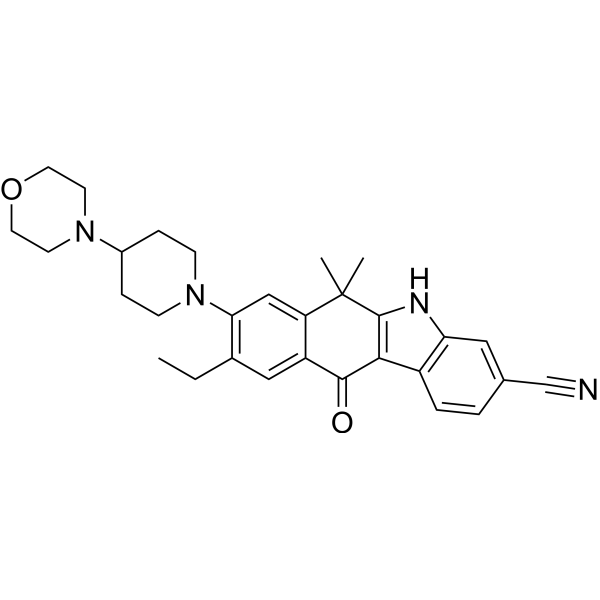
AlectinibALK Inhibitor -
HY-50878
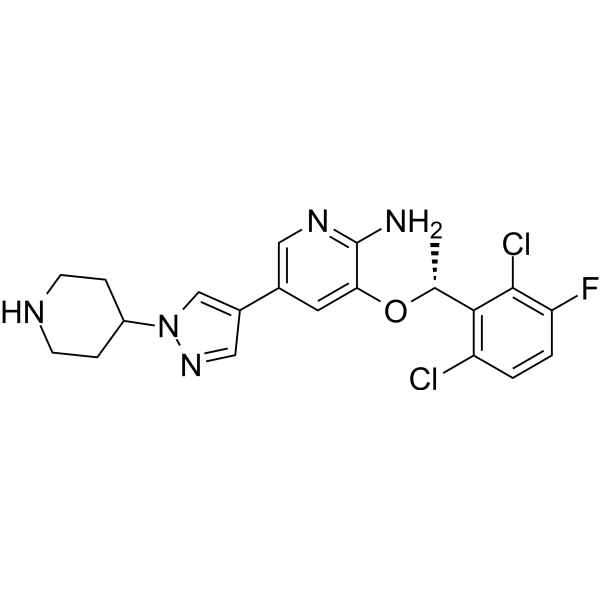
CrizotinibALK/c-Met/ROS1 Inhibitor -
HY-12678
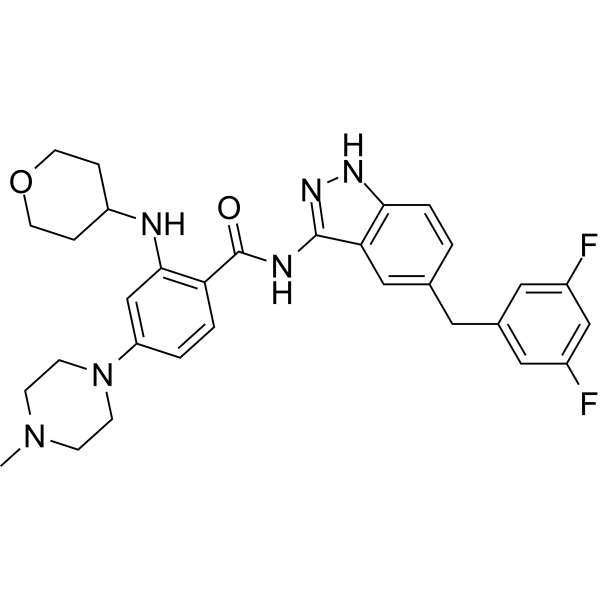
EntrectinibTrk/ROS1/ALK Inhibitor -
HY-16590
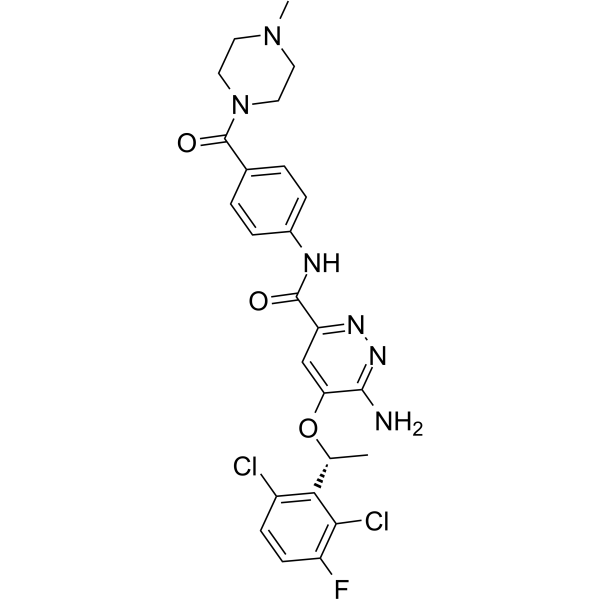
X-376ALK and MET Inhibitor -
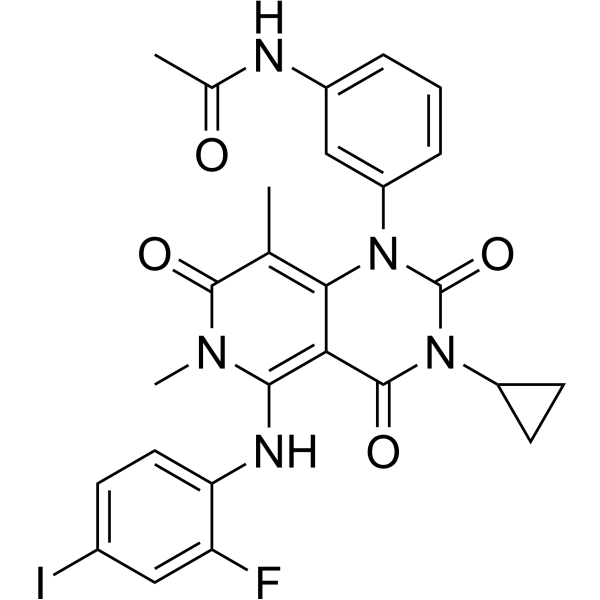
HY-10999
TrametinibMEK Inhibitor -
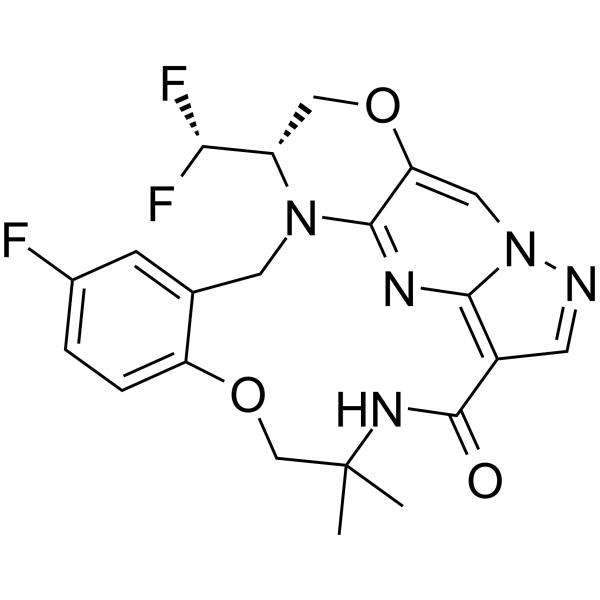
HY-139279
ZotizalkibALK Inhibitor -
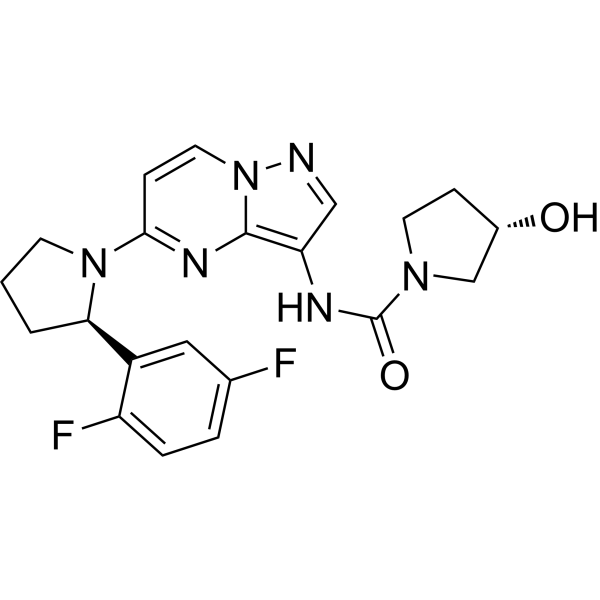
HY-12866
LarotrectinibTRK Inhibitor -
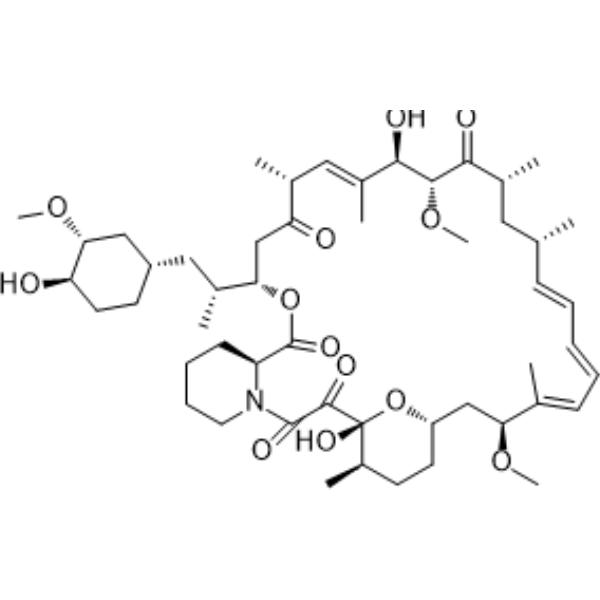
HY-10219
RapamycinmTOR Inhibitor -
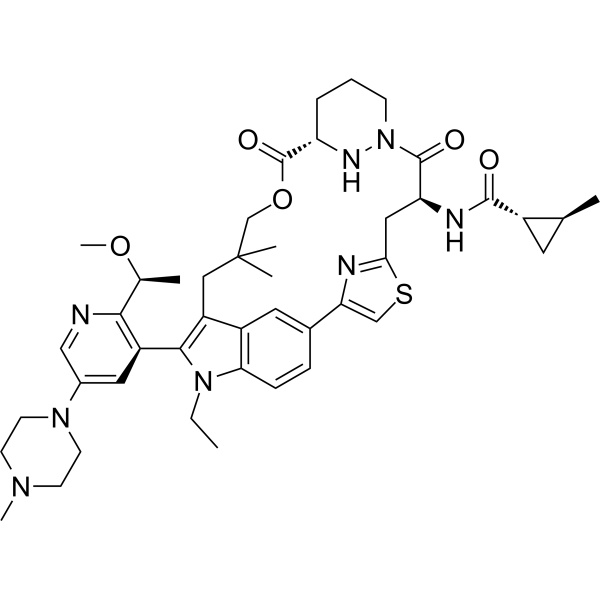
HY-148439
DaraxonrasibRAS(ON) Inhibitor
Publications Citing Use of MedChemExpress (MCE) Ensartinib
More

Biological Activity
Description
IC50 & Target
IC50: <0.4 nM (ALK), 0.74 nM (MET)[1]
Cellular Effect
|
Cell Line

|
Type | Value | Description | References |
|---|---|---|---|---|
| NCI-H3122 | IC50 |
15 nM
Compound: 10; X-396
|
Cytotoxicity against human NCI-H3122 cells harboring EML4-ALK E13;A20 mutant incubated for 72 hrs by Cell titer blue assay
Cytotoxicity against human NCI-H3122 cells harboring EML4-ALK E13;A20 mutant incubated for 72 hrs by Cell titer blue assay
|
[PMID: 31419130] |
In Vitro
The ability of Ensartinib (X-396) to inhibit the growth of different cancer cell lines harboring ALK fusions or point mutations is tested. Ensartinib is potent in H3122 lung cancer cells harboring EML4-ALK E13;A20 (IC50: 15nM). Ensartinib is also potent in H2228 lung cancer cells harboring EML4-ALK E6a/b; A20 (IC50: 45 nM). Furthermore, X-376 is potent in SUDHL-1 lymphoma cells harboring NPM-ALK (IC50: 9 nM). X-376 also inhibits SY5Y neuroblastoma cells harboring ALK F1174L, MKN-45 gastric carcinoma cells harboring MET dependent, HepG2 cells and PC-9 lung cancer cell lines harboring EGFR exon 19 del with IC50s of 68 nM, 156 nM, 9.644 μM and 2.989 μM, respectively[1].
MedChemExpress (MCE) has not independently confirmed the accuracy of these methods. They are for reference only.
In Vivo
MedChemExpress (MCE) has not independently confirmed the accuracy of these methods. They are for reference only.
Clinical Trial
| NCT Number | Sponsor | Condition | Start Date |
Phase
|
|---|---|---|---|---|
| NCT01329991 | 2011-05 | PHASE1 |


Chemical Information
-
CAS No. 1370651-20-9
-
Appearance Solid
-
Molecular Weight 561.44
-
Formula C26H27Cl2FN6O3
-
Color White to off-white
-
SMILES
O=C(C1=NN=C(N)C(O[C@@H](C2=C(Cl)C=CC(F)=C2Cl)C)=C1)NC3=CC=C(C(N4C[C@@H](C)N[C@@H](C)C4)=O)C=C3
-
Synonyms
X-396
-
Shipping
Room temperature in continental US; may vary elsewhere.
-
Storage
Powder -20°C 3 years 4°C 2 years In solvent -80°C 6 months -20°C 1 month


Publications (5)
-
Journal Impact Factor
-
Most Recent
-
Cancer Discov
NVL-655 Is a Selective and Brain-Penetrant Inhibitor of Diverse ALK-Mutant Oncoproteins, Including Lorlatinib-Resistant Compound Mutations. [Abstract]2024 Dec 2;14(12):2367-2386. PMID: 39269178 -
Drug Des Devel Ther
Characterization of Stable and Reactive Metabolites of the Anticancer Drug, Ensartinib, in Human Liver Microsomes Using LC-MS/MS: An in silico and Practical Bioactivation Approach. [Abstract]2020 Nov 30:14:5259-5273. PMID: 33299299 -
Cancers (Basel)
Ensartinib (X-396) Effectively Modulates Pharmacokinetic Resistance Mediated by ABCB1 and ABCG2 Drug Efflux Transporters and CYP3A4 Biotransformation Enzyme. [Abstract]2020 Mar 28;12(4):813. PMID: 32231067 -
Analyst
Development and validation of a quick and sensitive UPLC-MS/MS method for measuring ensartinib in HLMs: investigation of structural alerts associated with metabolic lability and in silico toxicity. [Abstract]2025 Nov 17;150(23):5174-5189. PMID: 41195964 -


Solvent & Solubility
In Vitro:
DMSO : 100 mg/mL (178.11 mM; Need ultrasonic; Hygroscopic DMSO has a significant impact on the solubility of product, please use newly opened DMSO)
Please refer to the solubility information to select the appropriate solvent. Once prepared, please aliquot and store the solution to prevent product inactivation from repeated freeze-thaw cycles.
Storage method and period of stock solution: -80°C, 6 months; -20°C, 1 month. When stored at -80°C, please use it within 6 months. When stored at -20°C, please use it within 1 month.
Please refer to the solubility information to select the appropriate solvent. Once prepared, please aliquot and store the solution to prevent product inactivation from repeated freeze-thaw cycles.
Storage method and period of stock solution: -80°C, 6 months; -20°C, 1 month. When stored at -80°C, please use it within 6 months. When stored at -20°C, please use it within 1 month.
Concentration (start) × Volume (start) = Concentration (final) × Volume (final)
In Vivo:
Select the appropriate dissolution method based on your experimental animal and administration route.
- For the following dissolution methods, please ensure to first prepare a clear stock solution using an In Vitro approach and then sequentially add co-solvents:
- To ensure reliable experimental results, the clarified stock solution can be appropriately stored based on storage conditions. As for the working solution for In Vivo experiments, it is recommended to prepare freshly and use it on the same day.
- The percentages shown for the solvents indicate their volumetric ratio in the final prepared solution. If precipitation or phase separation occurs during preparation, heat and/or sonication can be used to aid dissolution.
Add each solvent one by one: 10% DMSO 40% PEG300 5% Tween-80 45% Saline
Solubility: ≥ 2.5 mg/mL (4.45 mM); Clear solution
This protocol yields a clear solution of ≥ 2.5 mg/mL (saturation unknown).
Taking 1 mL working solution as an example, add 100 μL DMSO stock solution (25.0 mg/mL) to 400 μL PEG300, and mix evenly; then add 50 μL Tween-80 and mix evenly; then add 450 μL Saline to adjust the volume to 1 mL.
Preparation of Saline: Dissolve 0.9 g sodium chloride in ddH₂O and dilute to 100 mL to obtain a clear Saline solution.
Add each solvent one by one: 10% DMSO 90% (20% SBE-β-CD in Saline)
Solubility: ≥ 2.5 mg/mL (4.45 mM); Clear solution
This protocol yields a clear solution of ≥ 2.5 mg/mL (saturation unknown).
Taking 1 mL working solution as an example, add 100 μL DMSO stock solution (25.0 mg/mL) to 900 μL 20% SBE-β-CD in Saline, and mix evenly.
Preparation of 20% SBE-β-CD in Saline (4°C, storage for one week): 2 g SBE-β-CD powder is dissolved in 10 mL Saline, completely dissolve until clear.
In Vivo Dissolution Calculator
Please enter the basic information of animal experiments:
-
-
-
-
Recommended: Prepare an additional quantity of animals to account for potential losses during experiments.
Please enter your animal formula composition:
-
%DMSO +
Recommended: Keep the proportion of DMSO in working solution below 2% if your animal is weak.
-
%+
-
+%Tween-80 + +
-
%Saline +
The co-solvents required include: DMSO, . All of co-solvents are available by MedChemExpress (MCE). , Tween 80. All of co-solvents are available by MedChemExpress (MCE).
Working solution concentration: 0.22 mg/mL
Method for preparing stock solution: mg drug dissolved in μL DMSO. Stock solution concentration: mg/mL.
1. Take μL DMSO stock solution;
2. Add μL .
μL , mix evenly;
3. Then add μL Tween 80, mix evenly;
4. Then add μL
Please ensure that the stock solution in the first step is dissolved to a clear state, and add co-solvents in sequence. You can use ultrasonic heating (ultrasonic cleaner, recommended frequency 20-40 kHz), vortexing, etc. to assist dissolution.


Purity & Documentation
-
Data Sheet (277 KB)
-
SDS (396 KB)
- English - EN (396 KB)
- Français - FR (396 KB)
- Deutsch - DE (396 KB)
- Norwegian - NO (396 KB)
- Español - ES (396 KB)
- Swedish - SV (396 KB)
- Italian - IT (396 KB)
- Korean - KR (396 KB)
- Portuguese - PT (396 KB)
-
Handling Instructions (2659 KB)
References
[1]. Lovly CM, et al. Insights into ALK-driven cancers revealed through development of novel ALK tyrosine kinaseinhibitors. Cancer Res. 2011 Jul 15;71(14):4920-31. [Content Brief]
[2]. Wang WQ, et al. A comprehensive clinical evaluation of first-line drugs for ALK-positive advanced non-small cell lung cancer. J Thorac Dis. 2023 Apr 28;15(4):1935-1947. [Content Brief]


Complete Stock Solution Preparation Table
Please refer to the solubility information to select the appropriate solvent. Once prepared, please aliquot and store the solution to prevent product inactivation from repeated freeze-thaw cycles.
Storage method and period of stock solution: -80°C, 6 months; -20°C, 1 month. When stored at -80°C, please use it within 6 months. When stored at -20°C, please use it within 1 month.
| Optional Solvent | Concentration Solvent Mass | 1 mg | 5 mg | 10 mg | 25 mg |
|---|---|---|---|---|---|
| DMSO | 1 mM | 1.7811 mL | 8.9057 mL | 17.8113 mL | 44.5284 mL |
| 5 mM | 0.3562 mL | 1.7811 mL | 3.5623 mL | 8.9057 mL | |
| 10 mM | 0.1781 mL | 0.8906 mL | 1.7811 mL | 4.4528 mL | |
| 15 mM | 0.1187 mL | 0.5937 mL | 1.1874 mL | 2.9686 mL | |
| 20 mM | 0.0891 mL | 0.4453 mL | 0.8906 mL | 2.2264 mL | |
| 25 mM | 0.0712 mL | 0.3562 mL | 0.7125 mL | 1.7811 mL | |
| 30 mM | 0.0594 mL | 0.2969 mL | 0.5937 mL | 1.4843 mL | |
| 40 mM | 0.0445 mL | 0.2226 mL | 0.4453 mL | 1.1132 mL | |
| 50 mM | 0.0356 mL | 0.1781 mL | 0.3562 mL | 0.8906 mL | |
| 60 mM | 0.0297 mL | 0.1484 mL | 0.2969 mL | 0.7421 mL | |
| 80 mM | 0.0223 mL | 0.1113 mL | 0.2226 mL | 0.5566 mL | |
| 100 mM | 0.0178 mL | 0.0891 mL | 0.1781 mL | 0.4453 mL |


Ensartinib Related Classifications
HY-103714 Related Classifications
 Powered by Bioz