



VIP Protein, Human (HEK293, His)
Based on 1 publication(s) in Google Scholar
VIP is a neuropeptide that induces vasodilation, lowers arterial blood pressure, stimulates myocardial contractility, enhances glycogenolysis, and relaxes tracheal, gastric, and gallbladder smooth muscles. PHM and PHV-related peptides also have vasodilatory properties. VIP Protein, Human (HEK293, His) is the recombinant human-derived VIP protein, expressed by HEK293 , with C-6*His labeled tag.
- Species: Human
- Source: HEK293
-
Storage:Stored at -20°C for 2 years from date of receipt. After reconstitution, it is stable at 4°C for 1 week or -20°C for longer (with carrier protein). It is recommended to freeze aliquots at -20°C or -80°C for extended storage.


To place orders, for customer services and technical support, please contact: MedChemExpress USA
Tel: 609-228-6898 E-mail: [email protected] [email protected]


-
 Biological Activity
-
Technical Parameters
-
Product Properties
- Documentation
- Help & FAQs


-
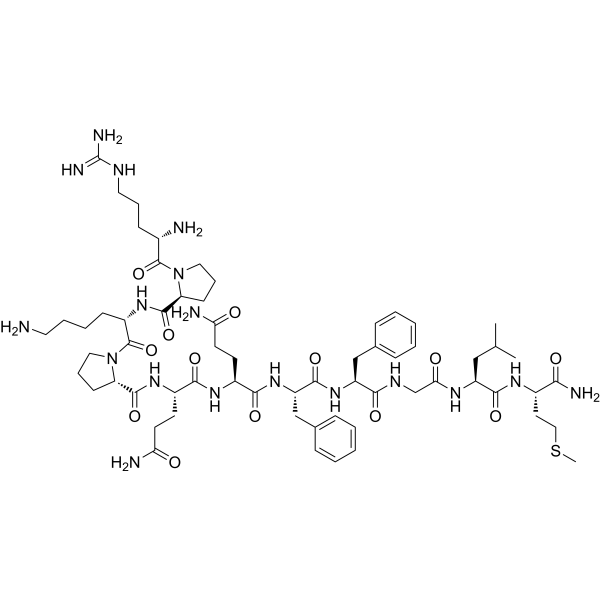
HY-P0201
Substance P -
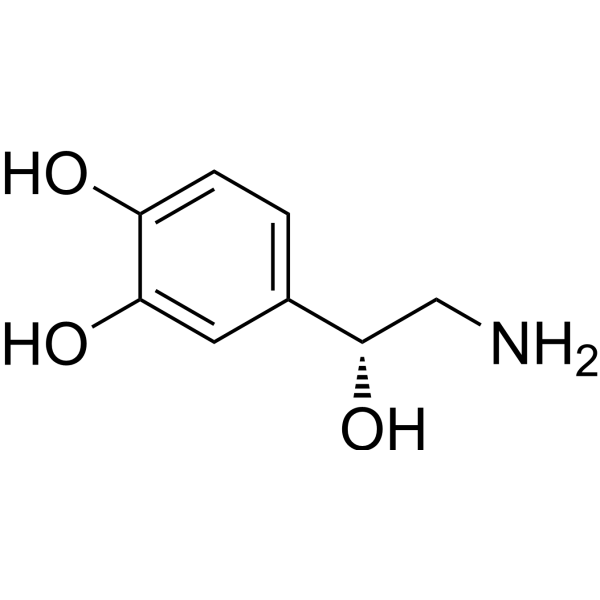
HY-13715
Norepinephrine -

HY-P1071
α-CGRP (human) -
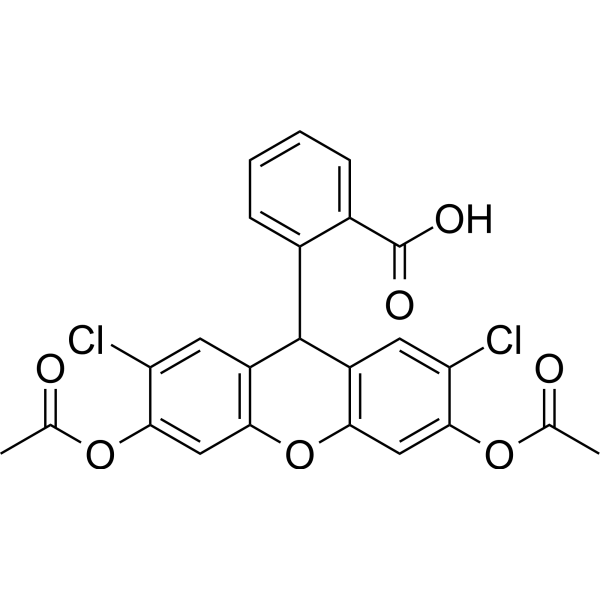
HY-D0940
H2DCFDA -
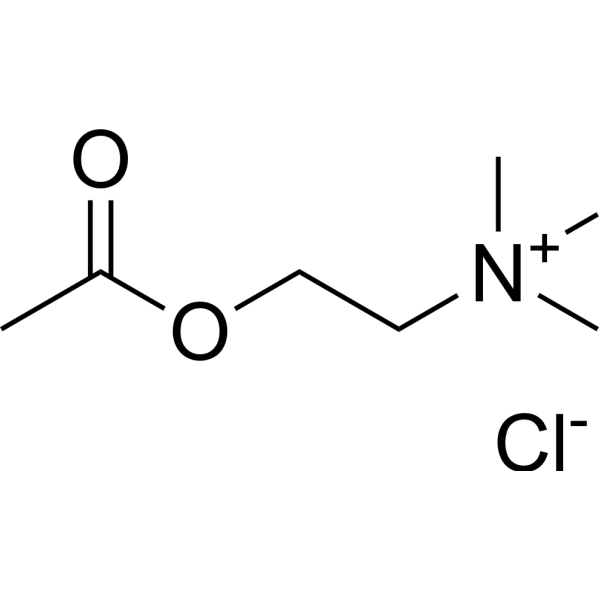
HY-B0282
Acetylcholine chloride -
HY-10971
Alisertib -

HY-P0221
PACAP (1-38), human, ovine, rat -

HY-P0221C
PACAP (1-38) free acid -

HY-P0176
PACAP (1-27), human, ovine, rat -

HY-P71063
NPY Protein, Human (HEK293, His) -
HY-P7359
GDNF Protein, Mouse (CHO) -
HY-P74426
Adrenomedullin/ADM Protein, Human (HEK293, Fc)


Biological Activity
Description
VIP is a neuropeptide that induces vasodilation, lowers arterial blood pressure, stimulates myocardial contractility, enhances glycogenolysis, and relaxes tracheal, gastric, and gallbladder smooth muscles. PHM and PHV-related peptides also have vasodilatory properties. VIP Protein, Human (HEK293, His) is the recombinant human-derived VIP protein, expressed by HEK293 , with C-6*His labeled tag.
Background
VIP, a neuropeptide with diverse physiological effects, elicits vasodilation, contributing to the lowering of arterial blood pressure. It further stimulates myocardial contractility, enhances glycogenolysis, and induces relaxation in the smooth muscles of the trachea, stomach, and gall bladder. In addition to VIP, both PHM and PHV also display vasodilatory properties. Notably, PHM-27 emerges as a potent agonist of the calcitonin receptor CALCR, demonstrating efficacy comparable to that of calcitonin. These findings highlight the multifaceted actions of VIP and its related peptides in regulating cardiovascular functions and smooth muscle activity.
MCE Validation Data
-
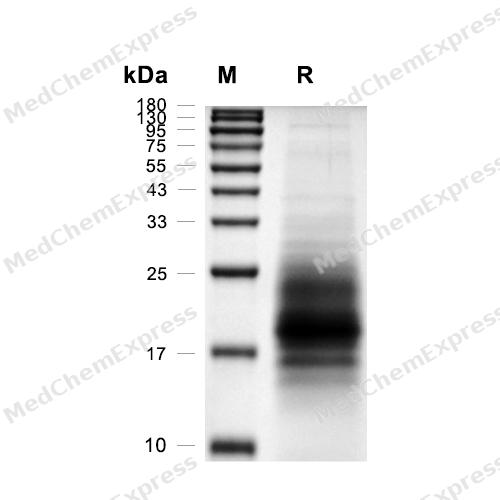
Purity - SDS-PAGE
Purity - SDS-PAGE


Publications (1)
-
Journal Impact Factor
-
Most Recent
-
Ageing Res Rev
The role of nerve fibers and their neurotransmitters in regulating intervertebral disc degeneration. [Abstract]2022 Nov:81:101733. PMID: 36113765
VIP Protein, Human (HEK293, His) purchased from MedChemExpress. Usage Cited in: Ageing Res Rev. 2022 Nov:81:101733. [Abstract]
After seeding of human NP cells onto 96-well plate, VIP Protein, Human (HEK293, His) with different concentrations was used to treat NP cells for 24 h. Then, the effect of VIP on cell viability of NP cells was evaluated using cell counting kit-8.


Technical Parameters
-
Species Human
-
Source HEK293
-
Tag C-6*His
-
Accession
P01282-2 (S21-G152)
-
Molecular Construction
-
N-term
-
VIP (S21-G152)
Accession # P01282-2 -
6*His
-
C-term
-
-
Protein Length
Partial
-
Synonyms
VIP; VIP peptides; Intestinal peptide PHV-42; Peptide histidine valine 42; PHV-42; Intestinal peptide PHM-27; Peptide histidine methioninamide 27; PHM-27; Vasoactive intestinal peptide; Vasoactive intestinal polypeptide; Vasoactive Intestinal Peptide; Pre
-
AA Sequence
SQTSAWPLYRAPSALRLGDRIPFEGANEPDQVSLKEDIDMLQNALAENDTPYYDVSRNARHADGVFTSDFSKLLGQLSAKKYLESLMGKRVSNISEDPVPVKRHSDAVFTDNYTRLRKQMAVKKYLNSILNG
-
Predicted Molecular Mass
15.9 kDa
-
Molecular Weight
Approximately 17-35 kDa, based on SDS-PAGE under reducing conditions.
-
Purity
≥ 95%, as determined by reducing SDS-PAGE.


Product Properties
Lyophilized powder.
Lyophilized from a 0.2 μm filtered solution of 20 mM PB, 150 mM NaCl, pH 7.4.
<1 EU/μg, determined by LAL method.
It is not recommended to reconstitute to a concentration less than 100 μg/mL in ddH2O. For long term storage it is recommended to add a carrier protein (0.1% BSA, 5% HSA, 10% FBS or 5% Trehalose).
Stored at -20°C for 2 years from date of receipt. After reconstitution, it is stable at 4°C for 1 week or -20°C for longer (with carrier protein). It is recommended to freeze aliquots at -20°C or -80°C for extended storage.
Room temperature in continental US; may vary elsewhere.


Documentation
-
Data Sheet (236 KB)
-
SDS (252 KB)
- English - EN (252 KB)
- Français - FR (252 KB)
- Deutsch - DE (252 KB)
- Norwegian - NO (252 KB)
- Español - ES (252 KB)
- Swedish - SV (252 KB)
- Italian - IT (252 KB)
- Korean - KR (252 KB)
- Portuguese - PT (252 KB)
-
Handling Instructions (2659 KB)

Calculators
Concentration (start) × Volume (start) = Concentration (final) × Volume (final)


 Powered by Bioz

