



Glycyrrhiza glabra Linn.
-
Glycyrrhiza glabra Linn. (18)

- 1
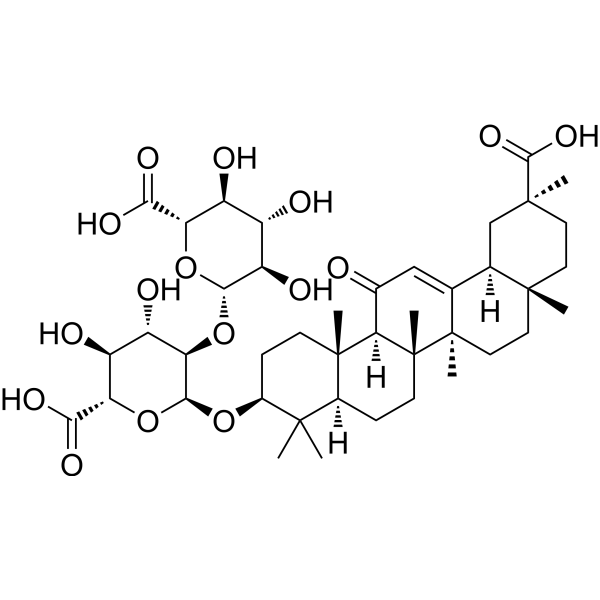
- Formula: C42H62O16
- Molecular Weight: 822.93
18α-Glycyrrhizic acid (18α-GA; Isoglycyrrhizinic acid; 18α-Glycyrrhizic acid) is a derivative of glycyrrhizic acid with oral activity. 18α-Glycyrrhizic acid exhibits antioxidant, anti-inflammatory, hepatoprotective and cardioprotective activities. 18α-Glycyrrhizic acid protects against ethanol-induced alcoholic liver disease in rats by upregulating the expression levels of SOD, GSH, PPAR-α and CPT-1. 18α-Glycyrrhizic acid shows cytotoxicity against T lymphocytes and inhibits HIV-1 replication in these cells. 18α-Glycyrrhizic acid alleviates oxidative stress by reducing the levels of ROS, Nrf2, HO-1 and p-P65, and alleviates pyroptosis by downregulating the expression levels of NLRP3, GSDMD-N, P20 and c-IL-1β. 18α-Glycyrrhizic acid inhibits autophagy, colonic fibrosis and myocardial fibrosis, and regulates intestinal barrier integrity. 18α-Glycyrrhizic acid can be used in research related to alcoholic liver disease, HIV-1 infection, hepatotoxicity, acute liver failure, inflammatory bowel disease and myocardial fibrosis.

- Formula: C21H22O4
- Molecular Weight: 338.40
4′-O-Methylglabridin is an apoptosis inducer with antioxidant, cell cycle-disrupting and anticancer cytotoxic activities. 4′-O-Methylglabridin inhibits various cancer cell lines including liver cancer, breast cancer and colorectal cancer cell lines. By reducing the expression levels of phosphorylated Rb (Ser807/811) and p21 proteins, 4′-O-Methylglabridin promotes cell accumulation at the subG1 and G2/M phases, and triggers caspase-dependent apoptosis via cytochrome C release and caspase-9 activation. 4′-O-Methylglabridin also exerts antioxidant effects by inhibiting lipid peroxide levels and reducing β-carotene consumption, thereby blocking LDL oxidation. 4′-O-Methylglabridin can be used in the research of various cancers and atherosclerotic diseases.

- Formula: C25H30O5
- Molecular Weight: 410.50
Kanzonol Y is a chalcone compound that can be found in the roots of Glycyrrhiza glabra. Kanzonol Y exerts anticancer and anti-dengue virus activity.
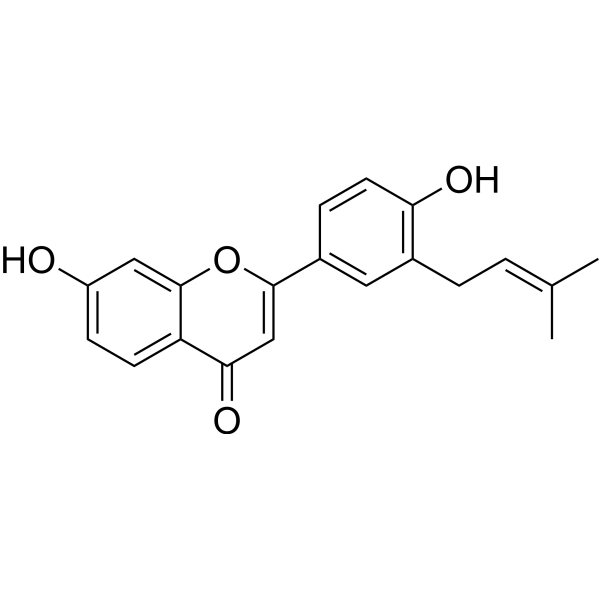
- Formula: C20H18O4
- Molecular Weight: 322.35
Kanzonol D is a flavonoid compound that can be found in the hairy root cultures of Glycyrrhiza glabra.

- Formula: C30H46O4
- Molecular Weight: 470.69
3-epi-18β-Glycyrrhetinic acid is an inhibitor of 11β-HSD1 and 11β-HSD2, with an IC50 of 0.17 μM against 11β-HSD2. 3-epi-18β-Glycyrrhetinic acid acts as a weak substrate for sulfotransferase 2A1. It serves as a biomarker for the toxicity of licorice-related pseudoaldosteronism. 3-epi-18β-Glycyrrhetinic acid is applicable to studies related to pseudoaldosteronism.

- Formula: C21H22O4
- Molecular Weight: 338.40

- Formula: C25H30O5
- Molecular Weight: 410.50
Glycybridin C is a Protein tyrosine phosphatase 1B (PTP1B) inhibitor and pregnane X receptor (PXR) ligand. Glycybridin C inhibits insulin and leptin signaling pathway negative regulation, LPS (HY-D1056)-induced NF-κB transcriptional activity. Glycybridin C forms hydrophobic and π-π stacking interactions with Met243, Phe288, Tyr306, and His407 residues of PXR. Glycybridin C can be used for the research of hepatocellular carcinoma, colorectal adenocarcinoma, breast carcinoma.

- Formula: C25H28O5
- Molecular Weight: 408.49
3-Hydroxyglabrol is an Antibacterial agent. 3-Hydroxyglabrol can be isolated from Glycyrrhiza glabra L. var. typica. 3-Hydroxyglabrol inhibits the growth of Staphylococcus aureus (ATCC 13709) and Mycobacterium smegmatis (ATCC 607), with a MIC of 6.25 mcg/mL. 3-Hydroxyglabrol can be used for the research of Staphylococcus aureus infection, Mycobacterium smegmatis infection.

- Formula: C15H16O4
- Molecular Weight: 260.29
3,3',5'-Trihydroxy-4-methoxybibenzyl is a dihydrostilbene derivative that can be found in the leaves of Glycyrrhiza glabra.

- Formula: C30H48O5
- Molecular Weight: 488.70
Liquiridiolic acid is a natural triterpene.

- Formula: C20H20O5
- Molecular Weight: 340.37
Dihydrocitflavanone is a natural flavonoid.
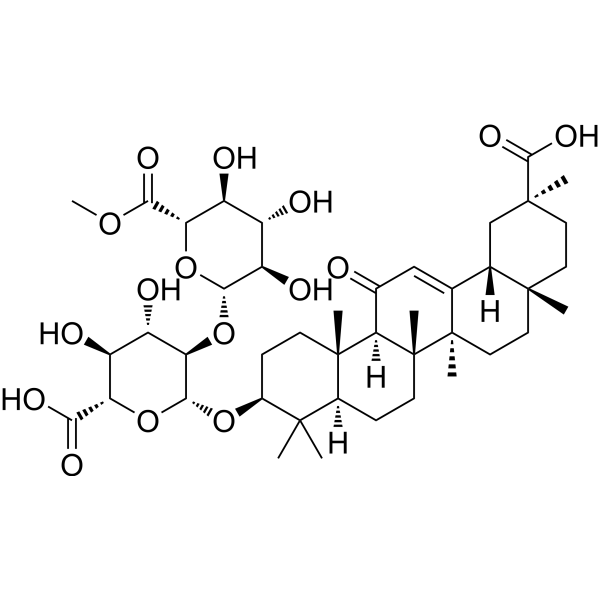
- Formula: C43H64O16
- Molecular Weight: 836.96
Glycyrrhizin-6′′-methylester (compound 22) is a glycyrrhizin that can be isolated from licorice root. Glycyrrhizin-6′′-methylester can participate as an aglycone in the formation of methyl glucuronate, producing a sweet and licorice taste, but no bitterness. This reveals the importance of the free carboxyl group on the glycoside cone-bound glucuronic acid for natural sweetness and licorice taste.
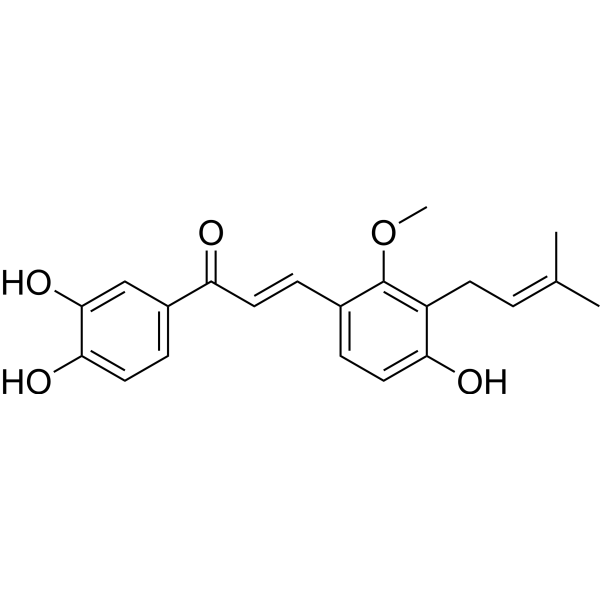
- Formula: C21H22O5
- Molecular Weight: 354.40

- Formula: C21H20O6
- Molecular Weight: 368.38
Glyasperin M is an isoflavanone found in Glycyrrhiza aspera.

- Formula: C10H18O2
- Molecular Weight: 170.25
cis-Linalool oxide is a monoterpenoid compound with an aromatic odor, and is often used as a flavoring agent. It is commonly found in certain species of aromatic plants.

- Formula: C21H20O4
- Molecular Weight: 336.38
Licoagrochalcone B is a prenylated retrochalcone that can be found in Glycyrrhiza glabra hairy root cultures.

- Formula: C19H16O4
- Molecular Weight: 308.33
Glabrocoumarone A (Kanzonol U) is a coumarin identified from G. glabra.
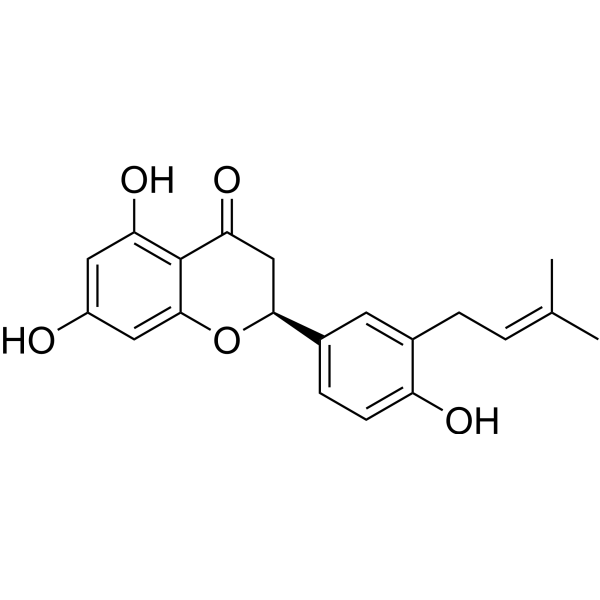
- Formula: C20H20O5
- Molecular Weight: 340.37
Licoflavanone (3′-Prenylnaringenin) is a flavanone with antioxidant, anti-inflammatory and anticancer activities. Licoflavanone can be isolated from the leaf extract of Glycyrrhiza glabra. Licoflavanone downregulates the mTOR/PI3K/AKT signaling pathway to inhibit the proliferation, migration and invasion of cancer cells, while activates Bax, Bad and multiple caspase enzymes to induce apoptosis. Its anti-inflammatory effect is manifested by reducing the nuclear translocation of NF-κB, decreasing the phosphorylation levels of p38, JNK and ERK1/2, thereby inhibiting the expression of nitric oxide, proinflammatory cytokines, COX-2 and iNOS. Licoflavanone is used in studies on nasopharyngeal carcinoma and related mechanisms.
- 1



