



M-CSF Protein, Rat (CHO)
Based on 12 publication(s) in Google Scholar
M-CSF Protein, Rat (CHO) is a pro-inflammatory cytokine which binds to its receptor CSF1R, and is involved in the development and proliferation of cells of the monocyte/macrophage lineage and participates in the induction of osteoclasts.
- Species: Rat
- Source: CHO
-
Storage:Stored at -20°C for 2 years from date of receipt. After reconstitution, it is stable at 4°C for 1 week or -20°C for longer (with carrier protein). It is recommended to freeze aliquots at -20°C or -80°C for extended storage.


To place orders, for customer services and technical support, please contact: MedChemExpress USA
Tel: 609-228-6898 E-mail: [email protected] [email protected]


-
 Biological Activity
-
Technical Parameters
-
Product Properties
- Documentation
- References
- Help & FAQs




Biological Activity
Description
M-CSF Protein, Rat (CHO) is a pro-inflammatory cytokine which binds to its receptor CSF1R, and is involved in the development and proliferation of cells of the monocyte/macrophage lineage and participates in the induction of osteoclasts.
Background
Macrophage Colony Stimulating Factor (M-CSF) is a pro-inflammatory cytokine, constitutively produced by several cell types, such as fibroblasts, endothelial cells, stromal cells, macrophages, smooth muscle cells and osteoblasts, binds to its receptor CSF1R, and exists in several isoforms- as a secreted glycoprotein, a cell-surface protein and a proteoglycan[1]. M-CSF is involved in the development and proliferation of cells of the monocyte/macrophage lineage and participates in the induction of osteoclasts, which are important in the destruction of bone and cartilage and in the periarticular osteoporotic changes seen in patients with rheumatoid arthritis[2].
Verified Bioactivity
Measured in a cell proliferation assay using M-NFS-60 mouse myelogenous leukemia lymphoblast cells. The ED50 for this effect is 0.5-2.5 ng/mL.
MCE Validation Data
-
Purity - SDS-PAGE
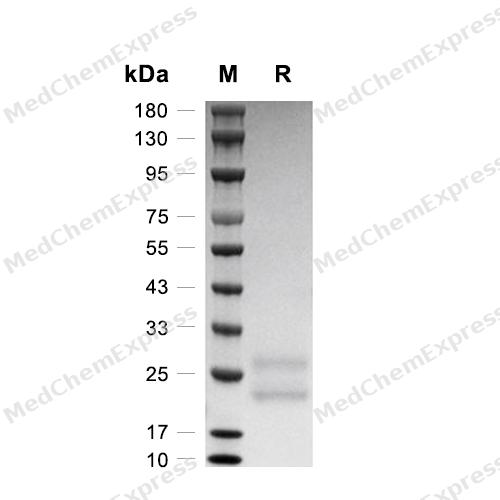
Purity - SDS-PAGE
-
Bioactivity - Cell-Based Assay
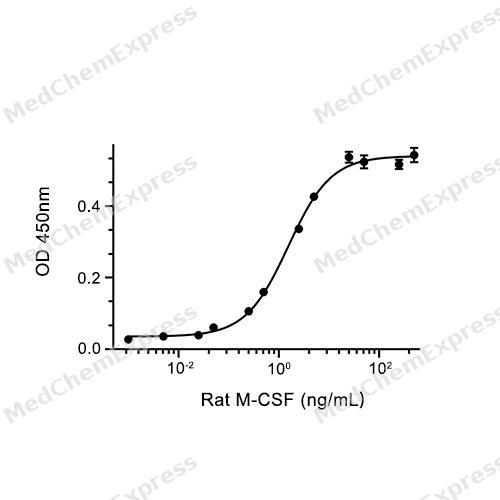
Bioactivity - Cell-Based Assay


Publications (12)
-
Journal Impact Factor
-
Most Recent
-
Sci Adv
Recombinant DTβ4-inspired porous 3D vascular graft enhanced antithrombogenicity and recruited circulating CD93+/CD34+ cells for endothelialization. [Abstract]2022 Jul 15;8(28):eabn1958. PMID: 35857526 -
-
Mater Today Bio
Mesenchymal stem cell-derived small extracellular vesicles-loaded GelMA microspheres enhance diabetic wound healing by promoting M2 macrophage polarization through p38 MAPK inhibition. [Abstract]2025 Oct 17:35:102423. PMID: 41209696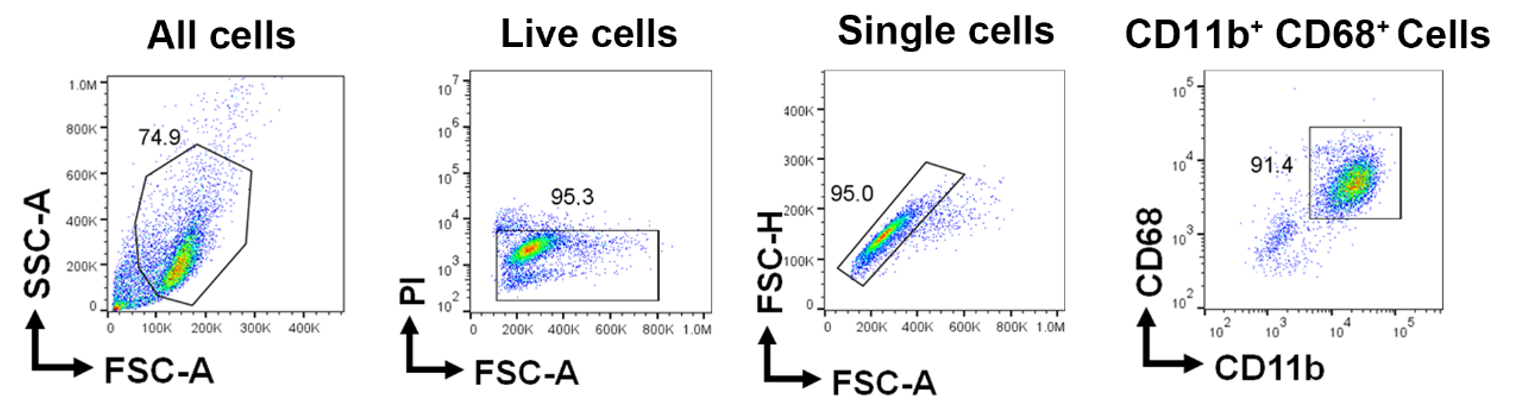
M-CSF Protein, Rat (CHO) purchased from MedChemExpress. Usage Cited in: Mater Today Bio. 2025 Oct 17:35:102423. [Abstract]
M-CSF Protein, Rat (CHO) (30 ng/mL; 7 d). Flow cytometry analysis confirmed over 90% of the differentiated cells were double-positive for CD11b and CD68, confirming the successful isolation and differentiation of BMDMs.
-
Stem Cell Res Ther
BMSC-derived exosomes promote tendon-bone healing after anterior cruciate ligament reconstruction by regulating M1/M2 macrophage polarization in rats. [Abstract]2022 Jul 15;13(1):295. PMID: 35841008 -
J Ethnopharmacol
New Qiangguyin activates Wnt/β-catenin pathway by down-regulating Notum to improve osteoporosis in rats. [Abstract]2025 May 12:347:119745. PMID: 40210176 -
Cell Biosci
Ang-(1-7)/MasR axis promotes functional recovery after spinal cord injury by regulating microglia/macrophage polarization. [Abstract]2023 Feb 4;13(1):23. PMID: 36739421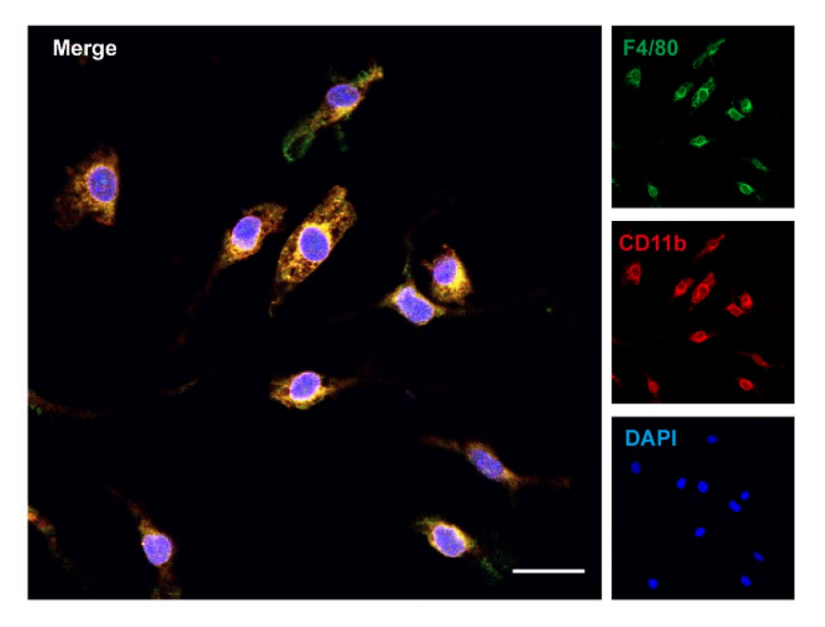
M-CSF Protein, Rat (CHO) purchased from MedChemExpress. Usage Cited in: Cell Biosci. 2023 Feb 4;13(1):23. [Abstract]
M-CSF Protein, Rat (CHO) (20 ng/mL; 37 ℃; 7 d). F4/80 and CD11b were used as specific markers of macrophages, and immunofluorescence staining was applied to identify the extracted primary macrophages from the femur and tibia of Wistar rats.
-
Mol Cell Biochem
HIRA promotes osteogenic differentiation of BMSCs and ameliorates osteoporosis by mediating M2 polarization of macrophages through the YAP1/β-catenin pathway. [Abstract]2026 Jun;481(6):2449-2466. PMID: 42048035 -
Immunotargets Ther
The Effects of M2 Macrophages-Derived Exosomes on Urethral Fibrosis and Stricture in Scar Formation. [Abstract]2025 Mar 4:14:151-173. PMID: 40061513 -
Immunol Lett
Mechanism of M2 macrophages modulating astrocyte polarization through the TGF-β/PI3K/Akt pathway. [Abstract]2023 Jul:259:1-8. PMID: 37244460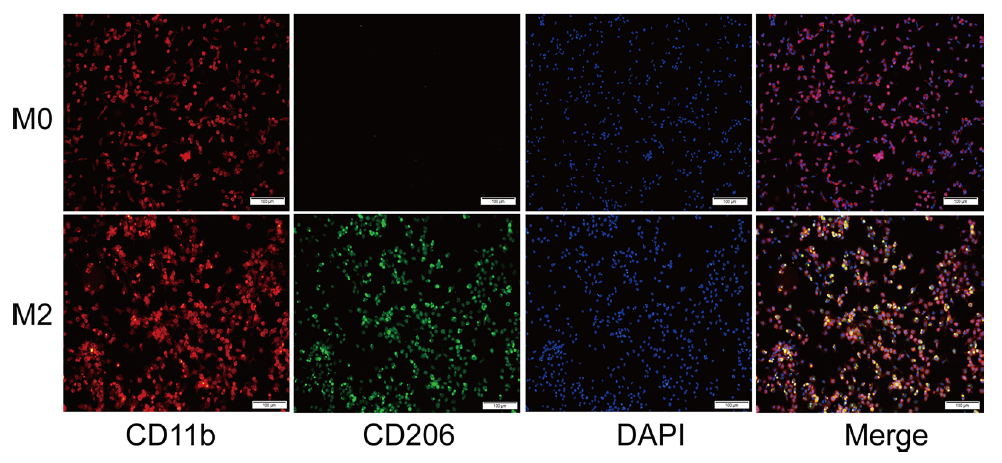
M-CSF Protein, Rat (CHO) purchased from MedChemExpress. Usage Cited in: Immunol Lett. 2023 Jul:259:1-8. [Abstract]
M-CSF Protein, Rat (CHO) (20 ng/mL; 7 d). The results of immunofluorescence staining revealed that the induced M0 macrophages had high expression of CD11b and low expression of CD206, while M2 macrophages had high expression of CD11b and CD206, which was fully consistent with the known immunophenotypic profile of M0/M2 macrophages.
-
-
Environ Toxicol
METTL14 represses osteoclast formation to ameliorate osteoporosis via enhancing GPX4 mRNA stability. [Abstract]2023 Sep;38(9):2057-2068. PMID: 37195267 -


Technical Parameters
-
Species Rat
-
Source CHO
-
Tag Tag Free
-
Accession
Q8JZQ0-1 (E33-P186)
-
Molecular Construction
-
N-term
-
M-CSF (E33-P186)
Accession # Q8JZQ0-1 -
C-term
-
-
Protein Length
Partial Extracellular Domain
-
Synonyms
CSF1; Macrophage Colony Stimulating Factor 1; Colony Stimulating Factor 1; Lanimostim; MCSF; MGC31930; Proteoglycan Macrophage Colony-Stimulating Factor; PG-M-CSF; Macrophage Colony-Stimulating Factor 1; CSF-1; M-CSF; CSF1-HERV-LTR71B Fusion Protein; Colo
-
AA Sequence
EVSEHCSHMIGNGHLQILQQLIDSQMETACLIEYKFVDQEQLDDPVCYLKKAFVLVQVIIEETMRFKDNTPNANATERLQELSMKLNSCFIKDYKEQNEACVQTYKESPLRLLEKIKNFFNETKNFLEKDWNIFSKNCNDSFAKCSSRDVVTKP
-
Predicted Molecular Mass
18 kDa
-
Molecular Weight
Approximately 32-40 kDa, based on SDS-PAGE under non reducing (N) conditions.
-
Glycosylation
Yes
-
Structure/Form
Disulfide-linked homodimer
-
Purity
≥ 95%, as determined by reducing SDS-PAGE.


Product Properties
Lyophilized powder
1.Lyophilized from a 0.22 μm filtered solution of PBS.
2.Lyophilized from a 0.22 μm filtered solution of PBS, pH 7.4, 8% trehalose.
Please refer to the lot-specific COA for specific buffer information.
<0.2 EU/μg, determined by LAL method.
It is not recommended to reconstitute to a concentration less than 100 μg/mL in ddH2O. For long term storage it is recommended to add a carrier protein (0.1% BSA, 5% HSA, 10% FBS or 5% Trehalose).
Stored at -20°C for 2 years from date of receipt. After reconstitution, it is stable at 4°C for 1 week or -20°C for longer (with carrier protein). It is recommended to freeze aliquots at -20°C or -80°C for extended storage.
Room temperature in continental US; may vary elsewhere.


Documentation
-
Data Sheet (262 KB)
-
SDS (251 KB)
- English - EN (251 KB)
- Français - FR (251 KB)
- Deutsch - DE (251 KB)
- Norwegian - NO (251 KB)
- Español - ES (251 KB)
- Swedish - SV (251 KB)
- Italian - IT (251 KB)
- Korean - KR (251 KB)
- Portuguese - PT (251 KB)
-
Handling Instructions (2659 KB)


References
[1]. Hamilton JA. Colony-stimulating factors in inflammation and autoimmunity. Nat Rev Immunol. 2008 Jul;8(7):533-44. [Content Brief]
[2]. Rioja I, et al. Potential novel biomarkers of disease activity in rheumatoid arthritis patients: CXCL13, CCL23, transforming growth factor alpha, tumor necrosis factor receptor superfamily member 9, and macrophage colony-stimulating factor. Arthritis Rheum. 2008 Aug;58(8):2257-67. [Content Brief]

Calculators
Concentration (start) × Volume (start) = Concentration (final) × Volume (final)


 Powered by Bioz

