



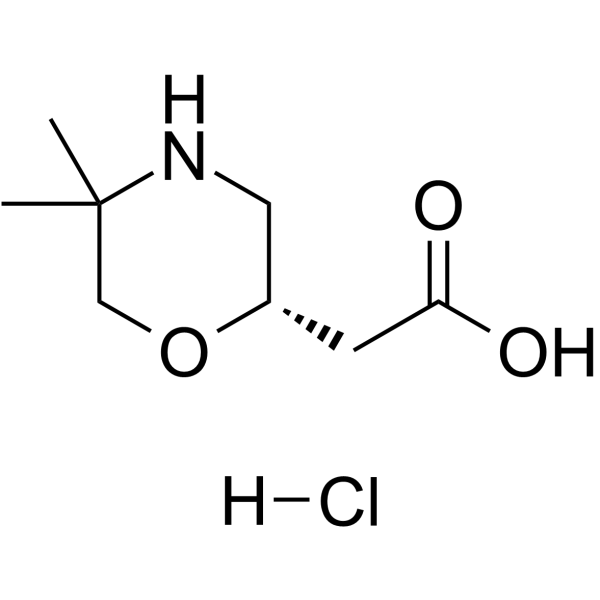
SCH 50911 hydrochloride
SCH 50911 dihydrochloride is a selective, orally active, blood-brain barrier permeable GABA-B receptor (GABA-B Receptor) antagonist with an IC50 of 1.1 μM in rats. SCH 50911 dihydrochloride blocks baclofen-induced antitussive effects, regulates neuronal firing and GABA release. SCH 50911 dihydrochloride promotes spontaneous seizures during withdrawal in ethanol-dependent rats, alters reward-related neurotransmission, and reduces or suppresses lever responding and self-administration behaviors of alcohol and sucrose in rats. SCH 50911 dihydrochloride is applicable to research related to ethanol withdrawal syndrome, absence epilepsy and alcohol use disorder.
For research use only. We do not sell to patients.
- CAS No.: 160415-07-6
- Formula: C8H16ClNO3
- Molecular Weight:209.67
-
Storage:
Please store the product under the recommended conditions in the Certificate of Analysis.

To place orders, for customer services and technical support, please contact: MedChemExpress USA
Tel: 609-228-6898 E-mail: [email protected] [email protected]


-
 Biological Activity
-
Chemical Information
- Purity & Documentation
- References
-
 Help & FAQs




Biological Activity
Description
IC50 & Target
|
GABA(B) 1.1 μM (IC50) |


Chemical Information
-
CAS No. 160415-07-6
-
Molecular Weight 209.67
-
Formula C8H16ClNO3
-
SMILES
O=C(O)C[C@H]1CNC(C)(C)CO1.[H]Cl
-
Shipping
Room temperature in continental US; may vary elsewhere.
-
Storage
Please store the product under the recommended conditions in the Certificate of Analysis.


Purity & Documentation
References
[1].
Bolser DC, et al. The pharmacology of SCH 50911: a novel, orally-active GABA-beta receptor antagonist. J Pharmacol Exp Ther. 1995 Sep;274(3):1393-8. PMID: 7562513.
[Content Brief]
[2]. Carai MA, et al. Proconvulsive effect of the GABA(B) receptor antagonist, SCH 50911, in rats undergoing ethanol withdrawal syndrome. Eur J Pharmacol. 2002;445(3):195-199. [Content Brief]
[3]. Ong J, et al. The morpholino-acetic acid analogue Sch 50911 is a selective GABA(B) receptor antagonist in rat neocortical slices. Eur J Pharmacol. 1998;362(1):35-41. [Content Brief]
[4]. Maccioni P, et al. Blockade of the GABAB receptor suppressed alcohol self-administration in rats: an effect similar to that produced by GABAB receptor activation. Behav Pharmacol. 2022;33(1):51-60. [Content Brief]

Calculators
Concentration (start) × Volume (start) = Concentration (final) × Volume (final)


SCH 50911 hydrochloride Related Classifications
HY-12783 Related Classifications
 Powered by Bioz