



Caspase 6
Caspase-6 (CASP6) is a cysteine-aspartate protease traditionally classified as an executioner caspase that participates in apoptotic signaling and substrate cleavage during programmed cell death[1][2]. Mechanistically, caspase-6 functions within the broader caspase network that regulates apoptosis, inflammation, and cellular homeostasis, and accumulating evidence demonstrates that its biological activities extend beyond classical apoptotic execution[1][3]. In innate immune pathways, caspase-6 promotes inflammasome activation and facilitates the assembly of the ZBP1-PANoptosome, thereby supporting pyroptotic, apoptotic, and necroptotic signaling collectively termed PANoptosis[3]. During influenza A virus infection, caspase-6 enhances the interaction between RIPK3 and ZBP1, contributing to inflammatory cell death, cytokine production, and host defense responses[3]. Disease relevance is further supported by studies linking caspase-6 activity to neurodegenerative disorders, including Alzheimer’s disease and Huntington’s disease, where aberrant caspase-6 activation has been associated with pathological processes independent of overt apoptosis[2][4]. Compared with the closely related executioner caspases caspase-3 and caspase-7, caspase-6 displays distinct biological functions, including non-enzymatic regulation of innate immune signaling and PANoptosome-associated pathways, highlighting functional divergence within the executioner caspase subgroup[1][3]. For experimental applications, the development of isoform-selective caspase-6 inhibitors has attracted significant interest because selective modulation of caspase-6 may enable mechanistic studies while reducing off-target effects associated with broad-spectrum caspase inhibition[5].
References:
- [1]. Nadendla EK, et al. Caspases: structural and molecular mechanisms and functions in cell death, innate immunity, and disease. Cell Discov. 2025 May 5;11(1):42. [Content Brief]
- [2]. Wang XJ, et al. Activation and regulation of caspase-6 and its role in neurodegenerative diseases. Annu Rev Pharmacol Toxicol. 2015;55:553-72. [Content Brief]
- [3]. Zheng M, et al. Caspase-6 Is a Key Regulator of Innate Immunity, Inflammasome Activation, and Host Defense. Cell. 2020 Apr 30;181(3):674-687.e13. [Content Brief]
- [4]. Yang L, et al. ncRNA- and Pc2 methylation-dependent gene relocation between nuclear structures mediates gene activation programs. Cell. 2011 Nov 11;147(4):773-88. [Content Brief]
- [5]. Van Horn KS, et al. Engaging a Non-catalytic Cysteine Residue Drives Potent and Selective Inhibition of Caspase-6. J Am Chem Soc. 2023 May 10;145(18):10015-10021. [Content Brief]
All Product Categories
-
Caspase 6 Related Products (12)
Related Products (12)

-
Antibodies (2)
- 1
-
Z-VAD
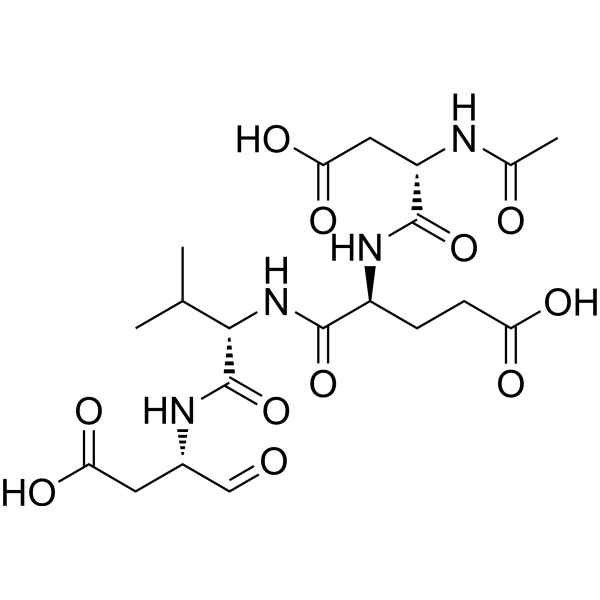
 0 ImagesZ-VAD is an irreversible, broad-spectrum pan-caspase inhibitor that can inhibit a variety of caspases including caspase-3, -6, -7, -8, -9, etc. (with a weaker inhibitory effect on caspase-2). Z-VAD can block apoptosis signaling pathways, induce autophagy and necrosis in tumor cells, and has anti-angiogenic activity. Z-VAD can enhance the sensitivity of breast cancer and lung cancer cells to radiotherapy in vitro and in vivo, and prolong the growth delay of tumor xenograft models. Z-VAD is well tolerated and is mainly used in research related to cancer radiosensitization and cell death pathway regulation.
-
Z-FA-FMK
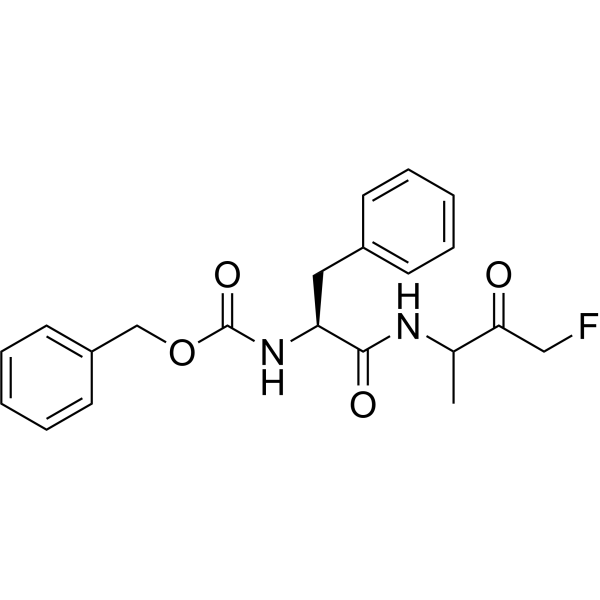 0 ImagesSynonyms: (1S)-Z-FA-FMKZ-FA-FMK ((1S)-Z-FA-FMK) is a potent Cathepsin B and L inhibitor. Z-FA-FMK blocks the induction of DEVDase activity, DNA fragmentation, and externalization of phosphatidylserine by selective synthetic retinoid-related molecules (RRMs). Z-FA-FMK inhibits apoptosis. Z-FA-FMK inhibits caspase activity and selectively inhibits recombinant effector caspases 2, -3, -6, and -7. Z-FA-FMK is a viral inhibitor. Z-FA-FMK inhibits reovirus replication in a susceptible host.
-
Oosporein
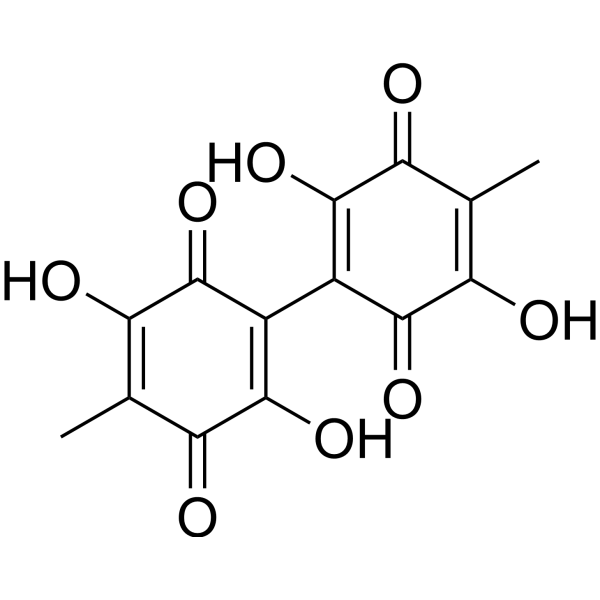 0 ImagesOosporein is a microbial metabolite and a red crystalline toxin produced by various fungi. Oosporein can promote the reproduction of fungi in host bodies by inhibiting insect immunity, and possesses multiple activities such as antibacterial, antiviral (HSV), and insecticidal effects. Oosporein can inhibit plant growth. In addition, Oosporein can also induce apoptosis, cell membrane damage, oxidative stress, and mitochondrial damage. Oosporein has certain antitumor activity.
-
Caspase-3-IN-1
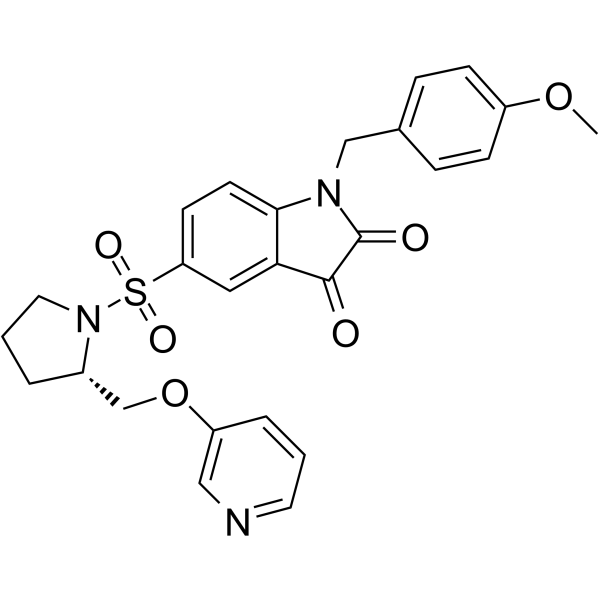 0 ImagesCat. No.: HY-136975CAS No.: 872254-32-5Caspase-3-IN-1 (compound 11b) is a potent Caspase-3 inhibitor, with an IC50 of 14.5 nM.
-
Caspase-6-IN-1
 0 ImagesCat. No.: HY-W635511CAS No.: 1438463-77-4Caspase-6-IN-1 is a Caspase-6 inhibitor with an IC50 of 5.6 μM. Caspase-6-IN-1 can inhibit Caspase-6 activity and reduce lamin A hydrolysis. Caspase-6-IN-1 can be used for the research of neurodegenerative diseases such as Huntington's disease and Alzheimer's disease.
-
Procaspase-3/6 activator 1
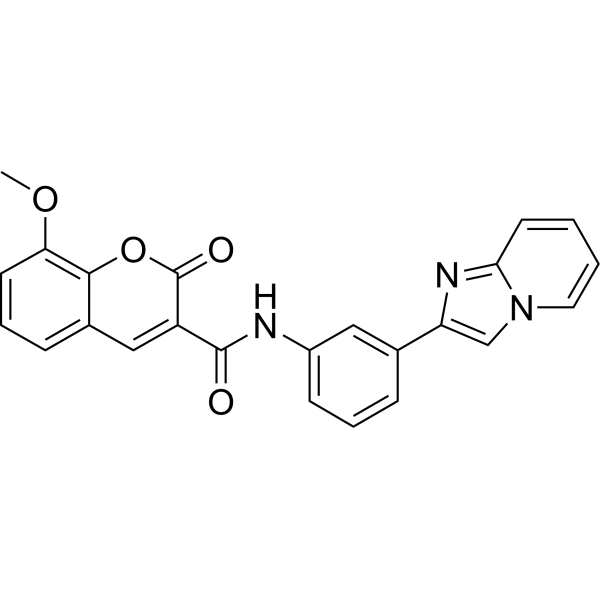 0 ImagesProcaspase-3/6 activator 1 (compound 1541) is a highly specific and robust activator of executioner procaspases-3 and -6, with EC50 values of 2.4 ± 0.2 and 2.8 ± 0.3 μM, respectively. Procaspase-3/6 activator 1 does not activate procaspases-1 or -7.
-
Ac-VEID-CHO TFA
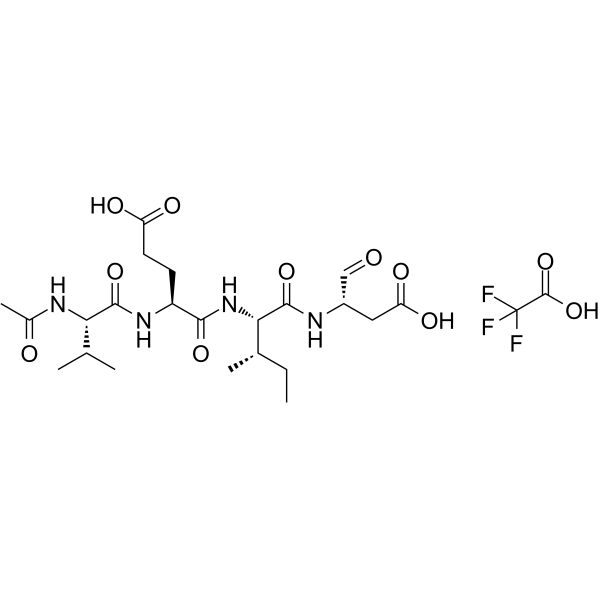 0 ImagesCat. No.: HY-108312APurity: 99.77%Ac-VEID-CHO (TFA) is a peptide-derived caspase inhibitor and has potency of inhibition for Caspase-6, Caspase-3 and Caspase-7 with IC50 values of 16.2 nM, 13.6 nM and 162.1 nM, respectively. Ac-VEID-CHO (TFA) can be used for the research of neurodegenerative conditions including Alzheimer’s and Huntington’s disease.
-
N-alpha-Tosyl-Lys chloromethyl ketone hydrochloride
 0 ImagesN-alpha-Tosyl-Lys chloromethyl ketone hydrochloride (TLCK hydrochloride) is a Serine protease inhibitor with an IC50 of 12.0 μM against Caspase-3, 54.5 μM against Caspase-6, and 19.3 μM against Caspase-7. It inhibits thrombin-induced nuclear translocation of FOXO1. N-alpha-Tosyl-Lys chloromethyl ketone hydrochloride can be used in research related to leukemia and cardiovascular diseases.
-
SP-6-27
 0 ImagesCat. No.: HY-136893CAS No.: 1384170-58-4SP-6-27 is a tubulin depolymerizing agent that binds to the colchicine site of β-tubulin. SP-6-27 induces G2/M cell cycle arrest in ovarian cancer cells. SP-6-27 enhances intrinsic apoptosis in ovarian cancer cells through upregulation of Bax, Apaf-1, caspase-6, caspase-9, and caspase-3. SP-6-27 reduces ovarian cancer cell migration. SP-6-27 inhibits capillary tube formation by human umbilical vein endothelial cells. SP-6-27 shows minimum cytotoxicity to normal ovarian epithelia. SP-6-27 shows enhanced cytotoxicity in chemo-sensitive/resistant ovarian cancer cells when combined with Cisplatin (HY-17394). SP-6-27 can be used for the research of ovarian cancer.
-
Z-VEID-AFC TFA
 0 ImagesCat. No.: HY-P4401AZ-VEID-AFC TFA is the trifluoroacetate salt of Z-VEID-AFC (HY-P4401). Z-VEID-AFC TFA is a fluorescent substrate for caspase-6. When Z-VEID-AFC TFA is cleaved by caspase-6, 7-amino-4-trifluoromethylcoumarin (AFC) is released, and its fluorescence can be used to quantify caspase-6 activity (Ex/Em: 400/505 nm) .
-
Ac-VEID-CHO
 0 ImagesCat. No.: HY-108312CAS No.: 319494-39-8Ac-VEID-CHO is a peptide-derived caspase inhibitor and has potency of inhibition for Caspase-6, Caspase-3 and Caspase-7 with IC50 values of 16.2 nM, 13.6 nM and 162.1 nM, respectively. Ac-VEID-CHO also inhibits VEIDase activity an IC50 value of 0.49 µM. Ac-VEID-CHO can be used for the research of neurodegenerative conditions including Alzheimer’s and Huntington’s disease.
- 1




