



αIIbβ3
Integrin αIIbβ3 is a transmembrane glycoprotein highly expressed on platelets, mediating bidirectional signal transduction essential for hemostasis and thrombosis[1][2]. Upon agonist stimulation, inside-out signaling converts αIIbβ3 from a low- to high-affinity state, allowing fibrinogen and other ligand binding, which subsequently triggers outside-in signaling for platelet spreading, aggregation, clot retraction, and thrombus consolidation[1][2]. Mechanistically, αIIbβ3 outside-in signaling involves Src family kinases, PI3K/Akt, and Rap1b pathways, coordinating platelet activation and thromboxane production[3][4]. Phosphatases, including PP1cα and PP2B-Aβ, modulate integrin-mediated signaling, where PP1cα amplifies agonist-induced signals but attenuates adhesion-mediated functions, and PP2B-Aβ suppresses outside-in αIIbβ3 activation[5][6][7]. Compared with related integrins, αIIbβ3 possesses a unique extracellular safeguard that maintains an inactive state under physiological shear, preventing premature activation by hydrodynamic forces. Kindlins act as co-activators, supporting talin-dependent ligand binding without promoting initial talin recruitment, emphasizing isoform-specific regulatory mechanisms[8]. Pharmacological and natural inhibitors, such as PPARγ agonists, glabridin, and disintegrins from hematophagous species, effectively modulate αIIbβ3 outside-in signaling, platelet aggregation, and thrombus formation, offering tools for experimental studies and therapeutic exploration[9][10][11][12]. In disease models, αIIbβ3 mediates thrombus formation in venous thrombosis and contributes to platelet hyperactivation in Alzheimer’s disease via ROS and NADPH oxidase signaling[13][14].
References:
- [1]. Alrehani N, et al. Distinct roles for the α , β and γ1 isoforms of protein phosphatase 1 in the outside-in αIIbβ3 integrin signalling-dependent functions. Thromb Haemost. 2013 Jan;109(1):118-26. [Content Brief]
- [2]. Situ AJ, et al. Insight Into Pathological Integrin αIIbβ3 Activation From Safeguarding The Inactive State. J Mol Biol. 2021 Apr 2;433(7):166832. [Content Brief]
- [3]. Huang J, et al. Platelet integrin αIIbβ3: signal transduction, regulation, and its therapeutic targeting. J Hematol Oncol. 2019 Mar 7;12(1):26. [Content Brief]
- [4]. Unsworth AJ, et al. PPARγ agonists negatively regulate αIIbβ3 integrin outside-in signaling and platelet function through up-regulation of protein kinase A activity. J Thromb Haemost. 2017 Feb;15(2):356-369. [Content Brief]
- [5]. Kahner BN, et al. Kindlins, integrin activation and the regulation of talin recruitment to αIIbβ3. PLoS One. 2012;7(3):e34056. [Content Brief]
- [6]. Khatlani T, et al. Opposing Roles for the α Isoform of the Catalytic Subunit of Protein Phosphatase 1 in Inside-Out and Outside-In Integrin Signaling in Murine Platelets. Cells. 2023 Oct 10;12(20):2424. [Content Brief]
- [7]. van den Kerkhof DL, et al. Exogenous Integrin αIIbβ3 Inhibitors Revisited: Past, Present and Future Applications. Int J Mol Sci. 2021 Mar 25;22(7):3366. [Content Brief]
- [8]. Niu H, et al. Integrin αIIb-mediated PI3K/Akt activation in platelets. PLoS One. 2012;7(10):e47356. [Content Brief]
- [9]. Khatlani T, et al. The β isoform of the catalytic subunit of protein phosphatase 2B restrains platelet function by suppressing outside-in αIIbβ3 integrin signaling. J Thromb Haemost. 2014;12:2089-2101. [Content Brief]
- [10]. Adair BD, et al. Platelet integrin αIIbβ3 plays a key role in venous thrombogenesis in a mouse model. bioRxiv [Preprint]. 2024 Jul 16:2024.07.11.602533. [Content Brief]
- [11]. Kim TI, et al. Extract of Seaweed Codium fragile Inhibits Integrin αIIbβ3-Induced Outside-in Signaling and Arterial Thrombosis. Front Pharmacol. 2021 Jul 2;12:685948. [Content Brief]
- [12]. Kim B, et al. Aβ₁₋₄₀ Enhances Platelet Sensitivity to Thrombin via NADPH Oxidase-ROS Signaling and Integrin αIIbβ₃ Engagement. Biomol Ther (Seoul). 2026 Mar 1;34(2):365-378. [Content Brief]
- [13]. Schoenwaelder SM, et al. Identification of a unique co-operative phosphoinositide 3-kinase signaling mechanism regulating integrin alpha IIb beta 3 adhesive function in platelets. J Biol Chem. 2007 Sep 28;282(39):28648-28658. [Content Brief]
- [14]. Huang WC, et al. Mechanisms of glabridin inhibition of integrin αIIbβ3 inside-out signals and NF-κB activation in human platelets. Chin Med. 2023 Jun 10;18(1):71. [Content Brief]
-
αIIbβ3 Related Products (14)
Related Products (14)

-
Antibodies (1)
- 1
-
Cilengitide
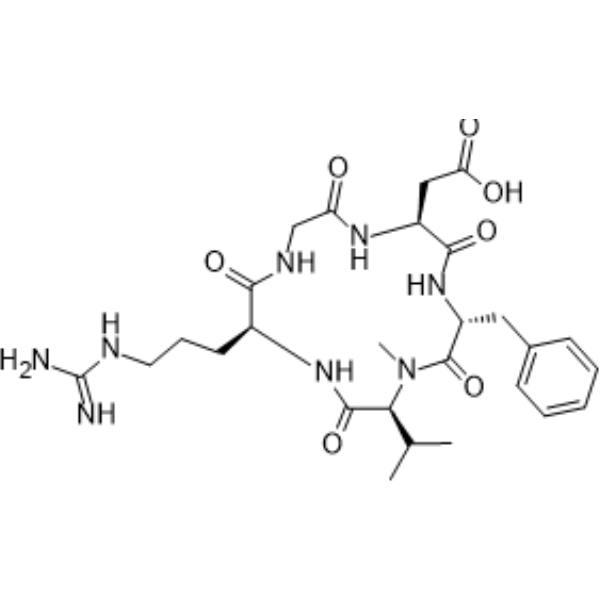 0 ImagesSynonyms: EMD 121974Cilengitide (EMD 121974) is an integrin (integrin) inhibitor with blood-brain barrier permeability, with IC50 values against human targets as follows: 0.61 nM for αvβ3, 8.4 nM for αvβ5, 14.9 nM for α5β1, 5400 nM for αIIbβ3, 2050 nM for αvβ6, 2350 nM for αvβ8. Cilengitide inhibits the binding of integrins to vitronectin, fibronectin, fibrinogen and LAP (TGF-β), and serves as an internal standard for solid-phase integrin binding assays. Cilengitide inhibits tumor cell viability, induces apoptosis, reduces the phosphorylation levels of STAT3, AKT and mTOR, downregulates the expression of PD-L1, inhibits cell viability and angiogenesis, regulates anti-tumor immune responses and slows tumor growth. Cilengitide can be used in research related to glioblastoma, melanoma, advanced solid tumors and refractory brain tumors.
-
Cilengitide TFA
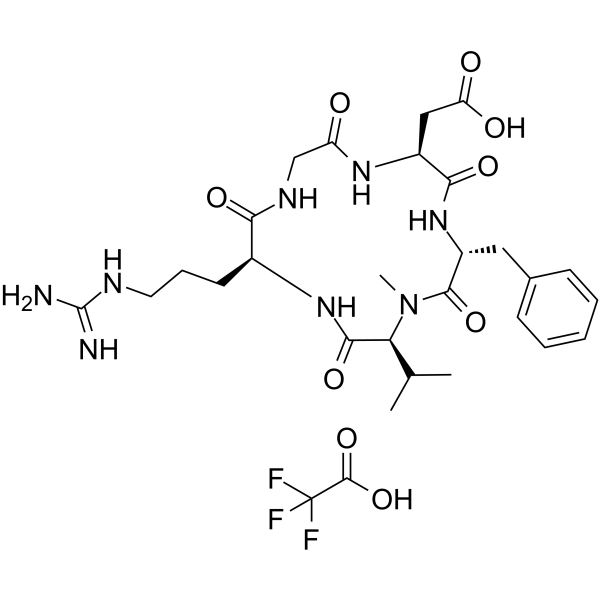 0 ImagesSynonyms: EMD 121974 TFACilengitide TFA (EMD 121974 TFA) is an integrin (integrin) inhibitor with blood-brain barrier permeability, with IC50 values against human targets as follows: 0.61 nM for αvβ3, 8.4 nM for αvβ5, 14.9 nM for α5β1, 5400 nM for αIIbβ3, 2050 nM for αvβ6, 2350 nM for αvβ8. Cilengitide TFA inhibits the binding of integrins to vitronectin, fibronectin, fibrinogen and LAP (TGF-β), and serves as an internal standard for solid-phase integrin binding assays. Cilengitide TFA inhibits tumor cell viability, induces apoptosis, reduces the phosphorylation levels of STAT3, AKT and mTOR, downregulates the expression of PD-L1, inhibits cell viability and angiogenesis, regulates anti-tumor immune responses and slows tumor growth. Cilengitide TFA can be used in research related to glioblastoma, melanoma, advanced solid tumors and refractory brain tumors.
-
Echistatin
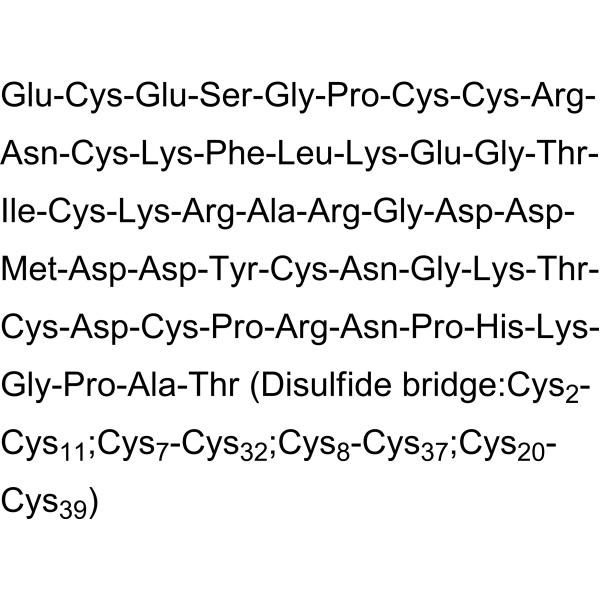 0 ImagesCat. No.: HY-P1189CAS No.: 154303-05-6Echistatin is a naturally derived RGD-containing snake venom peptide. Echistatin exhibits an IC50 of 0.6 nM against mouse αvβ3 integrin, and acts as an antagonist against αvβ3, αIIbβ3, α5β1 integrins, pp125FAK and paxillin. Echistatin reduces the phosphorylation of pp125FAK and paxillin, inhibits the autophosphorylation and kinase activity of pp125FAK, and weakens its binding to pp60src and paxillin. Echistatin disrupts the actin cytoskeleton and focal adhesions, induces melanoma cell detachment from fibronectin, and regulates cell adhesion and motility. Echistatin inhibits osteoclast maturation and migration, bone resorption, platelet aggregation, bone loss, as well as adhesion and metastasis of Lewis lung cancer cells; it also increases the number of osteoclasts and bone coverage area in mice with secondary hyperparathyroidism. Echistatin can be used in research related to melanoma, lung cancer and secondary hyperparathyroidism.
-
Echistatin TFA
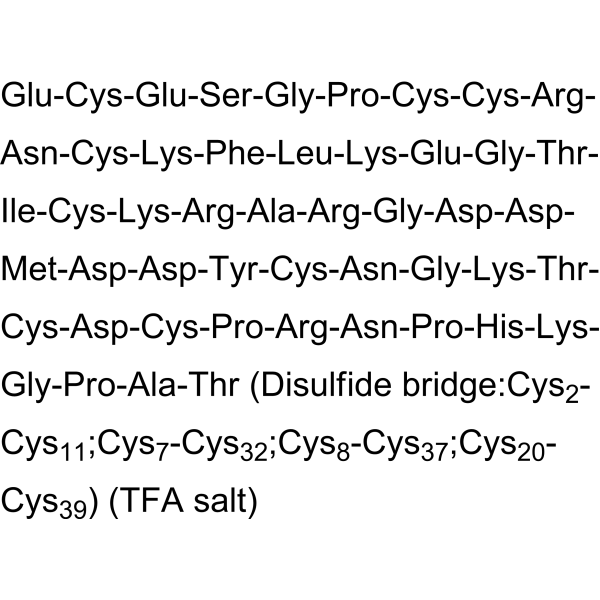 0 ImagesCat. No.: HY-P1189APurity: 99.32%Echistatin TFA is a naturally derived RGD-containing snake venom peptide. Echistatin TFA exhibits an IC50 of 0.6 nM against mouse αvβ3 integrin, and acts as an antagonist against αvβ3, αIIbβ3, α5β1 integrins, pp125FAK and paxillin. Echistatin TFA reduces the phosphorylation of pp125FAK and paxillin, inhibits the autophosphorylation and kinase activity of pp125FAK, and weakens its binding to pp60src and paxillin. Echistatin TFA disrupts the actin cytoskeleton and focal adhesions, induces melanoma cell detachment from fibronectin, and regulates cell adhesion and motility. Echistatin TFA inhibits osteoclast maturation and migration, bone resorption, platelet aggregation, bone loss, as well as adhesion and metastasis of Lewis lung cancer cells; it also increases the number of osteoclasts and bone coverage area in mice with secondary hyperparathyroidism. Echistatin TFA can be used in research related to melanoma, lung cancer and secondary hyperparathyroidism.
-
Tadocizumab
 0 ImagesCat. No.: HY-P99560CAS No.: 339086-80-5Synonyms: C4G1; YM-337Tadocizumab (C4G1; YM-337) is a humanized monoclonal antibody tageting integrin αIIbβ3. Tadocizumab has antiplatelet and antithrombotic effects, and can be used for cardiovascular disease research.
-
Orbofiban
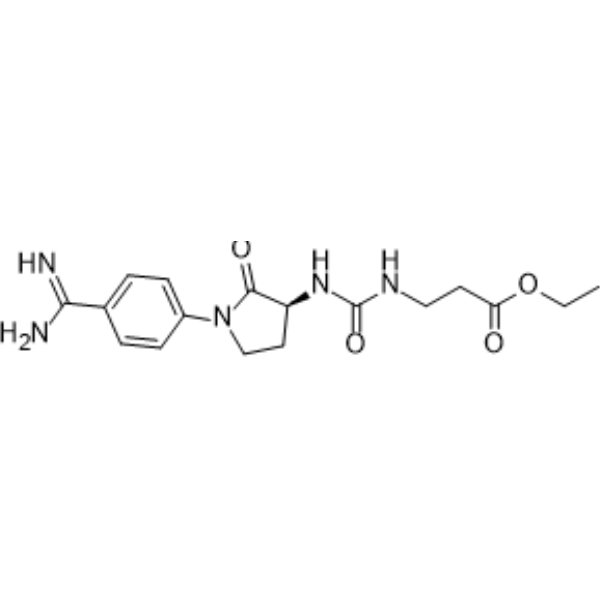 0 ImagesCat. No.: HY-10304CAS No.: 163250-90-6Orbofiban is an orally active platelet GPIIb/IIIa antagonist that inhibits platelet aggregation.
-
αvβ5 integrin-IN-3
 0 ImagesCat. No.: HY-189093CAS No.: 2226557-15-7αvβ5 integrin-IN-3 is an orally active, selective αVβ5 integrin inhibitor with an IC50 value of 0.61 nM. αvβ5 integrin-IN-3 inhibits αVβ1, αVβ3 and αVβ6 integrins with IC50 values of 21 nM, 5.5 nM and 18 nM, respectively. αvβ5 integrin-IN-3 reduces total Collagen content in a mouse unilateral ureteral obstruction model. αvβ5 integrin-IN-3 can be used for the research of renal fibrosis.
-
Orbofiban acetate
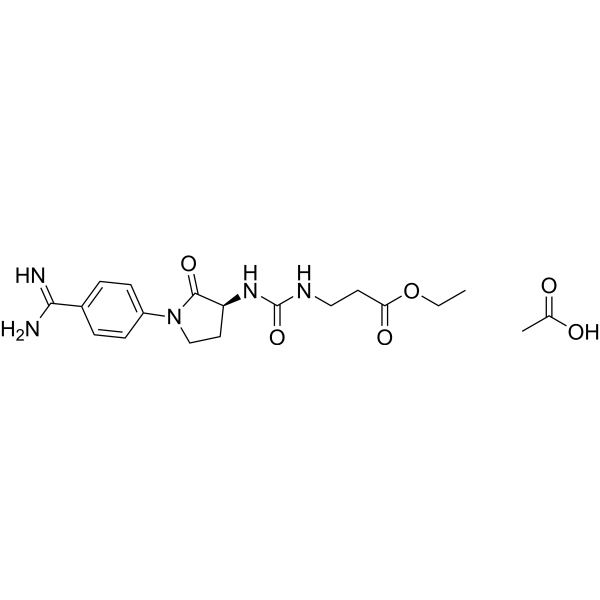 0 ImagesOrbofiban acetate is an orally active platelet GPIIb/IIIa antagonist that inhibits platelet aggregation.
-
ME-3277
 0 ImagesCat. No.: HY-19248CAS No.: 165948-72-1ME-3277 is a potent GPIIb/IIIa antagonist. ME-3277 reduces cerebral infarction without enhancing intracranial hemorrhage in photothrombotic occlusion of rabbit middle cerebral artery (MCA). ME-3277 can be used for the acute cerebral infarction research.
-
IP/EP4 receptor agonist-1
 0 ImagesCat. No.: HY-189067IP/EP4 receptor agonist-1 is a PGI2 analog and also an IP/EP4 receptor agonist. IP/EP4 receptor agonist-1 inhibits PAR-mediated integrin αIIbβ3 activation, P-selectin exposure, platelet aggregation and thrombus formation. IP/EP4 receptor agonist-1 can be used in research related to pulmonary hypertension.
-
Cilinaphthalide B
 0 ImagesCat. No.: HY-N21713CAS No.: 102040-06-2Cilinaphthalide B is an integrin αIIbβ3 inhibitor and a phthalide derivative that inhibits platelet aggregation by binding to integrin αIIbβ3 and interfering with the conformational changes required for its activation, and it exhibits cytotoxicity against cancer cell lines. Cilinaphthalide B can be used in antiplatelet and anticancer-related research.
-
TRAP-14 amide
 0 ImagesCat. No.: HY-P5764CAS No.: 141923-36-6TRAP-14 amide, a proteinase activated receptor (PAR)-activating peptide, is a PAR agonist with an EC50 of 24 μM. TRAP-14 amide significantly induces platelet aggregation through ADP- and MMP-2-dependent pathways with Aspirin (HY-14654)-insensitivity. TRAP-14 amide also effectively increases glycoprotein (GP) Ib and GPIIb/IIIa surface expression and ADP release.
-
Cilengitide hydrochloride
 0 ImagesCat. No.: HY-16142CAS No.: 188969-00-8Synonyms: EMD 121974 hydrochlorideCilengitide hydrochloride (EMD 121974 hydrochloride) is an integrin (integrin) inhibitor with blood-brain barrier permeability, with IC50 values against human targets as follows: 0.61 nM for αvβ3, 8.4 nM for αvβ5, 14.9 nM for α5β1, 5400 nM for αIIbβ3, 2050 nM for αvβ6, 2350 nM for αvβ8. Cilengitide hydrochloride inhibits the binding of integrins to vitronectin, fibronectin, fibrinogen and LAP (TGF-β), and serves as an internal standard for solid-phase integrin binding assays. Cilengitide hydrochloride inhibits tumor cell viability, induces apoptosis, reduces the phosphorylation levels of STAT3, AKT and mTOR, downregulates the expression of PD-L1, inhibits cell viability and angiogenesis, regulates anti-tumor immune responses and slows tumor growth. Cilengitide hydrochloride can be used in research related to glioblastoma, melanoma, advanced solid tumors and refractory brain tumors.
-
Ro 44-3888
 0 ImagesCat. No.: HY-187608CAS No.: 144412-18-0Ro 44-3888 is an orally active and selective GP IIb-IIIa (fibrinogen receptor, integrin αIIbβ3) inhibitor with an IC50 of 1.9 nM against the human target. Ro 44-3888 blocks the binding of fibrinogen to GP IIb-IIIa and inhibits human ADP-induced platelet aggregation. Ro 44‑3888 is formed via the metabolism of the double prodrug Ro 48‑3657 (HY-10309). Ro 44-3888 is used in studies related to arterial thrombosis.
- 1




