



Terlipressin
Based on 2 publication(s) in Google Scholar
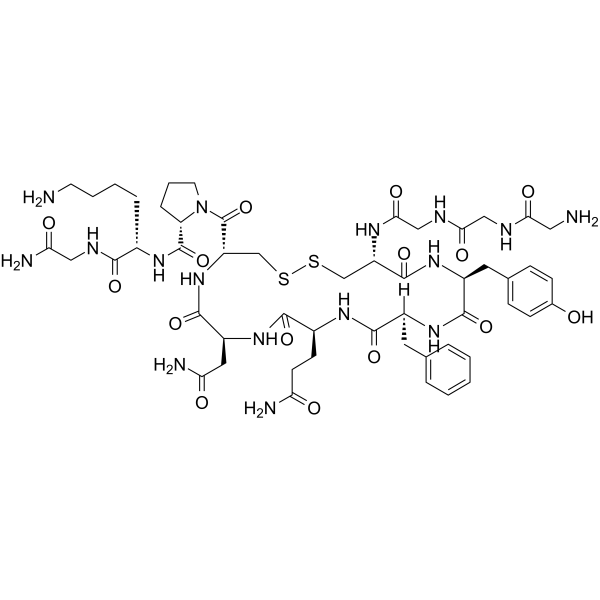
Terlipressin is a vasopressin analogue with potent vasoactive properties. Terlipressin is a highly selective vasopressin V1 receptor agonist that reduces the splanchnic blood flow and portal pressure and controls acute variceal bleeding. Terlipressin exerts anti-inflammatory and anti-oxidative effects. Terlipressin has the potential for hepatorenal syndrome and norepinephrine-resistant septic shock research.
Nur für Forschungszwecke. Wir verkaufen nicht an Patienten.
- CAS. Nr.: 14636-12-5
- Formel: C52H74N16O15S2
- Molecular Weight:1227.37
-
Speicherung:
Please store the product under the recommended conditions in the Certificate of Analysis.

To place orders, for customer services and technical support, please contact: MedChemExpress USA
Tel: 609-228-6898 E-mail: [email protected] [email protected]


-
 Biologische Aktivität
-
Chemical Information
-
Lösungsmittel & Löslichkeit
- Protokoll
- Reinheit & Dokumentation
- Verweise
-
 Help & FAQs


-
HY-14185
LixivaptanV2 Antagonist -
HY-15009
FuscosideVasopressin V1 Receptor Antagonist -
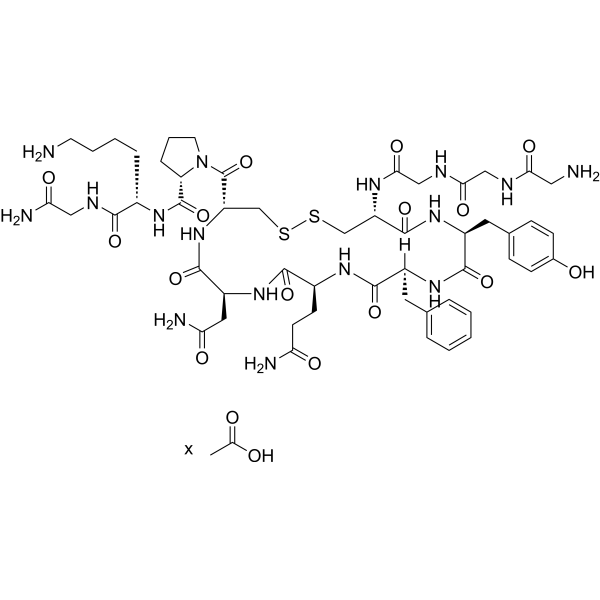
HY-12554A
Terlipressin diacetateVasopressin V1 Receptor Agonist -
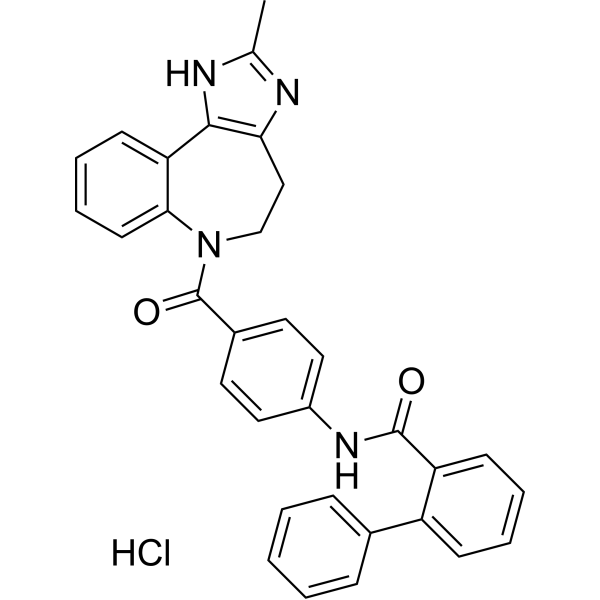
HY-18347A
Conivaptan hydrochlorideVasopressin V1a/V2 Receptor Antagonist -
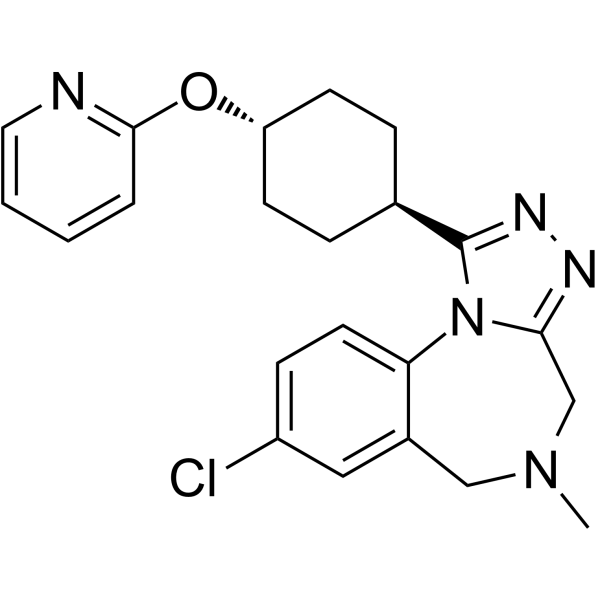
HY-109024
BalovaptanhV1a Receptor Antagonist -
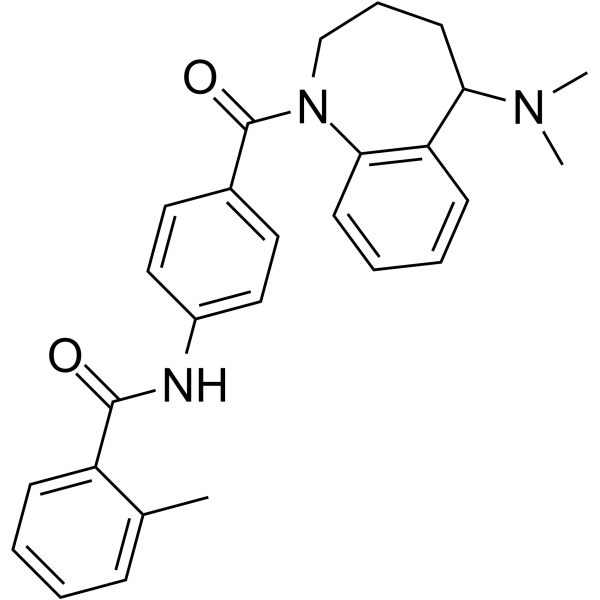
HY-18346
MozavaptanVasopressin V2 Receptor Antagonist -
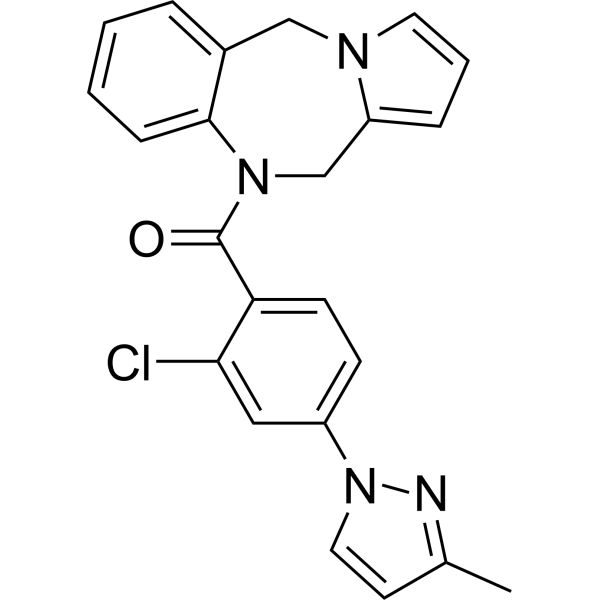
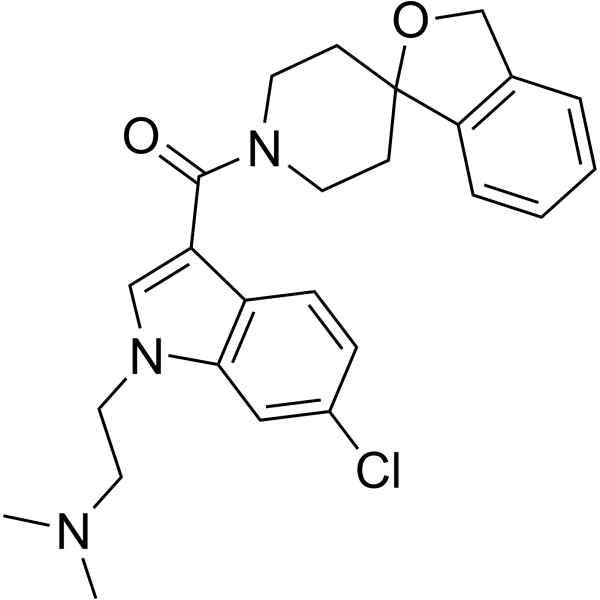
HY-19381
WAY-151932Vasopressin Receptor Agonist -
HY-12981
RG7713Vasopressin Receptor Antagonist -

HY-14185R
Lixivaptan (Standard)V2 Antagonist -
HY-12554B
Terlipressin acetateVasopressin V1 Receptor Agonist -
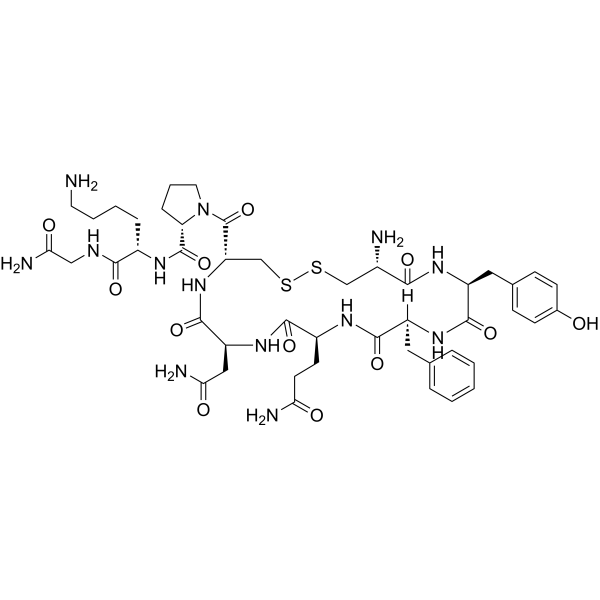
HY-P0004
LysipressinEndogenous Metabolite -
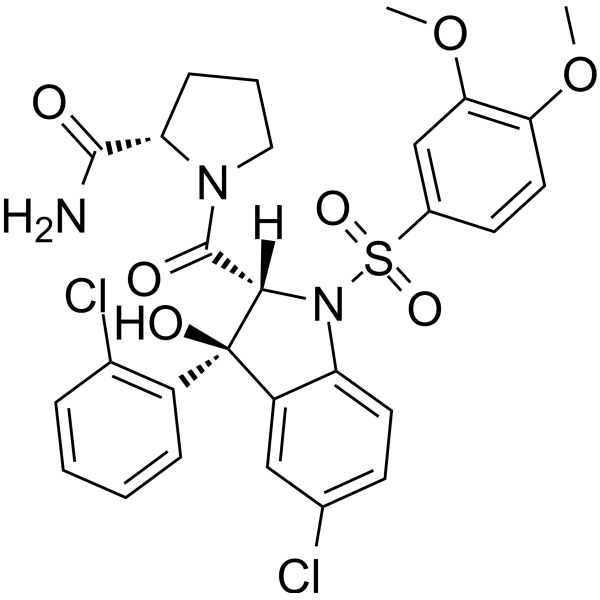
HY-18345
SR 49059Vasopressin V1a Antagonist
Publications Citing Use of MedChemExpress (MCE) Terlipressin
MoreAlle Vasopressin Receptor Isoform-spezifische Produkte anzeigen
More

Biologische Aktivität
Beschreibung
IC50 & Target
Vasopressin V1 receptor[1]
In Vitro
Terlipressin (25 nM; 24-72 hours; IEC-6 cells) treatment significantly improves cell viability, proliferation and apoptosis in IEC-6 cells[1].
Terlipressin inhibits the secretion of TNF-α and 15-F2t-isoprostane from IEC-6 cells following oxygen and glucose deprivation/re-oxygenation (OGD/R). Terlipressin administration following OGD attenuates OGD/R-induced cell damage via the PI3K signaling pathway[1].
MedChemExpress (MCE) has not independently confirmed the accuracy of these methods. They are for reference only. Further protocols information, click here.
-
Cell Line:IEC-6 cells induced by oxygen and glucose deprivation/re-oxygenation (OGD/R)
-
Concentration:25 nM
-
Incubation Time:24 hours, 48 hours, 72 hours
-
Result:Significantly increased the proliferation of IEC-6 cells.
In Vivo


Chemical Information
-
CAS. Nr. 14636-12-5
-
Appearance Solid
-
Molecular Weight 1227.37
-
Formel C52H74N16O15S2
-
Color White to off-white
-
SMILES
O=C([C@H](CSSC[C@@H](C(N[C@H](C1=O)CC2=CC=C(O)C=C2)=O)NC(CNC(CNC(CN)=O)=O)=O)NC([C@@H](NC([C@@H](NC([C@](N1)([H])CC3=CC=CC=C3)=O)CCC(N)=O)=O)CC(N)=O)=O)N(CCC4)[C@@H]4C(N[C@@H](CCCCN)C(NCC(N)=O)=O)=O
-
Sequence
Gly-Gly-Gly-Cys-Tyr-Phe-Gln-Asn-Cys-Pro-Lys-Gly-NH2 (Disulfide bridge: Cys4-Cys9)
-
Sequence Shortening
GGGCYFQNCPKG-NH2 (Disulfide bridge: Cys4-Cys9)
-
Versand
Room temperature in continental US; may vary elsewhere.
-
Speicherung
Please store the product under the recommended conditions in the Certificate of Analysis.


Publications (2)
-
Journal Impact Factor
-
Most Recent
-
Sci Rep
An investigation of reconstituted terlipressin infusion stability for use in hepatorenal syndrome. [Abstract]2020 Dec 3;10(1):21037. PMID: 33273555 -
Anal Bioanal Chem
Understanding the chemical stability of peptidomimetic therapeutics using high-resolution mass spectrometry: a study of terlipressin and its degradation products. [Abstract]2025 Aug;417(19):4311-4329. PMID: 40518483


Lösungsmittel & Löslichkeit
In Vitro:
DMSO : 100 mg/mL (81.48 mM; Need ultrasonic; Hygroscopic DMSO has a significant impact on the solubility of product, please use newly opened DMSO)
Konzentration (Stammlösung) × Volumen (Stammlösung) = Konzentration (Ziellösung) × Volumen (Ziellösung)
In Vivo:
Select the appropriate dissolution method based on your experimental animal and administration route.
- For the following dissolution methods, please ensure to first prepare a clear stock solution using an In Vitro approach and then sequentially add co-solvents:
- To ensure reliable experimental results, the clarified stock solution can be appropriately stored based on storage conditions. As for the working solution for In Vivo experiments, it is recommended to prepare freshly and use it on the same day.
- The percentages shown for the solvents indicate their volumetric ratio in the final prepared solution. If precipitation or phase separation occurs during preparation, heat and/or sonication can be used to aid dissolution.
Add each solvent one by one: 10% DMSO 40% PEG300 5% Tween-80 45% Saline
Solubility: ≥ 2.5 mg/mL (2.04 mM); Clear solution
This protocol yields a clear solution of ≥ 2.5 mg/mL (saturation unknown).
Taking 1 mL working solution as an example, add 100 μL DMSO stock solution (25.0 mg/mL) to 400 μL PEG300, and mix evenly; then add 50 μL Tween-80 and mix evenly; then add 450 μL Saline to adjust the volume to 1 mL.
Preparation of Saline: Dissolve 0.9 g sodium chloride in ddH₂O and dilute to 100 mL to obtain a clear Saline solution.
Add each solvent one by one: 10% DMSO 90% (20% SBE-β-CD in Saline)
Solubility: ≥ 2.5 mg/mL (2.04 mM); Clear solution
This protocol yields a clear solution of ≥ 2.5 mg/mL (saturation unknown).
Taking 1 mL working solution as an example, add 100 μL DMSO stock solution (25.0 mg/mL) to 900 μL 20% SBE-β-CD in Saline, and mix evenly.
Preparation of 20% SBE-β-CD in Saline (4°C, storage for one week): 2 g SBE-β-CD powder is dissolved in 10 mL Saline, completely dissolve until clear.
In Vivo Dissolution Calculator
Please enter the basic information of animal experiments:
-
-
-
-
Recommended: Prepare an additional quantity of animals to account for potential losses during experiments.
Please enter your animal formula composition:
-
%DMSO +
Recommended: Keep the proportion of DMSO in working solution below 2% if your animal is weak.
-
%+
-
+%Tween-80 + +
-
%Saline +
The co-solvents required include: DMSO, . All of co-solvents are available by MedChemExpress (MCE). , Tween 80. All of co-solvents are available by MedChemExpress (MCE).
Working solution concentration: 0.22 mg/mL
Method for preparing stock solution: mg drug dissolved in μL DMSO. Stock solution concentration: mg/mL.
1. Take μL DMSO stock solution;
2. Add μL .
μL , mix evenly;
3. Then add μL Tween 80, mix evenly;
4. Then add μL
Please ensure that the stock solution in the first step is dissolved to a clear state, and add co-solvents in sequence. You can use ultrasonic heating (ultrasonic cleaner, recommended frequency 20-40 kHz), vortexing, etc. to assist dissolution.

Protokoll
-
Research Protocol for Inflammation-related Diseases
The NLRP3 inflammasome is a cytosolic innate immune signaling platform that integrates priming signals and danger-signal activation to promote caspase-1 activation, maturation of IL-1β and IL-18, and gasdermin D-mediated pyroptotic cell death. The core experimental logic is to determine whether inflammatory disease phenotypes are driven by increased NLRP3 expression, ASC-containing inflammasome assembly, caspase-1 cleavage, GSDMD cleavage, and extracellular release of IL-1β/IL-18 rather than by nonspecific cell injury alone. The pathway is strongly linked to inflammation-related disease phenotypes because monosodium urate crystals activate NALP3/NLRP3 inflammasome signaling in gout-like crystal inflammation, cholesterol crystals activate NLRP3 inflammasomes in atherogenesis models, and DSS-induced intestinal inflammation has been reported to involve NLRP3 inflammasome activity. However, experimental colitis studies also show context-dependent protective effects of NLRP3 inflammasome co


Reinheit & Dokumentation
-
Data Sheet (280 KB)
-
SDS (252 KB)
- Français - FR (252 KB)
- Deutsch - DE (252 KB)
- Norwegian - NO (252 KB)
- Español - ES (252 KB)
- Swedish - SV (252 KB)
- Italian - IT (252 KB)
- Korean - KR (252 KB)
- Portuguese - PT (252 KB)
-
Handling Instructions (2659 KB)
Verweise
[1]. Zi-Meng Liu, et al. Terlipressin Protects Intestinal Epithelial Cells Against Oxygen-Glucose Deprivation/Re-Oxygenation Injury via the Phosphatidylinositol 3-kinase Pathway. Exp Ther Med. 2017 Jul;14(1):260-266. [Content Brief]
[2]. Yeun Tarl Fresner Ng Jao, et al. Refractory Torsade De Pointes Induced by Terlipressin (Glypressin). Int J Cardiol. 2016 Nov 1;222:135-140. [Content Brief]
[3]. Xiqiang Liu, et al. Signaling Through Hepatocyte Vasopressin Receptor 1 Protects Mouse Liver From Ischemia-Reperfusion Injury. Oncotarget. 2016 Oct 25;7(43):69276-69290. [Content Brief]
[4]. Xinmiao Zhou, et al. Terlipressin for the Treatment of Acute Variceal Bleeding: A Systematic Review and Meta-Analysis of Randomized Controlled Trials. Medicine (Baltimore). 2018 Nov;97(48):e13437. [Content Brief]
[5]. Alastair O'Brien, et al. Terlipressin for Norepinephrine-Resistant Septic Shock. Lancet. 2002 Apr 6;359(9313):1209-10. [Content Brief]


Complete Stock Solution Preparation Table
| Optional Solvent | Concentration Solvent Mass | 1 mg | 5 mg | 10 mg | 25 mg |
|---|---|---|---|---|---|
| DMSO | 1 mM | 0.8148 mL | 4.0738 mL | 8.1475 mL | 20.3688 mL |
| 5 mM | 0.1630 mL | 0.8148 mL | 1.6295 mL | 4.0738 mL | |
| 10 mM | 0.0815 mL | 0.4074 mL | 0.8148 mL | 2.0369 mL | |
| 15 mM | 0.0543 mL | 0.2716 mL | 0.5432 mL | 1.3579 mL | |
| 20 mM | 0.0407 mL | 0.2037 mL | 0.4074 mL | 1.0184 mL | |
| 25 mM | 0.0326 mL | 0.1630 mL | 0.3259 mL | 0.8148 mL | |
| 30 mM | 0.0272 mL | 0.1358 mL | 0.2716 mL | 0.6790 mL | |
| 40 mM | 0.0204 mL | 0.1018 mL | 0.2037 mL | 0.5092 mL | |
| 50 mM | 0.0163 mL | 0.0815 mL | 0.1630 mL | 0.4074 mL | |
| 60 mM | 0.0136 mL | 0.0679 mL | 0.1358 mL | 0.3395 mL | |
| 80 mM | 0.0102 mL | 0.0509 mL | 0.1018 mL | 0.2546 mL |


Terlipressin Related Classifications
HY-12554 Related Classifications
 Powered by Bioz