



AGN 194310
Based on 6 publication(s) in Google Scholar
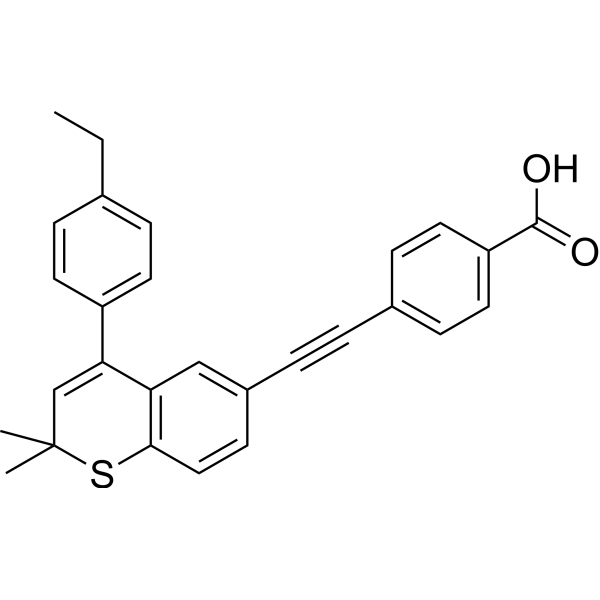
AGN 194310 (VTP-194310) is a high affinity, potent and selective retinioic acid receptors (RARs) pan-antagonist with Kd values of 3 nM, 2 nM, 5 nM for RARα, RARβ, RARγ, respectively. AGN 194310 is a click chemistry reagent, it contains an Alkyne group and can undergo copper-catalyzed azide-alkyne cycloaddition (CuAAc) with molecules containing Azide groups.
For research use only. We do not sell to patients.
- Purity : 98.07%
- CAS No.: 229961-45-9
- Formula: C28H24O2S
- Molecular Weight:424.55
-
Storage:Powder -20°C, 3 years , 4°C, 2 years ; In solvent -80°C, 2 years , -20°C, 1 year

To place orders, for customer services and technical support, please contact: MedChemExpress USA
Tel: 609-228-6898 E-mail: [email protected] [email protected]


-
 Biological Activity
-
Chemical Information
-
Solvent & Solubility
- Protocols
- Purity & Documentation
- References
-
 Help & FAQs


-
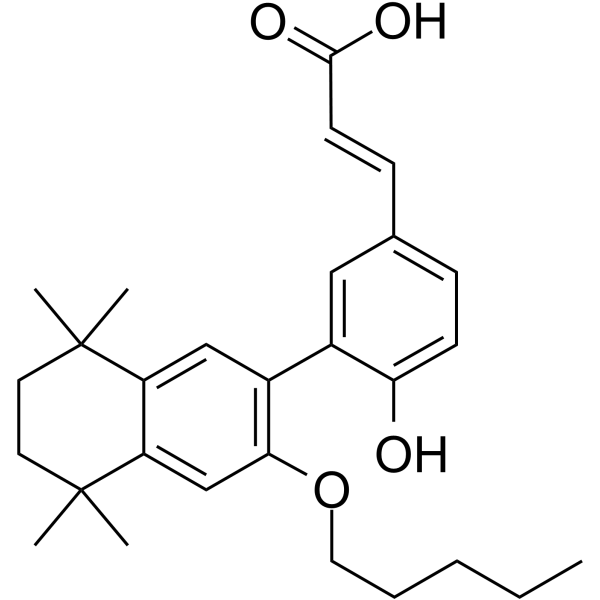
HY-107500
UVI 3003RXR Inhibitor -
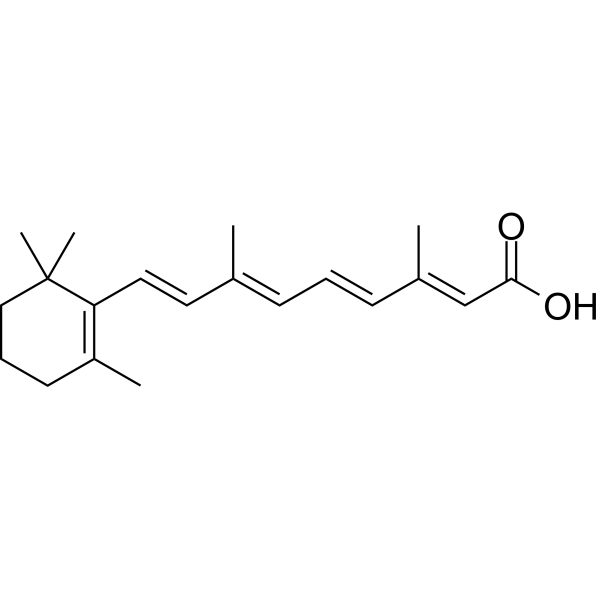
HY-14649
Retinoic acidRAR Agonist -
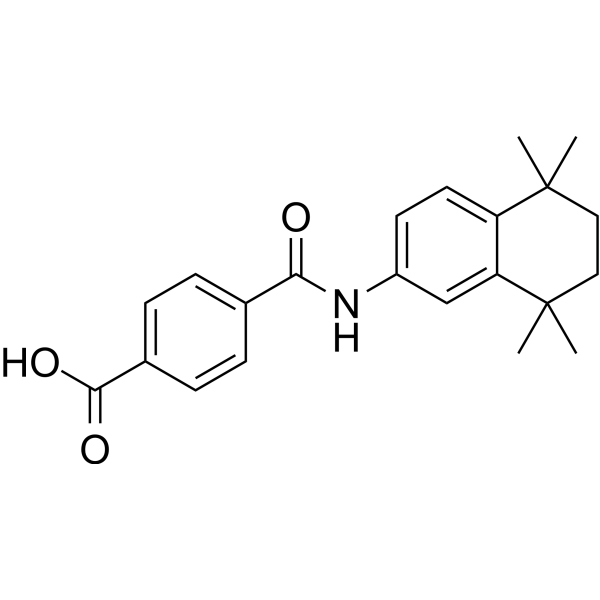
HY-14652
TamibaroteneApoptosis Inducer -
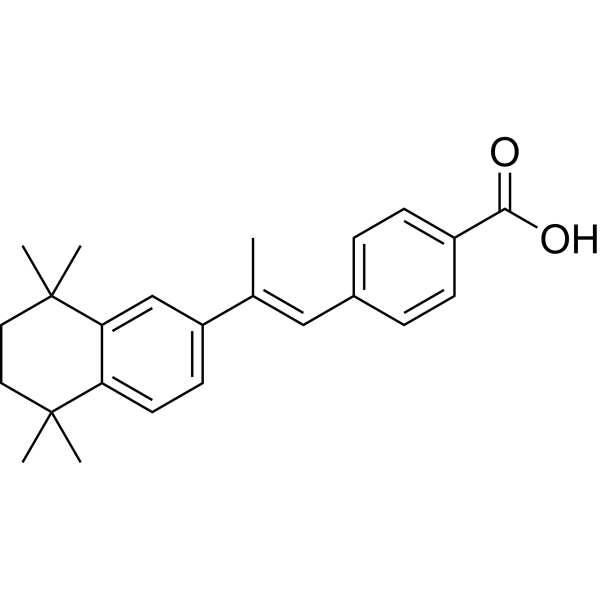
HY-15682
TTNPBApoptosis Inducer -
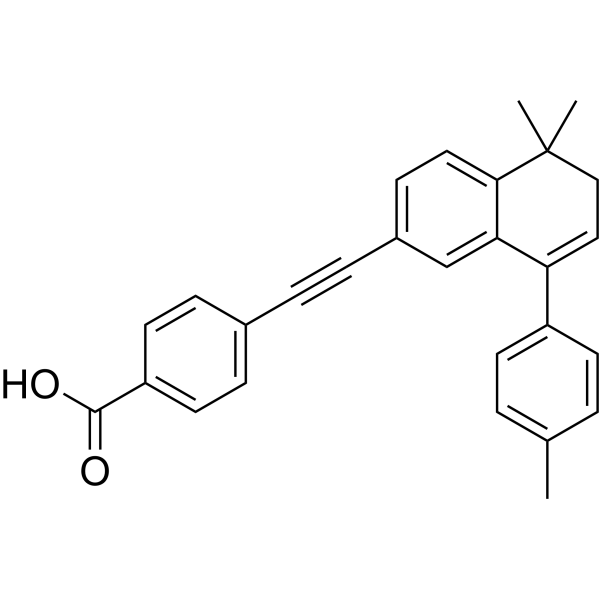
HY-U00449
AGN 193109RAR Antagonist -
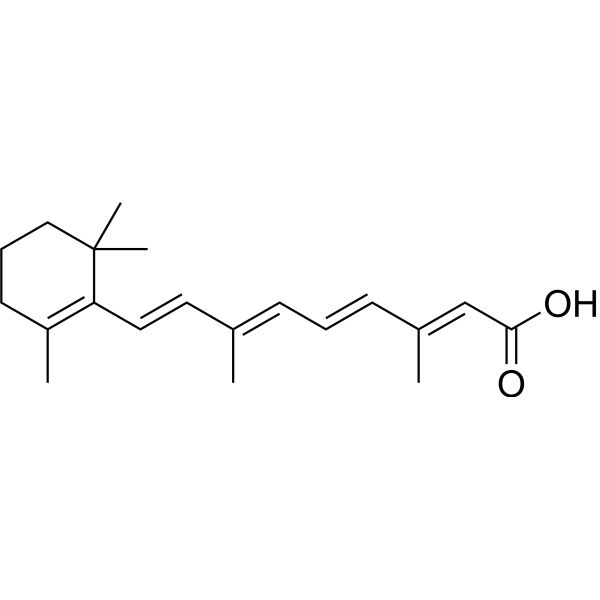
HY-14649R
Retinoic acid (Standard) -
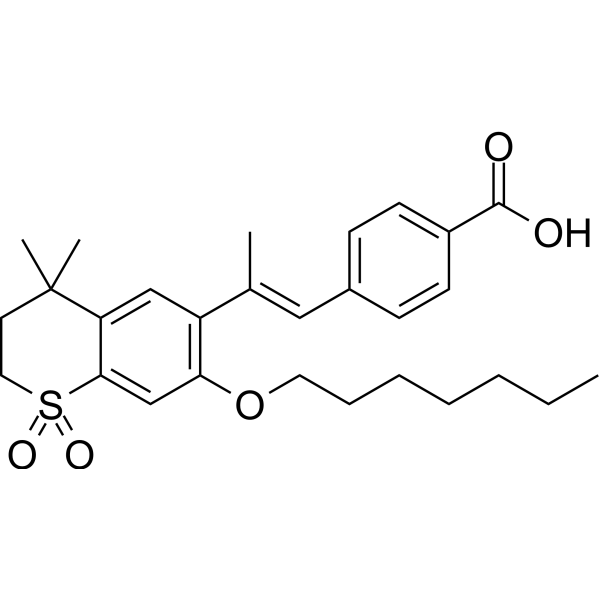
HY-116248
Ro 41-5253RARα Antagonist -
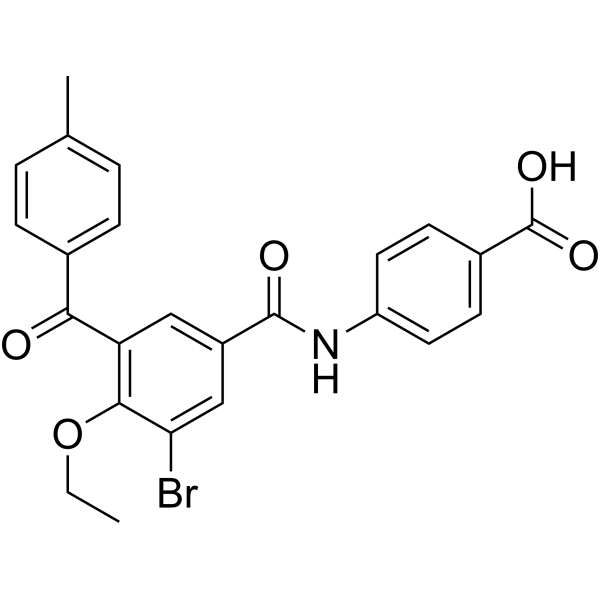
HY-16682
AGN 196996RAR/RXR Antagonist -
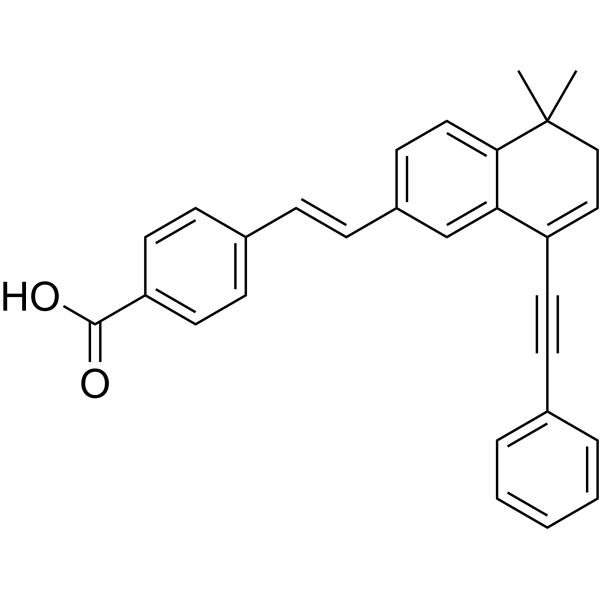
HY-108529
BMS493Inverse RAR Inhibitor -
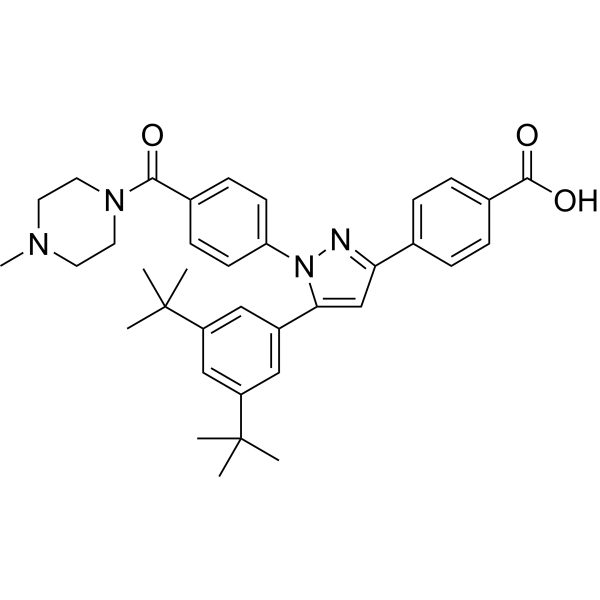
HY-107765
LY2955303RARγ Antagonist -
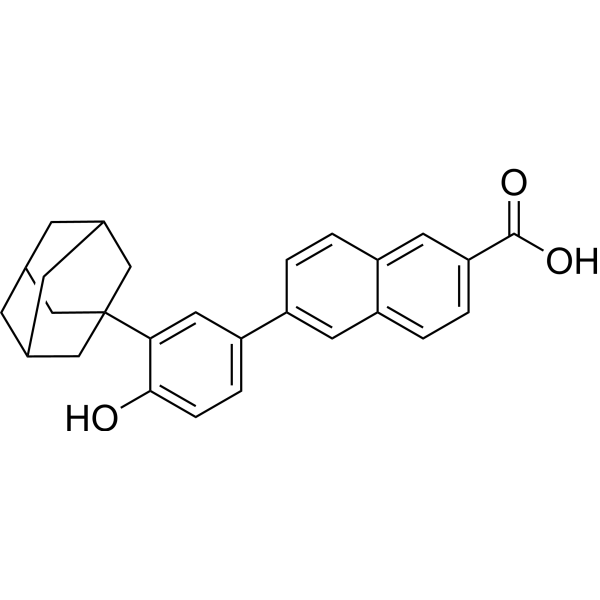
HY-100532
CD437RARγ Agonist -
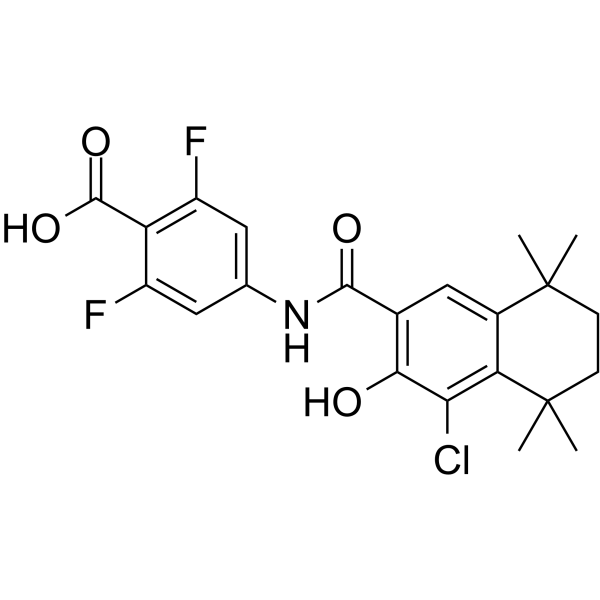
HY-16684
AGN-195183RARα Agonist
Publications Citing Use of MedChemExpress (MCE) AGN 194310
More- Nat Commun. 2022 Feb 17;13(1):931. [Abstract]
- Cell Commun Signal. 2025 Mar 29;23(1):156. [Abstract]
- Cell Rep. 2020 Dec 1;33(9):108465. [Abstract]
- J Ethnopharmacol. 2024 Jan 10;318(Pt A):116909. [Abstract]
- J Am Heart Assoc. 2020 Jun 16;9(12):e015686. [Abstract]
- Biol Open. 2019 Jun 17;8(6):bio044974. [Abstract]


Biological Activity
Description
In Vitro
AGN194310 potently inhibits colony formation by all three lines, with IC50 values of 16 nM for LNCaP cells; 18 nM for PC3 cells; and 34 nM for DU-145 cells[2].
AGN 194310 (50 nM, 100 nM; LNCaP, PC-3 and DU-145 cells) inhibits colony formation at concentrations of 50 nM and 100 nM alone and in combination with TTNPB[2].
AGN 194310 (1 μM; 72 hours; LNCaP cells) treatment results in 80% apoptosis[2].
MedChemExpress (MCE) has not independently confirmed the accuracy of these methods. They are for reference only. Further protocols information, click here.
-
Cell Line:LNCaP, PC-3 and DU-145 cells.
-
Concentration:50 nM, 100 nM
-
Incubation Time:
-
Result:When used together with 100 nM TTNPB, there was almost complete reversal of the growth inhibitory effect of 50 nM and partial reversal of the effect of 100 nM.
-
Cell Line:LNCaP cells
-
Concentration:1 μM
-
Incubation Time:72 hours
-
Result:Induced apoptosis in LNCaP cells.
In Vivo
MedChemExpress (MCE) has not independently confirmed the accuracy of these methods. They are for reference only.
-
Animal Model:Female C57Bl/6J mice (Five-week-old (34-37 days))[3]
-
Dosage:0.5 mg/kg/day
-
Administration:Oral gavage; every day; for 10 days
-
Result:The number of granulocytes was significantly increased across haemopoietic compartments. Progenitor cells containing granulocytes also increased significantly.


Chemical Information
-
CAS No. 229961-45-9
-
Appearance Solid
-
Molecular Weight 424.55
-
Formula C28H24O2S
-
Color White to off-white
-
SMILES
CC(S1)(C)C=C(C2=CC=C(CC)C=C2)C3=C1C=CC(C#CC4=CC=C(C(O)=O)C=C4)=C3
-
Synonyms
VTP-194310
-
Shipping
Room temperature in continental US; may vary elsewhere.
-
Storage
Powder -20°C 3 years 4°C 2 years In solvent -80°C 2 years -20°C 1 year


Publications (6)
-
Journal Impact Factor
-
Most Recent
-
Nat Commun
Kansl1 haploinsufficiency impairs autophagosome-lysosome fusion and links autophagic dysfunction with Koolen-de Vries syndrome in mice. [Abstract]2022 Feb 17;13(1):931. PMID: 35177641 -
Cell Commun Signal
Retinoic acid enhances γδ T cell cytotoxicity in nasopharyngeal carcinoma by reversing immune exhaustion. [Abstract]2025 Mar 29;23(1):156. PMID: 40158172 -
Cell Rep
Retinoic Acid Promotes Endothelial Cell Cycle Early G1 State to Enable Human Hemogenic Endothelial Cell Specification. [Abstract]2020 Dec 1;33(9):108465. PMID: 33264627 -
J Ethnopharmacol
Kuijieling decoction regulates the Treg/Th17 cell balance in ulcerative colitis through the RA/RARα signaling pathway. [Abstract]2024 Jan 10;318(Pt A):116909. PMID: 37451490 -
J Am Heart Assoc
Enhanced Generation of Induced Cardiomyocytes Using a Small-Molecule Cocktail to Overcome Barriers to Cardiac Cellular Reprogramming. [Abstract]2020 Jun 16;9(12):e015686. PMID: 32500803 -
Biol Open
2019 Jun 17;8(6):bio044974. PMID: 31189662


Solvent & Solubility
In Vitro:
DMSO : 50 mg/mL (117.77 mM; ultrasonic and warming and heat to 60°C; Hygroscopic DMSO has a significant impact on the solubility of product, please use newly opened DMSO)
H2O : < 0.1 mg/mL (insoluble)
Please refer to the solubility information to select the appropriate solvent. Once prepared, please aliquot and store the solution to prevent product inactivation from repeated freeze-thaw cycles.
Storage method and period of stock solution: -80°C, 2 years; -20°C, 1 year. When stored at -80°C, please use it within 2 years. When stored at -20°C, please use it within 1 year.
Please refer to the solubility information to select the appropriate solvent. Once prepared, please aliquot and store the solution to prevent product inactivation from repeated freeze-thaw cycles.
Storage method and period of stock solution: -80°C, 2 years; -20°C, 1 year. When stored at -80°C, please use it within 2 years. When stored at -20°C, please use it within 1 year.
Concentration (start) × Volume (start) = Concentration (final) × Volume (final)
In Vivo:
Select the appropriate dissolution method based on your experimental animal and administration route.
- For the following dissolution methods, please ensure to first prepare a clear stock solution using an In Vitro approach and then sequentially add co-solvents:
- To ensure reliable experimental results, the clarified stock solution can be appropriately stored based on storage conditions. As for the working solution for In Vivo experiments, it is recommended to prepare freshly and use it on the same day.
- The percentages shown for the solvents indicate their volumetric ratio in the final prepared solution. If precipitation or phase separation occurs during preparation, heat and/or sonication can be used to aid dissolution.
Add each solvent one by one: 10% DMSO 40% PEG300 5% Tween-80 45% Saline
Solubility: ≥ 1 mg/mL (2.36 mM); Clear solution
This protocol yields a clear solution of ≥ 1 mg/mL (saturation unknown).
Taking 1 mL working solution as an example, add 100 μL DMSO stock solution (10.0 mg/mL) to 400 μL PEG300, and mix evenly; then add 50 μL Tween-80 and mix evenly; then add 450 μL Saline to adjust the volume to 1 mL.
Preparation of Saline: Dissolve 0.9 g sodium chloride in ddH₂O and dilute to 100 mL to obtain a clear Saline solution.
In Vivo Dissolution Calculator
Please enter the basic information of animal experiments:
-
-
-
-
Recommended: Prepare an additional quantity of animals to account for potential losses during experiments.
Please enter your animal formula composition:
-
%DMSO +
Recommended: Keep the proportion of DMSO in working solution below 2% if your animal is weak.
-
%+
-
+%Tween-80 + +
-
%Saline +
The co-solvents required include: DMSO, . All of co-solvents are available by MedChemExpress (MCE). , Tween 80. All of co-solvents are available by MedChemExpress (MCE).
Working solution concentration: 0.22 mg/mL
Method for preparing stock solution: mg drug dissolved in μL DMSO. Stock solution concentration: mg/mL.
1. Take μL DMSO stock solution;
2. Add μL .
μL , mix evenly;
3. Then add μL Tween 80, mix evenly;
4. Then add μL
Please ensure that the stock solution in the first step is dissolved to a clear state, and add co-solvents in sequence. You can use ultrasonic heating (ultrasonic cleaner, recommended frequency 20-40 kHz), vortexing, etc. to assist dissolution.

Protocols
-
EdU Incorporation Assay (Click Chemistry-Based DNA Synthesis Measurement)
The EdU incorporation assay measures DNA synthesis by adding the thymidine analog 5-ethynyl-2′-deoxyuridine to cells or tissues, where it is incorporated into newly synthesized DNA during S phase. Incorporated EdU is detected by copper-catalyzed azide-alkyne cycloaddition, in which a fluorescent azide covalently reacts with the ethynyl group on EdU, allowing S-phase cells to be detected by fluorescence microscopy, flow cytometry, or high-content imaging. EdU detection does not require DNA denaturation or anti-BrdU antibody access, which preserves sample structure and improves compatibility with immunostaining and multiparameter cytometry compared with BrdU-based detection. EdU can be cytotoxic in a cell-type- and exposure-dependent manner, so pulse duration, concentration, and continuous-labeling designs should be validated for each cell type.


Purity & Documentation
-
Data Sheet (279 KB)
-
SDS (251 KB)
- English - EN (251 KB)
- Français - FR (251 KB)
- Deutsch - DE (251 KB)
- Norwegian - NO (251 KB)
- Español - ES (251 KB)
- Swedish - SV (251 KB)
- Italian - IT (251 KB)
- Korean - KR (251 KB)
- Portuguese - PT (251 KB)
-
Handling Instructions (2659 KB)
References
[1]. Johnson AT, et al. Synthesis and biological activity of high-affinity retinoic acid receptor antagonists. Bioorg Med Chem. 1999 Jul;7(7):1321-38. [Content Brief]
[2]. Hammond LA, et al. Antagonists of retinoic acid receptors (RARs) are potent growth inhibitors of prostate carcinoma cells. Br J Cancer. 2001 Aug 3;85(3):453-62. [Content Brief]
[3]. Walkley CR, et al. Retinoic acid receptor antagonism in vivo expands the numbers of precursor cells during granulopoiesis. Leukemia. 2002 Sep;16(9):1763-72. [Content Brief]


Complete Stock Solution Preparation Table
Please refer to the solubility information to select the appropriate solvent. Once prepared, please aliquot and store the solution to prevent product inactivation from repeated freeze-thaw cycles.
Storage method and period of stock solution: -80°C, 2 years; -20°C, 1 year. When stored at -80°C, please use it within 2 years. When stored at -20°C, please use it within 1 year.
| Optional Solvent | Concentration Solvent Mass | 1 mg | 5 mg | 10 mg | 25 mg |
|---|---|---|---|---|---|
| DMSO | 1 mM | 2.3554 mL | 11.7772 mL | 23.5544 mL | 58.8859 mL |
| 5 mM | 0.4711 mL | 2.3554 mL | 4.7109 mL | 11.7772 mL | |
| 10 mM | 0.2355 mL | 1.1777 mL | 2.3554 mL | 5.8886 mL | |
| 15 mM | 0.1570 mL | 0.7851 mL | 1.5703 mL | 3.9257 mL | |
| 20 mM | 0.1178 mL | 0.5889 mL | 1.1777 mL | 2.9443 mL | |
| 25 mM | 0.0942 mL | 0.4711 mL | 0.9422 mL | 2.3554 mL | |
| 30 mM | 0.0785 mL | 0.3926 mL | 0.7851 mL | 1.9629 mL | |
| 40 mM | 0.0589 mL | 0.2944 mL | 0.5889 mL | 1.4721 mL | |
| 50 mM | 0.0471 mL | 0.2355 mL | 0.4711 mL | 1.1777 mL | |
| 60 mM | 0.0393 mL | 0.1963 mL | 0.3926 mL | 0.9814 mL | |
| 80 mM | 0.0294 mL | 0.1472 mL | 0.2944 mL | 0.7361 mL | |
| 100 mM | 0.0236 mL | 0.1178 mL | 0.2355 mL | 0.5889 mL |


AGN 194310 Related Classifications
HY-16681 Related Classifications
 Powered by Bioz