



AMG 837 hemicalcium
Based on 3 publication(s) in Google Scholar
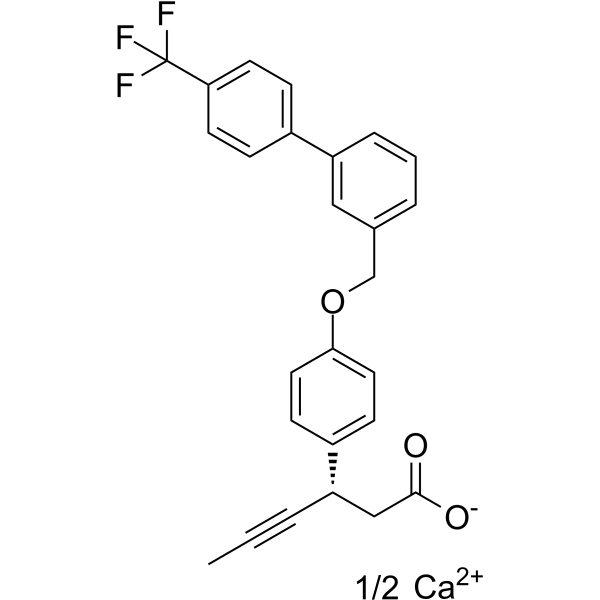
AMG 837 hemicalcium is a potent, orally bioavailable and partial agonist of GPR40/FFA1. AMG 837 hemicalcium inhibits specific [3H]AMG 837 binding at the human FFA1 receptor with a pIC50 of 8.13. AMG 837 hemicalcium could enhance insulin secretion and lower glucose levels in rodents.
For research use only. We do not sell to patients.
- CAS No.: 1291087-14-3
- Formula: C26H21F3O3.1/2Ca
- Molecular Weight:457.48
-
Storage:
Please store the product under the recommended conditions in the Certificate of Analysis.

To place orders, for customer services and technical support, please contact: MedChemExpress USA
Tel: 609-228-6898 E-mail: [email protected] [email protected]


-
 Biological Activity
-
Chemical Information
- Protocols
- Purity & Documentation
- References
-
 Help & FAQs


-
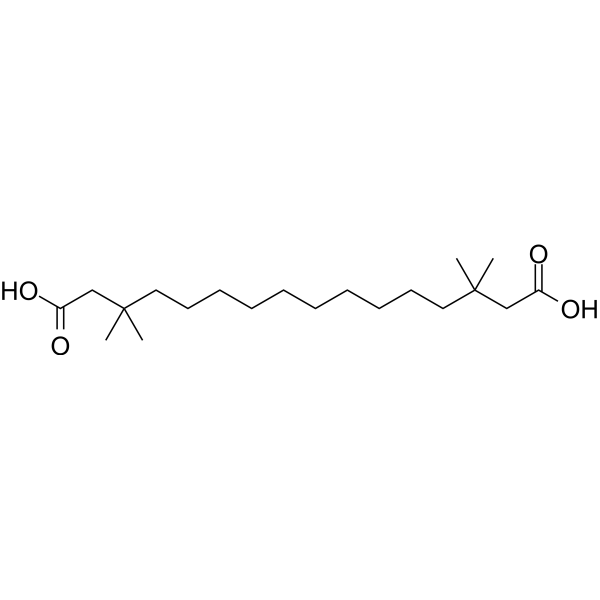
HY-P1123
MEDICA16Acetyl-CoA Carboxylase/ATP-Citrate Lyase Inhibitor -
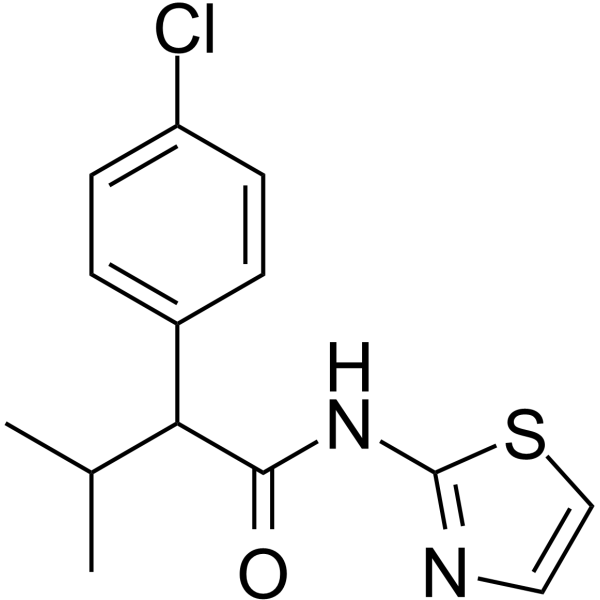
HY-P1125
4-CMTBFFA2 Agonist -
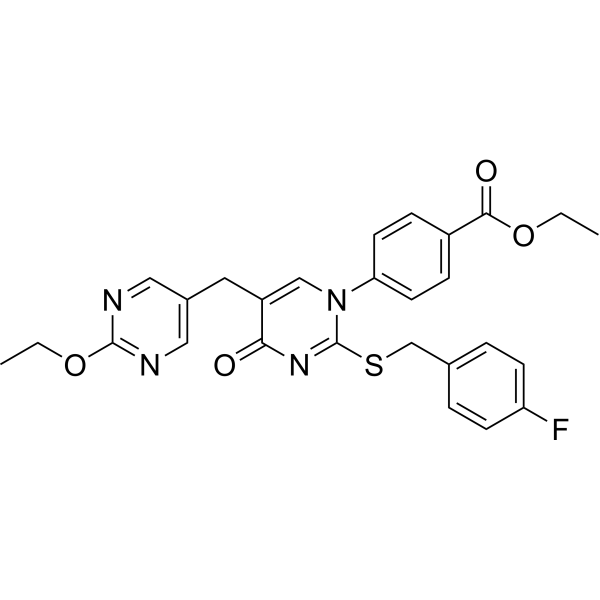
HY-50691
GW-1100Free Fatty Acid Receptor Antagonist -

HY-P1123R
MEDICA16 (Standard)Free Fatty Acid Receptor Agonist -
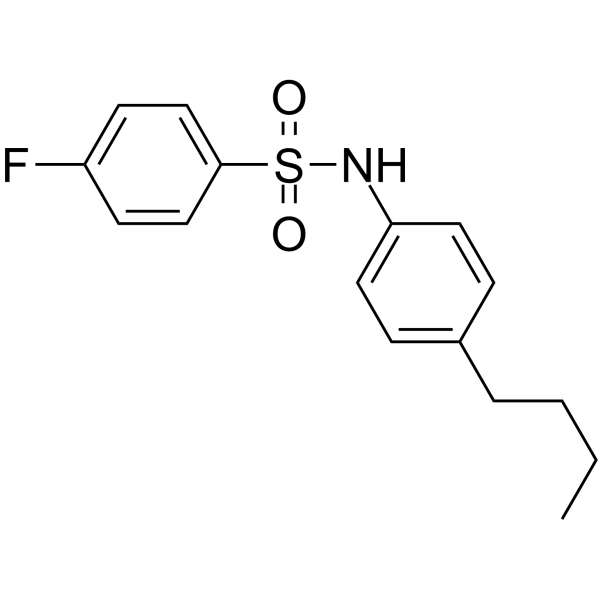
HY-101906
DC260126GPR40 antagonist -
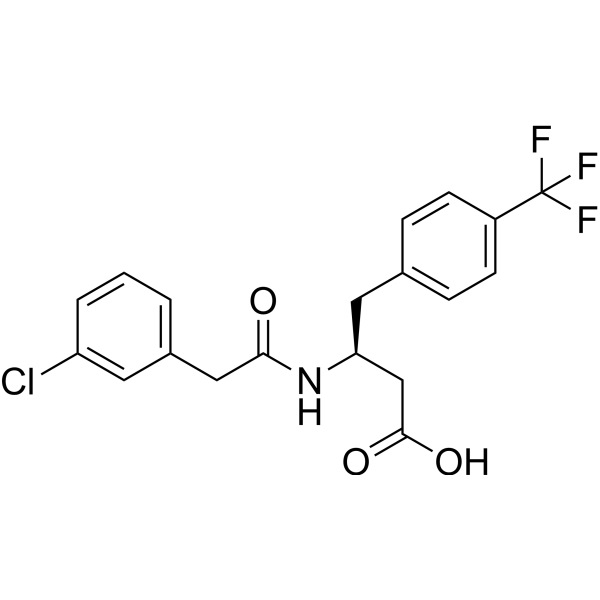
HY-116263
CATPBFFA2R Antagonist -
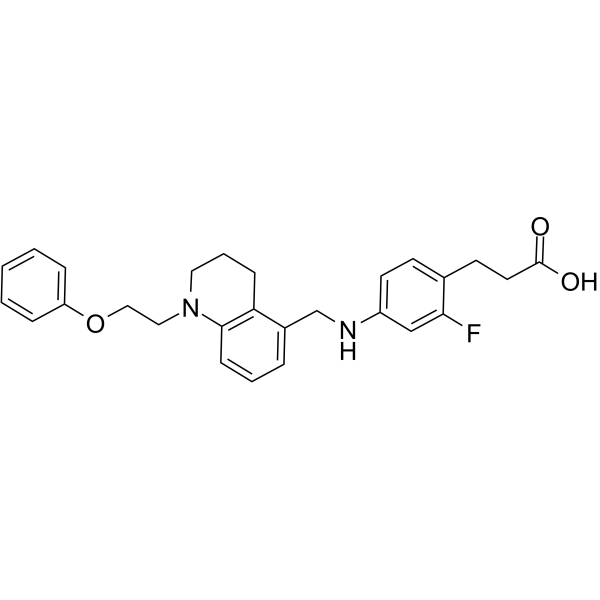
HY-P1124
AS2034178 free baseFree Fatty Acid Receptor Agonist -
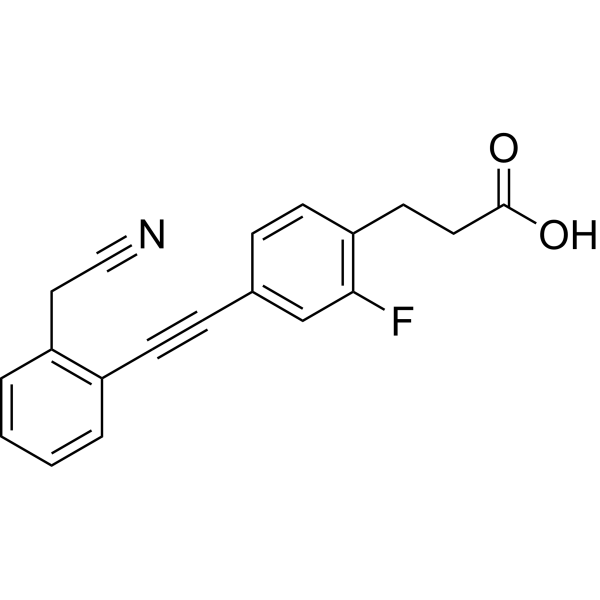
HY-15697
TUG-770GPR40/FFA1 Agonist -
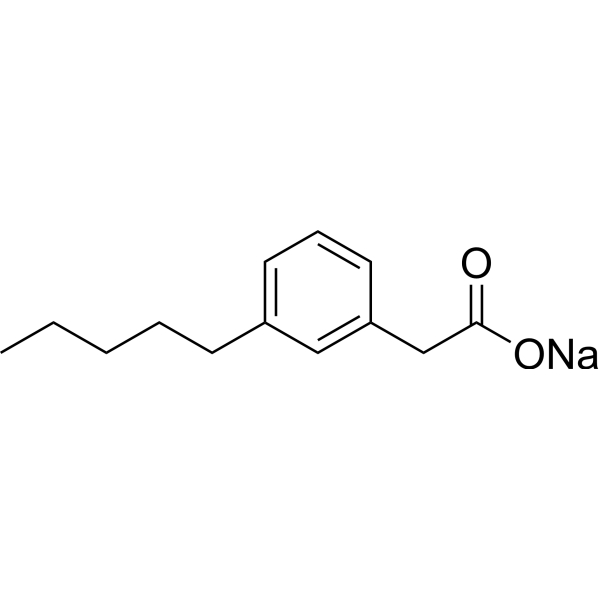
HY-100775
Fezagepras sodiumGPR40/GPR84 Modulator -
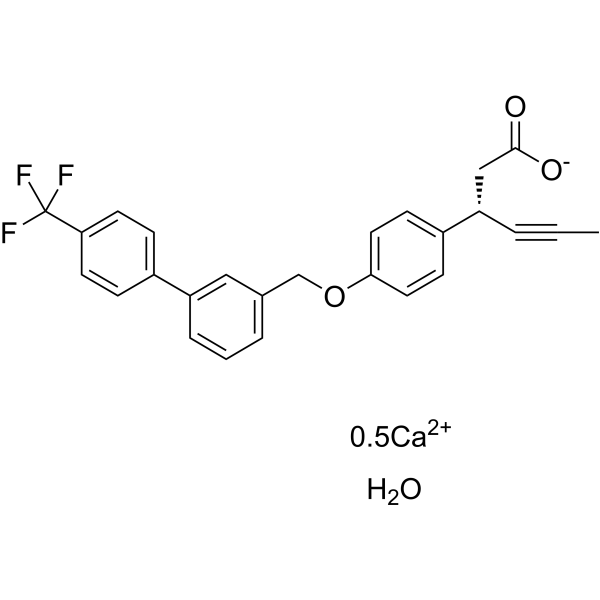
HY-13967B
AMG 837 calcium hydrateGPR40/FFA1 Agonist -
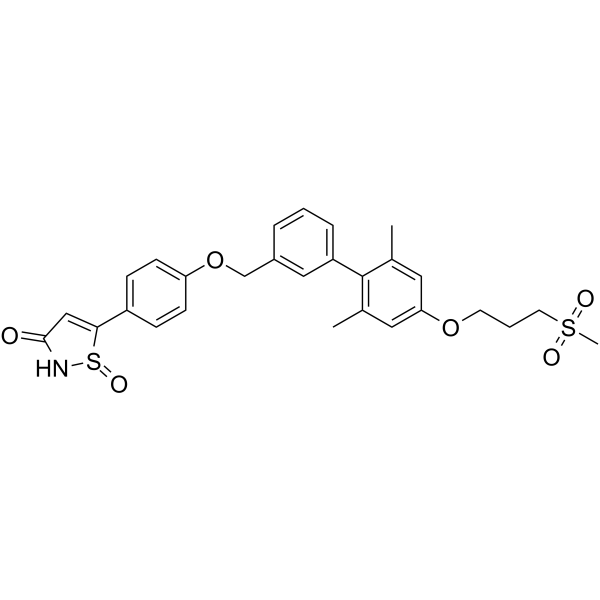
HY-12647
GPR40 Activator 2 -
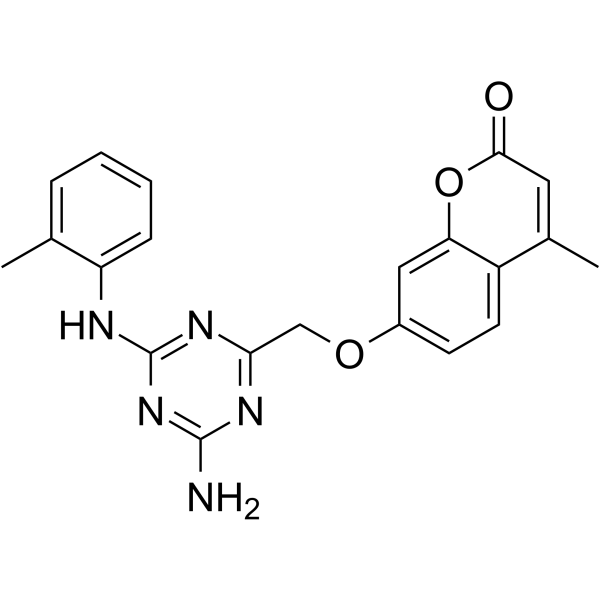
HY-111763
GPR40/FFAR1 modulator 1Free Fatty Acid Receptor Agonist
Publications Citing Use of MedChemExpress (MCE) AMG 837 hemicalcium
More Customer Validation & Images

-
Cell Imaging/Staining


Biological Activity
Description
IC50 & Target
pIC50: 8.13 (FFA1)[3]
In Vitro
AMG 837 (1 nM-10 μM) stimulates insulin secretion in a glucose-dependent manner with an EC50 of 142±20 nM on islets isolated from mice[1].
AMG 837 stimulates Ca2+ flux with the EC50s of 13.5, 22.6 and 31.7 nM for human, mouse and rat receptors in CHO cells, respectively[1].
MedChemExpress (MCE) has not independently confirmed the accuracy of these methods. They are for reference only. Further protocols information, click here.
In Vivo
AMG 837 (0.03-0.3 mg/kg; p.o. once daily for 21 days) reduces glucose levels and increases insulin levels following glucose challenge in vivo[1].
AMG 837 (0.5 mg/kg; p.o.) displays excellent oral bioavailability (F = 84%) and a total plasma Cmax of 1.4 µM[1].
MedChemExpress (MCE) has not independently confirmed the accuracy of these methods. They are for reference only.
-
Animal Model:8-week old Zucker Fatty Rats[1]
-
Dosage:0.03, 0.1, 0.3 mg/kg
-
Administration:Oral gavage once daily for 21 days
-
Result:Decreased glucose AUC values during the glucose tolerance test (GTT) to 7%, 15%, and 25% at 0.03, 0.1 and 0.3 mg/kg, respectively.
Increased insulin levels in the mid- and high-dose groups.
Not affected body weights during the 21-day treatment.
-
Animal Model:8-week old Sprague-Dawley rats[1]
-
Dosage:0.03, 0.1, 0.3 mg/kg
-
Administration:A single p.o. administration
-
Result:Reduced the post-prandial glucose with the half-maximal dose of 0.05 mg/kg.


Chemical Information
-
CAS No. 1291087-14-3
-
Molecular Weight 457.48
-
Formula C26H21F3O3.1/2Ca
-
SMILES
CC#C[C@@H](CC([O-])=O)C1=CC=C(OCC2=CC=CC(C3=CC=C(C=C3)C(F)(F)F)=C2)C=C1.[Ca+2].[1/2]
-
Shipping
Room temperature in continental US; may vary elsewhere.
-
Storage
Please store the product under the recommended conditions in the Certificate of Analysis.


Publications (3)
-
Journal Impact Factor
-
Most Recent
-
Nat Commun
Human iPSC-based Modeling of Pulmonary Fibrosis Reveals p300/CBP Inhibition Suppresses Alveolar Transitional Cell State. [Abstract]2026 Feb 12;17(1):1214. PMID: 41680175 -
Biochem Biophys Res Commun
High-throughput screening unveils AMG 837 and RORγt 13 as the potent Brucella inhibitor by targeting BacA. [Abstract]2025 Apr 9:757:151624. PMID: 40090117
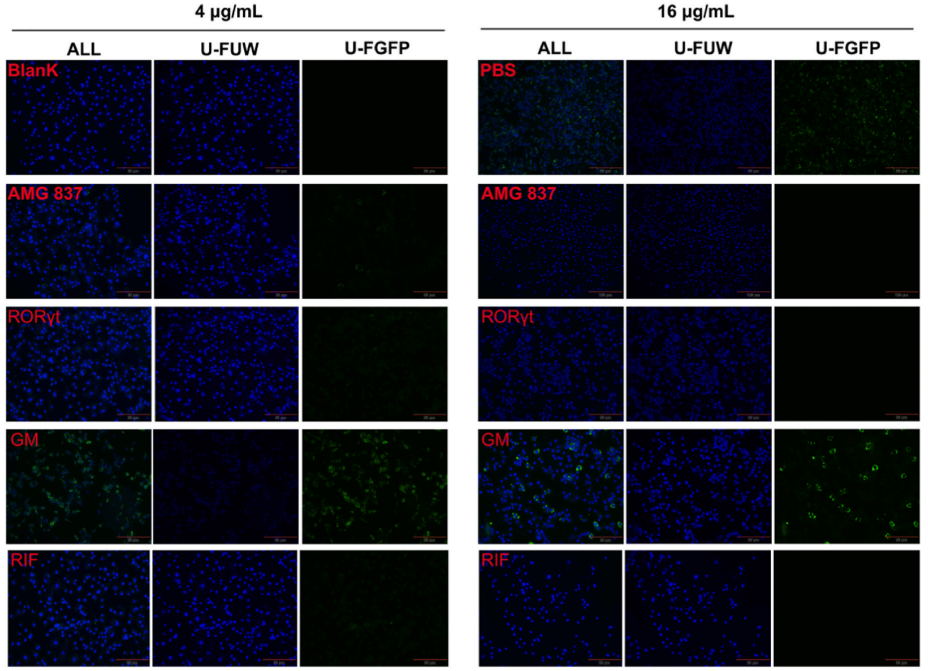
AMG 837 hemicalcium purchased from MedChemExpress. Usage Cited in: Biochem Biophys Res Commun. 2025 Apr 9:757:151624. [Abstract]
Ability of different concentrations compounds or drugs (GM, Gentamicin, Sterile; AMG 837; RORγt 13; RIF; 4, 16 μg/mL) to clear B. melitensis TZ in RAW264.7 cells at 24 h. Cells appear blue; B. melitensis TZ appear green.
-
Biomed Pharmacother
2023 May:161:114509. PMID: 37002580

Protocols
-
Research Protocol for Endocrine Diseases
Endocrine diseases often arise from disrupted hormone production, hormone signaling, or target-tissue responsiveness; for diabetes-focused endocrine disease models, insulin signaling regulates glucose uptake, hepatic glucose output, lipid metabolism, and β-cell compensation. Type 2 diabetes develops through interacting defects in insulin resistance, β-cell dysfunction, adipose inflammation, hepatic glucose overproduction, altered incretin signaling, and ectopic lipid metabolism. A major unresolved question is whether endocrine dysfunction is driven primarily by target-tissue insulin resistance, intrinsic β-cell failure, immune/inflammatory stress, or combined multi-organ failure that differs by disease stage.
-
Human Islet Cell Culture
The method of preserving islets in vitro, with purified reduced immunogenicity. The steps are islet isolation, islet cell purification, in vitro determination of islet function and islet cell culture.


Purity & Documentation
References
[1]. Daniel CHL, et, al. AMG 837: a novel GPR40/FFA1 agonist that enhances insulin secretion and lowers glucose levels in rodents. PLoS One. 2011; 6(11): e27270. [Content Brief]
[2]. Houze JB, et, al. AMG 837: a potent, orally bioavailable GPR40 agonist. Bioorg Med Chem Lett. 2012 Jan 15; 22(2): 1267-70. [Content Brief]
[3]. Daniel CHL, et, al. Identification and pharmacological characterization of multiple allosteric binding sites on the free fatty acid 1 receptor. Mol Pharmacol. 2012 Nov;82(5):843-59. [Content Brief]

Calculators
Concentration (start) × Volume (start) = Concentration (final) × Volume (final)


AMG 837 hemicalcium Related Classifications
HY-129707 Related Classifications
 Powered by Bioz