



AMG 837
Based on 3 publication(s) in Google Scholar
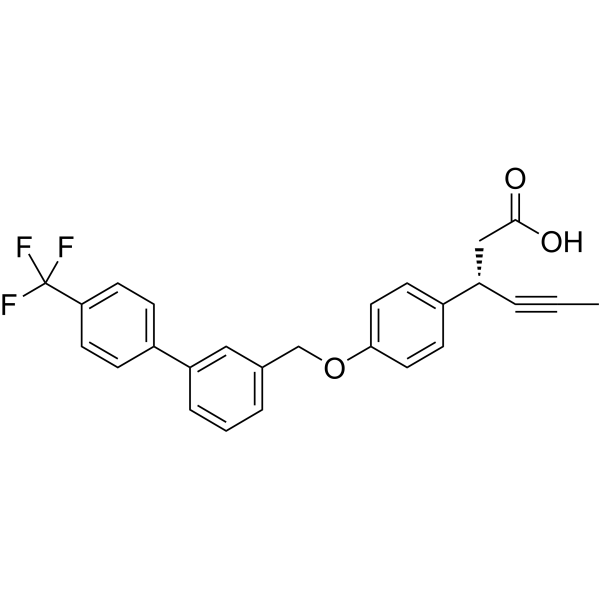
AMG 837 is an orally active, selective GPR40/FFA1 agonist with an EC50 of 1.5 nM against human GPR40. AMG 837 stimulates insulin secretion in a glucose-dependent manner, and effectively improves glycemic control in both normal and diabetic rodent models. AMG 837 binds to the BacA protein and impairs the survival and replication of Brucella. AMG 837 can be used in research related to type 2 diabetes and brucellosis.
For research use only. We do not sell to patients.
- Purity : 98.59%
- CAS No.: 865231-46-5
- Formula: C26H21F3O3
- Molecular Weight:438.44
-
Storage:Pure form -20°C, 3 years , 4°C, 2 years ; In solvent -80°C, 6 months , -20°C, 1 month

To place orders, for customer services and technical support, please contact: MedChemExpress USA
Tel: 609-228-6898 E-mail: [email protected] [email protected]


-
 Biological Activity
-
Chemical Information
-
Solvent & Solubility
- Protocols
- Purity & Documentation
- References
-
 Help & FAQs


-
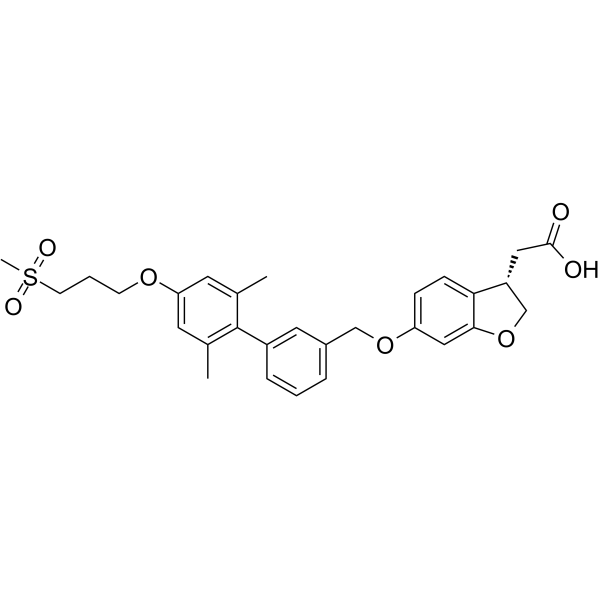
HY-10480
FasiglifamGPR40 Agonist -
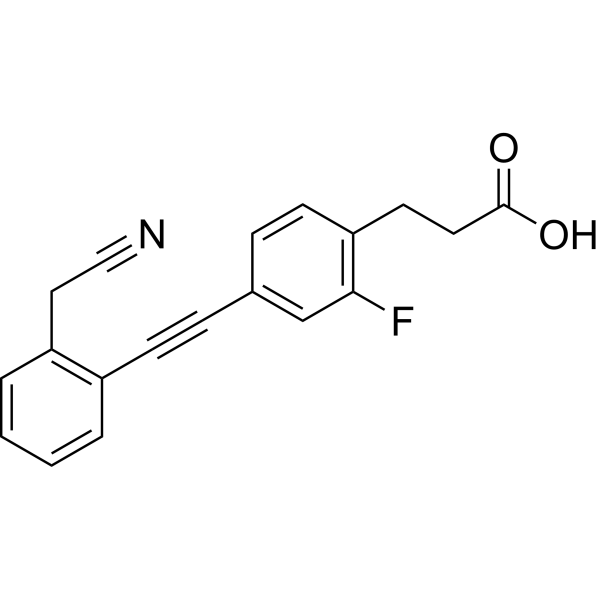
HY-15697
TUG-770GPR40/FFA1 Agonist -
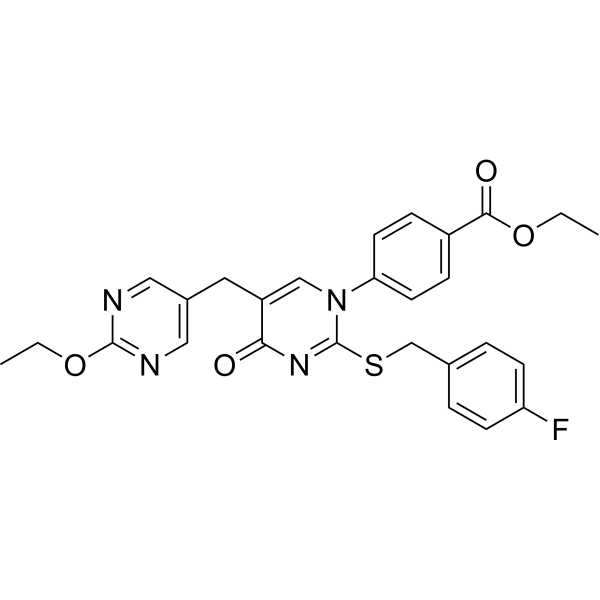
HY-50691
GW-1100Free Fatty Acid Receptor Antagonist -
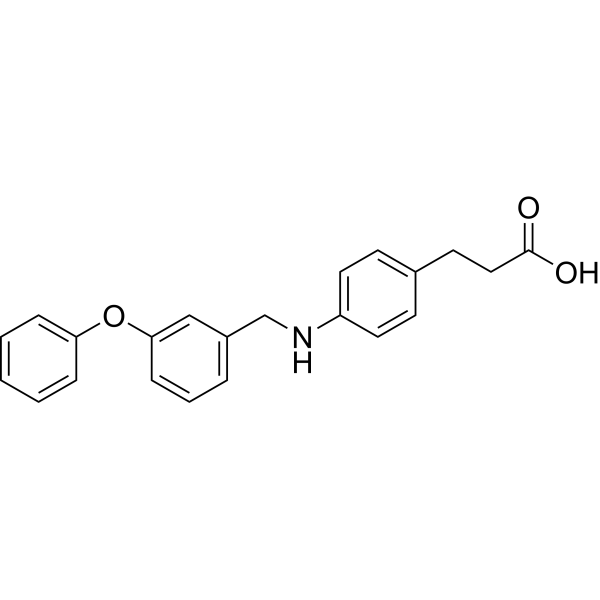
HY-15589
GW9508GPR40 Agonist -
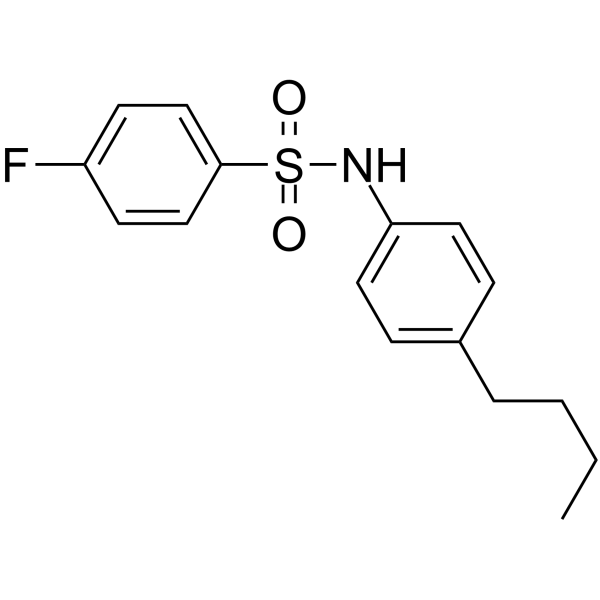
HY-101906
DC260126GPR40 antagonist -
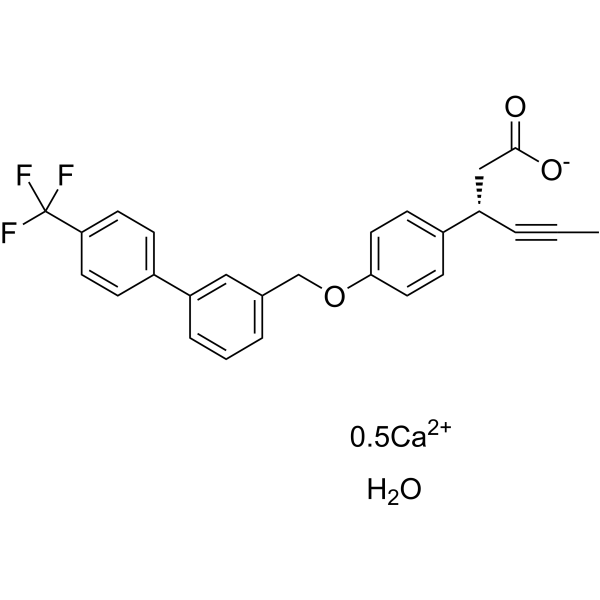
HY-13967B
AMG 837 calcium hydrateGPR40/FFA1 Agonist -
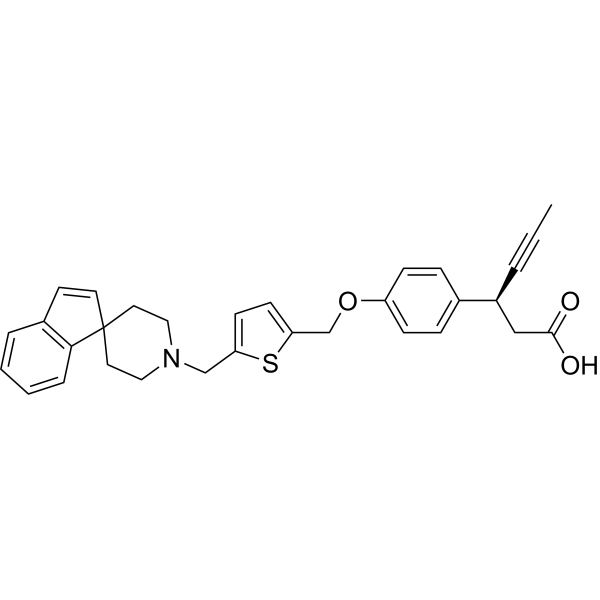
HY-13971
GPR40 Activator 1GPR40 Activator -
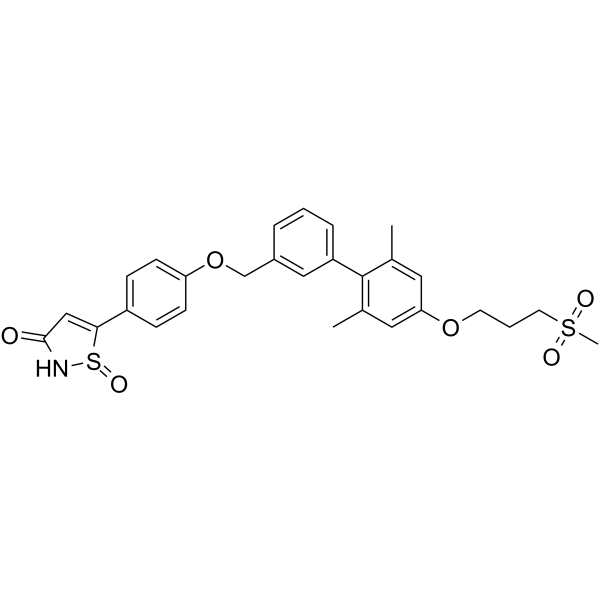
HY-12647
GPR40 Activator 2 -

HY-10480R
Fasiglifam (Standard)Reference Standard -

HY-15589R
GW9508 (Standard)GPR40 Agonist -
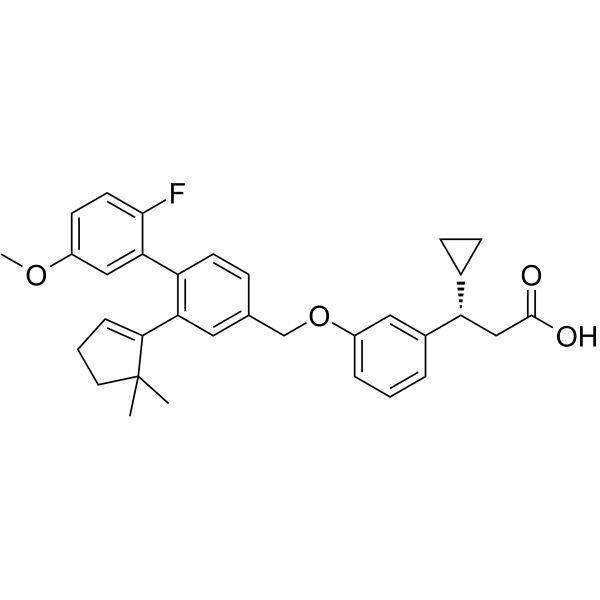
HY-13467
AM-1638GPR40/FFA1 Agonist -
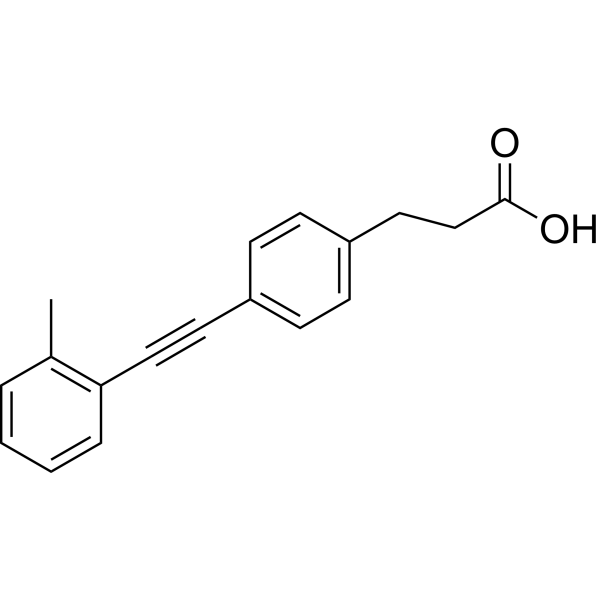
HY-14363
TUG-424Free Fatty Acid Receptor Agonist
Publications Citing Use of MedChemExpress (MCE) AMG 837
More Customer Validation & Images

-
Cell Imaging/Staining


Biological Activity
Description
Cellular Effect
|
Cell Line

|
Type | Value | Description | References |
|---|---|---|---|---|
| A9 | EC50 |
41 nM
Compound: 2, AMG 837
|
Agonist activity at human GPR40 expressed in mouse A9 cells by inositol phosphate accumulation assay
Agonist activity at human GPR40 expressed in mouse A9 cells by inositol phosphate accumulation assay
|
[PMID: 24900872] |
| CHO | EC50 |
0.013 μM
Compound: AMG 837
|
Partial agonist activity at human GPR40 expressed in CHO cells measured over 20 secs interval by luminometric analysis
Partial agonist activity at human GPR40 expressed in CHO cells measured over 20 secs interval by luminometric analysis
|
[PMID: 26620255] |
| CHO | EC50 |
0.06 μM
Compound: 1, AMG 837
|
Agonist activity at human FFA1 receptor expressed in CHO cell membranes after 4 hrs by aequorin bioluminescence assay
Agonist activity at human FFA1 receptor expressed in CHO cell membranes after 4 hrs by aequorin bioluminescence assay
|
[PMID: 24900707] |
| CHO | EC50 |
0.06 μM
Compound: 1, AMG-837
|
Agonist activity at GPR40 expressed in CHO cells after 20 seconds by aequorin bioluminescence assay in presence of 0.1 % human serum
Agonist activity at GPR40 expressed in CHO cells after 20 seconds by aequorin bioluminescence assay in presence of 0.1 % human serum
|
[PMID: 24900539] |
| CHO | EC50 |
0.08 μM
Compound: AMG 837
|
Partial agonist activity at human GPR40 expressed in CHO cells measured over 20 secs interval by luminometric analysis in presence of 0.01% human serum albumin
Partial agonist activity at human GPR40 expressed in CHO cells measured over 20 secs interval by luminometric analysis in presence of 0.01% human serum albumin
|
[PMID: 26620255] |
| CHO | EC50 |
104 nM
Compound: 2, AMG 837
|
Agonist activity at human GPR40 expressed in CHO cells by aequorin assay
Agonist activity at human GPR40 expressed in CHO cells by aequorin assay
|
[PMID: 24900872] |
| CHO | EC50 |
8.8 μM
Compound: AMG 837
|
Partial agonist activity at human GPR40 expressed in CHO cells measured over 20 secs interval by luminometric analysis in presence of 100% human serum
Partial agonist activity at human GPR40 expressed in CHO cells measured over 20 secs interval by luminometric analysis in presence of 100% human serum
|
[PMID: 26620255] |
| HEK293 | EC50 |
2.2 nM
Compound: AMG-837
|
Agonist activity at human GPR40 expressed in HEK293 cells measured after 18 to 20 hrs by beta-gal based luciferase reporter gene assay
Agonist activity at human GPR40 expressed in HEK293 cells measured after 18 to 20 hrs by beta-gal based luciferase reporter gene assay
|
[PMID: 27994752] |
| MIN6 | EC50 |
4.8 nM
Compound: 8, AMG-837
|
Induction of insulin secretion in mouse MIN6 cells
Induction of insulin secretion in mouse MIN6 cells
|
[PMID: 22217876] |
In Vitro
AMG 837 stimulates inositol phosphate accumulation in A9_GPR40 cells with an EC50 of 7.8 nM[1].
AMG 837 potently and selectively stimulates Ca2+ influx mediated by human GPR40 in CHO cells, with an EC50 of 13.5 nM, and shows no activity against the homologous human GPR41, GPR43 or GPR120 receptors[1].
AMG 837 activates GPR40 across multiple preclinical species, with EC50 values of 22.6 nM in mice, 31.7 nM in rats, 71.3 nM in dogs, and 30.6 nM in rhesus monkeys in the CHO cell aequorin assay[1].
The potency of AMG 837 against human GPR40 decreases in the presence of serum albumin or human serum, with an EC50 value of 210 nM in 0.625% HSA and 2140 nM in 100% human serum[1].
AMG 837 (1 μM) enhances insulin secretion activity of primary mouse islets in a glucose-dependent manner[1].
AMG 837 inhibits the growth of B. melitensis TZ, B. melitensis M5-90, B. suis S2, and B. abortus A19[2].
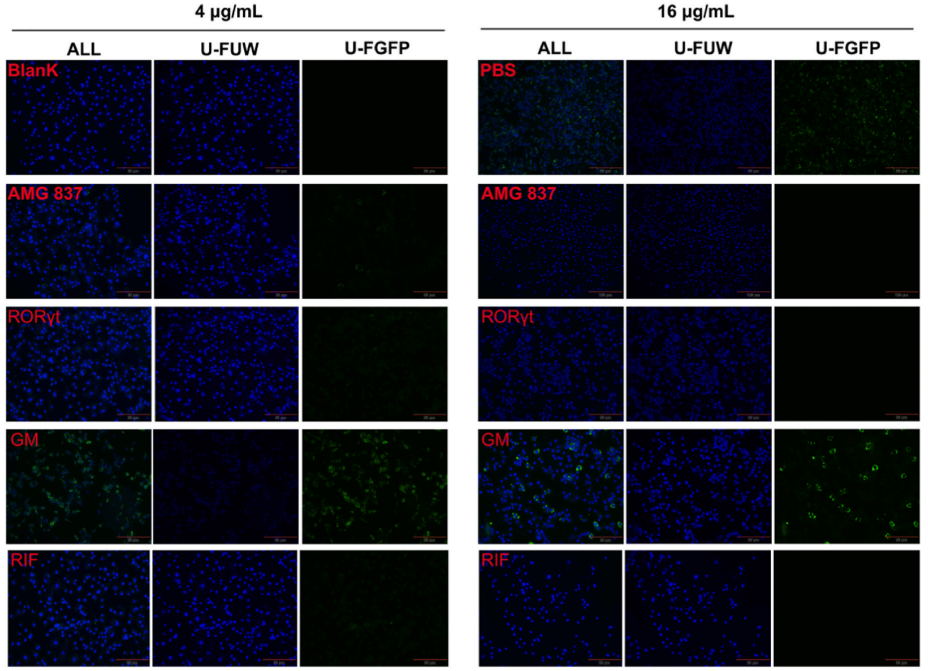
AMG 837 (4-16 μg/mL; 6-48 h) effectively inhibits B. melitensis TZ in RAW264.7 cells at a concentration of 4 μg/mL, and completely eliminates the bacterium at 16 μg/mL following 6, 12, 24, and 48 h of incubation[2].
MedChemExpress (MCE) has not independently confirmed the accuracy of these methods. They are for reference only. Further protocols information, click here.
In Vivo
AMG 837 (0.3 mg/kg; p.o.; single administration) effectively improves glucose tolerance and increases glucose-stimulated insulin secretion in normal Sprague-Dawley rats even after two consecutive glucose challenges[1].
AMG 837 (0.3-3 mg/kg; p.o.; single administration) reduces the postprandial blood glucose AUC0-t by approximately 46% in insulin-resistant Zucker obese rats by enhancing glucose-stimulated insulin secretion[1].
AMG 837 (0.03-0.3 mg/kg; p.o.; once daily for 21 days) maintains the efficacy of improving glucose tolerance in insulin-resistant Zucker obese rats, and reduces glucose AUC0-t by 25% at the dose of 0.3 mg/kg on day 21 of administration; its mechanism of action is to continuously stimulate insulin secretion via glucose, without affecting the body weight of rats[1].
MedChemExpress (MCE) has not independently confirmed the accuracy of these methods. They are for reference only.
-
Animal Model:Sprague-Dawley (8-week-old male)[1]
-
Dosage:0.03 mg/kg; 0.1 mg/kg; 0.3 mg/kg
-
Administration:p.o.; single dose
-
Result:Did not affect baseline glucose levels 30 minutes post-dose.
Induced a dose-dependent increase in plasma insulin levels, with peak secretion at 5 and 15 minutes post-glucose challenge.
Achieved a half-maximal dose to lower post-prandial glucose of approximately 0.05 mg/kg.
-
Animal Model:Sprague-Dawley (8-week-old male)[1]
-
Dosage:0.3 mg/kg
-
Administration:p.o.; single dose
-
Result:Improved blood glucose levels during both glucose challenges, with reduced glucose AUC during each challenge.
Induced peak insulin secretion soon after each glucose administration, mirroring the single-challenge response.
-
Animal Model:Zucker fatty (fa/fa) (8-week-old male; insulin-resistant, impaired glucose tolerance model)[1]
-
Dosage:0.3 mg/kg; 1 mg/kg; 3 mg/kg
-
Administration:p.o.; single dose
-
Result:Caused baseline glucose levels to trend lower and insulin levels to trend higher 30 minutes post-dose, though neither reached statistical significance.
Reduced post-glucose challenge glucose levels at all doses, with glucose AUC reduced by ~46% for all doses.
Induced a spike in plasma insulin levels 5 and 15 minutes post-glucose challenge at all doses.
-
Animal Model:Zucker fatty (fa/fa) (8-week-old male; insulin-resistant, impaired glucose tolerance model)[1]
-
Dosage:0.03 mg/kg; 0.1 mg/kg; 0.3 mg/kg
-
Administration:p.o.; daily; 21 days
-
Result:On day 1, reduced glucose AUC by 17%, 34% , and 39% at 0.03, 0.1, and 0.3 mg/kg doses, respectively, with corresponding increased insulin secretion post-glucose challenge.
On day 21, reduced glucose AUC by 7%, 15%, and 25% at 0.03, 0.1, and 0.3 mg/kg doses, respectively, with increased insulin secretion in the mid- and high-dose groups post-glucose challenge.
Caused no differences in body weight between treatment and control groups over the 21-day period.


Chemical Information
-
CAS No. 865231-46-5
-
Appearance Oil
-
Molecular Weight 438.44
-
Formula C26H21F3O3
-
Color White to off-white
-
SMILES
OC(C[C@H](C#CC)C1=CC=C(C=C1)OCC2=CC=CC(C3=CC=C(C(F)(F)F)C=C3)=C2)=O
-
Shipping
Room temperature in continental US; may vary elsewhere.
-
Storage
Pure form -20°C 3 years 4°C 2 years In solvent -80°C 6 months -20°C 1 month


Publications (3)
-
Journal Impact Factor
-
Most Recent
-
Nat Commun
Human iPSC-based Modeling of Pulmonary Fibrosis Reveals p300/CBP Inhibition Suppresses Alveolar Transitional Cell State. [Abstract]2026 Feb 12;17(1):1214. PMID: 41680175 -
Biochem Biophys Res Commun
High-throughput screening unveils AMG 837 and RORγt 13 as the potent Brucella inhibitor by targeting BacA. [Abstract]2025 Apr 9:757:151624. PMID: 40090117
AMG 837 purchased from MedChemExpress. Usage Cited in: Biochem Biophys Res Commun. 2025 Apr 9:757:151624. [Abstract]
Ability of different concentrations compounds or drugs (GM, Gentamicin, Sterile; AMG 837; RORγt 13; RIF; 4, 16 μg/mL) to clear B. melitensis TZ in RAW264.7 cells at 24 h. Cells appear blue; B. melitensis TZ appear green.
-
Biomed Pharmacother
2023 May:161:114509. PMID: 37002580


Solvent & Solubility
In Vitro:
DMSO : 100 mg/mL (228.08 mM; Need ultrasonic; Hygroscopic DMSO has a significant impact on the solubility of product, please use newly opened DMSO)
Please refer to the solubility information to select the appropriate solvent. Once prepared, please aliquot and store the solution to prevent product inactivation from repeated freeze-thaw cycles.
Storage method and period of stock solution: -80°C, 6 months; -20°C, 1 month. When stored at -80°C, please use it within 6 months. When stored at -20°C, please use it within 1 month.
Please refer to the solubility information to select the appropriate solvent. Once prepared, please aliquot and store the solution to prevent product inactivation from repeated freeze-thaw cycles.
Storage method and period of stock solution: -80°C, 6 months; -20°C, 1 month. When stored at -80°C, please use it within 6 months. When stored at -20°C, please use it within 1 month.
Concentration (start) × Volume (start) = Concentration (final) × Volume (final)
In Vivo:
Select the appropriate dissolution method based on your experimental animal and administration route.
- For the following dissolution methods, please ensure to first prepare a clear stock solution using an In Vitro approach and then sequentially add co-solvents:
- To ensure reliable experimental results, the clarified stock solution can be appropriately stored based on storage conditions. As for the working solution for In Vivo experiments, it is recommended to prepare freshly and use it on the same day.
- The percentages shown for the solvents indicate their volumetric ratio in the final prepared solution. If precipitation or phase separation occurs during preparation, heat and/or sonication can be used to aid dissolution.
Add each solvent one by one: 10% DMSO 40% PEG300 5% Tween-80 45% Saline
Solubility: ≥ 2.5 mg/mL (5.70 mM); Clear solution
This protocol yields a clear solution of ≥ 2.5 mg/mL (saturation unknown).
Taking 1 mL working solution as an example, add 100 μL DMSO stock solution (25.0 mg/mL) to 400 μL PEG300, and mix evenly; then add 50 μL Tween-80 and mix evenly; then add 450 μL Saline to adjust the volume to 1 mL.
Preparation of Saline: Dissolve 0.9 g sodium chloride in ddH₂O and dilute to 100 mL to obtain a clear Saline solution.
Add each solvent one by one: 10% DMSO 90% (20% SBE-β-CD in Saline)
Solubility: ≥ 2.5 mg/mL (5.70 mM); Suspended solution
This protocol yields a suspended solution of ≥ 2.5 mg/mL (saturation unknown). Suspended solution can be used for oral and intraperitoneal injection.
Taking 1 mL working solution as an example, add 100 μL DMSO stock solution (25.0 mg/mL) to 900 μL 20% SBE-β-CD in Saline, and mix evenly.
Preparation of 20% SBE-β-CD in Saline (4°C, storage for one week): 2 g SBE-β-CD powder is dissolved in 10 mL Saline, completely dissolve until clear.
In Vivo Dissolution Calculator
Please enter the basic information of animal experiments:
-
-
-
-
Recommended: Prepare an additional quantity of animals to account for potential losses during experiments.
Please enter your animal formula composition:
-
%DMSO +
Recommended: Keep the proportion of DMSO in working solution below 2% if your animal is weak.
-
%+
-
+%Tween-80 + +
-
%Saline +
The co-solvents required include: DMSO, . All of co-solvents are available by MedChemExpress (MCE). , Tween 80. All of co-solvents are available by MedChemExpress (MCE).
Working solution concentration: 0.22 mg/mL
Method for preparing stock solution: mg drug dissolved in μL DMSO. Stock solution concentration: mg/mL.
1. Take μL DMSO stock solution;
2. Add μL .
μL , mix evenly;
3. Then add μL Tween 80, mix evenly;
4. Then add μL
Please ensure that the stock solution in the first step is dissolved to a clear state, and add co-solvents in sequence. You can use ultrasonic heating (ultrasonic cleaner, recommended frequency 20-40 kHz), vortexing, etc. to assist dissolution.

Protocols
-
Research Protocol for Endocrine Diseases
Endocrine diseases often arise from disrupted hormone production, hormone signaling, or target-tissue responsiveness; for diabetes-focused endocrine disease models, insulin signaling regulates glucose uptake, hepatic glucose output, lipid metabolism, and β-cell compensation. Type 2 diabetes develops through interacting defects in insulin resistance, β-cell dysfunction, adipose inflammation, hepatic glucose overproduction, altered incretin signaling, and ectopic lipid metabolism. A major unresolved question is whether endocrine dysfunction is driven primarily by target-tissue insulin resistance, intrinsic β-cell failure, immune/inflammatory stress, or combined multi-organ failure that differs by disease stage.
-
Human Islet Cell Culture
The method of preserving islets in vitro, with purified reduced immunogenicity. The steps are islet isolation, islet cell purification, in vitro determination of islet function and islet cell culture.
-
Research Protocol for Metabolic Diseases
AMP-activated protein kinase, AMPK, is a conserved cellular energy sensor that responds to reduced cellular energy status and coordinates metabolism by increasing ATP-generating catabolic pathways while suppressing ATP-consuming anabolic processes. In metabolic disease research, the AMPK pathway is experimentally relevant because it regulates hepatic lipid synthesis, fatty acid oxidation, glucose production, skeletal-muscle glucose disposal, mTORC1-linked biosynthesis, autophagy, mitochondrial homeostasis, and whole-body energy balance. The central pathway logic is that energy stress, metformin, exercise-like stimulation, or direct AMPK activators increase AMPKα Thr172 phosphorylation and downstream substrate phosphorylation, including ACC and RAPTOR. Phosphorylation of ACC suppresses lipogenesis and supports fatty acid oxidation, whereas phosphorylation of RAPTOR suppresses mTORC1 signaling and links cellular energy status to growth and protein synthesis control. The pathway is linked


Purity & Documentation
-
Data Sheet (278 KB)
-
SDS (394 KB)
- English - EN (394 KB)
- Français - FR (394 KB)
- Deutsch - DE (394 KB)
- Norwegian - NO (394 KB)
- Español - ES (394 KB)
- Swedish - SV (394 KB)
- Italian - IT (394 KB)
- Korean - KR (394 KB)
- Portuguese - PT (394 KB)
-
Handling Instructions (2659 KB)
References
[1].
Lin DC, et al. AMG 837: a novel GPR40/FFA1 agonist that enhances insulin secretion and lowers glucose levels in rodents. PLoS One. 2011;6(11):e27270.
[Content Brief]
[2]. Guo KX, et al. High-throughput screening unveils AMG 837 and RORγt 13 as the potent Brucella inhibitor by targeting BacA. Biochem Biophys Res Commun. 2025;757:151624. [Content Brief]


Complete Stock Solution Preparation Table
Please refer to the solubility information to select the appropriate solvent. Once prepared, please aliquot and store the solution to prevent product inactivation from repeated freeze-thaw cycles.
Storage method and period of stock solution: -80°C, 6 months; -20°C, 1 month. When stored at -80°C, please use it within 6 months. When stored at -20°C, please use it within 1 month.
| Optional Solvent | Concentration Solvent Mass | 1 mg | 5 mg | 10 mg | 25 mg |
|---|---|---|---|---|---|
| DMSO | 1 mM | 2.2808 mL | 11.4041 mL | 22.8081 mL | 57.0203 mL |
| 5 mM | 0.4562 mL | 2.2808 mL | 4.5616 mL | 11.4041 mL | |
| 10 mM | 0.2281 mL | 1.1404 mL | 2.2808 mL | 5.7020 mL | |
| 15 mM | 0.1521 mL | 0.7603 mL | 1.5205 mL | 3.8014 mL | |
| 20 mM | 0.1140 mL | 0.5702 mL | 1.1404 mL | 2.8510 mL | |
| 25 mM | 0.0912 mL | 0.4562 mL | 0.9123 mL | 2.2808 mL | |
| 30 mM | 0.0760 mL | 0.3801 mL | 0.7603 mL | 1.9007 mL | |
| 40 mM | 0.0570 mL | 0.2851 mL | 0.5702 mL | 1.4255 mL | |
| 50 mM | 0.0456 mL | 0.2281 mL | 0.4562 mL | 1.1404 mL | |
| 60 mM | 0.0380 mL | 0.1901 mL | 0.3801 mL | 0.9503 mL | |
| 80 mM | 0.0285 mL | 0.1426 mL | 0.2851 mL | 0.7128 mL | |
| 100 mM | 0.0228 mL | 0.1140 mL | 0.2281 mL | 0.5702 mL |


AMG 837 Related Classifications
HY-13967 Related Classifications
 Powered by Bioz