Red Blood Cell Lysis Buffer (10×)
Based on 2 publication(s) in Google Scholar
MCE Red Blood Cell Lysis Buffer (10×) primarily contains ammonium chloride and is a ready-to-use solution designed for rapid and effective lysis and removal of anucleated red blood cells from human or mouse blood and tissue samples without affecting white blood cells, normal tissues, or tumor cells.
-
Storage :
4℃, 1 year. Room temperature, 3 months.


To place orders, for customer services and technical support, please contact: MedChemExpress USA
Tel: 609-228-6898 E-mail: [email protected] [email protected]



-

HY-108882
DNase I, Bovine pancreas -

HY-P7085
M-CSF Protein, Mouse -
HY-E70005D
Collagenase IV, Clostridium histolytica -

HY-E70005B
Collagenase, Type II -

HY-D1056
Lipopolysaccharides, from E. coli O55:B5 -
HY-10182
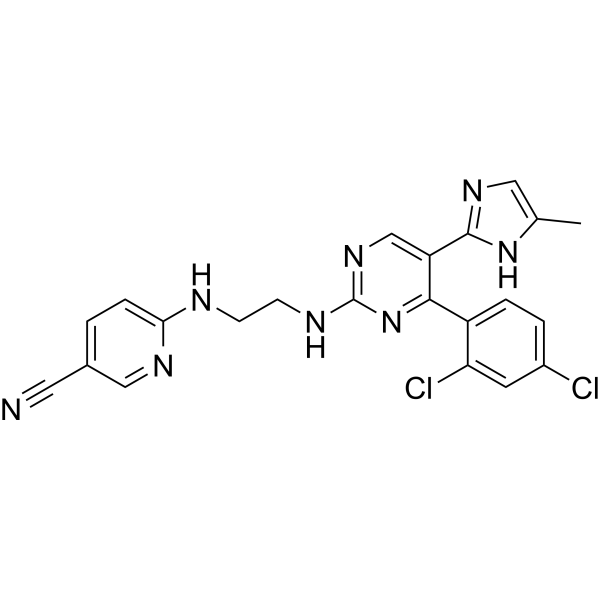
Laduviglusib -
HY-10071
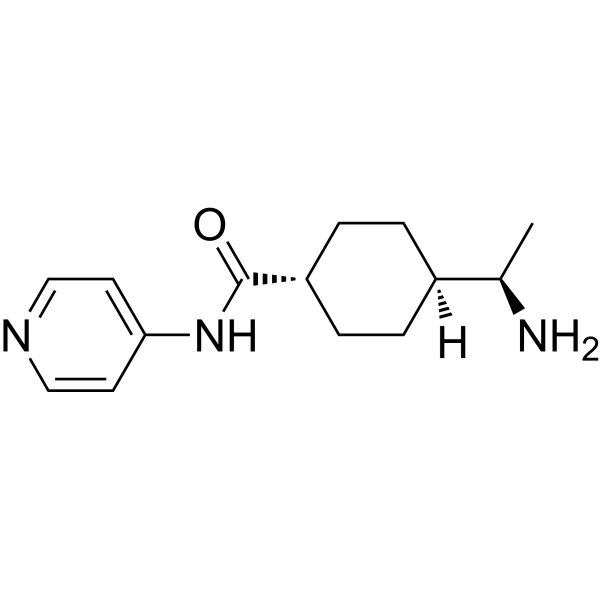
Y-27632 -
HY-18739
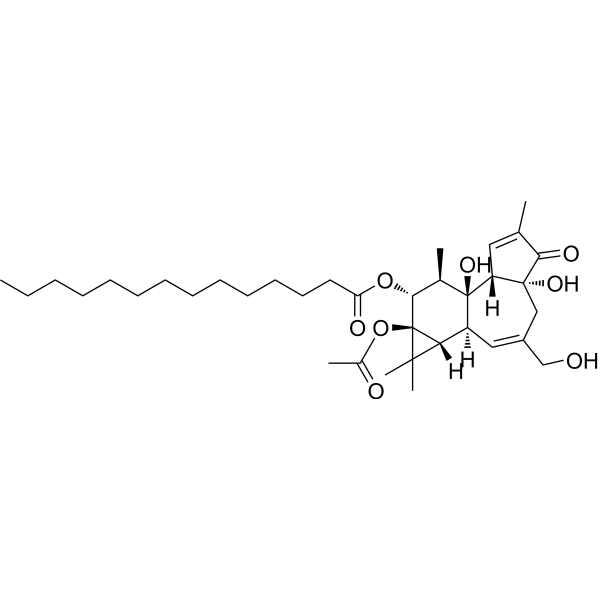
Phorbol 12-myristate 13-acetate -

HY-107910
Hyaluronidase, Bovine testes -
HY-Y0320C
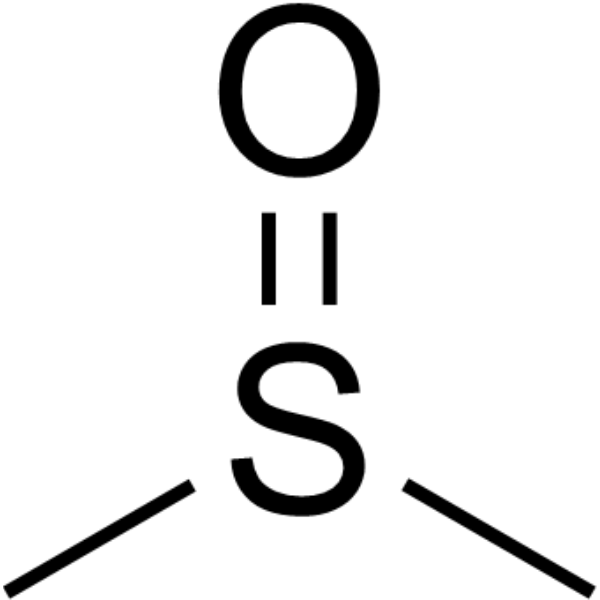
Dimethyl sulfoxide -
HY-10583
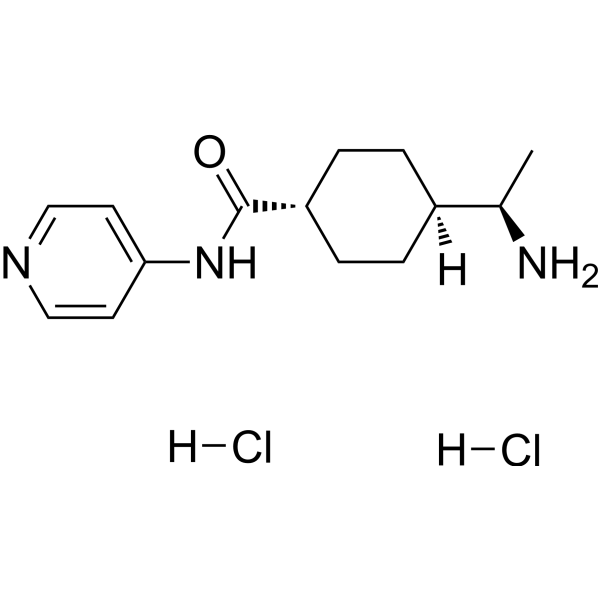
Y-27632 dihydrochloride -

HY-K6011
Tumor Tissue Dissociation Solution


Description & Advantages
MCE Red Blood Cell Lysis Buffer (10×) primarily contains ammonium chloride and is a ready-to-use solution designed for rapid and effective lysis and removal of anucleated red blood cells from human or mouse blood and tissue samples without affecting white blood cells, normal tissues, or tumor cells.
The formulation of MCE Red Blood Cell Lysis Buffer (10×) has been optimized to lyse red blood cells while causing minimal damage to lymphocytes or other nucleated cells. The treated blood or cell samples can be used for subsequent primary culture, cell fusion, and extraction of nucleic acids or proteins, as well as various routine analyses and tests.


Protocol
For Tissue Cell Samples (Requiring Washing)
1. Cell Collection: Fresh tissues are digested with collagenase, trypsin, or similar enzymes and dispersed into a cell suspension, and centrifuged to discard the supernatant.
2. Cell Lysis: Dilute Red Blood Cell Lysis Buffer (10×) with deionized water to 1× concentration, add 3-5 volumes of 1× Lysis Buffer to resuspend the cells, and lyse on ice or at room temperature for 1-2 min. Centrifuge at 4°C and 500 × g for 5 min, and discard the red supernatant.
Note: If incomplete lysis of red blood cells is observed upon collecting the precipitate, repeat the above steps once. Usually, a very small amount of residual red blood cells does not affect subsequent testing.
3. Cell Washing: Add over 5 volumes of PBS, HBSS, physiological saline, or serum-free medium to resuspend the cell precipitate, centrifuge at 4°C and 500 × g for 2-3 min, and discard the supernatant. Repeat this step once.
4. Resuspend and Count Cells: Resuspend the cell precipitate in an appropriate solution according to experimental requirements and count for subsequent experiments.
For Tissue Cell Samples (No Washing Required)
1. Cell Collection: Fresh tissues are digested with collagenase, trypsin, or similar enzymes and dispersed into a cell suspension, and centrifuged to discard the supernatant.
2. Cell Lysis: Dilute Red Blood Cell Lysis Buffer (10×) with deionized water to 1× concentration, add 5 volumes of 1× Lysis Buffer to resuspend the cells, and lyse on ice or at room temperature for 1-2 min. Add 15-20 mL PBS, HBSS, physiological saline, or serum-free medium and mix well. Centrifuge at 4°C and 500 × g for 5 min, and discard the red supernatant.
Note: If incomplete lysis of red blood cells is observed, repeat the lysis step once.
3. Resuspend and Count Cells: Resuspend the cell precipitate in an appropriate solution according to experimental requirements and count for subsequent experiments.
For Blood Samples (Requiring Washing)
1. Cell Collection: Collect fresh anticoagulated blood, centrifuge at 500 × g for 5 min, and discard the supernatant.
2. Cell Lysis: Dilute Red Blood Cell Lysis Buffer (10×) with deionized water to 1× concentration, add 6-10 volumes of 1× Lysis Buffer to resuspend the cells, and lyse on ice or at room temperature for 1-2 min. Centrifuge at 4°C and 500 × g for 5 min, and discard the red supernatant.
3. Cell Washing: Add over 5 volumes of PBS, HBSS, physiological saline, or serum-free medium to resuspend the cell precipitate, centrifuge at 4°C and 500 × g for 2-3 min, and discard the supernatant. Repeat this step once.
4. Resuspend and Count Cells: Resuspend the cell precipitate in an appropriate solution and count for subsequent experiments.
Note: Lysis time varies among blood sources. Mouse blood may require only 1-2 min, whereas human peripheral blood may require 4-5 min. Manually mix during lysis. For small blood samples, the first collection step may be omitted and 10 volumes of 1× Lysis Buffer can be added directly; mouse blood may be lysed for 4-5 min and human peripheral blood for up to 10 min, but not longer than 15 min.
Blood Samples (No Washing Required)
1. Cell Lysis: Dilute Red Blood Cell Lysis Buffer (10×) with deionized water to 1× concentration, add 10 volumes of 1× Lysis Buffer to fresh anticoagulated blood, and lyse on ice or at room temperature for 1-2 min. Centrifuge at 4°C and 500 × g for 5 min, and discard the red supernatant.
Note: For mouse blood, 4-5 min of lysis is sufficient, whereas human peripheral blood may require 10 min, but not more than 15 min. Manually mix during lysis.
2. Wash Cells: Add 20-30 mL PBS, HBSS, physiological saline, or serum-free culture medium and mix well. Centrifuge at 4°C and 500 × g for 5 min and discard the red supernatant. Repeat lysis if residual red blood cells remain.
3. Resuspend and Count Cells: Resuspend the cell precipitate in an appropriate solution according to experimental requirements and count for subsequent experiments.


Publications
-
Journal Impact Factor
-
Most Recent
-
J Control Release2025 Oct 14;388(Pt 1):114337. PMID: 41101699
Storage
4℃, 1 year.
Room temperature, 3 months.


Components
| Components | HY-K3010-100 mL |
|---|---|
| Red Blood Cell Lysis Buffer (10×) | 100 mL |


 Please enter the correct Lot Number