



Eukaryotic Release Factor (eRF)
Eukaryotic release factors terminate protein biosynthesis by recognizing stop codons and promoting peptidyl-tRNA hydrolysis on the ribosome[1][2]. Mechanistically, eRF1 recognizes UAA, UAG, and UGA stop codons, whereas eRF3 acts as a GTPase that cooperates with eRF1 to accelerate nascent polypeptide release[2][3]. In mRNA quality control, eRF1 and eRF3 also participate in the SMG1-UPF1-eRF1-eRF3 SURF complex that links translation termination to nonsense-mediated mRNA decay[4]. In disease models, premature termination codon readthrough provides an experimental route for studying nonsense-mutation disorders, and eRF3 degradation enhances G418-induced readthrough while altering NMD-related protein levels[5]. Compared with eRF3b, eRF3a silencing markedly increases premature nonsense codon readthrough in human cells, while eRF3b overexpression compensates for termination defects caused by eRF3a depletion[6]. Therefore, eRF3a and eRF3b are not fully equivalent release-factor isoforms, because eRF3a mainly maintains mammalian termination-complex formation and eRF1 stability[6]. For experimental applications, eRF3a degraders including CC-90009, CC-885, and SJ6986 support studies of premature stop codon readthrough and CFTR nonsense-mutation rescue[5][7].eRF research connects translation termination, stop codon recognition, GTP hydrolysis, and nonsense-mediated decay.
eRF3a and eRF3b isoform differences guide mammalian termination-complex and readthrough experiments.
eRF3a degraders support CFTR nonsense mutation rescue and premature stop codon readthrough studies.
- [1]. Song H, et al. The crystal structure of human eukaryotic release factor eRF1--mechanism of stop codon recognition and peptidyl-tRNA hydrolysis. Cell. 2000;100(3):311-321. [Content Brief]
- [2]. Alkalaeva EZ, et al. In vitro reconstitution of eukaryotic translation reveals cooperativity between release factors eRF1 and eRF3. Cell. 2006;125(6):1125-1136. [Content Brief]
- [3]. Cheng Z, et al. Structural insights into eRF3 and stop codon recognition by eRF1. Genes Dev. 2009;23(9):1106-1118. [Content Brief]
- [4]. Kashima I, et al. Binding of a novel SMG-1-Upf1-eRF1-eRF3 complex (SURF) to the exon junction complex triggers Upf1 phosphorylation and nonsense-mediated mRNA decay. Genes Dev. 2006;20(3):355-367. [Content Brief]
- [5]. Baradaran-Heravi A, et al. Effect of small molecule eRF3 degraders on premature termination codon readthrough. Nucleic Acids Res. 2021;49(7):3692-3708. [Content Brief]
- [6]. Chauvin C, et al. Involvement of human release factors eRF3a and eRF3b in translation termination and regulation of the termination complex formation. Mol Cell Biol. 2005;25(14):5801-5811. [Content Brief]
- [7]. Lee RE, et al. Small-molecule eRF3a degraders rescue CFTR nonsense mutations by promoting premature termination codon readthrough. J Clin Invest. 2022;132(18):e154571. [Content Brief]
Eukaryotic Release Factor (eRF) Isoform Specific Products
All Product Categories
-
Eukaryotic Release Factor (eRF) Related Products (59)
Related Products (59)

-
Eukaryotic Release Factor (eRF) Isoform Comparison
-
CC-885
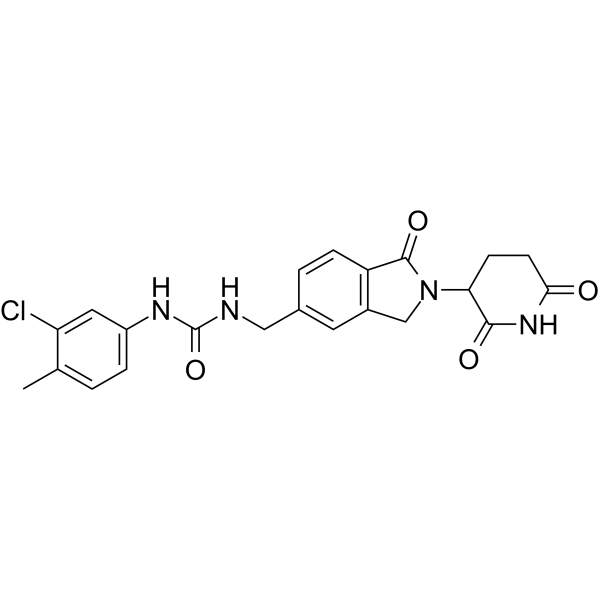 0 ImagesCC-885, a cereblon (CRBN) modulator, acts as a molecular glue degrader targeting GSPT1 with a Kd of 350 nM. CC-885 binds to CRBN to alter the substrate specificity of the CRL4 E3 ligase, promoting the ubiquitination and proteasomal degradation of GSPT1, BNIP3L, PLK1, CDK4, IKZF1/3, GSPT2, WIZ, CHD7, GOLM1, CK1α and ETS1. CC-885 induces apoptosis, cell cycle arrest, transcriptional downregulation and antiproliferation in cancer cells. CC-885 is applicable to research related to relapsed/refractory acute myeloid leukemia, MYC-driven tumors, metastatic castration-resistant prostate cancer, multiple myeloma, hepatocellular carcinoma, glioblastoma, VHL-deficient clear cell renal cell carcinoma and non-small cell lung cancer.
-
Eragidomide
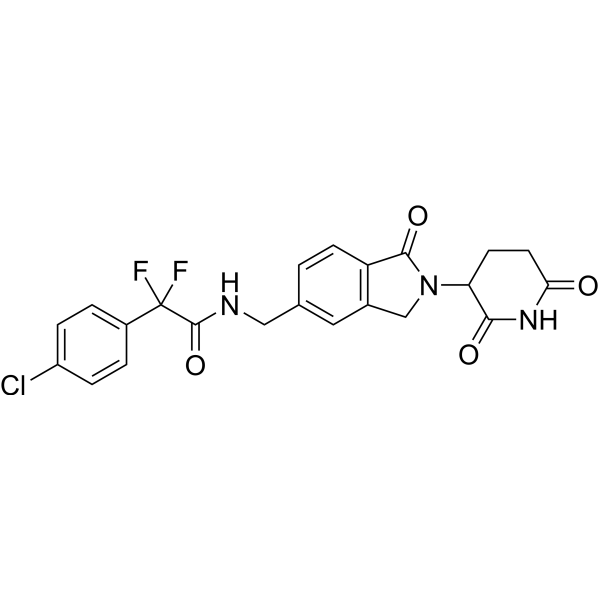 0 ImagesSynonyms: CC-90009Eragidomide (CC-90009) is a GSPT1 Molecular Glue degrader. Eragidomide exhibits antiproliferative and pro-apoptotic (apoptosis) activities against acute myeloid leukemia cells. Eragidomide recruits the CRL4CRBN E3 ubiquitin ligase complex to selectively target GSPT1 for ubiquitination and proteasomal degradation. Eragidomide reduces leukemia cell engraftment and eliminates leukemia stem cells. Eragidomide promotes the activation of the GCN1/GCN2/ATF4 pathway and the integrated stress response pathway, inhibits global protein translation, promotes preferential translation of ATF4, and induces the accumulation of ATF4, CHOP and ATF3. The response to Eragidomide is regulated by the ILF2/ILF3 heterodimer complex, the mTOR signaling pathway and the integrated stress response. Eragidomide can be used in research related to acute myeloid leukemia and relapsed/refractory acute myeloid leukemia.
-
MRT-2359
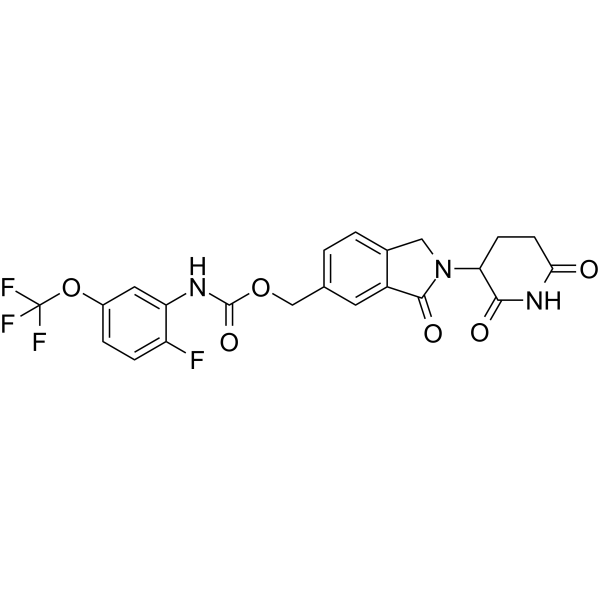 0 ImagesMRT-2359 is an orally active and selective GSPT1 molecular glue degrader, with a DC50 of 5 nM. MRT-2359 induces CRBN/GSPT1 ternary complex formation to drive CRBN- and degron-dependent proteasomal GSPT1 degradation, with selectivity for wild-type GSPT1 over the GSPT1G575N mutant. MRT-2359 disrupts protein translation, induces ribosome stalling, downregulates MYC family proteins and their transcriptional output, reduces proliferation, and induces apoptosis in cancer cells. MRT-2359 can be used for the research of non-small cell lung cancer (NSCLC), small cell lung cancer (SCLC), neuroendocrine lung cancer, high grade neuroendocrine cancers, diffuse large B-cell lymphoma, prostate cancer, and MYC-driven solid tumors.
-
SJ6986
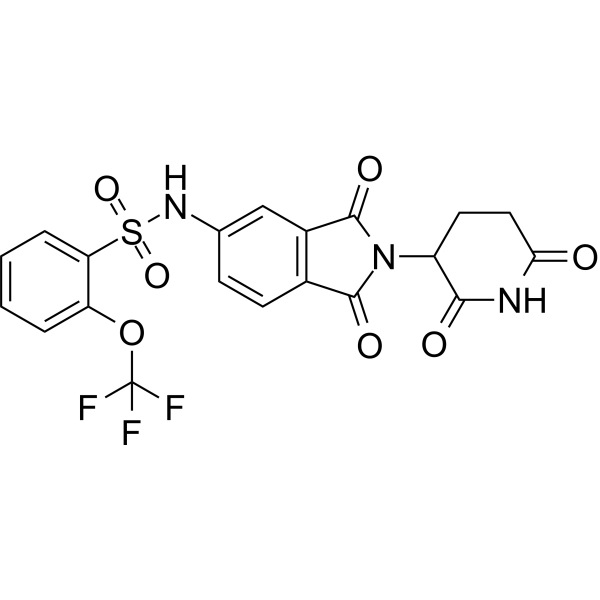 0 ImagesSJ6986 is an orally active GSPT1/2 molecular glue degrader, with a DC50 of 9.7 nM at 4 h and 2.1 nM at 24 h for GSPT1 degradation in MV4-11 cells. SJ6986 recruits GSPT1/2 to the CRBN E3 ligase complex, inducing ubiquitination and proteasomal degradation of GSPT1/2. SJ6986 triggers activation of the integrated stress response pathway and apoptosis downstream of GSPT1 degradation. SJ6986 serves as a chemical probe for investigating the functions of GSPT1/GSPT2 in vitro and in vivo. SJ6986 can be used for research on acute leukemia and medulloblastoma.
-
ORM-5029
 0 ImagesCat. No.: HY-164202ORM-5029 is a first-in-class human epidermal growth factor receptor 2 (HER2)-targeted antibody-drug conjugate (ADC) comprised of SMol006, a highly potent GSPT1 degrader, conjugated to Pertuzumab (HY-P9912). ORM-5029 exhibits robust efficacy across 14 HER2-positive breast cancer cell lines, with IC50 values ranging from 0.3 to 14.4 nM.ORM-5029 demonstrates anti-tumor activity in the BT474 xenograft model. ORM-5029 can be used for study of breast cancer.
-
GT19630
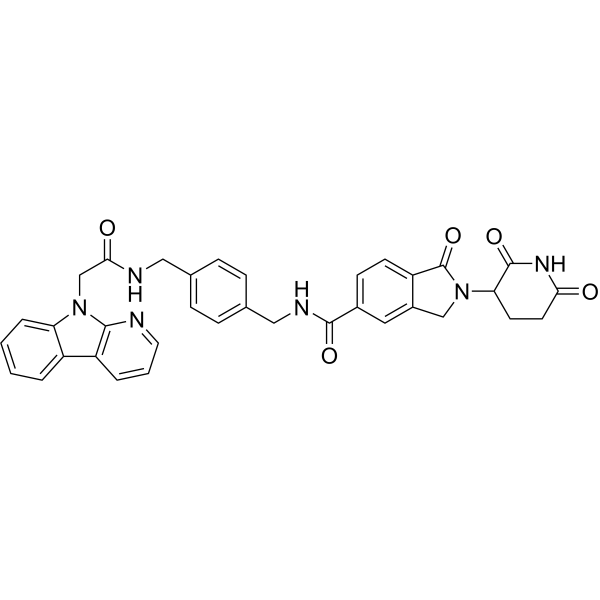 0 ImagesGT19630 is an orally active c-Myc PROTAC targeted degrader based on the cereblon E3 ubiquitin ligase, with an IC50 of 1.5 nM against human c-Myc. GT19630 mediates the degradation of MYC, GSPT1, GSPT2, CK1 alpha, N-Myc, B7-H3 and XIAP, and disrupts the MYC-GSPT1 synergistic regulatory feedback loop. GT19630 inhibits cell proliferation, blocks S-phase progression of the cell cycle, promotes cell apoptosis, reduces cell migration capacity, induces integrated stress response, and blocks oxidative phosphorylation by inhibiting the TCA cycle. GT19630 can be used in the research of Myc-driven hematological cancers, small cell lung cancer, breast cancer, TP53-mutant cancers, and venetoclax-resistant cancers.
-
SJ988497
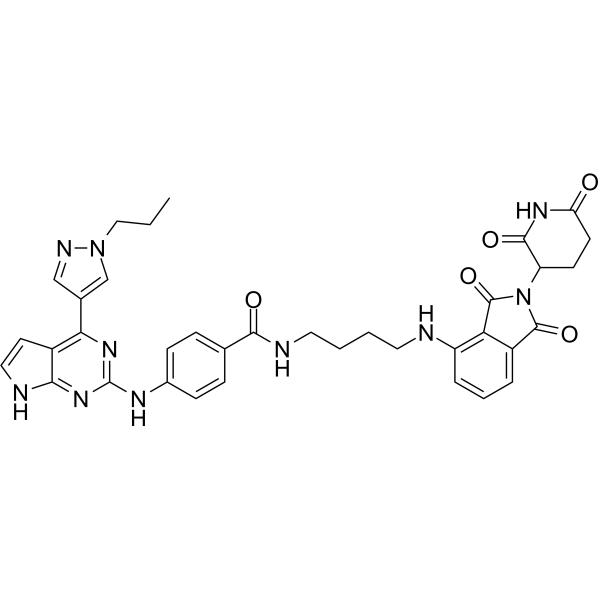 0 ImagesSJ988497 is a PROTAC degrader targeting JAK2. SJ988497 induces the proteasomal degradation of CRBN-mediated JAK2, JAK1, JAK3, GSPT1, and IKZF1, and functions as a CRBN neosubstrate for GSPT1. SJ988497 retains binding affinity for the kinase domain of JAK2. SJ988497 can be used in studies related to cancers such as crlf2-rearranged acute lymphoblastic leukemia.
-
MDEG-541
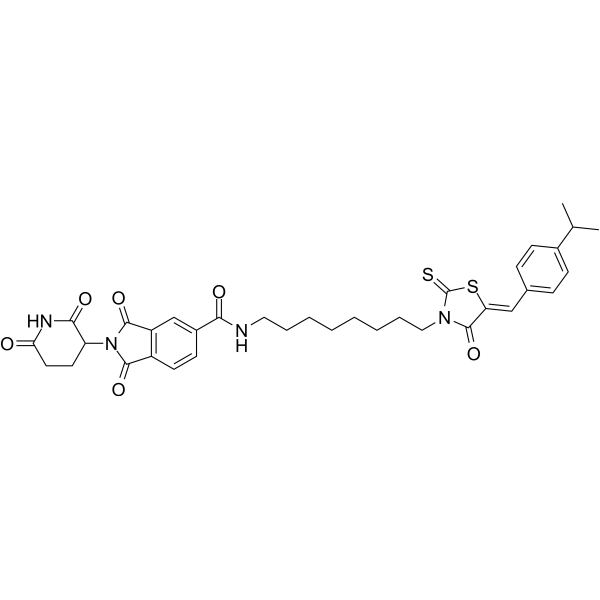 0 ImagesCat. No.: HY-150259Purity: 98.68%MDEG-541 is a PROTAC degrader targeting MYC, GSPT1/2 and PLK1. MDEG-541 induces degradation via proteasome- and ubiquitin-dependent pathways. MDEG-541 exhibits anti-tumor activity in gastrointestinal cancer cells and patient-derived organoids. MDEG-541 can be used for the research of gastrointestinal cancer.
-
GBD-9
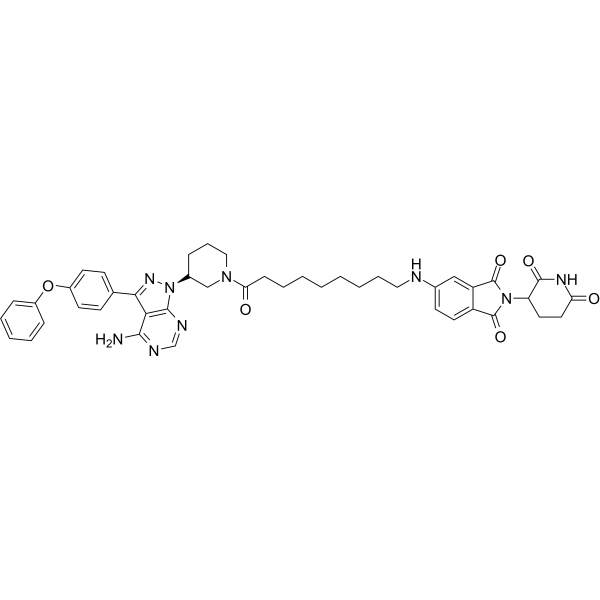 0 ImagesGBD-9 is a degrader based on the E3 ubiquitin ligase CRBN that targets BTK and the G1 to S phase transition protein GSPT1. GBD-9 has both PROTAC and molecular glue properties by inducing ubiquitination and proteasomal degradation of target proteins. GBD-9 can efficiently degrade wild-type and mutant BTK (such as C481S mutation) and GSPT1. GBD-9 significantly inhibits tumor cell proliferation by inducing G1 phase arrest in cancer cells, downregulating anti-apoptotic proteins (BCL-2, MCL-1) and activating Caspase-3 to induce apoptosis. GBD-9 is mainly used in the research of hematological tumors such as diffuse large B-cell lymphoma (DLBCL) and acute myeloid leukemia (AML).
-
ZXH-1-161
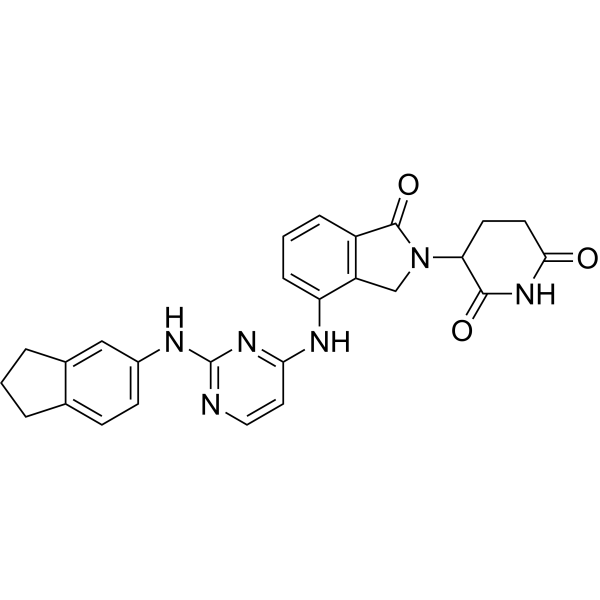 0 ImagesZXH-1-161 is a potent CRBN modulator that selectively induces the degradation of GSPT1 in a CRBN-dependent manner. ZXH-1-161 can inhibit the proliferation of multiple myeloma cells and exhibits antitumor activity.
-
MG-277
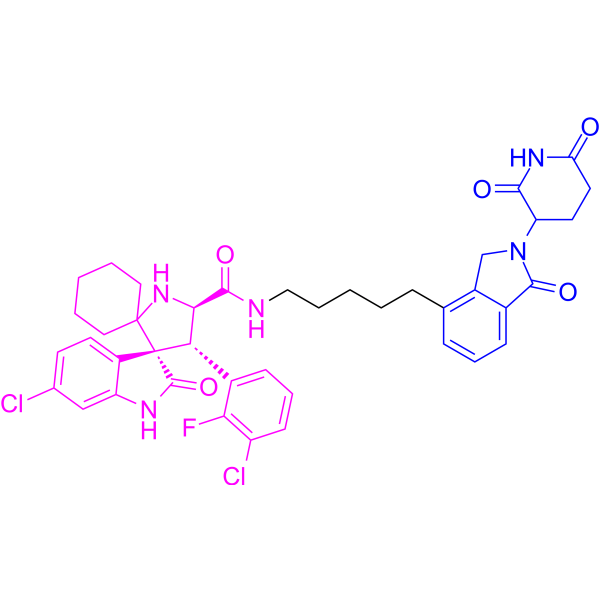 0 ImagesMG-277, a molecular glue degrader, effectively induces degradation of a translation termination factor based on Cereblon E3 ligand, GSPT1, with a DC50 of 1.3 nM. MG-277 potently inhibits tumor cell growth in a p53-independent manner, with IC50s of 3.5 nM for RS4;11 cells and 3.4 nM for p53 mutant RS4;11/IRMI-2 cells, respectively. Anticancer activity.
-
LYG-409
 0 ImagesLYG-409 is a highly potent, selective, and orally active GSPT1 molecular glue degrader. LYG-409 induces GSPT1 degradation in KG-1 cells with a DC50 of 7.87 nM. LYG-409 binds to Cereblon with an IC50 of 191 nM, promotes the formation of the CRBN-GSPT1 ternary complex, and induces proteasome-dependent degradation of GSPT1. LYG-409 exhibits broad antiproliferative and GSPT1-degrading activities in a variety of hematologic and solid tumor cells. LYG-409 can be used for studies related to GSPT1-targeted protein degradation, acute myeloid leukemia, and prostate cancer.

-
Sontigidomide
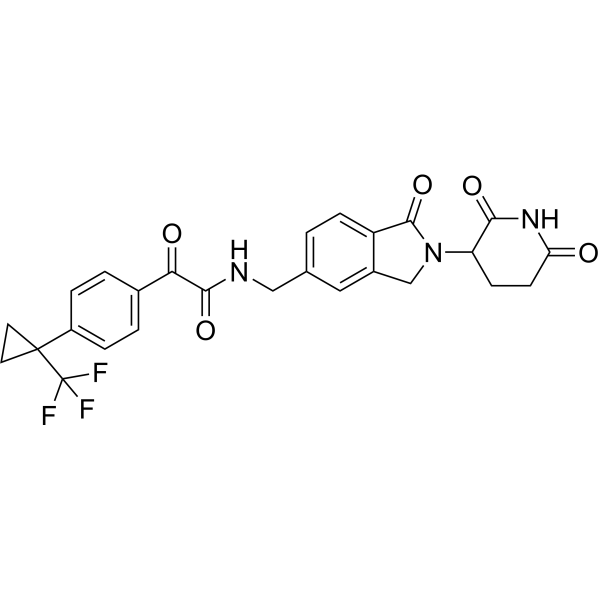 0 ImagesSontigidomide is a protein molecular glue degrader that can effectively degrade IKZF1/3 and GSPT1 proteins. Sontigidomide can be used to study inflammatory and immune system diseases. GSPT1/IKZF1/3 Molecular Glue Degrader
-
SJPYT-195
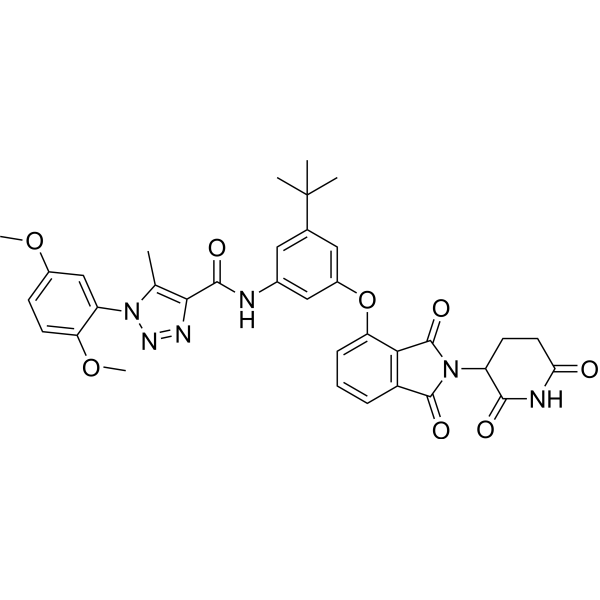 0 ImagesSJPYT-195 is a molecular glue degrader targeting GSPT1, with a DC50 of 310 nM. SJPYT-195 mediates CRBN-dependent and proteasome-dependent degradation of GSPT1 by forming a stable ternary complex with CRBN and GSPT1. As a secondary effect of GSPT1 degradation, SJPYT-195 induces a decrease in PXR protein levels. SJPYT-195 is applicable to research related to acute myeloid leukemia.
-
GSPT1 degrader-19
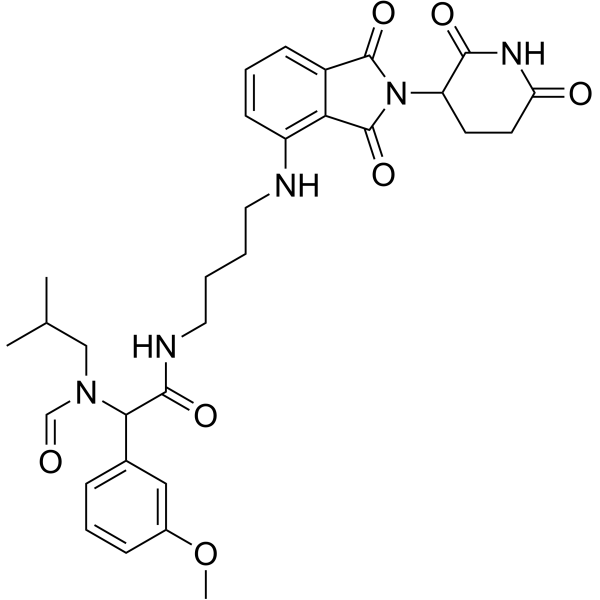 0 ImagesCat. No.: HY-161101Purity: 99.30%GSPT1 degrader-19 is a molecular glue degrader targeting GSPT1, IKZF1 and IKZF3, with DC50 values of 0.88 nM, 11.54 nM and 13.84 nM, respectively, in MM.1S multiple myeloma cells. GSPT1 degrader-19 induces cereblon (CRBN)-dependent ubiquitination and proteasomal degradation of IKZF1, IKZF3, GSPT1 and GSPT2, and also reduces ZFP91 protein levels via a CRBN-dependent pathway. GSPT1 degrader-19 exerts antiproliferative effects on cancer cells, induces global proteomic changes including downregulation of novel substrates, and exhibits activity against multiple myeloma and leukemia cell lines. GSPT1 degrader-19 can be used in research related to multiple myeloma and leukemia.
-
BMS-986497
 0 ImagesCat. No.: HY-171792Purity: 99.59%Synonyms: ORM-6151BMS-986497 (ORM-6151) is a CD33-targeting antibody-conjugated GSPT1 degrader. BMS-986497 delivers the GSPT1 degrader SMol006 to CD33-expressing cells and induces GSPT1 protein degradation. BMS-986497 shows potential for research on acute myeloid leukemia (AML).
-
KMG-1068
 0 ImagesKMG-1068 is a molecular glue degrader that induces proteasomal degradation of GSPT1 and GSPT2 with DC50 values of 126.7 nM and 42.2 nM, respectively. KMG-1068 binds to the C-terminal IMiD-binding site of CRBN, forms ternary complexes with GSPT1 and GSPT2, and mediates proteasomal degradation of target proteins via the CRL4 ubiquitination pathway. KMG-1068 is applicable to research related to acute myeloid leukemia.
-
DP-15
 0 ImagesDP-15 is a BRD4 and GSPT1 PROTAC degrader with DC50 values of 0.48 nM and 5.25 nM, respectively. DP-15 induces ubiquitination and degradation of BRD4 and GSPT1. DP-15 induces Apoptosis. DP-15 exerts anticancer activity against acute myeloid leukemia and non-Hodgkin's lymphoma cells. DP-15 can be used in studies related to acute myeloid leukemia and non-Hodgkin's lymphoma.
-
MI-389
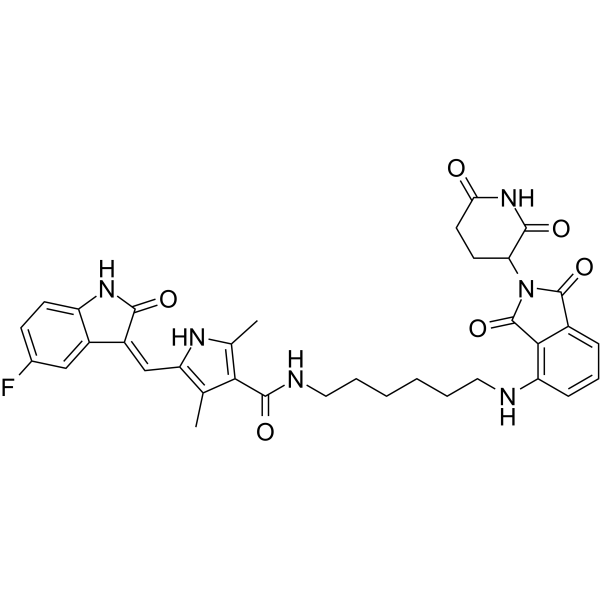 0 ImagesMI-389 is a potent menin-MLL interaction inhibitor (IC50=25 nM) and a CRBN-recruiting, GSPT1-targeted PROTAC degrader. MI-389 upregulates myeloid differentiation-related genes that are lowly expressed in primitive hematopoietic progenitor cells, thereby inducing myeloid differentiation phenotypic changes in MLL-rearranged leukemia cells. MI-389 competitively blocks the MG-H1-RAGE interaction to interfere with the AGEs-RAGE pathway, thus alleviating AGEs-induced HUVEC injury. MI-389 can be used in studies related to MLL-rearranged acute leukemia.



