



Hippo (MST)
Hippo signaling pathway, also known as the Salvador/Warts/Hippo (SWH) pathway, controls organ size in animals through the regulation of cell proliferationand apoptosis. The Hippo pathway consists of a core kinase cascade in which Hpo phosphorylates the protein kinase Warts (Wts) Hpo (MST1/2 in mammals) is a member of the Ste-20 family of protein kinases. This highly conserved group of serine/threonine kinases regulates several cellular processes, including cell proliferation, apoptosis, and various stress responses.
Hippo (MST) Isoform Specific Products
All Product Categories
-
Hippo (MST) Related Products (25)
Related Products (25)

-
Antibodies (2)
-
Hippo (MST) Isoform Comparison
- 1
- 2
-
XMU-MP-1
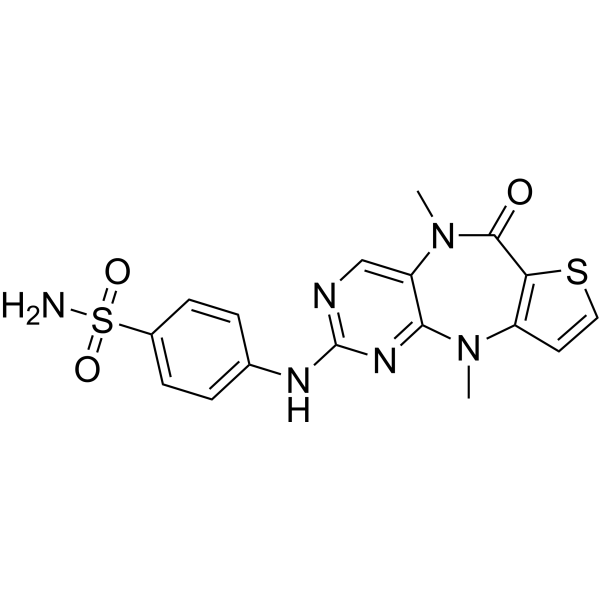 0 ImagesXMU-MP-1 is a reversible and selective MST1/2 inhibitor with IC50s of 71.1 and 38.1 nM, respectively.
-
VT3989
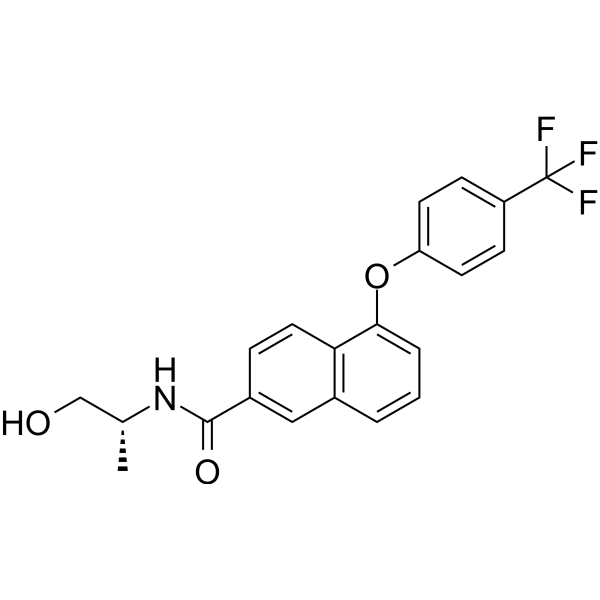 0 ImagesVT3989 is an orally active pan-TEAD autopalmitoylation inhibitor that modulates the Hippo signaling pathway. VT3989 directly binds to TEAD transcription factors to block their palmitoylation modification, thereby disrupting the formation of YAP/TAZ-TEAD complexes and inhibiting downstream oncogenic transcriptional activity. VT3989 effectively inhibits the growth of NF2-deficient schwannoma and meningioma cells and reverses the Schwann cell phenotype. In addition, VT3989 exerts a synergistic effect when combined with Osimtinib (HY-15772) in EGFR-mutant non-small cell lung cancer models, significantly delaying tumor recurrence and prolonging survival. VT3989 can be used for the research of epithelioid hemangioendothelioma, malignant pleural mesothelioma, type 2 neurofibromatosis and related advanced solid tumors.
-
I3MT-3
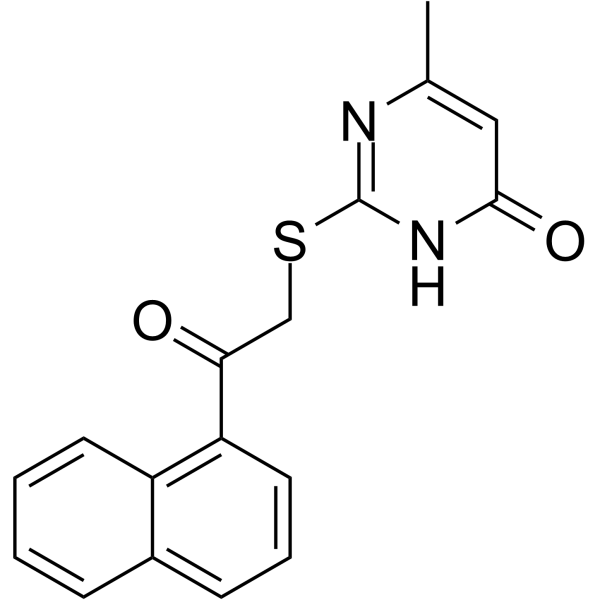 0 ImagesSynonyms: HMPSNEI3MT-3 (HMPSNE) is a potent, selective, and cell-membrane permeable inhibitor of 3-Mercaptopyruvate sulfurtransferase (3MST) (IC50=2.7 μM). I3MT-3 is inactive for other H2S/sulfane sulfur-producing enzymes.?I3MT-3 targets a persulfurated cysteine residue located in the active site of 3MST.
-
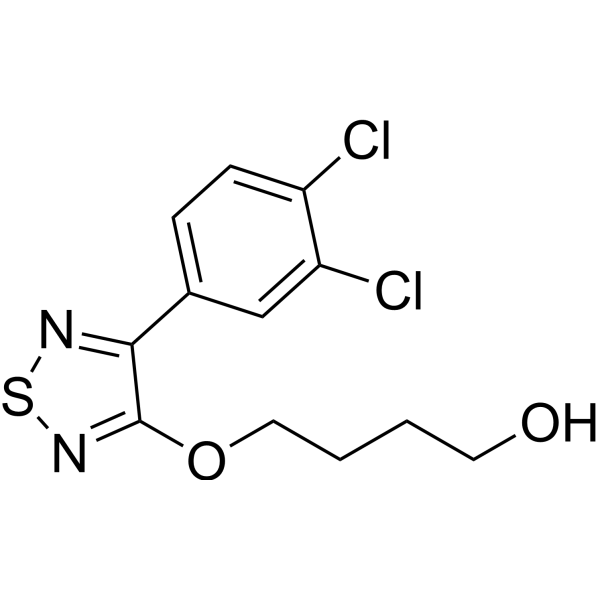
SBP-3264
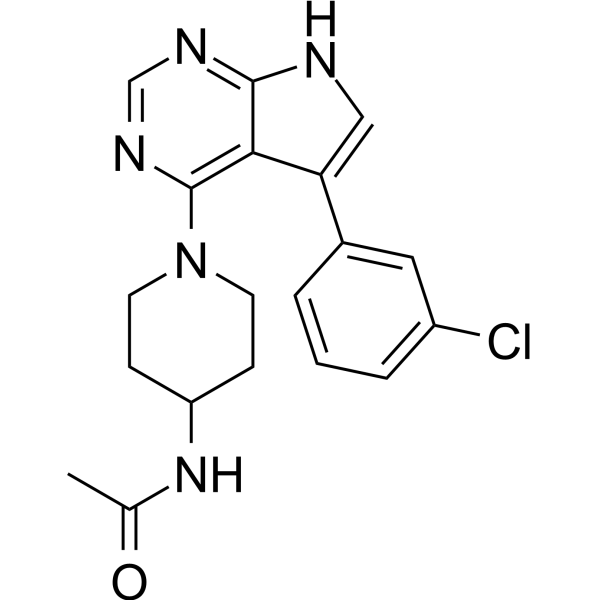 0 ImagesSBP-3264 is a YAP activator and STK/MST inhibitor with IC50 values of 36 nM against STK3/MST2 and 24 nM against STK4/MST1. SBP-3264 modulates the Hippo signaling pathway. SBP-3264 can be used for the research of acute myeloid leukemia.
-
AZ'4331
 0 ImagesCat. No.: HY-189200CAS No.: 3006101-94-3AZ'4331 is an orally active pan-TEAD family inhibitor, with an IC50 of 0.381 μM against TEAD1, 0.020 μM against TEAD2, 0.014 μM against TEAD3, and 0.031 μM against TEAD4. AZ'4331 slows cell cycle progression. AZ'4331 exerts effects in cancer xenograft models with dysregulated Hippo pathway. AZ'4331 can be used to study cancers with altered Hippo pathways, including mesothelioma, head and neck squamous cell carcinoma, and EGFR-mutant non-small cell lung cancer.
-
BRD2577
 0 ImagesBRD2577 is a selective mercaptopyruvate sulfurtransferase (3-MST) inhibitor with an IC50 of 9.9 μM. BRD2577 inhibits H2S production in colon carcinoma cells. BRD2577 exhibits weak to no significant inhibitory effect on colon cancer cell proliferation and mitochondrial activity. BRD2577 can be used for the research of colon cancer.
-
YL-602
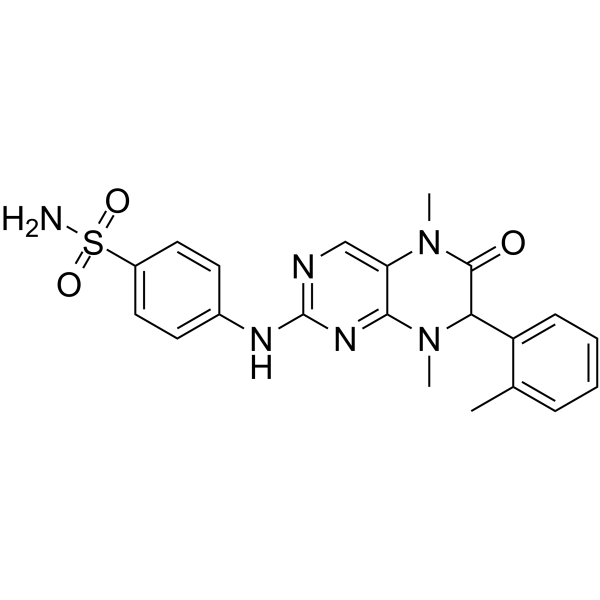
 0 ImagesCat. No.: HY-186148CAS No.: 3081701-84-7YL-602 is an orally active Hippo pathway activator. YL-602 activates the Hippo pathway via MST1/2, with downstream pathway activation. YL-602 inhibits YAP and CTGF expression in cells irrespective of cell density and serum presence. YL-602 induces tumor cell apoptosis and inhibits colony formation. YL-602 suppresses tumor growth in mice. YL-602 can be used for the research of cancer, such as breast cancer.
-
α-Ionone
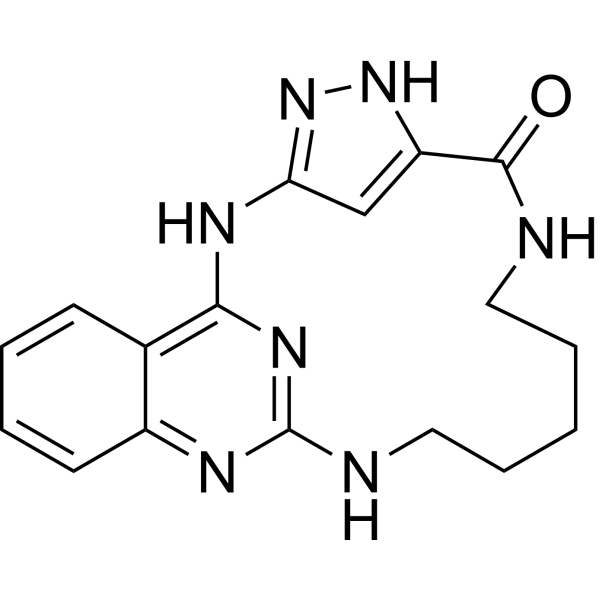
 0 Imagesα-Ionone (alpha-Ionone) is an activator of the olfactory receptor OR10A6. α-Ionone induces apoptosis by activating OR10A6 and increasing the phosphorylation of the LATS-YAP-TAZ signaling axis in the Hippo pathway. α-Ionone can inhibit tumor formation both in vivo and in vitro.
-
IHMT-MST1-39
 0 ImagesIHMT-MST1-39 is an orally active inhibitor for MST kinase, with IC50 of 42, 109, 286, 159 nM for MST1, MST2, MST3, MST4. IHMT-MST1-39 activates the AMPK signaling pathway in liver cells, reduces apoptosis of pancreatic β-cells. IHMT-MST1-39 can be used for the studies of type 1 diabetes (T1D) and type 2 diabetes (T2D).
-
MST3-IN-1 TFA
 0 ImagesCat. No.: HY-175208APurity: 99.38%MST3-IN-1 TFA (Compound LD-1) is a selective and orally active MST3 inhibitor, with an IC50 of 122.4 nM. MST3-IN-1 TFA shows antiproliferative activity against HepG2 cell. MST3-IN-1 TFA effectively induces Apoptosis in HepG2 cells, and halts the cell cycle at the G2/M transition. MST3-IN-1 TFA significantly suppressed tumor growth in HepG2 xenograft mice. MST3-IN-1 TFA can be used for the study of liver cancer.
-
MR24 TFA
 0 ImagesCat. No.: HY-157932APurity: 99.13%MR24 TFA, a G-5555 (HY-19635) derivative, is a mammalian STE20-like (MST) kinase inhibitor. MR24 TFA shows selectively to MST3/4 over MST1/2, with EC50 values of 57 and 583 nM, respectively. MR24 TFA induces G1 phase cell cycle arrest. MR24 TFA can be used for cancer research, such as breast, liver and lung cancers.
-
MY-1576
 0 ImagesCat. No.: HY-170936Purity: 99.21%MY-1576 is a FAK inhibitor with an IC50 of 8 nM. MY-1576 can activate the Hippo pathway, thereby blocking the regulation of YAP/TAZ. MY-1576 also effectively inhibits tumor growth in the KYSE30 xenograft mouse model, demonstrating good safety, and effectively downregulates the autophosphorylation of FAK and the levels of YAP/TAZ in vivo.
-
MST3-IN-1
 0 ImagesCat. No.: HY-175208CAS No.: 3095435-97-2MST3-IN-1 is a selective and orally active MST3 inhibitor, with an IC50 of 122.4 nM. MST3-IN-1 shows antiproliferative activity against HepG2 cell. MST3-IN-1 effectively induces apoptosis in HepG2 cells, and halts the cell cycle at the G2/M transition. MST3-IN-1 significantly suppressed tumor growth in HepG2 xenograft mice. MST3-IN-1 can be used for the study of liver cancer.

-
α-Ionone (Standard)
 0 Imagesα-Ionone (Standard) is the analytical standard of α-Ionone. This product is intended for research and analytical applications. α-Ionone (alpha-Ionone) is an activator of the olfactory receptor OR10A6. α-Ionone induces apoptosis by activating OR10A6 and increasing the phosphorylation of the LATS-YAP-TAZ signaling axis in the Hippo pathway. α-Ionone can inhibit tumor formation both in vivo and in vitro.
-
GNE-2181
 0 ImagesCat. No.: HY-187181CAS No.: 2933893-78-6GNE-2181 is an orally active, blood-brain barrier-penetrant pan-TEAD transcription factor inhibitor, with IC50 values of 13, 26, 61 and 17 nM against TEAD1, TEAD2, TEAD3 and TEAD4, respectively. GNE-8021 allosterically disrupts the TEAD-YAP/TAZ interaction and inhibits TEAD-mediated oncogenic transcriptional programs via the Hippo signaling pathway. GNE-8021 suppresses YAP-driven tumor cell growth. GNE-2181 inhibits the growth of intracranial tumor models in vivo. GNE-2181 can be used for research on brain metastasis of lung cancer.
-
TGF-β1/Smad3-IN-2
 0 ImagesCat. No.: HY-182038TGF-β1/Smad3-IN-2 is an orally active antifibrotic agent. TGF-β1/Smad3-IN-2 has high affinity for VDR and can inhibit the TGFβ/SMAD3 signaling pathway. TGF-β1/Smad3-IN-2 inhibits hepatic stellate cell activation, reduces extracellular matrix deposition, and alleviates liver fibrosis in a bile duct ligation mouse model. TGF-β1/Smad3-IN-2 can be used for the research of liver fibrosis.
- 1
- 2




