



Radionuclide-Drug Conjugates (RDCs)
Radionuclide-drug conjugates (RDCs) are one of the most promising development directions for nuclear drug targeted therapy. RDC is composed of targeting element, linker, chelate and radioactive isotope. RDC has advantages in early tumor diagnosis, treatment and postoperative tumor evaluation. The same ligand can be connected to nuclides used for disease diagnosis and treatment respectively, promoting the integration of diagnosis and treatment of RDC drugs. This entry provides molecular intermediates that can be used in the synthesis and research of RDC.
Radionuclide-Drug Conjugates (RDCs) Isoform Specific Products
All Product Categories
-
Radionuclide-Drug Conjugates (RDCs) Related Products (230)
Related Products (230)

-
Radionuclide-Drug Conjugates (RDCs) Isoform Comparison
-
Trastuzumab
 0 ImagesSynonyms: Anti-Human HER2, Humanized AntibodyTrastuzumab is a humanized IgG1 monoclonal antibody that selectively binds to HER2 with high affinity. Trastuzumab can be used for the research of HER2-positive metastatic breast cancer and gastric cancer. (Note: The product specifications below only indicate the effective content of Trastuzumab. The component ratio of this product is Trastuzumab : excipients = 1:0.6-1:0.9.)

-
Rosopatamab
 0 ImagesSynonyms: HUJ-591; TLX591Rosopatamab (HuJ591) is a humanized antiPSMA IgG1 monoclonal antibody that can be used in cancer research, especially prostate cancer. Rosopatamab can be linked to the low-energy beta-emitting radioisotope lutetium-177 (177Lu) through the bifunctional chelator DOTA-NHS ester to obtain a radioimmunoconjugate that targets malignant prostate cells with high efficiency.
-
DOTATATE
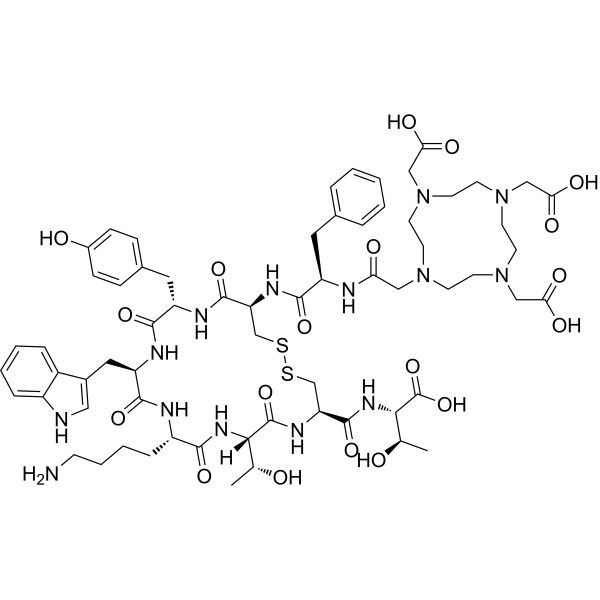 0 ImagesSynonyms: OxodotreotideDOTATATE is a DOTA-conjugated peptide. DOTATATE can be labelled with radionuclides for positron emission tomography (PET) imaging and peptide receptor radionuclide research (PRRT). DOTATATE can be used for the synthesis/research of Radionuclide-Drug Conjugates (RDCs).
-
DOTA-tri(t-butyl ester)
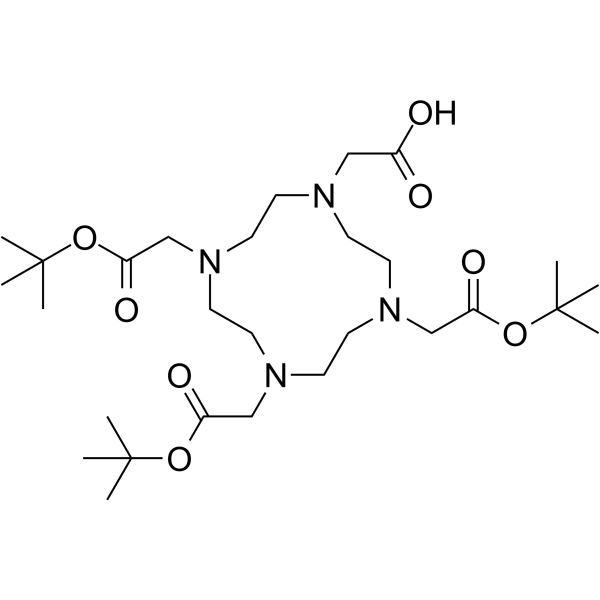 0 ImagesDOTA-tri(t-butyl ester) belongs to the DOTA class of chelating agents. DOTA-tri(t-butyl ester) is a key raw material for synthesizing nanospherical magnetic resonance imaging (MRI) contrast agents, which are used in MR angiography and tumor angiogenesis imaging.
-
PSMA-11
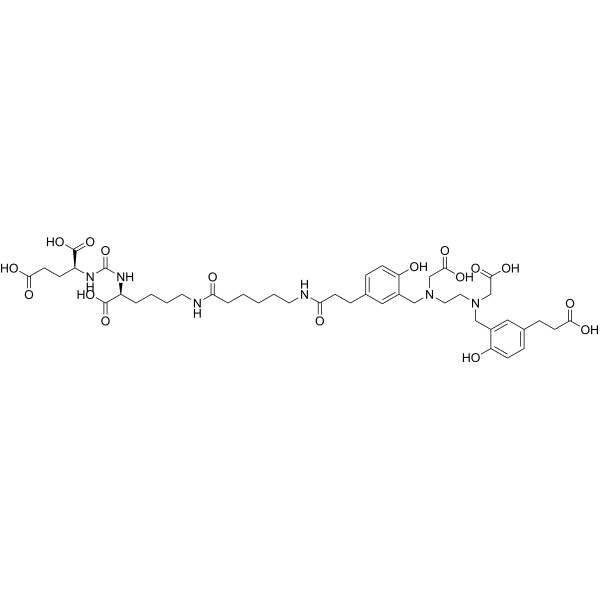 0 ImagesSynonyms: HBED-CC-PSMAPSMA-11 is a small molecule ligand that targets prostate-specific membrane antigen (PSMA) and has the ability to inhibit PSMA activity. PSMA-11 can be used to synthesize 68Ga-PSMA-11, a positron emission tomography (PET) tracer that can be used to image advanced prostate cancer.
-
DOTATATE acetate
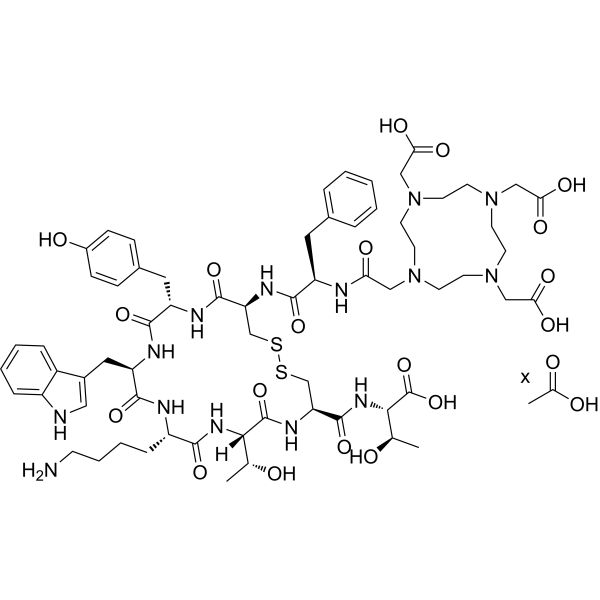 0 ImagesSynonyms: Oxodotreotide acetateDOTATATE acetate is a DOTA-conjugated peptide. DOTATATE acetate can be labelled with radionuclides for positron emission tomography (PET) imaging and peptide receptor radionuclide research (PRRT). DOTATATE (acetate) can be used for the synthesis/research of Radionuclide-Drug Conjugates (RDCs).
-
NOTA-NHS ester
 0 ImagesCat. No.: HY-W087028CAS No.: 1338231-09-6NOTA-NHS ester is a chelating agent. NOTA-NHS ester can be coupled with T140 (HY-P4810) to produce NOTA-T140. NOTA-T140 can be radiolabeled with Al[18F]. The uptake of Al[18F]NOTA-T140 in tumors is correlated with the expression level of CXCR4. Al[18F]NOTA-T140 can be used in tumor PET imaging studies. NOTA-NHS ester can be used for fluorescent labeling.
-
p-SCN-Bn-deferoxamine
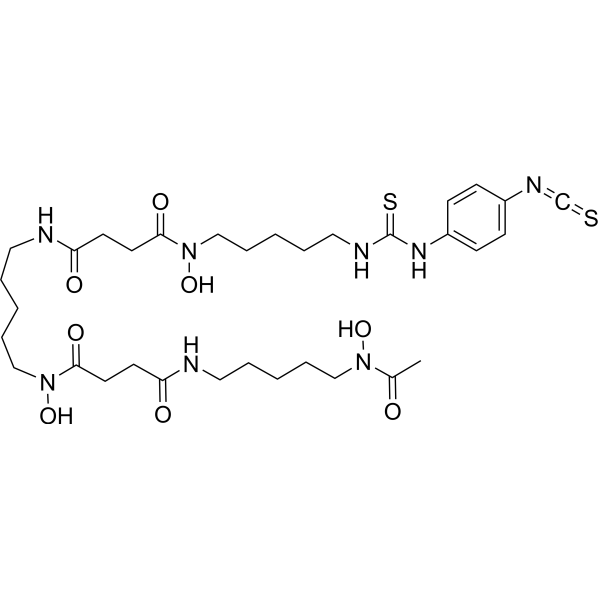 0 ImagesP-SCN-Bn-deferoxamine is a bifunctional chelating agent that can link radioactive metal nuclides (such as Zr-89) and biological targeting molecules (such as antibodies). P-SCN-Bn-deferoxamine can be used for the research of immune PET imaging.
-
Cetuximab (PBS)
 0 ImagesCat. No.: HY-P9S0008Purity: 99.33%
-
p-SCN-Bn-DOTA
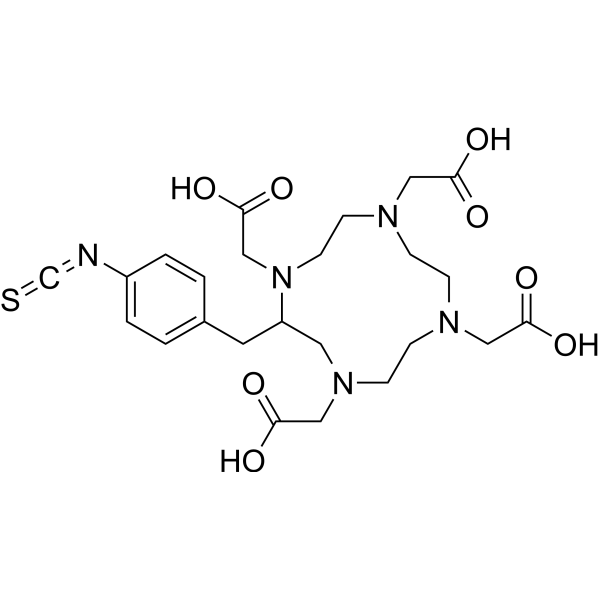 0 Imagesp-SCN-Bn-DOTA is a bifunctional chelating agent. p-SCN-Bn-DOTA can simultaneously chelate radionuclides and link monoclonal antibody for radioimmunoresearch of tumor.
-
Pentixafor
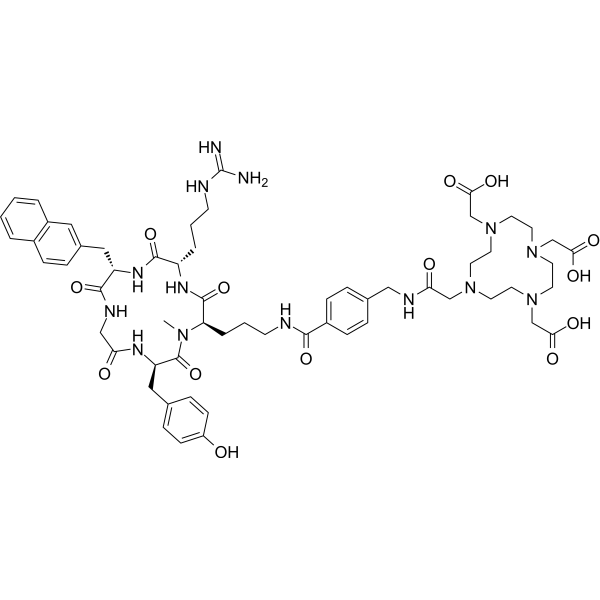 0 ImagesPentixafor is a cyclic pentapeptide ligand that targets CXCR4. Pentixafor is composed of the cyclic pentapeptide Pentixafor peptide cyclo(dTyr-dOrn(NMe)-R-Nal-G) (HY-P11451), a linker, and a DOTA chelator. Pentixafor is capable of being labelled with 68Gallium (68Ga) for positron emission tomography (PET) imaging. Pentixafor can be used for the synthesis/research of Radionuclide-Drug Conjugates (RDCs).
-
Tetraxetan
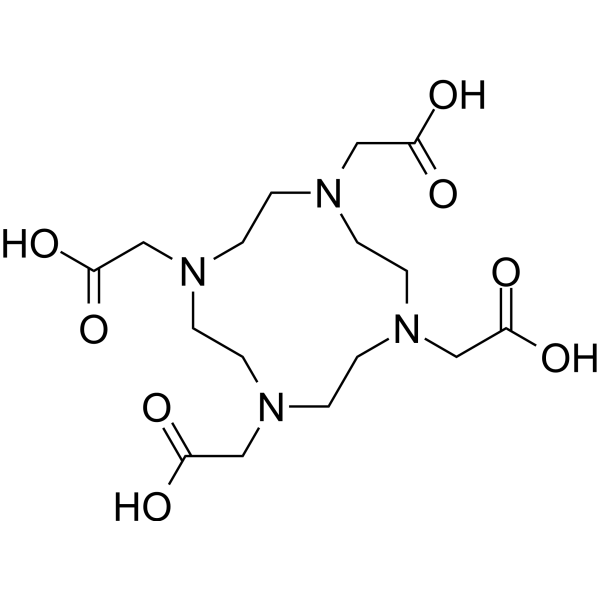 0 ImagesSynonyms: DOTATetraxetan (DOTA) is a macrocyclic chelating agent. Tetraxetan can form stable coordination complexes with a variety of metal ions (e.g., 68Ga, 111In, 177Lu). Tetraxetan can be conjugated with targeting molecules (e.g., RGD peptide, folic acid) to enable the complex to target specific biomolecules or cells. Tetraxetan can be used for imaging studies of tumors, including melanoma and folate receptor-positive tumors (e.g., cervical cancer) .
-
Lintuzumab
 0 ImagesSynonyms: SGN-33; HuM-195; GLK-33 AntibodyLintuzumab (HUM-195) is an anti-CD33 humanized monoclonal antibody. Lintuzumab reduces the production of TNFα-induced pro-inflammatory cytokines and chemokines by AML cells. Lintuzumab promotes tumor cell killing through antibody-dependent cellular cytotoxicity (ADCC) and phagocytosis (ADCP) activities against MDR and MDR+ AML cell lines and primary AML patient samples. Lintuzumab enhances survival and reduces tumor burden in mice.
-
DPI-4452
 0 ImagesDPI-4452 is a CAIX-targeting cyclic peptide with a DOTA cage, and can be chelated with radionuclide for CAIX-expressing tumor PET-CT imaging and study. DPI-4452 specifically and selectively binds CAIX without interaction with an in vitro off-target receptor panel of 55 targets (IC50 for recombinant hCAIX: 130 nM). Radiolabeled DPI-4452 inhibits tumor growth in HT-29 and SK-RC-52 xenograft mouse models. DPI-4452 can be used for the synthesis/research of Radionuclide-Drug Conjugates (RDCs).
-
Maleimide-NOTA
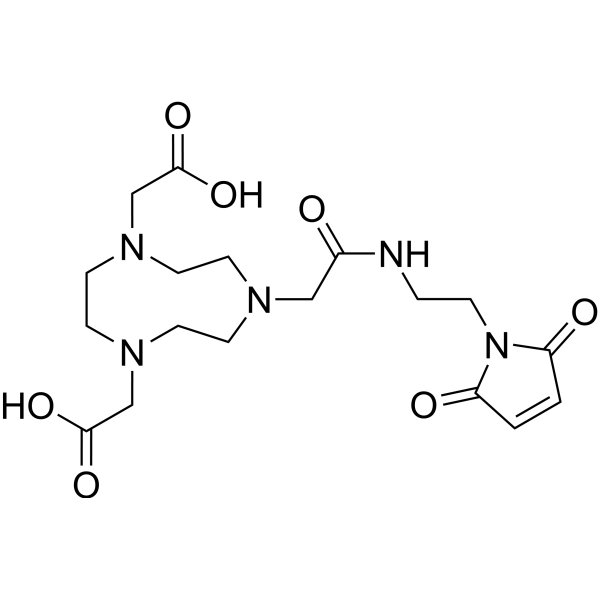 0 ImagesMaleimide-NOTA is a chelate. Maleimide-NOTA can be site-specifically coupled to the hPD-L1 nanobody bearing the Cys-tag. Maleimide-NOTA can specifically conjugate to A20FMDV2 (HY-P1654). The [68Ga]Ac-CG6 formed by the conjugation of 68Ga radiolabeled Maleimide-NOTA with A20FMDV2 can be used for PET imaging of αvβ6 integrin-positive pancreatic ductal adenocarcinoma.
-
DOTAGA-anhydride
 0 ImagesDOTAGA-anhydride is a DOTA-based metal chelator that can bind to radionuclides and is used to prepare radionuclide drug conjugates (RDCs). DOTAGA-anhydride has been successfully used for labeling antibodies (e.g., Trastuzumab (HY-P9907)). DOTAGA-anhydride can be used for the synthesis of a bimodal tag for Single-photon emission computed tomography (SPECT) or PET/optical imaging.
-
Edotreotide
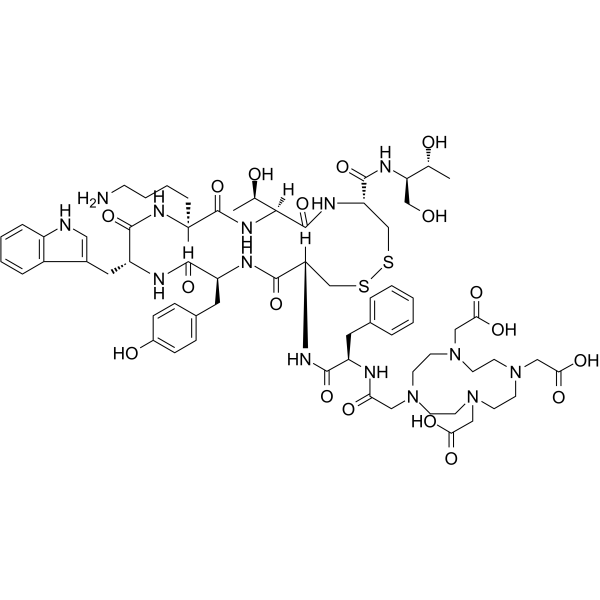 0 ImagesSynonyms: DOTATOC; SDZ-SMT 487; SMT 487Edotreotide is a ligand that selectively targets SSTR2 and can competitively bind to the receptor. Edotreotide mediates the targeted delivery, while modificated with radionuclides (such as 90Y, 177Lu, and 68Ga) to SSTR-positive tumors and induces tumor cell apoptosis by releasing β rays. Edotreotide has strong tumor targeting and precise killing activity. Edotreotide is used in the synthesis of radionuclide-drug conjugates (RDCs) and is widely used in the field of neuroendocrine tumors (such as metastatic carcinoids, lung and thymus NETs).
-
DOTA-LM3
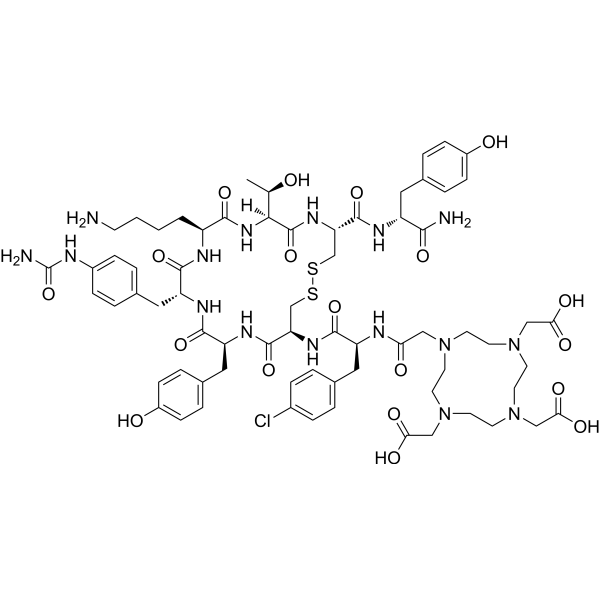 0 ImagesDOTA-LM3 is a somatostatin receptor (SSTR) antagonist. LM3 refers to p-Cl-Phe- cyclo(D-Cys-Tyr-D-4-amino-Phe(carbamoyl)-Lys-Thr-Cys)D-Tyr- NH2, as well as a somatostatin antagonist. DOTA-LM3 is often isotopically labeled for tracing tumors in vivo, such as 177Lu-DOTA-LM3 and 68 Ga-DOTA-LM3. 68 Ga-DOTA-LM3 shows favorable biodistribution, high tumor uptake, good tumor retention, and few safety concerns. 177Lu-DOTA-LM3 can be used for research in DOTATOC-negative liver metastases, such as pancreatic NET and extensive tumor thrombosis. DOTA-LM3 can be used for the synthesis/research of Radionuclide-Drug Conjugates (RDCs).



