



αvβ6
The epithelial integrin αvβ6 mediates cell adhesion and migration by binding to extracellular matrix ligands such as fibronectin and latency-associated peptide-TGFβ1[1][2]. Mechanistically, αvβ6 interacts with TGFβ receptor II to activate Smad3-dependent transcription, thereby regulating MMP2 expression and promoting matrix remodeling in cancer and fibrotic tissues[2]. In disease models, αvβ6 contributes to prostate cancer progression, including castrate-resistant growth, through JNK1-mediated androgen receptor activation, which upregulates survivin and supports anchorage-independent proliferation[3]. αvβ6 also drives epithelial-mesenchymal transition (EMT) in bronchial epithelial cells under bacterial lipopolysaccharide challenge via the TGF-β1-Smad2/3 pathway, linking infection to airway remodeling[4]. Compared with related isoforms such as αvβ3 and αvβ5, αvβ6 exhibits selective ligand interactions and tissue-restricted expression, particularly in adenocarcinoma regions of the prostate and fibrotic lung[5][1]. Experimental inhibitors and designed miniproteins targeting αvβ6 demonstrate high selectivity and picomolar affinity, stabilizing specific integrin conformations and reducing fibrosis or tumor progression in preclinical models[6][7]. Clinically, αvβ6-targeted PET tracers such as Ga-68-Trivehexin enable precise imaging of metastatic pancreatic and head-and-neck cancers, showing low off-target uptake and robust tumor visualization[8][9]. Additionally, anti-αvβ6 autoantibodies serve as biomarkers for ulcerative colitis-like immune responses, indicating the integrin’s involvement in inflammatory pathways[10][19].
References:
- [1]. Steiger K, et al. There is a world beyond αvβ3-integrin: Multimeric ligands for imaging of the integrin subtypes αvβ6, αvβ8, αvβ3, and α5β1 by positron emission tomography. EJNMMI Res. 2021 Oct 12;11(1):106. [Content Brief]
- [2]. Lu H, et al. αvβ6 Integrin Promotes Castrate-Resistant Prostate Cancer through JNK1-Mediated Activation of Androgen Receptor. Cancer Res. 2016 Sep 1;76(17):5163-74. [Content Brief]
- [3]. Dutta A, et al. Integrin αvβ6 promotes an osteolytic program in cancer cells by upregulating MMP2. Cancer Res. 2014 Mar 1;74(5):1598-608. [Content Brief]
- [4]. Yokode M, et al. Anti-integrin αvβ6 autoantibodies are a potential biomarker for ulcerative colitis-like immune checkpoint inhibitor-induced colitis. Br J Cancer. 2024 May;130(9):1552-1560. [Content Brief]
- [5]. Dutta A, et al. αvβ6 integrin is required for TGFβ1-mediated matrix metalloproteinase2 expression. Biochem J. 2015 Mar 15;466(3):525-36. [Content Brief]
- [6]. Liu W, et al. Integrin αvβ6 mediates epithelial-mesenchymal transition in human bronchial epithelial cells induced by lipopolysaccharides of Pseudomonas aeruginosa via TGF-β1-Smad2/3 signaling pathway. Folia Microbiol (Praha). 2020 Apr;65(2):329-338. [Content Brief]
- [7]. Roy A, et al. De novo design of highly selective miniprotein inhibitors of integrins αvβ6 and αvβ8. Nat Commun. 2023 Sep 13;14(1):5660. [Content Brief]
- [8]. Roy A, et al. De novo design of highly selective miniprotein inhibitors of integrins αvβ6 and αvβ8. bioRxiv [Preprint]. 2023 Jun 12:2023.06.12.544624. [Content Brief]
- [9]. Takimoto I, et al. Characteristics of anti-integrin αvβ6 autoantibodies in patients with ulcerative colitis. JCI Insight. 2026 Jan 8;11(4):e192953. [Content Brief]
- [10]. Quigley NG, et al. PET/CT imaging of head-and-neck and pancreatic cancer in humans by targeting the \"Cancer Integrin\" αvβ6 with Ga-68-Trivehexin. Eur J Nucl Med Mol Imaging. 2022 Mar;49(4):1136-1147. [Content Brief]
-
αvβ6 관련 제품 (25)
관련 제품 (25)

-
Recombinant Proteins (8)
- 1
- 2
-
Cilengitide
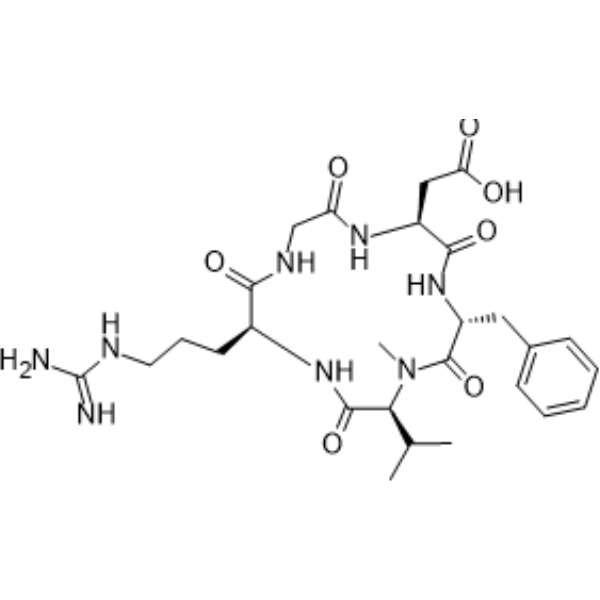 0 ImagesSynonyms: EMD 121974Cilengitide (EMD 121974) is an integrin (integrin) inhibitor with blood-brain barrier permeability, with IC50 values against human targets as follows: 0.61 nM for αvβ3, 8.4 nM for αvβ5, 14.9 nM for α5β1, 5400 nM for αIIbβ3, 2050 nM for αvβ6, 2350 nM for αvβ8. Cilengitide inhibits the binding of integrins to vitronectin, fibronectin, fibrinogen and LAP (TGF-β), and serves as an internal standard for solid-phase integrin binding assays. Cilengitide inhibits tumor cell viability, induces apoptosis, reduces the phosphorylation levels of STAT3, AKT and mTOR, downregulates the expression of PD-L1, inhibits cell viability and angiogenesis, regulates anti-tumor immune responses and slows tumor growth. Cilengitide can be used in research related to glioblastoma, melanoma, advanced solid tumors and refractory brain tumors.
-
Bexotegrast
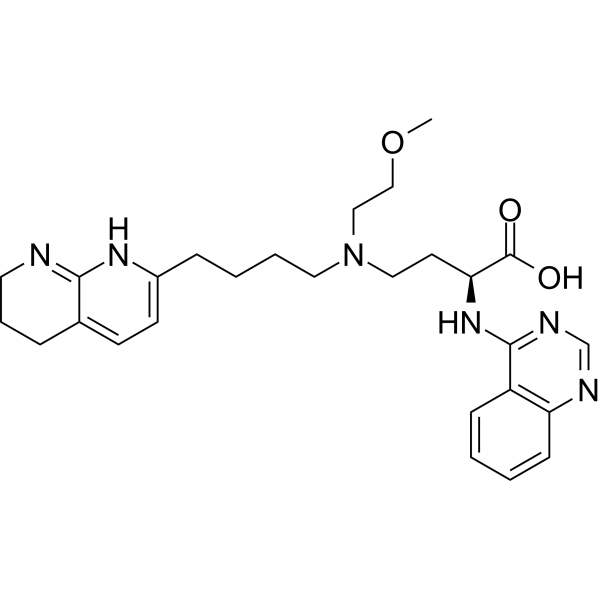 0 ImagesSynonyms: PLN-74809Bexotegrast (PLN-74809) is an orally active, potent dual αvβ6/αvβ1 integrin inhibitor with Kd of 5.7 nM and 3.4 nM, respectively. Bexotegrast inhibits αvβ6- and αvβ1-induced TGF-β activation with IC50 values of 29.8 nM and 19.2 nM, respectively. Bexotegrast has antifibrogenic effects and block multiple avenues of TGF-β activation in the fibrotic lung.
-
Cilengitide TFA
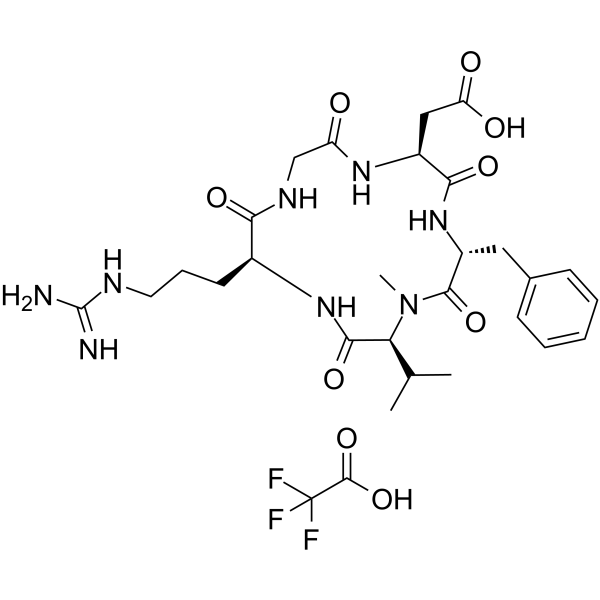 0 ImagesSynonyms: EMD 121974 TFACilengitide TFA (EMD 121974 TFA) is an integrin (integrin) inhibitor with blood-brain barrier permeability, with IC50 values against human targets as follows: 0.61 nM for αvβ3, 8.4 nM for αvβ5, 14.9 nM for α5β1, 5400 nM for αIIbβ3, 2050 nM for αvβ6, 2350 nM for αvβ8. Cilengitide TFA inhibits the binding of integrins to vitronectin, fibronectin, fibrinogen and LAP (TGF-β), and serves as an internal standard for solid-phase integrin binding assays. Cilengitide TFA inhibits tumor cell viability, induces apoptosis, reduces the phosphorylation levels of STAT3, AKT and mTOR, downregulates the expression of PD-L1, inhibits cell viability and angiogenesis, regulates anti-tumor immune responses and slows tumor growth. Cilengitide TFA can be used in research related to glioblastoma, melanoma, advanced solid tumors and refractory brain tumors.
-
Maleimide-NOTA
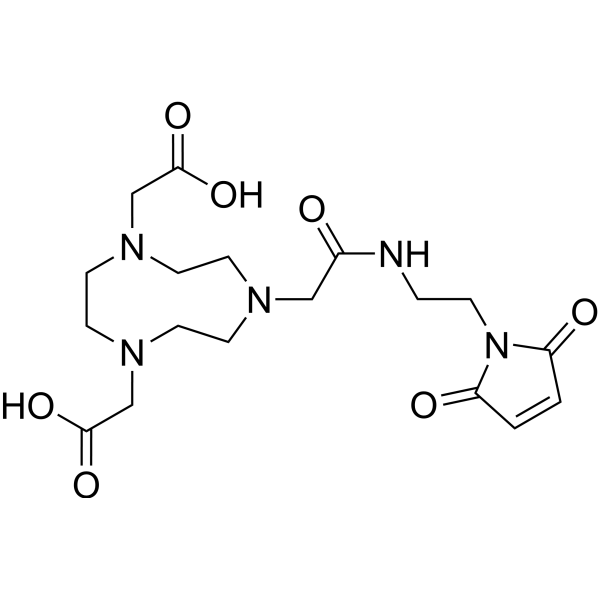 0 ImagesMaleimide-NOTA is a chelate. Maleimide-NOTA can be site-specifically coupled to the hPD-L1 nanobody bearing the Cys-tag. Maleimide-NOTA can specifically conjugate to A20FMDV2 (HY-P1654). The [68Ga]Ac-CG6 formed by the conjugation of 68Ga radiolabeled Maleimide-NOTA with A20FMDV2 can be used for PET imaging of αvβ6 integrin-positive pancreatic ductal adenocarcinoma.
-
DSPE-PEG2000-iRGD
 0 ImagesCat. No.: HY-172494DSPE-PEG2000-iRGD is a PEG compound which composed of DSPE and an αv-integrins targeting peptide (iRGD). iRGD peptide binds to αv-integrins, and then proteolytically cleaved in the tumor to produce CRGDK/R to interact with neuropilin-1, and has tumor-targeting and tumor-penetrating properties. DSPE-PEG2000-iRGD can be used for agent delivery.
-
GSK 3008348
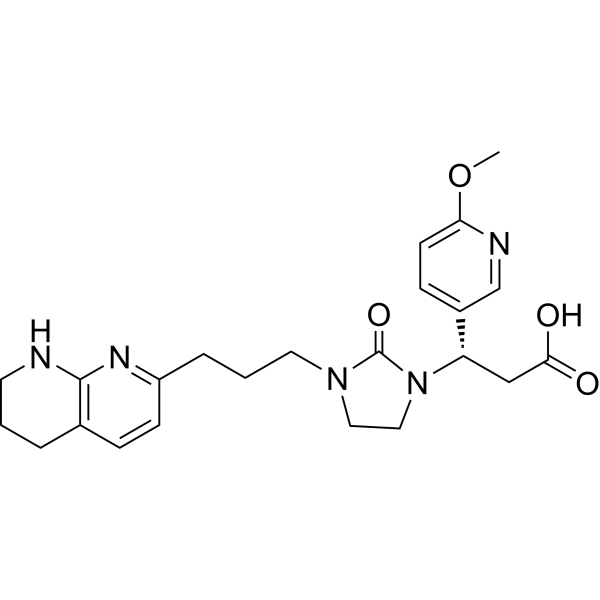
 0 ImagesGSK 3008348 is a small molecule antagonist of integrin αvβ6 with IC50 values for αvβ6, αvβ1, αvβ3, αvβ5, and αvβ8 are 1.50, 2.83, 12.53, 4.00, and 2.26 nM, respectively. GSK 3008348 can target the αvβ6 integrin, inhibit TGF-β activation, and thereby alleviate the fibrotic process. GSK 3008348 prevents the binding of the foot-and-mouth disease virus (FMDV) to the αvβ6 integrin receptor on the surface of host cells, thereby inhibiting the entry of the virus. GSK 3008348 can be used for research on pulmonary fibrosis and various types of cancer.
-
GSK 3008348 hydrochloride
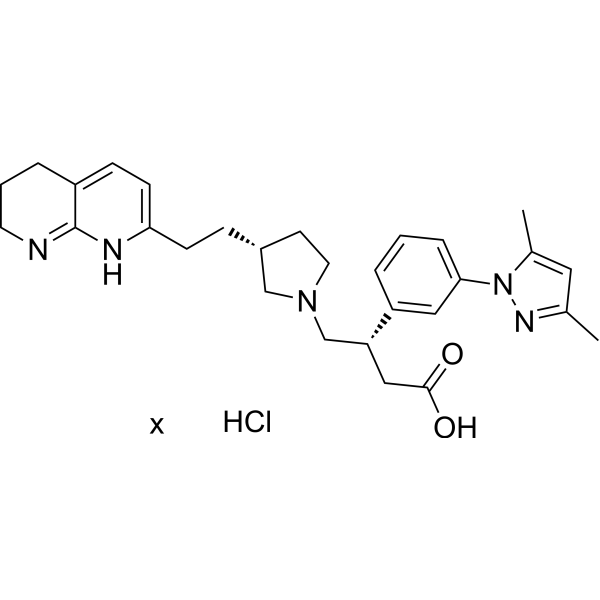 0 ImagesGSK 3008348 hydrochloride is a small molecule antagonist of integrin αvβ6 with IC50 values for αvβ6, αvβ1, αvβ3, αvβ5, and αvβ8 are 1.50, 2.83, 12.53, 4.00, and 2.26 nM, respectively. GSK 3008348 hydrochloride can target the αvβ6 integrin, inhibit TGF-β activation, and thereby alleviate the fibrotic process. GSK 3008348 hydrochloride prevents the binding of the foot-and-mouth disease virus (FMDV) to the αvβ6 integrin receptor on the surface of host cells, thereby inhibiting the entry of the virus. GSK 3008348 hydrochloride can be used for research on pulmonary fibrosis and various types of cancer.
-
A20FMDV2
 0 ImagesA20FMDV2 is a highly selective αvβ6 integrin inhibitor with human IC50 values of 3 nM and binds with at least 1000-fold selectivity over other RGD-binding integrins. A20FMDV2 binds to the integrin’s RGD-binding site, induces rapid integrin internalization, and delays post-internalization integrin recycling to the cell surface. A20FMDV2 can be used for the research of pancreatic cancer, breast cancer, colorectal cancer, ovarian cancer, oral squamous cell carcinoma.
-
STX-100
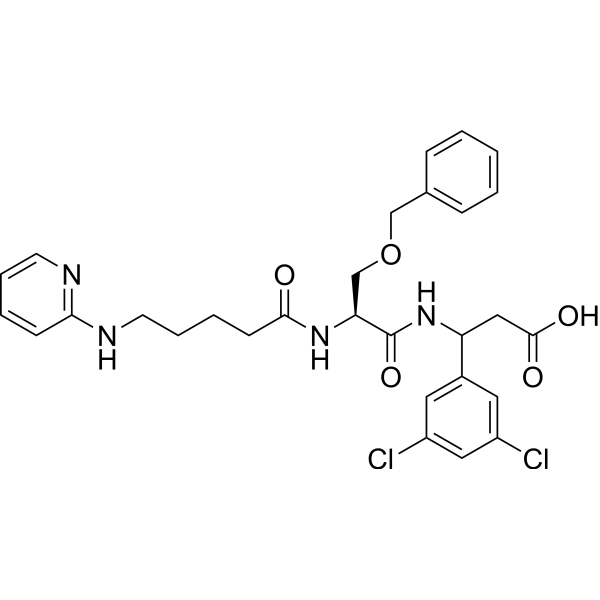
 0 ImagesSynonyms: BG00011STX-100 (BG00011) is a humanized monoclonal antibody targeting αVβ6 integrin. STX-100 specifically binds αVβ6 integrin, blocks latent TGF-β activation via latency-associated peptide (LAP) interaction prevention, and reduces profibrotic responses. STX-100 can be used for the research of idiopathic pulmonary fibrosis, and cancer.
-
DOTA-ADIBO TFA
 0 ImagesCat. No.: HY-100133APurity: 99.06%DOTA-ADIBO TFA is a DOTA-derived bifunctional chelator (BFC) that allows drug conjugation via an uncatalyzed, copper-free cycloaddition reaction. DOTA-ADIBO TFA enables the construction of fusion chelator systems that can be further used to synthesize radiotracers after Cu[64] modification. Positron emission tomography imaging of tumors expressing integrin αvβ6.

-
Nesvategrast
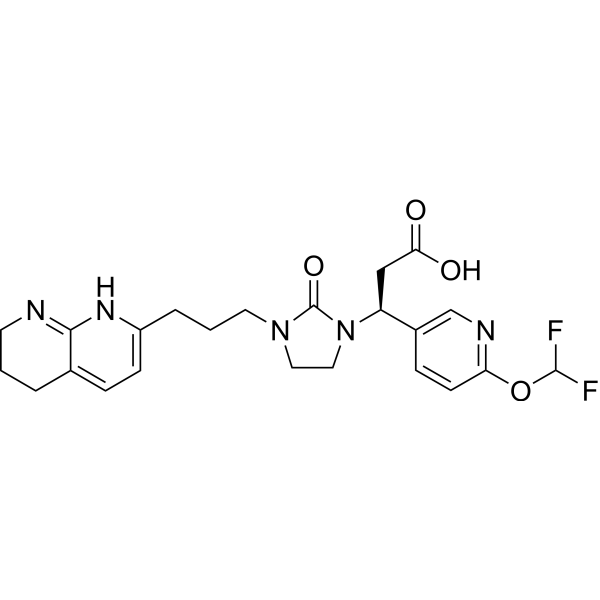 0 ImagesCat. No.: HY-117133CAS No.: 1621332-91-9Synonyms: SF0166Nesvategrast (SF0166) is a potent and selective αvβ3 antagonist with IC50 values of 0.6 nM, 8 nM, and 13 nM for αvβ3, αvβ6, and αvβ8, respectively. Nesvategrast inhibits cellular adhesion to vitronectin across human, rat, rabbit, and dog cell lines with IC50 values of 7.6 pM to 76 nM. Nesvategrast decreases neovascularization in the oxygen-induced retinopathy mouse model.
-
NOTA-Asp2-αvβ6L
 0 ImagesCat. No.: HY-P11596CAS No.: 3107808-75-0NOTA-Asp2-αvβ6L is an integrin αvβ6 binder with selective accumulation in αvβ6-positive pancreatic cancer cells and tumors. NOTA-Asp2-αvβ6L can be used as a PET/CT tracer for imaging pancreatic ductal adenocarcinoma (PDAC).


-
ATTO 740 NHS ester
 0 ImagesCat. No.: HY-D2062CAS No.: 1448146-89-1ATTO 740 NHS ester is a near-infrared fluorescent dye and a multimodal fluorescence/photoacoustic contrast agent with excellent near-infrared emission properties and extremely high photostability. The photoacoustic signal of ATTO 740 NHS ester shows no significant decrease after continuous irradiation with a 750 nm laser for 30 min, making it suitable for in vivo fluorescence imaging and photoacoustic contrast imaging. When conjugated with the cystine knot peptide R01, ATTO 740 NHS ester enables precise detection of integrin αvβ6-positive cells and tumors in nude mouse xenograft models.
-
αvβ5 integrin-IN-3
 0 ImagesCat. No.: HY-189093CAS No.: 2226557-15-7αvβ5 integrin-IN-3 is an orally active, selective αVβ5 integrin inhibitor with an IC50 value of 0.61 nM. αvβ5 integrin-IN-3 inhibits αVβ1, αVβ3 and αVβ6 integrins with IC50 values of 21 nM, 5.5 nM and 18 nM, respectively. αvβ5 integrin-IN-3 reduces total Collagen content in a mouse unilateral ureteral obstruction model. αvβ5 integrin-IN-3 can be used for the research of renal fibrosis.
-
ανβ6 Integrin ligand-1
 0 ImagesCat. No.: HY-185465CAS No.: 3047235-18-4
- 1
- 2




