



N-myristoyltransferase
N-myristoyltransferase; NMT
N-myristoyltransferase (NMT) is a post-translational modification enzyme that catalyzes the covalent attachment of myristic acid to the N-terminal glycine residue of proteins, belonging to the GNAT protein superfamily.
NMT comprises two isoforms: NMT1 and NMT2. By modifying signaling proteins (such as Src family kinases), NMT regulates cell proliferation, apoptosis, and pathogen infection, and interacts with proteins like heat shock protein HSP90 and calmodulin to affect protein stability.
NMT is implicated in the onset and progression of various diseases, including cancer, epilepsy, Alzheimer's disease, Noonan syndrome, as well as viral and bacterial infections[1][2][3][4].
References:
- [1]. Thinon E, et al. Global profiling of co-and post-translationally N-myristoylated proteomes in human cells[J]. Nature communications, 2014, 5(1): 4919. [Content Brief]
- [2]. Selvakumar P, et al. Potential role of N-myristoyltransferase in cancer[J]. Progress in lipid research, 2007, 46(1): 1-36. [Content Brief]
- [3]. Lakshmikuttyamma A, et al. Myristoyltransferase and calcineurin: novel molecular therapeutic target for epilepsy[J]. Progress in neurobiology, 2008, 84(1): 77-84. [Content Brief]
- [4]. dos Santos Nascimento I J, et al. Exploring N-myristoyltransferase as a promising drug target against parasitic neglected tropical diseases[J]. European Journal of Medicinal Chemistry, 2023, 258: 115550. [Content Brief]
All Product Categories
-
N-myristoyltransferase Related Products (13)
Related Products (13)

- 1
-
Zelenirstat
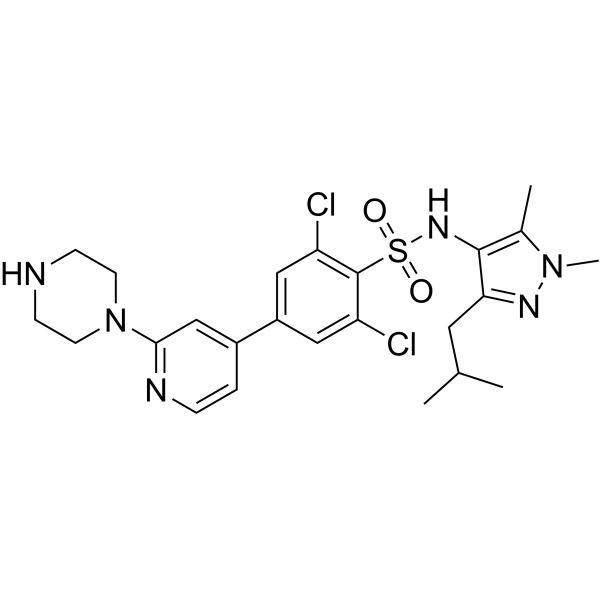 0 ImagesSynonyms: PCLX-001Zelenirstat is an orally acitve, small-molecule, dual N-myristoyltransferase (NMT) inhibitor, with IC50s of 5 nM (NMT1) and 8 nM (NMT2), respectively. Zelenirstat can induce cell apoptosis, has anti-cancer activity, inhibits early B cell receptor (BCR) signaling, and can be used to study malignant lymphoma.
-
MYX1715
 0 ImagesSynonyms: IMP1320MYX1715 is an inhibitor of N-Myristoyltransferase (NMT) with a KD value of 0.09 nM. MYX1715 inhibits the proliferation of LU0884 and LU2511 with IC50 values of 44 nM and 9 nM. MYX1715 exhibits antitumor efficacy against neuroblastoma and gastric cancer in mouse models. MYX1715 can be used as ADC toxin.
-
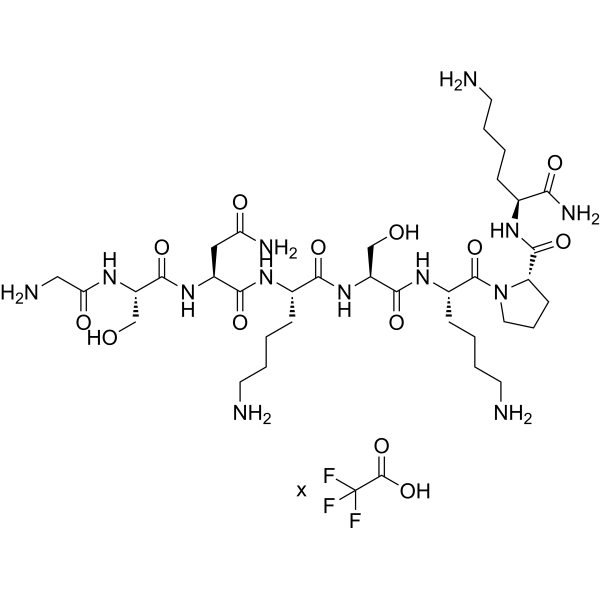
NMT-IN-7
 0 ImagesNMT-IN-7 is a N-myristoyl transferase (NMT) inhibitor, with IC50s of 2.1 nM for HsNMT1M, 0.6 nM for SU-DHL-10 cell. NMT-IN-7 can be used as a ADC cytotoxin.
-
Mal-PEG2-amide-C2-amide-Phenyl(β-D-glucuronide)-NMT-IN-7
 0 ImagesCat. No.: HY-171814CAS No.: 3032302-82-9Mal-PEG2-amide-C2-amide-Phenyl (β-D-glucuronide)-NMT-IN-7 is an drug-linker conjugate for ADC that contains a potent NMT inhibitor (NMT-IN-7), with an IC50 of 2.1 nM against HsNMT1. Mal-PEG2-amide-C2-amide-Phenyl (β-D-glucuronide)-NMT-IN-7 consists of an NMT inhibitor (HY-160945) and a stable cleavable linker (Mal-PEG2-amide-C2-amide-Phenyl (β-D-glucuronide)). Mal-PEG2-amide-C2-amide-Phenyl (β-D-glucuronide)-NMT-IN-7 can be used for ADC synthesis and breast cancer-related research.\n
-
IMP-1002
 0 ImagesCat. No.: HY-134199CAS No.: 2059148-58-0IMP-1002 is a Plasmodium N-myristoyltransferase (NMT) inhibitor. IMP-1002 inhibits myristoylation activity, blocks parasite development. IMP-1002 can be used for the research of malaria.
-
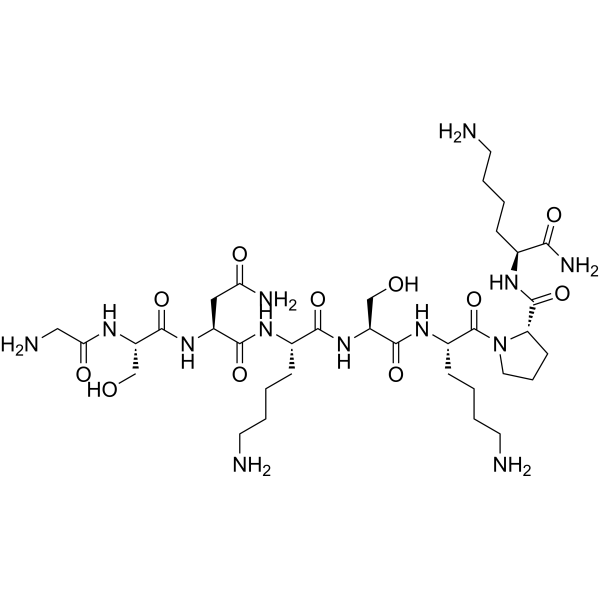
MYX1715 analog 1
 0 ImagesCat. No.: HY-183263CAS No.: 3119468-32-2MYX1715 analog 1 is an analog of MYX1715 (HY-164285). MYX1715 analog 1 is an N-myristoyltransferase (NMT) inhibitor that inhibits protein myristoylation modification. MYX1715 analog 1 can be conjugated to targeting antibodies via cleavable or non-cleavable linkers for use as an ADC cytotoxin. MYX1715 analog 1 is used in the development of drugs targeting tumor-associated antigens.
-
LY134046
 0 ImagesCat. No.: HY-136625CAS No.: 71274-97-0LY134046 is an inhibitor of norepinephrine N-methyltransferase (NMT) with cardiovascular activity. LY134046 causes sustained reductions in mean arterial blood pressure and heart rate, but no significant reductions in norepinephrine concentrations in the rat brain. LY134046 does not interact with adrenergic or cholinergic receptors, and its hypotensive and bradycardic effects do not require neurogenic tension. LY134046 (40 mg/kg/day) causes sustained and significant inhibition of hypothalamic and brainstem NMT activity, resulting in central norepinephrine depletion.
-
S-Acetonyl-CoA
 0 ImagesCat. No.: HY-E70394CAS No.: 75179-85-0Synonyms: Acetonyl-coenzyme AS-Acetonyl-CoA (Acetonyl-coenzyme A) is a non-reactive structural analog of acetyl-CoA that acts as a competitive inhibitor against multiple target enzymes. S-Acetonyl-CoA lacks the characteristic thioester group of acetyl-CoA, retaining only a thioether structure. S-Acetonyl-CoA competes with acetyl-CoA for binding to citrate synthase, phosphate transacetylase, carnitine acetyltransferase, and N-myristoyltransferase 1. S-Acetonyl-CoA serves as a reagent for investigating acetyl-CoA-dependent physiological processes.
-
NMT-IN-8
 0 ImagesCat. No.: HY-171788CAS No.: 2765258-26-0NMT-IN-8 (Compound Ex.129) is an orally active and highly selective inhibitor of N-myristoyl transferase (NMT) with an IC50 value of <10 nM. NMT-IN-8 binds to the peptide binding pocket of NMT, blocking its catalyzed protein N-myristoylation to interfere with key pathways such as protein trafficking, signal transduction, and viral replication. NMT-IN-8 is promising for research of oncology (e.g., MYC-addicted cancers, B-cell lymphoma) and infectious diseases (e.g., malaria, HIV, rhinovirus infection).
-
FTR1335
 0 ImagesCat. No.: HY-183872CAS No.: 851075-79-1FTR1335 is an Antifungal agent as well as a selective, substrate peptide-competitive, and myristoyl-CoA non-competitive inhibitor of N-myristoyltransferase CaNmt, with an IC50 of 0.49 nM against Candida albicans CaNmt. FTR1335 exhibits fungicidal activity against Candida albicans and inhibits the growth of Candida tropicalis. FTR1335 can be used in research related to Candida albicans infections.
-
NMT-IN-9
 0 ImagesCat. No.: HY-187518CAS No.: 3134912-65-2NMT-IN-9 is an arylpyrrolidone-based NMT inhibitor with an IC50 of 93.20 nM and a KD of 5.57 × 10⁻⁹ M against NMT. NMT-IN-9 exhibits broad-spectrum antifungal activity against Candida albicans, Candida glabrata, Candida tropicalis, Cryptococcus neoformans and Aspergillus fumigatus, with an MIC of 2-16 μg/mL, and retains activity against fluconazole-resistant Candida isolates, with an MIC of 8-16 μg/mL. NMT-IN-9 induces intracellular ROS accumulation, mitochondrial membrane depolarization, DNA damage, apoptosis and necrotic cell death in fungal cells, and disrupts fungal cell integrity. NMT-IN-9 can be used for studies on NMT-targeted antifungal mechanisms and fluconazole-resistant Candida infections.
- 1



