



Zelenirstat
Based on 6 publication(s) in Google Scholar
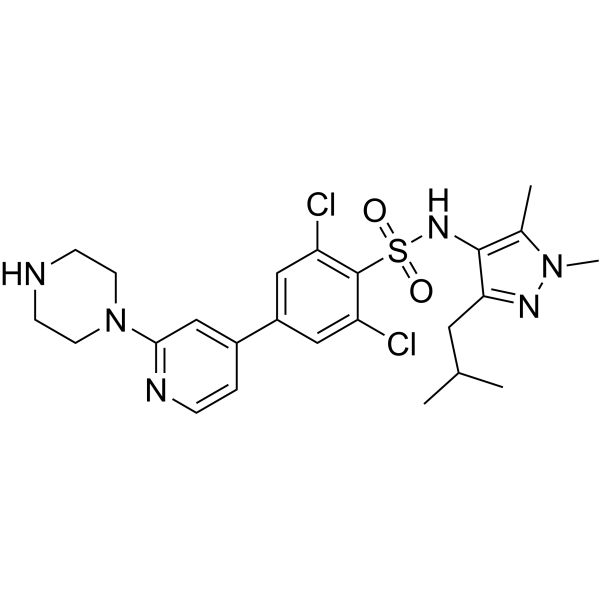
Zelenirstat is an orally acitve, small-molecule, dual N-myristoyltransferase (NMT) inhibitor, with IC50s of 5 nM (NMT1) and 8 nM (NMT2), respectively. Zelenirstat can induce cell apoptosis, has anti-cancer activity, inhibits early B cell receptor (BCR) signaling, and can be used to study malignant lymphoma.
Nur für Forschungszwecke. Wir verkaufen nicht an Patienten.
- Reinheit : 99.76%
- CAS. Nr.: 1215011-08-7
- Formel: C24H30Cl2N6O2S
- Molecular Weight:537.51
-
Speicherung:Powder -20°C, 3 years , 4°C, 2 years ; In solvent -80°C, 6 months , -20°C, 1 month

To place orders, for customer services and technical support, please contact: MedChemExpress USA
Tel: 609-228-6898 E-mail: [email protected] [email protected]


-
 Biologische Aktivität
-
Chemical Information
-
Lösungsmittel & Löslichkeit
- Protokoll
- Reinheit & Dokumentation
- Verweise
-
 Help & FAQs


-
HY-112258
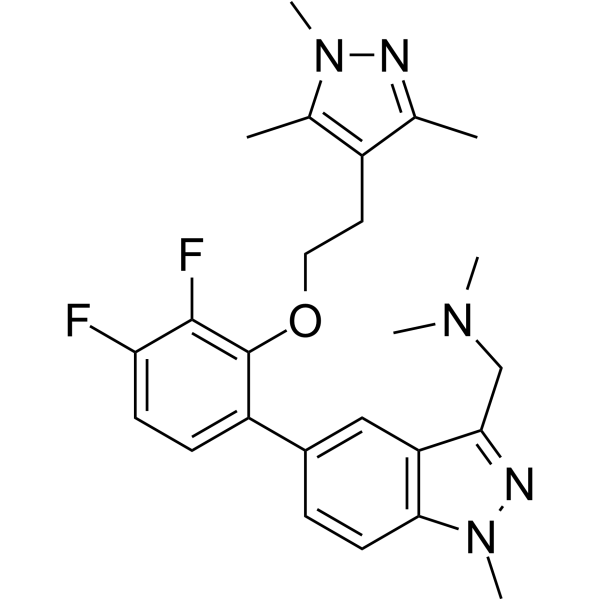
IMP-1088NMT1/2 Inhibitor -
HY-103056
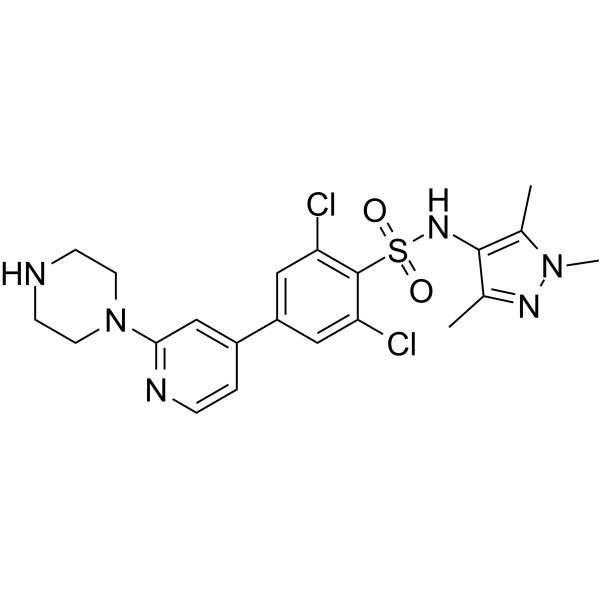
DDD85646NMT Inhibitor -

HY-164285
MYX1715NMT Inhibitor -
HY-15141
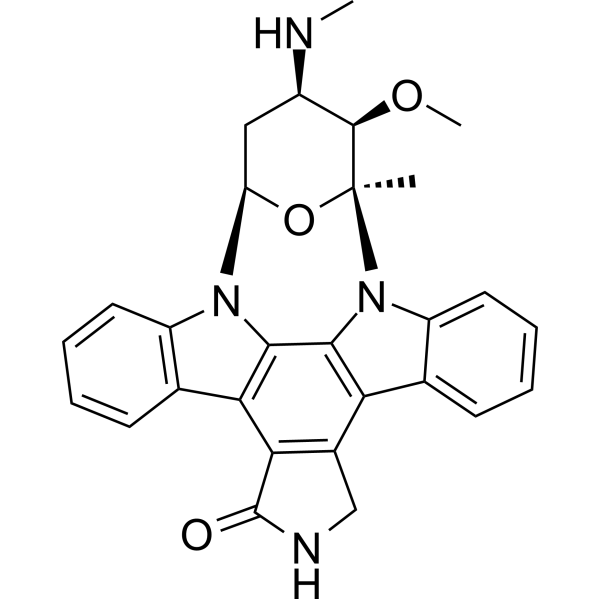
StaurosporinePKC/PKA Inhibitor -
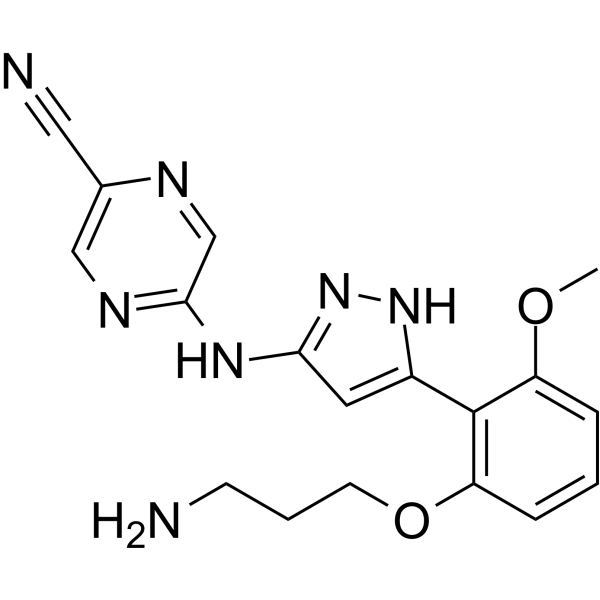
HY-18174
PrexasertibCHK1 Inhibitor -
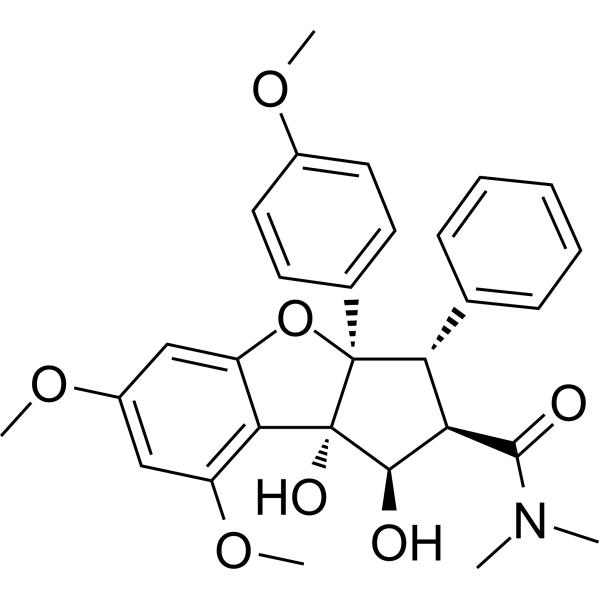
HY-19356
RocaglamideNF-κB Inhibitor -
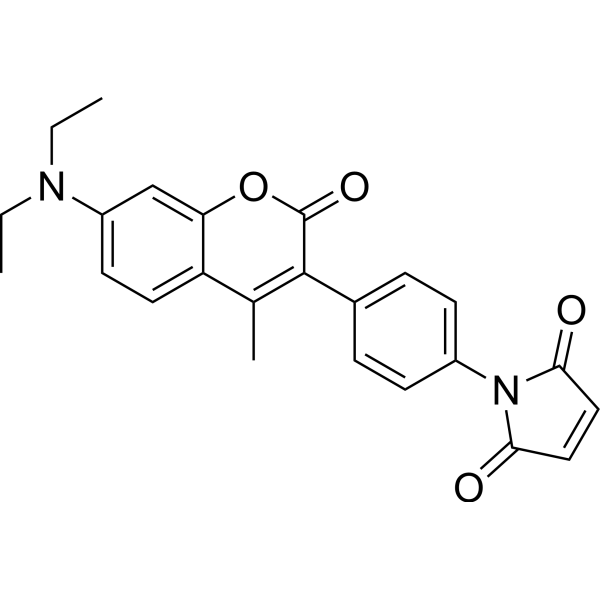
HY-D0069
CPMFluorescent Dye -
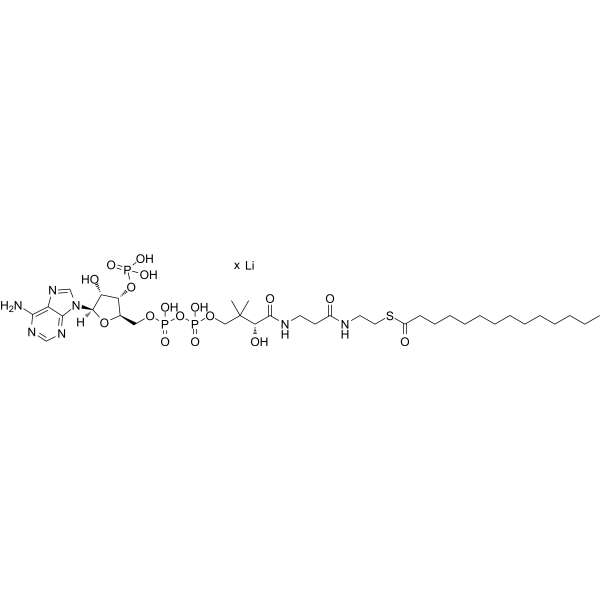
HY-126833A
Myristoyl coenzyme A lithiumNMT Inhibitor -
HY-P6028A
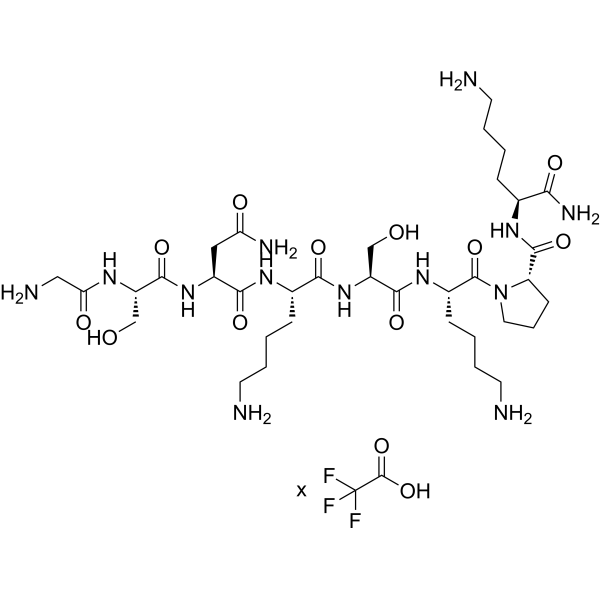
GSNKSKPK-NH2 TFANMT Substrate
Publications Citing Use of MedChemExpress (MCE) Zelenirstat
More Customer Validation & Images

-
WB
-
IF
-
WB
-
IF
-
Cell Proliferation/Viability Assay


Biologische Aktivität
Beschreibung
Cellular Effect
|
Cell Line

|
Type | Value | Description | References |
|---|---|---|---|---|
| MRC5 | EC50 |
0.09 μM
Compound: 6
|
Antiproliferative activity against human MRC5 cells assessed as reduction cell viability incubated for 69 hrs by rezasurin dye based assay
Antiproliferative activity against human MRC5 cells assessed as reduction cell viability incubated for 69 hrs by rezasurin dye based assay
|
[PMID: 25412409] |
| MRC5 | EC50 |
0.0004 μM
Compound: 6
|
Antitrypanosomal activity against Trypanosoma brucei BSF427 expressing VSG118 infected in human MRC5 cells assessed as reduction cell viability incubated for 69 hrs by rezasurin dye based assay
Antitrypanosomal activity against Trypanosoma brucei BSF427 expressing VSG118 infected in human MRC5 cells assessed as reduction cell viability incubated for 69 hrs by rezasurin dye based assay
|
[PMID: 25412409] |
| MRC5 | EC50 |
0.4 nM
Compound: 6
|
Antitrypanosomal activity against Trypanosoma brucei BSF427 expressing VSG118 infected in human MRC5 cells assessed as reduction cell viability incubated for 69 hrs by rezasurin dye based assay
Antitrypanosomal activity against Trypanosoma brucei BSF427 expressing VSG118 infected in human MRC5 cells assessed as reduction cell viability incubated for 69 hrs by rezasurin dye based assay
|
[PMID: 25412409] |
In Vitro
Zelenirstat does not inhibit any kinase at 10 µM (5380 ng/mL) and shows moderate inhibition of three kinases (MRCKA, PIP5K2B and SRPK1) at 100 µM (53800 ng/mL)[1].
Zelenirstat (0-10 μM, 4 days) inhibits the proliferation of tumor cells such as BL2 and DOHH2, but has no effect on normal cells IM9[2].
Zelenirstat (0-1 μM, 1 h) reduces total protein myristoylation in IM9 and BL2 and induces apoptosis of lymphoma cells[2].
MedChemExpress (MCE) has not independently confirmed the accuracy of these methods. They are for reference only.
-
Cell Line:IM9, VDS, BL2, Ramos, BJAB, DOHH2, WSU-DLCL2, SU-DHL-10
-
Concentration:0.001, 0.01, 0.1, 1, 10 μM; 0, 0.005, 0.01, 0.05, 0.1, 0.5, 1, 5 μM
-
Incubation Time:96 h; 4 days
-
Result:Inhibited tumor cell proliferation in a time- and dose-dependent manner and had no effect on normal cells.
-
Cell Line:BL2, IM9
-
Concentration:0, 0.01, 0.05, 0.1, 0.5, 1 μM
-
Incubation Time:1 h; 72 h
-
Result:Reduced total protein myristoylation was more sensitive in malignant tumors. Both Src and Lyn SFK protein levels showed more obvious dose- and time-dependent decreases.
In Vivo
Zelenirstat (0-50 mg/kg, subcutaneous injection, once daily; 0-15 days) induces tumor regression in BL2 xenograft mice[2].
MedChemExpress (MCE) has not independently confirmed the accuracy of these methods. They are for reference only.
-
Animal Model:Mice, rats, dogs[1]
-
Dosage:5-1000 mg/kg; daily; 14 and 21 days
-
Administration:Oral
-
Result:Showed that a single dose of 50 mg/kg caused vomiting, diarrhea, and weight loss in dogs, while a single dose of 1000 mg/kg caused the death of one rat and complete regression of xenograft tumors in mice.
-
Animal Model:BL2 xenograft mice[2]
-
Dosage:0, 10, 20, 50 mg/kg; daily; 0, 5, 10, 15 days
-
Administration:Subcutaneous injection (s.c.)
-
Result:Reduced tumor volume and caused complete tumor regression, and prolonged the survival of BL2 tumor-bearing mice.
Clinical Trial
| NCT Number | Sponsor | Condition | Start Date |
Phase
|
|---|---|---|---|---|
| NCT01329991 | 2011-05 | PHASE1 |


Chemical Information
-
CAS. Nr. 1215011-08-7
-
Appearance Solid
-
Molecular Weight 537.51
-
Formel C24H30Cl2N6O2S
-
Color White to light yellow
-
SMILES
O=S(NC1=C(C)N(C)N=C1CC(C)C)(C2=C(Cl)C=C(C3=CC(N4CCNCC4)=NC=C3)C=C2Cl)=O
-
Synonyms
PCLX-001
-
Versand
Room temperature in continental US; may vary elsewhere.
-
Speicherung
Powder -20°C 3 years 4°C 2 years In solvent -80°C 6 months -20°C 1 month


Publications (6)
-
Journal Impact Factor
-
Most Recent
-
-
Cancer Res Commun
N-Myristoytransferase Inhibition Causes Mitochondrial Iron Overload and Parthanatos in TIM17A-Dependent Aggressive Lung Carcinoma. [Abstract]2024 Jul 1;4(7):1815-1833. PMID: 38949950
Zelenirstat purchased from MedChemExpress. Usage Cited in: Cancer Res Commun. 2024 Jul 1;4(7):1815-1833. [Abstract]
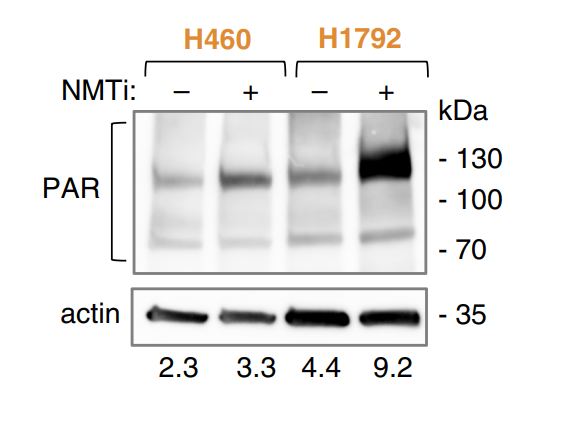
Detection of PARylation (PAR) by immunoblotting in lysates from (KL/K)MUT cells treated with 1 μmol/L Zelenirstat (NMTi) for 72 hours. Actin, loading control.
Zelenirstat purchased from MedChemExpress. Usage Cited in: Cancer Res Commun. 2024 Jul 1;4(7):1815-1833. [Abstract]
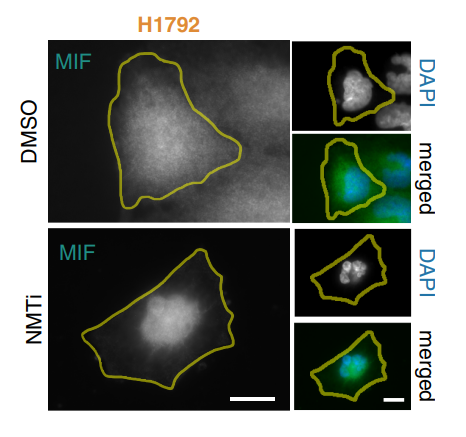
MIF subcellular localization in (KL/K)MUT H1792 cells treated with vehicle control of 1 μmol/L Zelenirstat (NMTi) for 96 hours and processed for immunofluorescence using a MIF antibody.
Zelenirstat purchased from MedChemExpress. Usage Cited in: Cancer Res Commun. 2024 Jul 1;4(7):1815-1833. [Abstract]
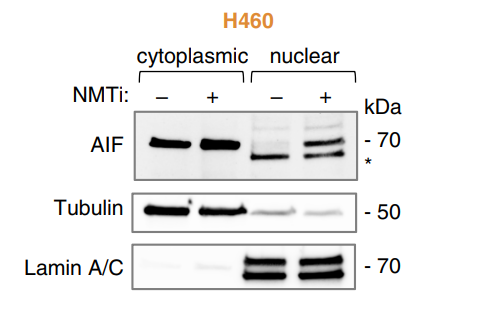
AIF1 immunoblotting in cytoplasmic and nuclear lysates of (KL/K)MUT H460 treated with 1 μmol/L Zelenirstat (NMTi) o vehicle for 72 hours. Tubulin and lamin staining were used to verify fraction purity.
Zelenirstat purchased from MedChemExpress. Usage Cited in: Cancer Res Commun. 2024 Jul 1;4(7):1815-1833. [Abstract]
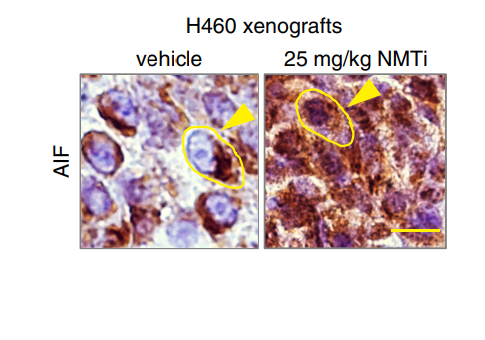
AIF immunofluorescence in tumor sections from (KL/K)MUT H460 xenografts from animals treated with 25 mg/kg Zelenirstat (NMTi) or vehicle control.
Zelenirstat purchased from MedChemExpress. Usage Cited in: Cancer Res Commun. 2024 Jul 1;4(7):1815-1833. [Abstract]
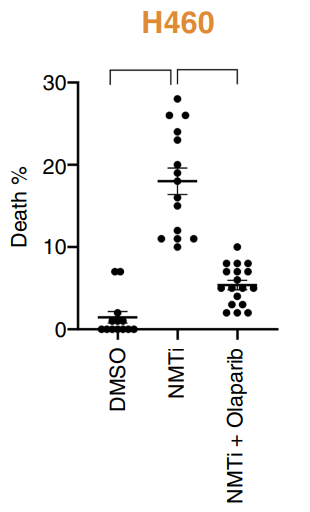
Cell viability (live/dead reagent) in (KL/K)MUT H460 cells treated with 1 μmol/L Zelenirstat (NMTi) or vehicle control and 20 μmol/L olaparib for 72 hours.
-
In Vivo
TNF-α-induced Inhibition of Protein Myristoylation Via Binding Between NMT1 and Sorbs2 in Osteoblasts. [Abstract]2024 Jan-Feb;38(1):107-113. PMID: 38148048 -
-
-


Lösungsmittel & Löslichkeit
In Vitro:
DMSO : 8.93 mg/mL (16.61 mM; ultrasonic and warming and heat to 60°C; Hygroscopic DMSO has a significant impact on the solubility of product, please use newly opened DMSO)
Please refer to the solubility information to select the appropriate solvent. Once prepared, please aliquot and store the solution to prevent product inactivation from repeated freeze-thaw cycles.
Storage method and period of stock solution: -80°C, 6 months; -20°C, 1 month. When stored at -80°C, please use it within 6 months. When stored at -20°C, please use it within 1 month.
Please refer to the solubility information to select the appropriate solvent. Once prepared, please aliquot and store the solution to prevent product inactivation from repeated freeze-thaw cycles.
Storage method and period of stock solution: -80°C, 6 months; -20°C, 1 month. When stored at -80°C, please use it within 6 months. When stored at -20°C, please use it within 1 month.
Konzentration (Stammlösung) × Volumen (Stammlösung) = Konzentration (Ziellösung) × Volumen (Ziellösung)
In Vivo:
Select the appropriate dissolution method based on your experimental animal and administration route.
- For the following dissolution methods, please ensure to first prepare a clear stock solution using an In Vitro approach and then sequentially add co-solvents:
- To ensure reliable experimental results, the clarified stock solution can be appropriately stored based on storage conditions. As for the working solution for In Vivo experiments, it is recommended to prepare freshly and use it on the same day.
- The percentages shown for the solvents indicate their volumetric ratio in the final prepared solution. If precipitation or phase separation occurs during preparation, heat and/or sonication can be used to aid dissolution.
Add each solvent one by one: 10% DMSO 40% PEG300 5% Tween-80 45% Saline
Solubility: ≥ 0.89 mg/mL (1.66 mM); Clear solution
This protocol yields a clear solution of ≥ 0.89 mg/mL (saturation unknown).
Taking 1 mL working solution as an example, add 100 μL DMSO stock solution (8.9 mg/mL) to 400 μL PEG300, and mix evenly; then add 50 μL Tween-80 and mix evenly; then add 450 μL Saline to adjust the volume to 1 mL.
Preparation of Saline: Dissolve 0.9 g sodium chloride in ddH₂O and dilute to 100 mL to obtain a clear Saline solution.
Add each solvent one by one: 10% DMSO 90% (20% SBE-β-CD in Saline)
Solubility: ≥ 0.89 mg/mL (1.66 mM); Clear solution
This protocol yields a clear solution of ≥ 0.89 mg/mL (saturation unknown).
Taking 1 mL working solution as an example, add 100 μL DMSO stock solution (8.9 mg/mL) to 900 μL 20% SBE-β-CD in Saline, and mix evenly.
Preparation of 20% SBE-β-CD in Saline (4°C, storage for one week): 2 g SBE-β-CD powder is dissolved in 10 mL Saline, completely dissolve until clear.
In Vivo Dissolution Calculator
Please enter the basic information of animal experiments:
-
-
-
-
Recommended: Prepare an additional quantity of animals to account for potential losses during experiments.
Please enter your animal formula composition:
-
%DMSO +
Recommended: Keep the proportion of DMSO in working solution below 2% if your animal is weak.
-
%+
-
+%Tween-80 + +
-
%Saline +
The co-solvents required include: DMSO, . All of co-solvents are available by MedChemExpress (MCE). , Tween 80. All of co-solvents are available by MedChemExpress (MCE).
Working solution concentration: 0.22 mg/mL
Method for preparing stock solution: mg drug dissolved in μL DMSO. Stock solution concentration: mg/mL.
1. Take μL DMSO stock solution;
2. Add μL .
μL , mix evenly;
3. Then add μL Tween 80, mix evenly;
4. Then add μL
Please ensure that the stock solution in the first step is dissolved to a clear state, and add co-solvents in sequence. You can use ultrasonic heating (ultrasonic cleaner, recommended frequency 20-40 kHz), vortexing, etc. to assist dissolution.


Reinheit & Dokumentation
-
Data Sheet (279 KB)
-
SDS (394 KB)
- English - EN (394 KB)
- Français - FR (394 KB)
- Deutsch - DE (394 KB)
- Norwegian - NO (394 KB)
- Español - ES (394 KB)
- Swedish - SV (394 KB)
- Italian - IT (394 KB)
- Korean - KR (394 KB)
- Portuguese - PT (394 KB)
-
Handling Instructions (2659 KB)
Verweise


Complete Stock Solution Preparation Table
Please refer to the solubility information to select the appropriate solvent. Once prepared, please aliquot and store the solution to prevent product inactivation from repeated freeze-thaw cycles.
Storage method and period of stock solution: -80°C, 6 months; -20°C, 1 month. When stored at -80°C, please use it within 6 months. When stored at -20°C, please use it within 1 month.
| Optional Solvent | Concentration Solvent Mass | 1 mg | 5 mg | 10 mg | 25 mg |
|---|---|---|---|---|---|
| DMSO | 1 mM | 1.8604 mL | 9.3022 mL | 18.6043 mL | 46.5108 mL |
| 5 mM | 0.3721 mL | 1.8604 mL | 3.7209 mL | 9.3022 mL | |
| 10 mM | 0.1860 mL | 0.9302 mL | 1.8604 mL | 4.6511 mL | |
| 15 mM | 0.1240 mL | 0.6201 mL | 1.2403 mL | 3.1007 mL |


Zelenirstat Related Classifications
HY-147308 Related Classifications
 Powered by Bioz