



Bases
- 1
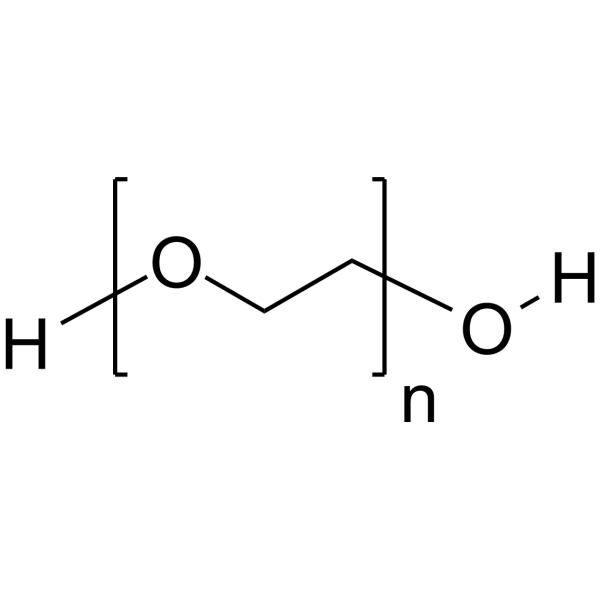
- Molecular Weight: 300.00
PEG300 (Polyethylene glycol 300), a neutral polymer of molecular weight 300, is a water-soluble, low immunogenic and biocompatible polymer formed by repeating units of ethylene glycol.
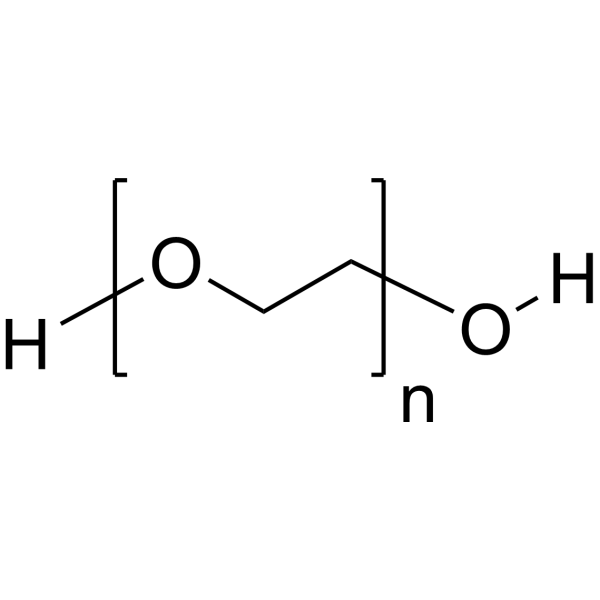
- Molecular Weight: 6000.00
PEG6000 can be used as an excipient, such as Ointment base, lubricant, etc. Pharmaceutical excipients, or pharmaceutical auxiliaries, refer to other chemical substances used in the pharmaceutical process other than pharmaceutical ingredients. Pharmaceutical excipients generally refer to inactive ingredients in pharmaceutical preparations, which can improve the stability, solubility and processability of pharmaceutical preparations. Pharmaceutical excipients also affect the absorption, distribution, metabolism, and elimination (ADME) processes of co-administered drugs.
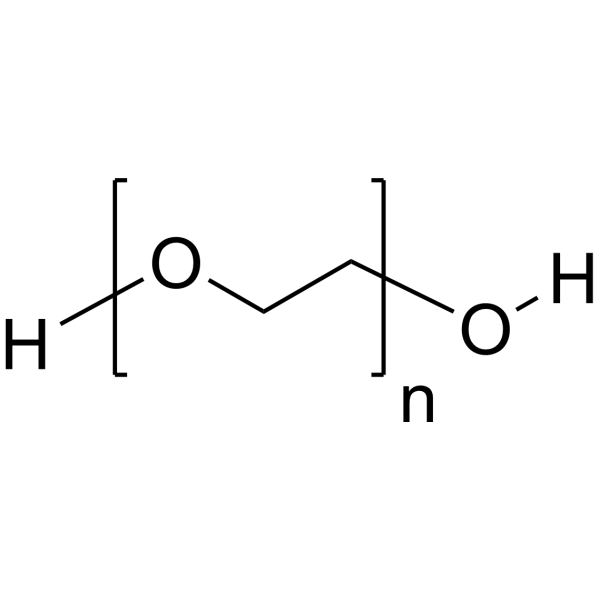
- Molecular Weight: 4000.00
PEG4000 can be used as an excipient, such as Ointment base, lubricant, etc. Pharmaceutical excipients, or pharmaceutical auxiliaries, refer to other chemical substances used in the pharmaceutical process other than pharmaceutical ingredients. Pharmaceutical excipients generally refer to inactive ingredients in pharmaceutical preparations, which can improve the stability, solubility and processability of pharmaceutical preparations. Pharmaceutical excipients also affect the absorption, distribution, metabolism, and elimination (ADME) processes of co-administered drugs.
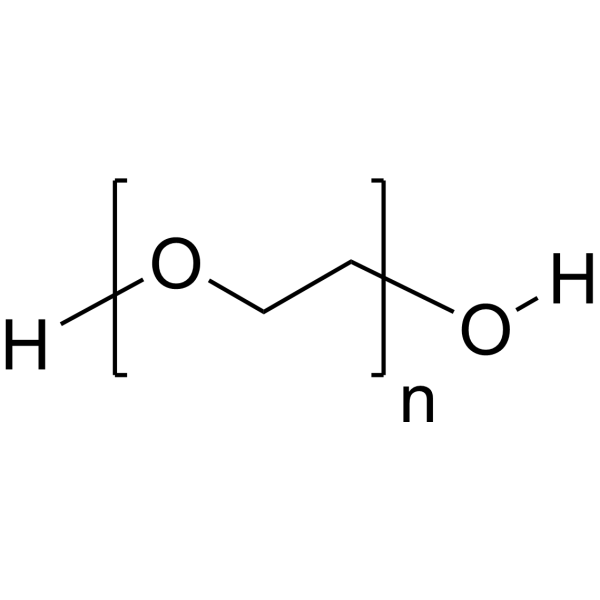
- Molecular Weight: 1500.00
PEG1500 can be used as an excipient, such as ointment base, lubricant. Pharmaceutical excipients, or pharmaceutical auxiliaries, refer to other chemical substances used in the pharmaceutical process other than pharmaceutical ingredients. Pharmaceutical excipients generally refer to inactive ingredients in pharmaceutical preparations, which can improve the stability, solubility and processability of pharmaceutical preparations. Pharmaceutical excipients also affect the absorption, distribution, metabolism, and elimination (ADME) processes of co-administered drugs.
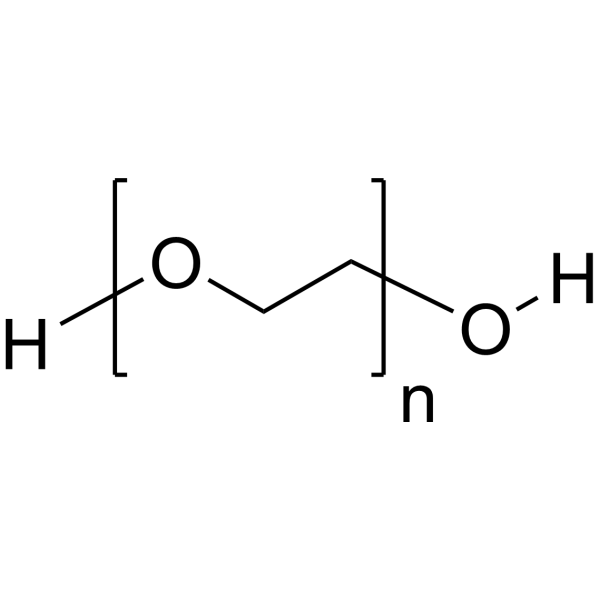
- Molecular Weight: 1000.00
PEG1000 can be used as an excipient, such as Ointment base, lubricant, etc. Pharmaceutical excipients, or pharmaceutical auxiliaries, refer to other chemical substances used in the pharmaceutical process other than pharmaceutical ingredients. Pharmaceutical excipients generally refer to inactive ingredients in pharmaceutical preparations, which can improve the stability, solubility and processability of pharmaceutical preparations. Pharmaceutical excipients also affect the absorption, distribution, metabolism, and elimination (ADME) processes of co-administered drugs.
Petrolatum (white) is mainly composed of hydrocarbons, possesses strong water resistance and moisturizing properties, and is commonly used as a pharmaceutical excipient. Petrolatum (white) penetrates into stratum corneum cells, improves skin barrier function, repairs epidermal structure, and reduces transepidermal water loss and the risk of skin damage. Petrolatum (white) induces the expression of antimicrobial peptides, innate immune genes, filaggrin and loricrin. Petrolatum (white) is used in research on atopic dermatitis and post-operative skin infections.

Cocoa butter can be used as an excipient, such as lubricants, suppository bases. Pharmaceutical excipients, or pharmaceutical auxiliaries, refer to other chemical substances used in the pharmaceutical process other than pharmaceutical ingredients. Pharmaceutical excipients generally refer to inactive ingredients in pharmaceutical preparations, which can improve the stability, solubility and processability of pharmaceutical preparations. Pharmaceutical excipients also affect the absorption, distribution, metabolism, and elimination (ADME) processes of co-administered drugs.
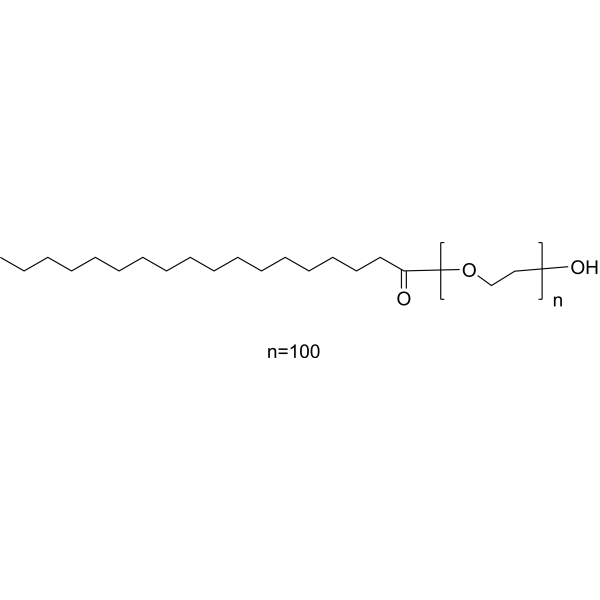
- Formula: C218H436O102
- Molecular Weight: 4686.89
Polyoxyl 100 stearate (PEG-100 stearate) is a non-ionic surfactant formed by polyethylene glycol (PEG) and stearic acid, and it is commonly used in pharmaceutical preparations, nanocarriers, emulsification systems and cosmetic formulations.
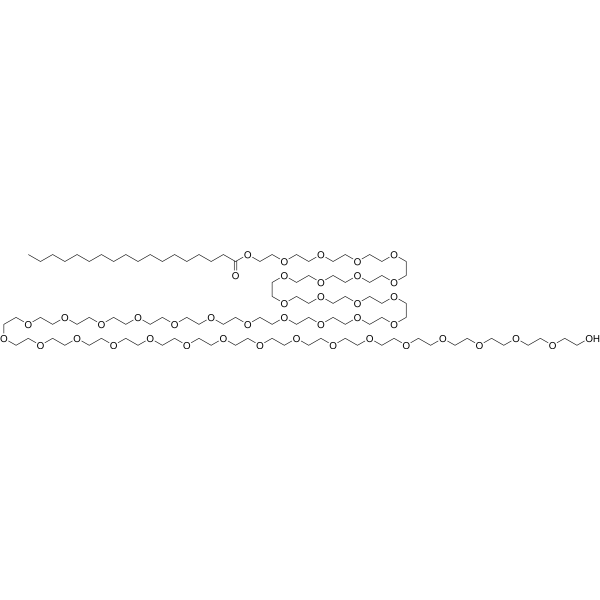
- Formula: (C2H4O)nC18H36O2
Polyoxyl 40 stearate (PEG 40 stearate) is a nonionic surfactant formed by the esterification of stearic acid with polyethylene glycol (PEG) containing approximately 40 ethoxy units, it is used in pharmaceutical preparations, nanodrug carriers, emulsification systems and biomedical materials. Polyoxyl 40 stearate can serve as a matrix component of solid lipid nanoparticles to achieve controlled release of encapsulated antifungal drugs; it can also act as a base material for solid lipid nanoparticles for vaginal administration, and polymerizable groups can be introduced via modification with acryloyl chloride.
Oxidized paraffin (calcium) can be used as an excipient, such as ointment base, hardening agent. Pharmaceutical excipients, or pharmaceutical auxiliaries, refer to other chemical substances used in the pharmaceutical process other than pharmaceutical ingredients. Pharmaceutical excipients generally refer to inactive ingredients in pharmaceutical preparations, which can improve the stability, solubility and processability of pharmaceutical preparations. Pharmaceutical excipients also affect the absorption, distribution, metabolism, and elimination (ADME) processes of co-administered drugs.
Petrolatum (yellow) is mainly composed of hydrocarbons, possesses strong water resistance and moisturizing properties, and is commonly used as a pharmaceutical excipient. Petrolatum (yellow) penetrates into stratum corneum cells, improves skin barrier function, repairs epidermal structure, and reduces transepidermal water loss and the risk of skin damage. Petrolatum (yellow) induces the expression of antimicrobial peptides, innate immune genes, filaggrin and loricrin. Petrolatum (yellow) is used in research on atopic dermatitis and post-operative skin infections.
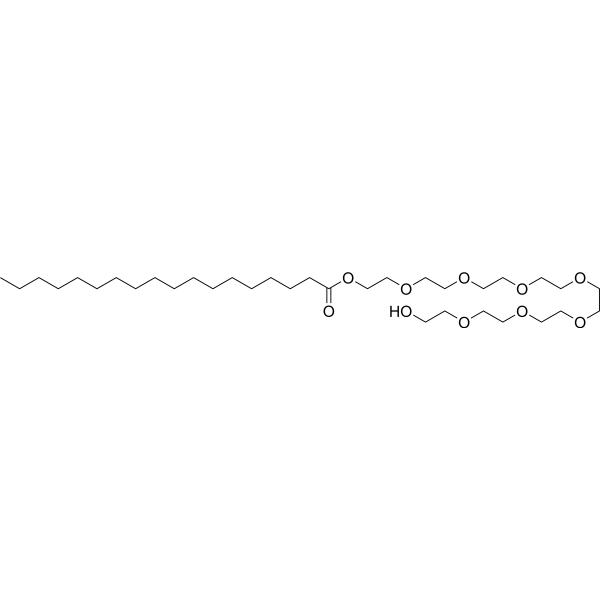
- Formula: C34H68O10
- Molecular Weight: 636.90
Polyoxyl 8 stearate can be used as an excipient. Pharmaceutical excipients, or pharmaceutical auxiliaries, refer to other chemical substances used in the pharmaceutical process other than pharmaceutical ingredients. Pharmaceutical excipients generally refer to inactive ingredients in pharmaceutical preparations, which can improve the stability, solubility and processability of pharmaceutical preparations. Pharmaceutical excipients also affect the absorption, distribution, metabolism, and elimination (ADME) processes of co-administered drugs.
- 1



