



Upper Respiratory Inflammation
-
Upper Respiratory Inflammation (6)

Chymotrypsin (EC 3.4.21.1; Chymotrypsin A) is an orally effective inhibitor targeting molecules such as TLR4, NF-κB, MMP-1, TNF-α, IL-1β, and IL-6. Chymotrypsin downregulates the TLR4/NF-κB signaling pathway, inhibiting the release of inflammatory factors, reducing cell infiltration and tissue damage. It also reduces the expression of tumor cell adhesion molecules (such as CD44 and CD54) and can be specifically detected by fluorescent probes (such as NBD-3). Chymotrypsin has anti-inflammatory, hepatoprotective, joint damage-reducing, liver protection against lipotoxicity, and anti-tumor metastasis functions. It can be used in research on diseases such as rheumatoid arthritis, non-alcoholic fatty liver disease, and melanoma metastasis. Chymotrypsin can be used in studies of inflammation, edema, and expectoration.
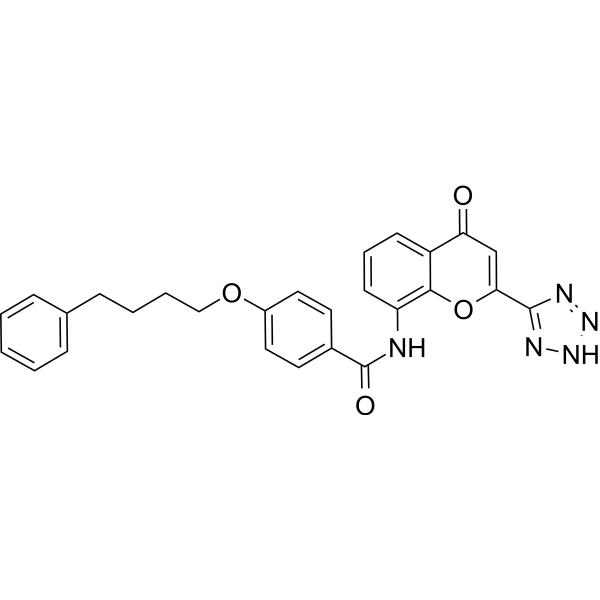
- Formula: C27H23N5O4
- Molecular Weight: 481.50
Pranlukast is a highly potent, selective and competitive antagonist of peptide leukotrienes. Pranlukast inhibits [3H]LTE4, [3H]LTD4, and [3H]LTC4 bindings to lung membranes with Kis of 0.63±0.11, 0.99±0.19, and 5640±680 nM, respectively.
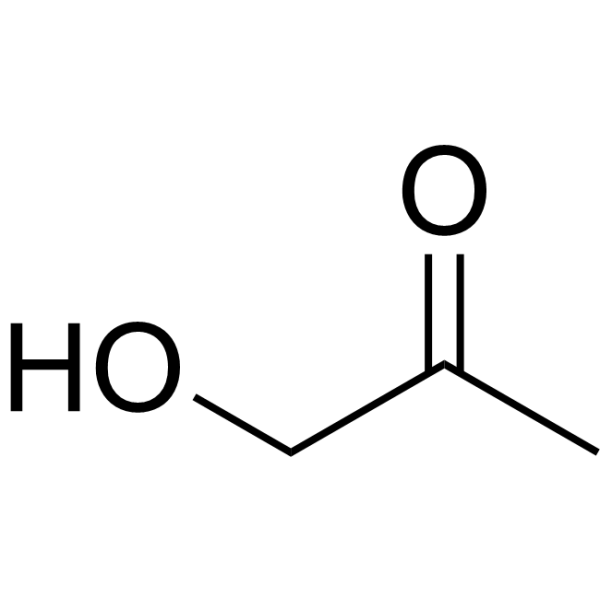
- Formula: C3H6O2
- Molecular Weight: 74.08
Hydroxyacetone is a toxic compound. Hydroxyacetone can be isolated from e-cigarette aerosols. Hydroxyacetone reduces the activity of cellular Mitochondrial reductase (with an IC50 of 5.53 mg/mL for mitochondrial reductase in BEAS-2B cells) and increases ROS levels. Hydroxyacetone induces mitochondrial stress and oxidative damage. Hydroxyacetone induces destabilization of F-actin. At high concentrations, Hydroxyacetone promotes cell rounding and Apoptotic body formation. Hydroxyacetone exerts toxic effects on cells including airway epithelial cells and possesses respiratory toxicity potential.\n
- Molecular Weight: 25 kDa
Chymotrypsin (EC 3.4.21.1; Chymotrypsin A) (MS grade) is an orally effective inhibitor targeting molecules such as TLR4, NF-κB, MMP-1, TNF-α, IL-1β, and IL-6. Chymotrypsin (MS grade) downregulates the TLR4/NF-κB signaling pathway, inhibits the release of inflammatory factors, reduces cell infiltration and tissue damage, and also reduces the expression of tumor cell adhesion molecules (such as CD44 and CD54). It can also be specifically detected by fluorescent probes (such as NBD-3). Chymotrypsin (MS grade) has anti-inflammatory, hepatoprotective, joint damage-reducing, liver protection against lipotoxicity, and anti-tumor metastasis functions, and can be used in the research of diseases such as rheumatoid arthritis, non-alcoholic fatty liver disease, and melanoma metastasis. Chymotrypsin (MS grade) can be used in studies of inflammation, edema, and expectoration.
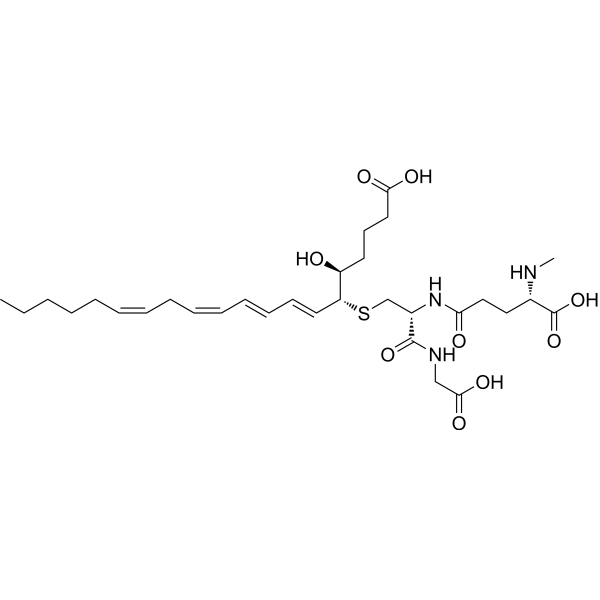
- Formula: C31H49N3O9S
- Molecular Weight: 639.80
N-Methyl Leukotriene C4 (N-Methyl-LTC4) is a non-metabolizable LTC4 analog and a selective cysteinyl leukotriene receptor 2 (CysLT2) agonist, with an EC50 of 46.1 nM for mouse CysLT2 and an EC50 value of 122.3 nM for human CysLT2. N-Methyl Leukotriene C4 shows low potency against CysLT1. N-Methyl Leukotriene C4 activates human and mouse CysLT2 receptors, triggering calcium signaling, β-arrestin-2 binding to phosphorylated receptors, vascular leakage, hypotension, tachycardia, contraction of guinea pig ileum and trachea, mild bronchoconstriction, as well as hypertension associated with peripheral vasoconstriction. N-Methyl Leukotriene C4 can be used in research on asthma, rhinitis, sinusitis, cerebral inflammation and edema, pulmonary arterial hypertension, and cardiovascular diseases.

- Formula: C14H21ClN2O
- Molecular Weight: 268.78
Tymazoline hydrochloride is an Imidazoline derivative. Tymazoline hydrochloride has nasal vasoconstrictor properties. Tymazoline hydrochloride can be used in the research of rhinitis.



