



N-Methyl Leukotriene C4

Based on 1 Customer Validation
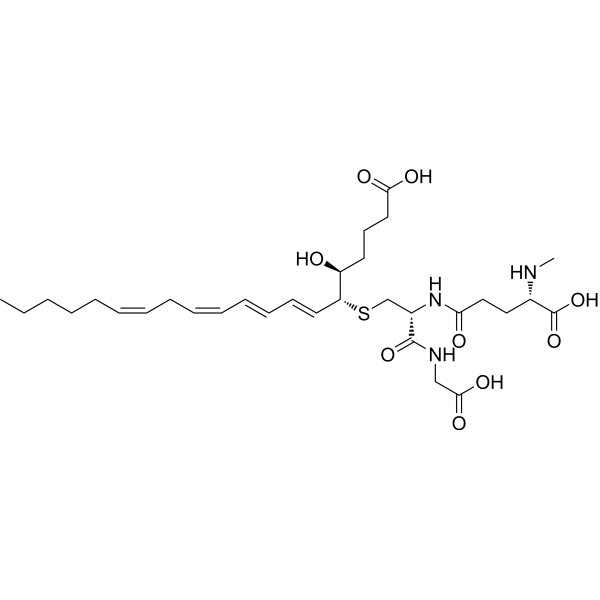
N-Methyl Leukotriene C4 (N-Methyl-LTC4) is a non-metabolizable LTC4 analog and a selective cysteinyl leukotriene receptor 2 (CysLT2) agonist, with an EC50 of 46.1 nM for mouse CysLT2 and an EC50 value of 122.3 nM for human CysLT2. N-Methyl Leukotriene C4 shows low potency against CysLT1. N-Methyl Leukotriene C4 activates human and mouse CysLT2 receptors, triggering calcium signaling, β-arrestin-2 binding to phosphorylated receptors, vascular leakage, hypotension, tachycardia, contraction of guinea pig ileum and trachea, mild bronchoconstriction, as well as hypertension associated with peripheral vasoconstriction. N-Methyl Leukotriene C4 can be used in research on asthma, rhinitis, sinusitis, cerebral inflammation and edema, pulmonary arterial hypertension, and cardiovascular diseases.
For research use only. We do not sell to patients.
- Purity : 98.1%
- CAS No.: 131391-65-6
- Formula: C31H49N3O9S
- Molecular Weight:639.80
-
Storage:
-80°C

To place orders, for customer services and technical support, please contact: MedChemExpress USA
Tel: 609-228-6898 E-mail: [email protected] [email protected]


-
 Biological Activity
-
Chemical Information
- Protocols
- Purity & Documentation
- References
-
 Help & FAQs


-
HY-113483
20-Carboxy-Leukotriene B4LTB4 Metabolite -
HY-113460
11-trans-Leukotriene C4 -
HY-131651
Leukotriene B4 ethanolamideLTB4 Receptor Antagonist -
HY-126716
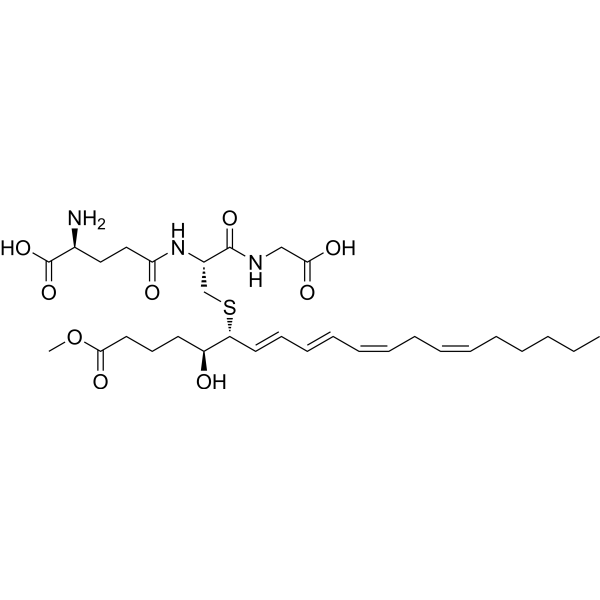
Leukotriene C4 methyl esterLeukotriene -

HY-168784
LTD4 antagonist 2LTD4 Antagonist -
HY-113465A
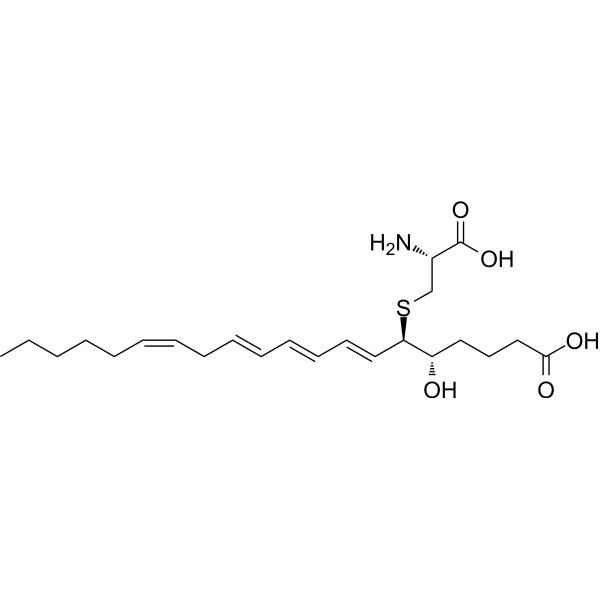
11-trans Leukotriene E4Endogenous Metabolite -

HY-W747563
11-trans Leukotriene D4 -
HY-130440
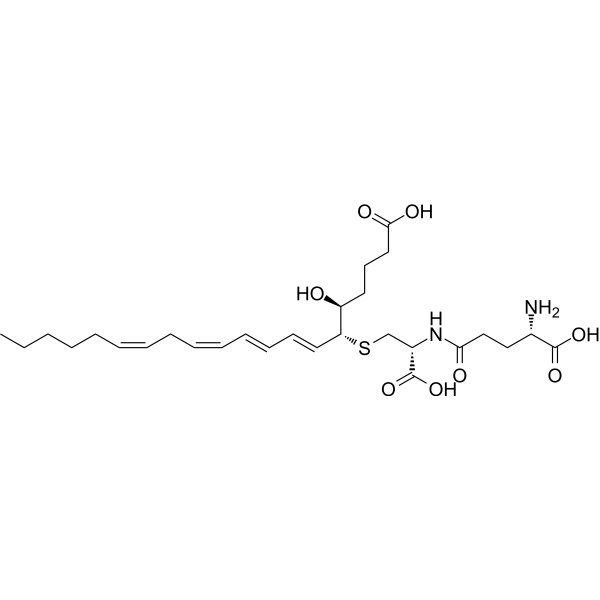
Leukotriene F4Arachidonic Metabolite -

HY-W653762
Cetirizine N-oxideOxidative Degradation Product of Cetirizine -
HY-130497
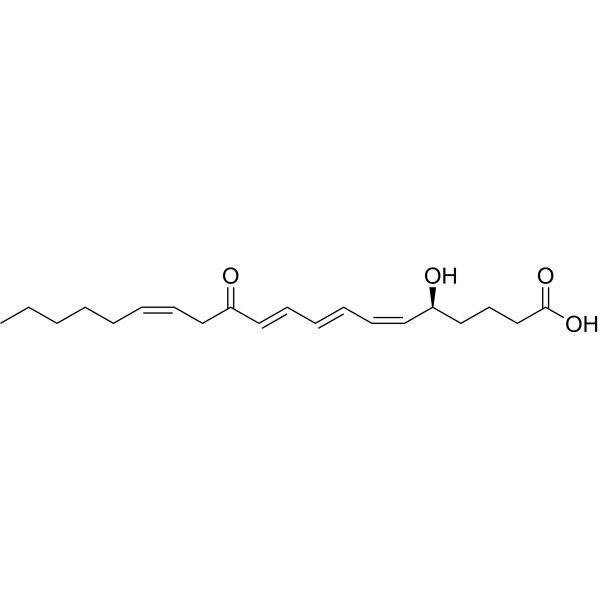
12-Oxo-leukotriene B4Endogenous Metabolite -

HY-115356
Eoxin E4Metabolite of 14,15-LTC4 and 14,15-LTD4 -
HY-122124
CAY10583BLT2 Agonist
All Leukotriene Receptor Isoforms
More

Biological Activity
Description
IC50 & Target
[1]|
CysLT2 122.3 nM (IC50, Human) |
CysLT2 46.1 nM (IC50, Mouse) |
CysLT1 >2000 nM (IC50, Human) |
CysLT1 >3000 nM (IC50, Mouse) |
In Vitro
N-Methyl Leukotriene C4 (3 μM; 1 h, 30 s) acts as a full, potent agonist at human CysLT2 receptors in HEK 293 cells, with an EC50 of 122.3 nM and 98% of LTC4's maximal efficacy[1].
N-Methyl Leukotriene C4 (serial dilutions, 1.5 μM; 1 h, 30 s) acts as a full, potent agonist at mouse CysLT2 receptors in HEK 293 cells, with an EC50 of 46.1 nM and 89% of LTC4's maximal efficacy[1].
N-Methyl Leukotriene C4 (10-40 μM; 1 h, 30 s) acts as a very weak partial agonist at human CysLT1 receptors in HEK 293 cells, with an EC50 of ≥2000 nM and 60% of LTD4's maximal efficacy[1].
N-Methyl Leukotriene C4 acts as a full, potent agonist for human CysLT2 receptor-mediated β-arrestin-2 binding in C2C12 myofibroblasts, with an EC50 of 8.7 nM and 90% of LTC4's maximal efficacy[1].
N-Methyl Leukotriene C4 (0.4 μg/mL; up to 30 min) is not metabolized by guinea pig lung supernatant homogenate, demonstrating stability against γ-glutamyl transpeptidase-mediated breakdown[3].
N-Methyl Leukotriene C4 (10 μg; single bolus administration) is not metabolized to LTD4 in isolated perfused guinea pig lungs, and its induced increase in perfusion pressure is not antagonized by FPL55712 (HY-107607)[3].
N-Methyl Leukotriene C4 induces concentration-dependent contractions of guinea pig ileum with a pD2 of 7.7[3].
N-Methyl Leukotriene C4 induces concentration-dependent contractions of guinea pig trachea with a pD2 of 8.1[3].
MedChemExpress (MCE) has not independently confirmed the accuracy of these methods. They are for reference only. Further protocols information, click here.
In Vivo
N-Methyl Leukotriene C4 (10-1000 ng/kg bw; i.v.; single bolus) produces a more potent, longer-duration hypotensive effect in cannulated American bullfrogs than native peptidoleukotrienes, and its cardiovascular effects are antagonized by high-dose Ablukast (Ro 23-3544) (HY-118958) at doses of 100 ng/kg bw and higher[2].
N-Methyl Leukotriene C4 (15-40 μg/kg; i.v.) acts as a weak, dose-dependent intravenous bronchoconstrictor in anaesthetised guinea pigs, being 25 times less potent than LTC4, with its bronchoconstrictive effect significantly reduced by FPL55712[3].
N-Methyl Leukotriene C4 (20 μg/kg; i.v.) induces a pronounced, prolonged hypertensive effect in anaesthetised guinea pigs, which is not significantly affected by LTD4/LTE4 antagonists, lipoxygenase inhibitors, or alpha-adrenoceptor antagonists[3].
MedChemExpress (MCE) has not independently confirmed the accuracy of these methods. They are for reference only.
-
Animal Model:transgenic mice overexpressing human CysLT2 receptor in vascular endothelial cells (TG-EC); CysLT2 receptor knockout (KO) mice[1]
-
Dosage:5 ng
-
Administration:i.d.; single dose
-
Result:Elicited a 22-fold increase in vascular leakage compared with vehicle control in TG-EC mice, with an average absorbance of 0.26 versus 0.012 for vehicle.
Did not produce a statistically significant increase in vascular leakage in CysLT2 receptor KO mice, with an average absorbance of 0.034 versus 0.063 for vehicle.
-
Animal Model:American bullfrog (both sexes, 368.06 g)[2]
-
Dosage:10 ng/kg bw; 30 ng/kg bw; 100 ng/kg bw; 300 ng/kg bw; 1000 ng/kg bw
-
Administration:i.v.; single bolus
-
Result:Exhibited equivalent hypotensive (ΔMAP) potency to LTC4, LTD4, and LTE4 at 10 and 30 ng/kg bw.
Produced the most potent hypotensive effect at 100, 300, and 1000 ng/kg bw, with significantly greater ΔMAP reduction than LTC4, LTD4, and LTE4.
Induced significantly greater HR responses than LTD4 and LTE4 at doses of 100 ng/kg bw and higher.
Caused significantly longer duration of cardiovascular effects than LTC4, LTD4, and LTE4 at doses as low as 30 ng/kg bw.
Showed significantly reduced MAP and HR responses when co-administered with high-dose Ro 23-3544 at doses of 100 ng/kg bw and higher.
-
Animal Model:Dunkin-Hartley (male, 350-450 g, anaesthetised, artificially ventilated, indomethacin pretreatment)[3]
-
Dosage:15 μg/kg; 20 μg/kg; 40 μg/kg
-
Administration:i.v.
-
Result:Produced a dose-dependent increase in total pulmonary resistance (TPR).
Increased TPR by ~2% at 15 μg/kg, ~15% at 20 μg/kg, and ~40% at 40 μg/kg.
Was approximately 25 times less potent than LTC4 as an intravenous bronchoconstrictor.
Induced a TPR increase of 37% and a mean arterial blood pressure (MAP) increase of 51 mmHg at 20 μg/kg i.v.
Reduced the TPR increase by 73% (to 10%) when pretreated with FPL55712 (0.5 mg/kg i.v.), but did not significantly affect the MAP increase.
-
Animal Model:Dunkin-Hartley (male, 350-450 g, anaesthetised, artificially ventilated, propranolol pretreatment)[3]
-
Dosage:10 μg/mL; 20 μg/mL; 30 μg/mL
-
Administration:aerosolised; 20 sec
-
Result:Produced a dose-dependent increase in total pulmonary resistance (TPR).
Increased TPR by ~28% at 10 μg/mL, ~58% at 20 μg/mL, and ~88% at 30 μg/mL.
Was approximately 20 times less potent than LTC4 as an inhaled bronchoconstrictor.
Reduced the TPR response by an average of 91% when pretreated with FPL55712 (0.5 mg/kg i.v.).
Reduced the TPR response by 71% when treated with aerosolised LY170680 (0.5 mg/mL for 20 sec).
Caused no change in mean arterial blood pressure (MAP).
-
Animal Model:Dunkin-Hartley (male, 350-450 g, anaesthetised, artificially ventilated, indomethacin and propranolol pretreatment)[3]
-
Dosage:20 μg/kg
-
Administration:i.v.
-
Result:Induced a mean arterial blood pressure (MAP) increase of 51 mmHg at 20 μg/kg i.v.
Showed no significant change in hypertensive effect when pretreated with FPL55712 (0.5 mg/kg i.v.), AA861 (5 mg/kg i.v.), or phenoxybenzamine (1 mg/kg i.v.).


Chemical Information
-
CAS No. 131391-65-6
-
Appearance Liquid
-
Molecular Weight 639.80
-
Formula C31H49N3O9S
-
Color Colorless to light yellow
-
SMILES
OC(CCC[C@H](O)[C@@H](/C=C/C=C/C=C\C/C=C\CCCCC)SC[C@@H](C(NCC(O)=O)=O)NC(CC[C@H](NC)C(O)=O)=O)=O
-
Synonyms
N-Methyl-LTC4
-
Shipping
Shipping with dry ice.
-
Storage
-80°C

Protocols
-
Research Protocol for Cardiovascular Diseases
Cardiovascular disease can be modeled as maladaptive cardiac remodeling, where ischemic injury or pressure overload activates inflammatory signaling, fibroblast activation, extracellular-matrix deposition, cardiomyocyte hypertrophy, vascular remodeling, and progressive ventricular dysfunction. The TGF-β/SMAD axis is a central profibrotic pathway after myocardial injury and pressure overload, while innate immune and cytokine pathways regulate leukocyte recruitment, scar formation, and adverse remodeling. Key unresolved questions include which inflammatory signals are reparative versus harmful, when fibrosis is protective versus maladaptive, and whether pathway inhibition improves function without weakening necessary infarct healing or compensatory remodeling.
-
Research Protocol for Inflammation-related Diseases
The NLRP3 inflammasome is a cytosolic innate immune signaling platform that integrates priming signals and danger-signal activation to promote caspase-1 activation, maturation of IL-1β and IL-18, and gasdermin D-mediated pyroptotic cell death. The core experimental logic is to determine whether inflammatory disease phenotypes are driven by increased NLRP3 expression, ASC-containing inflammasome assembly, caspase-1 cleavage, GSDMD cleavage, and extracellular release of IL-1β/IL-18 rather than by nonspecific cell injury alone. The pathway is strongly linked to inflammation-related disease phenotypes because monosodium urate crystals activate NALP3/NLRP3 inflammasome signaling in gout-like crystal inflammation, cholesterol crystals activate NLRP3 inflammasomes in atherogenesis models, and DSS-induced intestinal inflammation has been reported to involve NLRP3 inflammasome activity. However, experimental colitis studies also show context-dependent protective effects of NLRP3 inflammasome co


Purity & Documentation
References
[1]. Yan D, et al. Differential signaling of cysteinyl leukotrienes and a novel cysteinyl leukotriene receptor 2 (CysLT₂) agonist, N-methyl-leukotriene C₄, in calcium reporter and β arrestin assays. Mol Pharmacol. 2011 Feb;79(2):270-8. [Content Brief]
[2]. Sun J, et al. Cardiovascular effects of N-methyl leukotriene C4, a nonmetabolizable leukotriene C4 analogue, and the antagonism of leukotriene-induced hypotension by Ro 23-3544, in the American bullfrog, Rana catesbeiana. Canadian journal of physiology and pharmacology. 1995 Mar;73(3):383-9. [Content Brief]
[3]. Baker SR, et al. The pharmacology of N-methyl LTC4; a metabolically stable LTC4-mimetic. Prostaglandins. 1990 Nov;40(5):445-61. [Content Brief]

Calculators
Concentration (start) × Volume (start) = Concentration (final) × Volume (final)


N-Methyl Leukotriene C4 Related Classifications
HY-134092 Related Classifications
 Powered by Bioz