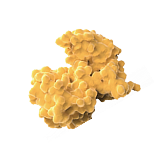
Protein A Magnetic Beads
Based on 32 publication(s) in Google Scholar
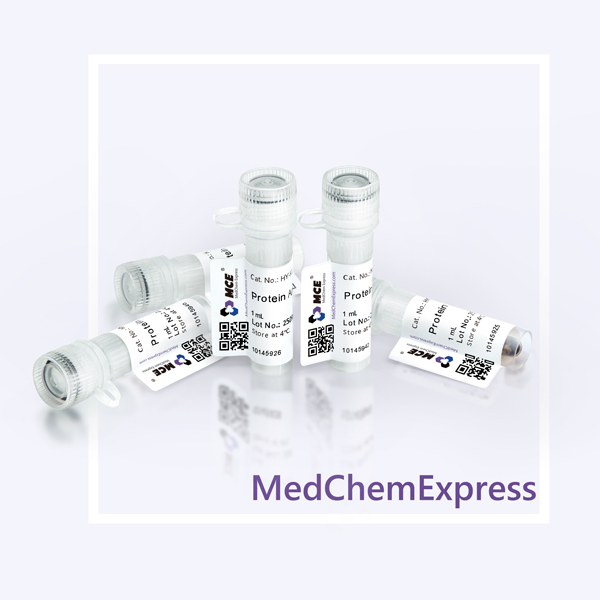
Protein A Magnetic Beads provide a fast and convenient method for Immunoprecipitation and Co-Immunoprecipitation and Chromatin Immunoprecipitation.The 1 mL volume is defined as the base specification. All larger sizes correspond to incremental volumes of this base.
-
Storage :
4°C, 2 years. Do not centrifuge, dry or freeze the magnetic beads.

To place orders, for customer services and technical support, please contact: MedChemExpress USA
Tel: 609-228-6898 E-mail: [email protected] [email protected]



-

HY-K0204
Protein G Magnetic Beads -
HY-K0202
Protein A/G Magnetic Beads -
HY-K0208
Streptavidin Magnetic Beads -
HY-K1002
NP-40 Lysis Buffer -
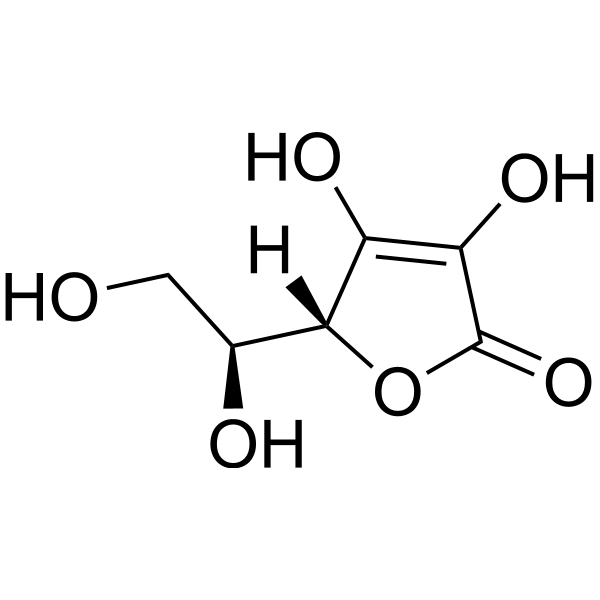
HY-B0166
L-Ascorbic acidAntioxidant -
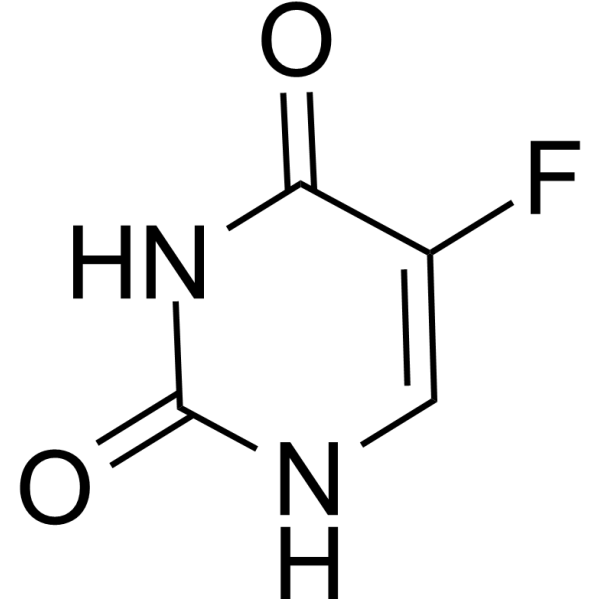
HY-90006
5-FluorouracilThymidylate Synthase Inhibitor -
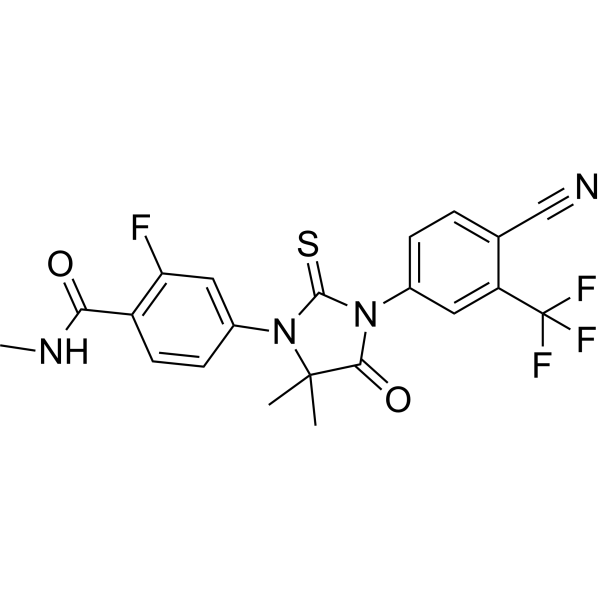
HY-70002
EnzalutamideAndrogen Receptor Antagonist -
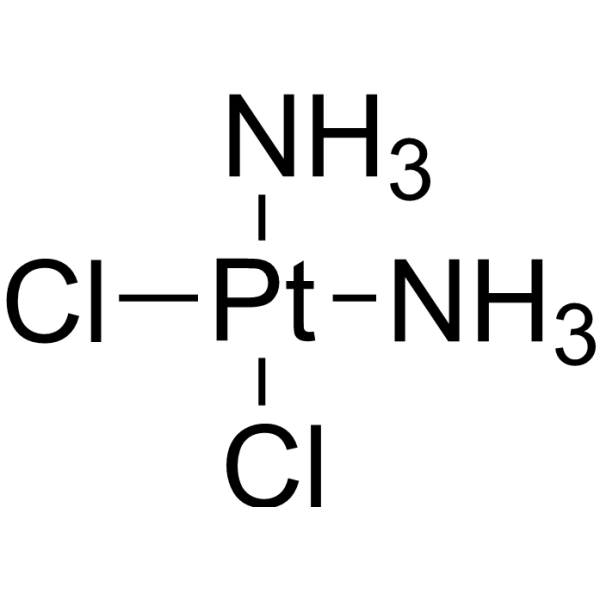
HY-17394
CisplatinDNA Alkylator -
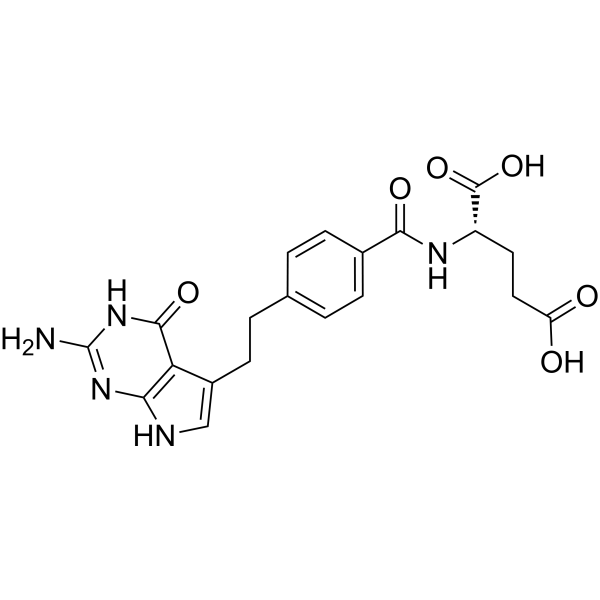
HY-10820
Pemetrexed -
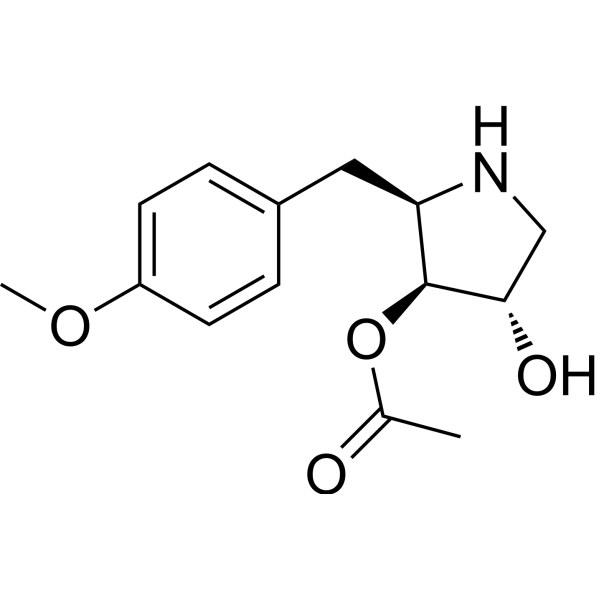
HY-18982
AnisomycinProtein Synthesis Inhibitor -
HY-10431
SB-431542TGF-β Receptor Kinase Inhibitor -
HY-B0150
NicotinamideSIRT Inhibitor


Description & Advantages
The MCE Protein A Magnetic Beads are typically used for isolating antibodies from serum, cell culture supernatant or ascites and for Immunoprecipitation and Co-immunoprecipitation of antigens from cell or tissue extracts. Protein A Magnetic Beads contain a recombinant Protein A with the binding domains for IgG.
1. During immunoprecipitation, only a small amount of magnetic beads are needed.
2. Convenient and time saving.
3. Low non-specific binding.
4. Minimal sample loss.
5. Antibody binding capacity up to 0.9 mg/mL.
6. Stable, one bottle solution.


Protocols
1. Preparation of Magnetic Beads
1.1 Resuspend the Magnetic Beads in the vial (tilt and rotate for 2 minutes or gently pipette for 10 times).
1.2 Transfer 25-50 μL of Protein A Magnetic Beads into a 1.5 mL tube (Transfer amount may be adjusted as required).
1.3 Add 400 μL of binding/wash buffer to the beads and gently pipette to mix. Place the tube into a magnetic stand to collect the beads against the side of the tube (Hereinafter referred to as magnetic separation). Remove and discard the supernatant. Repeat this step for 2 times.
2. Binding of Antibody
2.1 Dilute antibody (Ab) to the final concentration of 5-50 μg/mL with binding/wash buffer. The optimal amount of Ab may be adjusted as required.
2.2 Add 400 μL of diluted Ab to the Protein A Magnetic Beads. Rotate tube for 30 minutes at room temperature or 2 hours at 4°C.
2.3 Perform magnetic separation. Transfer the supernatant into a new tube for further analysis, if desired. The supernatant is the non-binding fraction.
2.4 Add 400 μL of binding/wash buffer to the beads and gently pipette to mix. Place the tube into a magnetic stand to collect the beads against the side of the tube. Remove and discard the supernatant. Repeat this step for 4 times.
3. Immunoprecipitation of Target Antigen
3.1 Remove the tubes from the magnetic separator and add your sample containing the antigen (Ag) (typically 5-50 μg in 400 μL binding/wash buffer) and gently pipette to resuspend the Protein A Magnetic Beads-Ab complex.
3.2 Incubate with rotation for 30 minutes at room temperature or 2 hours at 4°C to allow Ag to bind to the Protein A Magnetic Beads-Ab complex.
3.3 Perform magnetic separation. Remove and discard the supernatant.
3.4 Wash the Magbeads-Ab-Ag complex 5 times using 400 μL binding/wash buffer for each wash. Perform magnetic separation between each wash, remove supernatant and resuspend by gentle pipetting.
3.5 Resuspend the Protein A Magnetic Beads-Ab-Ag complex in 400 μL binding/wash buffer and transfer the bead suspension into a clean tube. This is recommended to avoid co-elution of the proteins bound to the tube wall.
4. Elution
This is a non-denaturation elution method.
4.1 Perform magnetic separation and remove the supernatant. Add 400 μL of binding/wash buffer into the tube and rotate for 5 minutes. Perform magnetic separation for 1 minute and remove the supernatant. Then add 25-50 μL elution buffer into the tube with magnetic beads-Ab-Ag complex, rotate for 5 minutes.
4.2 Perform magnetic separation, collect the supernatant.
4.3 The final solution can be used as samples for denaturing SDS-PAGE. Or the elution can be adjusted to neutral pH with neutralization buffer immediately and used for further analysis.


Publications
-
Journal Impact Factor
-
Most Recent
-
Bone ResMatrix stiffness regulates nucleus pulposus cell glycolysis by MRTF-A-dependent mechanotransduction. [Abstract]2025 Feb 14;13(1):23. PMID: 39952914
Protein A Magnetic Beads purchased from MedChemExpress. Usage Cited in: Bone Res. 2025 Feb 14;13(1):23. [Abstract]
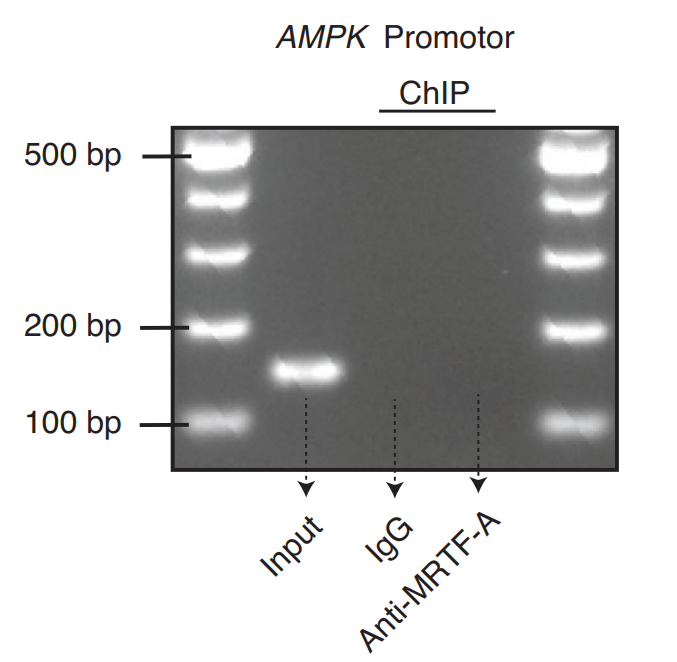
The PCR image of AMPK promoter region (MRTF-A antibody was used for immunoprecipitation, with normal IgG as the negative control and input as the loading control).
Protein A Magnetic Beads purchased from MedChemExpress. Usage Cited in: Bone Res. 2025 Feb 14;13(1):23. [Abstract]
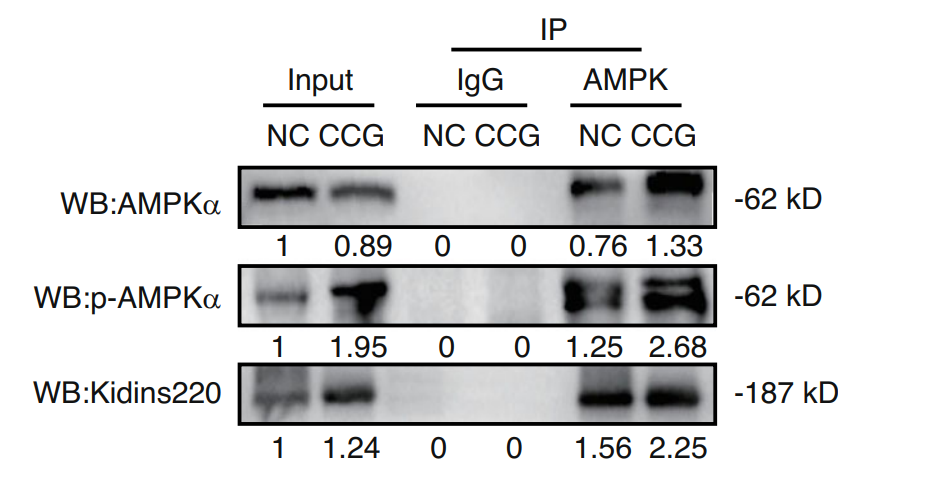
AMPK was immunoprecipitated from NPCs after CCG treatment, and the presence of AMPK, p-AMPK, and Kidins220 in the immunoprecipitates was evaluated.
Protein A Magnetic Beads purchased from MedChemExpress. Usage Cited in: Bone Res. 2025 Feb 14;13(1):23. [Abstract]
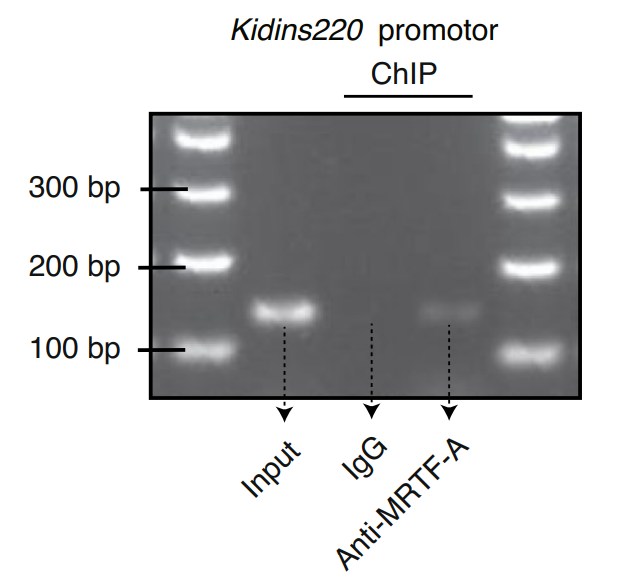
The PCR image of Kidins220 promoter region (MRTF-A antibody was used for immunoprecipitation, with normal IgG as the negative control and input as the loading control).
-
Nat Commun2025 May 7;16(1):4259. PMID: 40335523
Protein A Magnetic Beads purchased from MedChemExpress. Usage Cited in: Nat Commun. 2025 May 7;16(1):4259. [Abstract]
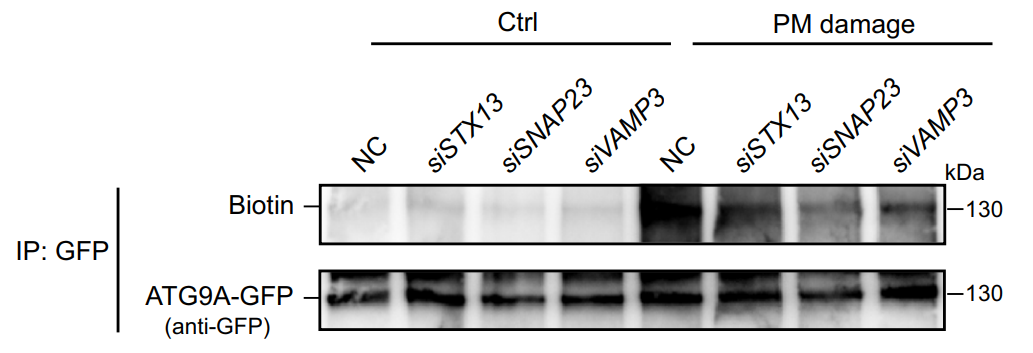
In HeLa cells expressing ATG9A-GFP (under normal conditions or after digoxigenin-induced plasma membrane damage), cell surface biotinylation analysis was performed in all experimental groups. ATG9A-GFP was immunoprecipitated using an anti-GFP antibody, and Western blot analysis was performed using a streptavidin-HRP antibody.
-
Nat CommunMaternal NAT10 orchestrates oocyte meiotic cell-cycle progression and maturation in mice. [Abstract]2023 Jun 22;14(1):3729. PMID: 37349316
Protein A Magnetic Beads purchased from MedChemExpress. Usage Cited in: Nat Commun. 2023 Jun 22;14(1):3729. [Abstract]
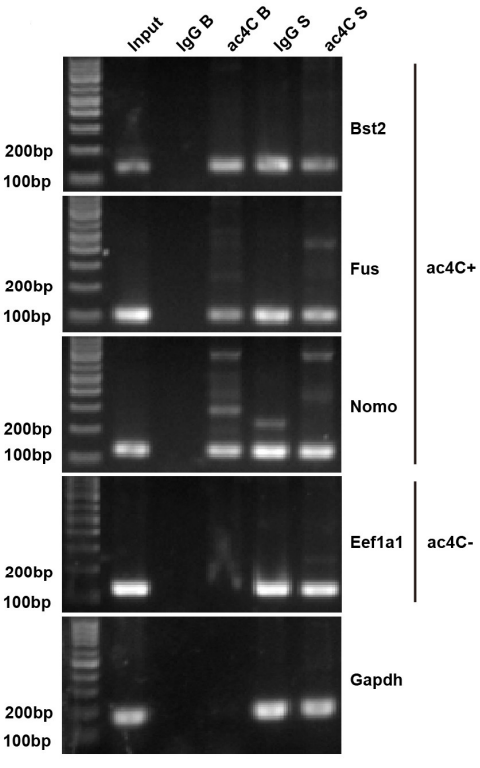
acRIP-PCR assay confirmed selected genes with or without ac4C modification in HeLa cells. IgG B, IgG beads. Ac4C B, ac4C beads. IgG S, IgG supernatant. Ac4C S, ac4C supernatant. Experiments were performed in triplicates; a representative image is shown in the 2% agarose gel. n = 3 biologically independent samples were included in each group.
-
Theranostics2022 Oct 17;12(17):7307-7318. PMID: 36438492
-
Adv Sci (Weinh)2024 Dec;11(46):e2407517. PMID: 39422063
-
Proc Natl Acad Sci U S A2022 Apr 26;119(17):e2106902119. PMID: 35439061
-
JCI InsightSETD1A drives stemness by reprograming epigenetic landscape in hepatocellular carcinoma stem cells. [Abstract]2023 Sep 22;8(18):e168375. PMID: 37581938
-
Int J Mol Sci2023 Sep 23;24(19):14473. PMID: 37833920
-
J Biol Chemm6A demethylation of cytidine deaminase APOBEC3B mRNA orchestrates arsenic-induced mutagenesis. [Abstract]2022 Feb;298(2):101563. PMID: 34998823
-
IUBMB LifeSerum/glucocorticoid-regulated kinase 1-targeted transient receptor potential oxalate subtype 1 regulates bladder smooth muscle cell proliferation due to bladder outlet obstruction in mice via activated T cell nuclear factor transcription factor 2. [Abstract]2022 May;74(5):463-473. PMID: 35148462
Storage
4°C, 2 years.
Do not centrifuge, dry or freeze the magnetic beads.


Components
| Components | HY-K0203-1 mL | HY-K0203-5 mL |
|---|---|---|
| Protein A Magnetic Beads | 1 mL | 1 mL×5 |


 Please enter the correct Lot Number