



SLK
STE20-like kinase
STE20-like kinase (SLK) belongs to the Serine/threonine protein kinase family. SLK can be activated by Gβγ heterodimers released by G protein-coupled receptors (GPCRs). SLK displays an N-terminal Ste20 catalytic kinase domain (amino acids 1–338), a predicted central unstructured region (amino acids 339–788), and a C-terminal coiled-coil domain (amino acids 789–1202). SLK play key roles in biological processes such as cell migration, cell cycle control, cell death, development, regenerative processes, and cancer[1].
All Product Categories
-
SLK Related Products (2)
Related Products (2)

-
Bisindolylmaleimide III
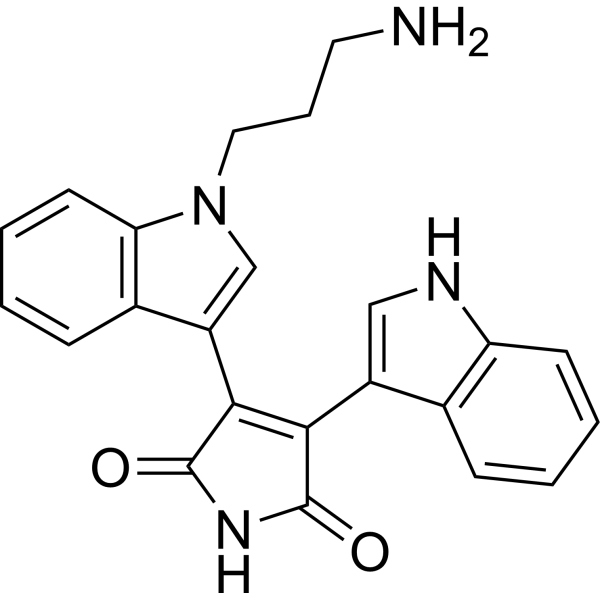 0 ImagesBisindolylmaleimide III is a protein kinase C (PKC) inhibitor with IC50 values of 0.26, 5.7, and 6 μM against PKCα, PKCδ, and PKCμ, respectively. Bisindolylmaleimide III also exhibits inhibitory activity against other off-targets, with IC50 values of 0.17, 1, and 2 μM against SLK, adenosine kinase (AK), and CDK2, respectively; its Ki for NQO2 is 16.5 μM. Bisindolylmaleimide III selectively binds to activated Rsk1 following EGF stimulation, and serves as a tool for detecting the activation status of intracellular Rsk1 and PKCα, as well as for functional analysis of SLK. Bisindolylmaleimide III can be used in studies of signal transduction and colorectal cancer.
-
Bisindolylmaleimide III hydrochloride
 0 ImagesCat. No.: HY-112454CAS No.: 683775-59-9Bisindolylmaleimide III hydrochloride is a protein kinase C (PKC) inhibitor with IC50 values of 0.26, 5.7, and 6 μM against PKCα, PKCδ, and PKCμ, respectively. Bisindolylmaleimide III hydrochloride also exhibits inhibitory activity against other off-targets, with IC50 values of 0.17, 1, and 2 μM against SLK, adenosine kinase (AK), and CDK2, respectively; its Ki for NQO2 is 16.5 μM. Bisindolylmaleimide III hydrochloride selectively binds to activated Rsk1 following EGF stimulation, and serves as a tool for detecting the activation status of intracellular Rsk1 and PKCα, as well as for functional analysis of SLK. Bisindolylmaleimide III hydrochloride can be used in studies of signal transduction and colorectal cancer.



