



-

Fluorescent Dyes (91)
Classical products, mainly supplied as solid powder
-

FluoroStock & Ready (2)
Easy to use, provided in solution form
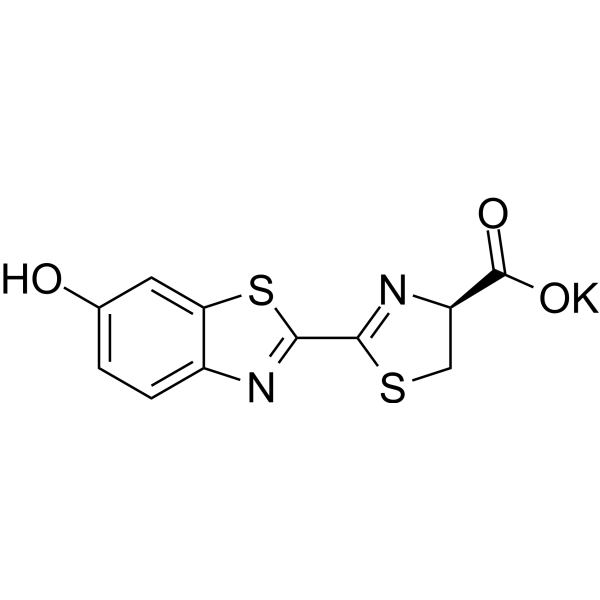
- Formula: C11H7KN2O3S2
- Molecular Weight: 318.41
D-luciferin potassium is the natural substrate of the enzyme luciferase (Luc) that catalyzes the production of the typical yellowgreen light of fireflies. The 560 nm chemiluminescence from this reaction peaks within seconds, with light output that is proportional to luciferase concentration when the substrate luciferin is present in excess. The luciferase (luc) gene is a popular reporter gene for research and agent screening. Chemiluminescent techniques are virtually background-free, making the luc reporter gene ideal for detecting low-level gene expression. As little as 0.02 pg of luciferase can be reliably measured in a standard scintillation counter. In addition to its role as a reporter of gene expression, luciferase is commonly used in an extremely sensitive assay for ATP. We offer the firefly luciferase (HY-P1004A), luciferin free acid (HY-12591A), as well as its water-soluble sodium salts (HY-12591) and potassium salts (HY-12591B) .
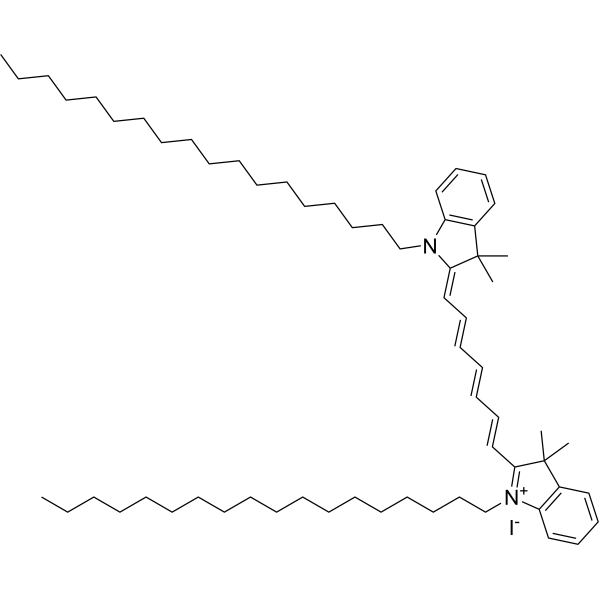
- Formula: C63H101IN2
- Molecular Weight: 1013.39
DiR is a long-chain carbocyanine dye. Carbocyanine dyes are widely used as Di to label cells, organelles, liposomes, viruses and lipoproteins.
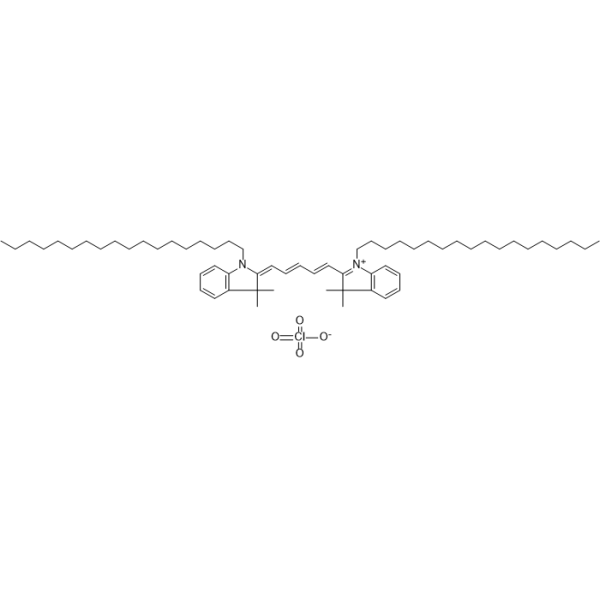
- Formula: C61H99ClN2O4
- Molecular Weight: 959.90
DiD is a long-chain carbocyanine dye. Carbocyanine dyes are widely used as Di to label cells, organelles, liposomes, viruses and lipoproteins (Ex/Em = 633/665 nm).
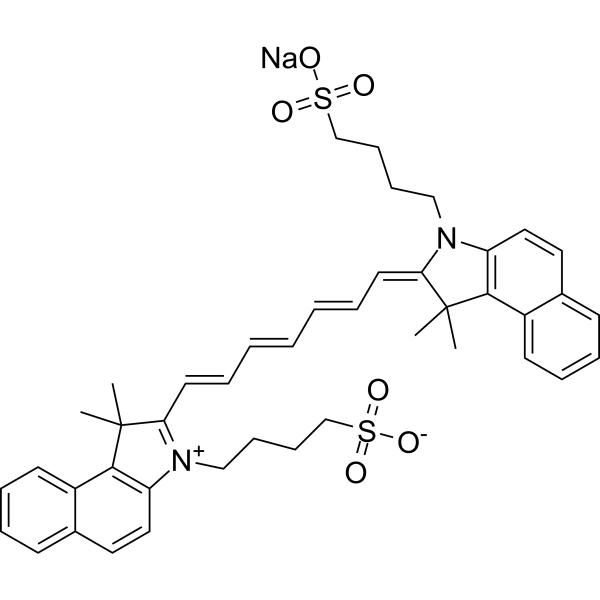
- Formula: C43H47N2NaO6S2
- Molecular Weight: 774.96
Indocyanine green (Foxgreen) is a low toxicic fluorescent agent that has been widely used in medical diagnostics, such as determining cardiac output, hepatic function, and liver blood flow, and for ophthalmic angiography (Ex/Em = 785/813 nm).
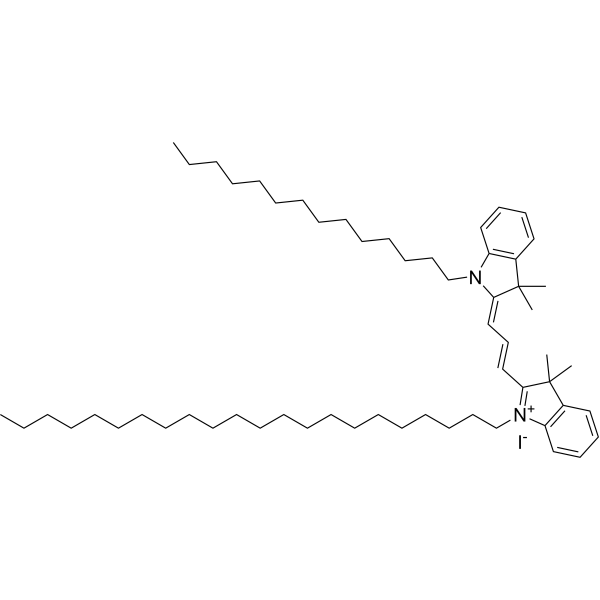
- Formula: C59H97IN2
- Molecular Weight: 961.32
PKH 26 is a red fluorescent dye, PKH 26 can stably bind to the lipid region of cell membrane and emit red fluorescence (Ex/Em=551/567 nm), which is mainly used for in vitro cell labeling, in vitro cell proliferation studies and in vivo and in vitro cell tracing studies.
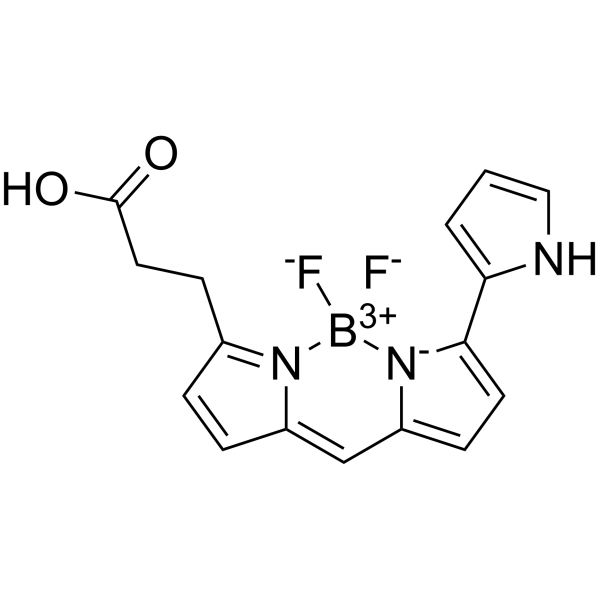
- Formula: C16H14BF2N3O2
- Molecular Weight: 329.11
BODIPY 576/589 is a long wavelength biological labeled dye contains a free COOH-group (Em/Ex = 589/576 nm).

- Formula: C60H52N4O20P2S4
- Molecular Weight: 1339.28
LJ-2P is an NIR-II small-molecule fluorescent probe with fibrin/fibrinogen affinity. LJ-2P can bind coagulation-related proteins and restrict dye molecular motion, thereby enhancing local fluorescence for high-contrast imaging of bleeding and blood clots in vivo. LJ-2P can also co-precipitate with Ca2+ to form LJ-2P nanoparticles, significantly enhancing NIR-II luminescence through the precipitation-enhanced emission (PEE) mechanism. LJ-2P can be used for research on bleeding disorders and breast cancer. LJ-2P exhibits dual-modal emission properties (Ex/Em ≈740/945 nm or 740/1066 nm).
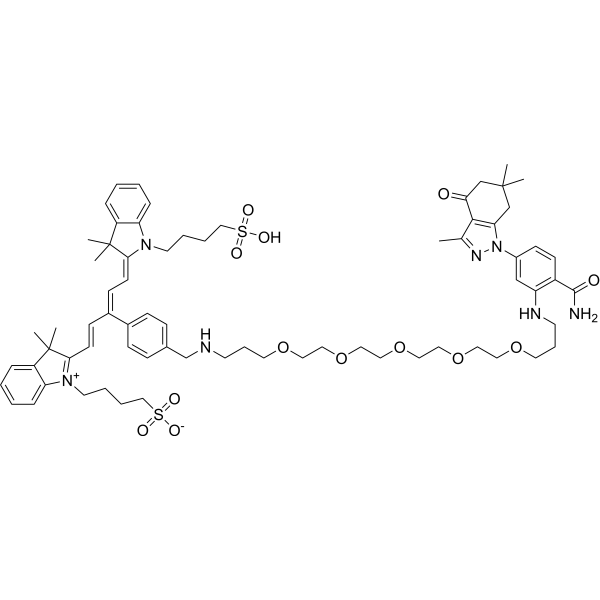
- Formula: C71H95N7O13S2
- Molecular Weight: 1318.68
HS-131, a near infrared dye tethered Hsp90 inhibitor, is able to detect oncogene-driven breast cancers, including multiple different molecular subtypes of human breast cancers.
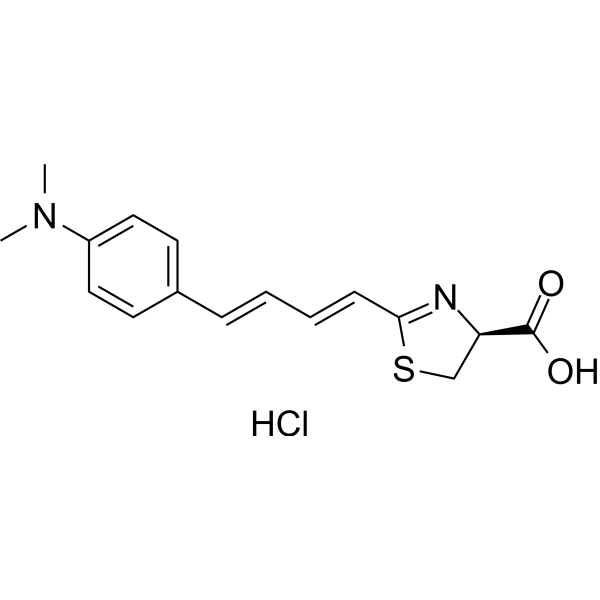
- Formula: C16H19ClN2O2S
- Molecular Weight: 338.85
AkaLumine hydrochloride is a D-luciferin (HY-12591A) analogue with a Km of 2.06 μM for recombinant firefly luciferase (Fluc) protein. AkaLumine hydrochloride emits near-infrared (NIR) light (λmax=677 nm) in reactions with native Fluc. AkaLumine hydrochloride has high tissue-penetration and increases detection sensitivity from deep-tissue targets.
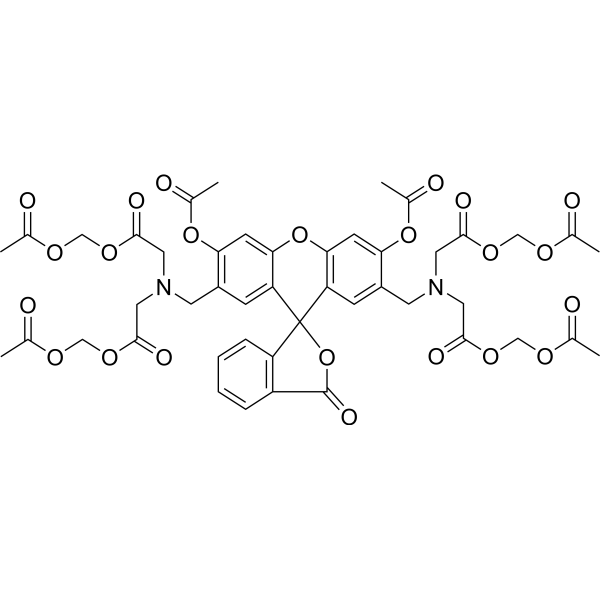
- Formula: C46H46N2O23
- Molecular Weight: 994.86
Calcein AM, has cell membrane permeability and can easily enter the cell. Calcein AM has no fluorescence and is hydrolyzed by endogenous esterase in the cell to produce polar molecule Calcein (Calcein), which has strong negative charge and cannot permeate the cell membrane. Calcein can emit strong green fluorescence, so it is often used with Propidium Iodide for cell viability/virulence detection, excitation/emission wavelength: 494/515 nm.
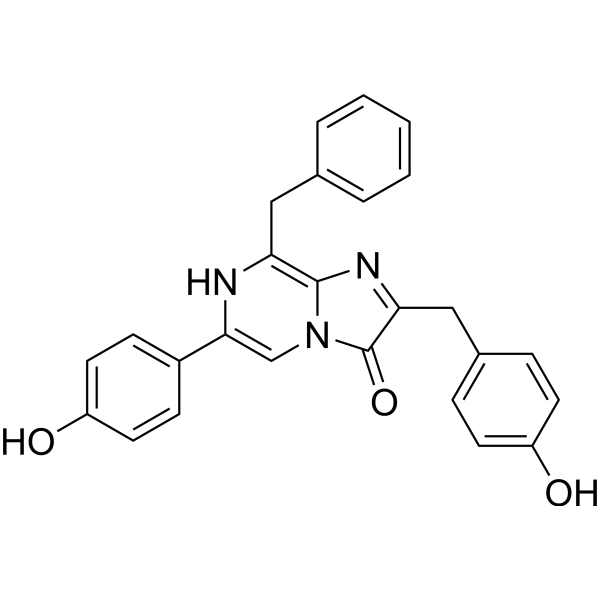
- Formula: C26H21N3O3
- Molecular Weight: 423.46
Coelenterazine is a luminescent enzyme substrate for apoaequorin and Renilla luciferase. Renilla luciferase and substrate coelenterazine has been used as the bioluminescence donor in bioluminescence resonance energy transfer (BRET) to detect protein-protein interactions. Coelenterazine is a superoxide anion-sensitive chemiluminescent probe and it can also be used in chemiluminescent detection of peroxynitrite (Ex/Em = 429/466 nm).
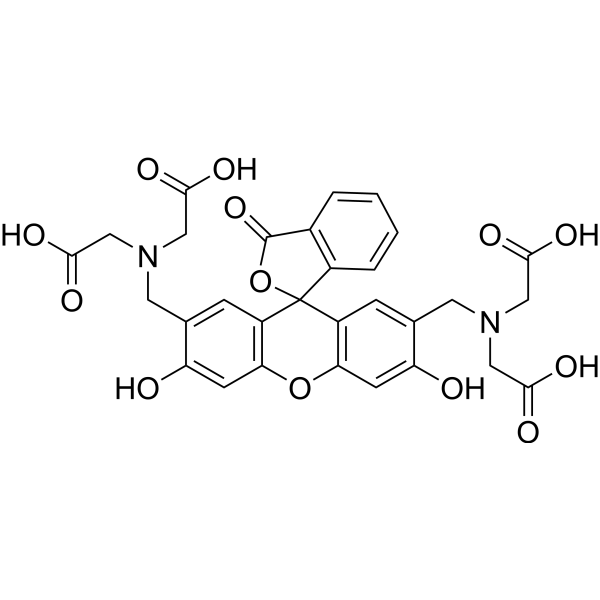
- Formula: C30H26N2O13
- Molecular Weight: 622.53
Calcein is a fluorescent dye and self-quenching probe, used as an indicator of lipid vesicle leakage, and also as a complexometric indicator for titration of calcium ions with EDTA, and for fluorometric determination of calcium. Calcein cannot directly cross the intact cell membrane of a living cell, unlike Calcein-AM (HY-D0041) which is cell-permeable. Calcein can also be used as a model drug for evaluating efficiency and bioavailability of drug delivery systems.
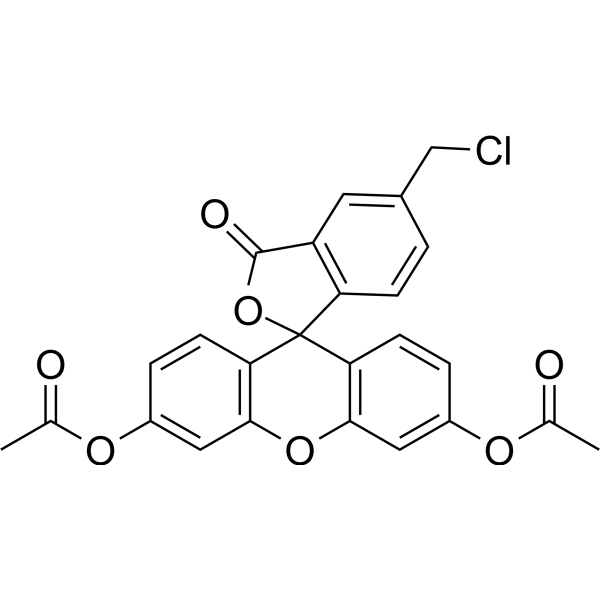
- Formula: C25H17ClO7
- Molecular Weight: 464.85
Green CMFDA is a cell-permeable fluorescent probe with Em of 514 nm and Ex of 485 nm and can be used as a cell tracer. Green CMFDA can be cleaved by non-specific esterases common in living cells, producing a fluorescent compound, fluorescein, visible using a fluorescent microscope.
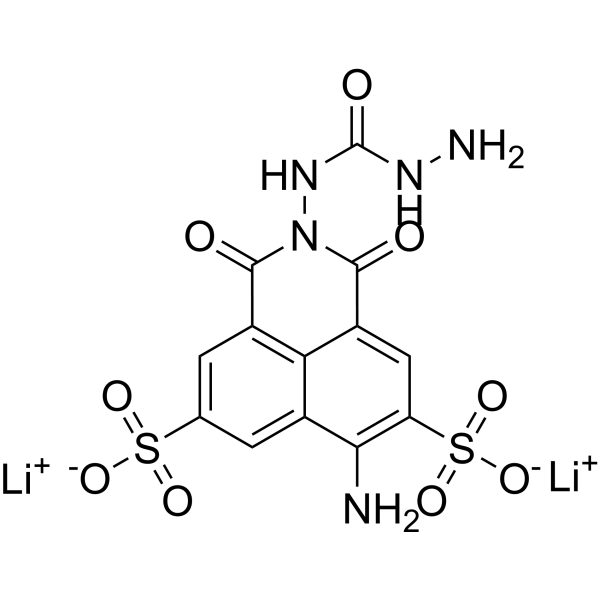
- Formula: C13H9Li2N5O9S2
- Molecular Weight: 457.25
Luc Yellow CH dilithium is a high-intensity fluorescent probe containing free hydrazyl groups. Luc Yellow CH can react with fatty aldehydes at room temperature. Luc Yellow CH serves as a biological tracer to monitor neuronal branching, regeneration, gap junction detection and characterization, and selective ablation of cells after aldehyde fixation. Luc Yellow CH displays the maximum excitation/emission of 430 nm/540 nm, respectively.
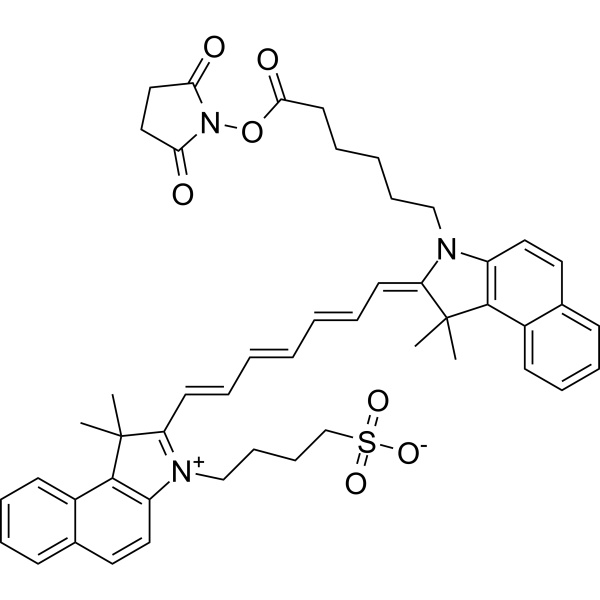
- Formula: C49H53N3O7S
- Molecular Weight: 828.03
ICG NHS ester (ICG-OSu) is a near-infrared fluorescent agent ICG derivative. ICG NHS ester is amine-reactive and has been widely used to design in vivo imaging probes.
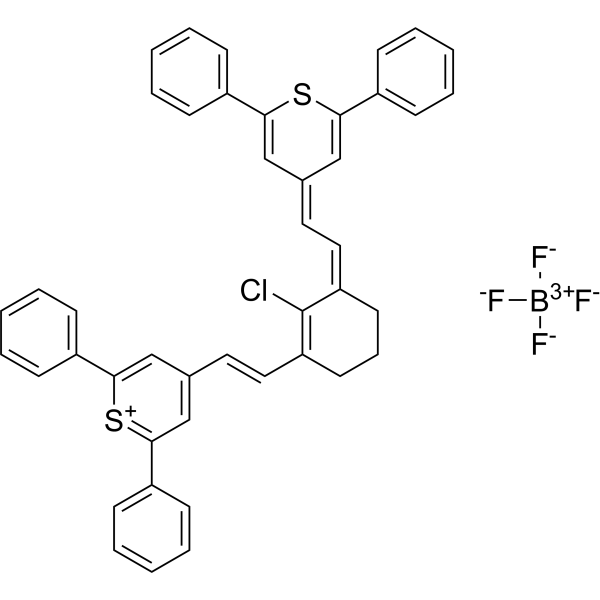
- Formula: C44H34BClF4S2
- Molecular Weight: 749.13
IR-1061 is a near infrared fluorescent organic dye for in vivo bimodal imaging.
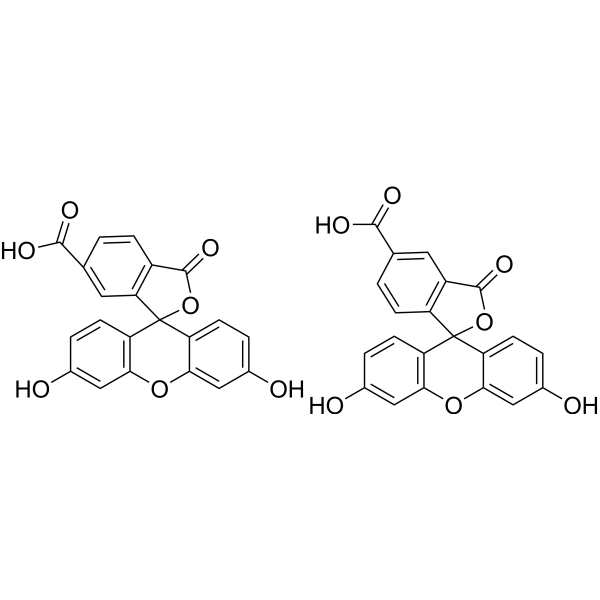
- Formula: C42H24O14
- Molecular Weight: 752.63
5(6)-Carboxyfluorescein (5(6)-FAM) is an amine-reactive pH-sensitive green fluorescent probe. 5(6)-Carboxyfluorescein (5(6)-FAM) can be used to label proteins, peptides and nucleotides. 5(6)-Carboxyfluorescein can be used for the detection of tumour areas in vivo.
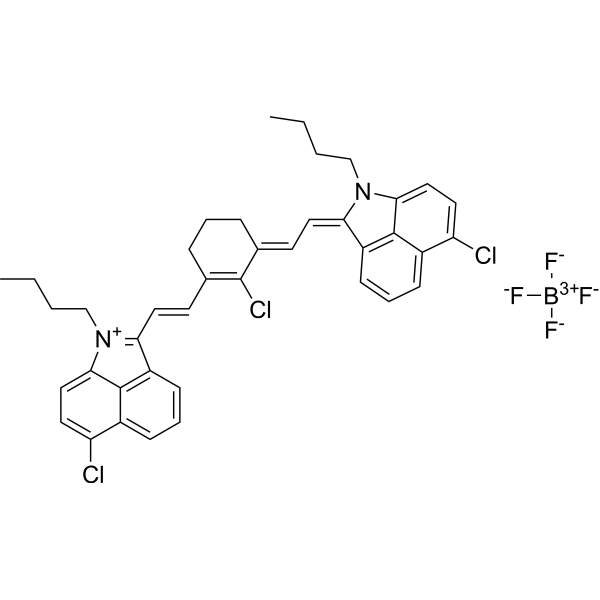
- Formula: C40H38BCl3F4N2
- Molecular Weight: 739.91
IR-1048 is a nitroreductase (NTR)-responsive near-infrared fluorescence (NIR)/photoacoustic (PA) imaging probe and photothermal agent. IR-1048 is coupled with a nitroimidazole group to form IR-1048-MZ. IR-1048-MZ is catalytically reduced by NTR in a hypoxic environment, restoring strong near-infrared absorption and fluorescence emission (NIR II window), while activating the photothermal effect. IR-1048 relies on NTR-mediated electron transfer to relieve intramolecular fluorescence quenching, achieving specific imaging and photothermal ablation of tumor hypoxic areas. IR-1048 is mainly used for high-contrast NIR II/photoacoustic imaging and photothermal therapy research and tumor diagnosis of the tumor hypoxic microenvironment.
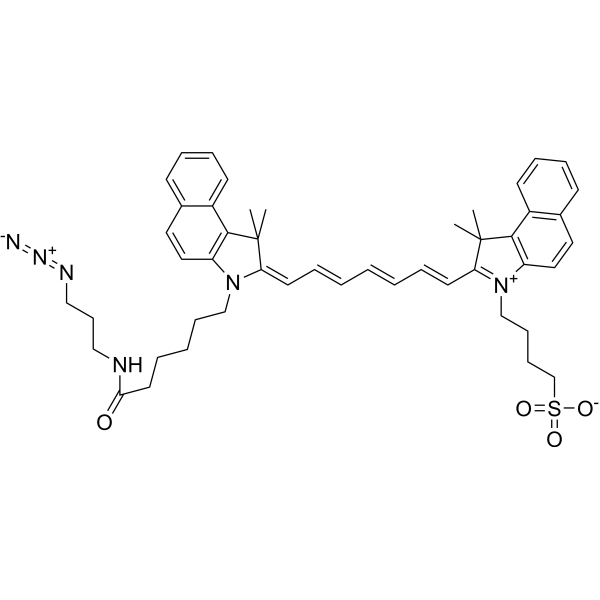
- Formula: C48H56N6O4S
- Molecular Weight: 813.06
ICG-azide, a near infrared (NIR) fluorescent dye, is a copper (I)-catalyzed azide-alkyne cycloaddition (CuAAC) reagent. ICG-azide can be readily incorporated into dye-stabilized nanoemulsions and facilitate the attachment of targeting ligands via click-chemistry in a simple, scalable, and reproducible reaction.
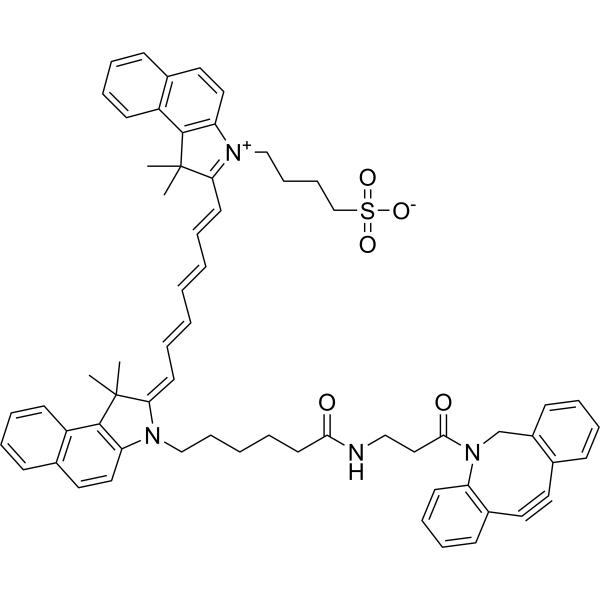
- Formula: C63H64N4O5S
- Molecular Weight: 989.27
ICG-DBCO is a near-infrared fluorescent click chemistry reagent (Ex/Em = 789/813 nm), composed of Indocyanine green (ICG) (HY-D0711) and dibenzocyclooctyne (DBCO). ICG-DBCO enables copper-free, strain-promoted azide-alkyne cycloaddition (SPAAC) for labeling biomolecules such as antibodies, proteins and peptides, thereby facilitating deep tissue optical imaging.



