



Behavioral Addiction
-
Behavioral Addiction (23)

- 1
- 2
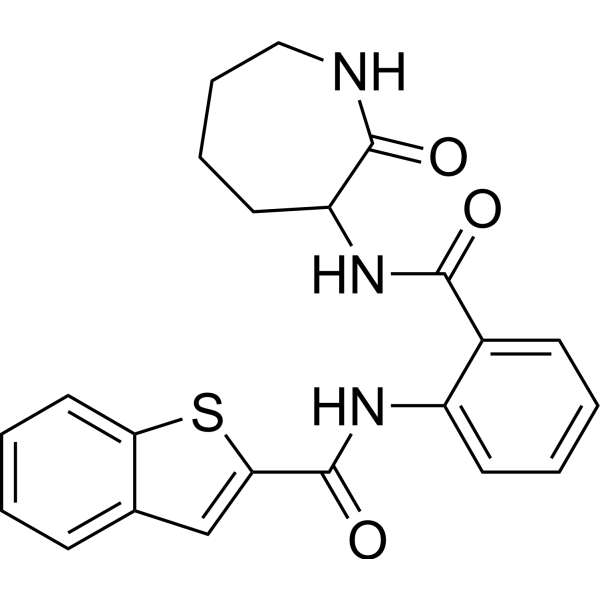
- Formula: C22H21N3O3S
- Molecular Weight: 407.49
ANA-12 is a brain-penetrant, selective TrkB antagonist with IC50 values of 45.6 nM and 41.1 μM, and Kd values of 10 nM and 12 μM, for high- and low-affinity sites, respectively. ANA-12 specifically inhibits BDNF-induced TrkB receptor activation and its downstream signaling cascades by directly and non-competitively binding to the TrkB receptor, without affecting the functions of TrkA and TrkC. ANA-12 is used in research concerning neuropsychiatric disorders (such as depression and anxiety), acute and chronic pain, neuroimmune inflammation, and the mechanisms of learning and memory.
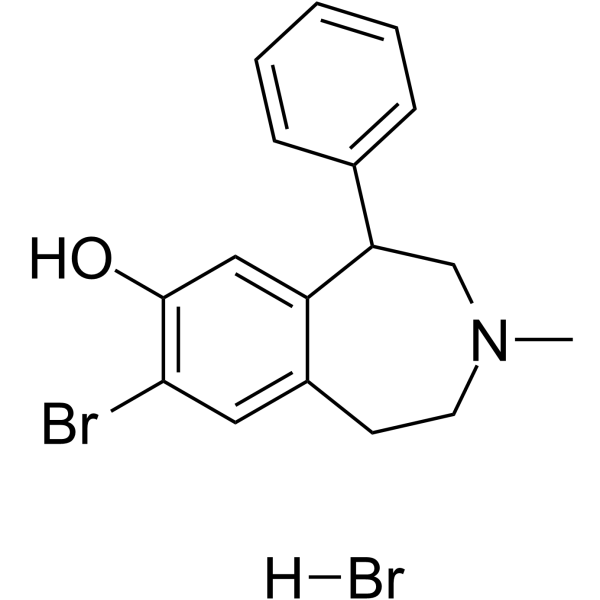
- Formula: C17H19Br2NO
- Molecular Weight: 413.15
SKF-83566 hydrobromide is an orally active, blood-brain barrier-permeable D1/D5 dopamine receptor antagonist with a Ki value of approximately 0.4-0.56 nM. SKF-83566 hydrobromide modulates locomotor behavior and spatial memory by blocking D1 receptors and inhibits glioblastoma progression by targeting the DRD1/c-Myc/UHRF1 pathway. SKF-83566 hydrobromide acts as an inhibitor of the dopamine transporter (DAT) and adenylyl cyclase 2 (AC2). SKF-83566 hydrobromide competitively binds to DAT to inhibit dopamine reuptake and non-competitively inhibits AC2 activity, thereby reducing cAMP accumulation. SKF-83566 hydrobromide is used in research areas such as dopaminergic system mechanisms, learning and memory, targeted intervention for glioblastoma, AC2 pathophysiology, antiparasitic drug screening, and synaptic plasticity (the "gating effect").
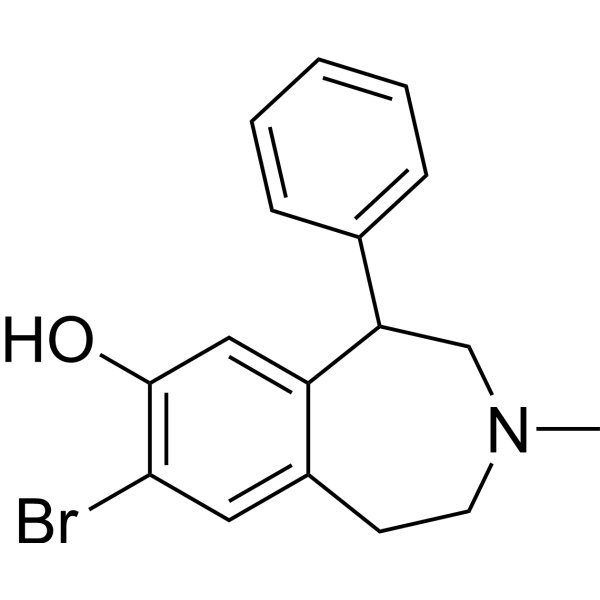
- Formula: C17H18BrNO
- Molecular Weight: 332.23
SKF-83566 is an orally active, blood-brain barrier-permeable D1/D5 dopamine receptor antagonist with a Ki value of approximately 0.4-0.56 nM. SKF-83566 modulates locomotor behavior and spatial memory by blocking D1 receptors and inhibits glioblastoma progression by targeting the DRD1/c-Myc/UHRF1 pathway. SKF-83566 acts as an inhibitor of the dopamine transporter (DAT) and adenylyl cyclase 2 (AC2). SKF-83566 competitively binds to DAT to inhibit dopamine reuptake and non-competitively inhibits AC2 activity, thereby reducing cAMP accumulation. SKF-83566 is used in research areas such as dopaminergic system mechanisms, learning and memory, targeted intervention for glioblastoma, AC2 pathophysiology, antiparasitic drug screening, and synaptic plasticity (the "gating effect").

- Formula: C15H21BrN2
- Molecular Weight: 309.24
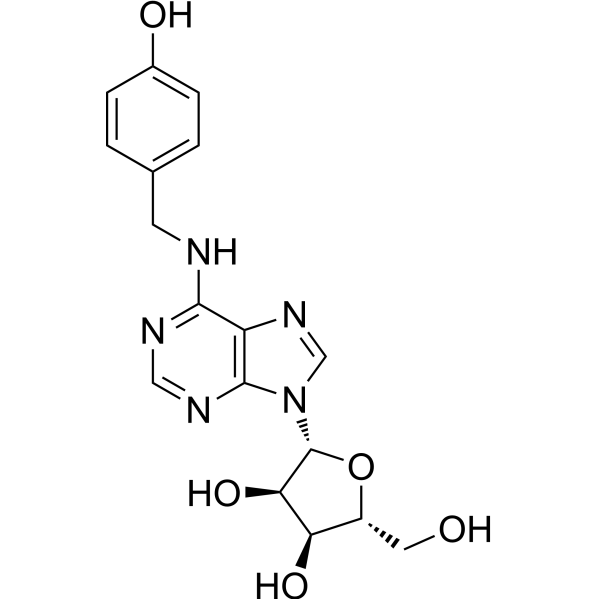
- Formula: C17H19N5O5
- Molecular Weight: 373.36
N6-(4-Hydroxybenzyl) adenosine (Para-topolin riboside) is an equilibrative nucleoside transporter 1 (ENT1) inhibitor and a selective agonist of adenosine A2a receptor (A2aR), and also exhibits activity against P2Y12 receptor. N6-(4-Hydroxybenzyl) adenosine reduces ethanol intake and preference, attenuates operant conditioning-induced ethanol place preference, decreases the value of ethanol-related rewards, and inhibits collagen-induced platelet aggregation. N6-(4-Hydroxybenzyl) adenosine can be used in studies related to alcohol use disorder.

- Formula: C19H25ClN2O
- Molecular Weight: 332.87
Noribogaine hydrochloride is an orally active, blood-brain barrier permeable SERT inhibitor (IC50=50-300 nM) and hERG channel blocker. Noribogaine hydrochloride enhances serotonergic transmission, activates the κ-opioid receptor (OPRK) G protein signaling pathway and inhibits β-arrestin recruitment. Meanwhile, Noribogaine hydrochloride blocks the μ-opioid receptor (OPRM) signaling pathway as well as ion channels associated with cardiac repolarization. Noribogaine hydrochloride induces neuritogenesis, upregulates GDNF mRNA expression, and modulates opioid tolerance. Noribogaine hydrochloride reduces alcohol-seeking behavior in experimental animals, and is widely used in studies related to depression, addiction, alcoholism, and cardiotoxicity.

- Formula: C18H25NO
- Molecular Weight: 271.40
Cyclazocine is a μ, δ, and κ opioid receptor modulator with Ki values of 0.32, 1.1, and 0.18 nM, respectively. Cyclazocine exhibits "mixed" pharmacological activities, acting as a μ-partial antagonist, κ-agonist, and low-affinity δ ligand. Cyclazocine shows antinociceptive activity in mice. Cyclazocine can be used in studies on psychoactive substance addiction.

- Formula: C29H34F2N2O
- Molecular Weight: 464.59
LR1143 is a dopamine transporter (DAT) and 5-HT uptake inhibitor, with IC50 values of 3.4 nM and 112 nM in rats, respectively. LR1143 binds to DAT labeled with the dopamine reuptake inhibitor GBR 12935 (HY-12242A), with an IC50 of 4.4 nM. LR1143 shows lower selectivity for DAT than for serotonin reuptake sites. LR1143 can be used in studies related to cocaine abuse.

- Formula: C29H34FN3O3
- Molecular Weight: 491.60
RTI-122 is a selective, blood-brain barrier-permeable GPR88 agonist (cAMP EC50=11 nM), with EC50 values of 11.5 nM and 155 nM for human and mouse GPR88, respectively ([35S]GTPγS assay). By activating the GPR88 receptor to regulate the cAMP signaling pathway and G protein activity, RTI-122 significantly attenuates Binge-like drinking, reduces alcohol intake, and decreases alcohol-seeking motivation. RTI-122 blocks the reinstatement of alcohol-seeking behavior without affecting water or sucrose intake. RTI-122 exhibits metabolic stability in mice (T1/2=5.8 h) and can be used to investigate alcohol use disorder.
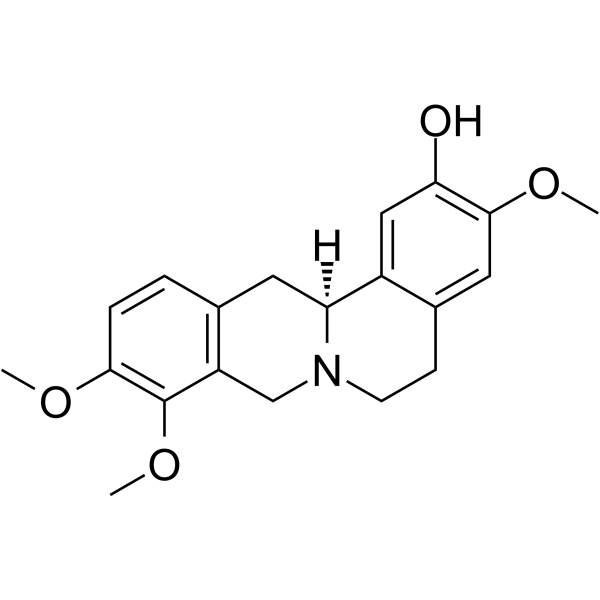
- Formula: C20H23NO4
- Molecular Weight: 341.40
(-)-Isocorypalmine (Tetrahydrocolumbamine; (S)-Tetrahydrocolumbamine) is a dopamine receptor ligand and modulator capable of crossing the blood-brain barrier. (-)-Isocorypalmine exhibits receptor selectivity, acting as a partial agonist of dopamine D1 and D5 receptors (coupled via Gs proteins), as well as an antagonist of D2, D3 and D4 receptors (by blocking Gi protein-mediated signaling). (-)-Isocorypalmine shows no significant binding to various non-dopamine receptors, ion channels and transporters. (-)-Isocorypalmine is metabolically stable in vivo, effectively inhibits spontaneous and cocaine-induced hyperlocomotion, sensitization and conditioned place preference in mice, and does not induce addictive place preference when administered alone. (-)-Isocorypalmine can be used in addiction research.

- Formula: C17H19BrClNO
- Molecular Weight: 368.70
SKF-83566 hydrochloride is an orally active, blood-brain barrier-permeable D1/D5 dopamine receptor antagonist with a Ki value of approximately 0.4-0.56 nM. SKF-83566 hydrochloride modulates locomotor behavior and spatial memory by blocking D1 receptors and inhibits glioblastoma progression by targeting the DRD1/c-Myc/UHRF1 pathway. SKF-83566 hydrochloride acts as an inhibitor of the dopamine transporter (DAT) and adenylyl cyclase 2 (AC2). SKF-83566 hydrochloride competitively binds to DAT to inhibit dopamine reuptake and non-competitively inhibits AC2 activity, thereby reducing cAMP accumulation. SKF-83566 hydrochloride is used in research areas such as dopaminergic system mechanisms, learning and memory, targeted intervention for glioblastoma, AC2 pathophysiology, antiparasitic drug screening, and synaptic plasticity (the "gating effect").

- Formula: C11H12BrN3
- Molecular Weight: 266.14
5-HT2A receptor agonist-14 (Compound I-23) is a tricyclic 5-HT2A receptor agonist with a pEC50 value ≥ 6. 5-HT2A receptor agonist-14 can be used in research related to depression, anxiety, substance abuse and headache.

- Formula: C26H33ClN4O3
- Molecular Weight: 485.02
VK4-116 (Compound 19) is a selective Dopamine D3 receptor (D3R) antagonist with a Ki of 6.84 nM.VK4-116 significantly inhibits Oxycodone-induced hyperlocomotion and locomotor sensitization in mouse models. VK4-116 with pretreatment also inhibits the acquisition of Oxycodone-induced conditioned place preference (CPP) in rat models.

- Formula: C11H15ClNO4PS
- Molecular Weight: 323.73
AI 3-25755 (OMS-403) is a peroxisome proliferator-activated receptor gamma (PPARγ) agonist. AI 3-25755 can be used for research on opioid abuse and smoking cessation.
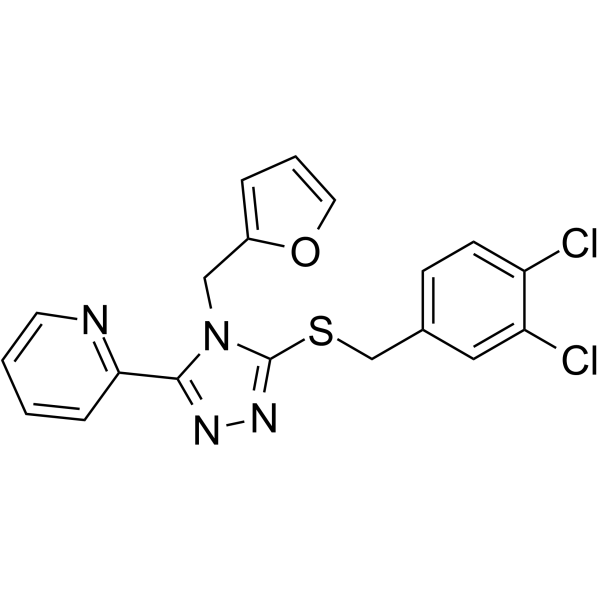
- Formula: C19H14Cl2N4OS
- Molecular Weight: 417.31
ML138 is a blood-brain barrier-permeable κ-opioid receptor (KOR) agonist, with an EC50 value of 0.87 μM and a human Ki value of 2.4 nM for human receptors; it exhibits high selectivity for KOR over μ, δ and other receptors. ML138 activates β-arrestin (beta-arrestin)-mediated signaling pathways, stimulates G protein coupling, and activates the downstream extracellular regulated protein kinase 1/2 (ERK1/2) mitogen-activated protein kinase (MAP kinase) signaling pathway. ML138 is applicable to research related to addictive behaviors.

- Formula: C22H28N2O3
- Molecular Weight: 368.48
18-Methoxycoronaridine ((-)-18-Methoxycoronaridine) is an orally active and selective α3β4 nicotinic acetylcholine receptor (nAChR) antagonist. 18-Methoxycoronaridine is an inhibitor of serotonin transporter (SERT) and norepinephrine transporter (NET), with IC50 values of 51.6 μM and 121 μM for SERT and NET, respectively. 18-Methoxycoronaridine inhibits the function of SERT and NET, promotes 5-HT3A receptor desensitization, blocks α3β4 nAChR, and modulates receptor signaling pathways associated with reinforcement. 18-Methoxycoronaridine also exhibits potent antiparasitic activity. 18-Methoxycoronaridine can be used in research related to depression, obesity, alcoholism, smoking addiction, and cutaneous leishmaniasis.

- Formula: C18H24N2S
- Molecular Weight: 300.46
Fourphit is a dopamine transporter (DAT) inhibitor and phencyclidine (PCP) receptor binding agent. Fourphit irreversibly acylates the DAT [3H]methylphenidate binding site, reversibly binds to the PCP receptor, and sensitizes neuronal L-type DHP calcium channels. Fourphit attenuates K+-stimulated 45Ca2+ uptake at high concentrations, and after its pretreatment, Nifedipine (HY-B0284) effectively inhibits this uptake without affecting resting calcium uptake. Fourphit reduces cocaine-induced hyperactivity, decreases cocaine-induced rearing frequency, enhances cocaine-induced thigmotaxis, elicits an acute increase in locomotor activity, and suppresses dark-cycle activity. Fourphit is used in research related to cocaine abuse and addiction.

- Formula: C22H29ClN2O3
- Molecular Weight: 404.93
18-Methoxycoronaridine ((-)-18-Methoxycoronaridine) hydrochloride is an orally active and selective α3β4 nicotinic acetylcholine receptor (nAChR) antagonist. 18-Methoxycoronaridine hydrochloride is an inhibitor of serotonin transporter (SERT) and norepinephrine transporter (NET), with IC50 values of 51.6 μM and 121 μM for SERT and NET, respectively. 18-Methoxycoronaridine hydrochloride inhibits the function of SERT and NET, promotes 5-HT3A receptor desensitization, blocks α3β4 nAChR, and modulates receptor signaling pathways associated with reinforcement. 18-Methoxycoronaridine hydrochloride also exhibits potent antiparasitic activity. 18-Methoxycoronaridine hydrochloride can be used in research related to depression, obesity, alcoholism, smoking addiction, and cutaneous leishmaniasis.

- Formula: C16H25Cl2N
- Molecular Weight: 302.28
CTDP-32476 is a dopamine transporter (DAT) inhibitor with antidepressant activity, exhibiting a Ki value of 12 nM for human DAT and moderate affinity for the norepinephrine transporter (NET). CTDP-32476 blocks DAT to increase extracellular dopamine levels, and induces locomotor stimulation and brain-stimulation reward effects in rats. CTDP-32476 is used in research related to drug addiction.

- Formula: C17H18BrNO
- Molecular Weight: 332.23
SKF-83566 (Standard) is the analytical standard of SKF-83566 (HY-103430A). This product is intended for research and analytical applications. SKF-83566 is an orally active, blood-brain barrier-permeable D1/D5 dopamine receptor antagonist with a Ki value of approximately 0.4-0.56 nM. SKF-83566 modulates locomotor behavior and spatial memory by blocking D1 receptors and inhibits glioblastoma progression by targeting the DRD1/c-Myc/UHRF1 pathway. SKF-83566 acts as an inhibitor of the dopamine transporter (DAT) and adenylyl cyclase 2 (AC2). SKF-83566 competitively binds to DAT to inhibit dopamine reuptake and non-competitively inhibits AC2 activity, thereby reducing cAMP accumulation. SKF-83566 is used in research areas such as dopaminergic system mechanisms, learning and memory, targeted intervention for glioblastoma, AC2 pathophysiology, antiparasitic drug screening, and synaptic plasticity (the "gating effect").
- 1
- 2



