GSH/GSSG Assay Kit
Based on 17 publication(s) in Google Scholar
MCE GSH/GSSG Assay Kit is suitable for the quantitative determination of reduced and oxidized glutathione (GSH/GSSG) in whole blood, plasma, serum, urine, and tissue and cell extracts.
-
Storage :
-20℃, 1 year. After opening, it is stable for up to 2 months at -20℃. Avoid repeated freezing and thawing.


To place orders, for customer services and technical support, please contact: MedChemExpress USA
Tel: 609-228-6898 E-mail: [email protected] [email protected]



-

HY-K0319
Lipid Peroxidation (MDA) Assay Kit -
HY-100579
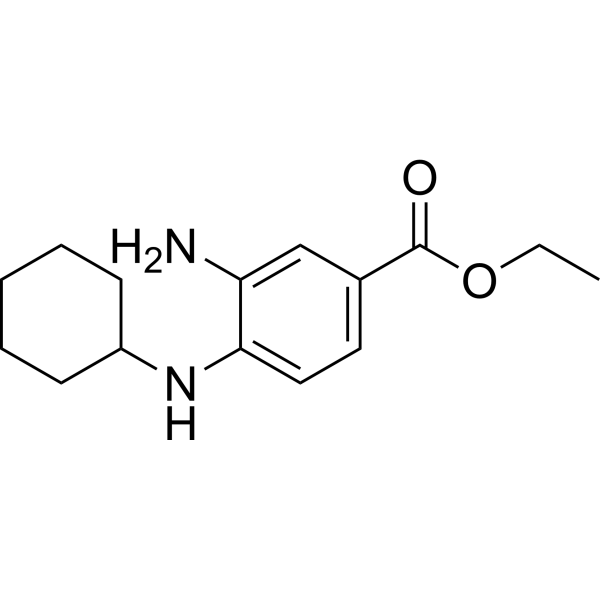
Ferrostatin-1Ferroptosis Inhibitor -
HY-D0940
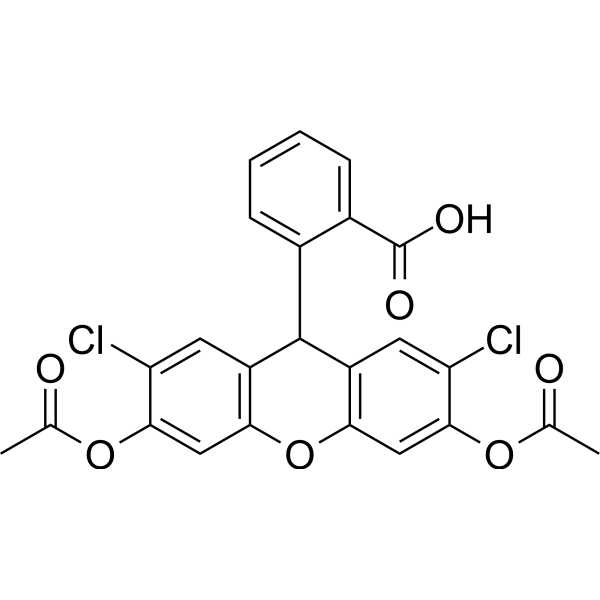
H2DCFDAROS-Sensitive Probe -
HY-15763
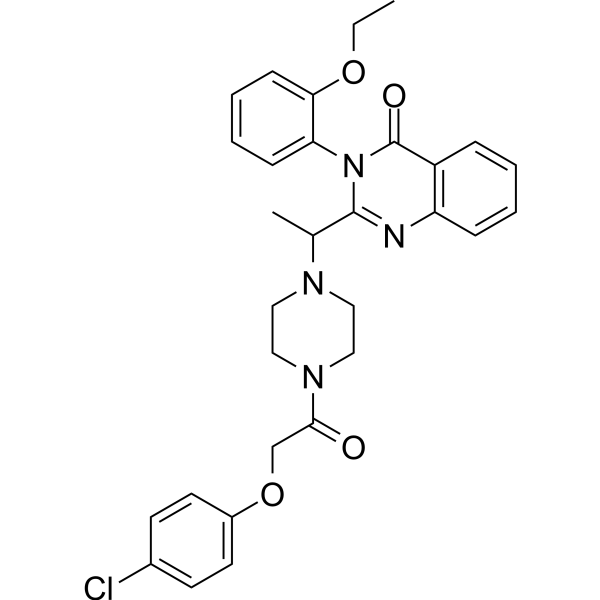
ErastinFerroptosis Inducer -
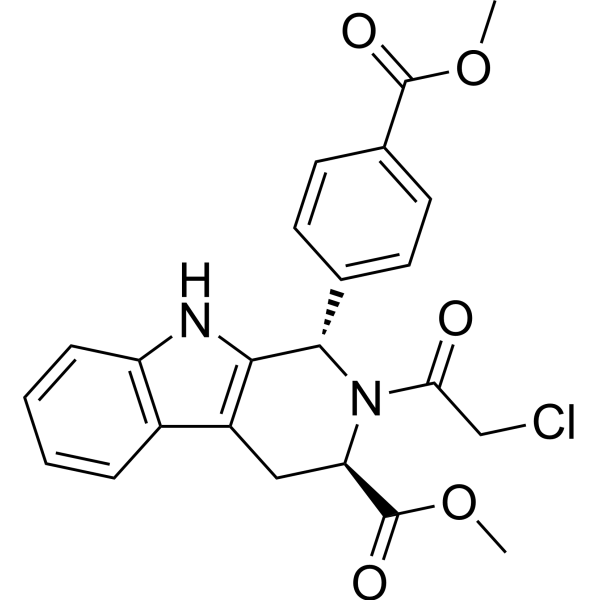
HY-100218A
RSL3GPX4 Inhibitor -
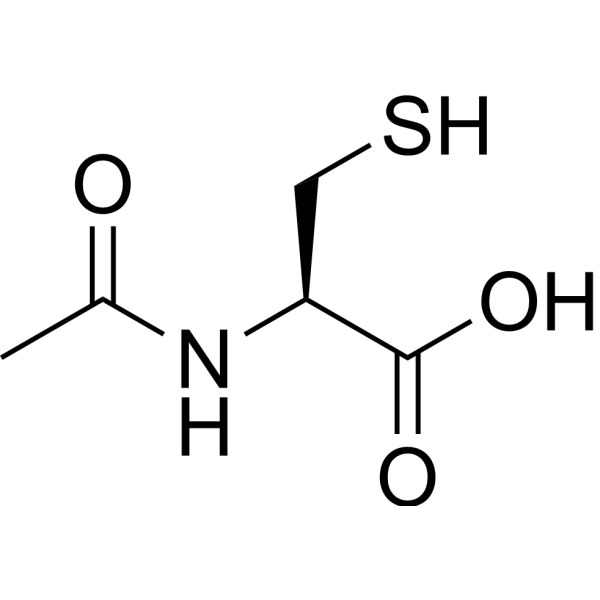
HY-B0215
AcetylcysteineMucolytic Agent -
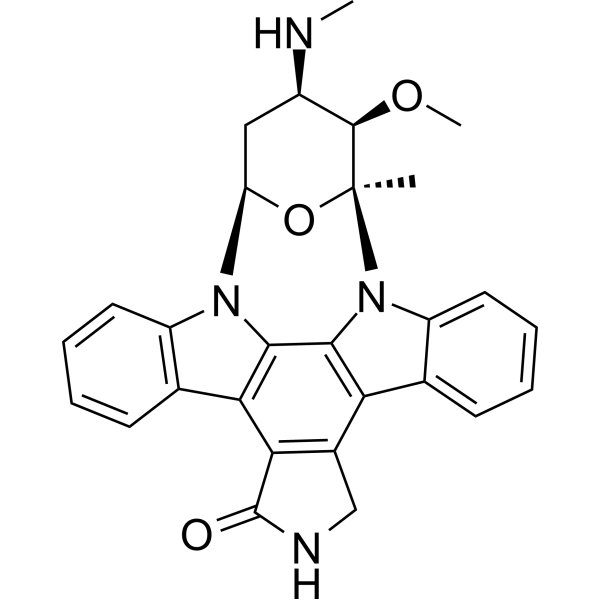
HY-15141
StaurosporinePKC/PKA Inhibitor -

HY-K1501
NADP+/NADPH Assay Kit (WST-8) -
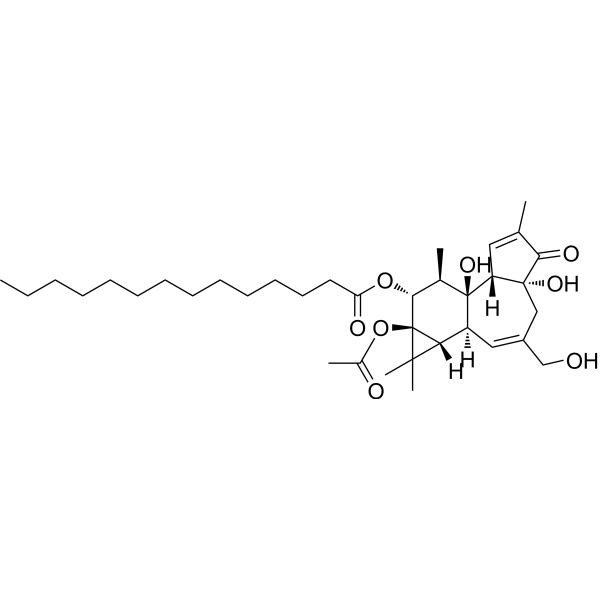
HY-18739
Phorbol 12-myristate 13-acetatePKC Activator -
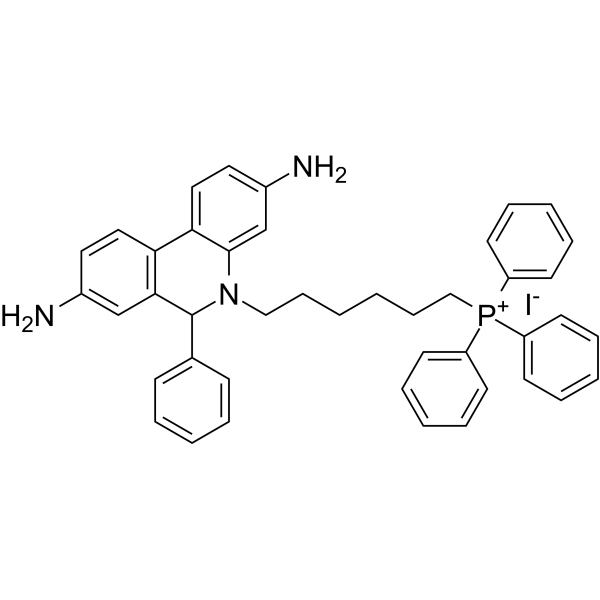
HY-D1055
MitoSOX RedMitochondrial ROS Indicator -
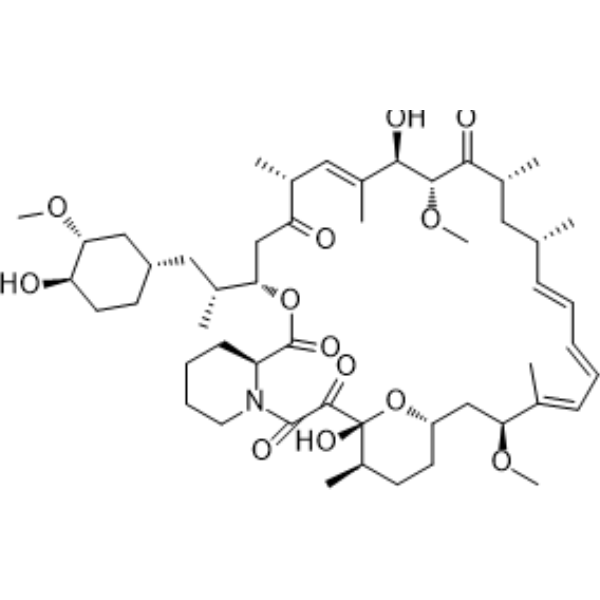
HY-10219
RapamycinmTOR Inhibitor -

HY-K0320
ROS Assay Kit


Description & Advantages
MCE Glutathione GSH/GSSG Assay Kit is designed to accurately measure total, reduced (GSH) and oxidized (GSSG) glutathione in biological samples using an enzymatic method that utilizes Ellman’s Reagent (DTNB) and glutathione reductase (GR). DTNB reacts with reduced glutathione to form a yellow product. The rate of change in the optical density, measured at 412 nm, is directly proportional to the glutathione concentration in the sample. This kit can also be used to measure oxidized glutathione (GSSG) by using a specific protocol which first scavenges all existing GSH using 1-methyl-2-vinylpyridinium triflate as a scavenger reagent. The assay method has a linear detection range of 0.1-3 μM GSH equivalents, with a lower detection limit of 10 nM GSH equivalents.
MCE GSH/GSSG Assay Kit is suitable for the quantitative determination of reduced and oxidized glutathione (GSH/GSSG) in whole blood, plasma, serum, urine, and tissue and cell extracts.


Protocols
Reagent Preparation
1. Substrate Working Solution: Dissolve the Substrate (DTNB) in 264 μL DMSO to prepare a 25× substrate stock solution. Dilute 25-fold with Buffer Solution before use to obtain the substrate working solution; 60 μL is required per sample or standard well. Note: The substrate working solution is unstable and must be prepared fresh before use; the stock solution can be stored at -20°C for 2 months, avoiding repeated freeze-thaw cycles.
2. Enzyme/Coenzyme Working Solution: Dissolve the enzyme in 1.1 mL Buffer Solution to prepare the enzyme working solution; dissolve the coenzyme in 1.1 mL Buffer Solution to prepare the coenzyme working solution. Combine the two, then add 4.4 mL Buffer Solution to prepare the enzyme/coenzyme working solution; 60 μL is required per sample or standard well. Note: The individual enzyme and coenzyme working solutions can be stored at -20°C for 2 months, but the combined enzyme/coenzyme working solution is unstable and must be prepared fresh before use.
3. GSH Standard Solution: Add 1 mL Deproteinizing Reagent to the GSH standard vial and dissolve thoroughly to prepare a 400 μM GSH standard solution. Can be stored at -20°C for 2 months.
4. GSSG Standard Solution: Add 1 mL Deproteinizing Reagent to the GSSG standard vial and dissolve thoroughly to prepare a 200 μM GSSG standard solution. Can be stored at -20°C for 2 months.
5. Masking Reagent: Add 2.2 mL Buffer Solution to the masking reagent vial to prepare the masking reagent stock solution. Can be stored at -20°C for 2 months.
6. Quenching Reagent: Add 0.55 mL Buffer Solution to the quenching reagent vial to prepare the quenching reagent stock solution. Can be stored at -20°C for 2 months.
Sample Preparation
1. Tissue Samples: Mince the tissue sample, snap-freeze in liquid nitrogen, and grind into a powder (this step can be skipped for tissues that are easy to homogenize). For every 10 mg of tissue powder, add 100 μL of Deproteinizing Reagent, mix thoroughly, and homogenize fully with a glass homogenizer; incubate at 4°C for 10 min. Centrifuge at 10,000 g for 10 min at 4°C and collect the supernatant as the sample to be tested. Note: Samples can be kept at 4°C for immediate testing; if not tested shortly, store at -80°C, but for no longer than one week.
2. Cell Samples: Collect cells and wash once with PBS (fresh cells are recommended, as frozen cells may give inaccurate results). Add 3-5 times the pellet volume of Deproteinizing Reagent and mix thoroughly. Lyse the cells by sonication, then centrifuge at 10,000 g for 10 min at 4°C and collect the supernatant as the sample to be tested. Note: a. Transfer the lysate to ice immediately after lysis to prevent oxidation of GSH to GSSG in air; b. Samples can be kept at 4°C for immediate testing; if not tested shortly, store at -80°C, but for no longer than one week.
3. Red Blood Cells or Plasma: Centrifuge fresh blood at 600 g for 10 min; the pellet is the red blood cells and the supernatant is the plasma. Red blood cells: Wash twice with PBS. Take 50 μL of the red blood cell pellet, add 50 μL of Deproteinizing Reagent, and mix thoroughly at 4°C or on ice. Lyse the cells by sonication, then centrifuge at 10,000 g for 10 min at 4°C and collect the supernatant as the sample to be tested. Plasma: The supernatant obtained after blood separation is the sample to be tested directly.
Determination of Total Glutathione (GSH + GSSG) in Samples
1. Preparation of GSH Standard Samples: Take 25 μL of the GSH standard solution (400 μM) and add 175 μL of Deproteinizing Reagent to obtain a 50 μM GSH standard sample solution. Serially dilute with Deproteinizing Reagent (100 μL of the previous concentration + 100 μL of Deproteinizing Reagent at each step) to final concentrations of 50, 25, 12.5, 6.25, 3.13, 1.57, and 0 μM. Add 20 μL of Buffer Solution to each 100 μL of the above GSH standard sample solutions and mix.
2. Preparation of Test Samples: Add 50 μL of Deproteinizing Reagent and 15 μL of Buffer Solution to 25 μL of the sample and vortex to mix; this is the test sample tube. Note: a. Since the total glutathione concentration in samples is relatively high, the original sample is diluted 3-fold here, and this must be corrected for in the final calculation; b. The addition of 15 μL of Buffer Solution ensures that the samples and standards undergo the same dilution steps.
3. Standard Detection and Standard Curve Preparation: In a 96-well plate, add 20 μL of standard and 65 μL of Buffer Solution to each well; incubate with shaking at 37°C for 10 min or at room temperature for 30 min (cover the plate to prevent evaporation; triplicate wells are recommended for each standard for more accurate results). Add 60 μL of Substrate Working Solution and 60 μL of Enzyme/Coenzyme Working Solution to each well; the reaction begins immediately upon addition, so measure the absorbance at 412 nm with a microplate reader right away. A Kinetic mode is recommended, reading every 25 s for a total of 15-20 reads (using a multichannel pipette is recommended to reduce well-to-well variation). For standard curve preparation, fit the absorbance values obtained at different time points linearly to obtain the slope K, then plot the standard curve with standard concentration on the x-axis and K on the y-axis.
4. Test Sample Detection: In a 96-well plate, add 20 μL of the diluted test sample and 65 μL of Buffer Solution to each well; incubate with shaking at 37°C for 10 min or at room temperature for 30 min, and follow the remaining steps as for the standards. Fit the absorbance values obtained at different time points from the test samples linearly to obtain the slope K, and calculate the total glutathione (GSH + GSSG) content of the test samples against the standard curve. Note: Since the samples were diluted, the actual total glutathione (GSH + GSSG) content is 3 times the measured value.
Determination of Oxidized Glutathione (GSSG) in Samples
1. Preparation of GSSG Standard Samples: Take 25 μL of the GSSG standard solution (200 μM) and add 175 μL of Deproteinizing Reagent to obtain a 25 μM GSSG standard sample solution. Serially dilute with Deproteinizing Reagent to final concentrations of 25, 12.5, 6.25, 3.13, 1.57, 0.785, and 0 μM. Add 20 μL of Masking Reagent to each 100 μL of the above GSSG standard sample solutions and mix.
2. Preparation of Test Samples: Add 15 μL of Masking Reagent to 75 μL of the sample, vortex to mix, and incubate at room temperature for > 5 min; this is the test sample tube. Note: The addition of 15 μL of Masking Reagent is to block the GSH present in the sample.
3. Standard Detection and Standard Curve Preparation: In a 96-well plate, add 20 μL of the diluted standard, 60 μL of Buffer Solution, and 5 μL of Quenching Reagent to each well; incubate with shaking at 37°C for 10 min or at room temperature for 30 min (cover the plate to prevent evaporation; triplicate wells are recommended for each standard for more accurate results). Add 60 μL of Substrate Working Solution and 60 μL of Enzyme/Coenzyme Working Solution to each well; the reaction begins immediately upon addition, so measure the absorbance at 412 nm with a microplate reader right away. A Kinetic mode is recommended, reading every 25 s for a total of 15-20 reads (using a multichannel pipette is recommended to reduce well-to-well variation). For standard curve preparation, fit the absorbance values obtained at different time points linearly to obtain the slope K, then plot the standard curve with standard concentration on the x-axis and K on the y-axis.
4. Test Sample Detection: In a 96-well plate, add 20 μL of the diluted test sample, 60 μL of Buffer Solution, and 5 μL of Quenching Reagent to each well; incubate with shaking at 37°C for 10 min or at room temperature for 30 min, and follow the remaining steps as for the standards. Fit the absorbance values obtained at different time points from the test samples linearly to obtain the slope K, and calculate the oxidized glutathione (GSSG) content of the test samples against the standard curve.
Note: Reduced glutathione (GSH) content can be calculated from the total glutathione content (GSH + GSSG) and the oxidized glutathione (GSSG) content as follows: Reduced glutathione (GSH) = Total glutathione (GSH + GSSG) − Oxidized glutathione (GSSG) × 2.


Publications
-
Journal Impact Factor
-
Most Recent
-
Nat Commun2025 Nov 4;16(1):9736. PMID: 41188239
-
J Med Chem2026 Apr 23;69(8):9051-9070. PMID: 41940724
-
J Cell Mol Med2025 Jul;29(14):e70710. PMID: 40682485
Storage
-20℃, 1 year.
After opening, it is stable for up to 2 months at -20℃.
Avoid repeated freezing and thawing.


Components
| Components | HY-K0311-100 T |
|---|---|
| Enzyme Solution | 20 U |
| Coenzyme | 4.4 mg |
| Substrate (DTNB) | 4.4 mg |
| Standard GSH | 0.123mg |
| Standard GSSG | 0.123mg |
| Masking Solution | 3.3 mg |
| Quenching Solution | 0.57 mg |
| Extraction Buffer | 15 mL |
| Buffer Solution | 30 mL |


 Please enter the correct Lot Number