1. Peptides
  2. Peptide and Derivatives
  3. Labeled Peptides

Labeled Peptides

Labeled peptides are peptides covalently conjugated with fluorophores, biotin or other modifications. They are commonly used to monitor the in vivo distribution and metabolism of specific peptides, with broad applications in fluorescence imaging, drug–receptor interaction studies, and pharmacokinetics.

Labeled Peptides (134):

Cat. No. Product Name CAS No. Purity Chemical Structure
  • HY-P1264F
    α-Bungarotoxin, FITC labeled
    FITC-labeled α-Bungarotoxin is FITC-conjugated α-Bungarotoxin (HY-P1264). α-Bungarotoxin acts as a competitive antagonist of nicotinic acetylcholine receptors (nAChRs).
    α-Bungarotoxin, FITC labeled
  • HY-P0028
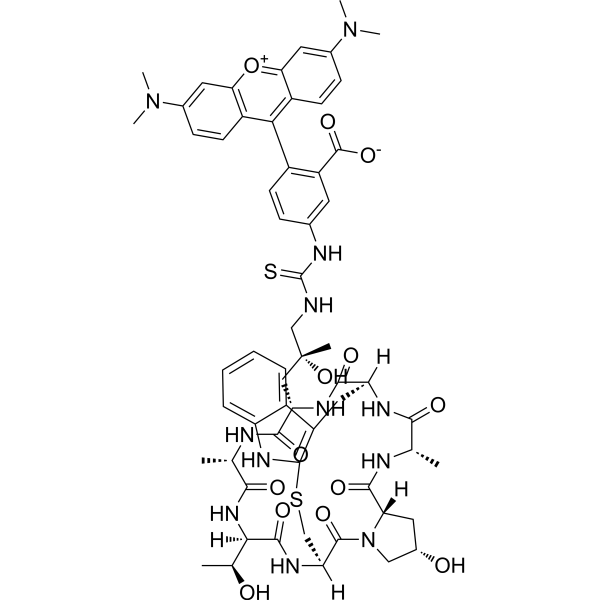
    Phalloidin 17466-45-4 99.83%
    Phalloidin is a mushroom-derived toxin which can be used to label F-actin of the cytoskeleton with fluorochrome .
    Phalloidin
  • HY-P2270
    Phalloidin-TRITC 915013-10-4
    Phalloidin-TRITC is a fluorescein derivative of Phalloidin, which can specifically label myof lin and display red fluorescence when labeled and can be observed using Tesred channels.
    Phalloidin-TRITC
  • HY-P1489F
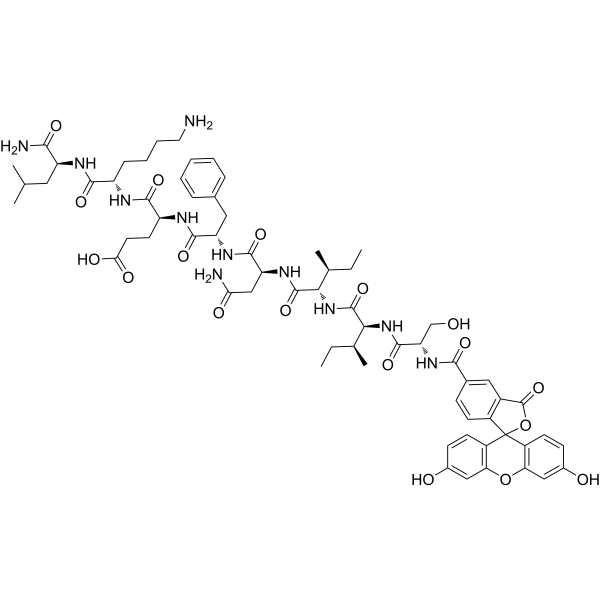
    FAM-OVA (257-264) 99.32%
    FAM-OVA (257-264) is a biological active peptide. (FAM labeled HY-P1489)
    FAM-OVA (257-264)
  • HY-P10932A
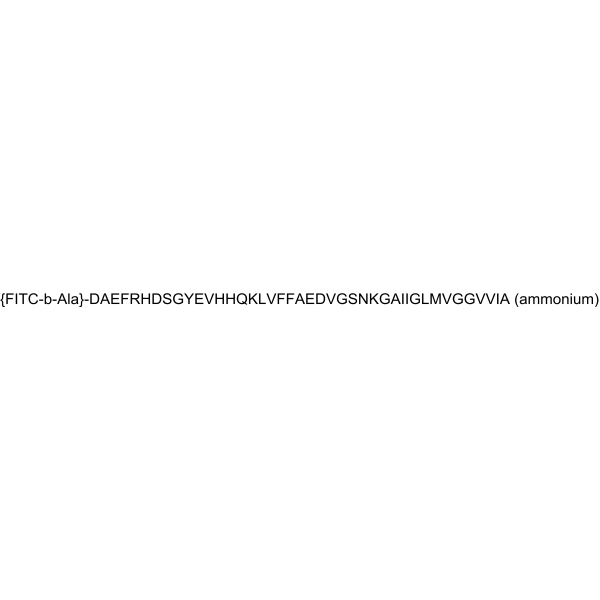
    pGk13a TFA
    pGk13a TFA is an azide (azide group can be combined with fluorophore)-containing amphiphilic membrane labeling probe. pGk13a TFA enables high-resolution imaging of cell membranes in the ultrastructural membrane expansion microscopy (umExM) technique, facilitating the observation of membrane-associated structures and proteins. pGk13a TFA can be used for neuronal structural studies.
    pGk13a TFA
  • HY-114118F4
    Semaglutide-FITC
    Semaglutide-FITC (Semaglutide-Lys(FITC)) is a FITC-labeled Semaglutide (a GLP-1R agonist) (HY-114118). Semaglutide-FITC can be used to directly track the distribution, cellular uptake, and transmembrane transport process of vesicles through techniques such as fluorescence imaging and flow cytometry. Semaglutide-FITC can be employed to study the movement and penetration ability of mixed vesicles in porcine intestinal mucus in vitro.
    Semaglutide-FITC
  • HY-P4083A
    (Arg)9,TAMRA-labeled acetate 98.68%
    (Arg)9,TAMRA-labeled acetate is a TAMRA-labeled, membrane-permeable cationic cell-penetrating polyarginine peptide. (Arg)9,TAMRA-labeled acetate acts as a cell-penetrating peptide for drug delivery.
    (Arg)9,TAMRA-labeled acetate
  • HY-D0844F
    Biotin-glutathione oxidized TFA 98.08%
    Biotin-glutathione oxidized TFA ((N,N-Biotinyl glutathione disulfide TFA; Biotin-GSSG TFA) is an inducer of protein S-glutathionylation and a detection probe for S-glutathionylated proteins. Biotin-glutathione oxidized TFA forms protein-glutathione disulfide adducts, mimics components of oxidative stress, and drives protein S-glutathionylation. Biotin-glutathione oxidized TFA enables the labeling, detection, localization and purification of proteins susceptible to S-glutathionylation.
    Biotin-glutathione oxidized TFA
  • HY-P2535
    GLP-1 (7-36), amide, biotin labeled 1802086-70-9 98.36%
    Glucagon-Like Peptide 1 (GLP-1) (7-36)-Lys (Biotin), amide, human is an C-terminal-labelled biotinylated GLP-1 (7-36) amide.
    GLP-1 (7-36), amide, biotin labeled
  • HY-P3908
    FITC-β-Ala-Amyloid β-Protein (1-42) ammonium 99.36%
    FITC-β-Ala-Amyloid β-Protein (1-42) ammonium is a FITC tagged Aβ1-42 peptide. Aβ1-42 plays a key role in the pathogenesis of Alzheimer’s disease.
    FITC-β-Ala-Amyloid β-Protein (1-42) ammonium
  • HY-P0286F1A
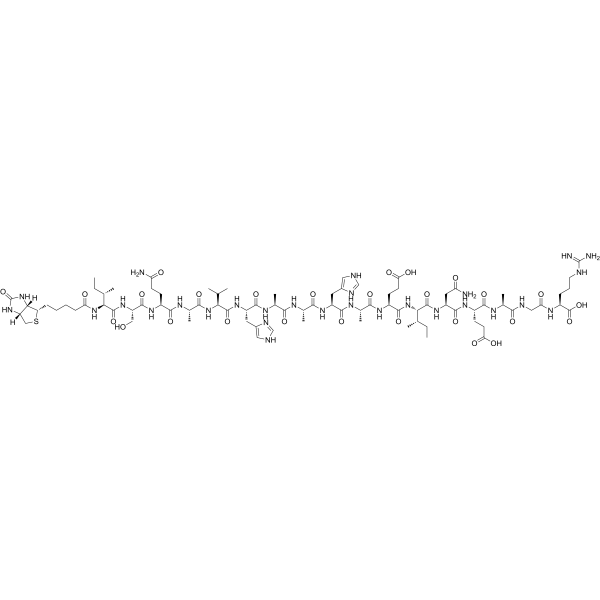
    FITC-OVA (323-339) TFA 98.22%
    FITC-OVA (323-339) TFA is a biological active peptide. (FITC labeled HY-P0286)
    FITC-OVA (323-339) TFA
  • HY-P2609F
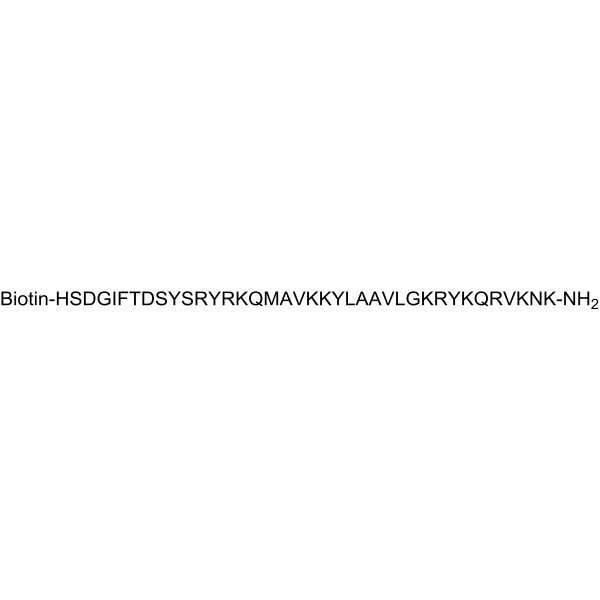
    PACAP (1-38), amide, Biotin-labeled 98.29%
    PACAP (1-38), amide, Biotin-labeled is a biological active peptide. (Biotin-labeled HY-P0221)
    PACAP (1-38), amide, Biotin-labeled
  • HY-13948F1
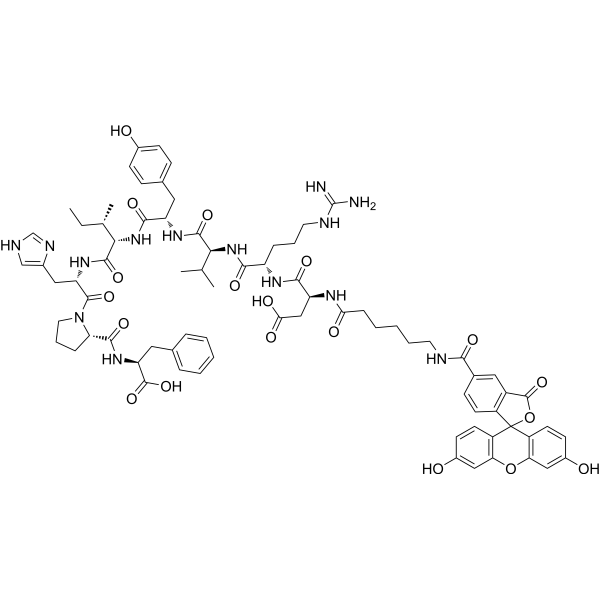
    Angiotensin II human, FAM-labeled 99.58%
    Angiotensin II human, FAM-labeled (Angiotensin II, FAM-labeled) is a FAM labeled Angiotensin II human (HY-13948).
    Angiotensin II human, FAM-labeled
  • HY-P4154
    Bevonescein 2276787-79-0 99.11%
    Bevonescein (ALM-488) is a fluorescein-conjugated peptide that facilitates the targeted delivery of a fluorescent moiety (5-FAM (HY-66022)) to nerves after intravenous (IV) administration. Bevonescein binds nerve-associated connective tissue, labels peripheral nerves under real-time fluorescence imaging (FL) in living mice and human ex vivo nerve tissue. Bevonescein is a peptide-linked tracer which fluorescently labeled both intact and degenerated nerves (Ex/Em = 480/530 nm).
    Bevonescein
  • HY-P4946A
    Biotinyl-α-CGRP (human) TFA 99.70%
    Biotinyl-α-CGRP (human) TFA is a polypeptide that can be found by peptide screening. Peptide screening is a research tool that pools active peptides primarily by immunoassay. Peptide screening can be used for protein interaction, functional analysis, epitope screening, especially in the field of agent research and development.
    Biotinyl-α-CGRP (human) TFA
  • HY-P0286F
    Biotin-OVA (323-339) 99.68%
    Biotin-OVA (323-339) is a biological active peptide. (Biotin labeled HY-P0286)
    Biotin-OVA (323-339)
  • HY-P4732
    5-FAM-Amylin (human) 1678414-71-5 99.34%
    5-FAM-Amylin (human) is a polypeptide that can be found by peptide screening. Peptide screening is a research tool that pools active peptides primarily by immunoassay. Peptide screening can be used for protein interaction, functional analysis, epitope screening, especially in the field of agent research and development.
    5-FAM-Amylin (human)
  • HY-P2550A
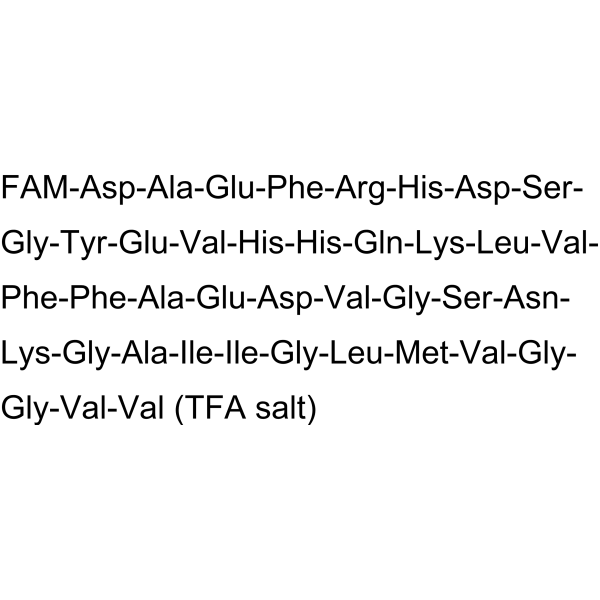
    β-Amyloid (1-40), FAM-labeled TFA 99.87%
    β-Amyloid (1-40), FAM-labeled TFA is a FAM fluorescently-labelled β-Amyloid (1-40) peptide (λex= 492 nm and λem= 518 nm).
    β-Amyloid (1-40), FAM-labeled TFA
  • HY-P1362F
    Cy5-β-Amyloid (42-1), human Tris 98.14%
    Cy5-β-Amyloid (42-1), human is a Cy5 fluorescently-labelled β-Amyloid (42-1, human) peptide (λex= 633 nm and λem= 670 nm).
    Cy5-β-Amyloid (42-1), human Tris
  • HY-P2546
    Biotin-Substance P 87468-58-4 99.66%
    Biotin-Substance P is the biotin tagged Substance P. Substance P (Neurokinin P) is a neuropeptide, acting as a neurotransmitter and as a neuromodulator in the CNS. The endogenous receptor for substance P is neurokinin 1 receptor (NK1-receptor, NK1R).

    Biotin-Substance P