



β-glucuronidase
GUSB
β-glucuronidase is a glycoside hydrolase widely distributed in mammalian tissues, body fluids, microbiota, plants, fish, insects and mollusks. β-glucuronidase belongs to GH family 1, 2, 30, 79, 154 and GH-A. β-glucuronidase can hydrolyze estrogen glucuronides, regulate the enterohepatic circulation and reabsorption of estrogen, and affect estrogen metabolism. β-glucuronidase can also hydrolyze the extracellular sugar residues on the TRPV5 channel, trapping it in the plasma membrane, maintaining calcium channel activity and membrane calcium permeability. This target is related to many disease areas. For example, in cancer, its increased activity is related to the occurrence and development of colorectal cancer, breast cancer, ovarian cancer, etc.; in metabolic diseases, it is related to diabetes and its induced periodontitis; in inflammatory diseases, it involves bacterial peritonitis, bacterial meningitis, pelvic inflammatory disease, etc.; in addition, it is also related to diseases such as endometriosis[1][2][3][4][5][6][7].
参考文献:
- [1]. Wei Y, et al. Gut dysbiosis-derived β-glucuronidase promotes the development of endometriosis. Fertil Steril. 2023 Sep;120(3 Pt 2):682-694. [Content Brief]
- [2]. Awolade P, et al. Therapeutic significance of β-glucuronidase activity and its inhibitors: A review. European Journal of Medicinal Chemistry, 2020, 187: 111921.
- [3]. Kim DH, et al. Intestinal bacterial beta-glucuronidase activity of patients with colon cancer. Arch Pharm Res. 2001 Dec;24(6):564-7. [Content Brief]
- [4]. Chang Q, et al. The beta-glucuronidase klotho hydrolyzes and activates the TRPV5 channel. Science. 2005 Oct 21;310(5747):490-3. [Content Brief]
- [5]. Sui Y, et al. The Role of Gut Microbial β-Glucuronidase in Estrogen Reactivation and Breast Cancer. Front Cell Dev Biol. 2021 Aug 12;9:631552. [Content Brief]
- [6]. Liu Z, et al. A novel allosteric driver mutation of β-glucuronidase promotes head and neck squamous cell carcinoma progression through STT3B-mediated PD-L1 N-glycosylation. MedComm (2020). 2025 Jan 19;6(2):e70062. [Content Brief]
- [7]. Paigen K. Mammalian beta-glucuronidase: genetics, molecular biology, and cell biology. Prog Nucleic Acid Res Mol Biol. 1989;37:155-205. [Content Brief]
All Product Categories
-
β-glucuronidase 関連製品 (54)
関連製品 (54)

-
D-Saccharic acid 1,4-lactone hydrate
(D-Saccharic acid 1,4-lactone (hydrate))
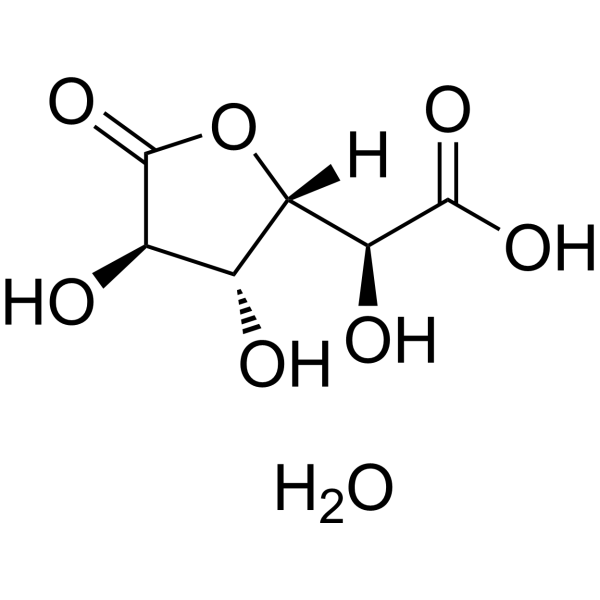 0 Images別名: D-サッカリン酸 1,4-ラクトン 一水和物D-Saccharic acid 1,4-lactone hydrate is an orally active β-glucuronidase inhibitor (IC50=48.4 μM). D-Saccharic acid 1,4-lactone hydrate can be used as a standard agent compared with novel β-glucuronidase inhibitors. D-Saccharic acid 1,4-lactone hydrate possesses anticarcinogenic, detoxifying, and antioxidant properties.
- Beta-glucuronidase (Escherichia coli) (Beta-glucuronidase (Escherichia coli))
-
4-Methylumbelliferyl-β-D-glucuronide hydrate
(4-Methylumbelliferyl-β-D-glucuronide hydrate)
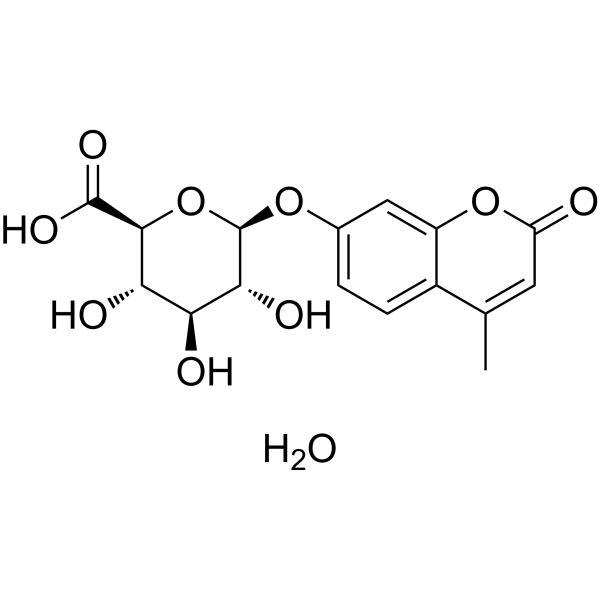 0 Images別名: MUG4-Methylumbelliferyl-β-D-glucuronide hydrate is a fluorogenic substrat (λex=362 nm, λem=445 nm). 4-Methylumbelliferyl-β-D-glucuronide hydrate has potential applications in detecting the activity of β-glucuronidase and the number of Escherichia coli.
-
Saccharic acid
 0 ImagesSaccharic acid is a competitive and potent inhibitor of β-glucuronidase. Saccharic acid inhibits glucuronide synthesis. Saccharic acid as an efficient iron chelate to enhance photo-Fenton
degradation of organic contaminants.
-
4-Nitrophenyl β-D-glucuronide
(4-Nitrophenyl β-D-glucuronide)
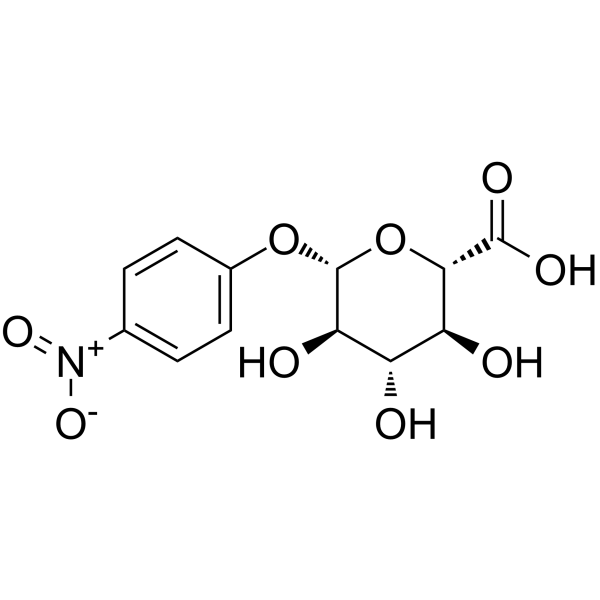 0 Images別名: pNPG_1; 4-ニトロフェニルβ-D-グルクロニド4-Nitrophenyl β-D-glucuronide (pNPG_1) is aderivative of 4-Nitrophenol. 4-Nitrophenyl β-D-glucuronide is the chromogenic substrate for β-glucuronidase.
-
β-Glu-PAB(CH2NH2)-Exatecan
 0 Imagesβ-Glu-PAB (CH2NH2)-Exatecan is a linker-payload conjugate composed of Exatecan (HY-13631) and β-Glu-PAB (CH2NH2). β-Glu-PAB (CH2NH2)-Exatecan also serves as an intermediate of Mal ((3S,3aR,6S,6aR)-Hexahydrofuro[3,2-b]furan-3,6-diamine-PEG12)-β-Glu-PAB-Exatecan (HY-173634). β-Glu-PAB (CH2NH2)-Exatecan is specifically cleaved by β-glucuronidase, which is highly expressed in the tumor microenvironment, to release Exatecan that exerts cytotoxic effects. β-Glu-PAB (CH2NH2)-Exatecan can be used in cancer research.
-
Euphominoid C
 0 Images製品番号: HY-N21640ACAS 番号: 2113766-69-9Euphominoid C is a competitive α-glucosidase inhibitor (IC50 = 52.50 μM) and a mixed-type β-glucuronidase inhibitor (IC50 = 45.87 μM). Euphominoid C exhibits reversible binding modes against both enzymes. Euphominoid C can be used for the research of diabetes.
-
Beta-glucuronidase (bovine liver)
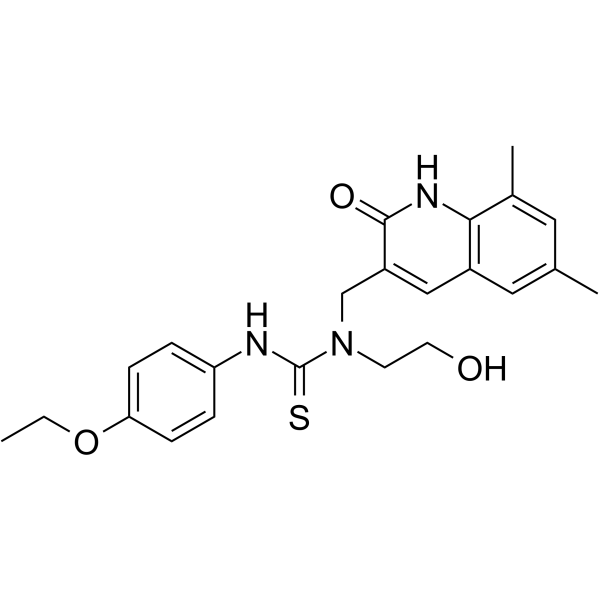
 0 ImagesBeta-glucuronidase (bovine liver) is a glycoside hydrolase that hydrolyzes β-glucuronic acid and sulfate esters in urine and other biological fluids, thereby releasing β-glucuronides. Beta-glucuronidase (bovine liver) cannot effectively hydrolyze Estriol glucuronide. Beta-glucuronidase (bovine liver) can be used in studies related to systemic gangliosidosis.
-
X-Gluc cyclohexanamine
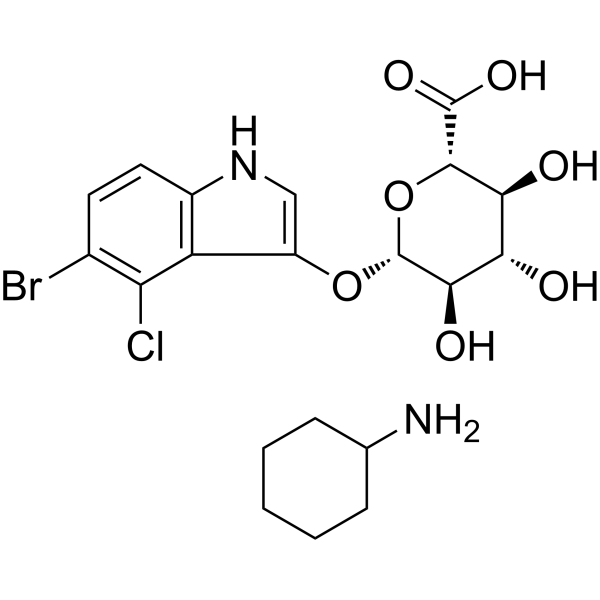 0 ImagesX-Gluc cyclohexanamine is a dye reagent for the detection of β-glucuronidase (GUS), an enzyme produced by E. coli. X-Gluc cyclohexanamine can be used to detect E. coli contamination in food, water and the urinary tract (GUS as a specific detection indicator). X-Gluc cyclohexanamine is also widely used in molecular biology experiments to label and detect the expression of target genes (reacts with the GUS gene, appears blue).
-
UNC10201652
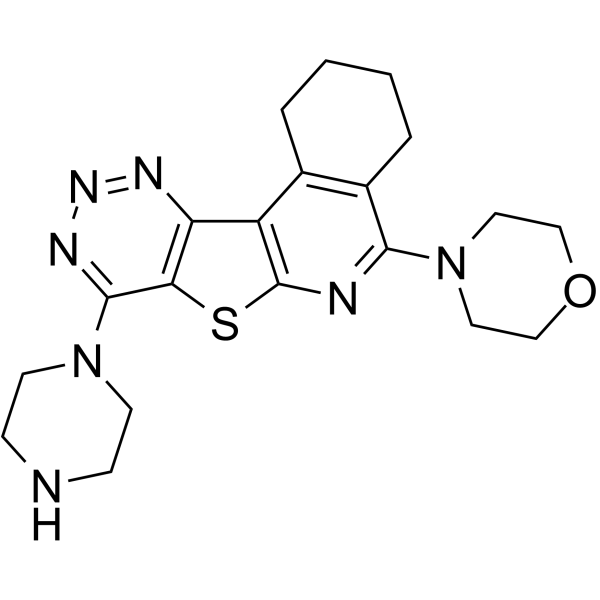 0 ImagesUNC10201652 is a potent Loop 1 (L1)-specific gut bacterial β-glucuronidase (GUSs) inhibitor with an IC50 value of 0.117 μM for E. coli GUS. UNC10201652 can block SN-38 glucuronide (HY-126373) processing only in individuals whose fecal gut microbiota is highly abundant in L1 GUS enzymes.

-
2′-Hydroxydaidzein
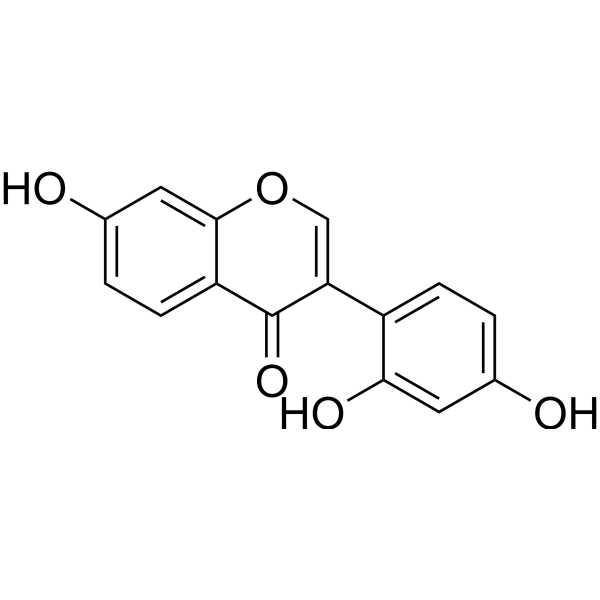 0 Images2′-Hydroxydaidzein is a metabolite. 2′-Hydroxydaidzein inhibits the release of chemical mediator from inflammatory cells. 2′-Hydroxydaidzein significantly inhibits lysozyme and β-glucuronidase release from rat neutrophils, which is stimulated with fMLP/CB, respectively.
-
X-Gluc sodium
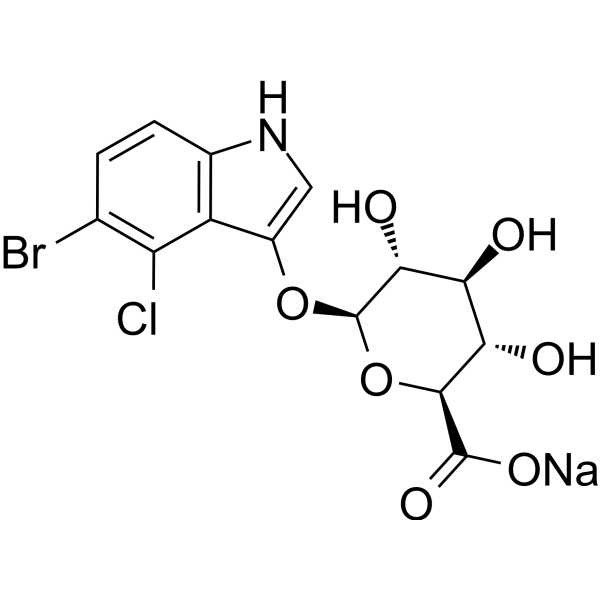 0 Images別名: X-Glucナトリウム塩X-Gluc sodium is a dye reagent for the detection of β-glucuronidase (GUS), an enzyme produced by E. coli. X-Gluc sodium can be used to detect E. coli contamination in food, water and the urinary tract (GUS as a specific detection indicator). X-Gluc sodium is also widely used in molecular biology experiments to label and detect the expression of target genes (reacts with the GUS gene, appears blue).
-
4-Methylumbelliferyl-β-D-glucuronide
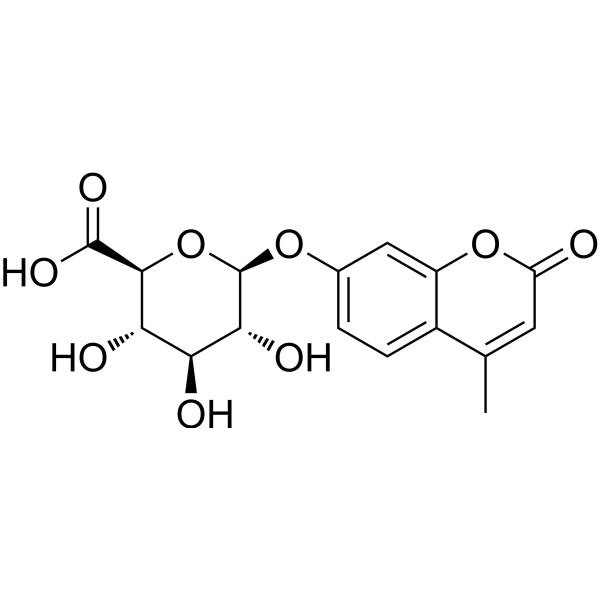 0 Images4-Methylumbelliferyl-β-D-glucuronide is a fluorogenic substrat (λex=362 nm, λem=445 nm). 4-Methylumbelliferyl-β-D-glucuronide has potential applications in detecting the activity of β-glucuronidase and the number of Escherichia coli.
-
3-Chlorogentisyl alcohol
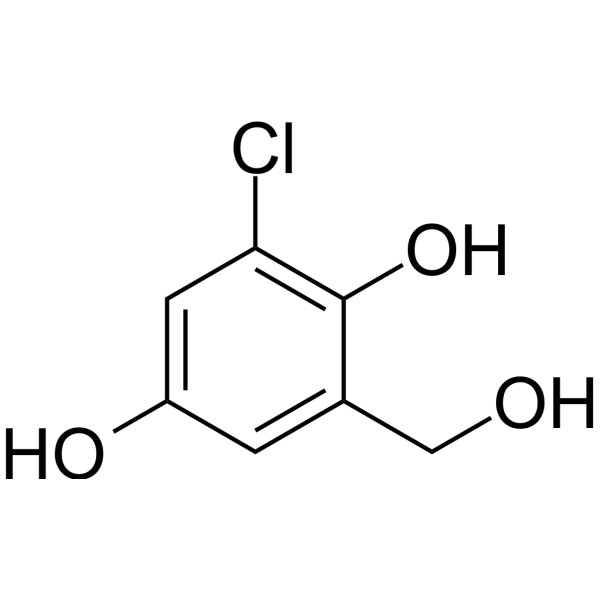 0 Images3-Chlorogentisyl alcohol is a potent E. coli β-glucuronidase inhibitor with an IC50 value of 0.74 μM, an Ki value of 0.58 μM. 3-Chlorogentisyl alcohol shows antiproliferative activity. 3-Chlorogentisyl alcohol has the potential for the research of anti-cancer and anti-inflammatory therapies.
-
Fluorescein Di-β-D-Glucuronide
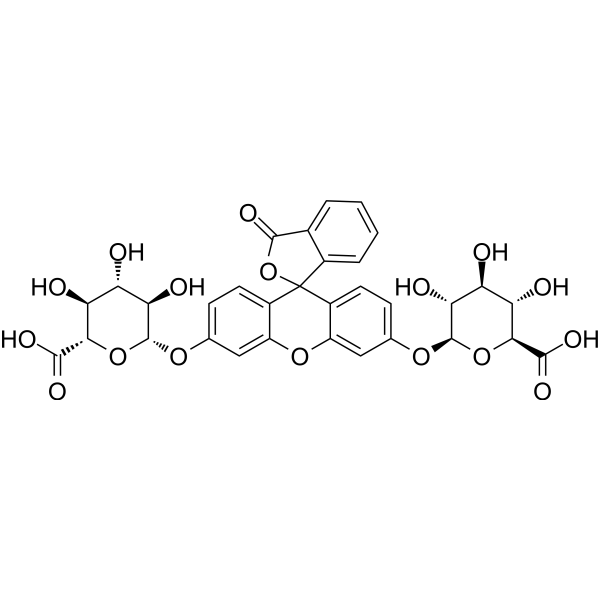 0 Images製品番号: HY-D1460CAS 番号: 134869-04-8Fluorescein Di-β-D-Glucuronide is an orally active fluorescent probe substrate and an indicator of β-glucuronidase (βG) activity in intestinal bacteria. Fluorescein Di-β-D-Glucuronide can be used for non-invasive time-lapse optical imaging of βG activity in intestinal bacteria in nude mice. Fluorescein Di-β-D-Glucuronide supports the quantitative analysis of bacterial βG enzyme activity and inhibition.
-
Naphthol AS-BI
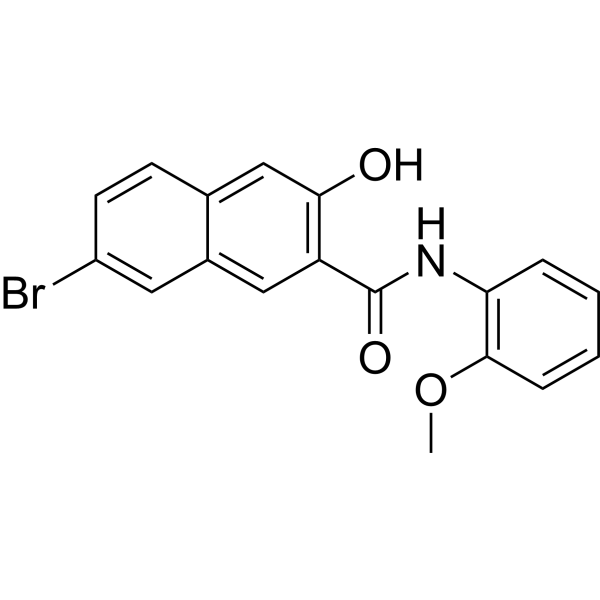 0 ImagesNaphthol AS-BI is a substrate of β-glucuronidase and produces a bright red effect after staining biological tissues.
-
2′-Hydroxygenistein
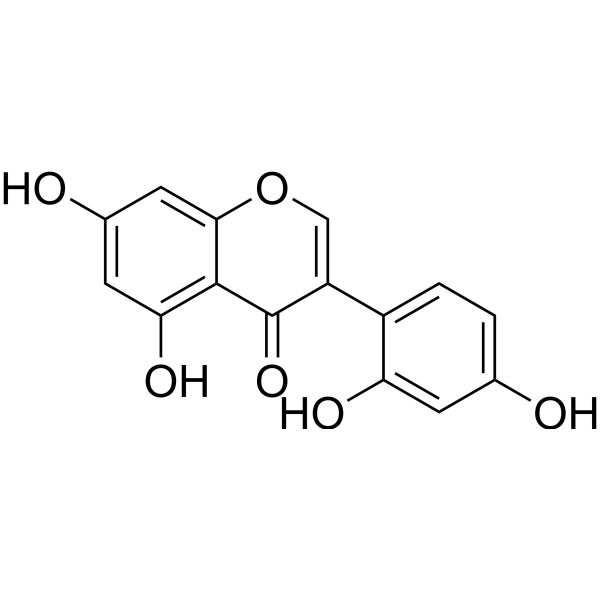 0 Images2′-Hydroxygenistein is a natural product that can be isolated from Crotalaria pallida and C. assamica. 2′-Hydroxygenistein shows anti-inflammatory activity. 2′-Hydroxygenistein shows significant concentration-dependent inhibitory effects on the release of β-glucuronidase and lysozyme from rat neutrophils, with IC50 values of 5.9 ± 1.4 and 9.7 ± 3.5 μM, respectively.
-
Dipropyl phthalate-d4
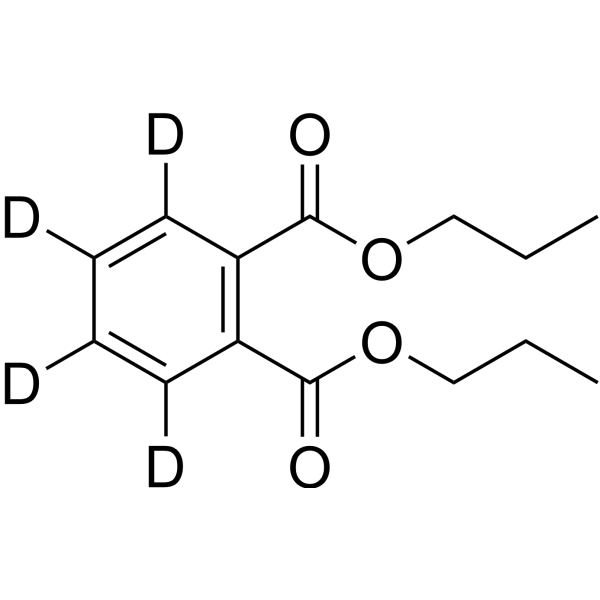 0 Images別名: NSC 15314-d4; Di-n-Propyl phthalate-d4Dipropyl phthalate-d4 (NSC 15314-d4) is the deuterated-labeled Dipropyl phthalate (HY-B1944). Dipropyl phthalate is an immunomodulator. Dipropyl phthalate alters the activities of acid phosphatase, phenoloxidase and superoxide dismutase, increases the activity of β-glucuronidase in a dose-dependent manner, and elevates the mRNA level of hemocyanin in shrimp. Dipropyl phthalate activates the FoxO signaling pathway, interferes with cell proliferation and apoptosis, downregulates chondrocyte-related genes, and induces craniofacial cartilage developmental malformations in zebrafish embryos. Dipropyl phthalate can be used in studies related to Aeromonas veronii infection and micrognathia syndrome.



