



Muscle Disease
-
Muscle Disease (115)

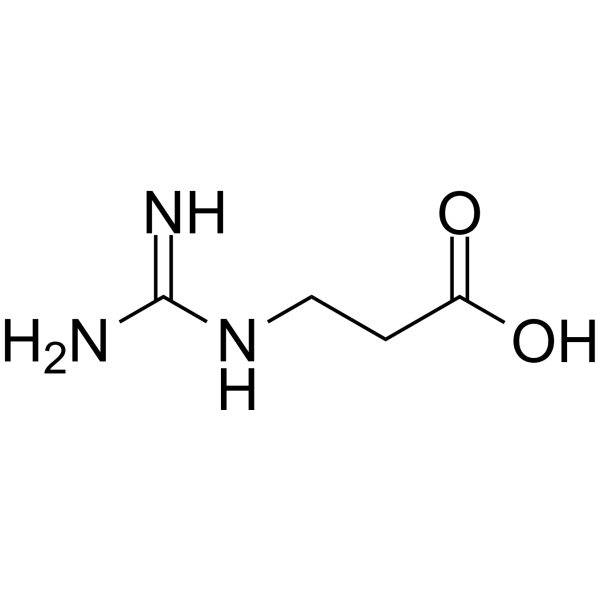
- Formula: C4H9N3O2
- Molecular Weight: 131.14
Ompenaclid (RGX-202) is an oral small-molecule SLC6A8 transporter inhibitor. Ompenaclid robustly inhibits creatine import in vitro and in vivo, reduces intracellular phosphocreatine and ATP levels, and induces tumor apoptosis. Ompenaclid can be used for the research of cancer and duchenne muscular dystrophy.
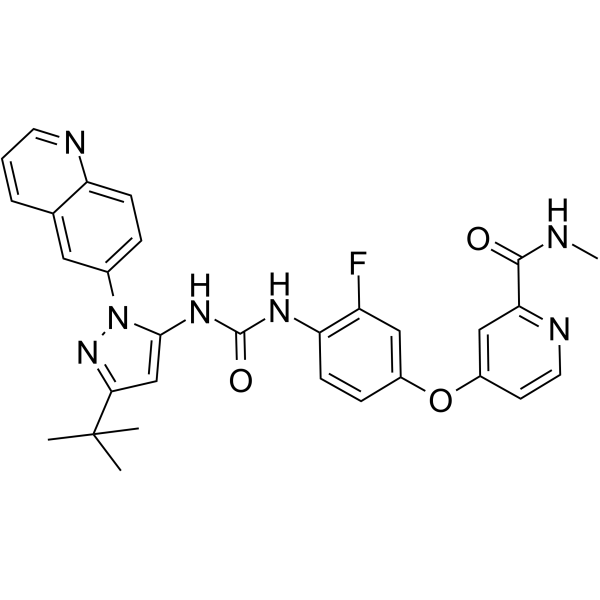
- Formula: C30H28FN7O3
- Molecular Weight: 553.59
Rebastinib (DCC-2036) is an orally active, non-ATP-competitive Bcr-Abl inhibitor, with IC50 values of 0.8 nM and 4 nM against Abl1WT and Abl1T315I, respectively. Rebastinib potently inhibits CYP2C8 (IC50 = 0.0533 μM) and CYP2C9 (IC50 = 2.54 μM). Rebastinib allosterically inhibits Tie2 with an IC50 of 0.63 nM. Rebastinib inhibits the transcriptional activity of FoxO1. Rebastinib inhibits SRC family kinases, KDR and FLT3 kinases. Rebastinib induces Apoptosis. Rebastinib exerts anti-tumor activity in breast cancer. Rebastinib exerts anti-angiogenic effects. Rebastinib increases myotube diameter and improves reduced contractility. Rebastinib can be used in research related to triple-negative breast cancer, luminal breast cancer, pancreatic neuroendocrine tumors, muscle atrophy, cancer cachexia, chronic myeloid leukemia, and B-lymphocytic leukemia.
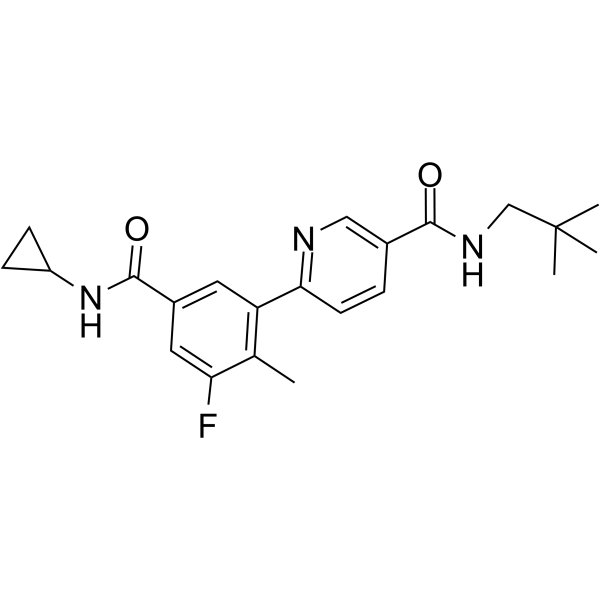
- Formula: C22H26FN3O2
- Molecular Weight: 383.46
Losmapimod (GSK-AHAB; GW856553X) is an orally active p38α/β MAPK inhibitor, with pKi values of 8.1 and 7.6 for p38α and p38β, respectively. Losmapimod reduces DUX4 expression, thus exerting efficacy in facioscapulohumeral muscular dystrophy. By inhibiting MAPK/NF-κB, Losmapimod reduces apoptosis of epileptiform hippocampal neurons, and exhibits anti-allodynia and anti-hyperalgesic activities. Losmapimod blocks the entry and fusion of Lassa fever virus (LASV). Losmapimod overcomes tyrosine kinase inhibitor resistance in non-small cell lung cancer (NSCLC). Losmapimod inhibits myocardial senescence and inflammation, and possesses cardioprotective activity against cardiotoxicity.

- Molecular Weight: 144.44 kDa
Delpacibart is a humanized IgG1κ monoclonal antibody targeting the transferrin receptor TFRC. Delpacibart can be conjugated with the phosphorodiamidate morpholino oligonucleotide (PMO) Zotadirsen (HY-177972), which targets exon 44 of the dystrophin gene, to synthesize the antibody-oligonucleotide conjugate (AOC) Delpacibart zotadirsen (HY-177564). Delpacibart is suitable for use in Duchenne muscular dystrophy (DMD44) research.

- Formula: C364H569N177O122P30
- Molecular Weight: 10305.74
Eteplirsen (AVI 4658) is a phosphorylated diamine morpholino oligonucleotide that targets exon 51 of the human Duchenne muscular dystrophy (DMD) gene. Eteplirsen induces exon 51 skipping, causing it to be skipped during splicing, thereby restoring the translation reading frame and producing a shortened functional dystrophin. Eteplirsen can be used in research on Duchenne muscular dystrophy.
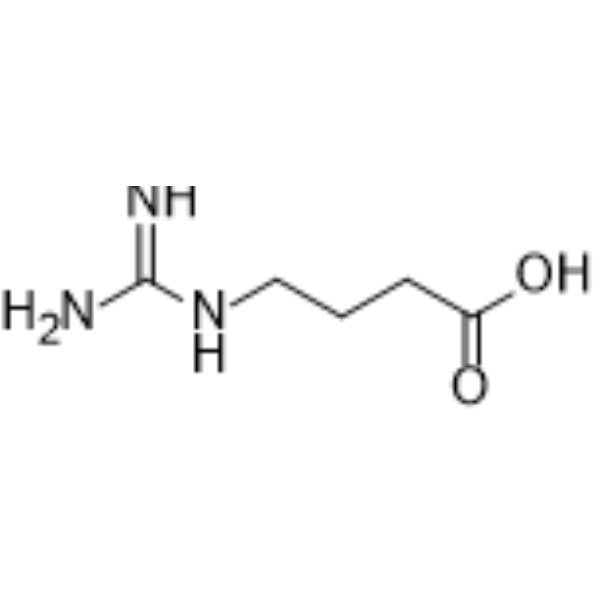
- Formula: C5H11N3O2
- Molecular Weight: 145.16
4-Guanidinobutanoic acid is a metabolite of arginine and an orally active SLC36A1/Hedgehog signaling pathway activator. 4-Guanidinobutanoic acid drives epithelial reprogramming, enhances intestinal stem cell function and goblet cell differentiation. 4-Guanidinobutanoic acid promotes the enrichment of Akkermansia muciniphila via mucus-dependent niche expansion, regulates intestinal homeostasis, and establishes a microbiota-host feedback loop. 4-Guanidinobutanoic acid exhibits anti-aging and healthspan-regulating properties. 4-Guanidinobutanoic acid can be used in research related to ulcerative colitis, amyotrophic lateral sclerosis, and Duchenne muscular dystrophy.
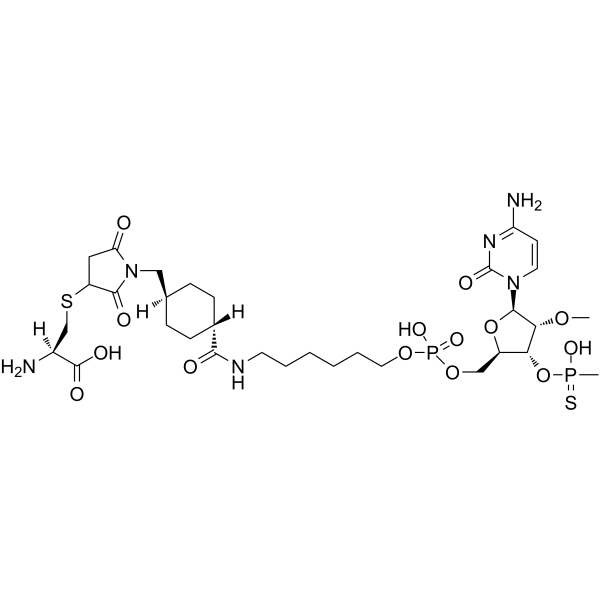
- Molecular Weight: 13699.70
Etedesiran is a component of the AOC drug Delpacibart etedesiran (HY-177565), formed by the reaction of an siRNA that induces cleavage of mRNA encoding myotonic dystrophy protein kinase (MTPK or DMPK) with SMCC linker (HY-42360). Etedesiran carries a maleimide group at its terminus, which can react with cysteine or lysine and is used for the synthesis of AOC drugs. Etedesiran is applicable to research related to myotonic dystrophy type 1.
- Formula: C268H402N124Na22O95P22
- Molecular Weight: 7584.00
Casimersen (SRP-4045) sodium is an antisense oligonucleotide of the phosphorodiamidate morpholino oligomer subclass. Casimersen sodium binds to exon 45 of dystrophin pre-mRNA, restores the open-reading frame (by skipping exon 45) resulting in the production of an internally truncated but functional dystrophin protein. Casimersen sodium can be used for the research of Duchenne muscular dystrophy (DMD).

- Formula: C364H539N177Na30O122P30
- Molecular Weight: 10306 (free acid)
Eteplirsen (AVI 4658) sodium is a phosphorylated diamine morpholino oligonucleotide that targets exon 51 of the human Duchenne muscular dystrophy (DMD) gene. Eteplirsen sodium induces exon 51 skipping, causing it to be skipped during splicing, thereby restoring the translation reading frame and producing a shortened functional dystrophin. Eteplirsen sodium can be used in research on Duchenne muscular dystrophy.
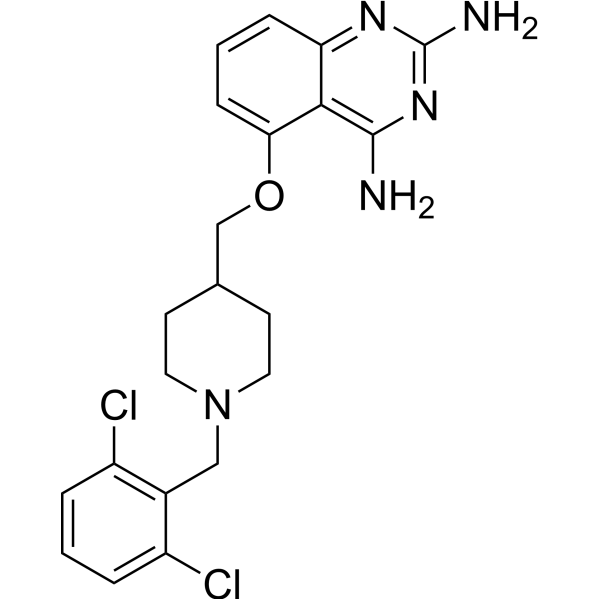
- Formula: C21H23Cl2N5O
- Molecular Weight: 432.35
RG3039 (PF-06687859) is an orally active, blood-brain barrier-permeable DcpS inhibitor with an IC50 of 4.2 nM against hDcpS. RG3039 inhibits the decapping activity of DcpS and maintains DcpS in a catalytically inactive conformation in the central nervous system and other tissues. RG3039 extends survival and improves function in spinal muscular atrophy mice. RG3039 is applicable to research related to spinal muscular atrophy.
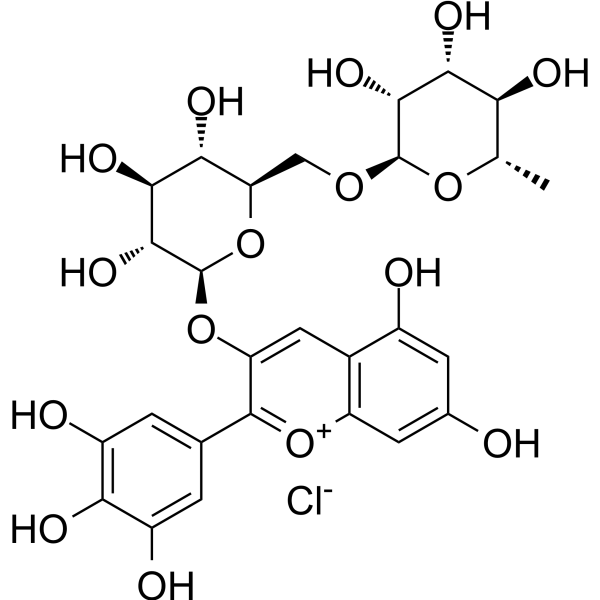
- Formula: C27H31ClO16
- Molecular Weight: 646.98
Delphinidin 3-rutinoside chloride is an anthocyanin component. Delphinidin 3-rutinoside chloride is isolable from the fruits of blackcurrant Ribes nigrum L. Delphinidin 3-rutinoside chloride activates the ETB receptor and stimulates the NO/cGMP pathway. Delphinidin 3-rutinoside chloride increases cyclic guanosine monophosphate production and reduces the phosphorylation level of Myosin regulatory light chain. Delphinidin 3-rutinoside chloride stimulates GLP-1 secretion. It significantly induces relaxation of bovine ciliary muscle strips contracted by ET-1 and inhibits ET-1-induced contraction of bovine ciliary muscle strips. Delphinidin 3-rutinoside chloride is applicable to research related to type 2 diabetes.

- Molecular Weight: 5750 (Average)
Poloxamer 403 P123 is a block copolymer of polyoxyethylene and polyoxypropylene with an average molecular weight of 5750. Poloxamer has the ability to inhibit P-gp. Poloxamer 403 increases creatine kinase levels. Poloxamer 403 is myotoxic.
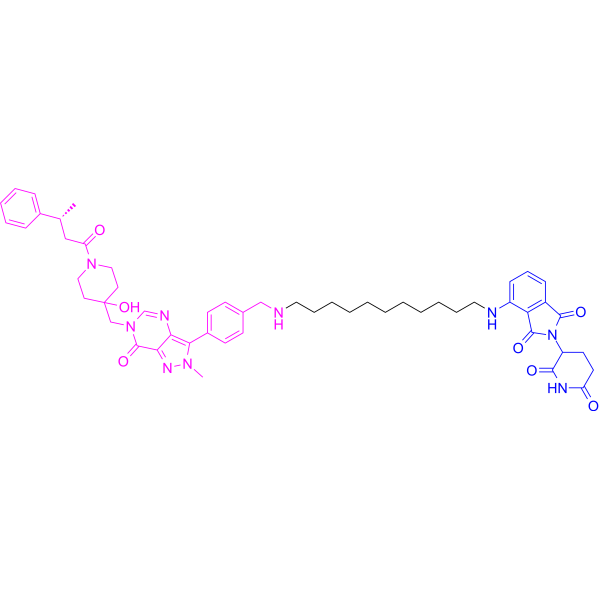
- Formula: C53H65N9O7
- Molecular Weight: 940.14
U7D-1 is a USP7 PROTAC degrader that induces selective proteasomal degradation of USP7. U7D-1 destabilizes and downregulates the expression of variant PRC1 complex subunits PCGF1, RING1A and PCGF6, and also slightly reduces the protein level of KDM2B. U7D-1 decreases cell viability, arrests neuroblastoma cells at the G0/G1 cell cycle phase, and downregulates the expression of target genes of PAX3::FOXO1 in FP-RMS cells. U7D-1 increases the level of cleaved PARP in FP-RMS cells, induces cell apoptosis, and upregulates the expression of muscle differentiation markers MYH1 and MYF5. U7D-1 inhibits the growth and proliferation of p53 wild-type and mutant cancer cells, and regulates the apoptosis pathway and E2F pathway. U7D-1 is applicable to studies on neuroblastoma, fusion-positive rhabdomyosarcoma, p53-mutant cancers and cancer-related research.

- Formula: C12H11NO
- Molecular Weight: 185.23
1-Naphthylacetamide is an orally active nonsteroidal anti-inflammatory agent (NAIA) and also an indole-type auxin plant growth regulator. 1-Naphthylacetamide inhibits inflammatory response-related pathways and modulates plant hormone signaling, exhibiting anti-inflammatory, local anesthetic, antispasmodic, analgesic, and diuretic activities. 1-Naphthylacetamide promotes plant cell expansion, differentiation, and fruit enlargement. Additionally, 1-Naphthylacetamide induces central nervous system (CNS) depression in mice, characterized by reduced spontaneous activity, decreased irritability, decreased muscle tone, and attenuated ear-cuff reflex, ipsilateral flexor reflex, and corneal reflex[1][2].
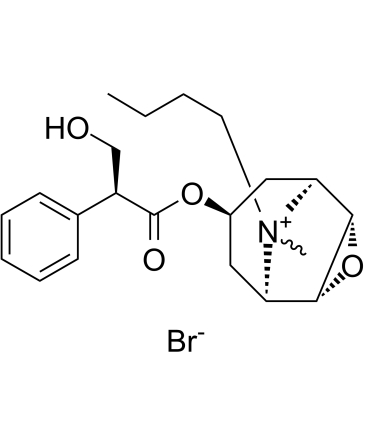
- Formula: C21H30BrNO4
- Molecular Weight: 440.37
Scopolamine butylbromide (Hyoscine butylbromide) is an orally active anticholinergic agent and spasmolytic. Scopolamine butylbromide binds with high affinity to rat cardiac M2 (Ki 83 nmol/L), hM2 (Ki 233 nmol/L), rat intestinal M3 (Ki 290 nmol/L) and hM3 (Ki 643 nmol/L) muscarinic receptors. Scopolamine butylbromide exerts a dose-dependent antagonistic effect on Carbachol-induced gastrointestinal smooth muscle spasm. Scopolamine butylbromide can be used for the research of abdominal colic and pain associated with gastrointestinal spasm, functional abdominal pain, chronic gastropathy and gastric ulcer.
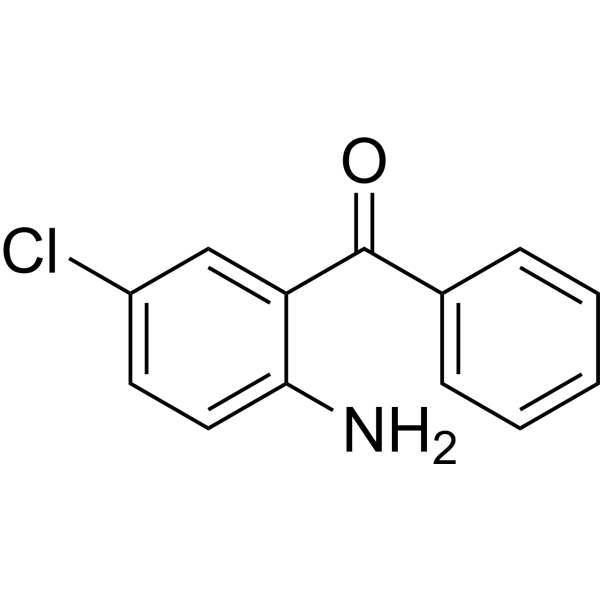
- Formula: C13H10ClNO
- Molecular Weight: 231.68
2-Amino-5-chlorobenzophenone (5-Chloro-2-aminobenzophenone) is a chemical intermediate. Derivatives of 2-Amino-5-chlorobenzophenone serve as skeletal muscle relaxants. 2-Amino-5-chlorobenzophenone acts as a starting material for the synthesis of anti-biofilm 2-amino-5-chlorobenzophenone Schiff bases. 2-Amino-5-chlorobenzophenone is applicable to research related to bacterial infections.\n
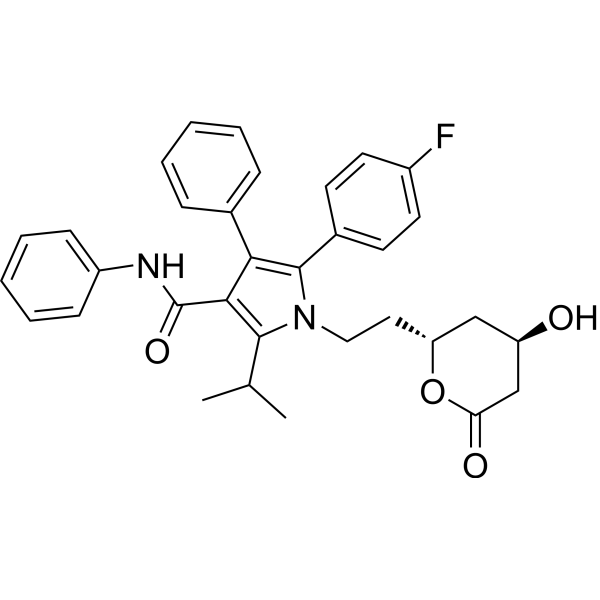
- Formula: C33H33FN2O4
- Molecular Weight: 540.62
Atorvastatin lactone is a metabolite of Atorvastatin acid, an HMG-CoA reductase inhibitor. Atorvastatin lactone exhibits myotoxicity.

- Formula: C211H275N76O119P19S19
- Molecular Weight: 6977.62
Drisapersen (Kyndrisa) is a 2'-O-methyl phosphorothioate RNA antisense oligonucleotide that induces exon 51 skipping. Drisapersen induces skipping of exon 51 during Dystrophin pre-mRNA splicing, allowing the synthesis of partially functional Dystrophin. Drisapersen can be used in research related to Duchenne muscular dystrophy.
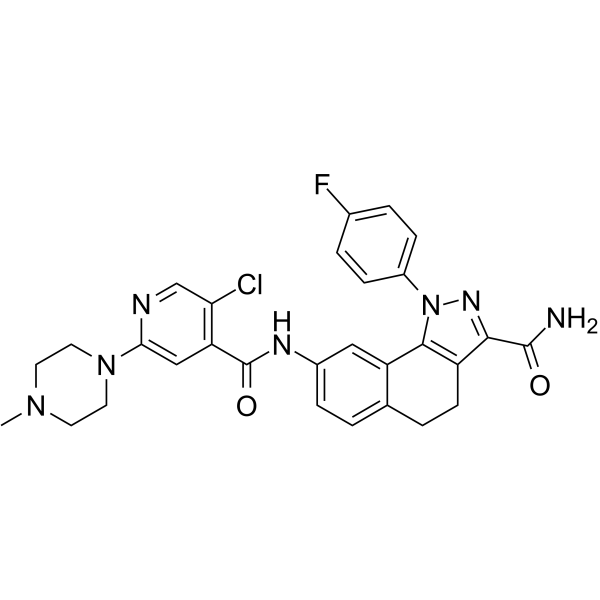
- Formula: C29H27ClFN7O2
- Molecular Weight: 560.02
PHA-408 is a highly selective, orally active and ATP-competitive IKK-2 inhibitor with an IC50 of 40 nM. PHA-408 blocks NF-κB signaling by suppressing IκBα phosphorylation and degradation, p65 phosphorylation, and pro-inflammatory cytokine production, and prevents TNF-α-induced premature senescence in HUVECs. PHA-408 alleviates LPS-and cigarette smoke-triggered pulmonary inflammation, reduces LPS-stimulated serum TNF-α release, and ameliorates joint damage in SCW-induced arthritis in rats. PHA-408 is applicable for the research of rheumatoid arthritis, chronic obstructive pulmonary disease (COPD), and Duchenne muscular dystrophy.
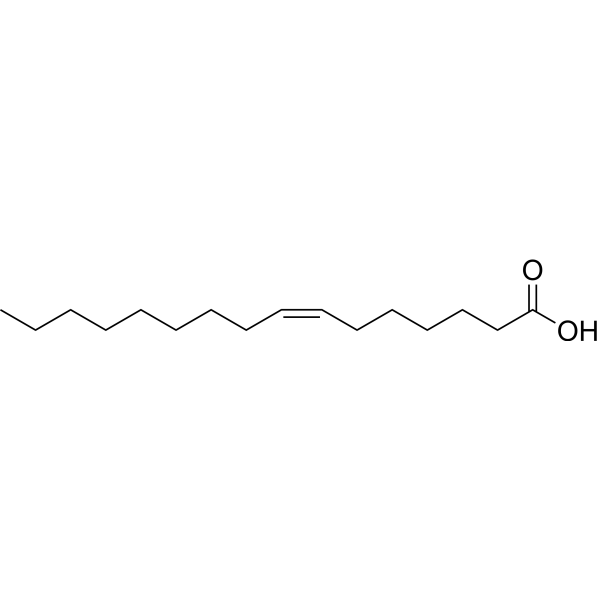
- Formula: C16H30O2
- Molecular Weight: 254.41
Hypogeic acid is a fatty acid and endogenous metabolite, with a concentration of 50 mg/mL in ethanol. The plasma level of Hypogeic acid is negatively correlated with the prevalence of interstitial lung disease in idiopathic inflammatory myopathy. Hypogeic acid can be used in studies related to idiopathic inflammatory myopathy.



