



Scopolamine butylbromide
Based on 1 publication(s) in Google Scholar
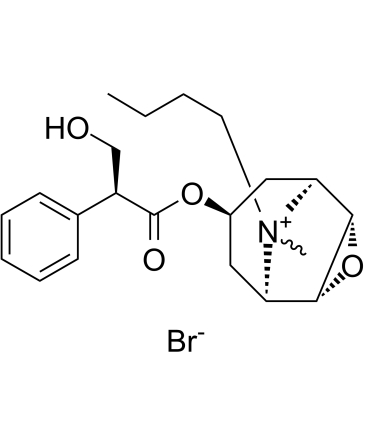
Scopolamine butylbromide (Hyoscine butylbromide) is an orally active anticholinergic agent and spasmolytic. Scopolamine butylbromide binds with high affinity to rat cardiac M2 (Ki 83 nmol/L), hM2 (Ki 233 nmol/L), rat intestinal M3 (Ki 290 nmol/L) and hM3 (Ki 643 nmol/L) muscarinic receptors. Scopolamine butylbromide exerts a dose-dependent antagonistic effect on Carbachol-induced gastrointestinal smooth muscle spasm. Scopolamine butylbromide can be used for the research of abdominal colic and pain associated with gastrointestinal spasm, functional abdominal pain, chronic gastropathy and gastric ulcer.
For research use only. We do not sell to patients.
- Purity : 99.04%
- CAS No.: 149-64-4
- Formula: C21H30BrNO4
- Molecular Weight:440.37
-
Storage:
4°C, sealed storage, away from moisture
* In solvent : -80°C, 6 months; -20°C, 1 month (sealed storage, away from moisture)

To place orders, for customer services and technical support, please contact: MedChemExpress USA
Tel: 609-228-6898 E-mail: [email protected] [email protected]


-
 Biological Activity
-
Chemical Information
-
Solvent & Solubility
- Purity & Documentation
- References
-
 Help & FAQs


-
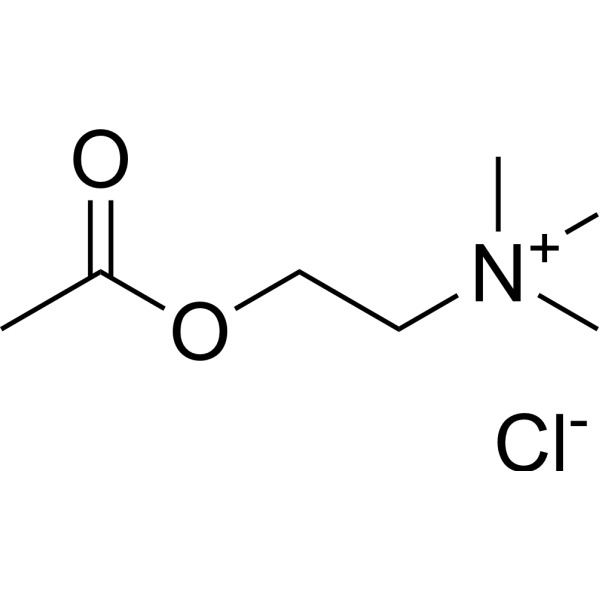
HY-B0282
Acetylcholine chlorideCholinergic Agonist -
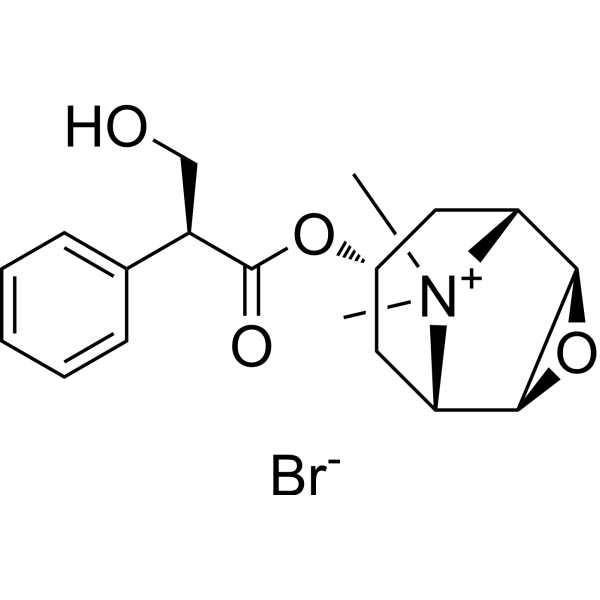
HY-B0344
Methscopolamine bromidemAChR Antagonist -
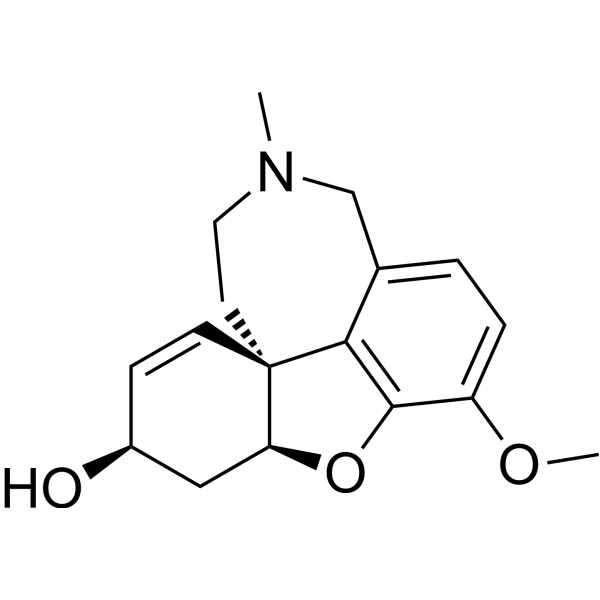
HY-76299
GalanthamineCholinesterase (ChE) Inhibitor -

HY-N0340R
Scopolamine butylbromide (Standard)Standard of Scopolamine Butylbromide -

HY-76299R
Galanthamine (Standard)Cholinesterase (ChE) Inhibitor -
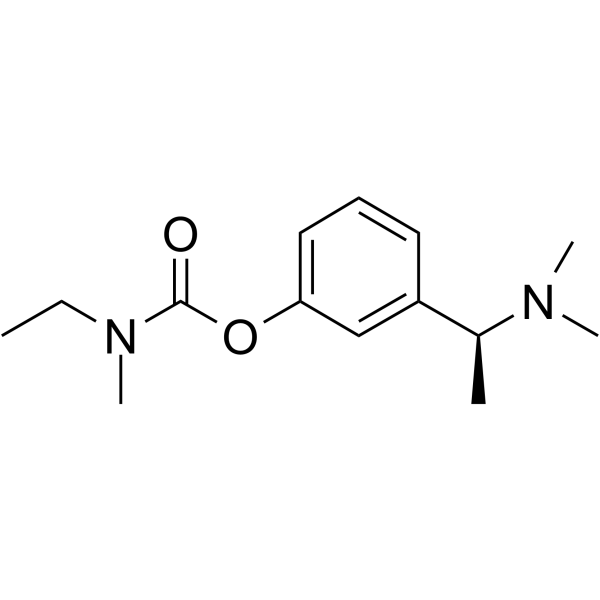
HY-17368
RivastigmineCholinesterase Inhibitor -

HY-B1277
Trihexyphenidyl hydrochlorideM1 Muscarinic Receptor Antagonist -
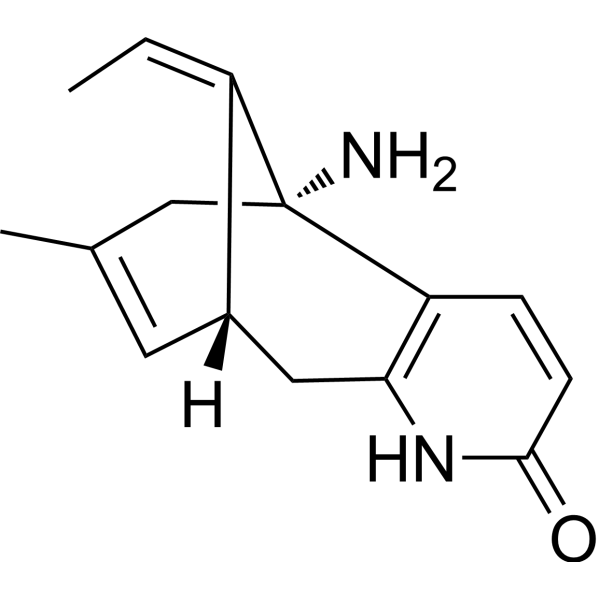
HY-17387
(-)-Huperzine AAChE/NMDA Receptor Inhibitor -
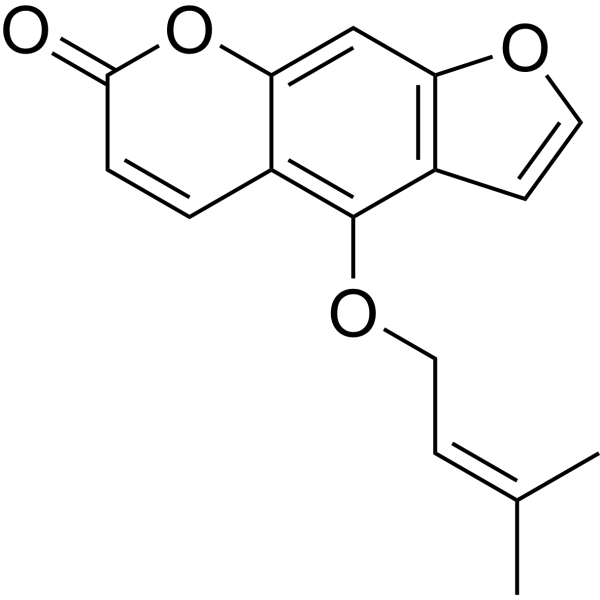
HY-N0286
IsoimperatorinCholinesterase (ChE) Inhibitor -
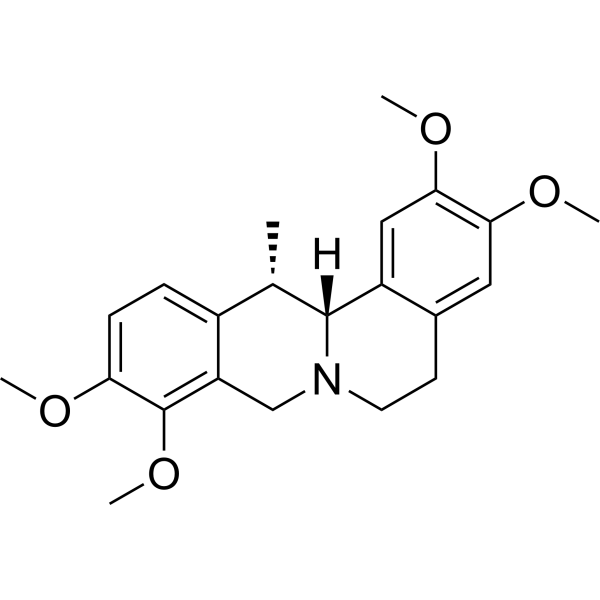
HY-N0923
CorydalineCholinesterase (ChE) Inhibitor -
HY-11017
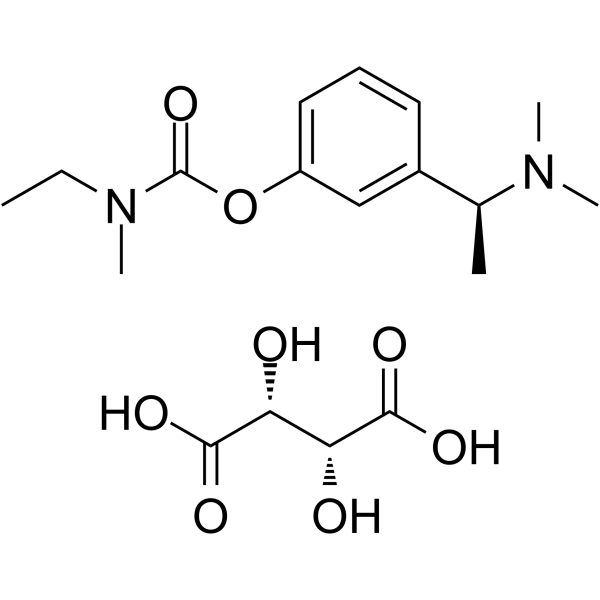
Rivastigmine tartrateCholinesterase Inhibitor
Publications Citing Use of MedChemExpress (MCE) Scopolamine butylbromide
More

Biological Activity
Description
IC50 & Target
[1]|
mAChR2 83 (rats) nM (Ki) |
mAChR3 290 (rats) nM (Ki) |
hM2 233 nM (Ki) |
hM3 643 nM (Ki) |
In Vitro
Scopolamine butylbromide binds with high affinity to rat cardiac M2 (Ki 83 nmol/L), hM2 (Ki 233 nmol/L), rat intestinal M3 (Ki 290 nmol/L) and hM3 (Ki 643 nmol/L) muscarinic receptors[1].
Scopolamine butylbromide specifically inhibits acetylcholine-induced contraction of isolated guinea pig ileum, with a pA2 value of 7.8; it also slightly inhibits histamine-induced contraction, with a pA2 value of 4.6[1].
Scopolamine butylbromide inhibits the contraction of isolated guinea pig colon induced by acetylcholine, transmural stimulation and pelvic nerve stimulation, with ID50 values of 8.13 × 10⁻⁸ mol/L, 1.15 × 10⁻⁷ mol/L and 2.54 × 10⁻⁷ mol/L, respectively. It also reduces acetylcholine release from stimulated nerves[1].
Scopolamine (0.1-800 μg/mL) butylbromide inhibits transmural stimulation-induced contraction and pressure-induced peristalsis of isolated guinea pig ileum at concentrations of 0.1-0.6 μg/mL and 4-6 μg/mL; however, due to limited tissue penetration, a dose of 600-800 μg/mL is required when administered via the mucosa[1].
MedChemExpress (MCE) has not independently confirmed the accuracy of these methods. They are for reference only. .
In Vivo
Scopolamine (0.1-30 mg/kg; p.o.; single administration) butylbromide displaces ≥50% of the radioligand bound to muscarinic receptors in rat duodenal smooth muscle at doses of 0.1-3.0 mg/kg, whereas a dose of ≥30 mg/kg is required to achieve similar displacement in myocardium[1].
Scopolamine (3.0 μg/kg; intraduodenal administration; single dose) butylbromide and (0.25-50 mg/kg; intravenous injection; single dose) inhibits spontaneous and electrical stimulation-induced duodenal motility in anesthetized dogs[1].
Scopolamine (intravenous injection) butylbromide reduces pelvic nerve-induced colonic contractions in anesthetized guinea pigs in a dose-dependent manner, with an ED50 of 26 μg/kg and a relative potency of 16.4[2].
MedChemExpress (MCE) has not independently confirmed the accuracy of these methods. They are for reference only.
-
Animal Model:anaesthetized[1]
-
Dosage:Not specified
-
Administration:i.v.; single dose
-
Result:Antagonized carbachol-induced increased gut tone dose-dependently across all GI tract sections.
Exhibited the lowest ID50 (highest potency) in the gastric antrum and the highest ID50 (lowest potency) in the rectum.
-
Animal Model:unspecified strain[1]
-
Dosage:0.1 mg/kg; 3.0 mg/kg; 30 mg/kg
-
Administration:p.o.; single dose
-
Result:Caused ≥50% displacement of specifically bound radioligand from duodenal smooth muscle at 0.1-3.0 mg/kg.
Required a much higher dose (≥30 mg/kg) to induce displacement in heart muscle.
Showed a biphasic displacement curve for duodenal smooth muscle.
-
Animal Model:anaesthetized[1]
-
Dosage:3.0 μg/kg (intraduodenal); 0.25 mg/kg (i.v.); 50 mg/kg (i.v.)
-
Administration:intraduodenal; single dose; i.v.; single dose
-
Result:Inhibited spontaneous and electrically stimulated duodenum motility at 3.0 μg/kg (intraduodenal).
Inhibited 60-100% of duodenum motility at 0.25-50 mg/kg (i.v.).
Clinical Trial
| NCT Number | Sponsor | Condition | Start Date |
Phase

|
|---|---|---|---|---|
| NCT01329991 | Plexxikon| | 2011-05 | PHASE1 |


Chemical Information
-
CAS No. 149-64-4
-
Appearance Solid
-
Molecular Weight 440.37
-
Formula C21H30BrNO4
-
Color White to off-white
-
SMILES
C[N+]1([C@H]2[C@@H](O3)[C@@H]3[C@@H]1C[C@H](OC([C@@H](C4=CC=CC=C4)CO)=O)C2)CCCC.[Br-]
-
Synonyms
Hyoscine butylbromide; (-)-Scopolamine butylbromide; Butylscopolamine bromide
-
Structure Classification
-
Initial Source
-
Shipping
Room temperature in continental US; may vary elsewhere.
-
Storage
4°C, sealed storage, away from moisture
* In solvent : -80°C, 6 months; -20°C, 1 month (sealed storage, away from moisture)


Publications (1)
-
Journal Impact Factor
-
Most Recent
-
Drug Metab Pharmacokinet
2020 Feb;35(1):102-110. PMID: 31732429


Solvent & Solubility
In Vitro:
DMSO : ≥ 90 mg/mL (204.37 mM; Hygroscopic DMSO has a significant impact on the solubility of product, please use newly opened DMSO)
* "≥" means soluble, but saturation unknown.
Please refer to the solubility information to select the appropriate solvent. Once prepared, please aliquot and store the solution to prevent product inactivation from repeated freeze-thaw cycles.
Storage method and period of stock solution: -80°C, 6 months; -20°C, 1 month (sealed storage, away from moisture). When stored at -80°C, please use it within 6 months. When stored at -20°C, please use it within 1 month.
Please refer to the solubility information to select the appropriate solvent. Once prepared, please aliquot and store the solution to prevent product inactivation from repeated freeze-thaw cycles.
Storage method and period of stock solution: -80°C, 6 months; -20°C, 1 month (sealed storage, away from moisture). When stored at -80°C, please use it within 6 months. When stored at -20°C, please use it within 1 month.
Concentration (start) × Volume (start) = Concentration (final) × Volume (final)
In Vivo:
Select the appropriate dissolution method based on your experimental animal and administration route.
- For the following dissolution methods, please ensure to first prepare a clear stock solution using an In Vitro approach and then sequentially add co-solvents:
- To ensure reliable experimental results, the clarified stock solution can be appropriately stored based on storage conditions. As for the working solution for In Vivo experiments, it is recommended to prepare freshly and use it on the same day.
- The percentages shown for the solvents indicate their volumetric ratio in the final prepared solution. If precipitation or phase separation occurs during preparation, heat and/or sonication can be used to aid dissolution.
Add each solvent one by one: 10% DMSO 40% PEG300 5% Tween-80 45% Saline
Solubility: ≥ 2.25 mg/mL (5.11 mM); Clear solution
This protocol yields a clear solution of ≥ 2.25 mg/mL (saturation unknown).
Taking 1 mL working solution as an example, add 100 μL DMSO stock solution (22.5 mg/mL) to 400 μL PEG300, and mix evenly; then add 50 μL Tween-80 and mix evenly; then add 450 μL Saline to adjust the volume to 1 mL.
Preparation of Saline: Dissolve 0.9 g sodium chloride in ddH₂O and dilute to 100 mL to obtain a clear Saline solution.
Add each solvent one by one: 10% DMSO 90% (20% SBE-β-CD in Saline)
Solubility: ≥ 2.25 mg/mL (5.11 mM); Clear solution
This protocol yields a clear solution of ≥ 2.25 mg/mL (saturation unknown).
Taking 1 mL working solution as an example, add 100 μL DMSO stock solution (22.5 mg/mL) to 900 μL 20% SBE-β-CD in Saline, and mix evenly.
Preparation of 20% SBE-β-CD in Saline (4°C, storage for one week): 2 g SBE-β-CD powder is dissolved in 10 mL Saline, completely dissolve until clear.
In Vivo Dissolution Calculator
Please enter the basic information of animal experiments:
-
-
-
-
Recommended: Prepare an additional quantity of animals to account for potential losses during experiments.
Please enter your animal formula composition:
-
%DMSO +
Recommended: Keep the proportion of DMSO in working solution below 2% if your animal is weak.
-
%+
-
+%Tween-80 + +
-
%Saline +
The co-solvents required include: DMSO, . All of co-solvents are available by MedChemExpress (MCE). , Tween 80. All of co-solvents are available by MedChemExpress (MCE).
Working solution concentration: 0.22 mg/mL
Method for preparing stock solution: mg drug dissolved in μL DMSO. Stock solution concentration: mg/mL. * In solvent : -80°C, 6 months; -20°C, 1 month (sealed storage, away from moisture)
1. Take μL DMSO stock solution;
2. Add μL .
μL , mix evenly;
3. Then add μL Tween 80, mix evenly;
4. Then add μL
Please ensure that the stock solution in the first step is dissolved to a clear state, and add co-solvents in sequence. You can use ultrasonic heating (ultrasonic cleaner, recommended frequency 20-40 kHz), vortexing, etc. to assist dissolution.


Purity & Documentation
-
Data Sheet (284 KB)
-
SDS (396 KB)
- English - EN (396 KB)
- Français - FR (396 KB)
- Deutsch - DE (396 KB)
- Norwegian - NO (396 KB)
- Español - ES (396 KB)
- Swedish - SV (396 KB)
- Italian - IT (396 KB)
- Korean - KR (396 KB)
- Portuguese - PT (396 KB)
-
Handling Instructions (2659 KB)
References
[1]. Tytgat GN. Hyoscine butylbromide: a review of its use in the treatment of abdominal cramping and pain. Drugs. 2007;67(9):1343-57. [Content Brief]
[2]. Corsetti M, et al. Hyoscine butylbromide mode of action on bowel motility: From pharmacology to clinical practice. Neurogastroenterol Motil. 2023;35(4):e14451. [Content Brief]


Complete Stock Solution Preparation Table
Please refer to the solubility information to select the appropriate solvent. Once prepared, please aliquot and store the solution to prevent product inactivation from repeated freeze-thaw cycles.
Storage method and period of stock solution: -80°C, 6 months; -20°C, 1 month (sealed storage, away from moisture). When stored at -80°C, please use it within 6 months. When stored at -20°C, please use it within 1 month.
| Optional Solvent | Concentration Solvent Mass | 1 mg | 5 mg | 10 mg | 25 mg |
|---|---|---|---|---|---|
| DMSO | 1 mM | 2.2708 mL | 11.3541 mL | 22.7082 mL | 56.7704 mL |
| 5 mM | 0.4542 mL | 2.2708 mL | 4.5416 mL | 11.3541 mL | |
| 10 mM | 0.2271 mL | 1.1354 mL | 2.2708 mL | 5.6770 mL | |
| 15 mM | 0.1514 mL | 0.7569 mL | 1.5139 mL | 3.7847 mL | |
| 20 mM | 0.1135 mL | 0.5677 mL | 1.1354 mL | 2.8385 mL | |
| 25 mM | 0.0908 mL | 0.4542 mL | 0.9083 mL | 2.2708 mL | |
| 30 mM | 0.0757 mL | 0.3785 mL | 0.7569 mL | 1.8923 mL | |
| 40 mM | 0.0568 mL | 0.2839 mL | 0.5677 mL | 1.4193 mL | |
| 50 mM | 0.0454 mL | 0.2271 mL | 0.4542 mL | 1.1354 mL | |
| 60 mM | 0.0378 mL | 0.1892 mL | 0.3785 mL | 0.9462 mL | |
| 80 mM | 0.0284 mL | 0.1419 mL | 0.2839 mL | 0.7096 mL | |
| 100 mM | 0.0227 mL | 0.1135 mL | 0.2271 mL | 0.5677 mL |


Scopolamine butylbromide Related Classifications
HY-N0340 Related Classifications
 Powered by Bioz
Keywords
- Scopolamine butylbromide
- 149-64-4
- Hyoscine butylbromide
- (-)-Scopolamine butylbromide
- Butylscopolamine
- mAChR
- gastrointestinal tissue
- human muscarinic M3 receptor
- ganglion blocker
- muscarinic receptor antagonist
- human muscarinic M2 receptor
- guinea pig ileum
- guinea pig colon
- irritable bowel syndrome
- ulcus ventriculi
- human nicotinic acetylcholine receptor
- Inhibitor
- inhibitor
- inhibit