



17β-HSD
17beta-HSD; 17β-hydroxysteroid dehydrogenases; 17 beta-hydroxysteroid dehydrogenase
17β-HSD (17β-Hydroxysteroid Dehydrogenases) is a class of NADPH/NAD+ dependent oxidoreductases that primarily catalyze the reversible conversion between the 17β-hydroxyl and ketone groups of steroid hormones, playing a crucial role in the synthesis, activation, and inactivation of steroids. The 17β-HSD family mainly belongs to the short-chain dehydrogenase/reductase (SDR) family, with the exception of 17β-HSD5 (AKR1C3), which belongs to the aldo-keto reductase (AKR) family. To date, 14 different mammalian 17β-HSDs have been identified, of which 12 are expressed in human tissues, exhibiting diverse tissue distributions, subcellular localizations, and catalytic preferences (oxidation or reduction).
17β-HSD1 primarily catalyzes the conversion of estrone (E1) to estradiol (E2) and is associated with breast cancer, prostate cancer, and endometriosis. 17β-HSD2 catalyzes the oxidation of E2 to E1, while also regulating the interconversion between androstenedione (A4) and testosterone (T), playing a role in osteoporosis. 17β-HSD3 promotes the conversion of A4 to T and is crucial for male sexual differentiation. 17β-HSD4 is involved in fatty acid β-oxidation and steroid hormone inactivation. Additionally, 17β-HSD5 participates in steroid hormone and prostaglandin synthesis, whereas 17β-HSD7 is involved in cholesterol and estrogen biosynthesis. 17β-HSD10 exhibits broad substrate specificity, contributing to the metabolism of fatty acids, bile acids, and neurosteroids, and has been implicated in Alzheimer's disease (AD). The development of selective inhibitors targeting specific 17β-HSD isoforms has become an important strategy in related disease research[1].
17β-HSD Isoform Specific Products
All Product Categories
-
17β-HSD Related Products (162)
Related Products (162)

-
17β-HSD Isoform Comparison
-
BI-3231
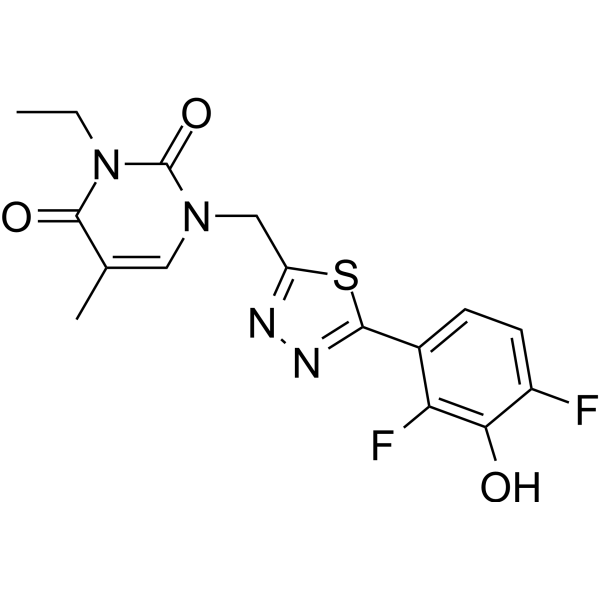 0 ImagesBI 3231, a chemical probe, is a potent and selective hydroxysteroid 17β-dehydrogenase 13 (HSD17B13) inhibitor, with IC50s of 1 and 13 nM for hHSD17B13 and mHSD17B13, respectively. BI 3231 has the potential for the research of nonalcoholic steatohepatitis (NASH) and other liver diseases.
-
(±)-Naproxen
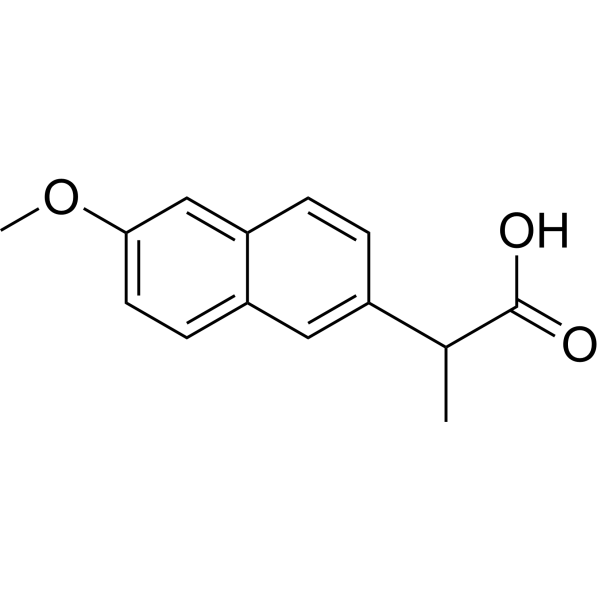 0 ImagesSynonyms: (Rac)-Naproxen(±)-Naproxen ((Rac)-Naproxen) is the racemate of Naproxen (HY-15030), consisting of R- and S-enantiomers. (±)-Naproxen binds to AKR1C3, which preferentially recognizes the R-enantiomer from the racemic mixture. It is used for AKR1C3 stereoselective ligand recognition and studies on NSAID binding mechanisms.
-
Obafistat
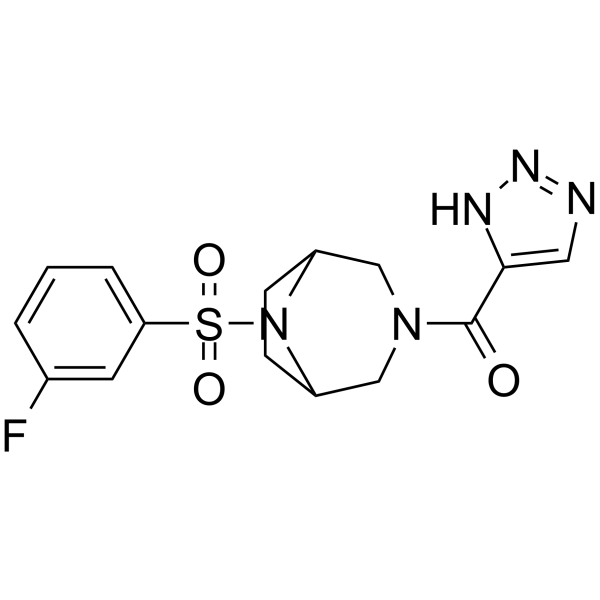 0 ImagesObafistat is a potent aldo-keto reductase AKR1C3 inhibitor with an IC50 of 1.2 nM for human AKR1C3 (patent WO2017202817A1, example 4).
-
17β-HSD1-IN-1
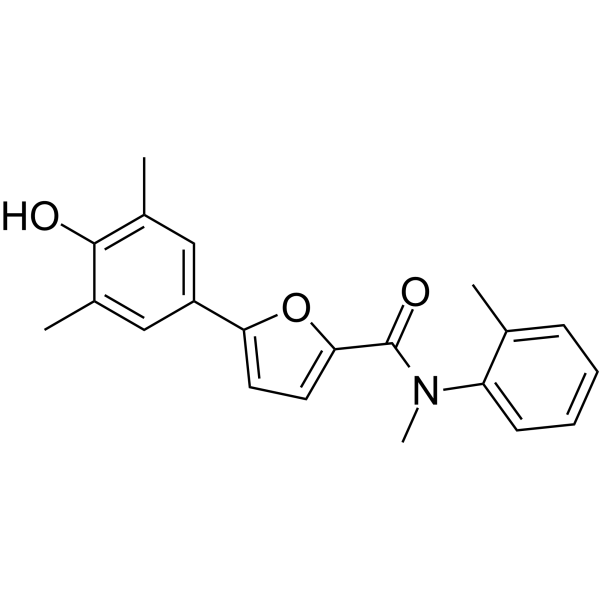 0 Images17β-HSD1-IN-1 (Compound 1) is a highly selective 17β-HSD1 inhibitor with IC50s of 5.6 and 3155 nM for 17β-HSD1 and 17β-HSD2, respectively. 17β-HSD1-IN-1 can be used for the research of non-small cell lung cancer (NSCLC).
-
6-Bromocoumarin
 0 ImagesCat. No.: HY-W005186CAS No.: 19063-55-9Synonyms: 6-Bromochromen-2-one6-Bromocoumarin (compound 34) is a potential anti-bacterial agent, with no inhibition against 17β-HSD1. 6-Bromocoumarin exhibtis affinity for α and β estrogen receptors.
-
17β-HSD10-IN-1
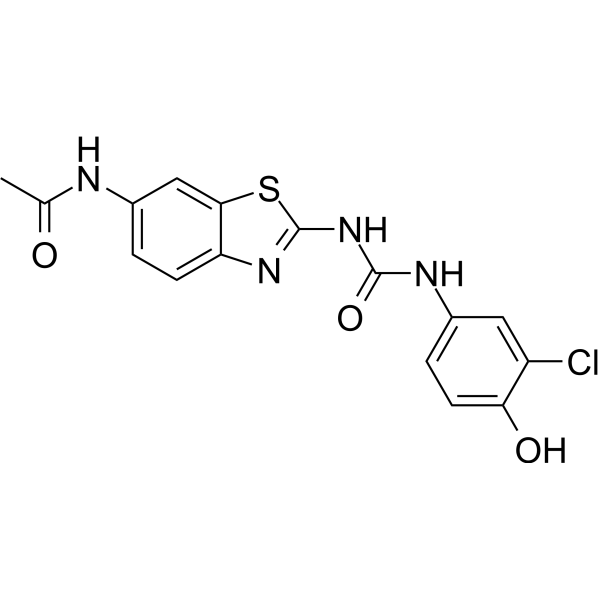 0 ImagesCat. No.: HY-155534CAS No.: 2316765-78-117β-HSD10-IN-1 (compound 9) is an orally active inhibitor of 17β-hydroxysteroid dehydrogenase type 10 (17β-HSD10) with blood-brain permeability. 17β-HSD10-IN-1 doesn't result additional effects for mitochondrial off-targets and cytotoxic or neurotoxic effects.
-
BAY-1128688
 0 ImagesBAY-1128688 is a selective, orally active aldo-keto reductase family 1 member C3 (AKR1C3) inhibitor with an IC50 of 1.4 nM. BAY-1128688 inhibits OATP, BSEP, MRP4, NTCP, UGT1A1, MRP2, and MRP3. BAY-1128688 induces reactive oxygen species (ROS) production, inhibits the mitochondrial electron transport chain, and increases circulating androsterone, etiocholanolone, dihydrotestosterone, and serum bilirubin concentrations. BAY-1128688 alters bilirubin disposition, leading to elevated plasma bilirubin, independent of liver injury. BAY-1128688 can be used in research on endometriosis and polycystic ovary syndrome.
-
Linustedastatum
 0 ImagesSynonyms: Linustedastat; FOR-6219; OG-6219Linustedastatum (Linustedastat; FOR-6219) is an orally active hydroxysteroid 17-beta dehydrogenase 1 (HSD17B1) inhibitor. Linustedastatum can be used for the study of endometriosis.
-
Lepidiline A
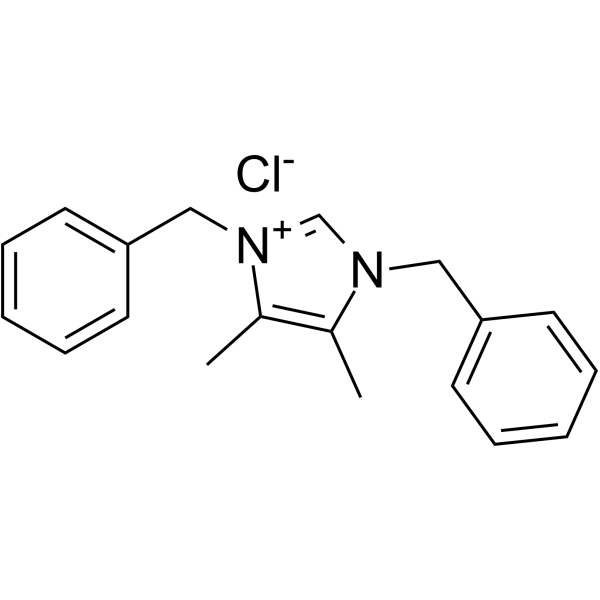 0 ImagesLepidiline A exhibits cytotoxic activity against HL-60 cells with an IC50 value of 32.3 μM. Lepidiline A targets HSD17B1 activity, increases the bioconversion efficiency of sex hormones (including the conversion of estrogen into 17β-estradiol and 4-androsten-3,7-dione into testosterone), thereby improving the reproductive capacity of fruit flies..
-
TC HSD 21
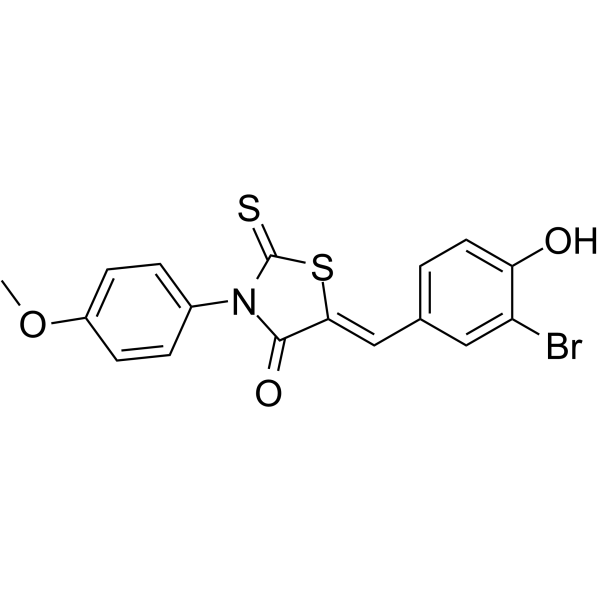 0 ImagesTC HSD 21 is a selective inhibitor of 17β-hydroxysteroid dehydrogenase type 3 (17β-HSD3) against related 17β-HSD isozymes, with an IC50 of 14 nM in HeLa cells. TC HSD 21 can be used in the research of prostate cancer.
-
Rapirosiran sodium
 0 ImagesCat. No.: HY-164221ACAS No.: 2755197-77-2Synonyms: ALN-HSD sodiumRapirosiran (ALN-HSD) sodium is a HSD17β13-targeting siRNA. Rapirosiran sodium can be used for the research of metabolic dysfunction-associated steatohepatitis.
-
(±)-Naproxen-d3
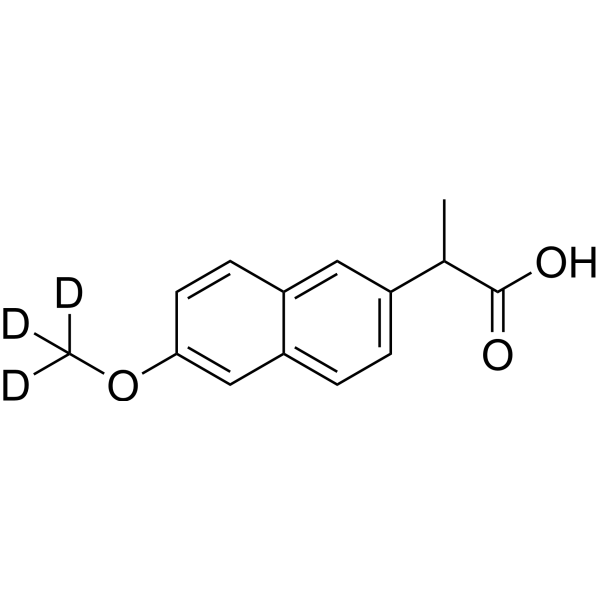 0 ImagesSynonyms: (Rac)-Naproxen-d3(±)-Naproxen-d3 ((Rac)-Naproxen-d3) is the deuterated-labeled (±)-Naproxen (HY-15029). (±)-Naproxen ((Rac)-Naproxen) is the racemate of Naproxen (HY-15030), consisting of R- and S-enantiomers. (±)-Naproxen binds to AKR1C3, which preferentially recognizes the R-enantiomer from the racemic mixture. It is used for AKR1C3 stereoselective ligand recognition and studies on NSAID binding mechanisms.
-
HSD17B13-IN-41
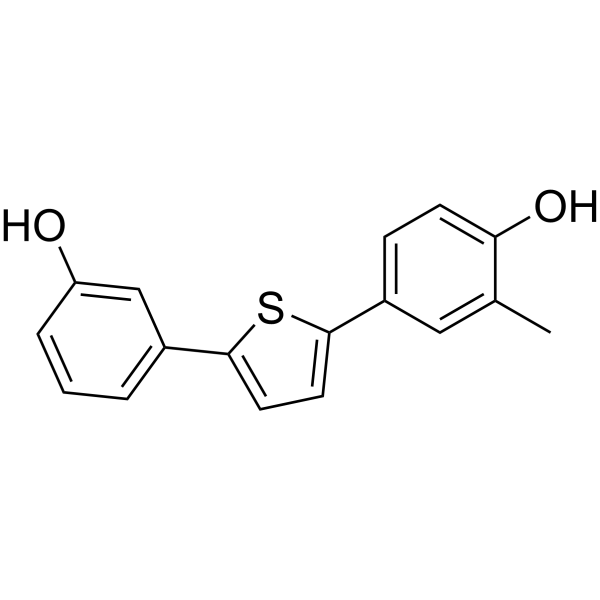 0 ImagesCat. No.: HY-128145CAS No.: 1122660-25-6HSD17B13-IN-41 (Compound C) is an inhibitor of hydroxysteroid 17β-dehydrogenase 13 (HSD17B13). HSD17B13-IN-41 can be used for research on liver diseases, metabolic diseases, or cardiovascular diseases, such as NAFLD or NASH.
-
HSD17B13-IN-9
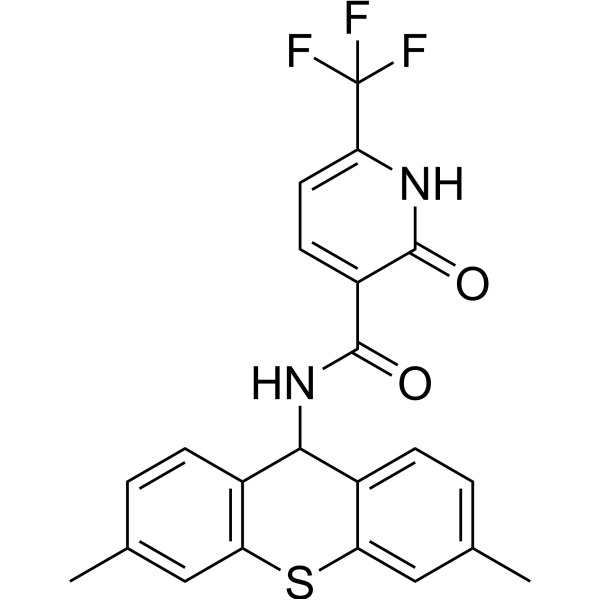 0 ImagesHSD17B13-IN-9 (252) is a 17β-Hydroxysteroid dehydrogenases (HSD17B13) inhibitor, with an IC50 of 0.01 μM for 50 nM HSD17B13. Used in NAFLD (Nonalcoholic fatty liver diseases) research.
-
HSD17B13-IN-8
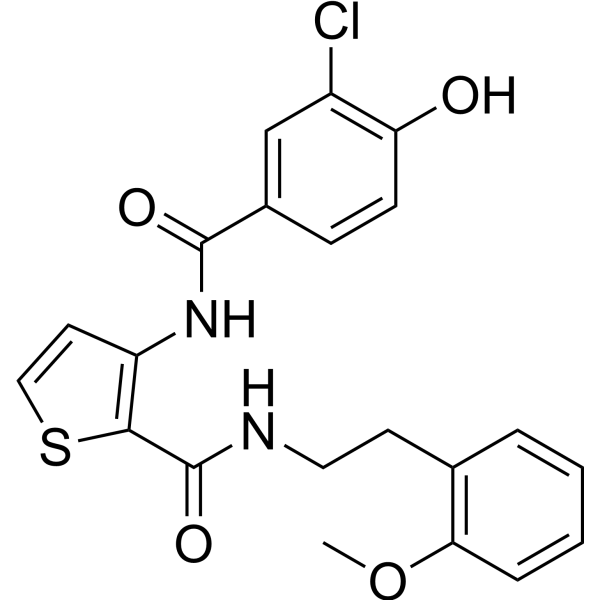 0 ImagesHSD17B13-IN-8 (1) is a 17β-Hydroxysteroid dehydrogenases (HSD17B13) inhibitor, with IC50 values of <0.1 μM for Estradiol and <1 μM for LTB3. Used in NAFLD (Nonalcoholic fatty liver diseases) research.
-
HSD17B13-IN-1
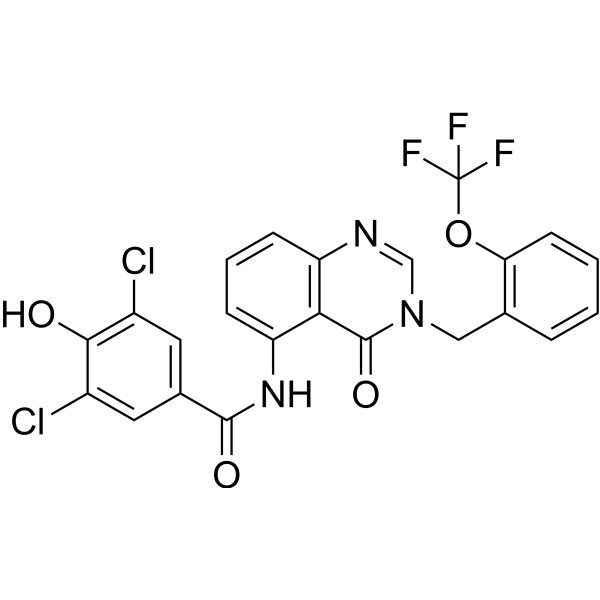 0 ImagesHSD17B13-IN-1 (compound 2) is a ppotent inhibitor of hydroxysteroid 17?-dehydrogenase 13 (HSD17B13), with the IC50 of < 0.1 μM? estradiol? as substrates. HSD17B13-IN-1? plays an important role in nonalcoholic fatty liver diseases (NAFLDs) including NASH (nonalcoholic steatohepatitis).
-
HSD17B13-IN-2
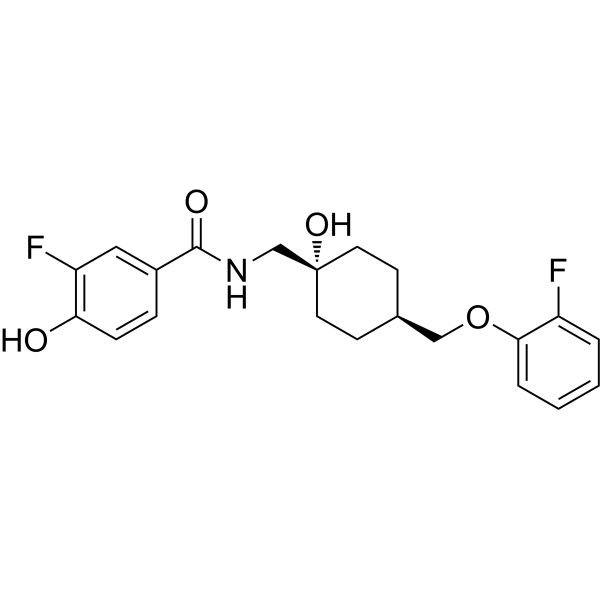 0 ImagesHSD17B13-IN-2 is an HSD17B13 inhibitor with human IC50 values of 0.18 μM (with β-estradiol as substrate) and 0.25 μM (with Leukotriene B4 as substrate), and it exhibits selectivity for human HSD17B11. HSD17B13-IN-2 binds to the active site of HSD17B13 in an NAD+-dependent manner, interacts with the bound NAD+ cofactor, and stabilizes human HSD17B13 protein to prevent its aggregation. HSD17B13-IN-2 reduces the conversion of β-estradiol to estrone in cellular assays. HSD17B13-IN-2 can be used in studies related to nonalcoholic fatty liver disease.
-
HSD17B13-IN-3
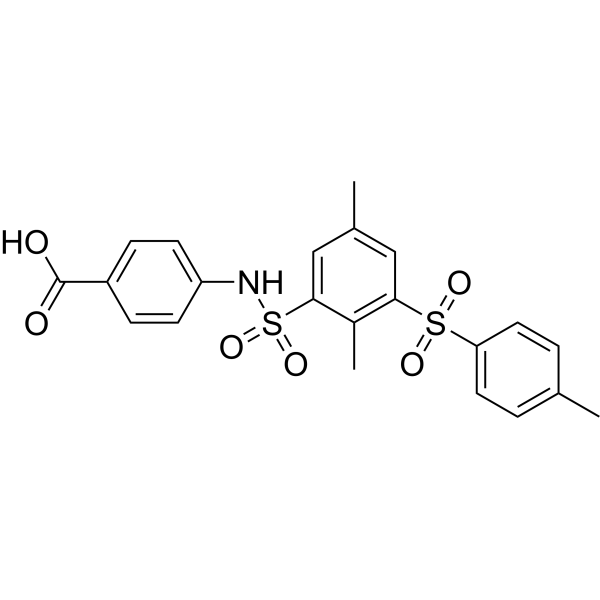 0 ImagesHSD17B13-IN-3 (compound 2) is a potent hydroxysteroid 17ß-dehydrogenase 13 (HSD17B13) inhibitor with IC50s of 0.38 μM and 0.45 μM in biochemical assays using both β-estradiol or Leukotriene B4 (LTB4) as substrate and NAD+ as cofactor. HSD17B13-IN-3 shows low cell penetration.
-
Gatuzosiran
 0 ImagesGatuzosiran, a siRNA,is a 17-beta-hydroxysteroid dehydrogenase 13 (HSD17B13) synthesis reducer. It is used for the study of fatty liver disease.
-
SN34037
 0 ImagesSN34037 is a specific inhibitor of Aldo-keto reductase 1C3 (AKR1C3, EC 1.1.1.188) with the ability to inhibit the cytotoxic activity of PR-104A. SN34037-sensitive coumberone reduction provides a rapid and specific assay for AKR1C3 activity. SN34037 inhibits the aerobic cytotoxicity of PR-104A in TF1 erythroleukemia cells with high AKR1C3 expression, but not in Nalm6 pre-B acute lymphoblastic leukemia cells with low AKR1C3 expression.



