Cell-ATP Viability Detection Kit
Based on 13 publication(s) in Google Scholar
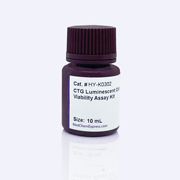
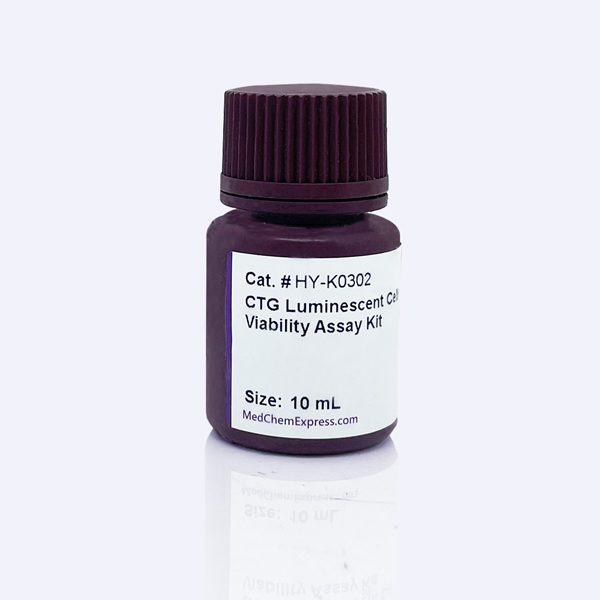
MCE Cell-ATP Viability Detection Kit is used for detecting the number and viability of living cells in culture based on high-sensitivity bioluminescence detection technology of the ATP present.Product specifications: Large sizes are based on 100 mL increments.
-
Storage :
-20°C, one year. Keep away from light. Shipping with dry ice.

To place orders, for customer services and technical support, please contact: MedChemExpress USA
Tel: 609-228-6898 E-mail: [email protected] [email protected]



-
HY-K0301
Cell Counting Kit-8 -
HY-K1090
Cytotoxicity LDH Assay Kit -

HY-K0601
JC-1 Mitochondrial Membrane Potential Assay Kit -
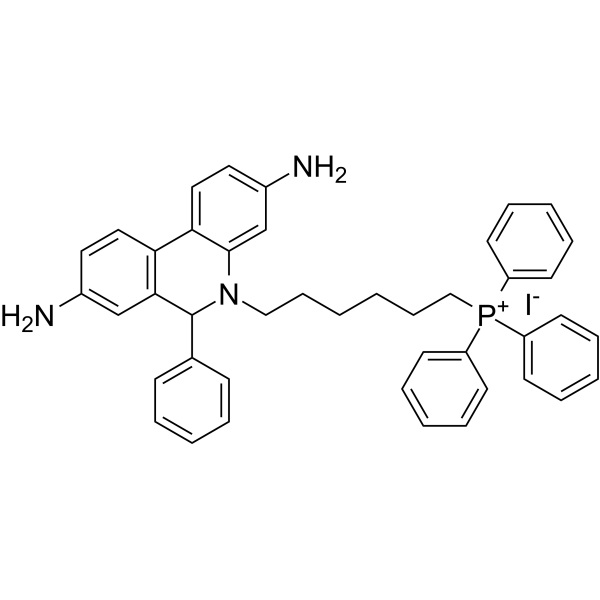
HY-D1055
MitoSOX Red -

HY-K6017
3D Cell-ATP Viability Detection Kit -
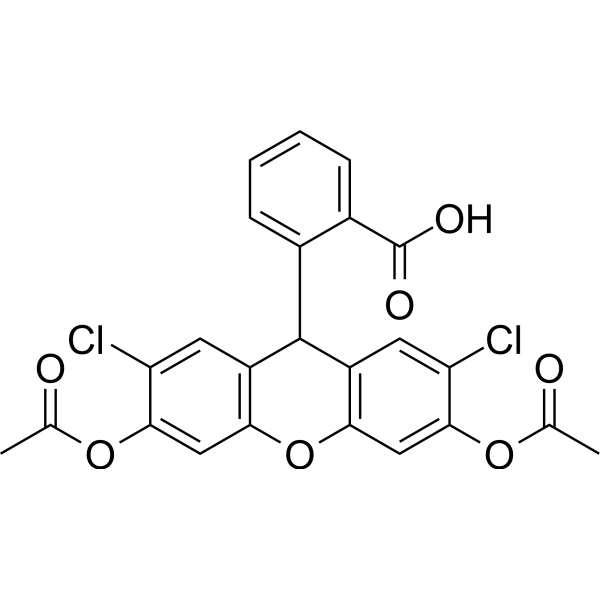
HY-D0940
H2DCFDA -
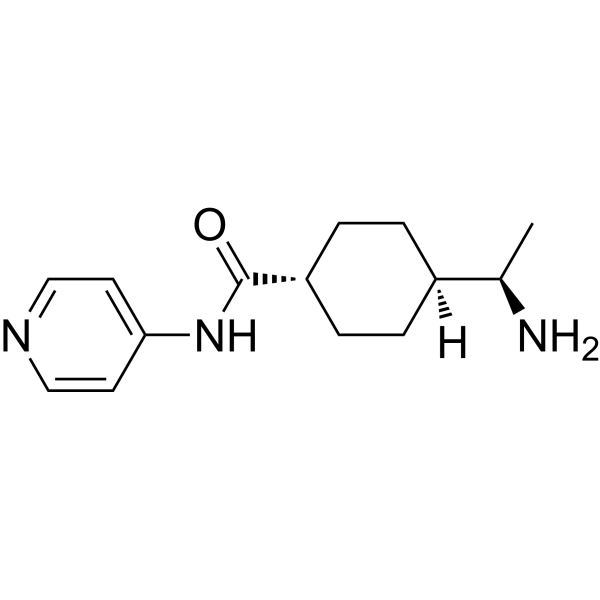
HY-10071
Y-27632 -
HY-13966
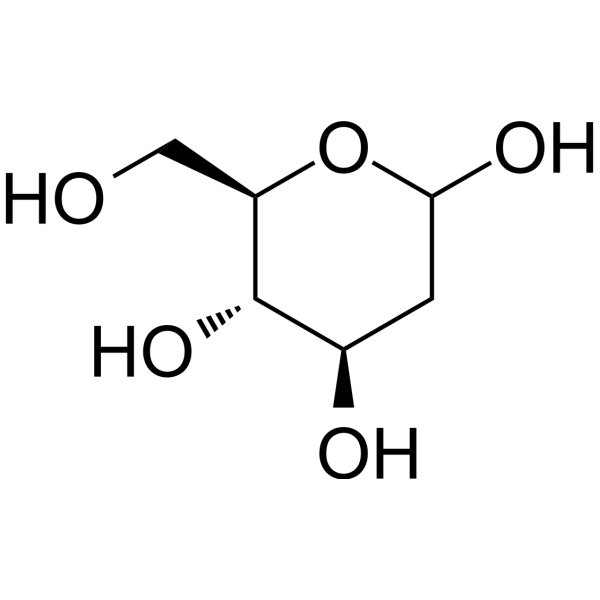
2-Deoxy-D-glucose -
HY-B1776
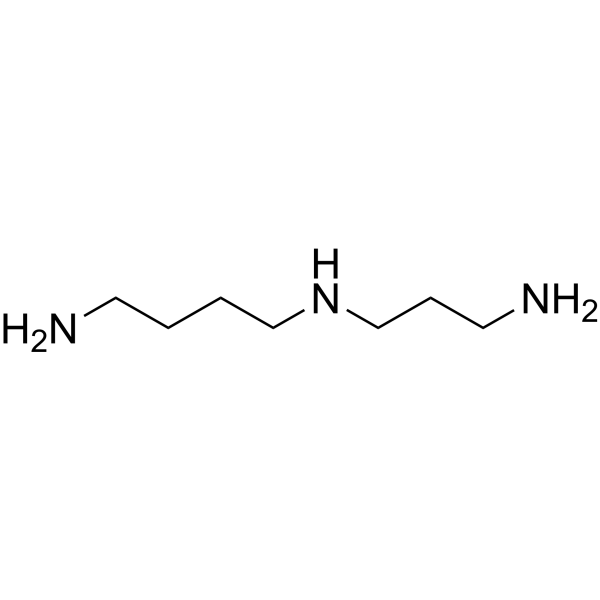
Spermidine -
HY-100941
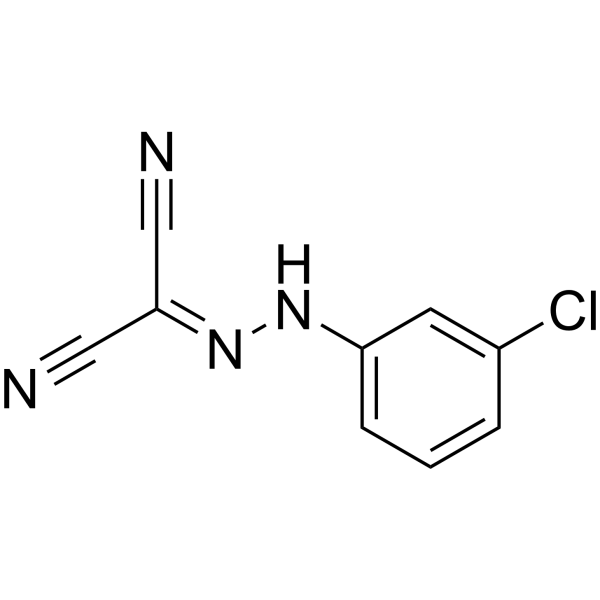
CCCP -
HY-B0146
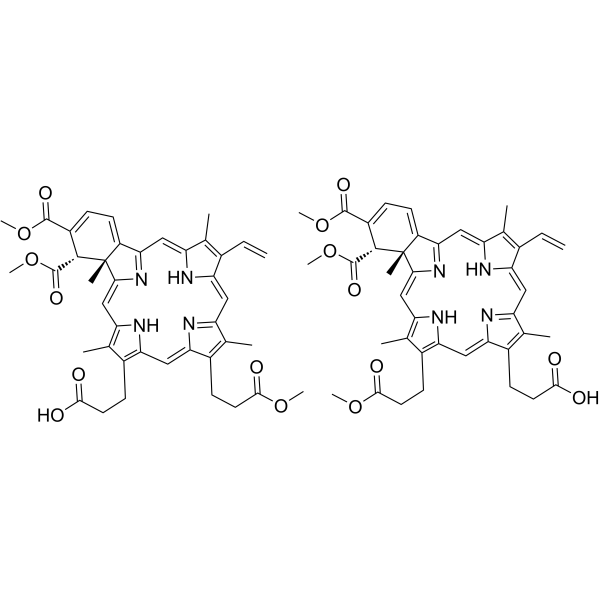
Verteporfin


Description & Advantages
ATP is an important index of cell metabolism which has a good linear relationship with the number of living cells. The principle of ATP bioluminescence technology is as follows: luciferase uses luciferin, adenosine triphosphate (ATP) and O2 as substrates, and converts chemical energy into light energy in the presence of Mg2+. In the luminescence reaction catalyzed by luciflucase, the concentration of ATP is linearly related to luminescence intensity within a certain concentration range. The amount of ATP is directly proportional to the number of cells present. Based on this, the Cell-ATP Viability Detection Kit can be used for cell counting or viability determination by ATP content.
MCE Cell-ATP Viability Detection Kit is used for detecting the number and viability of living cells in culture based on high-sensitivity bioluminescence detection technology of the ATP present.


Protocol
Reagent Preparation
Remove the Cell-ATP Viability Detection Reagent from -20°C storage, thaw it completely, equilibrate it to room temperature, and mix gently before use. After the first thaw, aliquot the reagent according to single-use requirements, protect it from light, and minimize repeated freeze-thaw cycles.
Cell Viability Detection
1. Cell Treatment: Culture and treat cells in an opaque 96-well plate or another plate suitable for luminescence detection. Equilibrate the plate to room temperature before detection.
2. Reagent Addition: Add Cell-ATP Viability Detection Reagent at a 1:1 volume ratio to the culture medium. For example, add 100 μL of reagent to a well containing 100 μL of cell culture medium.
3. Cell Lysis and Mixing: Shake the plate on an orbital microplate shaker for approximately 2 min to lyse the cells thoroughly and release ATP.
4. Signal Stabilization: Incubate the plate at room temperature for approximately 10 min protected from light to stabilize the luminescent signal.
5. Measurement: Measure luminescence in each well using a multimode microplate reader or luminometer. Include blank wells containing culture medium and detection reagent without cells.
Data Analysis
Cell viability (%) = [(RLUsample - RLUblank) / (RLUcontrol - RLUblank)] × 100%.
Note: For consistent results, equilibrate all samples, reagents, and plates to the same temperature before detection and maintain the same culture-medium-to-reagent volume ratio in all wells.


Publications
-
Journal Impact Factor
-
Most Recent
-
J NanobiotechnologyFisetin carbon dots alleviate periodontitis by enhancing mitophagy through regulation of sirtuin 3 SUMOylation. [Abstract]2025 Dec 6;23(1):767. PMID: 41353553
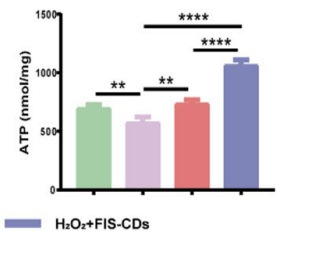
Cell-ATP Viability Detection Kit purchased from MedChemExpress. Usage Cited in: J Nanobiotechnology. 2025 Dec 6;23(1):767. [Abstract]
Quantification of intracellular ATP levels.
-
Pharmacol ResGenetic and pharmacological targeting of HINT2 promotes OXPHOS to alleviate inflammatory responses and cell necrosis in acute pancreatitis. [Abstract]2025 Feb:212:107620. PMID: 39848351
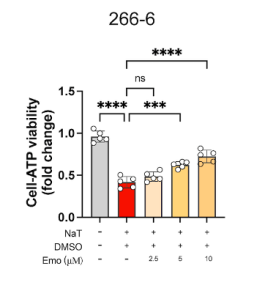
Cell-ATP Viability Detection Kit purchased from MedChemExpress. Usage Cited in: Pharmacol Res. 2025 Feb:212:107620. [Abstract]
Pre-treatment of 266–6 cells with Emo (2.5–10 μM) for 12 h and then exposed to NaT (5 mM) for 3 h; Cell viability was determined using the Cell-ATP Viability Detection Kit.
-
Proc Natl Acad Sci U S A2026 Apr 14;123(15):e2520128123. PMID: 41945431
-
ACS Appl Mater InterfacesDisrupting Neutrophil Extracellular Traps with Targeted Cerium Oxide Nanoparticles Ameliorates Diabetic Periodontitis. [Abstract]2026 Apr 22;18(15):21604-21621. PMID: 41972905
-
J EthnopharmacolLiquiritigenin alleviates inflammation and mitochondrial dysfunction in acute pancreatitis via ERβ-VDAC1 signaling. [Abstract]2025 Sep 3:120526. PMID: 40912483
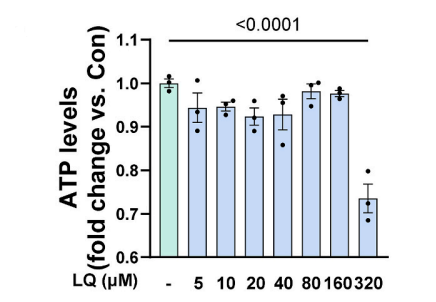
Cell-ATP Viability Detection Kit purchased from MedChemExpress. Usage Cited in: J Ethnopharmacol. 2025 Sep 3:120526. [Abstract]
Assessment of liquiritigenin toxicity in 266–6 cells using ATP viability .
-
ACS Synth BiolEfficient Strategy for Synthesizing Vector-Free and Oncolytic Herpes Simplex Type 1 Viruses. [Abstract]2024 Oct 18;13(10):3268-3280. PMID: 39358309
-
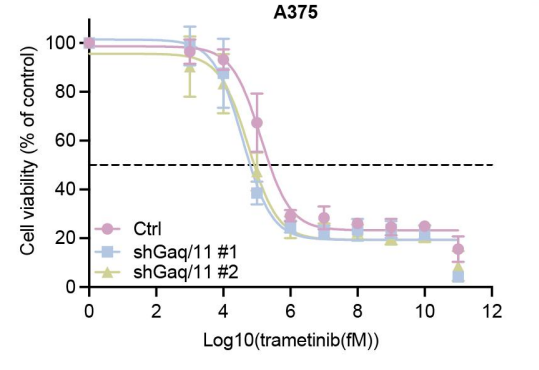
Cell-ATP Viability Detection Kit purchased from MedChemExpress. Usage Cited in: bioRxiv. 2025 Nov 18.
A375 cells transduced with empty vector control (Ctrl) or shRNA targeting both GNAQ and GNA11 (shGαq/11) were treated with vehicle or trametinib for 72 h. Cell viability was measured by CellTiter-Glo, and dose-response curves are shown.


Application
Cell viability assay; Live cell counting
Storage
-20°C, one year.
Keep away from light.
Shipping with dry ice.


Components
| Components | HY-K0302-10 mL | HY-K0302-100 mL | HY-K0302-500 mL |
|---|---|---|---|
| Cell-ATP Viability Detection Reagent | 10 mL | 100 mL | 100 mL*5 |


 Please enter the correct Lot Number