



Spermidine
Based on 20 publication(s) in Google Scholar
Spermidine maintains cell membrane stability, increases antioxidant enzymes activities, improving photosystem II (PSII), and relevant gene expression. Spermidine significantly decreases the H2O2 and O2.- contents.
For research use only. We do not sell to patients.
- Purity : 99.38%
- CAS No.: 124-20-9
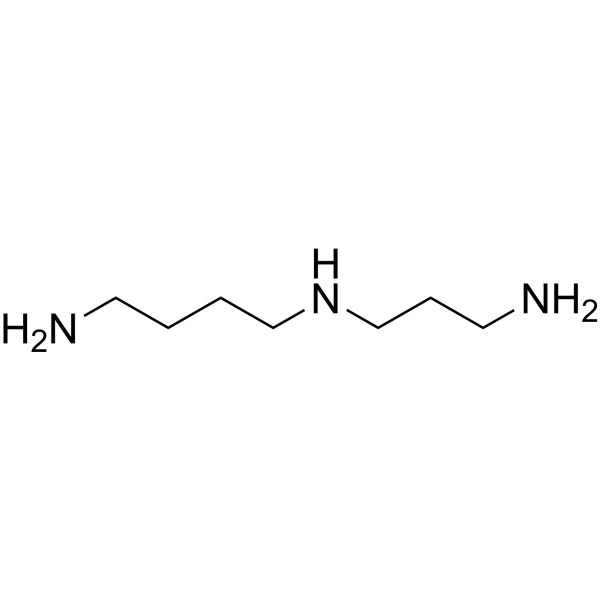
- Formula: C7H19N3
- Molecular Weight:145.25
-
Storage:Pure form -20°C, 3 years , 4°C, 2 years ; In solvent -80°C, 6 months , -20°C, 1 month

To place orders, for customer services and technical support, please contact: MedChemExpress USA
Tel: 609-228-6898 E-mail: [email protected] [email protected]


-
 Biological Activity
-
Chemical Information
-
Solvent & Solubility
- Protocols
- Purity & Documentation
- References
-
 Help & FAQs


-
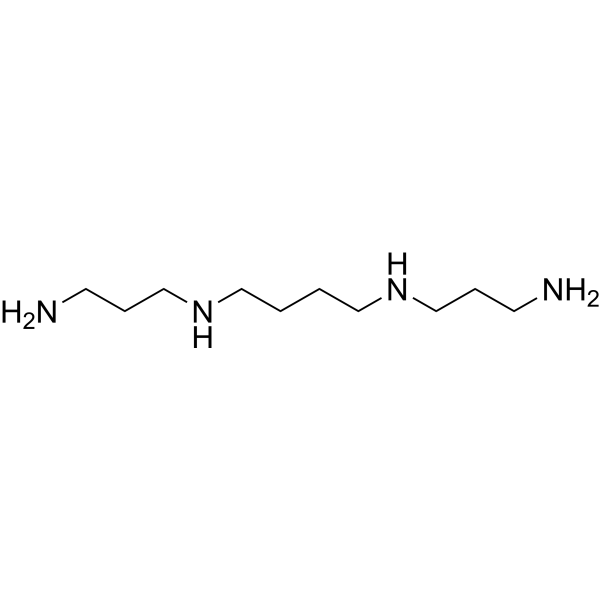
HY-B1777
SpermineEndogenous Metabolite -
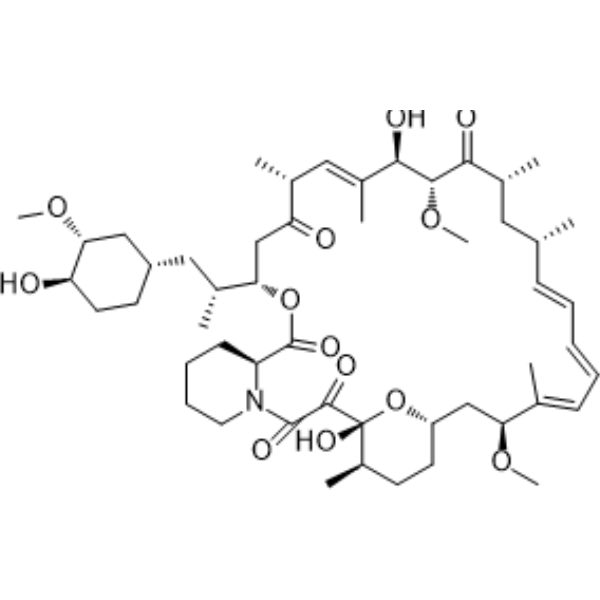
HY-10219
RapamycinmTOR Inhibitor -
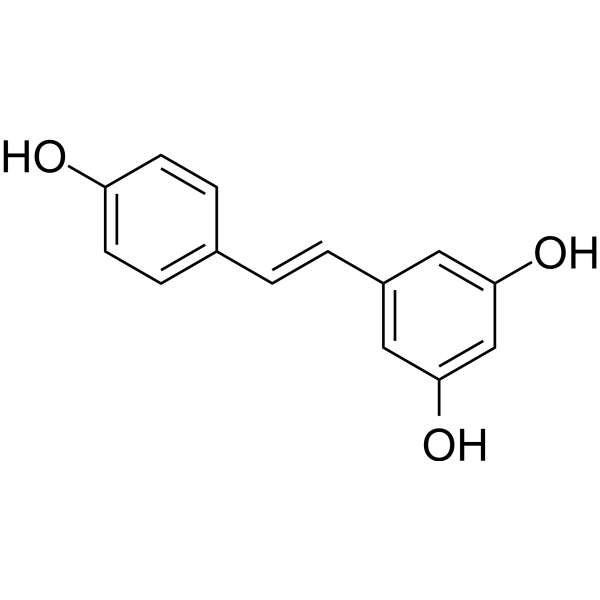
HY-16561
ResveratrolPolyphenolic Phytoalexin -

HY-B1776R
Spermidine (Standard)Polyamine Compound -
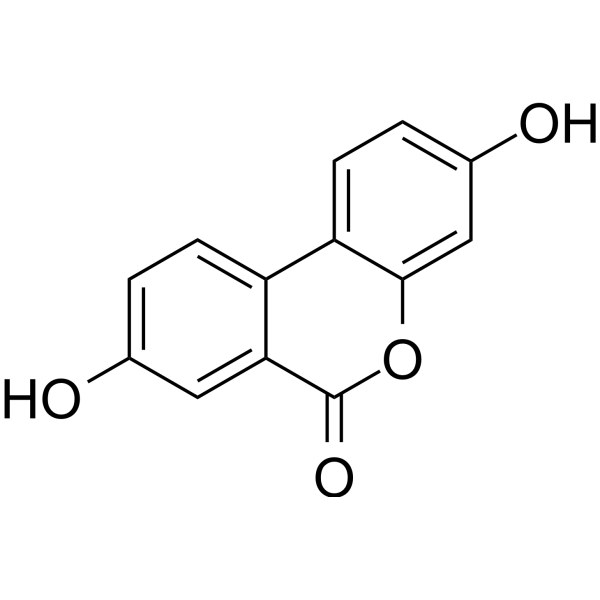
HY-100599
Urolithin AMitophagy Activator -
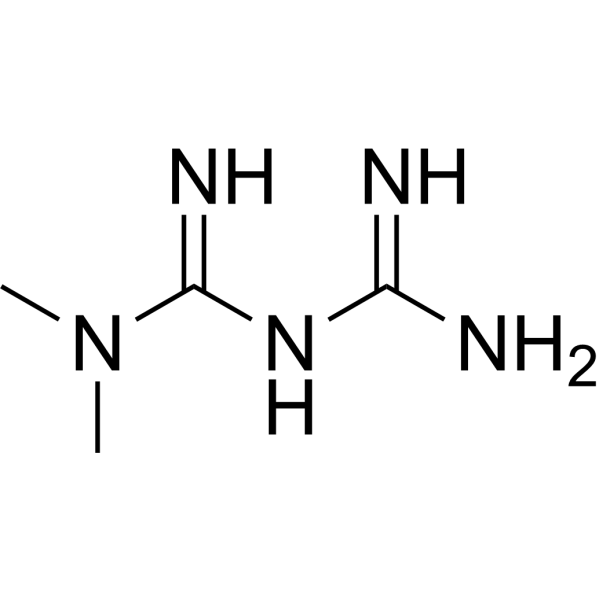
HY-B0627
MetforminAntihyperglycemic Agent -
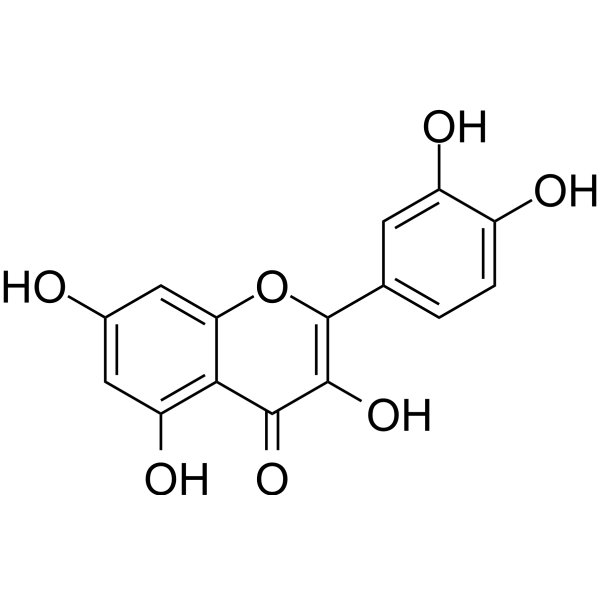
HY-18085
QuercetinFlavonoid Antioxidant -
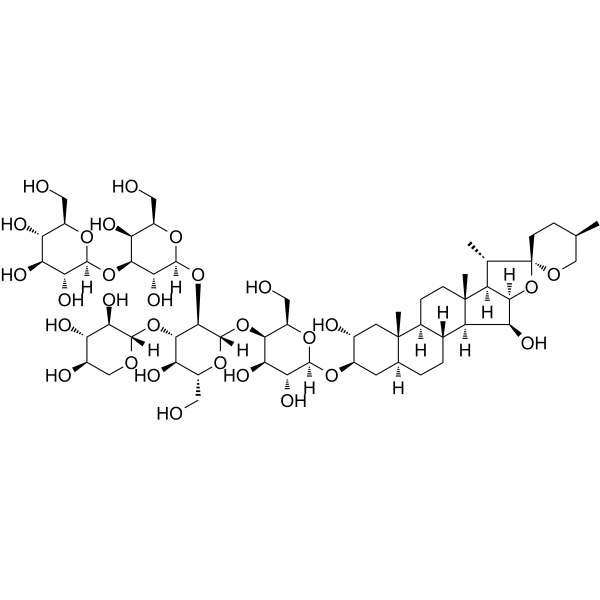
HY-N4000
DigitoninDetergent -
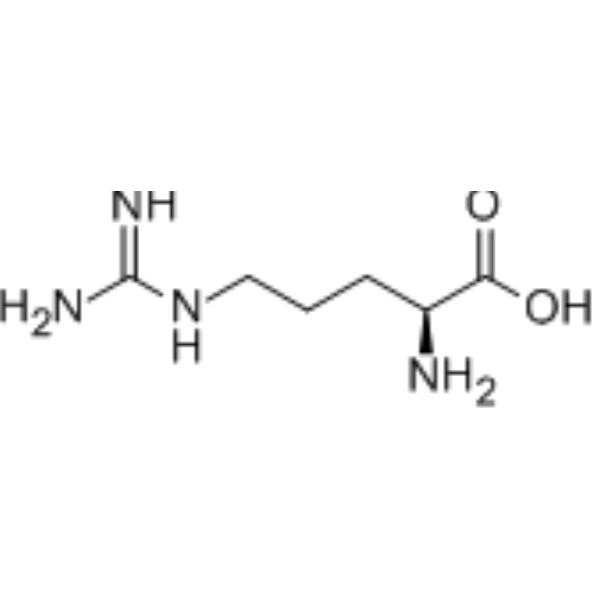
HY-N0455
L-ArginineeNOS Substrate -
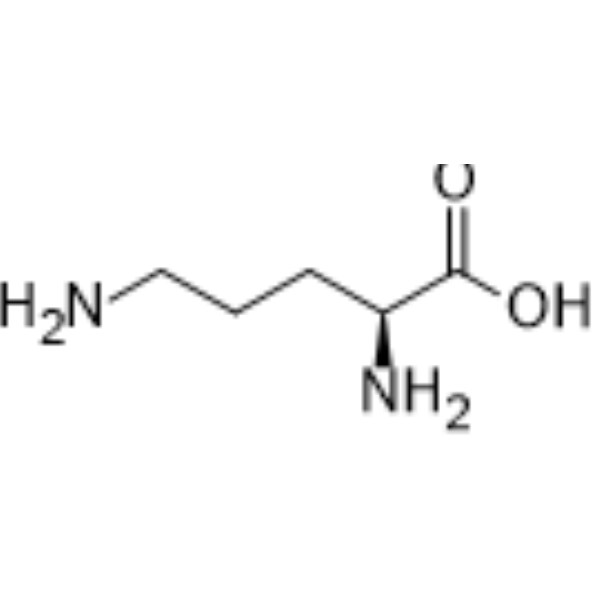
HY-B1352
L-OrnithineAmino Acid -
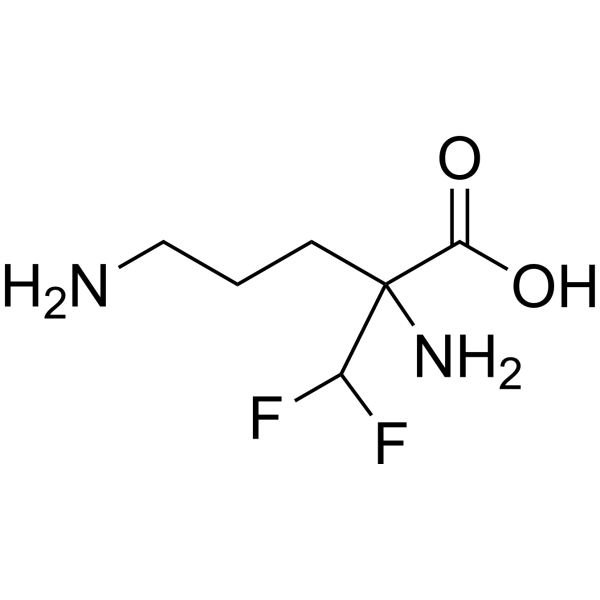
HY-B0744
EflornithineOrnithine Decarboxylase Inhibitor
Publications Citing Use of MedChemExpress (MCE) Spermidine
More- Cell. 2026 Jan 22;189(2):418-434.e24. [Abstract]
- Cell Metab. 2025 Jan 7;37(1):87-103.e10. [Abstract]
- Nat Commun. 2025 Dec 8. [Abstract]
- Nat Commun. 2025 Aug 1;16(1):7071. [Abstract]
- Cell Rep Med. 2025 Oct 27:102424. [Abstract]
- J Control Release. 2025 Sep 30;388(Pt 1):114283. [Abstract]
- Clin Cancer Res. 2025 Nov 20. [Abstract]
- EMBO J. 2023 Feb 1;42(3):e111364. [Abstract]
- Aging Cell. 2026 Jan 20;25(2):e70352.
- PLoS Biol. 2024 Jun 27;22(6):e3002672. [Abstract]
- Aquaculture. 2025 Oct 15.
- Sleep Med. 2025 Nov 8:137:108648. [Abstract]
- J Biol Chem. 2024 Nov;300(11):107862. [Abstract]
- PLoS Genet. 2026 Jan 23;22(1):e1012013. [Abstract]
- Vascul Pharmacol. 2026 Jun 16:164:107672. [Abstract]
- Virus Res. 2022 Apr 15:312:198708. [Abstract]
- Exp Eye Res. 2025 Jun:255:110360. [Abstract]
- J Toxicol Sci. 2025;50(10):555-567. [Abstract]
- Res Sq. 2025 Jul 13.
- bioRxiv. 2024 Apr 3:2023.06.02.542933. [Abstract]
 Customer Validation & Images

-
In Vivo Efficacy Study
-
IF
All Endogenous Metabolite Isoforms
More

Biological Activity
Description
IC50 & Target
|
Microbial Metabolite |
Human Endogenous Metabolite |
Cellular Effect
|
Cell Line

|
Type | Value | Description | References |
|---|---|---|---|---|
| CHO | IC50 |
>100 μM
Compound: Spd, spermidine
|
Cytotoxicity against CHO cells after 48 hrs by MTT assay
Cytotoxicity against CHO cells after 48 hrs by MTT assay
|
[PMID: 18558490] |
| CHO | IC50 |
>100 μM
Compound: Spd, spermidine
|
Cytotoxicity against polyamine transport-deficient mutant CHO cells after 48 hrs by MTT assay
Cytotoxicity against polyamine transport-deficient mutant CHO cells after 48 hrs by MTT assay
|
[PMID: 18558490] |
| CHO-MG | IC50 |
>100 μM
Compound: 2, Spermidine
|
Inhibition of cell growth in CHO-MG cells in the presence of DFMO
Inhibition of cell growth in CHO-MG cells in the presence of DFMO
|
[PMID: 16392808] |
| HeLa | IC50 |
100 μM
Compound: spermidine
|
Ability to inhibit 50% growth of HeLa cells
Ability to inhibit 50% growth of HeLa cells
|
[PMID: 1875339] |
| HeLa | IC50 |
1500 μM
Compound: spermidine
|
Ability to cause aggregation of purified HeLa cell DNA
Ability to cause aggregation of purified HeLa cell DNA
|
[PMID: 1875339] |
| L1210 | IC50 |
>100 μM
Compound: Spd, spermidine
|
Cytotoxicity against mouse L1210 ATCC CCL 219 cells after 48 hrs by MTT assay
Cytotoxicity against mouse L1210 ATCC CCL 219 cells after 48 hrs by MTT assay
|
[PMID: 18558490] |
| L1210 | IC50 |
>100 μM
Compound: 7
|
Growth inhibitory activity against L1210 cells (48h)
Growth inhibitory activity against L1210 cells (48h)
|
[PMID: 9154970] |
| L1210 | IC50 |
>100 μM
Compound: 7
|
Growth inhibitory activity against L1210 cells (96h)
Growth inhibitory activity against L1210 cells (96h)
|
[PMID: 9154970] |
| RAW264.7 | CC50 |
>100 μM
Compound: Spermidine
|
Cytotoxicity against mouse RAW264.7 cells assessed as cell growth inhibition after 72 hrs by Alamar blue dye-based assay
Cytotoxicity against mouse RAW264.7 cells assessed as cell growth inhibition after 72 hrs by Alamar blue dye-based assay
|
[PMID: 27793448] |
In Vitro
Spermidine?plays a crucial role of against abiotic stresses, such as salt, drought, heat, and salinity-alkalinity stresses in tomato, cucumber, rice[1].
MedChemExpress (MCE) has not independently confirmed the accuracy of these methods. They are for reference only.
Clinical Trial
| NCT Number | Sponsor | Condition | Start Date |
Phase
|
|---|---|---|---|---|
| NCT01329991 | Plexxikon| | 2011-05 | PHASE1 |


Chemical Information
-
CAS No. 124-20-9
-
Appearance <23°C Solid,>25°C Liquid
-
Molecular Weight 145.25
-
Formula C7H19N3
-
Color Colorless to light yellow
-
SMILES
NCCCCNCCCN
-
Structure Classification
-
Initial Source
-
Shipping
Room temperature in continental US; may vary elsewhere.
-
Storage
Pure form -20°C 3 years 4°C 2 years In solvent -80°C 6 months -20°C 1 month


Publications (20)
-
Journal Impact Factor
-
Most Recent
-
Cell
Tumor-produced ammonia is metabolized by regulatory T cells to further impede anti-tumor immunity. [Abstract]2026 Jan 22;189(2):418-434.e24. PMID: 41448182 -
Cell Metab
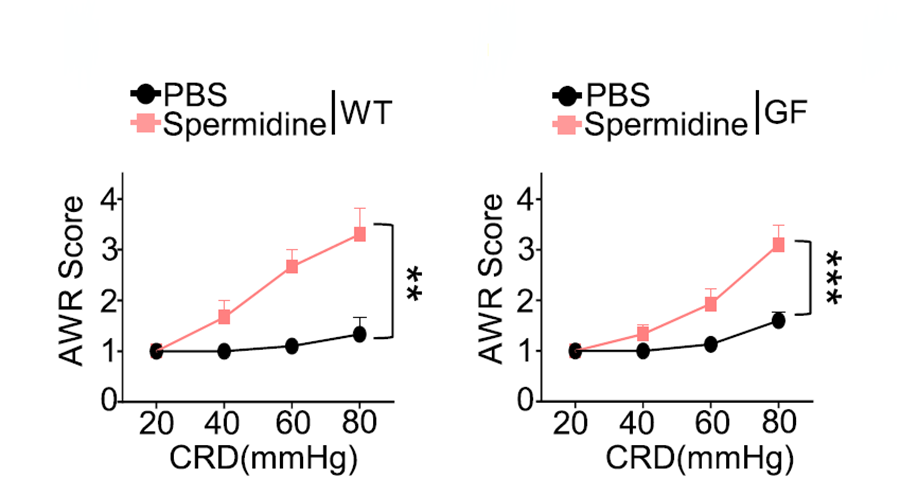
Stress triggers irritable bowel syndrome with diarrhea through a spermidine-mediated decline in type I interferon. [Abstract]2025 Jan 7;37(1):87-103.e10. PMID: 39366386
Spermidine purchased from MedChemExpress. Usage Cited in: Cell Metab. 2025 Jan 7;37(1):87-103.e10. [Abstract]
Spermidine (40 mg/kg; i.p.; every 2 days 3 times). WT (left, n = 3) or GF (right, n = 5) mice are i.p. injected with Spermidine (40 mg/kg) every 2 days 3 times, and the AWR scores are determined on day 8.
-
Nat Commun
2025 Dec 8. PMID: 41361241
Spermidine purchased from MedChemExpress. Usage Cited in: Nat Commun. 2025 Dec 8. [Abstract]
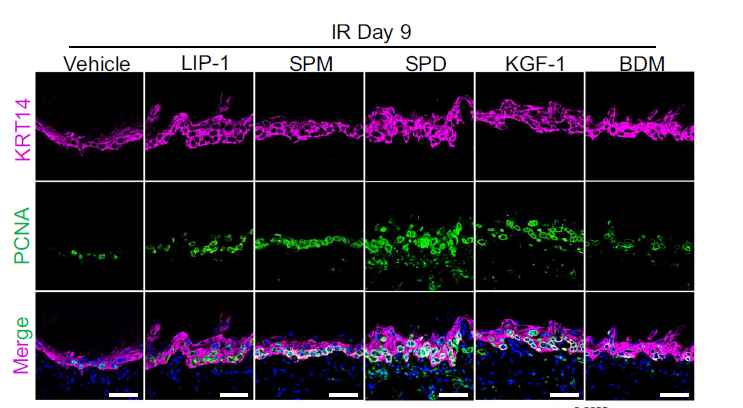
Spermidine (10 mg/kg; i.p.; starting 7 days prior to irradiation and continuing until 9 days post-irradiation). Immunofluorescence staining confirms significantly enhanced epithelial proliferation in the Spermidine-treated group by day 9 post-radiation. Quantification of PCNA+ basal cells before irradiation and for 9 days post-irradiation (n = 6 mice). Five random images per mouse were analyzed. Scale bar, 100 μm.
-
Nat Commun
USP17L promotes the 2-cell-like program through deubiquitination of H2AK119ub1 and ZSCAN4. [Abstract]2025 Aug 1;16(1):7071. PMID: 40750602 -
Cell Rep Med
2025 Oct 27:102424. PMID: 41151579 -
J Control Release
Targeting polyamine metabolism induces oxidative/carbonyl stress to reinvigorate antitumor immunity in prostate cancer. [Abstract]2025 Sep 30;388(Pt 1):114283. PMID: 41038348 -
Clin Cancer Res
Spermidine Secreted by Apoptotic Cells Enhances Chemotherapy Resistance by Modulating β-Catenin Activity in Osteosarcoma. [Abstract]2025 Nov 20. PMID: 41263700 -
EMBO J
Maternal mRNA deadenylation and allocation via Rbm14 condensates facilitate vertebrate blastula development. [Abstract]2023 Feb 1;42(3):e111364. PMID: 36477743 -
-
PLoS Biol
2024 Jun 27;22(6):e3002672. PMID: 38935621 -
-
Sleep Med
Cerebellar GluN2C protects against sleep deprivation-induced cognitive impairment and motor incoordination. [Abstract]2025 Nov 8:137:108648. PMID: 41223665 -
J Biol Chem
Different charged biopolymers induce α-synuclein to form fibrils with distinct structures. [Abstract]2024 Nov;300(11):107862. PMID: 39374778 -
PLoS Genet
A C. elegans model of copper deficiency: Dietary interventions rescue CTR1/CHCA-1 copper transporter mutant phenotype. [Abstract]2026 Jan 23;22(1):e1012013. PMID: 41575937 -
Vascul Pharmacol
Spermidine ameliorates BK channel dysfunction in diabetic coronary smooth muscle cells via PKM2/STAT3/FBXO32 axis. [Abstract]2026 Jun 16:164:107672. PMID: 42303097 -
Virus Res
PEDV infection affects the expression of polyamine-related genes inhibiting viral proliferation. [Abstract]2022 Apr 15:312:198708. PMID: 35151773 -
Exp Eye Res
Spermidine mitigates blue-light-induced corneal injury by alleviating oxidative stress and restoring autophagy impairment. [Abstract]2025 Jun:255:110360. PMID: 40139641 -
J Toxicol Sci
Spermidine alleviates sepsis-induced acute kidney injury by suppressing apoptosis and inflammation through modulation of TLR4-mediated signaling. [Abstract]2025;50(10):555-567. PMID: 41034042 -
-
bioRxiv
An efficient behavioral screening platform classifies natural products and other chemical cues according to their chemosensory valence in C. elegans. [Abstract]2024 Apr 3:2023.06.02.542933. PMID: 37333363


Solvent & Solubility
In Vitro:
H2O : 100 mg/mL (688.47 mM; Need ultrasonic)
DMSO : 16.67 mg/mL (114.77 mM; Need ultrasonic; Hygroscopic DMSO has a significant impact on the solubility of product, please use newly opened DMSO)
Please refer to the solubility information to select the appropriate solvent. Once prepared, please aliquot and store the solution to prevent product inactivation from repeated freeze-thaw cycles.
Storage method and period of stock solution: -80°C, 6 months; -20°C, 1 month. When stored at -80°C, please use it within 6 months. When stored at -20°C, please use it within 1 month.
* Note: If you choose water as the stock solution, please dilute it to the working solution, then filter and sterilize it with a 0.22 μm filter before use.
Please refer to the solubility information to select the appropriate solvent. Once prepared, please aliquot and store the solution to prevent product inactivation from repeated freeze-thaw cycles.
Storage method and period of stock solution: -80°C, 6 months; -20°C, 1 month. When stored at -80°C, please use it within 6 months. When stored at -20°C, please use it within 1 month.
* Note: If you choose water as the stock solution, please dilute it to the working solution, then filter and sterilize it with a 0.22 μm filter before use.
Concentration (start) × Volume (start) = Concentration (final) × Volume (final)
In Vivo:
Select the appropriate dissolution method based on your experimental animal and administration route.
- For the following dissolution methods, please ensure to first prepare a clear stock solution using an In Vitro approach and then sequentially add co-solvents:
- To ensure reliable experimental results, the clarified stock solution can be appropriately stored based on storage conditions. As for the working solution for In Vivo experiments, it is recommended to prepare freshly and use it on the same day.
- The percentages shown for the solvents indicate their volumetric ratio in the final prepared solution. If precipitation or phase separation occurs during preparation, heat and/or sonication can be used to aid dissolution.
Add each solvent one by one: 10% DMSO 40% PEG300 5% Tween-80 45% Saline
Solubility: ≥ 1.67 mg/mL (11.50 mM); Clear solution
This protocol yields a clear solution of ≥ 1.67 mg/mL (saturation unknown).
Taking 1 mL working solution as an example, add 100 μL DMSO stock solution (16.7 mg/mL) to 400 μL PEG300, and mix evenly; then add 50 μL Tween-80 and mix evenly; then add 450 μL Saline to adjust the volume to 1 mL.
Preparation of Saline: Dissolve 0.9 g sodium chloride in ddH₂O and dilute to 100 mL to obtain a clear Saline solution.
Add each solvent one by one: 10% DMSO 90% (20% SBE-β-CD in Saline)
Solubility: ≥ 1.67 mg/mL (11.50 mM); Clear solution
This protocol yields a clear solution of ≥ 1.67 mg/mL (saturation unknown).
Taking 1 mL working solution as an example, add 100 μL DMSO stock solution (16.7 mg/mL) to 900 μL 20% SBE-β-CD in Saline, and mix evenly.
Preparation of 20% SBE-β-CD in Saline (4°C, storage for one week): 2 g SBE-β-CD powder is dissolved in 10 mL Saline, completely dissolve until clear.
For the following dissolution methods, please prepare the working solution directly:
It is recommended to prepare fresh solutions and use them promptly within a short period of time.
The percentages shown for the solvents indicate their volumetric ratio in the final prepared solution. If precipitation or phase separation occurs during preparation, heat and/or sonication can be used to aid dissolution.
Add each solvent one by one: PBS
Solubility: 50 mg/mL (344.23 mM); Clear solution; Need ultrasonic
In Vivo Dissolution Calculator
Please enter the basic information of animal experiments:
-
-
-
-
Recommended: Prepare an additional quantity of animals to account for potential losses during experiments.
Working solution concentration: 0.22 mg/mL
This product has good water solubility, please refer to the measured solubility data in water/PBS/Saline for details.


Purity & Documentation
-
Data Sheet (268 KB)
-
SDS (477 KB)
- English - EN (477 KB)
- Français - FR (477 KB)
- Deutsch - DE (477 KB)
- Norwegian - NO (477 KB)
- Español - ES (477 KB)
- Swedish - SV (477 KB)
- Italian - IT (477 KB)
- Korean - KR (477 KB)
- Portuguese - PT (477 KB)
-
Handling Instructions (2659 KB)
References


Complete Stock Solution Preparation Table
Please refer to the solubility information to select the appropriate solvent. Once prepared, please aliquot and store the solution to prevent product inactivation from repeated freeze-thaw cycles.
Storage method and period of stock solution: -80°C, 6 months; -20°C, 1 month. When stored at -80°C, please use it within 6 months. When stored at -20°C, please use it within 1 month.
| Optional Solvent | Concentration Solvent Mass | 1 mg | 5 mg | 10 mg | 25 mg |
|---|---|---|---|---|---|
| DMSO / H2O | 1 mM | 6.8847 mL | 34.4234 mL | 68.8468 mL | 172.1170 mL |
| 5 mM | 1.3769 mL | 6.8847 mL | 13.7694 mL | 34.4234 mL | |
| 10 mM | 0.6885 mL | 3.4423 mL | 6.8847 mL | 17.2117 mL | |
| 15 mM | 0.4590 mL | 2.2949 mL | 4.5898 mL | 11.4745 mL | |
| 20 mM | 0.3442 mL | 1.7212 mL | 3.4423 mL | 8.6059 mL | |
| 25 mM | 0.2754 mL | 1.3769 mL | 2.7539 mL | 6.8847 mL | |
| 30 mM | 0.2295 mL | 1.1474 mL | 2.2949 mL | 5.7372 mL | |
| 40 mM | 0.1721 mL | 0.8606 mL | 1.7212 mL | 4.3029 mL | |
| 50 mM | 0.1377 mL | 0.6885 mL | 1.3769 mL | 3.4423 mL | |
| 60 mM | 0.1147 mL | 0.5737 mL | 1.1474 mL | 2.8686 mL | |
| 80 mM | 0.0861 mL | 0.4303 mL | 0.8606 mL | 2.1515 mL | |
| 100 mM | 0.0688 mL | 0.3442 mL | 0.6885 mL | 1.7212 mL |
* Note: If you choose water as the stock solution, please dilute it to the working solution, then filter and sterilize it with a 0.22 μm filter before use.


Spermidine Related Classifications
HY-B1776 Related Classifications
 Powered by Bioz