



Hypothalamic-Pituitary-Adrenal Regulation
-
Hypothalamic-Pituitary-Adrenal Regulation (10)

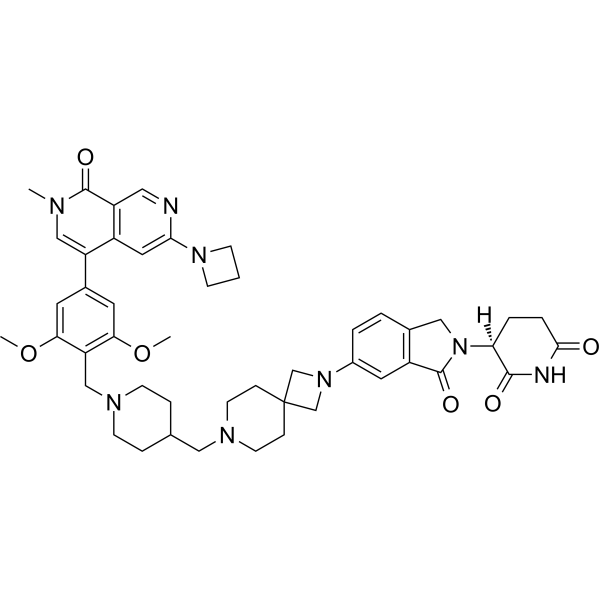
- Formula: C47H56N8O6
- Molecular Weight: 829.00
FHD-609 is a BRD9 PROTAC degrader. FHD-609 induces BRD9 degradation, downregulates primary transcripts of HBG/HBD, Myc expression and proliferation gene sets, reduces the levels of synovial sarcoma tumor proliferation markers, and inhibits tumor growth. FHD-609 can be used in research related to advanced synovial sarcoma, SMARCB1-deficient tumors and adrenocortical carcinoma.
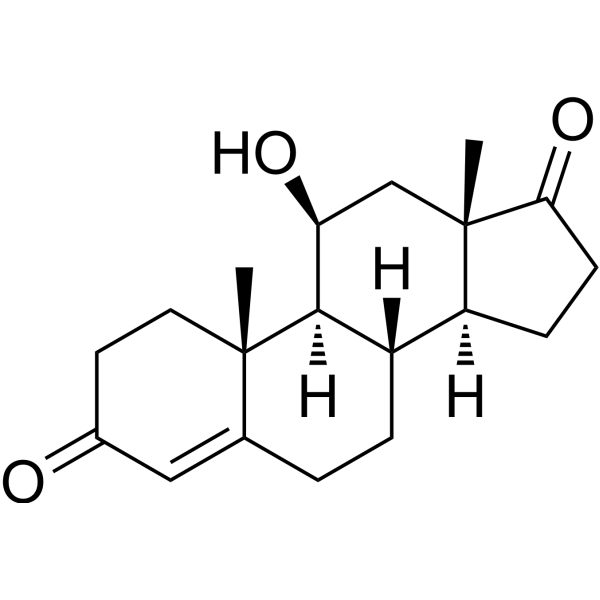
- Formula: C19H26O3
- Molecular Weight: 302.41
11-Beta-hydroxyandrostenedione (4-Androsten-11β-ol-3,17-dione) is a steroid mainly found in the the adrenal origin (11β-hydroxylase is present in adrenal tissue, but absent in ovarian tissue). 11-Beta-hydroxyandrostenedione is a 11β-hydroxysteroid dehydrogenase (11βHSD) isozymes inhibitor. As 4-androstenedione increases, measuring plasma 11-Beta-hydroxyandrostenedione can distinguish the adrenal or ovarian origin of hyperandrogenism.
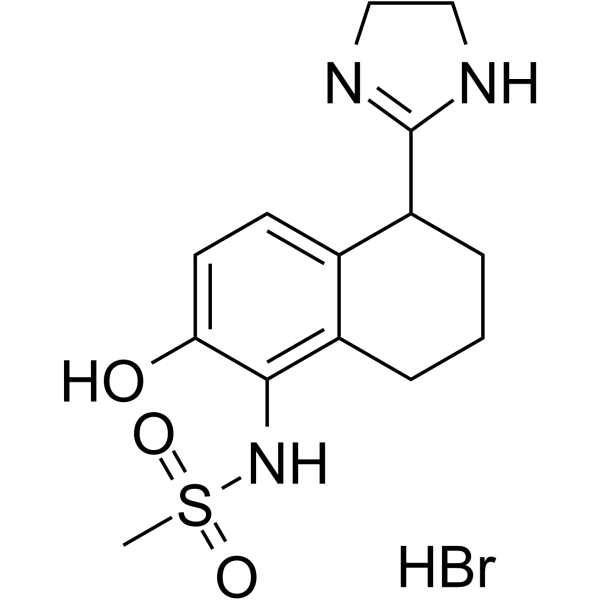
- Formula: C14H20BrN3O3S
- Molecular Weight: 390.30
A-61603 is a selective α1A/α1a-adrenergic receptor agonist with Ki of 8.89 nM for rat submaxillary gland α1A, Ki of 30.5 nM for cloned bovine α1a. A-61603 potentiates Ca2+ transients with EC50 of 6.9 nM. A-61603 stimulates phosphoinositide hydrolysis, induces contractile responses in vas deferens, prostate strips, and spleen strips, and exhibits low activity in aortic rings. A-61603 can be used for research on adrenergic function.

- Formula: C13H16N2O2
- Molecular Weight: 232.28
Aminoglutethimide (DL-Aminoglutethimide) is an orally active anticonvulsant with various endocrine-related side effects. Aminoglutethimide blocks multiple steroid hormone synthesis pathways by inhibiting several cytochrome P-450-dependent hydroxylases, such as aromatase, cholesterol side-chain cleavage enzyme, 11-hydroxylase, and 18-hydroxylase, with IC50 values of 0.3, 3.5, 120, and 20 μM, respectively. Aminoglutethimide reduces cortisol levels. Aminoglutethimide can be used in research on Cushing's syndrome, breast cancer, and other conditions.
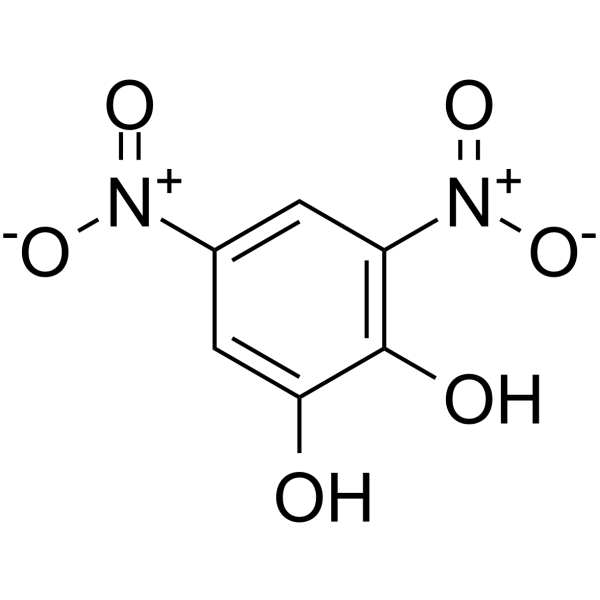
- Formula: C6H4N2O6
- Molecular Weight: 200.11
3,5-Dinitrocatechol (OR-486) is an orally active, blood-brain barrier-permeable selective catechol-O-methyltransferase (COMT) inhibitor. 3,5-Dinitrocatechol can be used in research related to Parkinson's disease, pheochromocytoma and adult cataract.

- Formula: C8H10IN3
- Molecular Weight: 275.09
m-Iodobenzylguanidine (Iobenguane) is a ligand with high affinity against norepinephrine transporter (NET). m-Iodobenzylguanidine is used as an imaging agent in the diagnostic imaging and radionuclide studies of neuroendocrine tumors, such as neuroblastoma, pheochromocytoma and carcinoid tumor.

- Formula: C120H171N23O32S
- Molecular Weight: 2479.84
Tezusomant is a growth hormone receptor antagonist. Tezusomant is promising for research on diseases caused by excessive growth hormone secretion, such as acromegaly.

- Formula: C6H4N2O6
- Molecular Weight: 200.11
3,5-Dinitrocatechol (Standard) (OR-486 (Standard); 3,5-Dinitropyrocatechol (Standard)) is the analytical standard of 3,5-Dinitrocatechol (HY-100959). This product is intended for research and analytical applications. 3,5-Dinitrocatechol (OR-486) is an orally active, blood-brain barrier-permeable selective catechol-O-methyltransferase (COMT) inhibitor. 3,5-Dinitrocatechol can be used in research related to Parkinson's disease, pheochromocytoma and adult cataract.

- Formula: C19H20F3NO
- Molecular Weight: 335.37
Boxidine is an orally active DHCR7 inhibitor. Boxidine inhibits DHCR7, blocks the conversion of 7-Dehydrocholesterol (HY-113279) to Cholesterol (HY-N0322), reduces serum cholesterol levels, causes accumulation of 7-dehydrocholesterol in serum and tissues, and inhibits sterol absorption. Boxidine exhibits antiproliferative and anticancer activities, with marginal activity against mouse tumors. Boxidine can be used in research related to diseases such as tumors and adrenal cancer.

- Formula: C13H19N2O6P
- Molecular Weight: 330.27
Aminoglutethimide phosphate (DL-Aminoglutethimide phosphate) is an orally active anticonvulsant with various endocrine-related side effects. Aminoglutethimide phosphate blocks multiple steroid hormone synthesis pathways by inhibiting several cytochrome P-450-dependent hydroxylases, such as aromatase, cholesterol side-chain cleavage enzyme, 11-hydroxylase, and 18-hydroxylase, with IC50 values of 0.3, 3.5, 120, and 20 μM, respectively. Aminoglutethimide phosphate reduces cortisol levels. Aminoglutethimide phosphate can be used in research on Cushing's syndrome, breast cancer, and other conditions.



