



Cushing’s Syndrome
-
Cushing’s Syndrome (3)

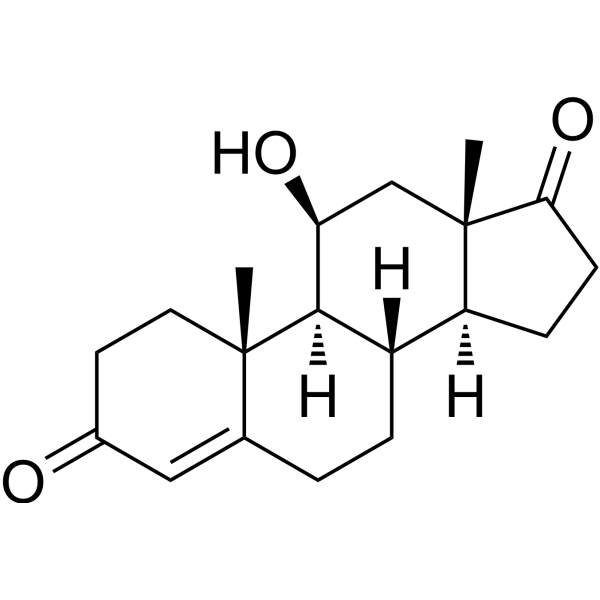
- Formula: C19H26O3
- Molecular Weight: 302.41
11-Beta-hydroxyandrostenedione (4-Androsten-11β-ol-3,17-dione) is a steroid mainly found in the the adrenal origin (11β-hydroxylase is present in adrenal tissue, but absent in ovarian tissue). 11-Beta-hydroxyandrostenedione is a 11β-hydroxysteroid dehydrogenase (11βHSD) isozymes inhibitor. As 4-androstenedione increases, measuring plasma 11-Beta-hydroxyandrostenedione can distinguish the adrenal or ovarian origin of hyperandrogenism.

- Formula: C13H16N2O2
- Molecular Weight: 232.28
Aminoglutethimide (DL-Aminoglutethimide) is an orally active anticonvulsant with various endocrine-related side effects. Aminoglutethimide blocks multiple steroid hormone synthesis pathways by inhibiting several cytochrome P-450-dependent hydroxylases, such as aromatase, cholesterol side-chain cleavage enzyme, 11-hydroxylase, and 18-hydroxylase, with IC50 values of 0.3, 3.5, 120, and 20 μM, respectively. Aminoglutethimide reduces cortisol levels. Aminoglutethimide can be used in research on Cushing's syndrome, breast cancer, and other conditions.

- Formula: C13H19N2O6P
- Molecular Weight: 330.27
Aminoglutethimide phosphate (DL-Aminoglutethimide phosphate) is an orally active anticonvulsant with various endocrine-related side effects. Aminoglutethimide phosphate blocks multiple steroid hormone synthesis pathways by inhibiting several cytochrome P-450-dependent hydroxylases, such as aromatase, cholesterol side-chain cleavage enzyme, 11-hydroxylase, and 18-hydroxylase, with IC50 values of 0.3, 3.5, 120, and 20 μM, respectively. Aminoglutethimide phosphate reduces cortisol levels. Aminoglutethimide phosphate can be used in research on Cushing's syndrome, breast cancer, and other conditions.



