



Aminoglutethimide

Based on 1 Customer Validation
Aminoglutethimide (DL-Aminoglutethimide) is an orally active anticonvulsant with various endocrine-related side effects. Aminoglutethimide blocks multiple steroid hormone synthesis pathways by inhibiting several cytochrome P-450-dependent hydroxylases, such as aromatase, cholesterol side-chain cleavage enzyme, 11-hydroxylase, and 18-hydroxylase, with IC50 values of 0.3, 3.5, 120, and 20 μM, respectively. Aminoglutethimide reduces cortisol levels. Aminoglutethimide can be used in research on Cushing's syndrome, breast cancer, and other conditions.
Nos produits utilisent uniquement pour la recherche. Nous ne vendons pas aux patients.
- Pureté : 98.87%
- CAS No.: 125-84-8
- Formule: C13H16N2O2
- Masse moléculaire:232.28
-
Stockage:Powder -20°C, 3 years , 4°C, 2 years ; In solvent -80°C, 2 years , -20°C, 1 year


To place orders, for customer services and technical support, please contact: MedChemExpress USA
Tel: 609-228-6898 E-mail: [email protected] [email protected]


-
 Activité biologique
-
Chemical Information
-
Solvant et solubilité
- Protocole
- Pureté et documentation
- Références
-
 Help & FAQs


-
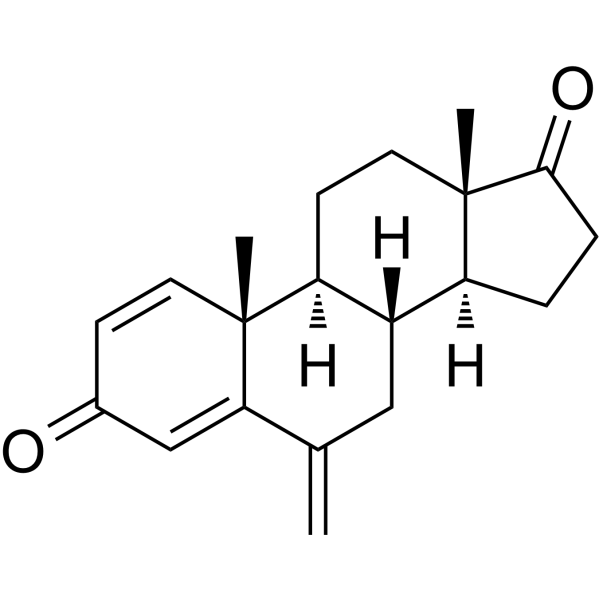
HY-13632
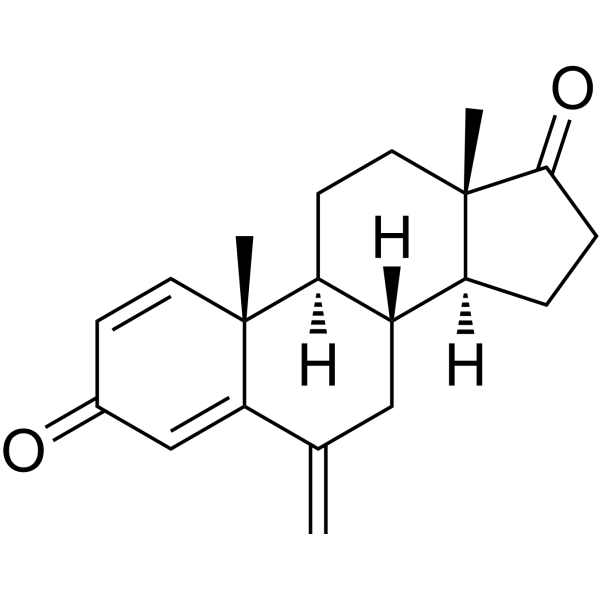
ExemestaneAromatase Inhibitor -
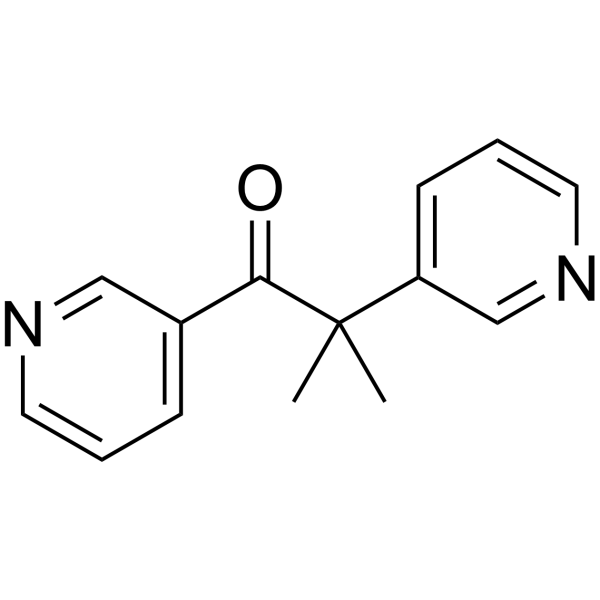
HY-B1232
Metyrapone11β-hydroxylase Inhibitor -
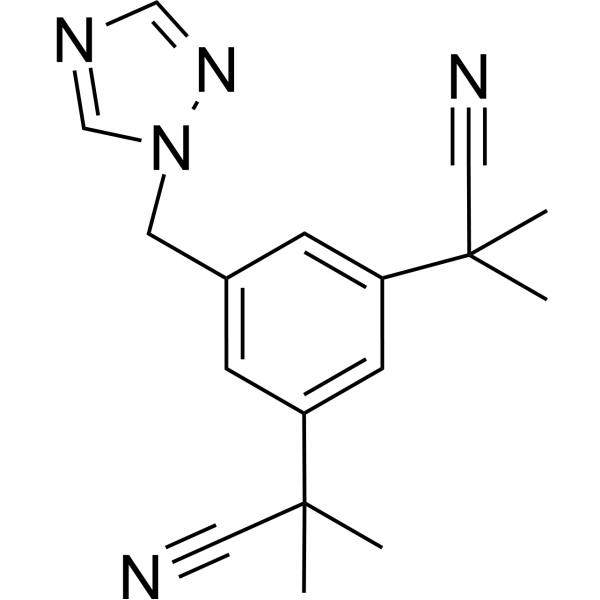
HY-14274
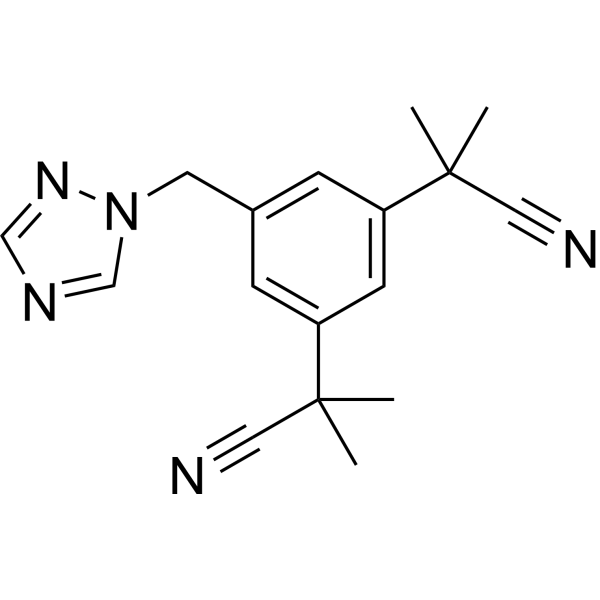
AnastrozoleAromatase Inhibitor -
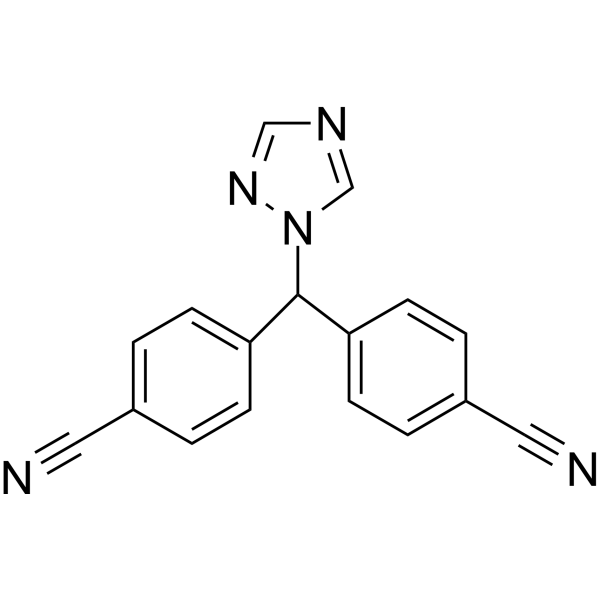
HY-14248
LetrozoleAromatase Inhibitor -
HY-14274R
Anastrozole (Standard)Aromatase Inhibitor -
HY-13632R
Exemestane (Standard) -

HY-14248R
Letrozole (Standard)Aromatase Inhibitor -
HY-14247A
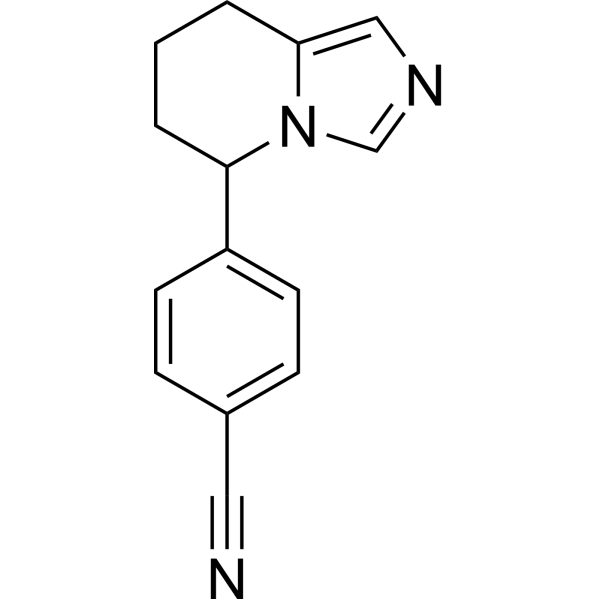
FadrozoleAromatase Inhibitor -
HY-N0292
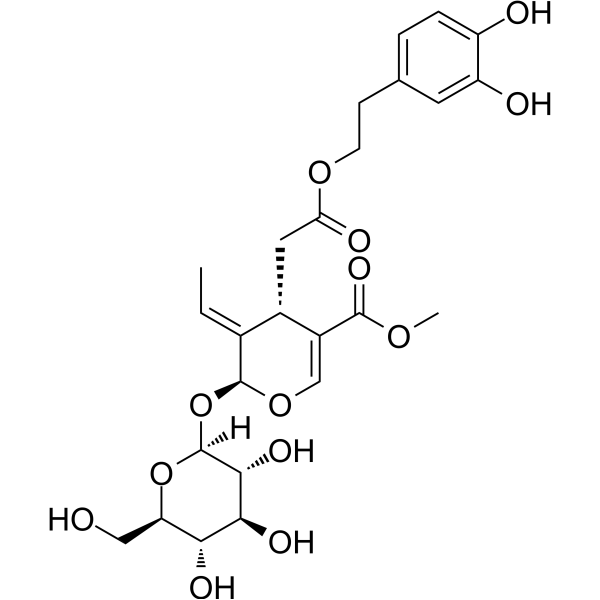
OleuropeinApoptosis Inducer -
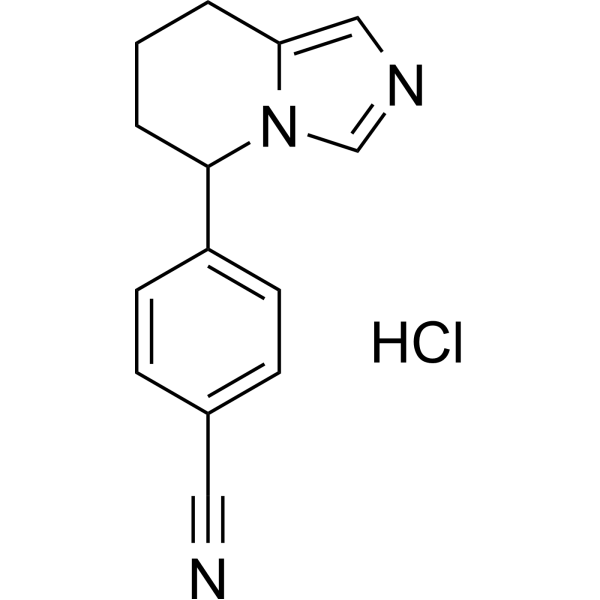
HY-14247
Fadrozole hydrochlorideAromatase Inhibitor -

HY-N0292R
Oleuropein (Standard)Apoptosis Inducer -

HY-14247AR
Fadrozole (Standard)Aromatase Inhibitor


Activité biologique
Description
IC50 & Target
|
Aromatase |
Cellular Effect
|
Cell Line

|
Type | Value | Description | References |
|---|---|---|---|---|
| MCF7 | IC50 |
10 μM
Compound: Cytadren
|
Inhibition of human aromatase transfected in human MCF7 cells
Inhibition of human aromatase transfected in human MCF7 cells
|
[PMID: 26689671] |
In Vitro
Aminoglutethimide inhibits human placental microsomal aromatase by targeting cytochrome P-450, preventing the oxygen-dependent conversion of androgens to estrogens[1].
Aminoglutethimide (0.05 mM; duration sufficient to produce complete steroidogenesis inhibition) completely inhibits steroidogenesis in monolayer cultures of functional adrenal tumour cells by directly targeting steroidogenic enzymes, without altering ACTH-induced cell morphology or glucose consumption[4].
MedChemExpress (MCE) has not independently confirmed the accuracy of these methods. They are for reference only. Further protocols information, click here.
In Vivo
Aminoglutethimide (125-500 mg/kg/day; p.o.; once daily; 5 days) induces dose-dependent adrenal zona fasciculata cell damage including cytoplasmic vacuolation, single cell necrosis, excessive lipid accumulation, mitochondrial injury, and accelerated lysosomal degradation (mitophagy and lipophagy) in male Crlj:CD1(ICR) mice[3].
Aminoglutethimide (8 days) exhibits goitrogenic activity and interferes with thyroid metabolism in intact rats on a low iodine diet, as evidenced by increased thyroid weight and reduced radio-iodine uptake[4].
Aminoglutethimide induces thyromegaly, reduces thyroxine and di-iodotyrosine production, and increases thyroidal inorganic iodide levels in Rattus norvegicus[4].
Aminoglutethimide inhibits adrenal steroid biosynthesis in rats and puppies, inducing adrenal hypertrophy, decreased corticosterone production, increased plasma ACTH, and characteristic cortical histological changes[4].
Aminoglutethimide induces ovarian enlargement in intact rats and potential uterine enlargement in hypophysectomized rats[4].
Aminoglutethimide (large doses) disrupts ovarian function, halts oestrous cycles, induces sterility, and reduces oestrogen-related uterine weight in intact female rats[4].
Aminoglutethimide (10 mg/kg; i.v.) is active at 10 mg/kg intravenously to inhibit cortisol secretion and block the steroidogenic response to ACTH in dogs[4].
MedChemExpress (MCE) has not independently confirmed the accuracy of these methods. They are for reference only.
-
Animal Model:Crlj:CD1(ICR) (male, 7 weeks old)[3]
-
Dosage:125 mg/kg/day; 250 mg/kg/day; 500 mg/kg/day
-
Administration:p.o.; once daily; 5 days
-
Result:Induced cytoplasmic vacuolation in adrenal zona fasciculata cells at 125-500 mg/kg/day, with vacuole membranes staining positive for adipophilin and LAMP-2, increased LAMP-2-positive granules, and Sudan black-positive vacuole contents.
Observed single cell necrosis in zona fasciculata cells at 250-500 mg/kg/day.
Caused 3 of 4 mice to become moribund and require euthanasia on Day 3 at 500 mg/kg/day.
Revealed enlarged lipid droplets, increased primary lysosomes, mitochondrial vacuolation, and enlarged lysosomes containing damaged mitochondria and lamellar bodies in zona fasciculata cells across all doses via electron microscopy.
Essai clinique
| NCT Number | Sponsor | Condition | Start Date |
Phase
|
|---|---|---|---|---|
| NCT01329991 | Plexxikon| | 2011-05 | PHASE1 |


Chemical Information
-
CAS No. 125-84-8
-
Appearance Solid
-
Masse moléculaire 232.28
-
Formule C13H16N2O2
-
Color White to off-white
-
SMILES
O=C(C(CC)(C1=CC=C(N)C=C1)CC2)NC2=O
-
Synonyms
DL-Aminoglutethimide
-
Livraison
Room temperature in continental US; may vary elsewhere.
-
Stockage
Powder -20°C 3 years 4°C 2 years In solvent -80°C 2 years -20°C 1 year


Solvant et solubilité
In Vitro:
DMSO : 50 mg/mL (215.26 mM; Need ultrasonic; Hygroscopic DMSO has a significant impact on the solubility of product, please use newly opened DMSO)
Please refer to the solubility information to select the appropriate solvent. Once prepared, please aliquot and store the solution to prevent product inactivation from repeated freeze-thaw cycles.
Storage method and period of stock solution: -80°C, 2 years; -20°C, 1 year. When stored at -80°C, please use it within 2 years. When stored at -20°C, please use it within 1 year.
Please refer to the solubility information to select the appropriate solvent. Once prepared, please aliquot and store the solution to prevent product inactivation from repeated freeze-thaw cycles.
Storage method and period of stock solution: -80°C, 2 years; -20°C, 1 year. When stored at -80°C, please use it within 2 years. When stored at -20°C, please use it within 1 year.
Concentration (start) × Volume (start) = Concentration (final) × Volume (final)
In Vivo:
Select the appropriate dissolution method based on your experimental animal and administration route.
- For the following dissolution methods, please ensure to first prepare a clear stock solution using an In Vitro approach and then sequentially add co-solvents:
- To ensure reliable experimental results, the clarified stock solution can be appropriately stored based on storage conditions. As for the working solution for In Vivo experiments, it is recommended to prepare freshly and use it on the same day.
- The percentages shown for the solvents indicate their volumetric ratio in the final prepared solution. If precipitation or phase separation occurs during preparation, heat and/or sonication can be used to aid dissolution.
Add each solvent one by one: 10% DMSO 40% PEG300 5% Tween-80 45% Saline
Solubility: ≥ 2.5 mg/mL (10.76 mM); Clear solution
This protocol yields a clear solution of ≥ 2.5 mg/mL (saturation unknown).
Taking 1 mL working solution as an example, add 100 μL DMSO stock solution (25.0 mg/mL) to 400 μL PEG300, and mix evenly; then add 50 μL Tween-80 and mix evenly; then add 450 μL Saline to adjust the volume to 1 mL.
Preparation of Saline: Dissolve 0.9 g sodium chloride in ddH₂O and dilute to 100 mL to obtain a clear Saline solution.
Add each solvent one by one: 10% DMSO 90% (20% SBE-β-CD in Saline)
Solubility: ≥ 2.5 mg/mL (10.76 mM); Clear solution
This protocol yields a clear solution of ≥ 2.5 mg/mL (saturation unknown).
Taking 1 mL working solution as an example, add 100 μL DMSO stock solution (25.0 mg/mL) to 900 μL 20% SBE-β-CD in Saline, and mix evenly.
Preparation of 20% SBE-β-CD in Saline (4°C, storage for one week): 2 g SBE-β-CD powder is dissolved in 10 mL Saline, completely dissolve until clear.
In Vivo Dissolution Calculator
Please enter the basic information of animal experiments:
-
-
-
-
Recommended: Prepare an additional quantity of animals to account for potential losses during experiments.
Please enter your animal formula composition:
-
%DMSO +
Recommended: Keep the proportion of DMSO in working solution below 2% if your animal is weak.
-
%+
-
+%Tween-80 + +
-
%Saline +
The co-solvents required include: DMSO, . All of co-solvents are available by MedChemExpress (MCE). , Tween 80. All of co-solvents are available by MedChemExpress (MCE).
Working solution concentration: 0.22 mg/mL
Method for preparing stock solution: mg drug dissolved in μL DMSO. Stock solution concentration: mg/mL.
1. Take μL DMSO stock solution;
2. Add μL .
μL , mix evenly;
3. Then add μL Tween 80, mix evenly;
4. Then add μL
Please ensure that the stock solution in the first step is dissolved to a clear state, and add co-solvents in sequence. You can use ultrasonic heating (ultrasonic cleaner, recommended frequency 20-40 kHz), vortexing, etc. to assist dissolution.

Protocole
-
Research Protocol for Endocrine Diseases
Endocrine diseases often arise from disrupted hormone production, hormone signaling, or target-tissue responsiveness; for diabetes-focused endocrine disease models, insulin signaling regulates glucose uptake, hepatic glucose output, lipid metabolism, and β-cell compensation. Type 2 diabetes develops through interacting defects in insulin resistance, β-cell dysfunction, adipose inflammation, hepatic glucose overproduction, altered incretin signaling, and ectopic lipid metabolism. A major unresolved question is whether endocrine dysfunction is driven primarily by target-tissue insulin resistance, intrinsic β-cell failure, immune/inflammatory stress, or combined multi-organ failure that differs by disease stage.
-
Breast Cancer Modeling
Breast cancer is a heterogeneous cancer, and it has been distinguished into four subtypes: luminal A, luminal B, HER2-positive and basal-like. Molecular mutations, epigenetic alterations, hormone exposure and immune microenvironment are related to the progression of breast cancer.


Pureté et documentation
-
Fiche technique (281 KB)
-
SDS (396 KB)
- English - EN (396 KB)
- Français - FR (396 KB)
- Deutsch - DE (396 KB)
- Norwegian - NO (396 KB)
- Español - ES (396 KB)
- Swedish - SV (396 KB)
- Italian - IT (396 KB)
- Korean - KR (396 KB)
- Portuguese - PT (396 KB)
-
Instruction de manipulation (2659 KB)
Références
[1]. Santen RJ, et al. Aminoglutethimide: review of pharmacology and clinical use. Pharmacotherapy. 1981;1(2):95-120. [Content Brief]
[2]. Cocconi G, et al. First generation aromatase inhibitors--aminoglutethimide and testololactone. Breast Cancer Res Treat. 1994;30(1):57-80. [Content Brief]
[3]. Mutsuga M, et al. Aminoglutethimide-induced lysosomal changes in adrenal gland in mice. Exp Toxicol Pathol. 2017;69(7):424-429. [Content Brief]
[4]. Hughss SW, et al. Aminoglutethimide: a "side-effect" turned to therapeutic advantage. Postgrad Med J. 1970;46(537):409-416. [Content Brief]


Complete Stock Solution Preparation Table
Please refer to the solubility information to select the appropriate solvent. Once prepared, please aliquot and store the solution to prevent product inactivation from repeated freeze-thaw cycles.
Storage method and period of stock solution: -80°C, 2 years; -20°C, 1 year. When stored at -80°C, please use it within 2 years. When stored at -20°C, please use it within 1 year.
| Optional Solvent | Concentration Solvent Mass | 1 mg | 5 mg | 10 mg | 25 mg |
|---|---|---|---|---|---|
| DMSO | 1 mM | 4.3051 mL | 21.5257 mL | 43.0515 mL | 107.6287 mL |
| 5 mM | 0.8610 mL | 4.3051 mL | 8.6103 mL | 21.5257 mL | |
| 10 mM | 0.4305 mL | 2.1526 mL | 4.3051 mL | 10.7629 mL | |
| 15 mM | 0.2870 mL | 1.4350 mL | 2.8701 mL | 7.1752 mL | |
| 20 mM | 0.2153 mL | 1.0763 mL | 2.1526 mL | 5.3814 mL | |
| 25 mM | 0.1722 mL | 0.8610 mL | 1.7221 mL | 4.3051 mL | |
| 30 mM | 0.1435 mL | 0.7175 mL | 1.4350 mL | 3.5876 mL | |
| 40 mM | 0.1076 mL | 0.5381 mL | 1.0763 mL | 2.6907 mL | |
| 50 mM | 0.0861 mL | 0.4305 mL | 0.8610 mL | 2.1526 mL | |
| 60 mM | 0.0718 mL | 0.3588 mL | 0.7175 mL | 1.7938 mL | |
| 80 mM | 0.0538 mL | 0.2691 mL | 0.5381 mL | 1.3454 mL | |
| 100 mM | 0.0431 mL | 0.2153 mL | 0.4305 mL | 1.0763 mL |


Aminoglutethimide Related Classifications
HY-B0237 Related Classifications
 Powered by Bioz