



Metyrapone
Based on 13 publication(s) in Google Scholar
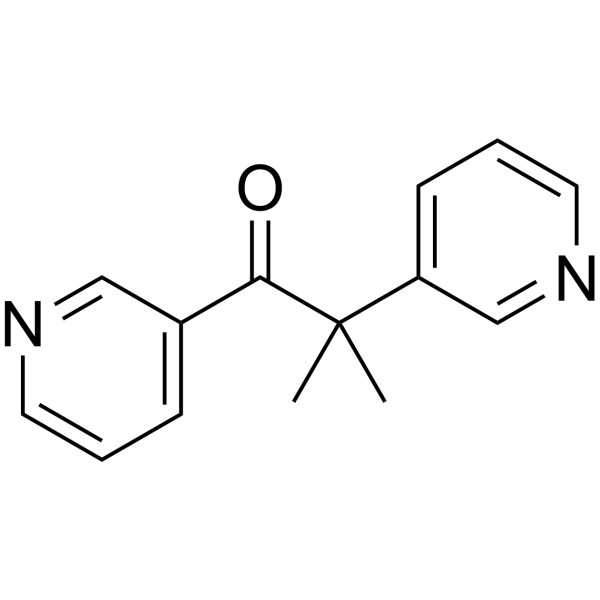
Metyrapone (Su-4885) is a potent and orally active 11β-hydroxylase inhibitor and an autophagy activator, also inhibits the production of aldosterone. Metyrapone inhibits synthesis of endogenous adrenal corticosteroid, decreases glucocorticoid levels, and also affects behavior and emotion. In addition, Metyrapone increases the efficiency of autophagic process via downregulation of mTOR pathway, and interacts with Pseudomonas putida cytochrome P-450. Metyrapone can be used for researching Cushing's syndrome and depression.
For research use only. We do not sell to patients.
- Purity : 99.70%
- CAS No.: 54-36-4
- Formula: C14H14N2O
- Molecular Weight:226.27
-
Storage:Powder -20°C, 3 years , 4°C, 2 years ; In solvent -80°C, 2 years , -20°C, 1 year

To place orders, for customer services and technical support, please contact: MedChemExpress USA
Tel: 609-228-6898 E-mail: [email protected] [email protected]


-
 Biological Activity
-
Chemical Information
-
Solvent & Solubility
- Protocols
- Purity & Documentation
- References
-
 Help & FAQs


-
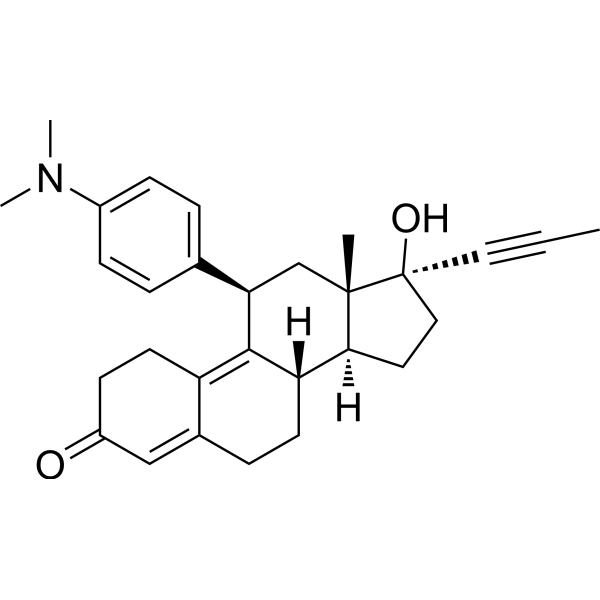
HY-13683
MifepristoneProgesterone Receptor Antagonist -
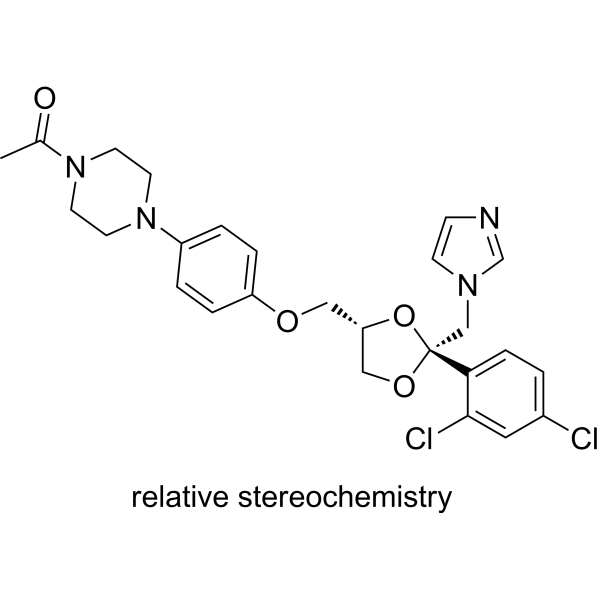
HY-B0105
KetoconazoleCYP3A4 Inhibitor -
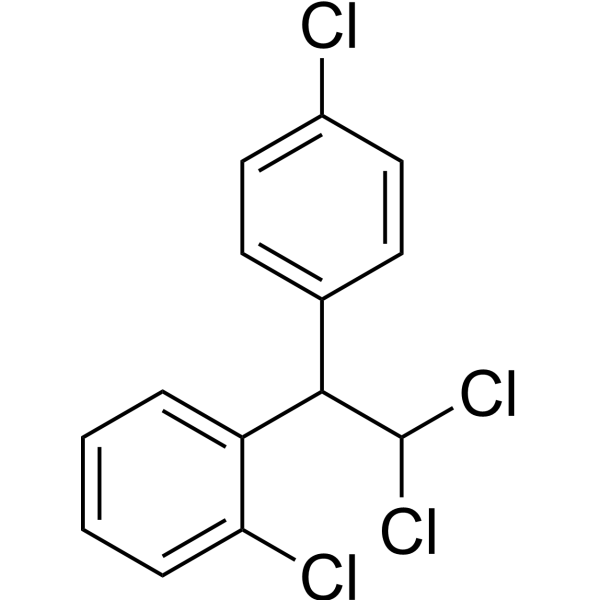
HY-13690
MitotaneAntineoplastic Agent -
HY-Y0873
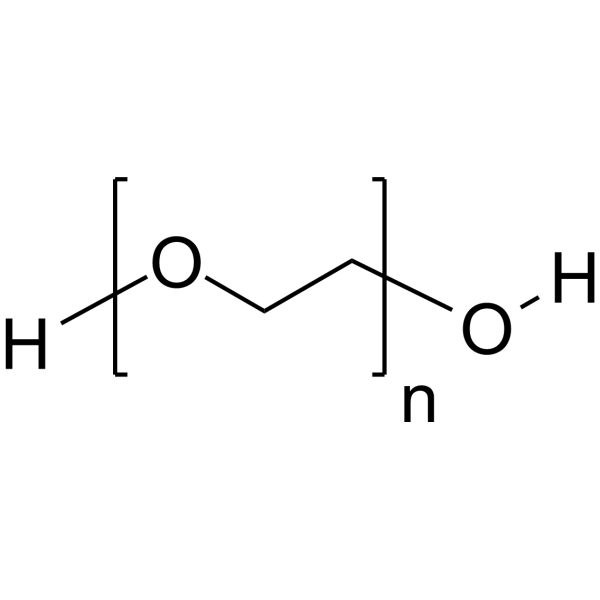
PEG300Neutral Polymer -
HY-15371
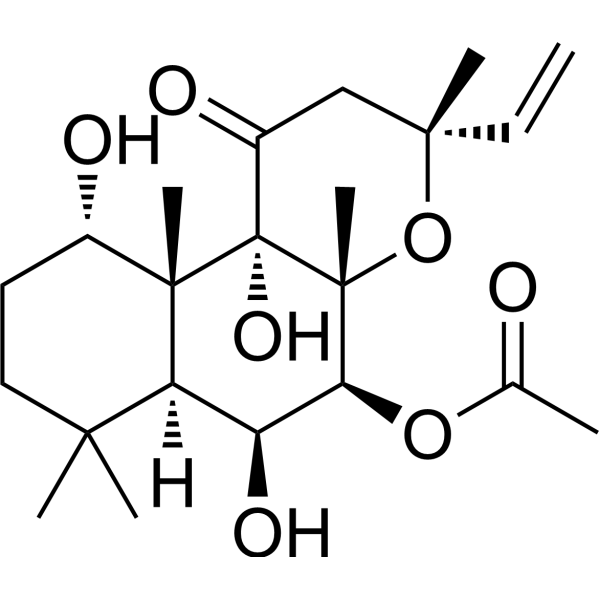
ForskolinAdenylate Cyclase Activator -
HY-15531
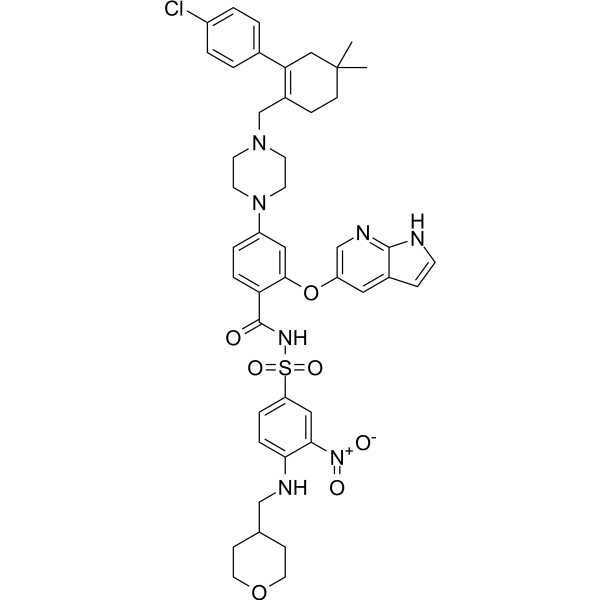
VenetoclaxBCL-2 Inhibitor -
HY-13966
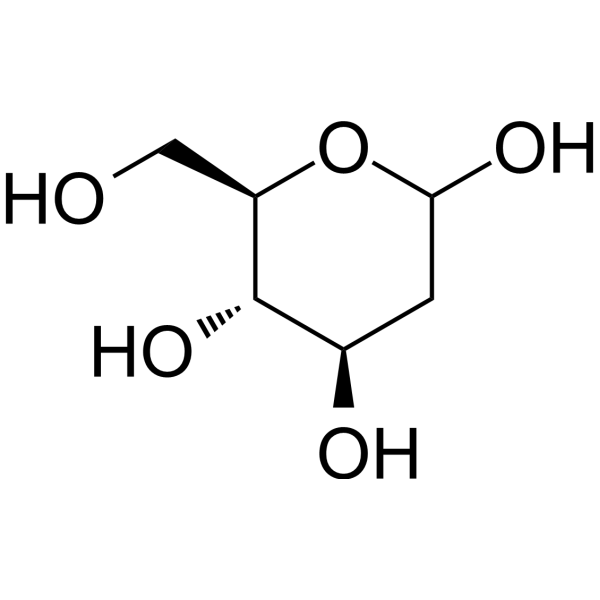
2-Deoxy-D-glucoseGlycolysis Inhibitor -
HY-Y1891
Tween 80 -
HY-10108
LY294002PI3K Inhibitor -
HY-B1618
CorticosteroneEndogenous Glucocorticoids -

HY-Y1888
Corn oil -

HY-Y0320
Dimethyl sulfoxide, meets analytical specification of Ch.P.Aprotic Solvent
Publications Citing Use of MedChemExpress (MCE) Metyrapone
More- Immunity. 2024 Feb 13;57(2):364-378.e9. [Abstract]
- Nat Commun. 2025 Apr 17;16(1):3639. [Abstract]
- Nat Commun. 2024 Nov 28;15(1):10361. [Abstract]
- Adv Sci (Weinh). 2025 Jul 11:e14659. [Abstract]
- Proc Natl Acad Sci U S A. 2025 Mar 25;122(12):e2426107122. [Abstract]
- Antioxidants (Basel). 2026 Jun 26;15(7):800.
- Free Radic Biol Med. 2026 Jan:242:636-653. [Abstract]
- Brain Behav Immun. 2019 Nov:82:178-187. [Abstract]
- J Neuroendocrinol. 2022 Dec;34(12):e13212. [Abstract]
- iScience. 2025 Jan 17;28(2):111831. [Abstract]
- J Pharm Biomed Anal. 2023 May 10:228:115316. [Abstract]
- Biochem Biophys Res Commun. 2020 Jun 11;526(4):913-919. [Abstract]
- University of Cincinnati. 2026.
 Customer Validation & Images

-
Bio/Physico-chemical Assay
-
In Vivo Efficacy Study
-
Bio/Physico-chemical Assay
-
WB
-
Histological Imaging/Staining


Biological Activity
Description
IC50 & Target
Cellular Effect
|
Cell Line

|
Type | Value | Description | References |
|---|---|---|---|---|
| V79 | IC50 |
14.6 nM
Compound: 2
|
Inhibition of human steroid-11beta-hydroxylase expressed in chinese hamster V79 cells using 11-deoxycorticosterone as substrate
Inhibition of human steroid-11beta-hydroxylase expressed in chinese hamster V79 cells using 11-deoxycorticosterone as substrate
|
[PMID: 21129965] |
| V79 | IC50 |
15 nM
Compound: MTP
|
Inhibition of human CYP11B1 expressed in hamster V79 MZ cells using [3H] 11 deoxycorticosterone as substrate by HPLC radioflow detector
Inhibition of human CYP11B1 expressed in hamster V79 MZ cells using [3H] 11 deoxycorticosterone as substrate by HPLC radioflow detector
|
[PMID: 24900349] |
| V79 | IC50 |
72 nM
Compound: 2
|
Inhibition of human aldosterone synthase expressed in chinese hamster V79 cells using 11-deoxycorticosterone as substrate
Inhibition of human aldosterone synthase expressed in chinese hamster V79 cells using 11-deoxycorticosterone as substrate
|
[PMID: 21129965] |
| V79 | IC50 |
72 nM
Compound: MTP
|
Inhibition of human CYP11B2 expressed in hamster V79 MZ cells using [3H] 11 deoxycorticosterone as substrate by HPLC radioflow detector
Inhibition of human CYP11B2 expressed in hamster V79 MZ cells using [3H] 11 deoxycorticosterone as substrate by HPLC radioflow detector
|
[PMID: 24900349] |
In Vitro
In Vivo
MedChemExpress (MCE) has not independently confirmed the accuracy of these methods. They are for reference only.
-
Animal Model:Male Sprague-Dawley rats (n=179; 270-300g)[1]
-
Dosage:25 or 50 mg/kg (in a volume of 2.0 mL/kg)
-
Administration:SC, single dosage
-
Result:Dose-dependently decreased the stress-induced increase in plasma corticosterone levels in the water maze test; the high level dose significantly impaired acquisition performance in the water maze and decreased fear-induced immobility; the lower dose increased open arm activity.
Clinical Trial
| NCT Number | Sponsor | Condition | Start Date |
Phase
|
|---|---|---|---|---|
| NCT01329991 | Plexxikon| | 2011-05 | PHASE1 |


Chemical Information
-
CAS No. 54-36-4
-
Appearance Solid
-
Molecular Weight 226.27
-
Formula C14H14N2O
-
Color White to yellow
-
SMILES
CC(C1=CC=CN=C1)(C)C(C2=CC=CN=C2)=O
-
Synonyms
Su-4885
-
Shipping
Room temperature in continental US; may vary elsewhere.
-
Storage
Powder -20°C 3 years 4°C 2 years In solvent -80°C 2 years -20°C 1 year


Publications (13)
-
Journal Impact Factor
-
Most Recent
-
Immunity
Small-molecule CBP/p300 histone acetyltransferase inhibition mobilizes leukocytes from the bone marrow via the endocrine stress response. [Abstract]2024 Feb 13;57(2):364-378.e9. PMID: 38301651 -
Nat Commun
2025 Apr 17;16(1):3639. PMID: 40240334
Metyrapone purchased from MedChemExpress. Usage Cited in: Nat Commun. 2025 Apr 17;16(1):3639. [Abstract]
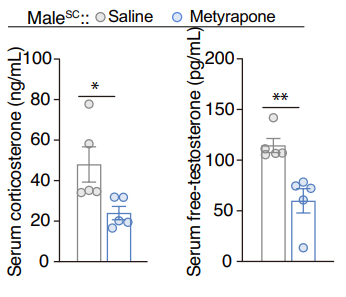
Summarized data for corticosterone and free-testosterone levels (n = 5; corticosterone, p = 0.0329; free-testosterone, p = 0.0042). The results showed that Metyrapone (5 mg/kg; i.h.; single dose) significantly reduced serum corticosterone and free testosterone levels in mice.
Metyrapone purchased from MedChemExpress. Usage Cited in: Nat Commun. 2025 Apr 17;16(1):3639. [Abstract]
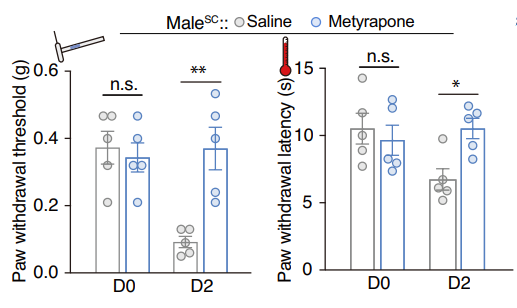
PWT and PWL of maleSC mice (n = 5; PWT: F1,8 = 6.027, p = 0.0396; PWL: F1,8 = 2.817, p = 0.1318). Metyrapone (5 mg/kg; i.h.; single dose) reversed conditioned contextual pain hypersensitivity in maleSC mice.
Metyrapone purchased from MedChemExpress. Usage Cited in: Nat Commun. 2025 Apr 17;16(1):3639. [Abstract]
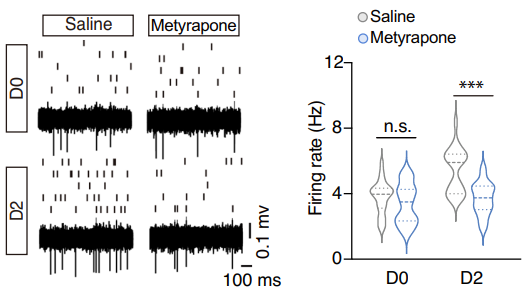
Raster plots with typical traces and quantitative data for spontaneous firing rates of GlumPOA neurons in maleSC mice (n = 24 units for D0-saline group and n = 22 units for other groups from 4 mice; F1,44 = 14.85, p = 0.0004). Metyrapone (5 mg/kg; i.h.; single dose) reversed the hyperactivity of GlumPOA neurons in maleSC mice.
-
Nat Commun
A brain-to-liver signal mediates the inhibition of liver regeneration under chronic stress in mice. [Abstract]2024 Nov 28;15(1):10361. PMID: 39609433 -
Adv Sci (Weinh)
Chronic Psychological Stress Induces Cardiomyocyte Hypertrophy Through Corticosterone-Glucocorticoid Receptor-LAMA5 Axis. [Abstract]2025 Jul 11:e14659. PMID: 40642838
Metyrapone purchased from MedChemExpress. Usage Cited in: Adv Sci (Weinh). 2025 Jul 11:e14659. [Abstract]
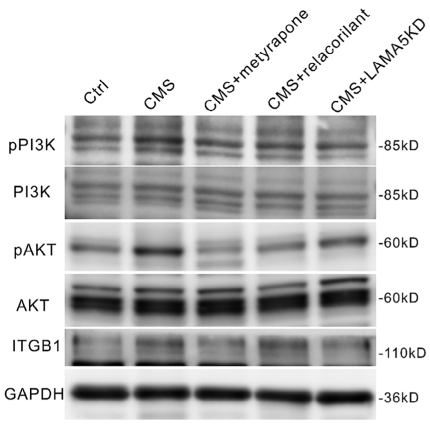
Representative Western blot images of pPI3K, PI3K, pAKT, AKT, and ITGB1 in heart tissue of each group of rats. Metyrapone (25 mg/kg; every 2 days for 12 weeks), relacorilant, and knockdown of LAMA5 partially inhibited the activation of the PI3K/AKT pathway.
Metyrapone purchased from MedChemExpress. Usage Cited in: Adv Sci (Weinh). 2025 Jul 11:e14659. [Abstract]
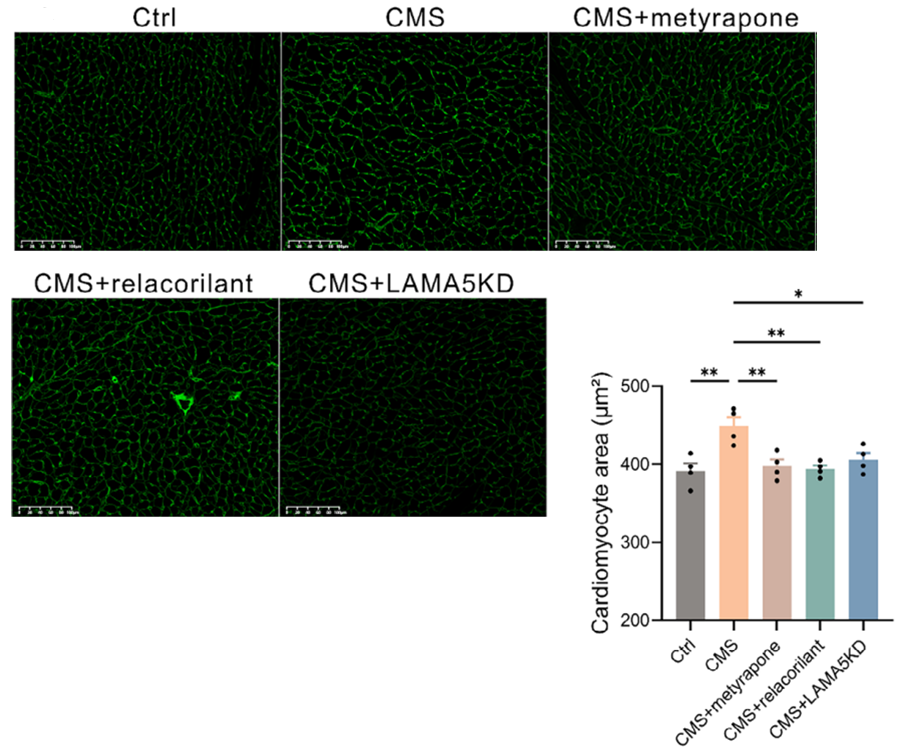
Representative images and quantitative analysis of WGA staining in cardiac myocytes of each group of rats (n=4). WGA staining results showed that the surface area of cardiomyocytes in the hearts of rats in the CMS group was significantly increased compared to the control group, and Metyrapone (25 mg/kg; every 2 days for 12 weeks)/relacorilant/LAMA5KD could reverse the cardiomyocyte enlargement induced by CMS.
-
Proc Natl Acad Sci U S A
Androgen receptors in corticotropin-releasing hormone neurons mediate the sexual dimorphism in restraint-induced thymic atrophy. [Abstract]2025 Mar 25;122(12):e2426107122. PMID: 40106355 -
-
Free Radic Biol Med
Chronic intermittent cold stress-induced lipophagy promotes foamy macrophage susceptibility to ferroptosis and exacerbates atherosclerosis. [Abstract]2026 Jan:242:636-653. PMID: 41205774 -
Brain Behav Immun
Corticosterone-mediated microglia activation affects dendritic spine plasticity and motor learning functions in minimal hepatic encephalopathy. [Abstract]2019 Nov:82:178-187. PMID: 31437533 -
J Neuroendocrinol
Glucocorticoid regulation of diurnal spine plasticity in the murine ventromedial prefrontal cortex. [Abstract]2022 Dec;34(12):e13212. PMID: 36426781 -
iScience
Stimulation of TRPV1+ peripheral somatosensory nerves suppress inflammation via the somato-autonomic reflex. [Abstract]2025 Jan 17;28(2):111831. PMID: 39967868 -
J Pharm Biomed Anal
LC-MS/MS method for simultaneous quantification of osilodrostat and metyrapone in human plasma from patients treated for Cushing's Syndrome. [Abstract]2023 May 10:228:115316. PMID: 36868030 -
Biochem Biophys Res Commun
Myo-inositol enhances the low-salinity tolerance of turbot (Scophthalmus maximus) by modulating cortisol synthesis. [Abstract]2020 Jun 11;526(4):913-919. PMID: 32279992 -


Solvent & Solubility
In Vitro:
DMSO : 100 mg/mL (441.95 mM; Need ultrasonic; Hygroscopic DMSO has a significant impact on the solubility of product, please use newly opened DMSO)
H2O : ≥ 38 mg/mL (167.94 mM)
* "≥" means soluble, but saturation unknown.
Please refer to the solubility information to select the appropriate solvent. Once prepared, please aliquot and store the solution to prevent product inactivation from repeated freeze-thaw cycles.
Storage method and period of stock solution: -80°C, 2 years; -20°C, 1 year. When stored at -80°C, please use it within 2 years. When stored at -20°C, please use it within 1 year.
* Note: If you choose water as the stock solution, please dilute it to the working solution, then filter and sterilize it with a 0.22 μm filter before use.
Please refer to the solubility information to select the appropriate solvent. Once prepared, please aliquot and store the solution to prevent product inactivation from repeated freeze-thaw cycles.
Storage method and period of stock solution: -80°C, 2 years; -20°C, 1 year. When stored at -80°C, please use it within 2 years. When stored at -20°C, please use it within 1 year.
* Note: If you choose water as the stock solution, please dilute it to the working solution, then filter and sterilize it with a 0.22 μm filter before use.
Concentration (start) × Volume (start) = Concentration (final) × Volume (final)
In Vivo:
Select the appropriate dissolution method based on your experimental animal and administration route.
- For the following dissolution methods, please ensure to first prepare a clear stock solution using an In Vitro approach and then sequentially add co-solvents:
- To ensure reliable experimental results, the clarified stock solution can be appropriately stored based on storage conditions. As for the working solution for In Vivo experiments, it is recommended to prepare freshly and use it on the same day.
- The percentages shown for the solvents indicate their volumetric ratio in the final prepared solution. If precipitation or phase separation occurs during preparation, heat and/or sonication can be used to aid dissolution.
Add each solvent one by one: 10% DMSO 40% PEG300 5% Tween-80 45% Saline
Solubility: ≥ 2.5 mg/mL (11.05 mM); Clear solution
This protocol yields a clear solution of ≥ 2.5 mg/mL (saturation unknown).
Taking 1 mL working solution as an example, add 100 μL DMSO stock solution (25.0 mg/mL) to 400 μL PEG300, and mix evenly; then add 50 μL Tween-80 and mix evenly; then add 450 μL Saline to adjust the volume to 1 mL.
Preparation of Saline: Dissolve 0.9 g sodium chloride in ddH₂O and dilute to 100 mL to obtain a clear Saline solution.
Add each solvent one by one: 10% DMSO 90% (20% SBE-β-CD in Saline)
Solubility: ≥ 2.5 mg/mL (11.05 mM); Clear solution
This protocol yields a clear solution of ≥ 2.5 mg/mL (saturation unknown).
Taking 1 mL working solution as an example, add 100 μL DMSO stock solution (25.0 mg/mL) to 900 μL 20% SBE-β-CD in Saline, and mix evenly.
Preparation of 20% SBE-β-CD in Saline (4°C, storage for one week): 2 g SBE-β-CD powder is dissolved in 10 mL Saline, completely dissolve until clear.
For the following dissolution methods, please prepare the working solution directly:
It is recommended to prepare fresh solutions and use them promptly within a short period of time.
The percentages shown for the solvents indicate their volumetric ratio in the final prepared solution. If precipitation or phase separation occurs during preparation, heat and/or sonication can be used to aid dissolution.
Add each solvent one by one: PBS
Solubility: 100 mg/mL (441.95 mM); Clear solution; Need ultrasonic
In Vivo Dissolution Calculator
Please enter the basic information of animal experiments:
-
-
-
-
Recommended: Prepare an additional quantity of animals to account for potential losses during experiments.
Working solution concentration: 0.22 mg/mL
This product has good water solubility, please refer to the measured solubility data in water/PBS/Saline for details.


Purity & Documentation
-
Data Sheet (301 KB)
-
SDS (396 KB)
- English - EN (396 KB)
- Français - FR (396 KB)
- Deutsch - DE (396 KB)
- Norwegian - NO (396 KB)
- Español - ES (396 KB)
- Swedish - SV (396 KB)
- Italian - IT (396 KB)
- Korean - KR (396 KB)
- Portuguese - PT (396 KB)
-
Handling Instructions (2659 KB)
References
[1]. Roozendaal B, et al. Dose-dependent suppression of adrenocortical activity with metyrapone: effects on emotion and memory. Psychoneuroendocrinology. 1996 Nov;21(8):681-93. [Content Brief]
[2]. Jahn H, et al. Metyrapone as additive treatment in major depression: a double-blind and placebo-controlled trial. Arch Gen Psychiatry. 2004 Dec;61(12):1235-44. [Content Brief]
[3]. Daniel E, et al. Effectiveness of Metyrapone in Treating Cushing's Syndrome: A Retrospective Multicenter Study in 195 Patients. J Clin Endocrinol Metab. 2015 Nov;100(11):4146-54. [Content Brief]
[4]. Peterson JA, Ullrich V, Hildebrandt AG. Methyrapone interaction with Pseudomonas putida cytochrome P-405. Arch Biochem Biophys. 1971 Aug;145(2):531-42. [Content Brief]
[5]. Holczer M, et al. A Comprehensive Systems Biological Study of Autophagy-Apoptosis Crosstalk during Endoplasmic Reticulum Stress. Biomed Res Int. 2015;2015:319589. [Content Brief]


Complete Stock Solution Preparation Table
Please refer to the solubility information to select the appropriate solvent. Once prepared, please aliquot and store the solution to prevent product inactivation from repeated freeze-thaw cycles.
Storage method and period of stock solution: -80°C, 2 years; -20°C, 1 year. When stored at -80°C, please use it within 2 years. When stored at -20°C, please use it within 1 year.
| Optional Solvent | Concentration Solvent Mass | 1 mg | 5 mg | 10 mg | 25 mg |
|---|---|---|---|---|---|
| H2O / DMSO | 1 mM | 4.4195 mL | 22.0975 mL | 44.1950 mL | 110.4875 mL |
| 5 mM | 0.8839 mL | 4.4195 mL | 8.8390 mL | 22.0975 mL | |
| 10 mM | 0.4419 mL | 2.2097 mL | 4.4195 mL | 11.0487 mL | |
| 15 mM | 0.2946 mL | 1.4732 mL | 2.9463 mL | 7.3658 mL | |
| 20 mM | 0.2210 mL | 1.1049 mL | 2.2097 mL | 5.5244 mL | |
| 25 mM | 0.1768 mL | 0.8839 mL | 1.7678 mL | 4.4195 mL | |
| 30 mM | 0.1473 mL | 0.7366 mL | 1.4732 mL | 3.6829 mL | |
| 40 mM | 0.1105 mL | 0.5524 mL | 1.1049 mL | 2.7622 mL | |
| 50 mM | 0.0884 mL | 0.4419 mL | 0.8839 mL | 2.2097 mL | |
| 60 mM | 0.0737 mL | 0.3683 mL | 0.7366 mL | 1.8415 mL | |
| 80 mM | 0.0552 mL | 0.2762 mL | 0.5524 mL | 1.3811 mL | |
| 100 mM | 0.0442 mL | 0.2210 mL | 0.4419 mL | 1.1049 mL |
* Note: If you choose water as the stock solution, please dilute it to the working solution, then filter and sterilize it with a 0.22 μm filter before use.


Metyrapone Related Classifications
HY-B1232 Related Classifications
 Powered by Bioz