



CYP3A
CYP3A enzymes are major members of the cytochrome P450 superfamily and catalyze the oxidative metabolism of endogenous compounds, xenobiotics, and a substantial proportion of clinically used drugs[1][2]. CYP3A4 is the predominant hepatic and intestinal isoform and is responsible for the metabolism of approximately 30-50% of marketed medications, making it a central determinant of drug disposition and drug-drug interactions[1][2]. Mechanistically, CYP3A expression is regulated through transcriptional networks involving the pregnane X receptor (PXR), hepatocyte nuclear factor 4α (HNF4α), constitutive androstane receptor (CAR), and vitamin D receptor (VDR), which coordinate xenobiotic sensing and detoxification pathways[1]. In disease and pharmacological models, altered CYP3A activity contributes to inter-individual variability in drug exposure and therapeutic response, highlighting its importance in precision medicine and clinical pharmacology research[1]. Compared with related isoforms, CYP3A4 is the most abundant drug-metabolizing enzyme in adult liver, whereas CYP3A5 displays distinct tissue distribution and contributes substantially to extrahepatic metabolism, supporting isoform-specific effects on substrate clearance and pharmacokinetics[2][3]. For experimental applications, selective inhibition of CYP3A activity remains a standard approach for evaluating metabolic pathways and drug-drug interaction risk, with ketoconazole serving as a widely used CYP3A inhibitor in human liver microsomes and recombinant CYP3A4/5 systems[3][4]. Therefore, CYP3A enzymes represent critical targets for mechanistic studies of xenobiotic metabolism, pharmacogenomics, and therapeutic optimization[1][2].
References:
- [1]. Zhang Y, et al. CYP3A4 and CYP3A5: the crucial roles in clinical drug metabolism and the significant implications of genetic polymorphisms. PeerJ. 2024 Dec 5;12:e18636. [Content Brief]
- [2]. Flügel K, et al. Determination of the Structural Relaxation Enthalpy Using a Mathematical Approach. J Pharm Sci. 2019 Nov;108(11):3675-3683. [Content Brief]
- [3]. Allqvist A, et al. Inhibition of CYP3A4 and CYP3A5 catalyzed metabolism of alprazolam and quinine by ketoconazole as racemate and four different enantiomers. Eur J Clin Pharmacol. 2007 Feb;63(2):173-9. [Content Brief]
- [4]. Lee J, et al. A Review of CYP-Mediated Drug Interactions: Mechanisms and In Vitro Drug-Drug Interaction Assessment. Biomolecules. 2024 Jan 12;14(1):99. [Content Brief]
All Product Categories
-
CYP3A Related Products (4)
Related Products (4)

-
Piperlonguminine
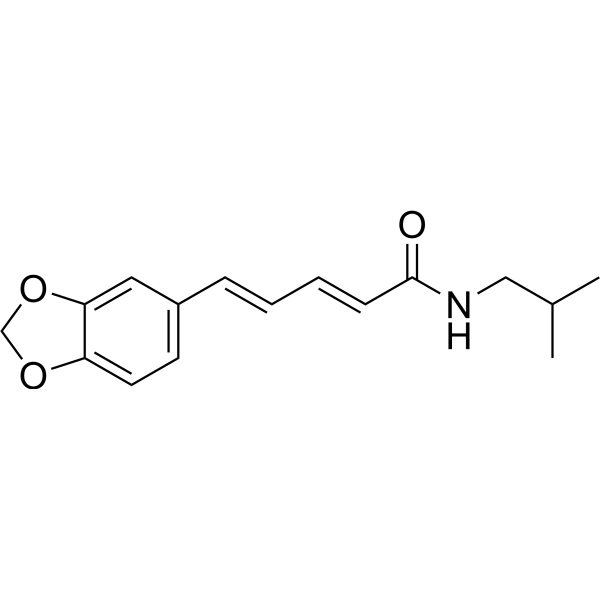 0 ImagesPiperlonguminine is a cytochrome P450 (CYP450) inhibitor. Piperlonguminine also inhibits the growth of epimastigotes and intracellular amastigotes of Trypanosoma cruzi, with IC50 values of 53.8 and 33.9 μM, respectively. Piperlonguminine regulates HMGB1/TLR4-NF-κB/MAPK-related inflammatory responses, endothelial protein C receptor (EPCR) shedding, melanogenesis, glycolipid metabolism, ischemic brain injury and tumor growth. Piperlonguminine can be used in research on hyperlipidemia, sepsis, Chagas disease, ischemic stroke, sarcoma and severe acute pancreatitis-associated lung injury.
-
Evodol
 0 ImagesCat. No.: HY-N2621CAS No.: 22318-10-1Evodol is a natural product isolated from the dried and nearly ripe fruits of Euodia rutaecarpa. Evodol shows inhibitory activity against NO production. Evodol possesses larvicidal activity against the Asian tiger mosquitoes with a LC50 value of 32.43 μg/ml. Evodol has the inhibitory effect on CYP3A.
-
Piperlonguminine (Standard)
 0 ImagesCat. No.: HY-126562RCAS No.: 5950-12-9Piperlonguminine (Standard) is the analytical standard of Piperlonguminine (HY-126562). This product is intended for research and analytical applications. Piperlonguminine is a cytochrome P450 (CYP450) inhibitor. Piperlonguminine also inhibits the growth of epimastigotes and intracellular amastigotes of Trypanosoma cruzi, with IC50 values of 53.8 and 33.9 μM, respectively. Piperlonguminine regulates HMGB1/TLR4-NF-κB/MAPK-related inflammatory responses, endothelial protein C receptor (EPCR) shedding, melanogenesis, glycolipid metabolism, ischemic brain injury and tumor growth. Piperlonguminine can be used in research on hyperlipidemia, sepsis, Chagas disease, ischemic stroke, sarcoma and severe acute pancreatitis-associated lung injury.
-
Varilutamide
 0 ImagesCat. No.: HY-114246CAS No.: 1351185-54-0Synonyms: ONC1-13BVarilutamide (ONC1-13B) is an orally active androgen receptor (AR) inhibitor. Varilutamide shows a rat AR IC50 of 7.9 μM, inhibits DHT-stimulated PSA expression and prostate cancer cell proliferation, suppresses tumor growth and PSA expression and weakly induces lower CYP3A activity. Varilutamide can be used for the research of castration-resistant prostate cancer and prostate cancer.



