



Recombinant Protein Expression Services
-

One-stop service from gene design to protein preparation
-

Independent research and development of a variety of high-expression vectors and strains
-

Professional R & D team of recombinant protein technologies
-

Providing customized services of high-purity protein from mg to g
-

Large-scale protein production platform
Recombinant proteins are encoded by recombinant DNA cloned in a system that supports gene expression and translation. The host cells for recombinant protein production can be bacteria, mammalian cells, insects, and yeast. Recombinant proteins have been used in hot research areas such as immune checkpoints, antibody-drug targets, CAR-T cell therapy, Fc receptors, influenza viral proteins, and cytokines.
Our one-stop customization platform ensures the delivery of high-yield and purity products in the most flexible, cost-effective manner possible within the shortest time frame. We look forward to collaborating with scientists worldwide to accelerate scientific discoveries.
Service Process
MedChemExpress (MCE) provides a one-stop service from genes to proteins. Customers can flexibly choose services or personalized services according to their own needs.


-
Codon Optimization

-
Gene Synthesis

-
Construction of Expression Vector

-
Strain Screening

-
Protein Expression

-
Purification & QC

-
Protein Delivery

Except for a smaller number of expression high risk proteins, most proteins are risk-free customization: there is no charge if there is no expression, without any upfront payments.
he number of amino acids is not restricted, and specific proteins need to be explicitly evaluated.
If, due to the protein’s intrinsic properties, the quality and purity do not meet the requirements after attempts and there is no need to deliver the protein, only the prepaid fee (if any) will be charged.
Strict quality control is enforced, with default internal toxin levels at <1 EU/μg and purity greater than 90% (some proteins can reach more significant than 95%). If the estimated purity is below 90% due to protein characteristics, this will be communicated during evaluation, and the customer can decide whether to continue.

Amino acid sequences

Target proteins / Plasmid (optional) / Project report, or QC report
Expression System Selection Guide
-
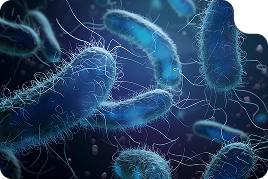
 E.coli Expression SystemMoreTypes
E.coli
Expression SystemProkaryotic
AdvantagesEconomy
Fast
High yield
Wide range of applications
ChallengeEasy to form inclusion
bodies
No PTM (like glycosylation)
High endotoxin levels
Recommended ExpressionBacterial proteins
Antigen proteins
Cytokines
Enzymes
-
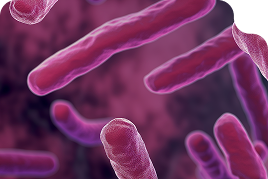 E.coli Cell-Free Expression SystemMoreTypes
E.coli Cell-Free
Expression SystemProkaryotic
AdvantagesFew steps
Short cycle
High throughput
ChallengeLarge molecular weight proteins
May not fold correctly
Recommended ExpressionToxic proteins
Multi-pass transmembrane proteins
Kinases
-
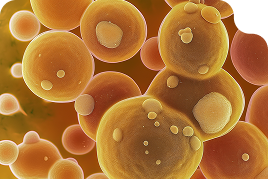 Yeast Expression SystemMoreTypes
Yeast
Expression SystemEukaryotic
AdvantagesEconomy
Fast
Partial PTM
ChallengeLow secretion efficiency
Recommended ExpressionCytokines
Small molecular protein
Enzymes
-
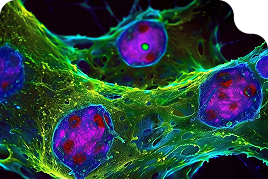 Mammalian Expression SystemMoreTypes
Mammalian
Expression SystemEukaryotic
AdvantagesCloser to natural protein
Lower endotoxins
Better activity
More complex PTM
ChallengeLong cycle
Higher cost
Recommended ExpressionSecreted proteins
Extracellular domain of transmembrane proteins
Recombinant antibodies
Antibody fragments
-
 Insect Expression SystemMoreTypes
Insect
Expression SystemEukaryotic
AdvantagesLarge gene capacity
Soluble protein
PTM is similar to the mammalian system
ChallengeLong cycle
Higher cost
Lack of partial glycosylation
Recommended ExpressionCytoplasmic proteins
Toxic proteins
Transmembrane proteins
Secreted proteins
Kinases
Cases Sharing
Challenge: Multi-pass transmembrane proteins have high hydrophobicity, low expression levels, and high purification difficulty, making it challenging to obtain a soluble protein.
Preparation process: Protein synthesis is achieved by adding DNA templates, ATP, amino acids, various substrates, and enzymes from cell extracts in vitro. The target protein is then extracted by screening different detergents. So far, we have found that Brij78, FOS12, and DDM are effective detergents that can dissolve and purify membrane proteins well and help them form the correct natural conformation in solution.
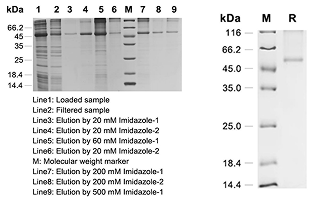
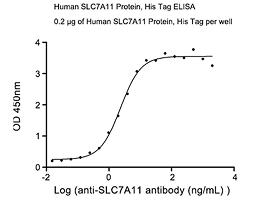
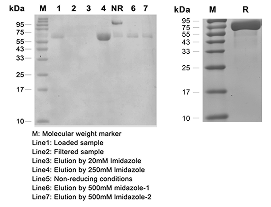
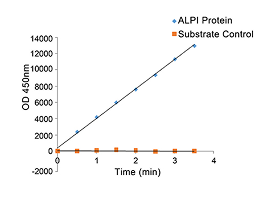
Advantages: Mammalian systems possess complex PTM, such as glycosylation. Regarding molecular structure, physical and chemical properties, and biological functions, proteins expressed in mammalian cells are the closest to natural proteins.
Preparation process: Based on the target protein’s sequence, we analyze and optimize factors such as rare codons and codon preferences, then perform complete gene synthesis. Once the sequencing is correct, the gene is cloned into a specialized high-expression vector. After confirming that the plasmid meet the requirements for transfection, an appropriate transfection method and host cells are chosen for the process. Upon completion of transfection, a suitable purification method is selected in combination with advanced equipment to purify the protein.
Challenge: Large molecular-weight proteins are difficult to secrete, have lower expression levels, and are challenging to purify.
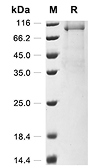
Preparation process: We optimize the codons based on the target protein’s sequence , synthesize the target gene, and subclone appropriate baculovirus vector for transfection into insect cells to obtain P0 generation. Then, protein expression levels are determined through electrophoresis. If necessary, we infect cells with the P0 generation to produce the P1-P2 generation. After infecting insect cells with P1 or P2 generation, we purify the target protein using various chromatography methods such as affinity, ion exchange, hydrophobic interaction, and size exclusion.
Bulk and Custom Product Services
Each project of recombinant protein customization requires evaluation to determine the corresponding plan and price. For further information on service prices or technical details, please send an email to [email protected] Or call 609-228-6898 to contact us directly.